
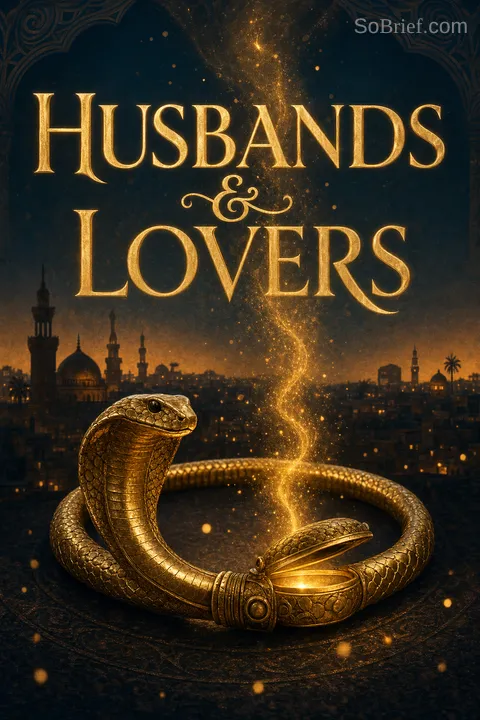


Plot Summary
Prologue
On a June afternoon in 2019, Mallory Dunne1 is gardening at her Mystic home when she finds two missed calls from Camp Winnipesaukee. She calls back and learns her ten-year-old son Sam6 has eaten a death cap mushroom on a dare. The camp nurse misdiagnosed it as stomach flu, and now Sam6 has been airlifted to Dartmouth Hitchcock Medical Center in New Hampshire.
Mallory1 drives three hours in a panic, barefoot, striking a baby owl on the windshield. At the ER, a nurse demands ID before she can see her son. Mallory's1 sister Paige5 arrives. The doctor explains that Amanita phalloides toxins attack the liver and kidneys. Sam6 lies in a coma, his skin jaundiced yellow. The next forty-eight hours will determine whether he lives or dies.
This prologue functions as both emotional gut-punch and structural keystone. The death cap mushroom, small and innocuous, destroys from within: a metaphor for the secrets both Mallory and her grandmother Hannah have swallowed across decades. The dead baby owl, struck as Mallory races to save her own child, prefigures the intergenerational sacrifice at the story's core. Mallory's shoeless drive, her clash with bureaucratic authority, her sister's arrival, all establish her as a woman who has managed alone but now faces a crisis beyond solo endurance. The prologue also introduces the central medical mystery that will drive the plot: Sam needs a new kidney, and finding a donor will force Mallory to confront the past she fled.
Cobra in the Pavilion
Hannah Ainsworth3 has spent a stifling year in Cairo with her husband Alistair,7 a British diplomat decades older. One evening in August 1951, after he dismisses her at dinner with a patronizing remark, she walks into the hotel gardens. In the pavilion she finds a cobra settling for the night.
They regard each other. The snake strikes; she flings up her arm. The fangs sink into her glove. Before she can process what is happening, the assistant hotel manager appears from nowhere, flings the cobra aside, and catches her as she falls.
This stranger, Lucien Beck,4 has been watching her all evening, concerned by her unhappiness. At the hospital, she learns the gloves absorbed most of the venom. The flowers he sends afterward, with a card signed J. Beck, unsettle her more than the bite itself.
The cobra functions as a mirrored self: Hannah too is a creature whose environment has been invaded, who strikes when cornered. Her thought that this would be a joke of a place to die reveals how thoroughly she has dissociated from her own life. Lucien's sudden appearance, like a djinn, marks him immediately as someone who sees and responds to her distress, unlike her husband. The cobra bite is the point where Hannah's carefully maintained numbness cracks open, and the bracelet she will one day pass to her daughter makes its first symbolic appearance as an object of protection and danger intertwined.
The Wagoneer at the Ferry
It is the Thursday before Memorial Day 2008. Monk Adams,2 Mallory's1 high school friend from Nobles, has arranged a summer nanny job with his father8 and stepmother on Winthrop Island. His stepmother Becca was supposed to pick Mallory1 up but is too hungover to drive.
Monk2 arrives instead in Bessie, a battered vintage Jeep Wagoneer with a rumbling engine. He grins, calls her Pinks (an old nickname from a My Little Pony story), and drives her up West Cliff Road past meadows and cliffs to Seagrapes, the Adams family estate.
He warns her the twins, Chippy and Blue, are a handful and his stepmother is difficult. Mallory1 meets Becca, polished but faintly slurred, and then the twins, who barrel down the stairs and throw themselves at her like they have been waiting all their lives for her to appear.
This chapter establishes Winthrop Island through Mallory's outsider eyes: the vintage cars, the cocktail-hour euphemisms, the old-money shabbiness masking immense privilege. Monk's immediate comfort with Mallory rekindles a connection that has simmered since prep school. The twins' instant embrace signals she belongs here, while Becca's cool assessment foreshadows class fault lines ahead. Bessie the Wagoneer becomes a character in her own right: a symbol of Monk's resistance to his father's world of status and polish, and the vehicle that will carry both their romance and, eventually, their shared history.
Ghosts of János
In Lucien's4 small office at Shepheard's, Hannah3 begins to tell him about her past. She met János10 at university in Vienna; they fell in love instantly and married within hours, a judge roused from bed at four in the morning. He was everything: handsome, brilliant, adoring.
They had children. Then the war came. János10 left to fight at Stalingrad and returned a skeleton. They rebuilt, had a new baby, Károly.15 One dawn, Soviet soldiers broke into their country house.
They beat and raped Hannah3 while János10 was forced to watch, shot him through the forehead, took the baby, and set the house on fire. Hannah3 crawled out, joined the Budapest resistance, killed as many soldiers as she could, was captured and tortured by SMERSH, escaped, and walked barefoot to Austria.
This is the novel's emotional core: the revelation of Hannah's unspeakable trauma. She has been a ghost in her own life since János's murder, performing the role of Alistair's wife while her soul remains in the ashes of that Hungarian country house. Her survival was fueled by vengeance, but vengeance eventually burned out, leaving her hollow. The detail that she still hears Károly's laugh 'always just around the corner' captures the haunting nature of ambiguous loss: a child neither confirmed dead nor found alive. Telling Lucien is the first crack in her armor.
Don Gato's Lullaby
On Mallory's1 first night, the twins refuse bedtime. She calls Monk,2 who arrives with his guitar, drops onto a beanbag, and sings 'Señor Don Gato,' a silly Spanish song about a cat who dies and is resurrected by the smell of fish. The children meow along and slowly surrender to sleep. Afterward, Monk2 takes Mallory1 to the Mohegan Inn, where he plays a set for the summer crowd.
She hears him sing 'Winter Tale,' a haunting original about a man who loses his love, and she is transfixed. Weeks later, on the beach below Seagrapes, Monk2 confesses he has been in love with Mallory1 for years, that his songs were written for her, that she is his sun. He kisses her, and Mallory1 realizes the connection she felt in high school was mutual all along.
Monk's performance of 'Don Gato' reveals his gift: he can command chaos with music alone. The song choice, about death and resurrection, is darkly prescient. His confession that he used music to survive his despair over a girl he loved from afar transforms his artistry from talent into emotional necessity. The beach kiss is the culmination of years of unspoken connection, but it carries an undercurrent of fear: both sense that happiness this intense cannot last. The gap between what they feel and what the world will permit has already begun to narrow around them.
Alexandria's Revelations
While Alistair7 is away at a conference in Rome, Lucien4 whisks Hannah3 to Alexandria. They stay at the Cecil Hotel, make love, drink champagne. He takes her to meet his mother, Madame Suarez, in a shabby-genteel apartment overlooking the sea.
Over tea, his mother tells the story: she fell in love with a married Swiss businessman who kept her as a mistress, provided for his children, but never acknowledged them publicly.
Afterward, walking along the esplanade, Lucien4 explains that his mother's family were Spanish Jews forced out by the Inquisition centuries ago, and that this heritage is something he reveals only to people he trusts. A Hungarian acquaintance of János10 recognizes Hannah3 at breakfast and calls her by her old title, Countess Vécsey; Hannah3 denies her identity and flees.
This chapter layers Lucien's identity: he is simultaneously a devoted son, a man of hidden heritage, and someone comfortable with secrets. The meeting with his mother parallels Hannah's own maternal loss while foreshadowing the child she is trying to conceive. Lucien's disclosure about his Jewish ancestry is an act of trust that Hannah does not yet fully reciprocate: she still hides the full extent of her past. The encounter with Irina, János's old friend, reminds us that Hannah's old life is not as buried as she believes, and the politics of Hungary will follow her.
Lunch at the Club
Two days before Mallory1 and Monk's2 planned road trip, Mr. Adams8 invites her to lunch at the Winthrop Island Club. He orders a bottle of Bollinger and speaks of Monk2 having dropped out of Colby to pursue music, implying Mallory1 has led him astray. He points out a man at another table, Bud Cooper, once rich, now destitute, living year-round in a crumbling summer house on the Club's charity.
The lesson is clear: Monk2 needs to secure his legacy, not chase an artistic career with a nanny from the wrong background. Mr. Adams8 offers his card and his support, a helping hand 'if things don't work out.' Mallory1 bristles at the condescension but later urges him to attend Monk's2 gig at the Mo that night, hoping he will finally see his son's talent.
Mr. Adams's lunch is a masterclass in manipulation, couched in avuncular concern. The story of Bud Cooper functions as a cautionary tale about class, money, and the cost of choosing art over commerce. The champagne, the club setting, the casual old-money entitlement: all signal the world Monk inhabits and Mallory does not. Her decision to urge Mr. Adams to see Monk perform that night is tragically ironic: she believes she is bridging a rift between father and son; in fact, she is setting in motion the events that will destroy her.
Alistair's Icy Toast
Hannah3 returns from Alexandria to find Alistair7 home early from Rome, drunk in the bath, smoking. She tells him she is pregnant. He calls himself a cuckold but without anger. He explains he has had Lucien4 investigated: the hotel manager is an Israeli intelligence agent who has been extracting information from British diplomatic wives through seduction.
Alistair7 mentions, with casual bigotry, that Lucien's4 Jewish blood would have disgusted his own father. He tells Hannah3 to check his desk for the typed intelligence report. Stunned, she pieces together that Lucien's4 initial interest in her may have been professional, not romantic. She writes a warning note, then takes a taxi to Shepheard's to find him.
Alistair's revelation reframes the entire affair. Hannah must now question whether Lucien's love was genuine or instrumental. Yet her immediate instinct is not to confront Lucien but to warn him, suggesting her love has already outpaced her self-protection. Alistair's casual anti-Semitism and his acceptance of the cuckoldry expose the transactional nature of their marriage: he is more concerned with appearances than with her heart. The pregnancy, which Hannah sought as a form of rebirth after losing her children, now becomes another vulnerability in a political game she did not know she was playing.
The Father's Crime
The night before their planned departure, Mallory1 cannot sleep. She finds Mr. Adams8 smoking on the terrace. He urges her to join him, pours her a drink, and talks about Monk's2 talent and the girls who flock to his shows, including Lee Lassiter,9 an old Colby girlfriend. Mallory1 begins to feel strange, her limbs heavy.
Mr. Adams8 helps her to her room, unbuttons her pajama top, and tells her she has been wanting this, that no one will know. Her body refuses her commands. She dissociates, watching the assault happen as if from above. Afterward, she lies in bed, shattered. At dawn, she packs her bags and leaves the island on the first ferry, unable to face Monk2 or tell him what his father8 did.
This scene is handled with devastating restraint. The drug in Mallory's drink renders her physically helpless but mentally present, forced to witness her own violation. Mr. Adams's grooming is revealed as methodical: the joint, the flattery about her art, the isolation, the predatory logic that she wanted it. His jealousy of Monk (watching his son receive the adulation he never achieved) fuels his need to destroy what Monk loves. Mallory's silence afterward is not weakness but survival: she has been conditioned by shame and by her working-class position relative to this powerful family to believe she will not be believed.
Black Saturday Inferno
It is January 26, 1952. Hannah3 reaches Shepheard's to warn Lucien,4 but his room is empty, his belongings gone. He returns at dawn. She tells him everything: the spy report, Alistair's7 knowledge, her need for him to flee. He asks her to come with him.
She resists, then finally tells him the full story of János,10 the rape, Károly,15 the fire that destroyed her home. He holds her. He leaves to put his mother on a ship but promises to return. The riots begin. Mobs burn the Turf Club, the opera house, and finally Shepheard's itself.
Hannah3 is trapped in the annex with a broken leg when Lucien4 finds her. He carries her through corridors of smoke and flame, out to the street, where he collapses and dies in her arms, murmuring words from Aida about a throne next to the sun.
The Cairo fire is both historical fact and symbolic reckoning. As the symbols of British colonial power burn, so too does the false life Hannah constructed with Alistair. Lucien's rescue is an act of love that costs him his life, redeeming any ambiguity about his motivations. His dying words, from Verdi's Aida (the opera they discussed at the pyramids), confirm that his love was genuine and that he heard Hannah's deepest wound: her belief that she was unworthy of a pyramid, a monument, a lasting love. He built her one with his last breath.
St. Hilda's Confinement
Severely burned and with a broken leg, Hannah3 is taken by Alistair7 to the Convent of St. Hilda in County Galway, a Magdalene laundry where unwed mothers are confined and their babies sold to American families. A young nun, Sister Bernadette,13 nurses Hannah,3 who remains mostly silent.
When labor comes, the doctor is drunk; Sister Bernadette13 delivers the baby herself. Hannah3 names the girl and nurses her. But the Mother Superior takes the infant away to a waiting American couple. Hannah's3 screams echo through the stone halls.
Before she is smuggled out by a woman in a car, she gives Sister Bernadette13 the gold cobra bracelet Lucien4 gave her, asking her to give it to the family adopting her daughter. Sister Bernadette13 chases the new parents to the Galway docks to deliver the bracelet and Hannah's3 dying wish.
The Magdalene laundry system, in which women were imprisoned and their children commodified, is the historical horror underlying this chapter. Hannah, a countess and a married woman, is subjected to the same regime as desperate teenagers because she has no identity papers and is completely in Alistair's power. The bracelet is both a tangible connection across generations and a wound: it carries Hannah's love but also her loss. Sister Bernadette's small act of defiance, running to the docks to pass on the bracelet to strangers, ensures the story will not be entirely erased, even if it will take seventy years to be read.
Certificate of Adoption
Four and a half years after their mother's death in a fall at Machu Picchu, Paige5 finds adoption papers in the attic. Their mother was born in 1952 in a Catholic orphanage near Galway to a married Englishwoman who gave her up. Shaken, Paige5 does a DNA test and books flights to Ireland. At the Convent of St. Hilda, they meet the ancient Mother Bernadette,13 the same sister who attended Hannah's3 labor.
She remembers everything: the fire-scarred woman who would not speak, the drunk doctor, the baby with green eyes, the bracelet. She tells them Hannah3 was smuggled out before a man claiming to be her husband came to collect her. She hands over the adoption file. As they leave, Paige's5 DNA results come back: the sisters are one-quarter Jewish.
The convent visit transforms the bracelet from a beloved heirloom into a relic of trauma. Mother Bernadette's testimony fills in the emotional reality the documents cannot convey: Hannah's screaming, her desperate gesture of the bracelet, her escape. The DNA revelation reframes the sisters' entire identity, connecting them to Lucien's hidden Sephardic heritage. Paige, whose life has just imploded with her husband Jake's infidelity, channels her need for control into genealogical detective work, while Mallory's resistance to DNA testing reflects her deeper fear of what truths might surface from the past.
Face to Face
During a visit to Winthrop with Paige5 and their friend Lola Peabody, Mallory1 walks alone to the beach below Seagrapes, the site of her summer with Monk2 fourteen years earlier. A man rises from the surf, shakes water from his hair. It is Monk.2 They stare at each other, shocked. He invites her inside, asks about her life; she tries to leave.
As they stand awkwardly on the bluff path, Paige5 and Sam6 appear at the top. Sam6 calls Mallory's1 name. Monk2 goes still. He looks at the boy's6 face, looks at Mallory,1 and the truth crashes over him. He asks Sam's6 age. 'Thirteen last month.' Monk's2 expression cycles through shock, grief, wonder. He excuses himself and walks away across the lawn, unable to speak, leaving Sam6 watching his father2 retreat.
This scene carries the novel's highest emotional voltage. Monk's emergence from the water, nearly naked and gleaming, is almost mythic: a rebirth into a world where he has a son. But the real birth here is his awareness of fatherhood, delivered not through explanation but through the undeniable evidence of Sam's face mirroring his own. Monk's retreat is not rejection but overwhelm: thirteen years of unknowing collapse into a single moment. Sam's composure contrasts with both parents' unraveling, marking him as a child forced into premature maturity by his illness and by the family secrets he has already intuited.
The Fiancée Unmasked
After Jake's scandal breaks, Mallory,1 Paige,5 and the kids stay at Monk's2 Winthrop estate. Lee Lassiter,9 Monk's2 fiancée, arrives unexpectedly. She is all performative warmth, calling Mallory1 'Mallie' and declaring them 'sisters in spirit.'
But Mallory1 overhears Lee9 berating Grace,14 the longtime housekeeper who has worked for the Monk2 family for decades, over the wrong kind of oatmeal. Mallory1 intervenes, telling Lee9 that speaking to people that way is unacceptable. Lee9 retreats, weeping.
Grace14 quits, too ashamed to tell Monk2 what has been happening. Monk2 comes to Mallory,1 shaken, and confesses he has been blind. He and Lee9 have a confrontation. She leaves the island. Monk2 tells Mallory1 he needed this relationship to work so badly that he ignored who Lee9 really was.
Lee functions as a dark mirror of the influencer economy: curated authenticity masking profound narcissism. Her cruelty to Grace, whom Monk considers family, is the final breach. Mallory's instinctive defense of Grace, calling out Lee's behavior despite the personal cost, reveals the integrity that first drew Monk to her. Monk's admission that he settled for 'ersatz coffee,' a wartime substitute, becomes the book's governing metaphor for his engagement: a relationship chosen by his dying father, sustaining but not nourishing, accepted because he had lost hope of the real thing.
A Perfect Match Stops
Monk2 is a perfect six-out-of-six tissue match for Sam.6 He donates a kidney without hesitation. Sam's6 surgery goes beautifully: his new kidney starts producing urine almost immediately. But during Monk's2 procedure, an undiagnosed heart arrhythmia causes cardiac arrest. His heart stops on the operating table. Mallory1 receives the call at Sam's6 bedside and races to Mass General.
She finds Monk2 in the ICU, sedated and surrounded by machines, his half-siblings Chippy and Blue already there. The doctors tell Mallory,1 who holds Monk's2 medical power of attorney (a document he signed granting her authority over his care), that the next twenty-four hours are critical. She sits by his bed, gripping his hand, refusing to leave.
The parallel of Monk and Sam, father and son, both on operating tables, both fighting for life, creates a symmetry of sacrifice and survival. Monk's undiagnosed heart condition operates as metaphor: his heart has been literally out of sync since Mallory left him. That he gave Sam his kidney before knowing if he himself would survive completes his redemption arc. Mallory holding his medical POA, a legal document Monk signed granting her power over his care, is an act of trust that predates their reunion and reveals he never truly let her go, even when he believed she had left him by choice.
The Cobra's Secret
While Monk2 lies unconscious, Mallory1 receives a text from her jeweler friend Luca. The cobra bracelet's tail has a hidden screw mechanism, a classic spy device for carrying messages. With Paige's5 help, Mallory1 unscrews the tip and extracts a tiny rolled paper. Sam,6 in his hospital bed, reads it aloud: 'I named you Lucile for your father, Lucien4 Suarez Beck, who gave his life to save you.
Hannah3 Countess Vécsey (Ainsworth).' The note confirms everything: Lucien4 was Hannah's3 true love, he died in the Cairo fire saving her, and their daughter was named for him. The same day, Mallory1 bends over Monk's2 hospital bed and finally tells him, in a whisper, the truth about what his father8 did to her that night in August 2008.
The bracelet, worn by three generations of women, finally yields its secret. The hidden message functions as both historical revelation and narrative key: it proves Hannah's love for Lucien, names the child, and connects the novel's timelines through a mother leaving a trace for a daughter she would never know. Mallory's confession to the unconscious Monk is equally momentous: she unburdens herself of the secret that shaped fourteen years of silence. Both women, across generations, use objects and whispered words to reach across impossible distances toward the people they love.
Love Reclaimed
Monk2 recovers. Two months later, he drives to Mallory's1 farmhouse in Mystic, carrying roses from Aunt Barbara's11 garden. He has spoken to Paige5 and learned the full truth about his father.8 He tells Mallory1 he heard her confession in the ICU and is devastated, furious, and determined to spend his life making things right. Mallory1 admits she was afraid he would be revolted.
He tells her she is the sun to his earth and proposes marriage. She says yes. As they lie in bed afterward, Paige5 arrives at the house with an elderly man: Károly Vécsey,15 Hannah's3 infant son, kidnapped by Soviet soldiers in 1945, raised in Russia, who spent decades searching for his birth mother and has now found his sister's granddaughters.
The convergence of Monk's proposal and Károly's arrival enacts the novel's central thesis: that love, however fractured by time and trauma, seeks reunion. Monk has completed his moral evolution from the privileged boy who failed to see his father's predation to the man who would give his kidney, his heart, and his future to protect his family. Károly's appearance proves that Hannah's story, begun in tragedy, is not finished. The final image of a family reconstituted across generations and continents offers hard-won domestic joy. The bracelet, the kidney, the songs: all have served as vessels carrying love across impossible distances.
Analysis
Beatriz Williams's Husbands and Lovers weaves together two timelines, 1950s Cairo and contemporary New England, through a single object: a gold cobra bracelet with a hidden compartment that carries a mother's message across seven decades. The novel argues that secrets, like toxins, destroy the bodies that contain them: Hannah3 dissociates from her own life after losing János10 and Károly;15 Mallory1 silences herself after Buzzy Adams's8 assault; Sam's6 body is literally poisoned by a mushroom while his family history remains unspoken. Healing arrives only through revelation, however belated or terrifying.
The dual narrative structure enacts the book's central theme: that trauma is intergenerational, that the stories we inherit shape us whether we know them or not. Mallory's1 mother, adopted and renamed, never knew she was the daughter of a Hungarian countess3 and a Sephardic Jewish spy.4 Mallory,1 in turn, conceals Sam's6 paternity and her own rape. The bracelet moves from Hannah's3 wrist to her daughter's to Mallory's,1 its secret compartment undiscovered until the novel's climax, a perfect metaphor for the way family histories remain latent, waiting for the right hands to open them.
The book is also a sustained meditation on what women are permitted to want. Hannah3 asks Lucien4 for a child, not love, because she has been taught that wanting more will cost her everything; Mallory1 builds a career and raises a son6 alone because she believes she is too damaged for partnership. Monk's2 evolution from the privileged boy who failed to see his father's8 predation to the man who would give his kidney and his future redeems the romantic plot without erasing its damage. His perfect tissue match with Sam6 is both medical fact and narrative grace note: a biological confirmation that love, not violation, produced this child.
Williams embeds serious historical research (the Cairo fires of 1952, the Magdalene laundries, early Israeli intelligence operations, the Hungarian resistance) within a compulsively readable frame. The novel's emotional intelligence lies in its refusal of easy catharsis: Mallory1 and Monk2 do not ride into the sunset but into a future that will include dialysis follow-ups, immunosuppressant medications, and the long work of rebuilding trust. The final image, of an elderly Károly15 arriving at Mallory's1 door with decades of lost history in his hands, insists that the past is never finished with us, but that its gifts can arrive as unexpectedly as its wounds.
Review Summary
Husbands & Lovers by Beatriz Williams is a dual-timeline historical fiction novel that has received mostly positive reviews. Readers praised the compelling characters, intricate plot, and emotional depth. The story follows two women: Mallory in present-day New England and Hannah in 1950s Egypt, connected by family secrets and a mysterious bracelet. While some readers found the dual timelines disjointed, many appreciated the exploration of love, family, and personal choices. The book's blend of romance, mystery, and historical elements resonated with fans of Williams' work.
People Also Read




Characters
Mallory Dunne
Single mother, textile designer, survivorA RISD-trained textile pattern designer in her mid-thirties, Mallory has raised her son Sam6 entirely alone since fleeing Winthrop Island at twenty-one. She is wry, self-deprecating, and fiercely protective of her independence, having built a quiet life in a Mystic farmhouse with her garden and her freelance design work. Beneath her tough exterior lies unprocessed trauma: the rape she suffered at the hands of Monk's father8, the guilt of keeping Sam6 from his father2, and the terror of losing her son to kidney failure. She inherited her mother's green eyes and a gold cobra bracelet whose significance she will not understand until the novel's end. Her artistic gift for pattern design reflects her deeper need to find order and beauty in chaos.
Monk Adams
Musician, reluctant heir, devoted fatherBorn Barclay Benjamin Monk Adams into a dynasty of Harvard-educated financiers, Monk rejected the path laid out for him to become a Grammy-winning singer-songwriter. He is charismatic, emotionally articulate through music, and carries deep wounds from his parents' divorce and his father's8 controlling disapproval. Despite global fame, he remains grounded, driving his grandfather's old Jeep Wagoneer and playing secret sets at a local dive bar. When he learns at thirty-five that he has a thirteen-year-old son6, he does not hesitate to donate a kidney and restructures his entire life around fatherhood. His undiagnosed heart arrhythmia literalizes the emotional arrhythmia he has lived with since Mallory1 disappeared.
Hannah Vécsey (Ainsworth)
Hungarian countess, war survivor, secret keeperA Hungarian Jewish aristocrat who lost her first husband János10 (murdered by Soviet soldiers), her children to typhoid and kidnapping, and her entire world to war, Hannah rebuilt herself as the cool, elegant wife of a British diplomat7 in 1950s Cairo. She speaks multiple languages fluently, reads people with unnerving accuracy, and keeps a pistol in her handbag. Her affair with Lucien Beck4 is her first act of emotional risk in years. She asks him for a child, not love, but receives both. After the Cairo fire kills Lucien4, she is taken to an Irish convent where her daughter is adopted. She spends the rest of her life fighting Soviet occupation in Hungary as a dissident, eventually dying in Budapest in 1992.
Lucien Beck
Hotel manager, Israeli spy, sacrificial loverThe assistant manager of Shepheard's Hotel in Cairo, Lucien Beck is the illegitimate son of a Swiss businessman and a Sephardic Jewish mother from Alexandria. Educated in Switzerland, trilingual, and trained in wartime sabotage operations, he uses his hotel position as cover for intelligence gathering for the nascent state of Israel. His charm and emotional availability to the British diplomatic wives are both professional tools and a mask for his fundamental loneliness. When he meets Hannah Ainsworth3, he falls genuinely in love for the first time. He gives her a gold cobra bracelet with a hidden compartment for secret messages, and ultimately gives his life carrying her through the burning hotel during the Cairo riots of January 1952.
Paige Powell
Mallory's older sister, fixer in crisisA Yale graduate married to a private equity partner, Paige has always been the competent one: the emergency contact, the financial safety net, the organizer. When her husband Jake's affair with a junior associate becomes public, her meticulously constructed life implodes. She channels her distress into genealogical detective work, uncovering their mother's adoption and their grandmother Hannah's3 extraordinary story. Her relationship with Mallory1 is both competitive and fiercely loyal, shaped by a childhood in which Paige was the achiever and Mallory1 the screwup.
Sam Dunne
Mallory and Monk's son, kidney patientThirteen years old at the novel's present-day climax, Sam is the child Mallory1 conceived during her summer with Monk2 on Winthrop Island. He has his father's2 golden hair, his musical ear, and his preternatural composure. At ten, he ate a death cap mushroom at summer camp, destroying his kidneys. Three years of dialysis have made him wise beyond his years and cautious with his body. When he finally meets Monk2, he handles the revelation with more grace than either parent. His need for a kidney transplant, and Monk's2 decision to donate, becomes the crucible in which the family's long-buried secrets are finally consumed.
Alistair Ainsworth
Hannah's husband, British diplomatA career diplomat in his sixties, Alistair married Hannah3 after meeting her at a displaced persons camp where she served as his translator. He is pompous, casually bigoted, alcoholic, and sexually inept, but also shrewd. He knows Hannah3 does not love him and does not seem to mind; their marriage is a transaction. When he discovers her pregnancy, he reveals he has had Lucien4 investigated as an Israeli spy and seems almost amused by the cuckoldry. After the Cairo fire, he takes the injured Hannah3 to Ireland to give birth and surrender the baby, then abandons her to the convent.
Buzzy Adams
Monk's father, art patron, predatorMonk's father, called Buzzy, is a Harvard-educated financier who sits on museum boards and prides himself on championing women artists. He divorced Monk's2 mother and remarried a younger socialite, Becca. He disapproves of Monk's2 music career and sees his son's talent as a threat to his own unrealized artistic ambitions. His avuncular manner masks a calculating, predatory nature. When he drugs and rapes Mallory1 on her last night at Seagrapes, he frames it as something she wanted. He dies years later, leaving a letter expressing remorse and a check for twenty-five thousand dollars.
Lee Lassiter
Monk's fiancée, lifestyle influencerA Texas oil heiress turned wellness and lifestyle influencer, Lee has been in love with Monk2 since she met him at a Harvard reunion when she was ten. She followed him to Colby, where they dated before he broke up with her. They reconnected when Monk's father8 was dying of cancer, and Buzzy8 urged Monk2 to propose. Lee's public persona is all warmth and empowerment; in private, she berates household staff. Her Instagram brand masks a controlling narcissism that Monk2 has chosen not to see because she represents his father's8 approval and the safe, orderly life he thought he should want.
János Vécsey
Hannah's first husband, Hungarian countA philosophy doctoral student when Hannah3 met him in Vienna, János was rakish, brilliant, and utterly devoted. He married Hannah3 within hours of their first real conversation and took her to Portofino for their honeymoon. He taught her to shoot a gun before leaving to fight with the Hungarian army at Stalingrad. He returned a skeletal ghost of himself but recovered, and they had a son, Károly15. In 1945, Soviet soldiers invaded their country estate, beat and raped Hannah3 while forcing János to watch, then shot him through the forehead. His death haunts Hannah3 for the rest of her life.
Aunt Barbara Huxley
Monk's aunt, sharp-tongued truth-tellerMonk's2 maternal aunt, Barbara is a dry-witted, chain-smoking, unflappable presence who served as Monk's2 real emotional parent during his chaotic childhood. She adores Mallory1 and treats her as family from their first meeting. Her garden roses, her Manhattan cocktails, and her unsentimental wisdom provide ballast for both Monk2 and Mallory1. She dislikes Becca and Lee9 with equal frankness, and her assessment of Buzzy8 as a gardener who forces showy blooms rather than letting things grow naturally proves tragically accurate. She dies before the novel's present-day events, but her ring becomes Monk's2 engagement ring for Mallory1.
Sedge Peabody
Kind tech entrepreneur, romantic possibilityA tall, dark-haired, self-deprecating man in his late thirties, Sedge is the grandson of the matriarch of Summerly, the Peabody estate on Winthrop Island. He dropped out of law school and founded a financial-tech company, which he sold for a substantial sum. He meets Mallory1 when she stumbles into the Summerly kitchen looking for water, and is immediately drawn to her. Patient, emotionally generous, and refreshingly uncomplicated, he represents a possible future in which Mallory1 might finally move on from Monk2. But he also recognizes, before she does, that she is not free to love him.
Mother Bernadette
Irish nun, keeper of Hannah's storyA ninety-seven-year-old American-born nun who came to Ireland as a nurse during World War II and never left, Mother Bernadette was the young sister who delivered Hannah's3 baby at St. Hilda's in 1952. She is the living link between Hannah's3 story and Mallory's1 present: she remembers the burns, the silence, the screams, and the bracelet. She defied the cruel Mother Superior to run the cobra bracelet to the Galway docks and ensure it reached the adopting family.
Grace
Adams family housekeeperA small, dainty woman from one of Winthrop's Portuguese fishing families, Grace has worked for the Monk2 and Adams households for decades. She watched Monk2 grow up and loves him like a son. She recognized the connection between Monk2 and Mallory1 from the start. When Lee9 berates her over oatmeal, she quits rather than burden Monk2 with the truth about his fiancée. Her quiet dignity and her eventual return after Monk's2 apology mark his moral reclamation.
Károly Vécsey
Hannah's long-lost son, final revelationHannah3 and János's10 infant son, kidnapped by Soviet soldiers during the January 1945 attack on the Vécsey estate. He was raised outside Leningrad, never knowing his true origins. After the Berlin Wall fell, he traveled to Hungary and eventually traced his birth mother, Hannah3, who had spent years in prison as a dissident. He arrives at Mallory's1 farmhouse at the novel's end, fulfilling Hannah's3 dying wish that he find his sister's family.
Plot Devices
The Cobra Bracelet
Intergenerational talisman with hidden compartmentA gold bracelet in the shape of an Egyptian cobra with emerald eyes and a ruby tongue, crafted in the 1930s or 1940s. Lucien Beck4 gave it to Hannah3 during their affair. Its tail contains a screw-off tip concealing a compartment small enough to hold a rolled paper message, a classic spy device. After Hannah3 surrendered her baby at the Irish convent, she gave the bracelet to Sister Bernadette13 to pass to the adopting family. It was worn by Mallory's1 mother for her entire life and then inherited by Mallory1. The hidden compartment remains undiscovered until a jeweler's examination reveals the secret mechanism, and the message inside, naming Lucien4 as Hannah's3 daughter's father, finally completes the family genealogy.
Monk's Music
Emotional expression, career, connective tissueMonk Adams's2 songwriting and performing career serves multiple structural functions. His songs express the emotions he cannot articulate in conversation; 'Winter Tale,' written during his despair after losing Mallory1, becomes his breakthrough single. His gigs at the Mohegan Inn provide the setting for key romantic and confrontational scenes. His fame creates the central tension in his reunion with Mallory1, who has deliberately avoided tabloid coverage of his life. His music also represents his rebellion against his father's8 expectations and his claim to an authentic identity. After his cardiac arrest, he plans to scale back touring and recording to focus on fatherhood and family, choosing presence over performance.
The Death Cap Mushroom
Catalyst for the present-day crisisAmanita phalloides, the death cap mushroom, is the agent of Sam's6 near-fatal poisoning at summer camp. The toxin attacks the liver and kidneys, and Sam6 survives only through emergency intervention and ongoing dialysis. His need for a kidney transplant drives Mallory1 to confront her past and eventually brings Monk2 back into her life as a potential donor. The mushroom, small and innocuous in appearance but lethally destructive, serves as a metaphor for the hidden dangers buried within seemingly safe environments: summer camp, a wealthy family's estate, a trusted father figure8.
DNA Testing
Reveals hidden heritage and family connectionsPaige's5 decision to submit her DNA to a commercial ancestry service uncovers two major revelations: first, that their mother was adopted from an Irish convent and is one-quarter Jewish (specifically of Sephardic heritage through Lucien Beck's4 maternal line); second, through cousin matching, the DNA results eventually lead to living descendants of Lucien's4 sister's family. The test also serves as a thematic counterpoint to the novel's exploration of paternity, identity, and the stories families tell about themselves. Lee's9 casual mention of her own DNA discoveries (her father was a sperm donor) normalizes the technology while foreshadowing its deeper implications.
The Kidney Transplant
Sacrifice, redemption, and medical crisisMonk's2 decision to donate a kidney to Sam6 is the act that physically unites father and son and symbolically completes Monk's2 moral arc. He is a perfect six-out-of-six tissue match, a biological confirmation of paternity that renders the DNA question moot. The surgery triggers Monk's2 undiagnosed cardiac arrhythmia, causing him to go into full cardiac arrest on the operating table. This near-death experience forces Mallory1 to confront her terror of losing him and prompts her to tell him the truth about his father's8 rape while he lies unconscious. The transplant thus functions as both a literal lifesaving procedure and a metaphorical operation that excises the long-festering secret from the family body.
FAQ
Synopsis & Basic Details
What is Husbands & Lovers about?
- Intertwined Lives, Past & Present: The novel follows two parallel storylines: one set in 1950s Cairo, involving a woman caught in a dangerous love affair, and another in present-day Connecticut, where a mother grapples with her son's illness and the reappearance of his biological father.
- Secrets and Consequences: Both timelines explore themes of hidden identities, family secrets, and the far-reaching consequences of past decisions, as characters confront their pasts and navigate complex relationships.
- Love, Loss, and Redemption: The narrative delves into the complexities of love, loss, and the search for redemption, as characters grapple with their desires, responsibilities, and the impact of their choices on themselves and others.
Why should I read Husbands & Lovers?
- Intricate Plot & Rich Characters: The novel offers a compelling narrative with well-developed characters, each grappling with their own internal conflicts and external challenges, making for an engaging and emotionally resonant read.
- Exploration of Complex Themes: It delves into profound themes such as identity, family secrets, the impact of historical events on personal lives, and the enduring power of love and forgiveness, providing a thought-provoking experience.
- Dual Timeline Narrative: The dual timeline structure, seamlessly weaving together past and present, creates a sense of mystery and intrigue, keeping readers invested in both storylines and their eventual convergence.
What is the background of Husbands & Lovers?
- Post-War Egypt, 1950s: One storyline is set in Cairo during the early 1950s, a time of political unrest and social change, with the British presence waning and Egyptian nationalism on the rise, creating a volatile backdrop for the characters' personal dramas.
- Contemporary New England: The other storyline takes place in present-day New England, specifically Mystic, Connecticut, a setting that contrasts with the exoticism of Cairo, highlighting the different challenges faced by the characters in each timeline.
- Historical and Cultural Context: The novel incorporates historical and cultural elements, such as the political climate of post-war Egypt, the legacy of colonialism, and the impact of the Cold War, adding depth and complexity to the narrative.
What are the most memorable quotes in Husbands & Lovers?
- "You're worth a hundred of him. A thousand.": This quote, spoken by Lucien to Hannah, encapsulates the intensity of their forbidden love and highlights the theme of a woman's worth beyond societal expectations.
- "Love is not a bargain, Hannah.": This line, also from Lucien, underscores the novel's exploration of love as a force that transcends transactional relationships and societal norms, emphasizing its emotional and often irrational nature.
- "I know who he is, all right? My dad. That singer guy. Monk Adams.": This quote, spoken by Sam, reveals his awareness of his parentage and sets the stage for the confrontation between Mallory and Monk, highlighting the theme of hidden truths and their eventual revelation.
What writing style, narrative choices, and literary techniques does Beatriz Williams use?
- Dual Narrative Structure: Williams employs a dual narrative structure, alternating between the past and present timelines, creating a sense of mystery and allowing for a gradual reveal of secrets and connections between the characters.
- Rich Historical Detail: The author incorporates rich historical details and cultural references, particularly in the Cairo storyline, immersing the reader in the atmosphere of the time and place and adding depth to the narrative.
- Emotional Depth and Psychological Complexity: Williams delves into the emotional and psychological complexities of her characters, exploring their motivations, desires, and vulnerabilities, making them relatable and compelling.
Hidden Details & Subtle Connections
What are some minor details that add significant meaning?
- The Cobra Bracelet: The bracelet, passed down through generations, serves as a tangible link between the past and present storylines, symbolizing the enduring impact of family secrets and the interconnectedness of the characters' lives.
- The Use of Music: References to specific songs and musical styles, particularly in Monk's storyline, reflect the characters' emotional states and the themes of love, loss, and longing, adding a layer of depth to the narrative.
- The Setting of Shepheard's Hotel: The hotel, a symbol of British colonialism and a hub of social and political activity, serves as a microcosm of the larger world, highlighting the tensions and conflicts of the time and providing a backdrop for Hannah's personal struggles.
What are some subtle foreshadowing and callbacks?
- The Baby Owl: The baby owl stuck in Mallory's windshield foreshadows the fragility of life and the unexpected tragedies that can occur, mirroring the sudden illness of her son, Sam.
- The Mention of "Special Operations": The casual mention of Lucien Beck's involvement in "special operations" during the war foreshadows his true identity as an Israeli intelligence operative, adding a layer of intrigue to his character.
- Recurring Phrases: The repetition of phrases like "Don't be silly, Hannah" highlights the dismissive nature of Alistair towards Hannah, foreshadowing the emotional distance in their marriage and her eventual rebellion.
What are some unexpected character connections?
- Lola and Monk's Sister: The revelation that Lola, Paige's friend, was best friends with Monk's sister, Thayer, highlights the interconnectedness of the characters' lives and the small-world nature of their social circles.
- Mr. Adams and the Art World: The fact that Monk's father is a patron of the arts and sits on the board of museums adds a layer of complexity to his character and his relationship with Monk, revealing his hypocrisy and the limitations he places on his son's artistic pursuits.
- Grace and the Adams Family: The long-standing relationship between Grace, the housekeeper, and the Adams family, reveals the hidden dynamics of power and class within the seemingly idyllic setting of Winthrop Island.
Who are the most significant supporting characters?
- Paige Powell: As Mallory's sister, Paige provides emotional support and a contrasting perspective, often pushing Mallory to confront her past and make difficult decisions, while also having her own personal struggles.
- Lucien Beck: As Hannah's lover, Lucien is a complex character whose actions and motivations drive the plot forward, highlighting the themes of love, betrayal, and political intrigue.
- Alistair Ainsworth: As Hannah's husband, Alistair represents the constraints of societal expectations and the limitations of a loveless marriage, serving as a foil to Lucien and highlighting Hannah's internal conflict.
Psychological, Emotional, & Relational Analysis
What are some unspoken motivations of the characters?
- Mallory's Fear of Vulnerability: Mallory's reluctance to reach out to Monk stems from a deep-seated fear of vulnerability and rejection, a result of her past experiences and the pain of their separation.
- Monk's Need for Validation: Monk's desire to connect with Sam is driven by a need for validation and a desire to make amends for his past absence, as well as a longing for a family of his own.
- Hannah's Yearning for Freedom: Hannah's affair with Lucien is fueled by a yearning for freedom and self-discovery, a rebellion against the constraints of her marriage and the societal expectations placed upon her.
What psychological complexities do the characters exhibit?
- Mallory's Internal Conflict: Mallory struggles with the guilt of keeping Sam's paternity a secret and the fear of exposing him to Monk's celebrity lifestyle, highlighting her internal conflict between protecting her son and acknowledging his need for a father.
- Monk's Struggle with Identity: Monk grapples with his identity as a musician and his complicated relationship with his father, revealing his internal struggle to reconcile his artistic aspirations with his family's expectations.
- Hannah's Emotional Repression: Hannah's emotional repression and her tendency to compartmentalize her feelings are a result of her traumatic past, highlighting the psychological toll of war and loss.
What are the major emotional turning points?
- Mallory's Call from Camp: The phone call about Sam's poisoning is a major emotional turning point, forcing Mallory to confront her deepest fears and setting her on a path of self-discovery and reconciliation.
- Hannah's Encounter with the Cobra: Hannah's near-death experience with the cobra prompts her to reevaluate her life and her marriage, leading her to seek out Lucien and embark on a dangerous affair.
- Monk's Discovery of Sam's Identity: Monk's realization that Sam is his son is a major emotional turning point, forcing him to confront his past and take responsibility for his actions, leading to a desire to connect with Sam and make amends with Mallory.
How do relationship dynamics evolve?
- Mallory and Monk's Relationship: Their relationship evolves from a youthful romance to a complex co-parenting dynamic, marked by unresolved feelings, shared history, and the challenges of navigating their present circumstances.
- Hannah and Lucien's Relationship: Their relationship evolves from a passionate affair to a complex entanglement of love, desire, and political intrigue, highlighting the dangers of forbidden love and the sacrifices they are willing to make.
- Mallory and Paige's Relationship: Their relationship evolves from a sisterly bond to a complex dynamic of support and conflict, as they navigate their family's secrets and their own personal struggles, highlighting the complexities of sibling relationships.
Interpretation & Debate
Which parts of the story remain ambiguous or open-ended?
- The True Nature of Lucien's Feelings: The extent of Lucien's genuine feelings for Hannah versus his use of her for information remains ambiguous, leaving the reader to question the sincerity of his love and his motivations.
- The Fate of Hannah's Child: The fate of Hannah's child from her first marriage is left open-ended, leaving the reader to wonder about the long-term consequences of her past and the impact of her choices on future generations.
- The Future of Mallory and Monk's Relationship: While the novel ends with a sense of hope, the future of Mallory and Monk's relationship remains open-ended, leaving the reader to speculate about the challenges they will face and the choices they will make.
What are some debatable, controversial scenes or moments in Husbands & Lovers?
- Hannah's Affair with Lucien: Hannah's affair with Lucien, while passionate and compelling, raises questions about morality and the consequences of infidelity, prompting readers to debate the ethics of her actions.
- Alistair's Actions in Ismailia: Alistair's violent actions in Ismailia, while presented as self-defense, raise questions about the nature of colonialism and the use of power, prompting readers to debate the morality of his actions.
- Mallory's Decision to Keep Sam's Paternity a Secret: Mallory's decision to keep Sam's paternity a secret from Monk raises questions about her motivations and the impact of her choices on both Monk and Sam, prompting readers to debate the ethics of her actions.
Husbands & Lovers Ending Explained: How It Ends & What It Means
- Open-Ended Resolution: The ending of "Husbands & Lovers" is not a neat resolution, but rather a hopeful beginning, with the characters acknowledging their pasts and embracing the possibilities of the future, leaving the reader to imagine what might come next.
- Emphasis on Choice and Agency: The ending emphasizes the importance of choice and agency, as the characters take control of their lives and make decisions that reflect their values and desires, highlighting the power of individual action in shaping one's destiny.
- Themes of Forgiveness and Redemption: The ending underscores the themes of forgiveness and redemption, as the characters find ways to heal from past traumas and move forward with a sense of hope and purpose, highlighting the transformative power of love and understanding.
Download PDF
Download EPUB
.epub digital book format is ideal for reading ebooks on phones, tablets, and e-readers.








































