
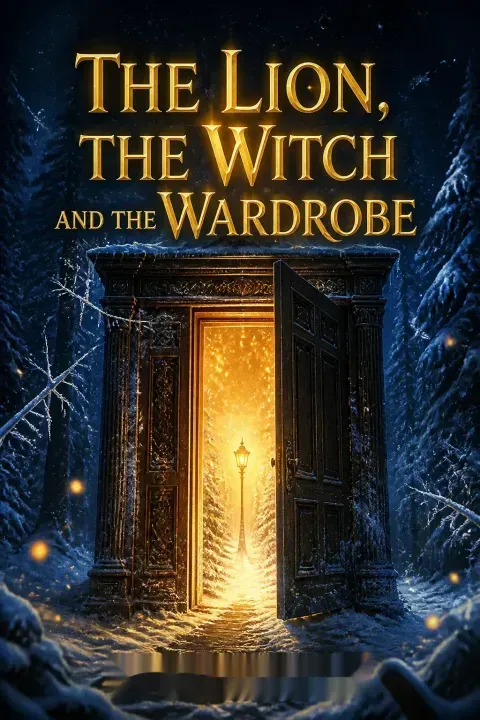


Plot Summary
The Faun at the Lamppost
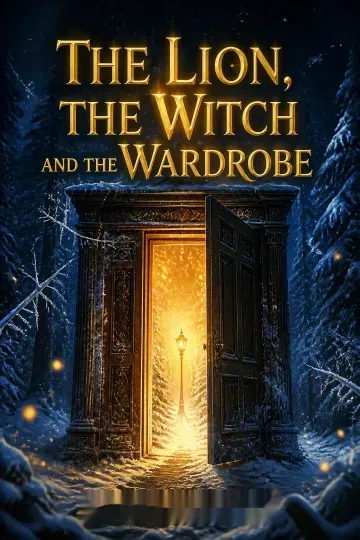
Lucy1 is the youngest of four siblings evacuated from wartime London to the country house of an old Professor.10 On a rainy afternoon, the children explore the rambling mansion and discover a spare room containing only a large wardrobe. When the others move on, Lucy1 lingers, curious about what lies inside.
She opens the door, breathes in the scent of mothballs and fur, and steps among the hanging coats. Instead of bumping against the wooden back panel, she feels cold air and something crunching underfoot that turns out to be snow.
She pushes forward and emerges in a moonlit forest where a lamppost burns inexplicably among the trees. From the shadows approaches a creature with a man's torso and goat's legs, carrying parcels and an umbrella: a faun named Tumnus,7 astounded to meet a human child in a land called Narnia.
The wardrobe is the perfect portal precisely because it is mundane. No spell, no incantation: just a child's curiosity and a door left open. Lucy's discovery establishes the story's epistemology: truth is encountered through trust in one's own experience, even when others dismiss it. The lamppost, burning inexplicably in a forest, serves as a boundary marker between worlds and between modes of reality. Tumnus's reaction, astonishment mixed with something darker, hints immediately that humans in Narnia are both rare and politically charged. The adventure begins not with heroic intention but with a child's simple desire to touch soft fur.
the Witch's Turkish Delight
Edmund2 slips into the wardrobe during hide-and-seek and finds himself alone in Narnia's snowy wood. The jingle of bells announces a sledge pulled by white reindeer and driven by a dwarf. On it sits a tall woman in white fur, gold-crowned, holding a long golden wand.
Her face is beautiful but rigid with cold authority. She demands to know what he is, and softens only when he stammers that he is a boy, a Son of Adam. From a copper bottle she conjures a hot drink, then a ribbon-tied box of Turkish Delight at his request.
The sweet is enchanted: each piece inflames an unquenchable craving. Between sticky mouthfuls, Edmund2 reveals his three siblings and Lucy's1 earlier visit. The Witch6 promises to make him prince, then king, if he delivers the others to her castle between two hills.
The Turkish Delight sequence is a clinical depiction of how addiction and manipulated desire work. The Witch does not force Edmund; she creates a craving and then positions herself as the sole supplier. The sweet itself is pleasure untethered from nourishment, a pure dopamine loop that inverts the eater's priorities. Edmund's willingness to believe her lies about making him king reveals his preexisting vulnerability: he feels slighted by Peter, overlooked by Susan, and annoyed by Lucy's goodness. The Witch offers him a story in which he is special, and he buys it because the alternative, being ordinary and wrong, is unbearable.
The Professor's Logic
Back in England, Lucy1 and Edmund2 emerge from the wardrobe together. When they find Peter3 and Susan,4 Lucy1 announces that Edmund2 has now seen Narnia too. But Edmund,2 asked directly by Peter,3 cruelly denies it all, claiming he and Lucy1 were only playing pretend. Lucy1 is devastated.
For days she endures Edmund's2 taunts while Peter3 and Susan,4 though gentler, clearly doubt her sanity. Worried, the older two consult the Professor.10 He listens to their entire account without interruption, then poses an unexpected question: since Lucy1 has always been truthful and shows no sign of madness, why should her story not be true?
He observes that other worlds might well have separate timelines. His final advice is that they should try minding their own business. The subject becomes taboo, and for a time the adventure seems over.
The Professor's intervention is a masterclass in epistemological humility. He does not claim Narnia exists; he merely demonstrates that the evidence favors Lucy's account over the alternatives. His logic exposes the older children's unwarranted assumption that the wardrobe must be ordinary because they have never encountered a magical one. The concept of separate timelines across worlds, which might seem fanciful, is treated by him as perfectly reasonable. His advice to mind their own business is not dismissal but wisdom: some truths cannot be argued into acceptance. They must be lived into.
Tumnus's Broken Door
Weeks later, fleeing a housekeeper-led tour group, all four children pile into the wardrobe. This time the magic admits them all. They tumble into the Narnian wood, and Peter3 immediately apologizes to Lucy1 for disbelieving her.
Donning fur coats from the wardrobe for warmth, they follow Lucy1 toward Tumnus's7 cave, but the door hangs splintered from its hinges. Inside, the cozy home is wrecked: crockery shattered, the fire stamped out, the portrait of old Tumnus7 slashed.
A notice nailed to the floor announces that Tumnus7 has been arrested by Maugrim,11 Captain of the Secret Police, for High Treason, harboring spies, and fraternizing with Humans. Guilt-stricken because Tumnus7 was arrested for helping her, Lucy1 insists they must rescue him. The others agree, though they have no food and no plan.
The ransacked cave transforms Narnia from a place of wonder into a place of consequence. Tumnus's arrest is the direct result of his mercy toward Lucy, which means her adventure has already altered the political landscape. The legalistic language of the arrest notice is crucial: the Witch's regime uses the forms of law to mask tyranny, a detail that will become central later. Lucy's immediate insistence on rescue, despite being the youngest and most frightened, demonstrates that moral clarity is not a function of age. The decision to press on, without food or plan, marks the transition from visitors to participants.
The Beavers' Prophecy
A robin guides the children to Mr. Beaver,8 who produces Lucy's1 handkerchief as a token from Tumnus.7 He leads them to his dam house, where Mrs. Beaver9 serves fresh trout, potatoes, and a marmalade roll. Over supper, Mr. Beaver8 reveals the truth: Aslan,5 the great Lion and true King, is on the move in Narnia.
At the name, each child feels a distinct physical response: Peter3 feels brave, Susan4 senses beauty, Lucy1 feels joy, and Edmund2 feels horror. Mr. Beaver8 recites a prophecy that when two Sons of Adam and two Daughters of Eve sit on the four thrones at Cair Paravel, the Witch's6 reign and life will end.
He also explains the Witch6 is not human but descended from Lilith and giants. During the conversation, no one notices Edmund2 silently slip out the door into the falling snow.
The differential reactions to Aslan's name are a masterful piece of psychological shorthand. Each response maps precisely to character: Peter the future warrior feels courage; Susan the aesthetic feels beauty; Lucy the faithful feels joy; Edmund the compromised feels dread. The prophecy provides the structural spine of the entire narrative: the children are not accidental tourists but destined sovereigns whose arrival triggers the endgame. The cozy domesticity of the Beavers' home, warm fire, fresh fish, sewing machine, is the last moment of safety before Edmund's betrayal fractures the group and launches the flight and pursuit.
To the Witch's Castle
Edmund2 trudges through bitter cold toward the Witch's6 castle, half-persuading himself she is the rightful queen and his siblings deserve whatever happens. He reaches a courtyard filled with stone statues of creatures frozen mid-motion, and mistakes a great stone lion for Aslan,5 scribbling a moustache on it with his pencil in petty triumph.
Inside, the wolf Maugrim11 challenges him at the threshold before admitting him to the Witch's6 hall. She is enraged he came alone, but when Edmund2 reveals his siblings are at the Beavers'8 house and that Aslan5 is in Narnia, her fury sharpens into urgency.
She orders her sledge prepared without bells and commands Maugrim11 to kill everyone at the dam. Edmund2 receives only stale bread and water, a prisoner in all but name.
Edmund's walk to the Witch's castle is a study in self-deception. He knows, at some level, that the Witch is evil, but he constructs a justifying narrative: she was nice to him, his siblings deserve punishment, she is probably the rightful queen. The scribbled moustache on the stone lion is a small, ugly act that reveals his need to diminish what threatens him. The courtyard of statues is the book's most chilling image, a museum of frozen victims that silently testifies to the Witch's true nature. Edmund's reception, stale bread and cold water, shatters his fantasy that he is an honored guest.
Father Christmas and the Thaw
The Beavers8 and three children flee into the night, sheltering in a secret cave. Next morning, bells jingle. Expecting the Witch,6 they instead see Father Christmas,12 huge and radiant, his arrival signaling that the Witch's6 power is cracking.
He distributes gifts: for Peter,3 a sword and shield for the coming battle; for Susan,4 a bow, arrows, and an ivory horn that summons help when blown; for Lucy,1 a diamond bottle of healing cordial and a small dagger for self-defense.
He promises Mrs. Beaver9 a new sewing machine and Mr. Beaver8 a repaired dam, then serves hot tea and vanishes. Meanwhile, spring erupts across Narnia: snow melts, streams roar, flowers carpet the valleys. The Witch's6 sledge bogs down in mud. She forces Edmund,2 bound and whipped, to march on foot.
Father Christmas's arrival is the narrative hinge: the long winter of the Witch's reign is ending, and the gifts he brings transform the children from refugees into combatants. Each gift is perfectly tailored: Peter's sword for leadership, Susan's horn for summoning aid, Lucy's cordial for healing. That these are tools not toys signals the story's shift from adventure to war. The parallel cuts between the children receiving gifts and Edmund suffering on the forced march create dramatic irony: two paths, two consequences, one converging destination. The spring thaw is not just weather but theophany, the visible sign of Aslan's approaching presence.
Aslan and the Deep Magic
The children and Beavers8 reach the hill of the Stone Table, where Aslan5 stands amid centaurs, dryads, and leopards, his golden presence both glorious and terrifying. Peter3 apologizes for his part in Edmund's2 downfall; Aslan5 says all shall be done.
A rescue party of centaurs and eagles snatches Edmund2 from the Witch's6 knife just as she prepares to kill him. After a private talk with Aslan,5 Edmund2 is visibly changed. The next day, the Witch6 arrives under safe conduct and invokes the Deep Magic from the Dawn of Time: every traitor's blood is her lawful property.
Aslan5 speaks with her privately, then announces she has renounced her claim. But his face carries undisclosed grief. That day, Peter3 kills Maugrim11 the wolf in his first battle, and Aslan5 knights him Sir Peter Wolf's-Bane.
The Deep Magic is Lewis's most ingenious narrative invention. By establishing that the Witch has a lawful claim on traitors, he prevents the conflict from being a simple contest of strength. Aslan cannot merely overpower her; he must satisfy the law, not circumvent it. This sets up the sacrificial logic that will dominate the next act. The private conversation between Aslan and the Witch, its contents withheld from the reader, creates a gap that only the subsequent sacrifice can fill. Peter's knighting after killing Maugrim marks his transition from protective older brother to warrior-king, a role he will need in the coming battle.
The Stone Table's Crack
That night, Susan4 and Lucy1 follow Aslan5 as he walks slowly, head drooping, toward the Stone Table. He allows them to accompany him but makes them stop at the hill's edge. From hiding, they watch the Witch's6 monstrous army bind, shave, and muzzle him. The crowd jeers, calling him a tame cat. The Witch6 raises her stone knife and, gloating that his sacrifice has won nothing, kills him.
The girls weep through the long, cold night beside his body. At dawn, a deafening crack splits the Stone Table in two. Aslan's5 body is gone. Then he stands before them, alive and radiant, mane regrown. He explains the Deeper Magic from Before the Dawn of Time: when a willing, innocent victim dies in a traitor's place, death itself reverses.
This is the emotional and theological center of the story. Aslan's willing submission is essential: he could destroy his tormentors with a single paw, but that would sidestep the Deep Magic rather than fulfill it. The humiliation before death, shaving, muzzling, jeering, strips away every layer of dignity, making the sacrifice absolute. The Deeper Magic, that love can satisfy the law in ways the law's administrators never imagined, is the story's central revelation. The girls' vigil through the night echoes every dark night of the soul, and the sunrise resurrection is earned by the depth of the preceding darkness.
Breath on Stone
Aslan5 carries Susan4 and Lucy1 on his back in a thrilling gallop to the Witch's6 castle. He leaps the wall in a single bound and walks among the stone statues in the courtyard, breathing on each one. Color floods back into cold stone: the great lion shakes his golden mane, Tumnus7 the faun springs to life, Giant Rumblebuffin13 rubs his eyes, and soon the courtyard teems with freed creatures.
Lucy1 and Tumnus7 dance with joy. Aslan5 orders the giant13 to smash the gates with his club, then leads the revived army toward the battlefield. On the field, Peter3 and Edmund2 fight desperately. The Witch6 has been turning soldiers to stone with her wand, and Aslan's5 forces are outnumbered and losing ground until the rescued army charges into the fray.
The resurrection of the statues is a cascade of liberation. Each breath of Aslan reverses a specific act of tyranny, turning cold stone back into warm flesh. It is redemption made visible: not abstract forgiveness but the concrete restoration of frozen lives to motion and joy. Lucy's reunion with Tumnus brings the story full circle, rewarding her initial faith with the sight of her first Narnian friend restored. The giant's casual destruction of the castle gates literalizes the collapse of the Witch's power structure. Aslan does not fight alone; he empowers the liberated to join the battle.
The Four Thrones Filled
During the battle, Edmund2 fights through three ogres to reach the Witch.6 Instead of attacking her directly, he smashes his sword down on her wand, shattering it. The act costs him severe wounds, but it stops the petrification of Aslan's5 army. Then Aslan5 lunges and kills the Witch.6
Lucy1 uses her cordial to heal Edmund2 and other wounded. In the aftermath, the four children are crowned at Cair Paravel: Peter3 the Magnificent, Susan4 the Gentle, Edmund2 the Just, Lucy1 the Valiant. They rule wisely for many years, growing into noble adults.
One day, hunting the White Stag, they find the lamppost in the forest. Pushing through coats that become branches, they tumble out of the wardrobe, children again, on the same day they left. The Professor10 believes their story and assures them Narnia will find them when it is time.
Edmund's redemption is earned through specific, costly action. He targets the wand, not the Witch, recognizing that disarming evil's tools is wiser than attacking evil directly. His wounds are the physical price of moral recovery, and Lucy's healing cordial restores him. The coronation fulfills the prophecy and completes each child's arc: Peter's courage becomes leadership, Susan's caution becomes gentleness, Edmund's treachery becomes justice, Lucy's faith becomes valor. The return through the wardrobe, finding no time has passed, affirms the Professor's insight about separate temporalities. The Professor's final words about not seeking Narnia but being found by it transform the wardrobe from a tool into a grace.
Analysis
The Lion, the Witch6 and the Wardrobe endures because it understands something essential about moral growth: it happens not through instruction but through consequence. The Pevensie children enter Narnia as wartime evacuees, already displaced, already aware that the adult world is capable of violence. What they find is a world where that violence has been frozen into permanent stasis, a hundred-year winter that serves as metaphor for tyranny's deadening effect on the soul.
Edmund's2 arc is the story's engine, and it is remarkable for its psychological realism within a fantasy frame. His betrayal does not spring from innate evil but from a constellation of painfully ordinary feelings: resentment of his older brother,3 irritation at being the middle child, the seductive pleasure of being told he is special. The Turkish Delight is not a magical compulsion but a supernaturally intensified version of ordinary temptation: it makes him want something, and the wanting reshapes his loyalties. His redemption is similarly granular. It requires suffering, a private reckoning with Aslan5 that the narrative wisely leaves undescribed, and finally a battlefield act that costs him real blood.
The Deep Magic and Deeper Magic form the story's theological architecture. By granting the Witch6 legal authority over traitors, Lewis creates a cosmos in which evil is not merely powerful but entitled. Aslan5 cannot punch his way to victory. The law must be satisfied, and it is satisfied through substitution. This is the story's central claim: that sacrificial love fulfills the law rather than breaking it, that death can be made to work backward.
The four children are not merely protagonists but a taxonomy of human response to the transcendent: faith (Lucy1 ), courage (Peter3 ), caution (Susan4 ), and repentance (Edmund2 ). Together they form a complete picture of how ordinary people, flawed and frightened, can rise to sovereignty. Their return to childhood in England, having lived full adult lives in Narnia, carries a particular ache: they have been kings and queens, and now they must be children again, keeping the secret of their own greatness.
Review Summary
The Lion, the Witch and the Wardrobe is a beloved children's fantasy novel that has captivated readers for generations. Many reviewers praise its magical world, memorable characters, and Christian allegory. While some criticize its simplistic morality and dated elements, most appreciate the story's timeless appeal and imaginative storytelling. Readers often note the book's ability to enchant both children and adults, with many fondly recalling childhood experiences of discovering Narnia. The novel's enduring popularity is attributed to its themes of bravery, sacrifice, and the triumph of good over evil.
People Also Read



Characters
Lucy Pevensie
Faithful discoverer of NarniaLucy is the youngest Pevensie and the first to discover Narnia. She is defined by an almost preternatural truthfulness and a capacity for wonder that her older siblings initially dismiss as fantasy. On her first visit she meets Mr. Tumnus7 and, by forgiving his intended betrayal and showing him kindness, sets in motion alliances that will help topple the Witch6. Her faith in her own experience never wavers, even when everyone she loves believes she is lying or mentally ill. Father Christmas12 gives her a healing cordial rather than a weapon, aligning her role with restoration and mercy. As Queen Lucy the Valiant, she becomes known for a courage rooted not in aggression but in an enduring openness to joy and a fierce loyalty to those she loves.
Edmund Pevensie
Resentful brother turned just kingEdmund begins the story consumed by resentment. He feels overshadowed by Peter3, dismissed by Susan4, and irritated by Lucy's1 simple goodness. The White Witch6 exploits this vulnerability with enchanted Turkish Delight that creates a physical craving mirrored by his deeper hunger for significance. His choices driven by this craving put his siblings in grave danger, but suffering the consequences of the Witch's6 true cruelty forces him to confront what he has become. A transformative encounter with Aslan5 sets him on a path toward redemption that requires genuine courage and sacrifice. He ultimately becomes King Edmund the Just, his painful past making him a wiser and more merciful ruler than he might otherwise have been.
Peter Pevensie
Eldest brother and High KingAs the eldest, Peter carries the weight of responsibility from the start. He is protective of his siblings and capable of admitting when he is wrong, as when he apologizes to Lucy1 upon entering Narnia. His first battle, killing the wolf Maugrim11 to save Susan4, earns him knighthood from Aslan5 as Sir Peter Wolf's-Bane. He receives a sword and shield from Father Christmas12 and is shown by Aslan5 the distant castle of Cair Paravel where he will rule as High King. His development traces the arc from boyish authority, bossing his siblings around, to tested sovereignty, leading an army and making life-and-death decisions under pressure. He becomes King Peter the Magnificent, a warrior and leader of genuine stature.
Susan Pevensie
Cautious sister and gentle queenSusan is practical, cautious, and often the voice of restraint among her siblings. She suggests wearing the fur coats for warmth, worries about food and provisions, and is the most reluctant to press deeper into Narnia. Her skepticism about Lucy's1 story, though gentler than Edmund's2 mockery, still causes pain. Yet she also shows genuine courage: she agrees to the mission to rescue Tumnus7, follows Aslan5 to the Stone Table, and witnesses his sacrifice through a long, cold night. Father Christmas12 gives her a bow and arrows for emergencies and an ivory horn that summons help when blown. She becomes Queen Susan the Gentle, her practical nature maturing into gracious, grounded wisdom rather than martial prowess.
Aslan
The great Lion, true KingAslan is the great Lion, true King of Narnia, and son of the Emperor-beyond-the-Sea. He is never tame, never safe, but always good. His presence provokes immediate, visceral responses: courage, delight, joy, or dread, depending on the heart of the beholder. He understands the Deep Magic that governs Narnia and will go to any length to satisfy its demands while saving those he loves. He commands the loyalty of every good creature in Narnia, from centaurs and dryads to the smallest field mice. He breathes life where there is death and brings spring where there was endless winter. He comes and goes as he pleases, belonging to no one, and his purposes are never fully predictable.
The White Witch
Usurper queen of frozen NarniaThe White Witch, Jadis, is the self-proclaimed Queen of Narnia. She is not human but descended from Lilith and giants. She has held Narnia in a hundred-year winter through her magic, making it always winter but never Christmas. Her golden wand turns living creatures to stone, and she rules through a network of spies and secret police. Her beauty is cold and severe, her charm entirely instrumental, deployed only to manipulate. She understands the ancient laws that govern Narnia and wields them like weapons. She represents a particular kind of evil: not chaos but frozen order, a world where nothing grows, nothing changes, and no warmth ever comes.
Mr. Tumnus
The faun who befriends LucyThe faun who becomes Lucy's1 first friend in Narnia. He initially serves the Witch6 as a kidnapper but his conscience rebels upon meeting Lucy's1 kindness. He risks his safety to escort her back to the lamppost, then gives her handkerchief to Mr. Beaver8 as a token of trust. His subsequent arrest for High Treason catalyzes the children's decision to stay and fight in Narnia rather than return home. Aslan5 later revives him from stone, and he serves the four monarchs loyally at Cair Paravel for many years.
Mr. Beaver
Guide and loyal informantA practical, warm-hearted beaver who serves as the children's guide through Narnia. He recognizes Edmund's2 treachery immediately, having learned over years of the Witch's6 reign to spot those who have eaten her enchanted food. He leads the children toward Aslan5 and provides crucial exposition about the ancient prophecy, the Witch's6 true origins, and Aslan's5 nature. His dam house offers the last moment of domestic safety before the group must flee into the wilderness. He is brave, resourceful, and unwaveringly loyal to Aslan5.
Mrs. Beaver
Motherly and practical survivorMr. Beaver's8 wife, a motherly and relentlessly practical figure. She insists on packing food and supplies before fleeing the Witch's6 wolves, maintains calm during crisis, and provides warmth and common sense to the frightened children. Her sewing machine, which she frets over leaving behind during the escape, is later replaced by Father Christmas12. She represents domestic resilience in the face of tyranny: the refusal to let fear prevent the ordinary acts of care and preparation that sustain life.
Professor Digory Kirke
Wise old scholar and hostThe old scholar who hosts the Pevensie children during their wartime evacuation. His logical defense of Lucy's1 story surprises Peter3 and Susan4, who expected a grown-up to dismiss her account as fantasy. He applies genuine reasoning to the evidence and concludes Lucy1 is probably telling the truth. His advice to mind their own business conceals deeper wisdom about the nature of other worlds. After the children's return from Narnia, he believes their entire story without hesitation and hints that he knows more than he reveals.
Maugrim
Captain of the Secret PoliceThe Witch's6 chief wolf and Captain of her Secret Police. He is fierce, cunning, and utterly obedient to his mistress6. He leads the raid on the Beavers'8 house and later confronts Susan4 at the Stone Table, where Peter3 kills him in single combat, earning the boy his knighthood.
Father Christmas
Bearer of gifts and hopeHis arrival signals the breaking of the Witch's6 power over Narnia. He distributes gifts to the children that are tools for the coming conflict, not toys, each suited to the recipient's future role. His very presence, after a century of being kept out, announces that Aslan5 is near and winter is ending.
Giant Rumblebuffin
Stone giant revived by AslanA good-natured giant from a respected Narnian family, turned to stone by the Witch6. Aslan5 revives him with his breath, and Rumblebuffin repays the favor by smashing the castle gates and towers with his club, freeing the liberated prisoners to join the battle.
Plot Devices
The Wardrobe
Portal between two worldsThe wardrobe stands in a spare room in the Professor's10 country house. Made from wood of a Narnian tree, it serves as an unpredictable threshold between England and Narnia. The children cannot enter at will; the passage opens when Narnia needs them. Its most crucial property is temporal disjunction: years in Narnia consume no time at all in England, so the children can live full adult lives as monarchs and return as the children they were. The wardrobe does not guarantee passage, nor can the same route be used twice. It functions as the boundary between ordinary childhood and extraordinary adventure, between the world of air-raids and the world of talking beasts.
Turkish Delight
Enchanted addictive foodConjured by the White Witch6 from a copper bottle, this Turkish Delight is enchanted to create an insatiable craving. Anyone who tastes it wants more and more, to the point of self-destruction if allowed. The Witch6 gives it to Edmund2 to create a dependency she can exploit. After the initial taste, she withholds it, using his craving as leverage to demand he bring his siblings to her. It functions as both a literal addiction and a symbol of how small compromises create escalating moral debt. The sweetness that should satisfy only deepens the hunger.
The Witch's Wand
Turns living creatures to stoneA long, straight, golden wand that is the White Witch's6 primary weapon. With a touch or gesture, she can turn any living creature into a stone statue, frozen in whatever pose they held at the moment of petrification. Her castle courtyard is filled with dozens of these victims, a silent museum of her enemies. The wand represents her power to arrest life itself, to halt growth, change, and resistance. It makes her reign one of permanent stasis: a world where nothing moves, nothing grows, nothing threatens her rule.
The Deep Magic
Cosmic law of traitor's bloodThe Deep Magic is the fundamental law established by the Emperor-beyond-the-Sea at Narnia's creation. Inscribed on the Stone Table, on the Emperor's scepter, and on the firestones of the Secret Hill, it decrees that every traitor belongs to the White Witch6 as her lawful prey. This gives her an unassailable legal claim on Edmund's2 blood after his betrayal. Aslan5 cannot simply overpower her to save Edmund2; the law must be satisfied. This device transforms the conflict from a contest of strength into a legal and moral puzzle that only sacrificial love can solve.
Lucy's Healing Cordial
Restores the wounded and dyingA small diamond bottle containing juice distilled from fire-flowers that grow in the mountains of the sun. Given to Lucy1 by Father Christmas12, a few drops of this cordial can restore anyone who is wounded, sick, or at the point of death. It establishes Lucy's1 role as healer rather than combatant: while Peter3 receives a sword, she receives the power to preserve life. The cordial is a gift that values restoration over destruction, matching Lucy's1 own nature. It embodies the principle that in the fight against evil, the capacity to heal is as essential as the capacity to fight.
FAQ
Basic Details
What is The Lion, the Witch and the Wardrobe about?
- Children discover magical world: Four siblings, Peter, Susan, Edmund, and Lucy Pevensie, evacuate to a professor's house during WWII and discover a magical world called Narnia through a wardrobe.
- Narnia under evil rule: Narnia is under the tyrannical rule of the White Witch, who has plunged the land into an eternal winter, and the children become involved in the struggle against her.
- Prophecy and destiny: The children are drawn into a prophecy involving the return of Aslan, the great lion, and their roles as kings and queens to restore Narnia to its former glory.
Why should I read The Lion, the Witch and the Wardrobe?
- Classic fantasy adventure: It's a foundational work of fantasy literature, offering a captivating blend of adventure, magic, and mythical creatures.
- Exploration of good vs evil: The story delves into the timeless battle between good and evil, exploring themes of sacrifice, redemption, and the importance of courage and loyalty.
- Rich symbolism and allegory: The narrative is rich with symbolism and allegorical elements, inviting readers to explore deeper meanings and interpretations beyond the surface plot.
What is the background of The Lion, the Witch and the Wardrobe?
- World War II backdrop: The story is set against the backdrop of World War II, with the children being evacuated from London due to air raids, which provides a context for their displacement and search for refuge.
- Christian allegorical elements: C.S. Lewis, a Christian author, incorporates allegorical elements, with Aslan representing Christ, the White Witch representing evil, and the story reflecting themes of sacrifice and redemption.
- Inspiration from mythology and folklore: The book draws inspiration from various mythologies and folklore, including fauns, centaurs, and other mythical creatures, creating a rich and imaginative world.
What are the most memorable quotes in The Lion, the Witch and the Wardrobe?
- "Wrong will be right, when Aslan comes in sight": This quote, part of a rhyme, foreshadows Aslan's return and the restoration of Narnia, encapsulating the hope and prophecy central to the story.
- "Once a king or queen in Narnia, always a king or queen": This quote emphasizes the lasting impact of their experiences in Narnia and their eternal roles as rulers, highlighting the theme of destiny.
- "Safe?" said Mr. Beaver; "Who said anything about safe? 'Course he isn't safe. But he's good. He's the King, I tell you.": This quote reveals the complex nature of Aslan, emphasizing that true goodness doesn't always equate to safety, and highlights the awe and respect he commands.
What writing style, narrative choices, and literary techniques does C.S. Lewis use?
- Third-person omniscient narration: Lewis employs a third-person omniscient narrator, allowing him to provide insights into the thoughts and feelings of multiple characters, enhancing the reader's understanding of the story's complexities.
- Simple and accessible language: The writing style is straightforward and accessible, making the story engaging for both children and adults, while still conveying profound themes and ideas.
- Foreshadowing and symbolism: Lewis uses foreshadowing to hint at future events and employs rich symbolism, such as the eternal winter representing the Witch's evil reign, to add layers of meaning to the narrative.
Hidden Details & Subtle Connections
What are some minor details that add significant meaning?
- Mothballs in the wardrobe: The presence of mothballs in the wardrobe is a seemingly mundane detail, but it emphasizes the ordinary nature of the object, contrasting with the extraordinary world it conceals, and highlighting the magical transition.
- The robin's red breast: The robin with a red breast acts as a guide, leading the children to the Beavers, and its vibrant color symbolizes hope and guidance in the midst of the wintry landscape.
- The broken Stone Table: The cracking of the Stone Table after Aslan's sacrifice is a visual representation of the breaking of the Deep Magic and the triumph of a deeper, more powerful magic, signifying the reversal of death.
What are some subtle foreshadowing and callbacks?
- Edmund's Turkish Delight craving: Edmund's insatiable craving for Turkish Delight foreshadows his susceptibility to the White Witch's temptations and his betrayal of his siblings, highlighting his weakness.
- The mention of the four thrones: The recurring mention of the four thrones at Cair Paravel foreshadows the children's destiny as rulers of Narnia, emphasizing the importance of their roles in the prophecy.
- The Professor's logic: The Professor's emphasis on logic and the three possibilities (lying, madness, or truth) foreshadows the deeper, more complex magic at play in Narnia, and his acceptance of Lucy's story.
What are some unexpected character connections?
- The White Witch and Lilith: The revelation that the White Witch is not human but descended from Lilith, Adam's first wife, connects her to a deeper, more ancient evil, adding a layer of mythological depth to her character.
- Mr. Tumnus and his father: The picture of Mr. Tumnus's father in his cave serves as a reminder of his moral compass and the values he is betraying by serving the White Witch, highlighting his internal conflict.
- Giant Rumblebuffin and the Buffin family: The mention of Giant Rumblebuffin's respected family adds a layer of depth to the giants of Narnia, showing that not all giants are evil, and that there are good giants with traditions.
Who are the most significant supporting characters?
- Mr. and Mrs. Beaver: They provide crucial guidance and support to the children, offering them shelter, food, and information about Narnia, and their loyalty and resourcefulness are essential to the plot.
- Mr. Tumnus: His initial kindness to Lucy and his subsequent internal conflict highlight the struggle between good and evil, and his eventual defiance of the White Witch is a pivotal moment.
- Father Christmas: His appearance signifies the weakening of the White Witch's power and the hope of spring, and his gifts to the children are not just presents but tools for their journey.
Psychological, Emotional, & Relational Analysis
What are some unspoken motivations of the characters?
- Edmund's desire for recognition: Beyond the Turkish Delight, Edmund's betrayal stems from a deep-seated desire for recognition and power, feeling overlooked by his siblings, and wanting to be seen as important.
- Susan's fear of the unknown: Susan's initial reluctance to fully embrace Narnia stems from a fear of the unknown and a desire for safety and practicality, highlighting her struggle to accept the magical world.
- Peter's burden of responsibility: Peter's eagerness to take on the leadership role is driven by a sense of responsibility and a desire to protect his siblings, but also a need to prove himself as the eldest.
What psychological complexities do the characters exhibit?
- Lucy's unwavering faith: Lucy's unwavering faith in Narnia and Aslan, despite her siblings' disbelief, reveals her strong sense of intuition and her ability to see beyond the surface, highlighting her spiritual depth.
- Edmund's internal conflict: Edmund's internal struggle between his desire for power and his guilt over betraying his family showcases the complexities of human nature and the pull of temptation.
- Peter's self-doubt: Despite his bravery, Peter experiences moments of self-doubt and insecurity, particularly when faced with the responsibility of leading the battle, revealing his vulnerability.
What are the major emotional turning points?
- Lucy's initial rejection: Lucy's emotional distress when her siblings dismiss her Narnia story highlights the pain of disbelief and the importance of validation, and her determination to prove her truth.
- Edmund's realization of the Witch's cruelty: Edmund's growing discomfort and guilt as he witnesses the Witch's cruelty marks a turning point in his character arc, leading him towards redemption.
- The children's grief over Aslan's death: The children's profound grief and despair over Aslan's death underscores the depth of their love for him and the seeming hopelessness of their situation, making his resurrection all the more powerful.
How do relationship dynamics evolve?
- Sibling rivalry to unity: The initial sibling rivalry and mistrust, particularly between Edmund and the others, evolves into a strong bond of loyalty and unity as they face the challenges of Narnia together.
- The children and Aslan: The children's relationship with Aslan evolves from awe and reverence to a deep sense of love and trust, highlighting his role as a guide and protector.
- The Beavers and the children: The relationship between the Beavers and the children develops from a practical alliance to a warm and familial bond, showcasing the importance of friendship and loyalty.
Interpretation & Debate
Which parts of the story remain ambiguous or open-ended?
- Aslan's true nature: While Aslan is presented as a Christ-like figure, his exact nature and origins remain somewhat ambiguous, inviting readers to interpret his role and significance in different ways.
- The nature of the Deep Magic: The precise workings and origins of the Deep Magic and the Deeper Magic are not fully explained, leaving room for interpretation and speculation about the nature of good and evil.
- The children's return to the real world: The children's return to their own world and the nature of their memories of Narnia are left somewhat open-ended, suggesting that their experiences have a lasting impact on them.
What are some debatable, controversial scenes or moments in The Lion, the Witch and the Wardrobe?
- Aslan's sacrifice: Aslan's willingness to sacrifice himself in Edmund's place can be interpreted as both a powerful act of love and a controversial act of self-destruction, sparking debate about the nature of sacrifice.
- The Witch's claim to Edmund: The Witch's claim to Edmund based on the Deep Magic raises questions about the nature of justice and whether the law should always be followed, even when it seems unjust.
- The portrayal of gender roles: The story's portrayal of gender roles, with Susan being given a bow but told not to fight, can be seen as both a reflection of its time and a point of debate about the roles of women in fantasy literature.
The Lion, the Witch and the Wardrobe Ending Explained: How It Ends & What It Means
- The children's coronation: The coronation of the children as kings and queens signifies the restoration of Narnia and the fulfillment of prophecy, highlighting the themes of destiny and leadership.
- Aslan's departure: Aslan's quiet departure after the coronation emphasizes his wild and untamed nature, and his role as a guide rather than a constant presence, suggesting that the children must now rule on their own.
- The return through the wardrobe: The children's return to their own world through the wardrobe, and the Professor's advice, suggests that their experiences in Narnia are real and will continue to influence their lives, and that they will return to Narnia when the time is right.
The Chronicles of Narnia (Chronological Order) Series
About the Author
Download PDF
Download EPUB
.epub digital book format is ideal for reading ebooks on phones, tablets, and e-readers.








































