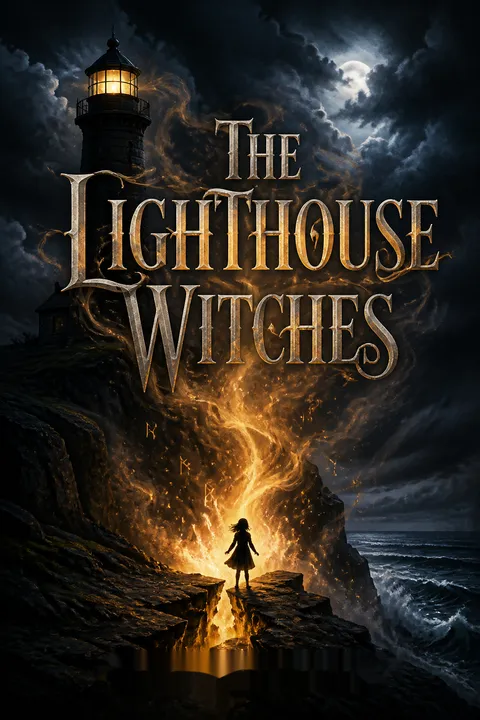

Plot Summary
Arrival at Lòn Haven
Olivia (Liv) Stay, a struggling artist and single mother, arrives with her three daughters—Saffy, Luna, and Clover—on the remote Scottish island of Lòn Haven. Hired to paint a mural in the decrepit lighthouse called the Longing, Liv hopes for a fresh start. The island's wild beauty is matched by its isolation and the sense of something ancient lurking beneath the surface. The family's arrival is marked by exhaustion, tension, and the feeling of being watched by the landscape itself. The lighthouse, perched on black rocks and battered by the sea, is both a symbol of hope and a harbinger of the uncanny. As they settle into the bothy, the girls' curiosity and Liv's unease foreshadow the unraveling of their family and the island's secrets.
The Longing's Shadow
The Longing is more than a building; it's a vessel of memory and dread. Liv explores its damp, echoing interior, discovering strange symbols, graffiti, and a sense of déjà vu. The lighthouse's history is layered—built atop ancient ruins, it's a palimpsest of violence and longing. The girls are both fascinated and frightened, especially after a doll is mistaken for a corpse. Liv's artistic commission is complicated by the cryptic mural design, filled with runes and symbols that hint at occult meanings. The islanders' wariness of outsiders and the lighthouse's reputation as a place of tragedy deepen the sense of foreboding. The Longing becomes a character in its own right, its presence shaping the family's fate.
Runes and Family Tensions
Liv's attempts to decipher the mural's runes lead to arguments with her eldest, Saffy, whose teenage rebellion is sharpened by grief and displacement. The runes—swastikas, triangles, and ancient symbols—carry ambiguous meanings, from infinity to protection, but also evoke dark histories. Saffy's knowledge of mythology and her own emotional wounds surface in a heated exchange that ends with Liv crossing a line and slapping her daughter. The family's fractures are exposed, and Saffy storms out, setting in motion a chain of events that will echo through time. The runes become a metaphor for the tangled, painful connections between past and present, mother and daughter.
Saffy's Disappearance
Saffy's absence is at first dismissed as teenage sulking, but soon becomes a crisis. Liv's frantic search is met with indifference and suspicion from the islanders and police. The family's history of loss—Liv's partner's death, their rootlessness—intensifies the panic. Saffy's own perspective reveals her anger at her mother, her longing for normalcy, and her sense of betrayal. The island's forests and caves become both sanctuary and threat. Saffy's disappearance is not just a personal tragedy but a re-enactment of the island's history of missing children, feeding the myth of wildlings and the community's fear of the uncanny.
Witch Trials Remembered
The island's past is revealed through the grimoire of Patrick Roberts, chronicling the witch trials of 1662. Women—healers, mothers, daughters—are accused, tortured, and burned, their confessions extracted through brutality. The narrative of Finwell, Amy, and Agnes, and the curse they lay upon the island, becomes a living memory. The trauma of the witch hunts is not just historical but generational, shaping the island's psyche and the fate of its inhabitants. The grimoire's stories blur the line between history and myth, suggesting that the violence of the past is never truly buried.
The Wildling Myth
The legend of wildlings—fae or changelings who take the form of lost children—pervades the island. The community's response to unexplained disappearances is shaped by fear: children who return with strange marks are suspected of being wildlings and are sometimes killed by their own families. The women of the island, including Liv's new friends, form a secretive committee to "protect" the community, perpetuating cycles of violence. The wildling myth becomes a way to explain the unexplainable, but also a justification for atrocity. Liv is drawn into this web of belief, forced to confront the possibility that her own children could be at risk.
Luna's Haunted Adulthood
In 2021, Luna, now an adult and pregnant, is haunted by fragmented memories of her childhood on Lòn Haven. Abandoned by her mother, she has spent decades searching for her missing sisters, Saffy and Clover. Her life is marked by anxiety, failed relationships, and a compulsion to find answers. When the police call to say Clover has been found, Luna's hope is rekindled, but the reunion is uncanny: Clover is still a child, unchanged by time. Luna's struggle to reconcile her memories with reality, and to care for a sister who defies explanation, becomes a journey into the heart of trauma and the persistence of the past.
Clover Returns, Unchanged
Clover's reappearance is both miracle and mystery. She is physically unchanged from the day she disappeared, still seven years old, with no memory of the intervening decades. Medical and psychological explanations fail; the only clue is a strange mark on her hip—four numbers, like a brand. Luna's attempts to care for Clover are complicated by the child's erratic behavior, emotional distance, and the growing suspicion that something supernatural is at work. The island's legends and Luna's own buried memories converge, forcing her to question the nature of identity, time, and family.
The Mark and the Mystery
The mark on Clover's hip—2021—echoes the wildling myth and the stories from the grimoire. Similar marks are found on other children in the island's history, always associated with disappearances and returns. Luna discovers a faint number on her own leg, suggesting she too may have been touched by the island's magic. The marks become a key to understanding the true nature of the wildlings: not fae, but children displaced in time by the cave beneath the Longing. The mystery deepens as Luna's memories return, revealing the trauma and violence that shaped her childhood.
The Island's Dark History
The narrative weaves together the personal and the communal, showing how the island's history of witch hunts, wildling killings, and missing children is perpetuated by fear and superstition. The women's committee, the police, and even Liv herself become complicit in acts of violence justified by myth. The cave beneath the Longing is both a literal and symbolic site of trauma, a place where time fractures and the past bleeds into the present. The island's beauty is inseparable from its darkness, and the characters' fates are bound to its history.
The Cave Beneath Time
The cave beneath the Longing—Witches Hide—is revealed as a portal through time. Children who enter may emerge in another era, marked by the year they arrive. The wildlings are not monsters, but victims of a curse born of injustice and grief. Saffy, Clover, and others are displaced, their families left to mourn or fear them. The cave's magic is both a punishment and a possibility, offering escape but also perpetuating cycles of loss. The truth of the cave reframes the island's tragedies, exposing the cost of ignorance and the need for understanding.
Mothers and Daughters Lost
Liv's story is one of love and failure, hope and despair. Her attempts to protect her daughters are undermined by illness, poverty, and the weight of history. The loss of Saffy and Clover, the violence she is drawn into, and her own disappearance through the cave are acts of both agency and helplessness. The narrative explores the complexity of motherhood—the desire to save, the inevitability of loss, and the possibility of forgiveness. The daughters, in turn, are shaped by their mother's choices, their own longing for connection, and the scars of abandonment.
The Ritual and the Knife
The climax of the island's superstition is a ritual in the burning trees, where Liv is pressured to kill a "wildling" version of Luna. The scene is a harrowing exploration of how fear can override love, and how communities can demand sacrifice in the name of safety. Liv's refusal to go through with the killing, and her desperate attempt to save her daughter, mark a turning point. The knife, the rope, and the fire are symbols of both the violence of the past and the possibility of breaking the cycle.
Time's Stigmata Revealed
The marks on the children's skin are revealed to be not signs of fae possession, but the stigmata of time travel. Each number is the year to which the child has been displaced. The wildlings are not monsters, but lost children, victims of a curse born of injustice and grief. The realization reframes the island's tragedies, exposing the cost of ignorance and the need for understanding. The narrative's supernatural elements are grounded in the psychological and historical, making the magic both wondrous and tragic.
The Burning Trees
The burning trees, site of ritual killings, become the stage for Liv's final confrontation with the island's legacy. Pursued by the women's committee and the weight of expectation, Liv chooses to save her daughter rather than perpetuate the violence. The escape through the forest, the pursuit, and the eventual fall into the cave are moments of terror and liberation. The burning trees are both a literal and symbolic site of transformation, where the past is confronted and the future made possible.
Reunion and Reckoning
In the present, Luna, Clover, and Saffy are finally reunited, each bearing the scars of their journeys. Liv, having survived her own passage through time, is found and cared for by Finn. The family's reunion is bittersweet, marked by joy, regret, and the knowledge that the past cannot be undone. The truth about the cave, the wildlings, and the island's history is finally acknowledged. The characters must reckon with what they have lost, what they have learned, and what they can forgive.
The Past in the Present
The narrative closes with the family attempting to build new lives, shaped by the lessons of the past. The cave is destroyed to prevent further tragedy, and the island's history is honored through remembrance rather than repetition. Luna, now a mother herself, reflects on the meaning of home, family, and the scars—literal and metaphorical—that shape identity. The past is not erased, but integrated, allowing for healing and hope.
Forgiveness and Home Scars
The final chapter is one of acceptance and forgiveness. Liv, dying but at peace, is reunited with her daughters. The family's story is one of survival, resilience, and the power of love to transcend even the deepest wounds. The metaphor of the limpet's home scar—a mark worn into stone by persistence and belonging—captures the novel's message: that we are shaped by our histories, but not doomed to repeat them. The narrative ends with a sense of closure, the possibility of new beginnings, and the enduring strength of connection.
Analysis
A meditation on trauma, superstition, and the power of narrativeThe Lighthouse Witches is a haunting exploration of how communities and individuals respond to loss, fear, and the unknown. By weaving together historical injustice (the witch trials), folklore (wildlings), and contemporary family drama, the novel interrogates the ways in which stories—true or not—shape our actions and identities. The wildling myth, born of real violence and grief, becomes both a shield against and a justification for further harm. The novel's supernatural elements are grounded in psychological realism, making the magic both believable and tragic. At its heart, the story is about mothers and daughters, the scars we inherit, and the possibility of breaking cycles of violence through understanding and forgiveness. The cave, the marks, and the lighthouse are all metaphors for the persistence of the past and the need to confront it. Ultimately, the novel suggests that healing is possible—not by erasing history, but by integrating it, honoring the lost, and choosing compassion over fear. The "home scar" of the limpet becomes a symbol of belonging, resilience, and the enduring power of love.
Review Summary
People Also Read
Characters
Olivia (Liv) Stay
Liv is the emotional core of the novel—a mother driven by love, guilt, and desperation. Her journey is one of seeking safety and meaning for her daughters after a series of losses. Liv's psychological complexity is shaped by trauma: the death of her partner, poverty, illness, and the burden of single motherhood. Her artistic sensibility makes her sensitive to the island's beauty and its darkness. Liv's relationship with her daughters is fraught—she is both protector and, at times, a source of pain. Her involvement in the island's rituals, her struggle with belief and skepticism, and her ultimate sacrifice and survival make her a deeply human figure. Liv's development is marked by increasing self-awareness, the courage to break cycles of violence, and the capacity for forgiveness.
Luna Stay
Luna is both a victim and a survivor, her childhood shattered by abandonment and loss. As an adult, she is driven by the need to understand her past and to find her missing sisters. Luna's psychological landscape is marked by anxiety, fragmented memory, and a longing for connection. Her work in children's mental health reflects her desire to heal what is broken, both in herself and others. Luna's journey is one of reclaiming agency, piecing together the truth, and learning to forgive—not just her mother, but herself. Her relationship with Clover is both nurturing and fraught, as she confronts the uncanny reality of her sister's unchanged childhood. Luna's arc is one of integration, moving from victimhood to wholeness.
Sapphire (Saffy) Stay
Saffy embodies the pain and anger of adolescence, sharpened by grief and displacement. Her relationship with Liv is contentious, marked by defiance and longing for normalcy. Saffy's disappearance is both an act of rebellion and a cry for help. Her journey through the cave, her experience of time displacement, and her eventual reunion with her family are marked by trauma and resilience. Saffy's psychological development is shaped by betrayal, shame, and the struggle to find her place in a world that has moved on without her. Her eventual acceptance and forgiveness are hard-won, making her arc one of growth and self-discovery.
Clover Stay
Clover is the youngest, her innocence and vulnerability making her disappearance especially tragic. Her return, unchanged by time, is both miraculous and unsettling. Clover's psychological state is marked by confusion, fear, and a longing for her mother. Her behavior is at times erratic, reflecting the trauma of displacement and the burden of being seen as "other." Clover's journey is one of adaptation, as she learns to trust Luna and to find her place in a changed world. Her presence is a constant reminder of the island's magic and the cost of its secrets.
Patrick Roberts
Patrick is both a chronicler and a participant in the island's history. His grimoire provides the narrative of the witch trials, and his obsession with the past drives much of the plot. Patrick's psychological makeup is shaped by loss, longing, and a sense of responsibility for the island's curse. His actions—both in the past and present—are driven by a desire to undo wrongs, but also by a dangerous willingness to sacrifice others. Patrick's development is a cautionary tale about the dangers of obsession and the inability to let go.
Isla Kissick
Isla is both a friend and a threat to Liv. As housekeeper, café owner, and leader of the women's committee, she embodies the island's dual nature: welcoming and protective, but also suspicious and capable of violence. Isla's belief in the wildling myth and her willingness to enforce its rituals make her a complex antagonist. Her psychological motivations are rooted in grief, loss, and the need for control. Isla's arc is one of tragic complicity, her actions both understandable and unforgivable.
Finn McAllen
Finn is a source of stability and kindness, both to Liv and her daughters. His own experiences of loss and single parenthood make him empathetic and supportive. Finn's involvement in the island's rewilding project symbolizes hope and renewal. His relationship with Liv is marked by mutual respect, vulnerability, and the possibility of new beginnings. Finn's development is one of healing, as he moves from isolation to connection.
Cassie McAllen
Cassie, Finn's daughter, is a link between past and present. As a child, she is a playmate to Luna and Clover; as an adult, she becomes a source of support and information. Cassie's own experiences of loss and displacement mirror those of the Stay sisters. Her role as a restorer—of both buildings and relationships—makes her a symbol of resilience and continuity.
Rowan Kissick
Rowan, Isla's daughter, is both a friend and antagonist to Saffy. Her involvement in the island's rituals and her own emotional wounds make her a complex figure. Rowan's actions—motivated by jealousy, loyalty, and belief—contribute to the cycle of violence. Her psychological development is marked by confusion, longing, and the struggle to define herself.
Brodie
Brodie is Saffy's love interest and a symbol of the island's dangers. His charm masks a capacity for cruelty and manipulation. Brodie's actions—spreading Saffy's photos, participating in the island's myths—reflect the ways in which individuals can be both victims and perpetrators. His arc is a warning about the consequences of unchecked desire and the power of community narratives.
Plot Devices
Nonlinear Narrative and Multiple Timelines
The novel employs a nonlinear structure, shifting between 1998 and 2021, and between multiple points of view (Liv, Luna, Saffy, and others). This device mirrors the fractured nature of memory and trauma, allowing the reader to experience the disorientation and longing that define the characters' lives. The gradual revelation of key events—Saffy's disappearance, Liv's fate, the truth of the wildlings—creates suspense and emotional resonance. The use of historical documents (the grimoire) and embedded stories deepens the sense of time's complexity.
Foreshadowing and Symbolism
The novel is rich in foreshadowing: the runes and symbols in the mural, the recurring marks on the children's skin, the presence of the cave, and the repeated references to witch trials and wildlings all hint at the supernatural and the tragic. The lighthouse itself is a symbol of hope, isolation, and the cyclical nature of history. The use of animal imagery (limpets, sharks, wolves) and natural phenomena (mareel, storms) reinforces the themes of survival, adaptation, and the power of the wild.
The Wildling Myth and Community Ritual
The wildling myth functions as both a plot device and a commentary on the dangers of collective belief. The community's rituals—identifying, marking, and killing supposed wildlings—are both a response to trauma and a perpetuation of it. The myth provides a framework for understanding loss, but also justifies violence. The tension between skepticism and belief, science and superstition, is embodied in the characters' choices and the novel's structure.
The Cave as Portal and Metaphor
The cave beneath the Longing is both a literal portal through time and a metaphor for the unconscious, trauma, and the unknown. Its magic is ambiguous—both curse and escape, punishment and possibility. The cave's role in displacing children, marking them, and perpetuating the island's tragedies is central to the plot. Its eventual destruction symbolizes the need to confront and contain the past.
Psychological Realism and Unreliable Memory
The novel's use of unreliable narrators, fragmented memories, and dissociation reflects the psychological reality of trauma. Characters' perceptions are shaped by fear, longing, and the need to make sense of the senseless. The gradual return of memory, the integration of past and present, and the acknowledgment of pain are key to the characters' healing and the resolution of the plot.
Download PDF
Download EPUB
.epub digital book format is ideal for reading ebooks on phones, tablets, and e-readers.








































