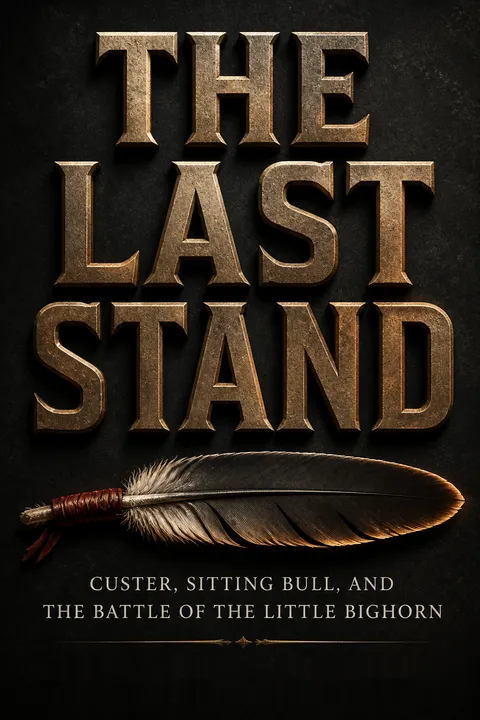

Key Takeaways
1. Custer: A Charismatic, Flawed, and Ambitious Figure
By the age of twenty-three, just two years after finishing last in his class at West Point, he had been named a brigadier general.
A prodigy of war. George Armstrong Custer was a complex figure, a "true prodigy of war—charismatic, quirky, and fearless" who rose to brigadier general by 23. Despite finishing last at West Point, his audacious Civil War cavalry charges, like at Gettysburg, earned him immense fame and the admiration of generals like Sheridan. He thrived on the battlefield's "smoke, blood, and confusion," finding peace in its chaos.
Driven by ambition. Custer harbored deep ambitions, even dreaming of the White House, and constantly sought glory. He cultivated a flamboyant image, wearing buckskin and long blond hair, and skillfully used the press to amplify his exploits, often exaggerating his accomplishments. This relentless pursuit of fame, however, often led to impulsive decisions and strained relationships with superiors and subordinates alike.
Personal contradictions. Despite his public persona, Custer was a man of contradictions. He was a teetotaler with a sensitive stomach, yet a compulsive gambler with mounting debts. He could be charming and devoted to his wife, Libbie, but also prone to "erratic, wild, or unseemly" conduct, including alleged affairs and a volatile temper that led to public berating of his men and scouts.
2. Sitting Bull: A Holy Man and Strategic Leader
Sitting Bull was much more than a brave warrior. He was a wicasa wakan: a holy man with an unusual relationship with the Great Mystery that the Lakota called Wakan Tanka.
Prophet and leader. Sitting Bull, a Hunkpapa Lakota holy man, possessed a profound connection to Wakan Tanka, the Great Mystery, receiving visions and dreams that guided his people. His prophecies, like the one foretelling soldiers falling into his camp "like grasshoppers," instilled confidence and unity among the Lakota and Cheyenne during a time of immense threat.
Unifying force. In an era when Lakota society valued individual bravery, Sitting Bull emerged as a crucial unifying leader, particularly on matters of war. He skillfully navigated internal tribal politics, gaining support from young warriors who resisted reservation life and even from women, whose influence he recognized in shaping tribal attitudes. His unwavering stance against white encroachment resonated deeply, especially after the government's attempts to seize the Black Hills.
Strategic patience. Unlike Custer's impulsive aggression, Sitting Bull often advocated strategic patience and defensive warfare. He understood the importance of strength in numbers and preferred to let the "washichus" (whites) attack first, believing that a defensive posture would lead to victory, as his sun dance vision had foretold. This methodical approach, combined with his spiritual authority, proved instrumental in the Battle of the Little Bighorn.
3. The Black Hills: Catalyst for an Inevitable War
Instead of an effort to defend innocent American pioneers from Indian attack, the campaign against the Sioux and Cheyenne in the spring of 1876 was an unprovoked military invasion of an independent nation that already happened to exist within what came to be declared the United States.
Sacred land, coveted gold. The Black Hills, or Paha Sapa, were sacred to the Lakota and Cheyenne, a vital source of game and spiritual power. Custer's 1874 expedition, however, confirmed rumors of gold, triggering a massive influx of prospectors. This economic lure, coupled with the Panic of 1873, made the U.S. government determined to acquire the hills, despite the 1868 treaty granting them to the Lakota.
Government's ultimatum. When the Lakota refused to sell their sacred lands, the Grant administration, under pressure from mining interests and public demand, instigated war. An ultimatum was issued: all non-reservation Indians must report to agencies by January 31, 1876, or be considered hostile. This demand, made during the harsh winter, was seen by many, including General Sheridan, as a "good joke" designed to fail.
Unprovoked aggression. The subsequent military campaign in 1876 was, in essence, an "unprovoked military invasion of an independent nation." The government's actions, driven by greed for gold and land, forced Sitting Bull and other traditional leaders to unite and defend their way of life, transforming a diplomatic dispute into a full-scale war.
4. Terry's Flawed Plan and Custer's Disobedience
It is of course impossible to give you any definite instructions in regard to this movement, and, were it not impossible to do so, the Dept. Commander places too much confidence in your zeal, energy and ability to impose on you precise orders which might hamper your action when nearly in contact with the enemy.
A lawyer's cunning. General Alfred Terry, Custer's superior, crafted a battle plan for the Little Bighorn that was both meticulous and strategically ambiguous. His written orders to Custer, while seemingly granting broad discretion, contained qualifiers that allowed Terry to later shift blame. This "day-velish sly" approach protected Terry's reputation regardless of the outcome.
Custer's dilemma. Custer was ordered to march up the Rosebud, then sweep west, delaying his arrival at the Little Bighorn to coordinate with Gibbon's column. However, Terry's verbal instructions, as overheard by some, suggested Custer should attack if he found the Indians. This created a dangerous ambiguity, tempting Custer to pursue glory independently, especially after Reno's earlier failure to engage.
The blue pencil line. Terry's plan, meticulously drawn on a map with a "blue pencil line" indicating Custer's route, was based on a flawed understanding of Indian mobility and the terrain. It aimed for a pincer movement to trap the village, but Custer, driven by ambition and a fear of the village scattering, chose to disregard the spirit, if not the letter, of these orders, setting the stage for disaster.
5. Reno's Retreat: A Mix of Fear, Alcohol, and Misjudgment
“Any of you men who wish to make your escape, follow me.”
A hesitant charge. Major Marcus Reno, Custer's second-in-command, led his battalion into the Little Bighorn Valley with orders to charge the Indian village. However, confronted by a rapidly thickening dust cloud and the perceived threat of an ambush, Reno hesitated. His decision to halt and form a skirmish line, rather than press the attack, gave the Native warriors crucial time to organize their defense.
Alcohol's influence. Reno's judgment was severely impaired by alcohol; he was seen drinking whiskey before and during the charge. This likely amplified his fears and contributed to his indecisiveness. His subsequent order to retreat from the timber, delivered as "Any of you men who wish to make your escape, follow me," devolved into a panicked rout, leaving many soldiers dead or wounded.
A costly pause. Reno's initial pause, followed by his disorganized retreat, transformed a potential surprise attack into a desperate flight. This allowed the Lakota and Cheyenne, initially in disarray, to regroup and inflict heavy casualties. His actions, though later defended as a necessary tactical withdrawal, were widely criticized for their lack of leadership and discipline, contributing significantly to the overall tragedy.
6. Benteen's Calculated Indifference and Eventual Heroism
“Wherever Benteen went,” Peter Thompson remembered, “the soldiers’ faces lighted up with hope.”
Antagonistic subordinate. Captain Frederick Benteen, a cynical and proud officer, harbored a deep-seated animosity towards Custer, stemming from past conflicts like the Battle of the Washita. He openly defied Custer's orders to "Come on" quickly with the ammunition packs, deliberately slowing his battalion's advance and lingering at a watering hole, convinced Custer was leading them into a trap.
Reluctant savior. Despite his initial indifference and refusal to build barricades, Benteen proved to be a formidable fighter when directly threatened. Awakened from a nap during a fierce Indian assault on Reno Hill, he rallied his men, leading a desperate charge that cleared a ravine of warriors. His courage under fire, combined with his tactical acumen, was instrumental in preventing the complete annihilation of Reno's command.
A complex legacy. Benteen's actions on Reno Hill, though heroic, were intertwined with his personal vendetta against Custer. He later reveled in Custer's demise, believing it vindicated his long-held criticisms. While he saved Reno's battalion, his delay in reaching Custer's position remains a point of contention, highlighting how personal rivalries and exhaustion influenced critical decisions during the battle.
7. The Native Perspective: Unity, Defense, and Devastating Victory
“A bird, when it is on its nest, spreads its wings to cover the nest and eggs and protect them,” Sitting Bull said. “It cannot use its wings for defense, but it can cackle and try to drive away the enemy. We are here to protect our wives and children, and we must not let the soldiers get them. Make a brave fight!”
A thriving, unified village. Sitting Bull's village on the Little Bighorn was an unprecedented gathering of Lakota and Cheyenne, numbering up to eight thousand people and twenty thousand ponies. Drawn by abundant buffalo and a shared defiance of white encroachment, these disparate bands, under Sitting Bull's spiritual and political leadership, formed a powerful, if loosely organized, fighting force.
Defensive strategy. Despite the initial shock of Reno's attack, Sitting Bull's vision of soldiers falling into their camp guided the Native response. He urged his warriors to protect their families, emphasizing a defensive posture rather than an aggressive pursuit. This strategy allowed the warriors to regroup, exploit the terrain, and use their superior numbers and knowledge of the land to their advantage.
Overwhelming force. The Native warriors, many armed with repeating rifles, quickly overwhelmed Reno's disorganized retreat and then turned their attention to Custer's battalion. Their tactics involved using the broken terrain for cover, drawing fire, and then launching coordinated charges. The sheer number of warriors, combined with their intimate knowledge of the battlefield, proved decisive, leading to Custer's complete annihilation.
8. The Brutal Realities of Frontier Warfare
“The Indians were mad and it was hard to check them,” Black Elk remembered; “they were plumb crazy.”
No quarter given. The Battle of the Little Bighorn was a brutal, no-holds-barred conflict, reflecting decades of escalating violence on the frontier. The initial killing of Native women and children by Arikara scouts, and the desecration of Lakota graves by Custer's men, fueled a ferocious desire for revenge among the warriors.
Mutilation and terror. The aftermath of the fighting was horrific. Wounded soldiers were systematically killed and mutilated, often by women who had suffered similar atrocities, like the Sand Creek Massacre. Bodies were stripped, scalped, and dismembered, with some accounts describing arrows jammed into Custer's penis and his eardrums pierced, a symbolic act to make him "hear better in the afterlife."
Psychological toll. The battle inflicted immense psychological trauma on all participants. Soldiers experienced extreme thirst, exhaustion, and the terror of being hunted. Warriors, while victorious, also witnessed gruesome scenes and suffered losses, with some expressing sorrow at killing frightened, helpless soldiers. The "continuous roar" of gunfire, the dust, and the screams created a hellish environment that left indelible scars.
9. The Enduring, Complex Legacy of the Last Stand
In the end, Custer’s smile remains a mystery, and people will make of it what they will.
A national shock. News of Custer's defeat on July 7, 1876, during the nation's centennial celebrations, shocked a country "drunk on its own potency and power." It sparked a national obsession to understand "how this could have happened," transforming Custer into a cultural lightning rod—either a noble hero or a deranged maniac.
The myth of the Last Stand. Custer's death quickly became synonymous with the "Last Stand" myth, portraying a brave hero fighting against overwhelming odds. This narrative, amplified by figures like Buffalo Bill Cody, served to romanticize American expansion and justify subsequent military actions, even as it obscured the complex realities of the frontier wars.
A double-edged legacy. The battle was a "Last Stand" not only for Custer but also for the Native nations. While a great victory for the Lakota and Cheyenne, it triggered intensified U.S. military campaigns, leading to the eventual surrender of all major tribal leaders, including Sitting Bull. The tragic climax at Wounded Knee in 1890, where the Seventh Cavalry massacred Ghost Dancers, underscored the devastating consequences of the Little Bighorn, marking the end of the frontier and a profound shift in America's self-perception.
Review Summary
The Last Stand by Nathaniel Philbrick receives generally positive reviews (4.05/5) for its well-written, accessible account of the Battle of Little Bighorn. Readers appreciate Philbrick's balanced portrayal of both sides, excellent maps, and engaging narrative style. The book examines Custer's complex character alongside figures like Sitting Bull, Reno, and Benteen. Some critics note it doesn't offer much new scholarship for experts, reading more as popular history than groundbreaking analysis. Several reviewers praise how Philbrick makes the battle comprehensible while acknowledging uncertainties. The book successfully appeals to general readers seeking an introduction to this iconic American historical event.
People Also Read

About the Author
Other books by Nathaniel Philbrick



Download PDF
Download EPUB
.epub digital book format is ideal for reading ebooks on phones, tablets, and e-readers.








































