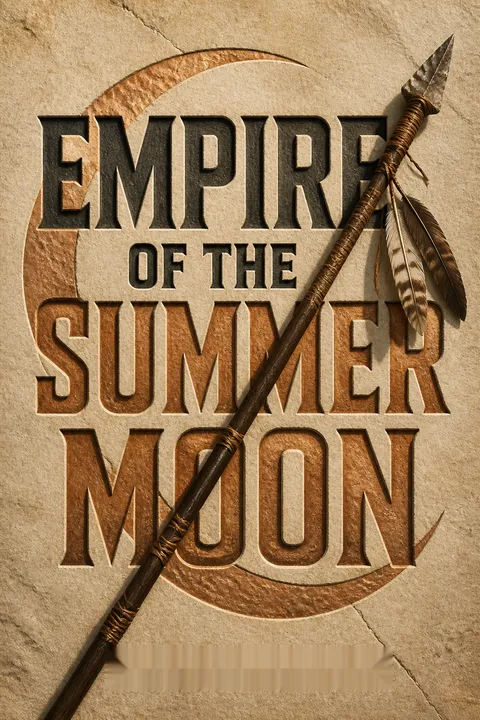

Key Takeaways
1. The Comanches established an unmatched horse-based empire on the southern Great Plains
Though the idea would have astonished Texas settlers of the time, the Comanche horsemen who rode up to the front gate of Parker’s Fort that morning in May 1836 were representatives of a military and trade empire that covered some 240,000 square miles, essentially the southern Great Plains.
Imperial dominance. The Comanches ruled a vast territory known as Comancheria, which spanned parts of five modern states. They held sway over twenty other tribes through military supremacy and diplomatic brilliance, making their Shoshone dialect the commercial language of the plains.
Unmatched mobility. Their nomadic range was around eight hundred miles, with a striking range of four hundred miles. This incredible mobility allowed them to easily outmaneuver Spanish, Mexican, and early American forces, who could not comprehend how a raiding party could strike so far from its home base.
Key features of Comancheria:
- Encompassed 240,000 square miles of the southern Great Plains.
- Bounded by major rivers like the Arkansas, Canadian, and Red.
- Contained the continent's largest buffalo herds.
- Stalled the northward advance of the Spanish Empire.
2. The introduction of the horse transformed the Comanches from weak gatherers into dominant conquerors
The Comanches adapted to the horse earlier and more completely than any other plains tribe.
Breathtaking transformation. Originally a weak, mountain-dwelling Shoshone branch in Wyoming, the Comanches were transformed by the horse in the seventeenth century. They evolved from primitive hunter-gatherers into the prototype horse tribe of North America, mastering equestrian skills better than any other group.
Equine wealth. Unlike other tribes, the Comanches learned the art of horse breeding, carefully castrating their herds to produce superior mounts. A single warrior might own hundreds of horses, and the tribe's wealth was measured directly by the size of their massive herds.
Equestrian mastery:
- Children rode independently by age four or five.
- Warriors could shoot arrows while hanging off the side of a galloping horse.
- They developed a highly specialized vocabulary to describe horse colors and traits.
- They excelled at capturing and taming wild mustangs in minutes.
3. The 1836 Parker's Fort raid ignited a brutal, forty-year conflict between Texans and Comanches
The kidnapping of a blue-eyed, nine-year-old Cynthia Ann in 1836 marked the start of the white man’s forty-year war with the Comanches, in which Quanah would play a leading role.
The fatal raid. In May 1836, a large band of Comanches and Kiowas attacked Parker's Fort, an isolated outpost on the Texas frontier. The defenders were caught completely unprepared, resulting in the brutal slaughter of several family members and the capture of five hostages, including nine-year-old Cynthia Ann Parker.
A symbolic clash. This event marked the collision of two expanding empires: the westward-moving Anglo-Americans and the dominant Comanches. The capture of Cynthia Ann became a legendary narrative of the American West, symbolizing the raw dangers and deep anxieties of the frontier.
Key outcomes of the raid:
- Five settlers were killed and mutilated.
- Cynthia Ann Parker and her brother John were taken into captivity.
- The Parker family became obsessed with retrieving their lost kin.
- The raid initiated a cycle of blood vengeance that lasted for decades.
4. The Great Plains presented a harsh, trackless barrier that stalled Anglo-American expansion
West of the Mississippi not one but two of those legs were withdrawn—water and timber—and civilization was left on one leg—land.
Environmental barrier. The Great Plains, particularly the Llano Estacado, presented an incredibly hostile environment for Anglo-American settlers accustomed to forested, well-watered lands. West of the 98th meridian, the lack of timber and water forced pioneers to abandon traditional survival methods.
Extreme climate. The plains were subject to brutal summer heat, violent windstorms, and sudden, freezing "blue northers." These extreme weather patterns, combined with the vast, featureless landscape, made it easy for travelers to become disoriented and die of exposure or thirst.
Plains characteristics:
- Annual rainfall dropped below twenty inches west of the 98th meridian.
- Vast, trackless oceans of grass offered no landmarks for navigation.
- Frequent blizzards and wildfires threatened survival.
- The Caprock Escarpment provided a natural fortress for the Comanches.
5. Comanche warfare was defined by extreme violence, mobile tactics, and blood vengeance
The logic of Comanche raids was straightforward: All the men were killed, and any men who were captured alive were tortured to death as a matter of course, some more slowly than others; the captive women were gang-raped.
Savage warfare. Comanche raids were designed to terrorize enemies, secure horses, and take captives. Their moral universe did not recognize Western concepts of good and evil; instead, they operated on a system of blood vengeance and spiritual power, or "puha."
Treatment of captives. While adult male captives were invariably tortured to death, young children were often adopted and fully integrated into the tribe to offset low birth rates. Women captives faced brutal abuse and slavery, though some young girls, like Cynthia Ann, were raised as full members of the tribe.
Tactical elements:
- Raids were often timed to the bright light of the "Comanche Moon."
- Warriors used surprise, speed, and terrain to their advantage.
- They fought entirely on horseback, unlike most other North American tribes.
- Blood debts were paid through retaliatory torture and killings.
6. The Texas Rangers revolutionized frontier combat by adopting Comanche equestrian and tactical methods
They moved as lightly over the prairie as the Indians did and lived as they did, without tent, with a saddle for a pillow at night.
Organic defense. To counter the Comanche threat, the Republic of Texas relied on informal, highly mobile units known as the Texas Rangers. Unlike the slow, heavily equipped federal infantry and dragoons, the Rangers lived off the land and traveled light, mimicking the nomadic lifestyle of their enemies.
Equestrian adaptation. Under legendary leaders like Jack Hays, the Rangers learned to ride and shoot from the saddle at full speed. They abandoned the traditional practice of dismounting to fire, realizing that mobility was the only way to survive a Comanche attack on the open plains.
Ranger innovations:
- Rode fast, hardy horses bred for the Texas climate.
- Practiced shooting and picking up objects at a full gallop.
- Traveled by night and made "cold camps" without fires.
- Relied heavily on native scouts, such as the Tonkawas and Lipan Apaches.
7. The invention of the Colt revolver permanently shifted the balance of power on the frontier
The result of this engagement was such as to intimidate them and enable us to treat with them.
Firepower revolution. The introduction of the five-shot Colt Paterson revolver, and later the six-shot Walker Colt, solved the Rangers' greatest tactical problem. Previously, a Ranger had only one shot before needing to dismount and reload, while a Comanche could loose dozens of arrows in a minute.
Walker's Creek. At the Battle of Walker's Creek in 1844, Jack Hays and fifteen Rangers used the repeating pistols to decimate a force of seventy-five Comanches. This battle proved that mounted white men could now match and exceed the rapid-fire capabilities of Comanche archers.
Impact of the Colt:
- Allowed five or six rapid shots without reloading.
- Could be fired easily from the saddle at full gallop.
- The Walker Colt was designed specifically for the rugged needs of the Rangers.
- Permanently ended the Comanches' absolute tactical superiority.
8. Ranald Slidell Mackenzie pioneered the aggressive military strategies that finally subdued the Comanches
But it was Mackenzie, not Custer, who would teach the rest of the army how to fight Indians.
Relentless pursuit. Colonel Ranald Slidell Mackenzie, a highly decorated Civil War veteran, was dispatched to Texas to solve the Comanche problem. He realized that defensive fortresses were useless, and pioneered a strategy of relentless, offensive pursuit into the heart of Comancheria.
Palo Duro Canyon. In September 1874, Mackenzie's Fourth Cavalry trapped a massive Comanche, Kiowa, and Cheyenne encampment in Palo Duro Canyon. While the Indians fled up the canyon walls, Mackenzie destroyed their villages and captured over a thousand horses, which he ordered shot to cripple their mobility.
Mackenzie's tactics:
- Tracked hostiles directly into their winter sanctuaries.
- Destroyed Indian villages, food supplies, and equipment.
- Exterminated captured horse herds to strand the warriors.
- Kept troops in the field through brutal winter weather.
9. Quanah Parker bridged two worlds, leading his people through their final defeat and transition to civilization
Quanah might have been a leader and a governor in any circle where fate might have cast him—it is in his blood.
The last chief. Quanah Parker, the son of Comanche chief Peta Nocona and the captured white woman Cynthia Ann Parker, rose to become the last great chief of the Comanches. After leading the fierce Quahadi band in their final holdout, he surrendered at Fort Sill in 1875, realizing that resistance was futile.
Bridging the divide. Upon surrendering, Quanah made the conscious decision to walk the "white man's road." He learned English, became a prosperous rancher, built the famous Star House, and successfully lobbied the federal government on behalf of his people, securing lucrative grazing leases.
Quanah's legacy:
- Cooperated with influential Texas cattlemen to lease reservation lands.
- Appointed by the government as the Principal Chief of the Comanches.
- Helped establish the peyote religion (Native American Church).
- Preserved Comanche dignity while guiding them into the modern era.
Review Summary
Empire of the Summer Moon receives mixed reviews. Many praise its engaging writing and comprehensive history of the Comanches, particularly their conflicts with white settlers. Critics appreciate the detailed accounts of battles and key figures like Quanah Parker. However, some readers find the language and portrayal of Native Americans problematic, accusing Gwynne of perpetuating racist stereotypes and outdated perspectives. The book's focus on violence and limited exploration of Comanche culture also draws criticism. Despite controversies, it remains a popular and widely-discussed work on the American West.
People Also Read





FAQ
1. What is Empire of the Summer Moon by S.C. Gwynne about?
- Comanche rise and fall: The book chronicles the rise and fall of the Comanche tribe, focusing on their dominance of the Southern Great Plains and their eventual defeat by settlers and the U.S. military.
- Quanah Parker’s story: Central to the narrative is Quanah Parker, the last and greatest Comanche chief, whose life bridges the worlds of Native Americans and white settlers.
- Clash of civilizations: It explores the violent and complex conflicts between the Comanche and white settlers, including the impact of new technologies, military campaigns, and cultural misunderstandings.
- Personal and historical depth: The book intertwines personal stories, such as that of Cynthia Ann Parker, with broader historical events, providing a vivid account of frontier life and cultural transformation.
2. Why should I read Empire of the Summer Moon by S.C. Gwynne?
- Comprehensive frontier history: The book offers a detailed, well-researched account of a pivotal but often overlooked chapter in American history, enriching understanding of Native American and frontier experiences.
- Balanced and nuanced perspective: Gwynne avoids simplistic portrayals, presenting both the brutality and humanity of the Comanche and settlers, and highlighting the complexity of the Indian Wars.
- Engaging storytelling: The narrative combines historical rigor with vivid, accessible storytelling, making it both informative and compelling to read.
- Relevance to modern issues: The book sheds light on themes of cultural conflict, adaptation, and resilience that remain relevant in discussions of American identity and history.
3. Who was Quanah Parker and why is he significant in Empire of the Summer Moon by S.C. Gwynne?
- Last Comanche chief: Quanah Parker was the final principal chief of the Comanche, leading his people through their last resistance and into reservation life.
- Bridge between cultures: Born to a Comanche chief and Cynthia Ann Parker, a white captive, Quanah embodied the intersection of Native and settler worlds, using his unique heritage to mediate between them.
- Adaptation and leadership: He became a skilled warrior, political leader, and later a successful rancher, helping his people navigate the challenges of forced assimilation.
- Cultural legacy: Quanah’s life symbolizes the end of the Comanche empire and the resilience of Native American identity during a period of intense upheaval.
4. What was the Comanche empire and how did it function according to Empire of the Summer Moon by S.C. Gwynne?
- Vast territorial control: The Comanche dominated over 621,000 square kilometers across Texas, New Mexico, Colorado, Kansas, and Oklahoma, making them the most powerful tribe in the Southern Plains.
- Decentralized structure: The empire was a loose confederation of at least five major bands, united by language and culture but lacking a single ruler.
- Military and economic power: Their dominance was based on superior horsemanship, warfare, and control of large herds of horses and bison, which underpinned their nomadic lifestyle.
- Strategic alliances: The Comanche maintained power through both warfare and diplomacy, engaging in trade and treaties with other tribes and European settlers.
5. How did the introduction of the horse transform the Comanche and other Great Plains tribes in Empire of the Summer Moon by S.C. Gwynne?
- Revolutionized mobility: Horses gave the Comanche unprecedented speed and range, allowing them to hunt bison more efficiently and conduct long-distance raids.
- Military superiority: Mastery of horseback riding and mounted archery made the Comanche the most formidable cavalry force in North America.
- Cultural transformation: The horse became central to Comanche identity, wealth, and social structure, enabling rapid expansion and dominance over rival tribes.
- Economic impact: Horses facilitated trade, raiding, and the accumulation of wealth, increasing the Comanche’s influence across the Southern Plains.
6. Who was Cynthia Ann Parker and what role did she play in Empire of the Summer Moon by S.C. Gwynne?
- White captive assimilated: Cynthia Ann Parker was kidnapped by the Comanche at age nine and fully assimilated, marrying chief Peta Nocona and becoming the mother of Quanah Parker.
- Symbol of cultural conflict: Her life story challenges Eurocentric prejudices, as she chose to remain with the Comanche despite opportunities to return to white society.
- Personal tragedy: After being "rescued" by Texas Rangers, she struggled to readjust to white society and was separated from her children, highlighting the human cost of cultural collision.
- Legacy: Cynthia Ann’s story is central to understanding the intersection of Native and settler cultures and the personal dimensions of frontier conflict.
7. What were the key conflicts and battles involving the Comanche described in Empire of the Summer Moon by S.C. Gwynne?
- Major battles: The book details significant conflicts such as the Battle of Blanco Canyon (1871), the Council House Fight (1840), the Linnville Raid and Battle of Plum Creek (1840), and the San Saba Massacre (1758).
- Ongoing raids: Numerous smaller raids and skirmishes illustrate the relentless and brutal struggle for control of the Plains.
- Turning points: Battles like Adobe Walls (1874) and the Palo Duro Canyon campaign marked the beginning of the end for Comanche military power.
- Escalation and decline: These conflicts demonstrate both the ferocity of Comanche resistance and the increasing effectiveness of U.S. military campaigns.
8. How did the U.S. Army and Texas Rangers eventually defeat the Comanche in Empire of the Summer Moon by S.C. Gwynne?
- Military adaptation: Leaders like Colonel Ranald Mackenzie adopted Comanche tactics, using scouts and mobile cavalry to match their speed and surprise.
- Destruction of resources: The U.S. Army targeted the Comanche’s food supply, especially by decimating bison herds, undermining their nomadic way of life.
- Relentless campaigns: Continuous military pressure and coordinated campaigns forced the Comanche onto reservations.
- Role of Texas Rangers: The Rangers, skilled in frontier warfare and equipped with new weapons like the Colt revolver, played a crucial role in tracking and engaging Comanche bands.
9. What was the impact of new technologies, such as the Colt revolver and repeating rifles, in the conflicts described in Empire of the Summer Moon by S.C. Gwynne?
- Colt revolver revolution: The introduction of the Colt revolver, especially the Walker model, gave Texas Rangers and settlers rapid-fire capability on horseback, countering the Comanche’s archery advantage.
- Repeating rifles: Weapons like the Spencer carbine and Sharps rifle provided the U.S. Army with superior firepower and range, shifting the balance in favor of the military.
- Turning point battles: The effectiveness of these weapons was demonstrated in battles such as Walker’s Creek and Adobe Walls, where small groups of armed settlers repelled much larger Comanche forces.
- Catalyst for decline: The technological edge contributed significantly to the eventual defeat and subjugation of the Comanche.
10. How did the destruction of the bison herds affect the Comanche, according to Empire of the Summer Moon by S.C. Gwynne?
- Economic devastation: The mass slaughter of bison by commercial hunters destroyed the Comanche’s primary food source and economic foundation.
- Cultural collapse: Without bison, the Comanche’s nomadic lifestyle and social structure became unsustainable, leading to forced dependency on government rations.
- Political strategy: Military leaders supported bison extermination as a means to force Native Americans onto reservations by eliminating their subsistence base.
- Accelerated decline: The loss of bison hastened the collapse of traditional Comanche society and their final surrender.
11. What cultural changes did the Comanche undergo during the reservation period in Empire of the Summer Moon by S.C. Gwynne?
- Loss of traditional identity: The disintegration of bands and adoption of the Quahadi dialect and customs led to a weakening of traditional social structures.
- Adoption of new customs: The Comanche incorporated white goods, clothing, and food, as well as customs from neighboring tribes, reflecting a blending and loss of traditional culture.
- Religious transformation: The rise of the peyote religion, promoted by Quanah Parker, became a significant spiritual institution among the Plains tribes.
- Economic adaptation: Many Comanche became ranchers or laborers, leasing land to white cattlemen and shifting from hunting to agriculture and wage labor.
12. What are the best quotes from Empire of the Summer Moon by S.C. Gwynne and what do they mean?
- Quanah’s epitaph: “Here lies before the breeze of day / and lengthen shadows / and darkness disappear / Quanah Parker, last chief of the Comanches.” This reflects the end of an era and Quanah’s role as the final leader of his people.
- Quanah on change: “Now we are the same people.” Spoken at a 1910 Dallas speech, this highlights the transformation and adaptation of the Comanche into American society.
- Mackenzie’s warning: “If you do not bring me the offenders in twenty minutes, I will go to their camps and kill them all.” This quote shows Mackenzie’s ruthless determination and leadership style.
- Isa-tai’s failed prophecy: “I stop the bullets in the guns. The bullets do not penetrate our shirts. We kill them like old women.” This illustrates the tragic hope and ultimate failure of spiritual resistance against superior technology.
Download PDF
Download EPUB
.epub digital book format is ideal for reading ebooks on phones, tablets, and e-readers.








































