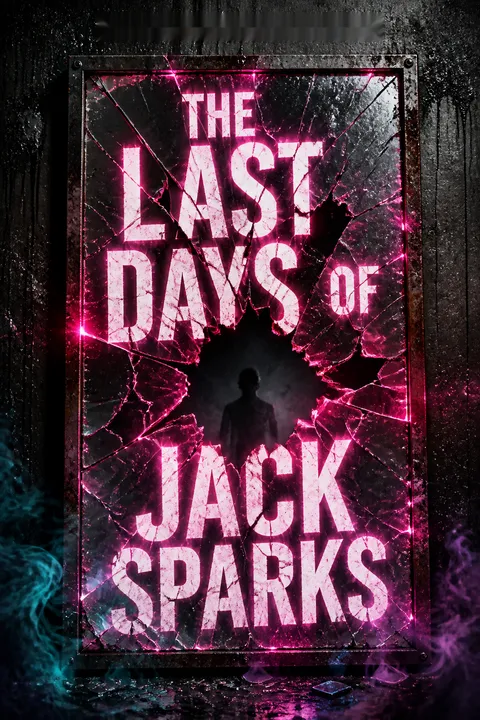

Plot Summary
The Black Hole Memory
Jack Sparks' story begins with a memory: as a child, he's locked in a pitch-black cloakroom by his older brother, Alistair. The terror he feels in that "black hole" becomes a formative trauma, seeding his lifelong need for control, certainty, and skepticism. This event, and the family's dysfunction—his father's abandonment, his mother's coldness, and his brother's resentment—forge Jack's defensive arrogance and his compulsion to explain away the unknown. The black hole becomes a metaphor for Jack's fear of the unexplained, and his later obsession with debunking the supernatural. This memory will echo through his life, shaping his relationships, his career, and ultimately, his fate.
Exorcism in Italy
Jack, a notorious atheist journalist, travels to rural Italy to witness an exorcism for his new book on the supernatural. He's accompanied by Maria, a troubled teenage girl, her mother, and Father Di Stefano, a veteran exorcist. Jack's cynicism is on full display—he laughs during the ritual, convinced it's all theater. But the exorcism takes a violent turn: Maria vomits nails, wounds the priest, and displays impossible phenomena. Jack's rational explanations falter as he's confronted with events that defy easy dismissal. His laughter, meant as a shield, becomes a catalyst for something darker. The exorcism marks the beginning of Jack's unraveling, as the boundaries between skepticism and belief start to blur.
The Viral Video
After the exorcism, Jack's online followers bombard him with supposed "evidence" of ghosts—YouTube videos, most easily debunked. But one video, uploaded to his own channel without his knowledge, unsettles him: a shadowy basement, a ghostly figure, and three whispered demon names. The video vanishes, then reappears, spreading virally. Jack becomes obsessed with its origin, unable to explain how it appeared or why only he hears the demonic words. The video's uncanny power draws Jack deeper into the supernatural, eroding his certainty. It becomes the spine of his investigation, a riddle that will lead him across the world and into the heart of his own darkness.
Ghosts, Science, and Skepticism
Jack's journey is framed by his "SPOOKS List"—a taxonomy of supernatural claims: people are either deceiving, deceived, or self-deluded. He travels, seeking scientific explanations for hauntings, exorcisms, and ghost sightings. Yet, as he encounters phenomena that resist debunking, his skepticism is tested. Encounters with believers, magicians, and the haunted challenge his worldview. Jack's bravado masks growing fear and doubt. The more he tries to control the narrative, the more reality slips from his grasp. The supernatural becomes personal, and Jack's need to explain everything becomes a prison, isolating him from those who care for him.
Combat Magician's Warning
In Hong Kong, Jack meets Sherilyn Chastain, a "combat magician" who claims to fight real supernatural forces. She warns Jack that his certainty is dangerous, that belief and skepticism are both traps. Sherilyn senses darkness gathering around him, urging him to abandon his quest. Jack, however, is dismissive—he sees her as another charlatan. Yet, her words linger, and her rituals, though alien to him, seem to have real effects. Sherilyn's warning foreshadows Jack's coming ordeal: his refusal to doubt, to open himself to uncertainty, will be his undoing. The supernatural, she insists, is not just about ghosts, but about the stories we tell ourselves.
The Haunted Houseboat
Jack joins Sherilyn and her partner Fang on a case: a wealthy family's houseboat plagued by violent hauntings. The investigation is part performance, part genuine terror. Jack witnesses inexplicable phenomena—a smoke-like entity, physical attacks, and a sense of oppressive evil. Despite his skepticism, he glimpses something in a mirror that shakes him. The "ghost" is captured in a ritual, but Jack's arrogance leads him to demand its destruction, dismissing the possibility of real harm. The episode leaves him rattled, his rational explanations fraying. The haunted houseboat becomes a microcosm of Jack's struggle: the more he tries to control the narrative, the more he is haunted by what he cannot explain.
The Hollywood Experiment
In Los Angeles, Jack joins the Hollywood Paranormals, a group attempting to recreate a famous 1970s experiment: can collective belief conjure a ghost? They invent "Mimi," a fictional spirit, and conduct séances in a hotel basement—the same one from the viral video. At first, Jack suspects trickery, but soon, phenomena escalate: a table levitates, a face appears in midair, and the group is terrorized by a presence that seems to feed on their egos and fears. The experiment spirals out of control as "Mimi" becomes real, violent, and vengeful. Jack's skepticism is shattered; he is forced to confront the possibility that belief itself can create monsters.
The Face in the Basement
The viral video's basement becomes the site of a terrifying revelation. Jack, now convinced the Paranormals faked the video, moves the experiment to a new location—only for the phenomena to follow. The face in the basement, shifting and composite, is not just a ghost but a reflection of the group's collective ego—and Jack's in particular. As the entity grows stronger, it begins to kill. Jack realizes, too late, that the supernatural is not just "out there," but within him. The face is his own, twisted by fear, guilt, and narcissism. The boundary between hunter and haunted collapses.
Mimi Unleashed
"Mimi," the thought-form ghost, breaks free of the group's control. One by one, the Paranormals are killed in grotesque, supernatural ways. Jack, possessed by the entity, becomes both victim and perpetrator. His ego, amplified and weaponized, turns on those around him. The killings are not random but targeted: those who try to stop the experiment, who show doubt or humility, are destroyed. Jack's descent into madness is complete—he is no longer sure where he ends and Mimi begins. The experiment, meant to debunk the supernatural, has instead unleashed it, with Jack as its vessel.
Descent into Madness
Haunted by guilt, addiction, and the deaths he has caused, Jack spirals into psychosis. He is possessed by Mimi, his speech and thoughts overtaken by mantras of "me, myself, and I." He mutilates himself in a desperate attempt to regain control, but the entity's grip tightens. Jack's relationships disintegrate—he alienates his brother, his agent, and Bex, the woman he loves but has always used. The boundaries between reality and hallucination blur. Jack's quest for certainty, for control, has led him to the edge of annihilation. The supernatural is no longer a question of belief, but a lived nightmare.
The Ego Exorcism
Sherilyn and Bex intervene, performing a ritual to purge Jack of Mimi. The exorcism is not of a demon, but of Jack's own ego—his lifelong need to be the center, to control, to never doubt. Through confession, Jack confronts his childhood trauma, his guilt over his mother's death, and his selfishness. The ritual strips him bare, leaving him vulnerable but free. For a moment, Jack is himself again, capable of love and remorse. But the damage is done: the supernatural has claimed its price, and Jack's fate is sealed. The exorcism is both a release and a reckoning.
Forty Days in the Wilderness
Jack is cast into a supernatural wilderness, reliving the forty days after the exorcism. He is hunted by Maria Corvi, the possessed girl, and by his own ghost. Time loops and fractures—Jack meets his past and future selves, witnesses the events he set in motion, and is forced to choose between saving himself or Bex. The journey is both literal and symbolic: Jack must confront the consequences of his actions, the reality of the afterlife, and the existence of evil. The wilderness is not just a place, but a state of being—lost, alone, and at the mercy of forces beyond understanding.
The Final Reckoning
In a final confrontation, Jack is forced to choose: call his brother and save himself, or call Bex and save her. He chooses Bex, sacrificing his own chance at survival. In a vision, he encounters Bex's ghost, who forgives him but refuses to be saved. Jack's journey comes full circle—he is returned to the site of the exorcism, where Maria awaits. The supernatural has claimed him, but in his final act, Jack achieves a measure of redemption. The circle closes: the black hole of his childhood, the exorcism, the viral video, and the deaths all converge in a moment of reckoning.
The Afterlife Revealed
Jack's experiences reveal a universe where the supernatural is real, but not as he imagined. Ghosts are not just spirits of the dead, but echoes of trauma, ego, and unfinished business. The afterlife is not a simple heaven or hell, but a complex, unknowable realm. Jack's SPOOKS List, once a tool of skepticism, now includes the reality of the supernatural, the afterlife, and even the Devil. The boundaries between self and other, life and death, are porous. The lesson is not certainty, but humility: the unknown cannot be controlled or explained away.
The Devil's Victims
Jack's death sparks a media frenzy. His final manuscript leaks online, spawning conspiracy theories, cult followings, and a TV series hosted by his brother, Alistair. The "Impostor Theory" emerges: was Jack's story real, or the work of a deranged fan? The survivors—Sherilyn, Alistair, and others—struggle to make sense of what happened. The supernatural is both denied and embraced, depending on the audience. The Devil's Victims, a book by Father Di Stefano, adds another layer of ambiguity. The world moves on, but the questions remain: what is real, and what is the story we tell ourselves?
The Impostor Theory
Alistair, Jack's brother, offers a rational explanation: Jack's book is a work of fiction, a product of guilt, addiction, and mental illness. The events after his death are the work of an impostor, not the supernatural. Yet, evidence mounts that cannot be easily dismissed: DNA, eyewitness accounts, and the persistence of the viral video. The truth is elusive, and the narrative fractures. The Impostor Theory becomes a metaphor for the book itself: is the supernatural real, or is it all in our heads? The answer is left unresolved, inviting the reader to choose their own belief.
The Last Confession
In a posthumous confession, Jack admits the real reason for his book: a desperate hope to find evidence of the afterlife, to apologize to his dead mother, to be forgiven. His public persona as a skeptic was a mask for private longing and fear. The supernatural, he realizes, is not just about ghosts, but about the need for meaning, connection, and redemption. Jack's journey is both a horror story and a confession—a search for forgiveness that ends in self-knowledge. The last confession is not to the world, but to himself.
The Circle Closes
Jack's journey ends as it began: in the black hole of his childhood, facing the darkness he has always feared. He becomes both ghost and haunted, past and future, victim and perpetrator. The circle closes—Jack's need for certainty, his fear of the unknown, and his longing for forgiveness all converge. The supernatural is not just "out there," but within. The story is both a warning and a lament: in seeking to control the unknown, we risk becoming its victim. The last days of Jack Sparks are not just his, but ours—a mirror held up to our own fears, doubts, and hopes.
Analysis
A modern parable of ego, skepticism, and the dangers of certaintyThe Last Days of Jack Sparks is a horror novel for the internet age, blending supernatural terror with psychological realism and media satire. At its core, the book is a meditation on the limits of rationality, the seduction of certainty, and the destructive power of ego. Jack's journey—from arrogant skeptic to haunted victim—is both a cautionary tale and a confession. The supernatural is not just a question of belief, but a mirror for our deepest fears, traumas, and desires. The novel warns against the hubris of thinking we can explain, control, or dismiss the unknown. In a world saturated with information, performance, and self-promotion, the real horror is not ghosts or demons, but the stories we tell ourselves to avoid doubt, vulnerability, and empathy. The lesson is humility: the unknown cannot be mastered, only faced. In the end, Jack's greatest enemy is not the supernatural, but himself.
Review Summary
The Last Days of Jack Sparks follows narcissistic journalist Jack Sparks as he attempts to debunk the supernatural for his next book. After disrespectfully mocking an exorcism in Italy, terrifying events unfold. Readers praise the novel's originality, dark humor, and genuinely creepy moments, with many noting it kept them up at night. Jack is intentionally unlikeable—an unreliable narrator whose arrogance makes him compelling. The book's structure includes footnotes, interviews, and contradictory accounts that enhance the mystery. While some found Jack's character exhausting or the story confusing, most reviewers were gripped by the unpredictable plot and brilliant, horrifying conclusion.
People Also Read
Characters
Jack Sparks
Jack is a brash, arrogant journalist and author, famous for his provocative investigations and public atheism. Scarred by childhood trauma—his father's abandonment, his mother's coldness, and his brother's resentment—Jack develops a defensive, self-centered persona. His need for control and certainty masks deep-seated fear and guilt, especially over his mother's death. Jack's journey is a descent from skepticism into supernatural horror, as he becomes both hunter and haunted. His relationships are transactional, often exploitative, yet he is capable of love and remorse. Jack's arc is one of self-destruction and, ultimately, self-reckoning: his greatest enemy is not the supernatural, but his own ego.
Alistair Sparks
Alistair is Jack's older brother, a scientist who embodies rationality and emotional restraint. Their relationship is fraught with rivalry, resentment, and unspoken wounds. Alistair's childhood prank—locking Jack in the cloakroom—becomes a defining trauma for both. As Jack spirals into madness, Alistair remains distant, unable to bridge the gap. After Jack's death, Alistair becomes the public face of skepticism, hosting a TV series debunking the supernatural. Yet, he is haunted by guilt and the possibility that Jack's story was more than delusion. Alistair's arc is one of denial and reluctant empathy, a mirror to Jack's own journey.
Rebecca "Bex" Lawson
Bex is Jack's flatmate, confidante, and unrequited love interest. Practical, witty, and emotionally intelligent, she provides a grounding influence in Jack's chaotic life. Their relationship is complex—Jack's feelings are more lust than love, and he often exploits her for narrative effect. Bex's own struggles, including a failed relationship, make her vulnerable to Jack's manipulations. Ultimately, she becomes a victim of the supernatural forces Jack unleashes, her death a consequence of his selfishness. Bex's ghost offers Jack a chance at redemption, but also a final reckoning with the cost of his actions.
Sherilyn Chastain
Sherilyn is a "combat magician" who straddles the line between belief and skepticism. Practical, tough, and deeply intuitive, she warns Jack of the dangers of certainty and ego. Her rituals and worldview challenge Jack's rationalism, offering a more nuanced understanding of the supernatural. Sherilyn becomes Jack's reluctant savior, performing the "ego exorcism" that temporarily frees him from possession. Her own failures and guilt mirror Jack's, making her both ally and foil. Sherilyn's arc is one of humility and resilience, a counterpoint to Jack's arrogance.
Maria Corvi
Maria is a thirteen-year-old Italian girl, the subject of the exorcism that begins Jack's downfall. Her possession is ambiguous—mental illness, performance, or genuine supernatural evil? As the story unfolds, Maria becomes the avatar of the darkness Jack has unleashed. She haunts him across time and space, orchestrating his torment and ultimate destruction. Maria is both victim and perpetrator, her innocence corrupted by forces beyond her control. She embodies the book's central question: is evil external, or does it arise from within?
Father Primo Di Stefano
Di Stefano is an aging Catholic priest, renowned for his exorcisms and books. He is both sincere and self-promoting, embodying the contradictions of faith. His confrontation with Jack is a clash of worldviews—faith versus skepticism, humility versus arrogance. Di Stefano's warnings about the dangers of mocking the supernatural foreshadow Jack's fate. He is both a figure of authority and a tragic bystander, unable to save Maria or Jack from the forces at play.
The Hollywood Paranormals
A group of amateur investigators, the Paranormals are united by a desire for fame, validation, and scientific discovery. Their experiment to conjure a ghost—Mimi—becomes a collective act of hubris. Each member embodies a different facet of belief, skepticism, and self-delusion. As the experiment spirals out of control, they are destroyed by the very entity they create. The group serves as a microcosm of the dangers of unchecked ego and the seductive power of the supernatural.
Mimi
Mimi is the thought-form ghost conjured by the Paranormals, but quickly becomes something more: a vessel for Jack's ego, the group's fears, and the malevolent force unleashed at the exorcism. Shapeshifting, violent, and vengeful, Mimi is both a supernatural entity and a psychological projection. As Mimi gains power, the boundaries between self and other, real and unreal, collapse. Mimi's arc is the story's central horror: the monster we create when we refuse to doubt, to empathize, to be humble.
Antonino "Tony" Bonelli
Tony is the Italian translator present at the exorcism, later driven to madness and suicide by the events he witnesses. His fate is a warning: those who become entangled in Jack's narrative, willingly or not, are destroyed. Tony's posthumous appearances—phone calls, visions—blur the line between guilt, haunting, and supernatural retribution. He is both a victim of Jack's actions and a symbol of the collateral damage caused by ego and disbelief.
Alistair's Family
Alistair's wife and daughters represent the next generation, caught in the aftermath of Jack's story. The children's nightmares and visions of "Uncle Jack" in the cloakroom suggest that trauma, like the supernatural, is inherited. Their presence in the afterword underscores the story's cyclical nature: the black hole of childhood fear, the persistence of the past, and the need for healing.
Plot Devices
Unreliable Narration and Found Footage
The novel is structured as a "found manuscript," interspersed with emails, interviews, diary entries, and editorial notes. Jack's narration is deeply unreliable—his arrogance, addiction, and mental instability color every event. The viral video, which only Jack hears in full, becomes a symbol of subjective reality: what is real, and what is projection? The use of multiple perspectives—Alistair's foreword and afterword, Sherilyn's emails, Bex's diary—creates a mosaic of conflicting truths. The reader is forced to question not just the supernatural, but the nature of storytelling itself.
The SPOOKS List
Jack's "SPOOKS List" is his attempt to categorize all supernatural claims: deception, delusion, or self-deception. As the story progresses, the list expands to include group psychokinesis, the reality of the supernatural, and ultimately, the Devil. The list's evolution mirrors Jack's psychological collapse and the story's thematic arc: the limits of rationality, the dangers of certainty, and the inevitability of the unknown.
Foreshadowing and Circular Structure
The novel is rich in foreshadowing: the black hole memory, the exorcism, the viral video, and the Hollywood experiment all prefigure Jack's fate. Time loops and fractures—Jack meets his past and future selves, relives key moments, and is haunted by the consequences of his actions. The story's circular structure—beginning and ending with the black hole—emphasizes the inescapability of trauma, ego, and the supernatural. The past is never past; the circle always closes.
Possession and Ego
Possession in the novel is both literal and metaphorical: Jack is possessed by Mimi, but also by his own ego, guilt, and need for control. The exorcism, the haunted houseboat, and the Hollywood experiment all explore the porous boundaries between self and other, belief and doubt. The supernatural is not just "out there," but within—created, sustained, and weaponized by human fear and arrogance. The final exorcism is not of a demon, but of Jack's own self.
Ambiguity and Doubt
The novel refuses to offer a single, definitive explanation for its events. The Impostor Theory, Alistair's skepticism, and the supernatural evidence all coexist, unresolved. The reader is left to choose: is Jack's story a descent into madness, a genuine haunting, or a metafictional game? The ambiguity is the point: certainty is the real danger, and the unknown is both terrifying and necessary.
Download PDF
Download EPUB
.epub digital book format is ideal for reading ebooks on phones, tablets, and e-readers.








































