


Plot Summary
Flour in the Play Dough
Joan Cooper1 runs a home daycare in Lansdowne, juggling four children including Josh,8 who has celiac disease. When Joan1 makes play dough from flour, Josh8 eats it and gets sick. His mother Ramona,3 an HR manager, rushes over furious.
The same day, she fires her employee Ross9 and feels immediate guilt. Pediatrician David Harris,4 still grieving his son Paul who died in a car accident, gives a prenatal consultation to a pregnant teen.13 David's wife Nadine5 works as his receptionist, hollow with grief.
Sanitation worker Doug Cooper2 learns automated trucks may eliminate his job, threatening his ability to provide for his wife Joan1 and their kids, Nate6 and Megan.7 Four families navigate ordinary stress, unaware that within hours, all children on Earth will die.
The pre-Herod world is defined by economic precarity and parental guilt. Joan monetizes motherhood yet feels invisible to the GDP; Doug's manual labor is being automated away; Ramona's career ambition conflicts with single motherhood; David's grief has hollowed out his practice. Each family is already bleeding, already sacrificing for children, before a single drop of supernatural blood is spilled. The play dough incident, trivial in itself, exposes the hair-trigger anxieties of modern parenting: dietary restrictions, daycare trust, working-mom guilt. DiLouie establishes that the horror to come will exploit structures of love and duty already under immense strain.
Smelling Burning Toast
At the mall, Ramona3 waits in line for Santa with Josh8 when children begin collapsing. A woman screams as Santa holds a limp girl. Josh8 stiffens in Ramona's3 arms, whispers that something is eating him, then goes still. At an outdoor skating rink, Doug2 hears his son Nate6 say he smells burning toast just before crumpling onto the ice. Megan7 falls moments later.
Doug2 carries both dead children toward his truck, howling. In a movie theater, Joan's1 film is interrupted by panicked shouts; she calls Doug2 and learns her kids are dead. At a restaurant, David4 and Nadine5 watch television as the phenomenon, dubbed Herod's syndrome, sweeps the globe. Fifty million American children die within hours. Every pre-pubescent child on Earth is gone.
The Herod Event is chilling precisely because it offers no spectacle, just absence. Children don't explode or transform; they simply stop. Nate's cryptic 'toast burning' and Josh's 'it's eating me' are the only clues that something vast and invisible is consuming them from within. The global simultaneity rules out any conventional disease model, pushing the event into theological territory. Parents' last words to dying children are banal: promises of Santa, hockey games, tool sets. The horror lives in that gap between the triviality of the moment before and the absolute finality of the moment after.
Ninety Thousand Body Bags
Joan1 prepares a wake, scrubbing the house clean and erasing her children's toothbrushes and toys. She visits Pastor Gary14 at church but finds him chain-smoking outside, his faith shattered by the deaths of his own three children.
Doug2 is drafted into sanitation crews collecting the dead. With a volunteer named Tom,12 he enters homes where parents have killed themselves beside their children's bodies. He begins drinking again after eight years sober.
The bodies go to a mass burial ground where bulldozers dig trenches and workers lay rows of black bags across frozen earth. Ramona3 keeps Josh's8 body in his bedroom until the smell overwhelms her. David4 assists his friend Ben,10 the medical examiner, autopsying young victims. He learns that unborn babies are dying too.
This section explores grief as logistical problem. Doug's body-collection route transforms parental mourning into municipal waste management. The mass graves, bulldozers, and quicklime industrialize death, stripping it of ritual. Joan's compulsive housecleaning and her visit to the faithless Pastor Gary reveal two incompatible responses: the desperate need for meaning and the complete absence of it. The suicides of parents who cannot bear the emptiness prefigure the choice every character will eventually face: endure the horror or opt out. The machinery of burial becomes the machinery of denial.
The Children Walk Home
During the candlelight vigil at Union Park, a bell tolls marking the final child's death. Then the screaming changes. Children emerge from the darkness, walking stiffly like somnambulists. Ramona3 finds Josh8 standing before her in frozen mud, asking why she was kissing Ross.9 Doug2 and Joan1 race to the burial ground and open body bags until they find Nate6 and Megan,7 cold and rigid but conscious.
At the hospital, David4 watches in horror as the child he was about to autopsy sits up and speaks. Dozens of dead children walk out of the morgue, swarming anyone blocking their path home. Parents across the world embrace their risen children, weeping with joy and terror, convinced a miracle has occurred.
The resurrection reverses the emotional arc but preserves the horror. The children return not as radiant miracles but as shambling, dirt-caked corpses, their eyes unblinking, their bodies cold and stiff. DiLouie deliberately invokes zombie and vampire tropes while keeping the children recognizably human enough to make parental love plausible. The parents' joy is genuine but stained with something primal: they are embracing things that should not move. The scene in the autopsy room, where mutilated children sit up and walk out, literalizes the genre's central anxiety: what if the dead aren't done with us?
A Mother's Cut Thumb
At home, the children show no pulse or respiration, but their eyes track movement. They sit catatonic, staring at televisions. During the night, Nate6 creeps to Joan's1 bedside and rasps a single word: blood. She cuts her thumb with a knife and presses it into his mouth. He sucks hard, color floods his cheeks, and he speaks briefly before collapsing.
Nadine Harris5 makes the same discovery and begins drawing parents' blood with phlebotomy kits, feeding it to the children via syringe. She frames this as a sacred duty, a blood sacrifice God demands. Ramona,3 desperate, gives Josh8 a pint of her own blood. He sits up, asks to watch cartoons, and is briefly, perfectly alive. The miracle comes with a terrible price.
The blood-feeding scene is the novel's thematic fulcrum. Joan's self-mutilation with a kitchen knife and her submission to Nate's suckling invert the natural order: the child feeds on the mother. This is simultaneously an act of ultimate maternal sacrifice and a violation of every biological and moral boundary. Nadine's religious framing provides the rationalization parents need, transforming vampirism into sacrament. But the briefness of the revival reveals the cruelty of the transaction: Herod is a parasite that has learned to exploit love itself as a delivery mechanism.
One Hour Per Pint
The joy is devastatingly short. After roughly two hours, the children relapse. Joan1 discovers this when Nate6 and Megan7 collapse while opening Christmas presents. Friends and family become donors, each pint buying about an hour of consciousness. Doug2 donates despite his fear; Joan1 gives until she is pale and anemic. Ramona3 exhausts her supply and begins bargaining.
The math is brutal: keeping a child awake one hour daily requires fifteen pints monthly, far more than any adult can safely give. David4 converts his pediatric practice into a phlebotomy clinic, drawing blood from paid donors. He feels like a drug dealer whose product is human life, but he cannot refuse Nadine's5 crusade. Every family now lives pint to pint.
The one-hour-per-pint calculus introduces the novel's central economic horror. Parental love, previously infinite and unconditional, becomes a resource allocation problem. Every hour of a child's consciousness must be purchased with an adult's health. The math doesn't work: children will always need more blood than parents can safely give. David's conversion of his pediatric practice into a phlebotomy clinic marks the medical establishment's complicity in the emerging system. He is treating symptoms while enabling the disease, a physician reduced to managing the suicide of the human race one pint at a time.
Baby Formula on Craigslist
Charity runs dry. Blood becomes currency, sold online under the euphemism 'baby formula,' prices soaring into the thousands. Joan,1 shopping at a nearly empty supermarket, watches a gaunt mother attack a healthy woman whose daughter rides in her cart. The attacker smashes a bottle against the woman's face, then she and other mothers hold her down to cut her arm open and steal her blood while Joan1 shields the screaming child.
The veneer of civilization shatters. Doug,2 increasingly alcoholic, mutters about taking blood by force. Ramona,3 alone and broke, pays donors with whatever they demand. Everyone learns the same lesson: when the resource is finite and the need infinite, only the ruthless survive.
The supermarket attack crystallizes the collapse of social contract. The women who assault the rich mother aren't monsters; they are desperate parents who have exhausted every legitimate channel. Their victim was conspicuous not because she had blood but because she hadn't sacrificed anything to get it: no bruises, no pallor, no cotton balls taped to her arm. The scene functions as a miniature of the larger societal breakdown: when the resource is finite and the need is infinite, equality of sacrifice becomes the only moral currency. Those who don't give become targets.
Forgetting How to Be Human
Each resurrection erodes the children further. Nate6 stops wearing his Giants cap and doesn't remember Little League. Megan7 forgets Major, the family dog Doug2 killed trying to harvest animal blood. The children become voraciously hungry and increasingly violent.
Nate6 bites his mother and screams obscenities when denied ice cream; both kids tear apart their rooms with feral strength. Joan1 realizes with horror that her children are losing their identities, becoming something predatory. Doug2 refuses to accept it.
David4 learns from Ben10 at the CDC that the Herod parasite isn't just killing and reviving: it is overwriting the children's stored memories and personality with its own programming. The children are literally becoming the parasite, vessels for pure, undifferentiated hunger.
The children's mental degradation answers the question of what Herod ultimately wants. The parasite isn't just killing and resurrecting; it's overwriting. Each stroke-like death erases stored memories, personality traits, learned behaviors, replacing them with Herod's own programming: pure hunger. The children stop being people who need blood and become the need itself. This is the novel's most disturbing proposition: that identity is just chemical information, and it can be deleted. Nate forgetting his baseball cap isn't a symptom; it's an amputation of selfhood so precise the victim doesn't know what's missing.
A Crowbar at Mercy Hospital
Doug2 joins three other desperate fathers to rob a hospital blood bank. Wearing his yellow hazmat suit and gripping a crowbar, he leads them through bright corridors to the laboratory refrigerator, threatening staff with violence. They expected hundreds of units; they find only thirteen.
Doug2 takes his share (four pints, roughly four hours of life) and feels a surge of pride at having provided. A second robbery attempt ends catastrophically: Doug2 is beaten by security guards, then kidnapped by rogue paramedics who hook him to an IV and try to bleed him in the ambulance.
He escapes, staggering through a ghost-town neighborhood where feral children chase him, drawn by the blood leaking from his pocket. He reaches home with a shattered face, no blood, and a conviction that violence is the only path left.
Doug's hospital robbery is both triumphant and pathetic. The four suburban dads with their crowbars and golf clubs are not hardened criminals; they are desperate fathers cosplaying violence. The thirteen units they find, when they expected hundreds, reveals how far the system has already collapsed. Doug's fate is sealed not by this act but by its failure: he learns that even crime can't provide enough. The paramedics who try to bleed him in the ambulance show that the predator-prey dynamic has infected even emergency services. No institution remains trustworthy.
A Skillet in the Living Room
Ramona3 has crossed her own line. Desperate for blood, she allows a teenage donor named Mitch15 to degrade her sexually in a parking lot in exchange for his pint. That night, her boyfriend Ross9 tells her he is leaving.
She kills him with a cast iron skillet during the argument, then drains his body of blood into mugs covered with plastic wrap and stores his corpse in the basement. The killing unlocks something in her: a cold, pragmatic clarity. She posts on dating sites, luring men to her home with promises of dinner and sex.
An overweight man named George arrives to find macaroni and cheese waiting. Soon the basement holds several bodies, and Josh8 has learned to feed directly from the corpses. Ramona3 tells herself this is not madness but survival.
Ramona's murder of Ross represents a complete moral inversion. She kills the one person who genuinely cared for her, then harvests his body with the same pragmatism she once applied to HR terminations. The scene's horror comes from its domesticity: a cast iron skillet, a mug from her son's cartoon, plastic wrap. She's not a monster; she's a mother who has reclassified all other humans as either donors or threats. Her descent is gradual enough that each step follows logically from the last, which makes it more terrifying than any supernatural evil.
A Gymnasium Full of Prisoners
The police have their own operation. David Harris4 is kidnapped by officers wearing grotesque pig masks and taken to a school gymnasium converted into a blood farm. Dozens of homeless men and petty criminals lie strapped to cots, drained steadily through IV tubes while sedated into compliance.
A doctor in a blood-spattered coat manages the extraction; the cops call the program 'blood for parole.' David4 is bled and terrorized, certain he will die anonymously. When the officers discover he is a physician with connections who could expose them, they release him with death threats.
He returns home shattered, clutching a handgun. The government announces a synthetic blood substitute in development but acknowledges it will not be ready for at least a month. For most families, that is far too long.
The police blood farm literalizes the state's complicity in the new order. The pig masks, the cattle prods, the school gymnasium setting, the euphemistic 'blood for parole' program: all of it suggests a bureaucracy of atrocity that functions precisely because everyone involved has children of their own. The officers aren't sadists; they're parents who have drawn the line at victimizing 'real people' (homeless men and criminals don't count). David's kidnapping by the same system he'd been serving reveals that no one is safe from reclassification. The government's promised blood substitute is revealed as a lie designed to prevent immediate collapse.
The Crowbar Meets the Gun
A former coworker named Tom12 offers Doug2 two pints of blood, freely given. But David's4 clinic is closed permanently. Doug,2 drunk and enraged, drives to the Harris home, smashes a decorative window with his crowbar, and forces his way inside. David4 pulls a Beretta from his bathrobe. Joan1 and Ramona3 arrive, begging Doug2 to stop.
Doug2 advances anyway, telling David4 this is his last chance. David4 fires. The first shot misses; two more strike Doug's2 chest and head, killing him instantly. While Joan1 screams over her husband's body, Ramona3 sees only a resource. She snatches the gun, shoots at Joan1 (hitting her leg), then turns on David4 and Nadine.5 She harvests Doug's2 blood while Joan1 flees into the night.
The Harris house confrontation collapses all the novel's threads into a single room. Doug, the provider who can't provide; David, the healer who can't heal; Joan, the mother who's lost control of her family; Ramona, who has become what she feared; Nadine, the true believer whose faith has curdled into fanaticism. David's shooting of Doug isn't self-defense; it's the inevitable endpoint of a system that has made every parent a potential killer. Ramona's immediate harvesting of Doug's corpse shows that the old moral world is already gone; what remains is pure resource extraction.
Let Them Eat
Joan1 drives home with a bullet wound in her calf, blood soaking the seat. She drags herself into the kitchen and calls her mother. Then she hears the garage door open. Nate6 and Megan7 have risen on their own, without blood. They walk toward her with jerky movements, faces gray and vacant. She holds out her arms, but Megan7 latches onto her leg wound and begins sucking.
Nate6 pushes his sister aside and feeds too. Joan1 reaches to push him away, then instead strokes his hair. She whispers for him to grow up big and strong, remembering he wanted to be a doctor. The last thing she sees is her beautiful boy feeding at her leg, and she lets the darkness take everything.
Joan's death scene completes her arc from nurturing mother to sacrificial prey. The children rising on their own confirms the parasite's final evolution: it no longer needs the intermediary of parental love. Herod has learned to operate its hosts independently. Joan's choice to stroke Nate's hair rather than push him away is both an act of love and a surrender to the inevitable. Her whispered encouragement to 'grow up big and strong' echoes every parent's hope while reversing its meaning: the thing growing strong is Herod itself, wearing her son's face. The tragedy is that she knows this and chooses it anyway.
Epilogue
The boy who was Nate6 no longer remembers his name. He leads a pack of eight feral children through ruined streets at night, hunting adults for food. They carry hockey sticks and kitchen knives.
When they find a house where feeding children surround a dead red-haired woman, the pack attacks, cracking skulls to drink the half-digested blood inside. Outside, scores of other children wait, enraged that Nate's6 pack feeds on their own kind. He fires a stolen gun and runs. They reach a fortified community where adults shoot from towers.
Nate6 throws his leather jacket over barbed wire and climbs. His sister7 is shot dead beside him. He guns down a teenage girl and drinks from her arterial spray, weeping with joy. A new world has begun, and it belongs to the children.
The 'Midnight' section strips away the last traces of sentiment. The boy who was Nate is now 'the Boy,' a pack leader who kills and feeds with feral joy. His tears while drinking from his victim aren't grief for his lost humanity but the ecstasy of satiated hunger. The new world is perfectly Darwinian: children hunt in packs, fight territorial wars, and attack fortified adult enclaves. The Christian imagery (children inheriting the earth) is inverted into nightmare. DiLouie's final stroke is to make the monster's victory feel not evil but evolutionary: this is simply what comes next. There is no redemption, no cure, no return. Only hunger and the creatures hunger has made of us all.
Analysis
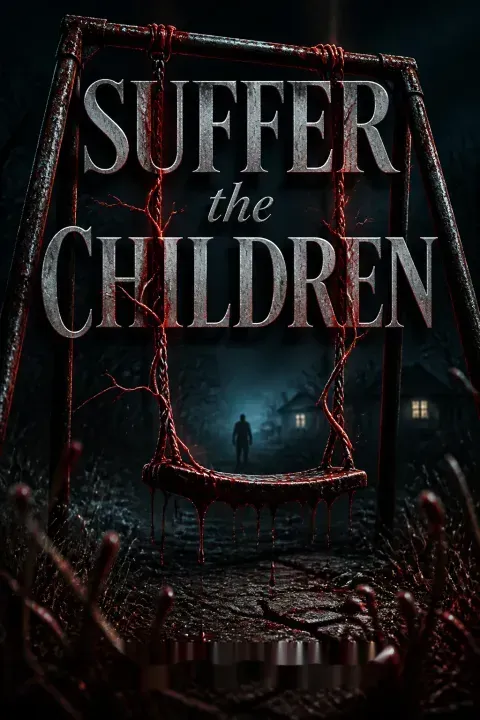
Suffer the Children reworks vampire mythology into a brutal allegory of parental sacrifice and resource scarcity. DiLouie asks a question that cuts deeper than any supernatural horror: what wouldn't you do for your child? The answer, delivered across a hundred thousand merciless words, is nothing. There is no act too monstrous, no boundary too sacred, when your child's life depends on crossing it.
The novel's structural genius lies in its escalation. The Herod Event kills every child; the resurrection returns them as something that needs blood to function; the blood requirement creates an impossible economic equation; the resulting scarcity drives parents to robbery, murder, and self-destruction. Each step feels inevitable, yet each step is a choice. Joan1 chooses to let her children feed on her. Doug2 chooses to break into a doctor's home. Ramona3 chooses to kill the one man who loved her. David4 chooses to pull the trigger.
The parasite itself is almost incidental. Herod doesn't make anyone do anything; it simply creates the conditions under which human love becomes indistinguishable from monstrousness. The children's degradation from beloved individuals into predatory shells literalizes the experience of watching a loved one succumb to addiction or dementia: they're still there, and they're gone, simultaneously.
DiLouie's Lansdowne, Michigan, is blue-collar America in miniature, a place already hollowed out by economic decline before the supernatural arrives. The sanitation worker,2 the daycare provider,1 the single mom,3 the grieving pediatrician:4 these are people for whom the American Dream was already precarious. Herod doesn't destroy their world so much as accelerate a collapse already underway. The blood economy recapitulates capitalism's darkest logic: when resources are finite, the strong consume the weak, and love becomes just another market distortion.
The ending offers no redemption. The children inherit the earth not as a blessing but as a predator species. The boy who was Nate6 weeps with joy while drinking from a teenage girl's artery. But the real horror isn't that the children became monsters. It's that their parents, one choice at a time, became monsters first.
Review Summary
Suffer the Children follows a global pandemic called Herod's Syndrome that kills all pre-pubescent children. Three days later, they return as undead creatures requiring human blood to remain "alive" temporarily. Reviewers praise DiLouie's disturbing exploration of how far parents will go to keep their children functioning, describing it as emotionally devastating yet compelling. Most found the realistic horror—societal collapse, desperate parents, moral degradation—more terrifying than supernatural elements. Comparisons to Pet Sematary are frequent. While some found it too dark or long, most gave high ratings for its originality and emotional impact.
People Also Read
Characters
Joan Cooper
Daycare mom turned sacrificial providerJoan defines herself entirely through motherhood, having modeled her life on her own mother's total devotion. She runs a home daycare in Lansdowne while raising Nate6 and Megan7 with her husband Doug2. Her resentment toward a world that doesn't value domestic labor masks a deeper fear: that she has no identity outside her children. When the crisis hits, her maternal instinct becomes both her greatest strength and her fatal vulnerability. She will give everything she has rather than accept that her children are truly gone, and her love proves as bottomless as it is self-destructive.
Doug Cooper
Sanitation worker fighting obsolescenceShaped by childhood poverty, Doug measures his worth entirely by his ability to provide for his family. The threat of losing his job to automated garbage trucks terrifies him more than physical danger. A recovering alcoholic whose drinking resurfaces under pressure, he expresses love through action: fixing things, hunting, working overtime. Unlike Joan1, who will surrender to her children's needs, Doug fights the world head-on. His devotion to Nate6 and Megan7 is absolute, but his methods become increasingly violent as the blood economy collapses every legitimate channel of provision.
Ramona Fox
Single mother, HR manager, survivorAbandoned first by her mother's death, then by her father, then by Josh's8 father, Ramona has internalized the lesson that love is conditional and always ends. Her career ambition masks guilt over not being a 'natural' mother like Joan1. She loves Josh8 fiercely but resents the sacrifices he demands. When the blood crisis forces impossible choices, she discovers a cold pragmatism beneath her polished surface. Her capacity for ruthlessness both horrifies and sustains her, revealing that her survival instincts were always stronger than her moral scruples.
David Harris
Grieving pediatrician, reluctant accompliceAfter his son Paul died in a car accident, David rebuilt himself around empirical truth: there is no deeper meaning to suffering, only cause and effect. This rationalism serves him until Herod presents a phenomenon that defies scientific explanation. He resumes his pediatric practice only to become a glorified phlebotomist, drawing blood from desperate donors to feed undead children. His conflict with his wife Nadine5, who needs the resurrection to have cosmic meaning, mirrors the novel's central tension between material and spiritual interpretations of horror. He struggles to maintain detachment in a world that rewards magical thinking.
Nadine Harris
Nurse turned blood evangelistPaul's death shattered Nadine, and she spent a year searching for meaning in meaningless tragedy. Herod's resurrection of the children gives her what she desperately needs: proof that suffering serves a divine purpose. She becomes the apostle of the blood cure, framing vampiric feeding as holy sacrifice, traveling house to house with her phlebotomy kit like a missionary. Her conviction that God demands a blood sacrifice to lift the curse gives her strength, but her need for cosmic meaning drives her to increasingly extreme acts of devotion. She genuinely believes she is saving souls.
Nate Cooper
Joan and Doug's eight-year-old sonA bright, inquisitive boy who loves geography, hockey, and his orange Giants baseball cap. He wants to be a doctor when he grows up. His death and subsequent resurrections gradually erase his personality, stripping away memories, learned behaviors, and emotional connections. His transformation from a curious child into something feral and unrecognizable illustrates the parasite's method: memory loss accelerates until only Herod's predatory programming remains.
Megan Cooper
Joan and Doug's four-year-old daughterPrincess-obsessed, empathetic, and emotionally expressive, Megan wears her oversized feelings on her sleeves. She loves hearts, fairy tales, and her stuffed animals. Her degradation mirrors her brother's6: she forgets the family dog, becomes violent during tantrums, and eventually bites her mother. Her favorite story, 'Sleeping Beauty,' becomes a dark metaphor for her condition: a princess who keeps falling asleep, waiting for true love's kiss to wake her permanently.
Josh Fox
Ramona's sickly four-year-old sonPale, scrawny, and artistic, Josh has celiac disease and a sensitive disposition. He draws elaborate pictures of monsters and, later, of 'Heaven' (the parasite's interior world). His needs dominate Ramona's3 life, and his gradual transformation into a blood-drinking predator both horrifies and empowers her. He learns to feed directly from the corpses his mother provides, becoming her partner in survival rather than merely her dependent.
Ross Kelley
Ramona's coworker turned boyfriendHandsome, easygoing, and terminally underemployed, Ross drifts through life waiting for the right woman. He genuinely cares for Ramona3 and tries to help after Josh's8 death, but he cannot accept the new world's demands. His refusal to give blood, and his insistence that the endless cycle of temporary revivals is pointless, puts him in direct conflict with Ramona's3 absolute commitment to her son. His decency becomes his death sentence in a world that has redefined morality.
Ben Glass
County medical examiner and friendA forensic pathologist who chose his field because dead people don't scream or die under your care. He and his wife Gloria were close friends with David4 and Nadine5 before Paul's death. His role in autopsying hundreds of children's bodies during the crisis makes him a target for grieving parents and corrupt authorities. He provides crucial scientific exposition about Herod's biological nature, tracking its progression from medical mystery to existential threat.
Russell
Ex-military father turned robberA veteran of Afghanistan with three children of his own, Russell brings tactical competence to the desperate fathers' blood heist. He is pragmatic, capable of violence, but haunted by what he did during war. He recruits Doug2 for the hospital robbery and serves as the group's moral anchor, insisting they avoid unnecessary harm. His fate illustrates the gap between professional violence and the amateur savagery the blood crisis demands.
Tom Rafferty
Volunteer body collector, eventual donorA childless economic development worker who volunteers to help collect dead children's bodies. Bookish and initially naive, he is traumatized by his experience at the mass burial ground. His later decision to donate two pints of his own blood to Doug's2 children, asking nothing in return, is the novel's purest act of altruism. He represents the possibility of goodness persisting even as the world collapses.
Shannon Donegal
Pregnant teenager, David's patientAn eighteen-year-old valedictorian whose boyfriend abandoned her after she became pregnant. Her unborn son Liam (renamed Jonah after the biblical figure who spent three days in darkness) briefly revives in her womb, then begins feeding on her from within. Her pregnancy becomes the most intimate and horrifying manifestation of Herod's predation: the parasite consumes her to sustain the child she carried.
Pastor Gary
Minister who loses his faithThe pastor of St. Andrew's, who lost all three of his children to Herod. When Joan1 visits him seeking comfort, she finds him chain-smoking outside his packed church, confessing that he no longer believes in a loving God. His crisis of faith crystallizes the novel's theological despair: if God exists, He either willed this atrocity or was powerless to prevent it. Neither answer offers comfort.
Mitch
Teenage donor and predatorA sarcastic, manipulative diabetic teenager who sells his blood to desperate parents. He exploits Ramona's3 desperation by demanding sexual favors in addition to payment, relishing the power his blood gives him over adults. He represents the new predatory class that emerges in the blood economy: those who have what parents need and are willing to extract any price for it.
Plot Devices
Herod's Syndrome (the parasite)
Global parasite killing and reanimating childrenA microscopic parasitic organism that infects all humans but only activates in pre-pubescent children, causing death by cerebrovascular accident. Three days after death, it reanimates the bodies. The revived children require ingested human blood to maintain consciousness and motor function (roughly one hour per pint). The parasite resides in the brain, nervous system, heart, and stomach lining, selectively erasing the host's memories and personality with each death-revival cycle and replacing them with its own hunger-driven programming. Its origin is unknown; it may have always been present in human biology, triggered by an unidentified environmental catalyst. It cannot be destroyed without killing the host children. The parasite is the novel's central engine, driving every character decision and the collapse of civilization.
Blood as Currency
Human blood becomes the sole valuable commodityAfter the resurrection, human blood becomes the most precious resource on Earth. One pint sustains a revived child for approximately one hour of consciousness. The arithmetic is catastrophic: keeping a single child awake one hour per day requires roughly fifteen pints monthly, far more than any adult can safely donate. This scarcity creates an escalating economy of donation, barter, sale, theft, and murder. Blood is sold on Craigslist under the euphemism 'baby formula,' with prices reaching thousands of dollars per pint. The blood economy serves as the mechanism driving all character decisions and the broader societal collapse.
The Resurrection-Degradation Cycle
Children erode with each revivalChildren can be revived repeatedly through blood ingestion, but each death-revival cycle causes neurological damage. The Herod parasite selectively erases stored body chemicals containing memories, personality traits, and learned behaviors. Over successive cycles, the child's original identity is overwritten by the parasite's own programming: pure, undifferentiated hunger. The children become increasingly feral, violent, and amnesiac. This cycle functions as the novel's ticking clock, forcing parents to acquire blood faster while their children simultaneously become less human and less worth saving. The cycle also represents the central tragedy: parents are destroying themselves to preserve something that is already slipping away.
Police Blood Farms
Institutionalized blood harvesting operationAs legitimate blood supplies collapse, police officers establish secret blood-harvesting operations. Homeless people, criminals, and other vulnerable populations are kidnapped, strapped to cots in converted school gymnasiums, and drained through IV tubes while sedated. The officers wear pig masks to dehumanize both themselves and their victims. The program is euphemistically called 'blood for parole,' though no one is actually released. The farms represent the state's full complicity in the new predatory order: institutions that once protected citizens now consume them. The discovery of these operations reveals that no one is safe from being reclassified as a resource.
The Blood Substitute Announcement
Government promise that cannot be keptLate in the crisis, the government announces the development of a hemerythrin-based synthetic blood substitute that can sustain the revived children. However, officials acknowledge it will not enter production for at least a month, and distribution to millions of children will take far longer. The announcement provides false hope that temporarily stabilizes society but is functionally useless to most families, whose children will decompose beyond the point of revival before the substitute arrives. The promise functions as a cruel deus ex machina that won't materialize in time, exposing the gap between institutional reassurance and the brutal timeline parents actually face.
Download PDF
Download EPUB
.epub digital book format is ideal for reading ebooks on phones, tablets, and e-readers.








































