


Plot Summary
Prologue
Paisley,1 a seventeen-year-old true crime vlogger, posts a trailer for her latest YouTube video while eavesdropping on her parents. They are arguing about an invitation she received from billionaire Malcolm Wyatt6 to spend a weekend on his exclusive new amusement park resort, Jagged Island.
Her father objects, calling the trip perverse; her mother, who dislikes Paisley's1 morbid content, hopes the experience will shift her interests toward lighter influencers. Paisley's1 older brother Blaine,12 a Princeton student, is recruited to lobby on her behalf.
After two days of debate, her father relents with a resigned sigh. Paisley1 celebrates silently, knowing that at month's end she will be one of six influencers invited to the remote, gothic-themed island accessible only by boat.
The prologue establishes the central dramatic tension between adolescent ambition and parental protection. Paisley's macabre fascination with murder, rooted in a childhood neighbor's unsolved disappearance, functions as both identity and armor. Her parents' argument externalizes an internal conflict: the father's instinct to guard against unknown dangers versus the mother's hope that exposure to beauty vloggers might normalize her daughter. The mention of Blaine as the golden child introduces a subtle sibling hierarchy where Paisley's interests mark her as different. Malcolm Wyatt's faceless invitation, with its gothic gargoyles and remote island setting, signals danger to the reader long before any character acknowledges it. The prologue functions as dramatic irony: we know Paisley will go, we know the island is isolated, and we feel her thrill while sensing the terrible weight of her throwaway line about it killing her to miss out.
Arrival at Jagged Island
Paisley1 arrives by boat with five other teen influencers: Ava,8 a brutally honest beauty vlogger; James,10 a film critic attached to Ava;8 Liam,2 a muscular gamer with a dominant personality; Harper,3 a book blogger and competitive swimmer; and Will,9 a beauty rival to Ava.8 They are greeted by Reeve,4 head of maintenance, and Gibson,5 the boat driver.
Malcolm Wyatt,6 draped in a burgundy coat despite summer heat, gives a tour of his gothic hotel filled with medieval weaponry and carved gargoyles. Paisley1 bonds fastest with Harper3 over a shared love of thrillers and dark aesthetics.
The group splits into factions almost immediately: Ava8 and James10 form a dismissive duo, while Paisley,1 Harper,3 Will,9 and Liam2 gravitate toward each other. Malcolm6 explains his rejection of Disney-style luxury in favor of sixteenth-century gothic atmosphere, then leaves the teenagers to explore the park's roller coasters and haunted house.
The arrival sequence establishes a microcosm of high school social dynamics transplanted onto an isolated stage. The influencers, accustomed to performing for audiences, now perform for each other. Paisley's immediate connection with Harper foreshadows a false intimacy that becomes the novel's central betrayal. Malcolm's conspicuous oddness (the pipe, the coat, the weapon cabinet) signals eccentricity but not yet menace; his real sin is willful blindness to family cruelty. The group's fracturing into cliques mirrors their online niches: each influencer has built a persona around a specific obsession, and these obsessions become lenses through which they initially misinterpret the danger. The gothic aesthetic, which Paisley finds thrillingly on-brand, serves as camouflage for the real horror: architectural gloom obscuring human malice.
Paisley's Midnight Adventure
Will9 proposes sneaking into the park at midnight, an idea Paisley1 eagerly accepts. She waits by the lobby fireplace, but Will9 never shows. After twenty minutes, she ventures out alone into the cold night. The empty park feels different: wind whips her hair, the ocean crashes against cliffs, and the gothic architecture casts elongated shadows.
She takes photos and walks toward the jetty, but a scrape on the ground behind her freezes her blood. She calls out, assuming Will9 is pranking her, but no one answers. A black flash whips past her peripheral vision. She retreats to the hotel, shaken, texting Will9 to accuse him of standing her up.
Her phone receives no reply. Back in her room, she rationalizes the experience: wind, birds, an overactive imagination fed by years of true crime research. But her conviction wavers. Something touched her shoulder on the ghost train earlier. Something felt like a hand.
This sequence enacts the classic slasher trope of the lone girl in the dark, but with a crucial inversion: Paisley's expertise in true crime makes her both more paranoid and more dismissive of her instincts. She cycles through rational explanations (wind, birds, practical jokes) precisely because she knows how stories of terror begin. The unseen presence crystallizes the novel's primary fear: being watched by someone who knows you better than you know them. Will's absence plants the first seed of doubt about him, but the narrative cleverly misdirects: we suspect Will because he proposed the adventure, not because we have evidence. The ghost train's phantom touch foreshadows the killer's physical intimacy with victims. Paisley's decision not to trust her gut becomes the first link in a chain of near-fatal misjudgments.
Will Is Missing
The next morning, Will9 fails to appear for breakfast. Liam2 mentions hearing Will9 moving in his room around midnight, which means Will9 was awake when Paisley1 was in the park. When Paisley1 and Liam2 knock on his door, there is no answer. Camilla,7 Malcolm's6 assistant, uses a master key to open the room.
It is empty. Will's9 bed is suspiciously neat, his makeup bags are untouched, and his phone sits charging on the nightstand. Paisley1 points out that Will9 never leaves without his phone or a full face of makeup. Camilla7 radios the team. A search of the hotel and park reveals that the main boat is gone from the jetty.
Reeve4 speculates it may have sunk in rough water. Gibson5 notes that no one would take a boat out in those conditions. Paisley1 shadows Reeve4 to the security room, where they discover something worse: the CCTV footage has been erased since the moment the influencers arrived.
The discovery of Will's absence transforms the weekend from a mystery into a crisis. Paisley's investigative instincts activate here, but the narrative subtly undermines her authority by having Camilla and the other adults dismiss her observations as paranoid. The missing boat and erased footage create a closed-circle scenario: someone on the island has sabotaged escape and surveillance. The neat bed becomes a telling detail: it suggests either Will's compulsive orderliness (unlikely, given his online persona) or that someone else made the bed to remove evidence. The phone left behind is the definitive proof of foul play, an object no influencer would voluntarily abandon. This turning point also introduces the first seed of distrust among the group: who had access, who was awake, who is lying.
Body in the Ice Cream Cart
While searching the park perimeter, Paisley1 leans against an ice cream cart. A panel falls loose, and Will's9 body tumbles out, one bloody hand slapping the asphalt. A deep gash cleaves his chest. Liam2 grabs Paisley,1 spinning her away, but she has already seen the vacant eyes and pooled blood.
She screams and radios the others. Reeve,4 Gibson,5 and Camilla7 arrive within minutes. Camilla7 retches and turns away. Harper3 stays by the hotel gate, arms wrapped around herself, refusing to look. The boys carry Will's9 body out of sight while Paisley1 watches from the lobby window, bile rising.
No one had searched the carts because no one imagined a body could fit inside one. The discovery recasts every shadow on the island as potential threat. The group huddles in the hotel lobby, phones useless, Wi-Fi dead, storm approaching. Malcolm6 lights a fire no one needs, and Camilla7 whispers to him with wild, frightened eyes.
The corpse's discovery is the point of no return: the weekend transforms from an unsettling puzzle into a survival scenario. Will's body, hidden in plain sight near where the group congregated, demonstrates the killer's audacity and spatial control. The staging matters: he was not merely killed but displayed, his hand positioned as if reaching toward rescuers. Paisley's reaction moves from clinical distance (she has seen bodies on screens) to visceral horror. Liam's protective instinct establishes him as a potential ally while simultaneously positioning him near every critical event. The adults' helplessness (Camilla's vomiting, Malcolm's useless fire) undermines the teenagers' expectation that authority figures will save them. This is the moment Paisley realizes she must rely on her own investigative skills, not external rescue.
Sabotage in the Basement
Reeve4 takes Paisley1 to the service room to investigate the Wi-Fi outage. In the basement, rows of electrical switchboards line the walls. They find the internet wires cleanly snipped. Someone with access codes and tools did this intentionally, not the storm.
Paisley1 theorizes a cell jammer must also be operating, which explains why phones lost service even before the Wi-Fi went down. Meanwhile, the group realizes Kenna,11 the cook, is also missing. Malcolm6 and Camilla7 go to find water for the injured Reeve4 but do not return. Suspicion shifts toward Camilla,7 whose behavior has become increasingly erratic.
Paisley1 recalls overhearing Camilla7 whisper a name during the earlier panic: Robert.2 Reeve4 pulls up staff files and finds Robert Jenkins,2 whose last name matches Camilla's.7 His staff photo has been deleted, and he has not punched in since Tuesday. Camilla7 has an adult son no one knew about.
The basement discovery crystallizes the threat: this is not random violence but a planned operation. The cut wires and jammer demonstrate technical knowledge and premeditation. Paisley's theory about the jammer, initially speculative, proves correct because she thinks like an investigator rather than a victim. The introduction of Robert as Camilla's son adds a familial dimension to the horror: the killer may be someone's child, operating with inside knowledge. Camilla's whispered fear suggests she suspects her son but has not warned the group, either out of maternal protection or paralyzing terror. The deleted staff photo and missing punch records indicate someone has been systematically erasing Robert's presence from the island's records. The question shifts from who is killing to why a mother would protect her murderous son.
Lights Out, James Dead
As the group reconvenes in the lobby, the lights suddenly cut. In total darkness, people shout, move, and panic. Paisley1 hears a thud, then a groaning gargle, then Ava8 screaming that something happened to James.10 When the lights return, James10 is slumped in his chair with a knife driven through his chest.
Ava8 wails on the floor. Harper3 backs away. Camilla7 presses herself against the window. Reeve4 is not in the room: he claims he was struck from behind while trying to reach the breaker box, and woke in the kitchen with a head wound. Paisley1 notices the knife is inserted straight, meaning the killer2 stood in front of James,10 not behind him.
No tables or chairs were knocked over despite the darkness. The killer2 must have used night vision equipment to navigate. The group retreats to a first-aid hut in the park, now certain the killer2 can see in the dark and has access to every room.
The second murder escalates the threat from targeted to opportunistic. James's death in a room full of people demolishes the safety-in-numbers assumption the group had clung to. The killer's use of night vision technology introduces an asymmetric advantage that makes darkness a weapon rather than a hiding place. Paisley's forensic observation (knife angle, undisturbed furniture) demonstrates her growing competence under pressure. Reeve's convenient absence and convenient wound make him the most obvious suspect, but the narrative deliberately overplays this: he is too obvious, his explanation too neat. The killer's theatricality (orchestrating a blackout, using medieval weaponry from Malcolm's collection) suggests someone performing violence as public spectacle.
Camilla's Final Conversation
Gibson5 and Paisley,1 searching the park, spot the cell jammer near a tree. Before they can act, Camilla7 appears, walking toward a masked figure in black. She raises her palms in surrender. They speak briefly: she seems to be reasoning with him, perhaps pleading. Then the masked figure, Robert,2 jabs a knife into her gut.
Camilla7 drops to her knees, staring up with betrayed eyes. He stabs her repeatedly while Gibson5 clamps a hand over Paisley's1 mouth to silence her scream. From hiding, Paisley1 watches Camilla's7 lips form the name Robert2 over and over as she bleeds out on the path.
The killer2 stands over her body, watching her die, before walking away. Gibson5 and Paisley1 flee. Later, when they regroup with Harper3 and Ava,8 they realize Robert2 moved the jammer while they were escaping. Ava,8 who was supposed to be lookout from the restaurant, confesses she hid in a cupboard the entire time.
The murder of Camilla is the novel's most psychologically complex killing. She approaches her son with palms raised, the universal gesture of peace, not self-defense. Her failure to warn the group earlier suggests either denial powerful enough to override maternal instinct or complicity that curdled into self-preservation. The repeated stabbing indicates rage beyond efficiency: this is punishment, not elimination. Paisley's forced witness position (held by Gibson, mouth covered) mirrors the viewer's relationship to true crime content: we consume violence from a remove, until suddenly we do not. The revelation of Ava's cowardice adds a layer of moral complexity: heroism is not equally distributed, and self-preservation looks different for different people. The missing jammer reasserts the killer's control over information flow.
Escape by Sea
Robert,2 now armed with a medieval sword from Malcolm's collection, corners Gibson,5 Harper,3 Ava,8 and Paisley1 at the service jetty. The rowboats have been sunk. Pinned between Robert2 and the ocean, the four have no choice. They jump. The freezing water steals Paisley's1 breath.
She kicks toward the surface, but a current catches her, dragging her toward the rocks. She slams into the cliff face, claws at the jagged stone, and finds a lip to cling to. Above her, the others are now distant dots, swimming for the main jetty. Gibson5 yells at her to keep going. Paisley's1 grip fails, and she plunges back into the water.
She fights the current a second time, swimming out to sea before angling toward the jetty. Exhausted, bleeding from a gash on her forehead, she hauls herself onto the wooden planks and collapses. Alone. No sign of Robert.2 No sign of the others. She stands on shaking legs and moves inland, determined to find the jammer.
The ocean plunge represents death and rebirth: Paisley enters the water as one of a group and emerges alone, baptized into a new, harder self. Her solo survival (the current, the rocks, the climb) strips away all remaining dependency on others. The image of her clinging to the cliff face, fingers cramping, is the novel's most visceral depiction of the will to live. The current that nearly kills her also separates her from the group, and this separation becomes tactical advantage: Robert may believe she drowned. The bleeding head wound, the second head injury she has sustained, signals that physical trauma is accumulating, but Paisley has stopped cataloging her own pain. She has transitioned from thinker to survivor. The missing jammer remains her objective, proof that her investigative identity has not been fully subsumed by panic.
The Haunted House Chase
Reunited with Liam,2 Paisley1 shares what she knows: the jammer's location, Camilla's7 death, Ava's8 cowardice. But when Robert2 ambushes them near the haunted house, Gibson5 and Paisley1 are separated inside. Gibson5 escapes through one exit while Paisley1 darts through the serial killer exhibit, hiding behind wax figures of Bundy, Dahmer, and Shipman.
Robert2 stalks through the rooms, his boots echoing on the floorboards. Paisley1 nearly escapes but stumbles upon Kenna's11 body behind a door, throat slit, a halo of blood beneath her head. She screams. Robert2 closes in, grabs her from behind, and clamps a leather-gloved hand over her mouth.
She manages to twist free, snatch his knife from his cargo pocket, and stab at his leg. He releases her. She runs. Outside, Robert2 disappears, and Gibson5 finds her shaking. She tells him Kenna11 is dead. They spot Reeve4 in the distance and sprint for the hotel, hoping to regroup before nightfall.
The haunted house sequence literalizes the novel's central metaphor: Paisley, who has spent years studying murderers, now hides among their effigies from a real one. The wax figures function as a hall of mirrors, reflecting her obsession back at her. Robert's choice to pursue her through this specific attraction suggests either contempt for her interests or an attempt to frame her murder as fitting. The discovery of Kenna's body connects to the earlier unspoken pact to not search for her: guilt materializes as a corpse. Paisley's successful theft of the knife is the first time she has directly disarmed the killer, marking her shift from passive victim to active combatant. The moment she stabs at his leg, she crosses a psychological threshold: she has attempted to kill someone, and the attempt changes her self-conception permanently.
The Fire and Ava
The group regroups and decides to set fire to the check-in booths as a distress signal. Gibson5 and Liam2 douse the wooden structures with alcohol while the others watch for Robert.2 The flames catch, then roar. Without warning, hidden chemicals in the unused booth trigger an explosion. Paisley1 is thrown backward, her head cracking against stone.
Dazed, she hears a voice screaming that Robert2 is there. When her vision clears, she finds Ava8 stumbling toward her with a shard of glass embedded in her collarbone. Paisley1 and Harper3 drag Ava8 behind a park map to hide. Ava8 shivers, going into shock, asking why it is so cold.
Harper3 locates them and crouches nearby. Then Robert2 appears, sword in hand. He chases the three girls along the cliff's edge. Ava,8 slow and injured, cannot keep pace. Paisley1 pulls her hand, but Robert2 catches up. He plunges the sword into Ava's8 chest, then stabs again and again while Paisley1 and Harper3 flee, screaming.
The fire, a symbol of rescue and human ingenuity, becomes an instrument of further destruction. The explosion functions as a narrative trick: the group's best plan backfires because they could not anticipate the hidden accelerant, just as they could not anticipate the killer hiding among them. Ava's death completes her arc from arrogant beauty vlogger to terrified teenager. Her earlier cowardice (hiding in the cupboard) becomes tragic rather than contemptible: she was right to be afraid. The glass in her collarbone and the sword through her chest create parallel wounds: one accidental, one deliberate. Paisley's attempt to save her by pulling her hand is the novel's most heartbreaking image of futile solidarity. Robert's familiar eyes glimpsed through the mask confirm what the reader may have begun to suspect: the killer is not a stranger.
Liam Is Robert Jenkins
Paisley1 and Harper3 flee Robert2 into the park, but he corners them between the gate and the cliff's edge. He removes his ski mask. It is Liam.2 He explains: his real name is Robert Liam Jenkins,2 son of Camilla7 and nephew of Malcolm Wyatt.6
Their wealthy grandparents disinherited Camilla,7 favoring Malcolm6 solely because he was male. After the grandparents died, Malcolm6 inherited everything. He kept Camilla7 employed as his personal assistant at a pittance while he lived as a billionaire.
Liam2 grew up watching his mother work herself to exhaustion for a brother who never shared his fortune. He built his gaming channel as a cover, befriending Harper3 online two years prior. Together they planned to destroy Malcolm's6 reputation by staging accidents on the island.
But when Malcolm6 failed to recognize his own nephew on arrival, Liam's2 hatred intensified. He escalated the plan to murder, stabbing Malcolm6 in the back in a storeroom. Camilla,7 he admits, was not part of the killing. She suspected him and tried to stop him, and he killed her for it.
The Liam reveal recontextualizes every earlier interaction. His flirting with Paisley, his protective gestures, his split-second absences: all were performance. The family backstory introduces a critique of patriarchal inheritance: Malcolm's wealth and Camilla's poverty are products of the same gendered injustice. The novel does not excuse Liam's murders but explains them as the product of intergenerational trauma and economic violence. Malcolm's failure to recognize his nephew is the narrative's most damning detail: the billionaire was so disconnected from his own family that he did not know what his sister's son looked like. This absence of recognition becomes the wound that Liam literalizes with his blade. Camilla's tragic arc (loyal servant, desperate mother, failed interventionist) makes her the novel's most complex figure: neither fully victim nor fully accomplice.
Harper's Knife, Gibson's Blood
Paisley1 and Reeve,4 who has found them after discovering Gibson's5 body (stabbed, murmuring a final warning), sprint for the jetty where a rescue boat approaches. Robert2 blocks their path, sword ready. As Reeve4 prepares to fight, Paisley1 feels cold metal against her throat.
Harper3 presses a knife to Paisley's1 neck and laughs. She and Liam2 have been partners the entire time: they met online two years ago, bonded over controlling families, and planned the island massacre together. Harper3 killed Gibson.5 Harper3 stole and sank the boat, then swam back.
Every conversation Paisley1 shared with her was intelligence gathering. Reeve4 reacts to the betrayal by inventing a lie: he tells Harper3 that Liam2 kissed Ava,8 a claim designed to enrage her. Harper's3 grip falters as she processes the perceived betrayal.
Paisley1 drops, seizes Harper's3 knife, and drives it into Harper's3 side. The blade sinks in with shocking ease. Harper3 stares at her, stunned, repeating that Paisley1 did it. Reeve4 punches Robert2 repeatedly while the rescue boat crew shouts for them to stop.
Harper's betrayal is the emotional climax of the novel because it violates the one relationship Paisley believed was genuine. Their earlier bonding (the shared love of thrillers, the instant intimacy) was entirely manufactured. The novel suggests that digital-age friendships, forged through curated online personas, are indistinguishable from real ones until tested. Reeve's quick thinking (using jealousy as a weapon) demonstrates emotional intelligence that Paisley's forensic approach could not provide. Paisley's stabbing of Harper completes her transformation from observer to participant in violence. The ease with which the blade penetrates human flesh is the book's most disturbing detail: killing, Paisley discovers, is not difficult. The rescue boat's arrival, perfectly timed, creates dramatic irony: salvation is meters away, but Robert still holds the power to destroy it.
Into the Water Together
The rescue boat pulls up to the jetty. Harbor patrol officers lean over the side, shouting at the blood-soaked teenagers. Reeve4 catches a thrown rope and prepares to help Paisley1 aboard. Then Robert2 slams into her from behind. His arms lock around her waist, and together they plunge off the jetty into the sea.
Paisley's1 scream is swallowed by water. The last thing she sees is Reeve's4 horrified face above the surface. The novel ends here: Paisley,1 a true crime vlogger who spent years studying how people die, dragged underwater by a killer2 whose motives she finally understands. The rescue boat is right there. Seven people are dead.
Harper3 is bleeding on the rocks, perhaps dying. Robert2 may be trying to drown them both or simply refusing to face justice alone. The ambiguity of the ending mirrors the uncertainty that has defined the entire weekend: nothing on Jagged Island was what it seemed, and no one who stepped onto the jetty will leave unchanged.
The ending's deliberate ambiguity weaponizes the reader's investment in Paisley's survival. By denying closure, the novel forces us to sit with the same uncertainty the characters have endured. Robert's final act is not a murder but a refusal: he will not be taken, and he will not let his story be told by survivors. His choice to drag Paisley rather than simply kill her suggests he sees her as a worthy adversary, the only person who came close to understanding him. Reeve's horrified face, frozen in the moment of rescue, becomes a mirror for the reader: we are witnesses to violence we cannot stop. The novel's true subject is not the murders but the systems of inheritance, recognition, and online performance that created the conditions for them. Jagged Island becomes a microcosm of a world where wealth hoarding and emotional neglect produce monsters, and where teenagers, armed with phones and followers, can either document horror or become it.
Analysis
The Island operates as a slasher thriller in the tradition of Agatha Christie's And Then There Were None, but its true subject is the violence of inheritance. Malcolm Wyatt's6 fortune, hoarded at the expense of his sister Camilla,7 produces Robert,2 a monster shaped by economic neglect and patriarchal preference. The grandparents' decision to disinherit their daughter because of her gender is the novel's primal crime, and every subsequent murder flows from it. This structural critique (wealth inequality as intergenerational trauma) elevates the narrative above genre formula. The killers2 are not evil incarnate but products of a system that punished Camilla's7 femaleness and then punished her son's2 response to that punishment. The influencers, with their curated personas and follower counts, represent the false meritocracy of digital fame: they believe they have earned their platforms through talent, just as Malcolm6 believed he earned his fortune through birthright. The island setting literalizes the isolation that wealth creates: even surrounded by people, the truly rich are unreachable. Paisley's1 true crime obsession, initially presented as quirky, becomes the skill set that keeps her alive. She is the only character who treats the murders as data rather than chaos, cataloging wounds, testing theories, and revising conclusions. Her arc from consumer of violence to participant in it (stabbing Harper3) raises uncomfortable questions about the voyeurism inherent in the true crime genre. The novel's ambiguous ending with Paisley1 dragged underwater by Robert,2 rescue boat feet away, refuses catharsis. Justice is not delivered; it is merely glimpsed from a distance, as uncertain as a boat in fog. The real horror of The Island is not the masked killer but the family secrets that created him, and the recognition that monsters are not born on islands: they are raised in mansions.
Review Summary
The Island by Natasha Preston receives mixed reviews averaging 3.47/5 stars. Readers appreciate the engaging premise of influencers trapped on an island with a killer, praising its fast pace and Gothic atmosphere. However, the ending draws widespread criticism for being abrupt, unsatisfying, and cliff-hanger style, with many feeling cheated by the lack of closure. Common complaints include flat characters making illogical decisions, predictable plot twists, weak killer motivations, plot holes, and juvenile writing. Some readers found it entertainingly bad while others considered it genuinely poorly written. The audiobook narrator received praise.
People Also Read
Characters
Paisley
True crime vlogger protagonistA seventeen-year-old with a massive social media following built on true crime content. Paisley's fascination with murder began when her neighbor Elliana was killed by her own father. She processes trauma through investigation, filling notebooks with case details. On Jagged Island, her expertise becomes survival skill: she catalogs wounds, tracks suspects, and deduces the jammer's existence. Beneath the analytical exterior, she craves normal teenage experiences (crushes, friendship). Her relationships with Reeve4 and Harper3 reveal her hunger for connection, which makes Harper's3 betrayal devastating. Paisley's arc moves from passive observer to active combatant: she steals the killer's2 knife, stabs Harper3, and nearly drowns fighting Robert2. She discovers that understanding violence and surviving it are different capacities entirely.
Robert Liam Jenkins (Liam)
Killer posing as gamer influencerMalcolm's6 nephew, Camilla's7 son, and the orchestrator of the island murders. Liam built his gaming influencer persona to infiltrate the weekend, hiding his real name and his relationship to the island's owner6. His grandparents favored Malcolm6 for inheritance solely due to gender, leaving Camilla7 penniless despite her years of labor. Malcolm6 compounded this by employing his sister7 as an underpaid assistant while building a billionaire's playground. Liam's ideology of revenge calcified over years of watching his mother's7 exhaustion. He met Harper3 online, and their shared rage at controlling families forged a romantic and homicidal partnership. He kills without hesitation but reveals a need to be understood when he confesses his motives to Paisley1. His final act is dragging her into the sea rather than facing capture.
Harper
Accomplice posing as book bloggerA competitive swimmer and voracious reader whose online persona masked her true alliance with Liam2. Harper met Liam2 online two years before the island weekend, bonding over strict, controlling parents who demanded academic and athletic perfection. She agreed to help sabotage Malcolm's6 resort, then escalate to murder. Her athleticism enabled her to steal and sink the boat, then swim back to the island unobserved. She befriended Paisley1 specifically to monitor the most likely person to solve the mystery, feigning warmth while gathering intelligence. Her betrayal stings most because it was so complete: every shared laugh, every whispered confidence, every moment of apparent solidarity was strategic. When jealousy over a fabricated infidelity breaks her focus, Paisley1 stabs her.
Reeve
Head of maintenance with a pastA handsome eighteen-year-old who served nine months in juvenile detention for assault: he knocked a man unconscious while defending friend Gibson5 from a beating. Malcolm6 was the only employer willing to hire him after release. On the island, Reeve acts as a protector, leading searches and taking Paisley1 into his confidence about his criminal record. His attraction to Paisley1 is genuine, though she initially suspects him because of his conviction. His guilt over Gibson's5 death nearly breaks him, but Paisley's1 need pulls him back to action. His quick lie about Liam2 kissing Ava8 creates the opening Paisley1 needs to disarm Harper3. He survives to witness Paisley1 being dragged underwater, a final image of helpless horror.
Gibson
Loyal boat driver and best friendReeve's4 childhood friend who secured him the island job. Gibson is competent at sea, respecting the ocean's danger after witnessing a friend drown in a storm. He protects Paisley1 during the Camilla murder7, covering her mouth to keep her silent. When Harper3 kills him, he uses his last words to warn Reeve4 about her, though the warning is initially misinterpreted. His death devastates Reeve4, whose protective rage at the killer2 is rooted in the same loyalty that once landed him in juvenile detention. Gibson represents uncomplicated decency in a cast of compromised characters.
Malcolm Wyatt
Billionaire island owner and neglectful uncleThe eccentric creator of Jagged Island, obsessed with sixteenth-century gothic aesthetics. He inherited his parents' fortune entirely, leaving his sister Camilla7 with nothing but a low-paying job as his personal assistant. He does not recognize his own nephew when Liam2 arrives on the island. His wealth insulates him from consequences until Liam2 ties him to a chair in the storeroom and forces him to confess his callousness. Malcolm dies with a sword through his back, the same way his parents metaphorically stabbed their daughter by disinheriting her. His fatal flaw is not malice but willful blindness.
Camilla Jenkins
Malcolm's assistant and Liam's motherThe emotional core of the novel's tragedy. Camilla was raised in wealth but disinherited because she was female. She worked tirelessly for her brother6, who paid her poorly and barked orders. She agreed to help Liam2 sabotage the island believing no one would be hurt. When she realized her son2 had escalated to murder, she tried to stop him, approaching him with raised hands. He stabbed her repeatedly. Her final moments are a whispered repetition of her son's2 name. Camilla embodies the cost of patriarchal inheritance systems: her life was defined by what she was denied.
Ava
Vain beauty influencerA TikTok beauty vlogger with a reputation for brutal honesty. On the island, Ava is dismissive and hostile, referring to staff as 'the help' and complaining constantly. But her arrogance masks fragility: when James10 is murdered beside her in the dark, she unravels. She agrees to be lookout, then hides in a cupboard during the crisis, consumed by terror. Her final moments are spent running with a shard of glass in her collarbone, cold and afraid, before Robert's2 sword pierces her chest. Her death reframes her earlier behavior as misguided self-protection rather than cruelty.
Will
First victim, beauty vloggerA makeup artist with a polished online presence. Will proposed the midnight adventure to Paisley1, then never showed. His body is found stuffed in an ice cream cart with multiple stab wounds to the chest. The neatness of his hotel room suggests he never slept there: Robert2 likely ambushed him before he could leave.
James
Second victim, film criticAva's8 boyfriend during the weekend, a movie reviewer rarely impressed by anything. He is killed in the lobby blackout, a knife driven through his chest while four others sat in the same room. His death demonstrates the killer's2 ability to navigate total darkness, likely using night vision equipment.
Kenna
Third victim, island cookThe Jamaican-born chef whose meals were one of the weekend's few pleasures. Her body is discovered by Paisley1 in the haunted house, throat slit. Her death occurs early, possibly because she stumbled upon the killer's2 preparations. She leaves behind a young daughter, Gabrielle.
Blaine
Paisley's supportive older brotherA Princeton biochemistry student and the family golden child. Blaine persuaded their parents to let Paisley1 attend the island weekend, arguing it was a once-in-a-lifetime opportunity. His advocacy, though well-intentioned, sends his sister into mortal danger.
Plot Devices
Jagged Island
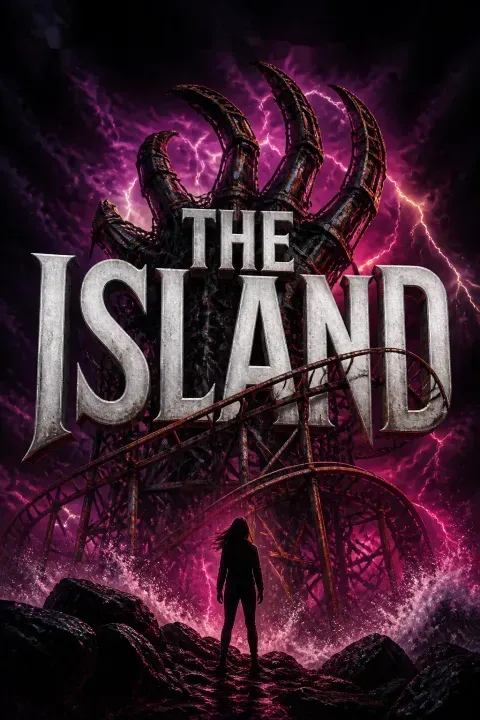
Isolated murder setting with no escapeMalcolm Wyatt's6 private amusement park resort, built on a remote island reachable only by boat. The gothic architecture (gargoyles, pointed arches, medieval weaponry) creates an atmosphere of curated menace that camouflages real danger. The island's isolation becomes a weapon once the boat is stolen and communications are sabotaged. Its various attractions (haunted house, roller coasters, ice cream carts) are transformed from entertainment venues into hiding places for bodies. The dual jetties and cliffside paths become the geography of pursuit. Malcolm's6 obsession with sixteenth-century aesthetics unintentionally provides the killer2 with an arsenal of replica weapons stored in the lobby display case. By the novel's end, the island has absorbed seven deaths, and its promised opening to wealthy guests will never occur.
Cell Jammer and Cut Wires
Technology that traps everyoneA high-power cell jammer, hidden near the park's entrance, blocks all phone signals across the island. Combined with the snipped internet wires in the basement, it eliminates every method of contacting the mainland. The jammer's range is wide enough to require a large device, not a handheld model, which means it was planted deliberately and requires guarding. Robert2 moves it after Paisley1 and Gibson5 discover its location, forcing the group to continue searching even as they are hunted. The device represents the killer's2 technical sophistication and the vulnerability of a generation dependent on constant connectivity. Without their phones, the influencers lose their primary tools of documentation, self-presentation, and rescue.
Malcolm's Weapon Collection
Provides the killer with medieval armsA glass-fronted display case in the hotel lobby filled with replicas of medieval weaponry: short swords, axes, labrys axes, and a mace. Malcolm6 commissioned authentic recreations that, while not antique, are fully functional. Paisley1 notices two empty hooks in the display, suggesting items were removed. Robert2 uses a short sword from this collection to kill Camilla7, Ava8, and Malcolm6. The weapons are both practical (sharp, lethal) and symbolic (representing Malcolm's6 wealth and obsession, turned against him). The lobby case is unlocked and accessible to anyone with a master key, which the killer2 has. The displayed weapons transform the hotel's aesthetic from gothic-chic to arsenal, blurring the boundary between decoration and danger.
Erased CCTV Footage
Eliminates all video evidenceThe island's security cameras stopped recording the moment the influencers arrived, and all footage from before their arrival has been deleted. Even the backup files are gone. Reeve4, who operates the system, lacks the technical knowledge to restore them. The erasing of footage suggests someone with administrator access, which implicates Camilla7 (who had access) or Harper3 (who may have been given codes). Without footage, there is no way to verify anyone's movements or identify Robert's2 face. The missing records also conceal Paisley's1 own midnight rule-breaking, creating a mutual silence between her and anyone else who was out that night. The security room becomes a site of repeated frustration: evidence always just out of reach.
The First-Aid Hut
Temporary safe haven during the stormOne of three small medical buildings spread across the park, stocked with bandages, tools, and a radio. The group retreats here after James's10 murder, using it as a base while the storm rages outside. Camilla7 unlocks it with a keypad code, and the group patches Reeve's4 head wound with supplies from the cabinet. A hammer found in the toolbox becomes Paisley's1 only weapon. The hut's radio connects them to the killers'2 channel for a brief, terrifying moment when they hear Reeve4 groaning for help, a transmission that lures Paisley1 back into danger. The hut represents temporary safety and the false promise that medical supplies can treat what is fundamentally a threat of violence rather than illness.
About the Author


Download PDF
Download EPUB
.epub digital book format is ideal for reading ebooks on phones, tablets, and e-readers.








































