
Plot Summary
Signals in the Void
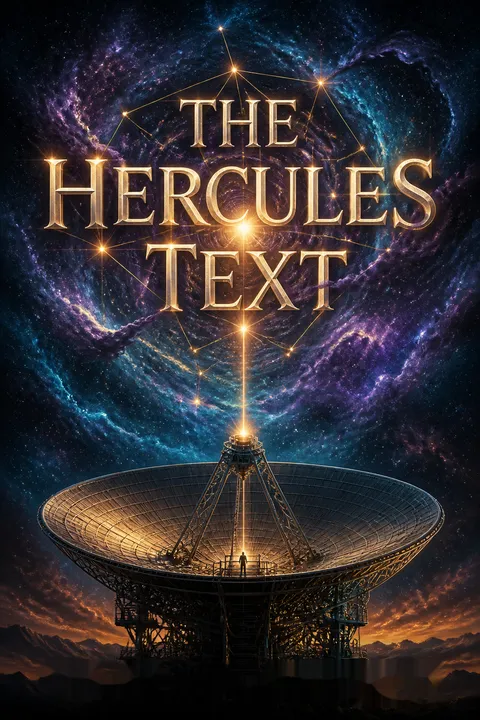
At NASA's Goddard Space Center, Harry Carmichael's life is already unraveling when a cosmic anomaly interrupts the monotony of scientific observation. An X-ray pulsar in the Hercules constellation abruptly ceases its regular emissions, then resumes in a pattern that suggests intelligent control. The event electrifies the scientific community, hinting at the long-sought "LGM" (Little Green Men) signal. As the team scrambles to interpret the data, the world outside remains oblivious, but for those at Goddard, the universe has just become a far less lonely place. The emotional weight of the discovery is matched only by the personal turmoil Harry faces at home, setting the stage for a collision between the cosmic and the intimate.
Fractures at Home
Harry's marriage to Julie is quietly collapsing, their son Tommy's diabetes a constant shadow. The night of the signal's arrival, Harry's domestic world is as turbulent as the scientific one. Julie's decision to leave, and the pain of separation from his son, mirror the uncertainty and loss of control Harry feels at work. The emotional resonance of the family's disintegration is heightened by the cosmic event, as if the universe itself is echoing Harry's sense of isolation and helplessness. The comet in the sky becomes a symbol of both wonder and impending dissolution, threading together the personal and cosmic arcs.
The LGM Revelation
Ed Gambini, the project's charismatic physicist, is convinced the pulsar's behavior is a deliberate message. The pattern of pulses, mathematical and precise, cannot be explained by natural phenomena. Yet skepticism abounds—Director Rosenbloom fears public embarrassment and political fallout, while Harry and others struggle to balance scientific rigor with the thrill of possible contact. The team debates the meaning and risks of the signal, aware that the implications could upend not only science but society itself. The tension between belief and doubt, ambition and caution, becomes a defining feature of the project's early days.
Gathering the Minds
As the significance of the signal becomes undeniable, Gambini calls in a diverse team: cosmologist Baines Rimford, psychologist Leslie Davies, priest-scientist Pete Wheeler, and microbiologist Cyrus Hakluyt. Each brings a unique lens—mathematical, philosophical, spiritual, biological—to the mystery. Their interactions are fraught with ego, skepticism, and hope. The group's debates reflect humanity's own uncertainties about its place in the cosmos, and the challenge of interpreting a message from a civilization unimaginably distant in both space and time. The project becomes a crucible for both scientific discovery and personal transformation, utilizing multiple perspectives and disciplines.
The World Reacts
When the U.S. government finally announces the discovery, the world's response is a mix of awe, skepticism, and anxiety. Political leaders, religious authorities, and the public grapple with the implications. Some see hope for unity, others fear existential threats or loss of faith. The media frenzy, protests, and international tensions underscore the fragility of human institutions in the face of the unknown. Harry and his colleagues are thrust into the spotlight, their actions scrutinized and second-guessed. The signal's meaning becomes a battleground for competing worldviews, and the project's secrecy breeds suspicion and resentment.
The Second Transmission
After weeks of silence, a second, more complex transmission arrives—this time in radio waves, encoded in binary. The team's excitement is tempered by fear: what if the message contains knowledge too dangerous for humanity? As they begin to decode the data, it becomes clear that the Altheans possess technology and understanding far beyond Earth's. The government, now deeply involved, imposes strict security, fearing military or existential threats. The scientists are torn between their duty to share knowledge and the responsibility to protect humanity from its own worst impulses.
Secrets and Dilemmas
The project's secrecy deepens, straining relationships within the team and with the outside world. Scientists protest, some threaten to walk out, and the public grows restless. The government's desire to control the information clashes with the scientific ethos of openness. Harry, caught between bureaucratic loyalty and personal conscience, faces impossible choices. The team discovers that the Althean message includes not only mathematics and physics but also philosophy, art, and hints of their biology—raising profound questions about what it means to be intelligent, moral, and alive.
The Pandora Text
As translation progresses, the team uncovers data sets containing instructions for technologies that could revolutionize—or destroy—human civilization: unlimited energy, genetic manipulation, weapons of unimaginable power. Baines Rimford, recognizing the potential for catastrophe, destroys a portion of the Text. The group is divided: some argue for total destruction, others for careful stewardship, and a few for open dissemination. The "Manhattan Option"—the deliberate erasure of the Text to prevent its misuse—becomes a real and urgent possibility. The project's internal debates mirror humanity's own struggle with the double-edged sword of knowledge, as the Text as Pandora's Box reveals its true nature.
Faith and Doubt
The Althean message shakes the foundations of faith and philosophy. Religious leaders debate the implications for doctrine, salvation, and the uniqueness of humanity. Some find reassurance in the vastness of creation, others see a threat to core beliefs. The Text's references to communication with the dead, the absence of history or psychology, and the apparent unity of the Althean mind challenge human assumptions about individuality, mortality, and the soul. The project's members, especially Wheeler, grapple with their own beliefs, doubts, and the possibility that the universe is far stranger—and lonelier—than anyone imagined.
The Price of Knowledge
The release of even partial information from the Text triggers economic chaos, political crises, and social unrest. Stock markets crash on rumors of new energy sources; religious and ideological factions clash; violence erupts at Goddard. The scientists themselves are not immune: Majeski dies in a failed experiment with Althean technology, and Gambini suffers a heart attack under the strain. The cost of knowledge—personal, societal, existential—becomes painfully clear. The team is forced to confront the limits of human wisdom and the dangers of hubris.
The Manhattan Option
With the government poised to seize control, Wheeler and Harry face the ultimate decision: destroy the Text to save humanity, or hide it in the hope that future generations will be wiser. The team is divided, but the urgency of the moment forces action. In a tense, clandestine operation, they erase the official copies of the Text, but Harry secretly preserves a duplicate, hiding it in a place only he knows. The act is both betrayal and hope—a gamble that the future will judge kindly.
The End of the World
As the U.S. and Soviet Union teeter on the edge of nuclear war, the fate of the Text becomes entangled with the fate of the world. The Soviets demand access, threatening annihilation; the U.S. government, desperate for an advantage, is willing to risk everything. The scientists' refusal to cooperate is both an act of conscience and a final assertion of human agency. In the end, the crisis is averted not by technology, but by the recognition of shared vulnerability and the limits of power. The Text, now lost to both superpowers, becomes a symbol of both the promise and peril of knowledge.
The Althean Mirror
In the aftermath, the survivors reflect on what they have learned—and what they have lost. The Althean message, stripped of its technological secrets, remains as a mirror in which humanity sees both its potential and its limitations. The absence of history, art, and individuality in the Text suggests a civilization that has transcended—or lost—what makes life meaningful. The scientists, scattered and changed, must come to terms with the consequences of their choices and the enduring mystery of the universe.
Unintended Consequences
The fallout from the project continues: economic instability, political realignment, personal reckonings. Some, like Hakluyt, pursue the promise of genetic mastery; others, like Gambini, are broken by the loss of their life's work. Harry, now an exile from his former life, finds unexpected solace and connection with Leslie. The world moves on, changed in ways both subtle and profound. The Text, hidden and perhaps forgotten, remains a latent force—a Pandora's box waiting for another hand.
The Collapse
The collapse of the Hercules Project marks the end of an era. The team is disbanded, the Text lost, and the promise of contact with another intelligence recedes into myth. The institutions that once seemed unassailable—science, government, faith—are revealed as fragile, their authority undermined by the very knowledge they sought. The survivors are left to pick up the pieces, haunted by what might have been and what still might be.
The Last Decision
In the final reckoning, Harry and Wheeler must decide the ultimate fate of the Text. The choice is not between good and evil, but between competing visions of responsibility and hope. The decision to hide, rather than destroy, the Text is an act of faith—not in God or science, but in the possibility that humanity can grow into its inheritance. The story ends not with triumph or despair, but with the quiet persistence of life and the enduring mystery of the stars.
The Text in Exile
Harry buries the Text in a forgotten pump house, its secrets safe for now. The act is both a burden and a relief, a final gesture of stewardship in a world unready for the knowledge it contains. The project's survivors go their separate ways, changed by what they have seen and done. The universe remains silent, the Althean signal a fading echo. Yet the possibility of future contact, of understanding, endures—a testament to the resilience and curiosity of the human spirit.
The Lonely Universe
In the epilogue, Baines Rimford contemplates the ultimate questions: the shape and purpose of the universe, the possibility of design, the meaning of intelligence. The Althean message, with its hints of a solitary mind adrift in the void, becomes a metaphor for humanity's own search for connection and meaning. The story closes on a note of wonder and humility, the stars still singing, the answers still elusive.
Epilogue: Four Corners
Life goes on. The world, forever changed by the brief brush with the other, returns to its routines. The scientists, politicians, and dreamers who touched the edge of the infinite are left with memories, regrets, and a few hard-won insights. The Text, buried and silent, waits for another age. The universe, vast and indifferent, remains—its secrets intact, its possibilities undiminished.
Analysis
The Hercules Text is a profound meditation on the double-edged nature of knowledge and the responsibilities that come with discovery. At its core, the novel asks: What does it mean to be human in a universe that may be indifferent, empty, or even hostile? The arrival of the Althean signal is both a promise and a threat, forcing humanity to confront its own limitations, ambitions, and fears. The story's emotional power lies in its refusal to offer easy answers: every gain is shadowed by loss, every hope by danger. The characters' struggles—with love, faith, ambition, and conscience—mirror the larger dilemmas facing society in an age of rapid technological change. The decision to destroy or hide the Text is emblematic of the broader challenge of stewardship in a world where the consequences of action are both unpredictable and irreversible. Ultimately, The Hercules Text is a call for humility, compassion, and wisdom—a recognition that the search for meaning is as much about how we live with each other as about what we find in the stars. The novel's enduring lesson is that the greatest mysteries are not out there, but within us, and that the answers we seek may be less important than the questions we dare to ask. The use of first contact as catalyst, parallel personal and cosmic arcs, the Text as Pandora's Box, multiple perspectives and disciplines, foreshadowing and irony, and the "Manhattan Option" all serve to deepen the narrative's exploration of these themes through the experiences of Harry Carmichael, Ed Gambini, Baines Rimford, Leslie Davies, Pete Wheeler, and the other members of this extraordinary ensemble.
Review Summary
The Hercules Text receives mixed reviews, averaging 3.67/5 stars. Positive reviews praise its mature, realistic exploration of first contact's implications on religion, politics, and society, calling it thought-provoking speculative fiction. Critics appreciate McDevitt's handling of humanity's reaction to alien communication. Negative reviews cite slow pacing, wooden characterization, poor prose quality, too many forgettable characters, and unrealistic plot elements like rapid message decoding. Several reviewers compare it unfavorably to Carl Sagan's Contact. Some note the 2015 update removed Cold War references but left outdated computer technology, creating inconsistencies.
People Also Read
Characters
Harry Carmichael
Harry is the administrative heart of the Hercules Project, a man more comfortable with personnel files than cosmic mysteries. His personal life is in shambles—his marriage to Julie dissolving, his son Tommy's illness a constant ache. Harry's journey is one of reluctant transformation: from bureaucratic functionary to moral agent, forced to make decisions with consequences far beyond his training or desire. He is defined by his empathy, his sense of responsibility, and his deep ambivalence about power and knowledge. Harry's relationships—with Julie, Tommy, Leslie, and his colleagues—anchor the story's emotional arc, making the cosmic personal and the personal cosmic.
Ed Gambini
Gambini is the project's intellectual and emotional engine, a Nobel laureate whose passion for discovery borders on obsession. Charismatic yet brittle, he is both a mentor and a cautionary figure. Gambini's longing for contact with other intelligence is as much spiritual as scientific, and his breakdowns reflect the toll of carrying humanity's hopes. His relationship with Harry is complex—part friendship, part rivalry, part mutual dependence. Gambini's ultimate fate, broken by the loss of the Text and the weight of responsibility, is a poignant reminder of the costs of genius and the dangers of hubris.
Julie Carmichael
Julie is both a character and a symbol—the embodiment of what Harry stands to lose, and of the emotional costs of obsession. Her decision to leave is rooted in years of neglect and unmet needs, but also in the inexorable drift of two lives apart. Julie's love for Tommy, her struggle to find meaning and independence, and her complex feelings for Harry add depth to the story's exploration of family, sacrifice, and regret. Her presence lingers even in absence, a reminder that the search for meaning is as much about the heart as the stars.
Tommy Carmichael
Tommy's diabetes and vulnerability make him a focal point for Harry's anxieties and hopes. He represents the future—the generation that will inherit the consequences of the project's choices. Tommy's resilience, curiosity, and longing for family provide moments of grace and lightness amid the story's darker themes. His illness also becomes a test case for the potential and peril of the Althean knowledge, especially in the hands of scientists like Hakluyt.
Baines Rimford
Rimford is the elder statesman, a man whose life has been devoted to understanding the universe's deepest mysteries. His skepticism, humility, and eventual decision to destroy part of the Text mark him as the project's moral center. Rimford's reflections on the nature of reality, the possibility of design, and the limits of knowledge provide the story's philosophical backbone. His actions force the team—and the reader—to confront the ethical dimensions of discovery and the responsibilities that come with power.
Leslie Davies
Leslie is the project's interpreter—not just of the Althean message, but of the human heart. Her insights into language, culture, and motivation help the team navigate the complexities of contact. Leslie's own journey—from professional detachment to personal involvement with Harry—mirrors the story's movement from abstraction to intimacy. Her empathy, intelligence, and courage make her both a voice of reason and a source of hope, especially as the project's consequences become more dire.
Pete Wheeler
Wheeler embodies the tension between faith and reason, tradition and progress. As both a priest and a cosmologist, he is uniquely positioned to grapple with the spiritual implications of the Althean message. Wheeler's doubts, fears, and ultimate willingness to act—destroying the Text to save humanity—make him a tragic figure, torn between loyalty to his calling and the demands of conscience. His friendship with Harry and Gambini is a source of strength and conflict, and his reflections on solitude and meaning resonate throughout the narrative.
Cyrus Hakluyt
Hakluyt is the project's wild card—a brilliant, eccentric scientist obsessed with the possibilities of genetic mastery. His discovery of techniques for prolonging life and curing disease is both a promise and a threat. Hakluyt's ambition, impatience, and willingness to defy authority make him a catalyst for some of the story's most dangerous moments. His interactions with Harry, Gambini, and the rest of the team highlight the ethical dilemmas at the heart of the project.
Quinton Rosenbloom
Rosenbloom is the embodiment of institutional caution and self-preservation. His primary concern is the reputation and survival of the agency, and he is willing to suppress, delay, or distort the truth to achieve those ends. Rosenbloom's clashes with Gambini, Harry, and the rest of the team reflect the broader conflict between innovation and control, risk and safety. His ultimate impotence in the face of events underscores the limits of bureaucracy in a world transformed by discovery.
President John Hurley
Hurley is the story's political center—a man of vision and pragmatism, caught between the demands of national security, public opinion, and personal conscience. His decisions shape the fate of the project and, by extension, the world. Hurley's interactions with the scientists, his handling of the Soviet crisis, and his ultimate acceptance of the loss of the Text reveal both the possibilities and limitations of leadership. He is a figure of both hope and tragedy, emblematic of the era's anxieties and aspirations.
Plot Devices
First Contact as Catalyst
The arrival of the Althean signal is the inciting incident, shattering the routines of both science and daily life. It serves as a mirror, reflecting humanity's hopes, fears, and divisions. The signal's ambiguity—its mathematical precision, its lack of context—forces the characters to confront the limits of their knowledge and the dangers of projection. The device of first contact is used not to provide answers, but to raise questions about meaning, responsibility, and the nature of intelligence.
Parallel Personal and Cosmic Arcs
The narrative structure weaves together the personal (Harry's family, Gambini's breakdown, Leslie's longing) and the cosmic (the signal, the Text, the fate of the world). The dissolution of Harry's marriage, Tommy's illness, and the team's internal conflicts are set against the backdrop of humanity's encounter with the unknown. This parallelism heightens the emotional stakes and grounds the story's philosophical explorations in lived experience.
The Text as Pandora's Box
The Althean message is both a treasure trove and a time bomb. Its contents—mathematics, physics, philosophy, biology—offer the promise of utopia and the threat of apocalypse. The gradual decoding of the Text, and the discovery of its most dangerous secrets, drive the plot and force the characters to confront the ethical limits of science. The decision to destroy, hide, or share the Text becomes the central moral dilemma, echoing the real-world debates over nuclear weapons, genetic engineering, and artificial intelligence.
Multiple Perspectives and Disciplines
The project's team is deliberately multidisciplinary, bringing together physicists, psychologists, biologists, and theologians. Their debates and collaborations reflect the complexity of interpreting the unknown, and the necessity—and difficulty—of integrating different ways of knowing. The narrative uses their perspectives to explore themes of faith, reason, individuality, and community, and to highlight the challenges of communication across not only species, but cultures and disciplines.
Foreshadowing and Irony
From the beginning, the story is laced with foreshadowing: the comet coming apart, the references to Pandora, the warnings about the dangers of knowledge. The irony of seeking contact only to find loneliness, of pursuing knowledge only to risk destruction, pervades the narrative. The ultimate loss of the Text—through both deliberate action and accident—is both a fulfillment and subversion of the characters' hopes and fears.
The "Manhattan Option"
The decision to erase the Text, echoing the moral crisis of the Manhattan Project, is the story's climactic plot device. It forces the characters—and the reader—to confront the paradox that sometimes the greatest act of stewardship is restraint, and that the most profound discoveries may be those we choose not to make.
Download PDF
Download EPUB
.epub digital book format is ideal for reading ebooks on phones, tablets, and e-readers.








































