
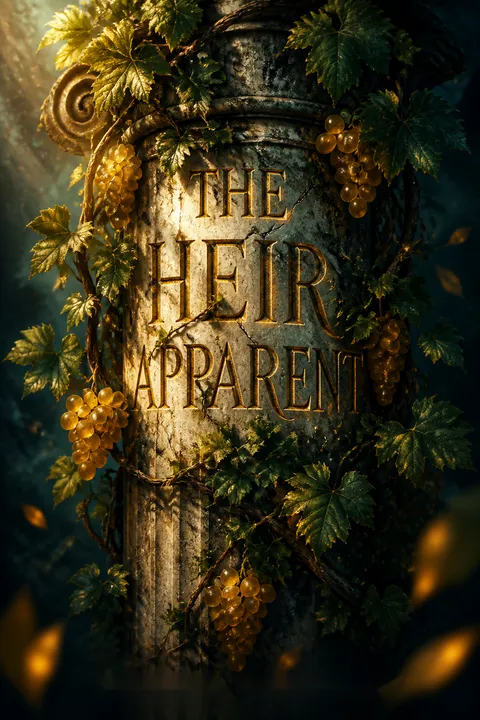


Plot Summary
The Helicopter Breaks the Kiss
Stewart,10 the Queen's6 private secretary, lands a chartered helicopter on Maria Island in Tasmania just as Lexi1 and her housemate Jack3 are about to kiss on New Year's Day. Her father, Prince Frederick,15 is dead — killed in a Swiss avalanche alongside her twin brother Louis4 and their close friend Kris Shankar.17
Louis4 clings to life with catastrophic brain damage; Kris17 is already brain-dead. Within hours, Lexi1 is stripped of her dark nail polish, dressed in Alexander McQueen black, and strapped into a billionaire's jet hurtling toward London.
She is a second-year medical resident who fled the House of Villiers at eighteen. Now the monarchy has come to reclaim her. She leaves Jack3 and her best friend Finn9 — a fellow doctor — watching from a shrinking island below.
Orphaned Over the Timor Sea
Despite promises to keep Lexi1 informed, no one tells her that Amira2 — Louis's4 wife — has turned off his life support until they land for fuel in Singapore. Louis4 is gone. Kris17 is gone. Lexi's1 knees buckle on the tarmac. In London, Prime Minister Jenny Walsh12 meets her plane and rides with her to the palace.
Lexi1 finds her grandmother, Queen Eleanor,6 diminished by grief, barely able to speak over the teacups. Later she knocks on Louis's4 childhood door and discovers Amira2 inside, skeletal and sleepless. Amira2 throws her a pair of boxers and Louis's4 rugby shirt, asking her to stay the night. In the dark, Amira2 whispers a question that has haunted royal widows across centuries: what will become of her now?
Evicted Before the Funeral
Lexi's1 uncle Richard,5 the Duke of Clarence, installs himself beside the Queen6 and persuades her that Amira2 and Lexi's1 presence is overwhelming a grieving sovereign. The women are moved to Cumberland Palace — Amira2 and Louis's4 London apartment.
On the way out, Lexi1 meets Mary Williams,7 a sharp young aide from her father's office who volunteers to help with funeral preparations. Mary7 is mousy but shrewd, and Lexi1 likes her. The funeral comes — a vast procession through London, two coffins on gun carriages, the nation watching.
Amira2 sleeps in Lexi's1 lap on the drive to the burial. That night in the castle quadrangle, Amira2 erupts: Lexi1 trapped Louis4 by leaving, failed him as a sister, and still cannot commit to staying. The accusation lands like a blade.
Vikki Shankar's Fifteen-Year Climb
Decades earlier, Vikki8 Yarborough — daughter of a Newcastle plumber — reinvented herself through elocution lessons, a strategic marriage to tech millionaire Madhav Shankar, and fifteen years of patient social climbing.
Through intelligence gleaned from aristocratic mothers at school drop-off, Vikki8 deduced that Princess Isla13 would insist on keeping the royal twins together at co-ed Astley College. She enrolled both her children there six months before the announcement. Kris17 was handpicked by the palace as Louis's4 roommate, while Amira2 became Lexi's1 suitemate.
Vikki8 had no idea how far the families' fates would entwine, or how much she would sacrifice to reach the summit. Her project had always been placing her children in the path of power. Their survival there was never guaranteed.
The Mound at Midnight
After the end-of-term dance at Astley, fifteen-year-old Lexi1 and Amira2 climb back up The Mound — an ancient hillock used by students for smoking and hookups — to retrieve Amira's2 lost coat. Through the bare willows, they find Louis4 and Kris17 swaying to tinny music, Louis's4 cheek resting on Kris's17 shoulder, his face more peaceful than Lexi1 has ever seen it.
They retreat in silence. Years later in Scotland, Lexi1 gently asks Louis4 if he'll fight for Kris17 the way their father never fought for love. He stiffens. But that night, he comes to her room and admits the truth. They agree to guard the secret between the four of them — a pact that will shape every decision in their intertwined lives for the next decade.
Twelve Thousand Miles from Louis
When Lexi1 discovers that Amira2 has agreed to pose as Louis's4 girlfriend — flying to Chile to create a heterosexual cover story — she confronts them. Kris17 lashes out, accusing her of always running to Daddy. Louis4 won't meet her eyes.
Devastated, Lexi1 activates the escape plan she has been building for a year with Uncle James,16 Isla's13 reclusive twin brother who farms sheep in Tasmania. She enrolls in university, learns to cook under Jack Jennings's3 mother, meets Finn9 as her chemistry lab partner, and eventually moves onto Jack's3 vineyard for security after her protection detail is withdrawn by Papa15 in retaliation. Over seven years she earns a medical degree and starts a hospital residency, building a life that feels real. But Louis4 barely speaks to her again.
Louis at the End of the World
Three years before the avalanche, Louis4 visits Tasmania and bonds with Jack3 over campfire dinners on the coast. Lexi1 watches her two worlds collide with wary hope. But at a farewell party, Louis4 vanishes with Finn9 into the vines. At dawn, Lexi1 finds them together.
Furious, she drives Louis4 to the airport and confronts him about his reckless behavior — volcano boarding, hookups with strangers. Louis4 turns on her: she left him to carry everything alone and has no right to judge. He accuses her of failing to understand what he sacrificed.
At the wedding weeks later, Stewart10 presents Lexi1 with a non-disclosure agreement: she must legally vow never to discuss her father or brother's secrets. She signs, changes out of her bridesmaid dress, and takes the first flight to Hobart. The estrangement becomes permanent.
One Year to Choose the Crown
At the reading of Papa's15 will, Lexi1 inherits nothing — male primogeniture directs everything to Annabelle14 and the duchy. The billion-pound Duchy of Exeter, reserved for the monarch's eldest son, can never be hers simply because she is female.
But Queen Eleanor6 makes an extraordinary declaration: Lexi1 is not the usual heir presumptive but the heir apparent, a status no woman has ever held, meaning no future-born son could displace her. She gives Lexi1 one year to decide.
Jenny Walsh,12 lingering after the meeting, warns quietly that if Richard5 takes the crown instead, plenty of people would be happy to serve as executioner. Outside, Annabelle14 intercepts Lexi1 to warn her about Mary,7 hinting that the delay gives Richard5 exactly the window he needs.
The Tiara and the Balcony
Through spring and summer, Lexi1 throws herself into royal duties under Mary's7 meticulous guidance. At a state banquet, she wears her mother's13 wedding tiara for the first time and is escorted to dinner by Colin Bellingham11 — a charismatic future duke and Louis's4 old friend.
Their chemistry becomes tabloid obsession. At Trooping the Colour, the crowd's thunderous roar from the palace balcony moves Lexi1 to tears. The Queen6 offers her a charity reception of her own choosing.
Jack,3 calling from the vineyard at dawn, suggests the obstetric fistula hospital in Kenya that once inspired Lexi1 to become a doctor, and promises to fly to London in November. But Colin11 pulls Lexi1 into a reckless hookup at his country estate, and the guilt begins its quiet erosion.
The Cliff Where Everything Breaks
Jack3 and Finn9 fly to the Scottish estate for two weeks. Lexi1 and Jack3 finally sleep together — days of tenderness compressed into stolen moments between formal dinners and stag hunts.
But on their last day, she drives him to a cliff overlooking the estate, her mother's13 favorite retreat, and Jack3 asks where he fits in her future. She cannot answer. She insists she won't ask him to abandon his vineyard to become a consort trailed by tabloids. Jack3 reveals he stayed in Tasmania instead of following his ex-girlfriend to New York because he was already in love with Lexi.1
She walks away, terrified that loving him means eventually losing him. Richard,5 who poisoned Jack3 during a hunt by mentioning Colin,11 corners Lexi1 on the stairs afterward with something far worse.
Davide Rossi Surfaces
With Jack3 gone, Richard5 delivers his threat: Lexi1 should ask herself about a man named David Rossi.20 If she doesn't relinquish the crown by year's end, he'll put Rossi20 on the front page. The name means nothing — not at first.
For ten weeks Lexi1 spirals, losing weight, numbing herself with Colin,11 unable to function. Then one morning at the Hampstead Heath ladies' pond, she lets herself sink beneath the cold water, and the memory surfaces like a drowned thing: Davide Rossi20 was the Italian security guard who ferried her off her mother's13 yacht the night Isla13 disappeared.
Papa15 had paid Rossi20 to stay silent and staged the entire cover-up. Richard's5 investigators tracked the man down to a villa in southern Italy. Gasping back to the surface, Lexi1 calls Uncle James16 and confesses everything.
The Boat in the Ligurian Sea
In the summer of 2011, Isla13 woke Lexi1 at three in the morning and took her onto a borrowed motorboat to watch the sunrise. They drank champagne under the stars. Isla13 confided that she knew about Louis4 and Kris17 and told Lexi1 never to believe her only purpose was to serve the crown. Lexi1 fell asleep below deck. She woke to absolute silence and an empty boat.
She searched every cabin, climbed to the bow, screamed her mother's name into the void. Nothing came back. Panicked, she called Papa,15 who told her to make the beds, pack her things, and wait. He sent Davide Rossi20 in a fishing boat to retrieve her. No one searched for Isla13 that night. Her body was found three days later, tangled in seaweed, a hundred miles from the yacht.
Annabelle and the Witch Marks
Stranded by a storm in Scotland, Lexi1 drives to Annabelle's14 cottage — the house Papa15 kept for himself and his true love. Annabelle14 reveals that Richard5 had been threatening Frederick15 before he died, using knowledge of Louis4 and Kris's17 relationship to extract money.
Papa15 was planning to pay. She hands Lexi1 a Tesco bag containing a wooden plank carved with centuries-old protective marks, pried from beneath Papa's15 childhood bed at his instruction. It was his last gift — proof of a love he could not voice in life.
Annabelle14 also confirms Lexi's1 growing suspicion: Mary7 was placed in her orbit by Amira2 and the Queen6 to keep the reluctant heir in London. Armed with these truths, Lexi1 calls Rossi20 directly — but decides she will not buy his silence. She will speak the truth herself.
Off-Script at the Palace
At her fistula charity reception, Lexi1 abandons the approved speech and tells the assembled guests that the monarchy must honestly address its colonial legacy. Stewart10 is livid. Then she faces Richard5 among the candlelit portraits and informs him she has already spoken to Rossi20 — his leverage is dissolved.
Vikki Shankar8 arrives and publicly stands at Lexi's1 side, calling Richard5 by the insult he once threw at her. Later, on the palace stairs, Amira2 unravels the whole truth: the sham marriage was crushing her, she had a secret affair with Colin11 that ended brutally, and Mary7 was always meant to keep Lexi1 tethered.
Their honesty strips everything bare. Lexi1 asks Amira2 if it is time to finally leave this life. When Amira2 asks what Lexi1 truly wants, she whispers that it is an impossible choice.
Papa's Hidden Fortune
On December twenty-eighth, Lexi1 wakes to find three million pounds deposited in her account. Papa's15 lawyer explains that Frederick15 secretly added his own money to her trust, investing it over the years into a total of twelve million.
His instruction was simple: if Lexi1 made it to thirty without asking for help, she would be alright — but he still wanted her comfortable. Lexi1 weeps at this belated proof of his love, then donates half to the Nairobi fistula hospital and writes a personal cheque for Mary.7
On the phone with James,16 she asks whether Isla13 could have been saved that night. He does not know. But he tells her she must forgive herself, or she will never be able to accept forgiveness from anyone else. The advice lands harder than any inheritance.
Smuggled Out in a Trolley
Lexi1 signs renunciation papers at Mary's7 terraced house in Brixton, witnessed by Jenny Walsh12 and a constitutional lawyer. There is no ceremony — only a fountain pen, a cupcake with one candle, and a new passport bearing her stripped-down name.
Mary's7 teenage brother Charlie rolls Lexi1 and her dog Chino out of Cumberland Palace hidden inside a carpet cleaning trolley, loaded into his white van. The palace gates open without incident. At Hong Kong's airport hotel, Lexi1 meets a Pulitzer-winning journalist named Dee and gives her the full story — the boat, the cover-up, Richard's5 blackmail.
Annabelle14 and Amira2 have already spoken. When Richard5 predictably leaks Rossi's20 name to a tabloid within days, Lexi1 activates the backup plan: the full exposé of everything he has done.
First Sunrise Without the Crown
Lexi1 lands in Hobart on New Year's Eve. James16 picks her up and, instead of driving to his farm, turns into the Jennings vineyard. He tells her that Amira2 called Jack3 weeks ago and told him everything — the boat, Richard's5 threats, Lexi's1 misery. Jack3 bought a plane ticket to London before James16 talked him down. In the back field among budding vines, Lexi1 sees Jack3 standing with his back to her.
He turns. They meet in the middle of the row. She tells him the truth she had been too frightened to speak: she has loved him from the start. He says he tried for five months to stop loving her and every day felt like it might kill him. They kiss among the grapes. Tomorrow they will watch the first sunrise of a new year and begin again.
Epilogue
Lexi1 dreams of drifting on a raft with her mother13 under the stars — but this time, Isla13 has aged, still alive in the dream, smiling beside her daughter. Jack3 wakes Lexi1 to go see the sunrise, their tradition from the very first page. She is no longer afraid of sleep. Somewhere across the world, a newspaper is preparing to publish her story.
Richard5 will begin his reign under a cloud of exposure. But Lexi1 has made her choice: not the crown, not exile, but a life she built with her own hands — scrubs and night shifts and a man who saw through every disguise she ever wore. The Earth makes its closest pass around the sun. Anything feels possible.
Analysis
The Heir Apparent uses an alternate history — the House of Villiers replacing Windsor — to anatomize the monarchy as a system of controlled inheritance that devours its women. Lexi's1 crisis is not whether she wants the crown but whether she can stop performing the role of princess long enough to discover who she actually is. The novel's structural masterstroke is withholding the boat revelation until two-thirds through, so the reader initially reads Lexi's1 indecision as fear of commitment, only to discover it is guilt — the guilt of a child who chose her father's authority over her mother's life.
Three models of womanhood within patriarchal power are examined: Isla,13 who rebelled and was destroyed; Amira,2 who complied and was hollowed out; and Vikki,8 who gamed the system but lost her son. Lexi's1 resolution — renouncing the crown to tell the truth — suggests a fourth path: exit with voice. Her decision is not escapism but exposure, transforming the private act of running away into a public act of accountability.
Armitage embeds a sharp critique of the 'modernize from within' fantasy. Mary's7 plan to make Lexi1 a reformist queen is systematically dismantled: every progressive gesture is curtailed by Stewart,10 every authentic moment policed by protocol. The Queen6 herself makes the argument explicit — a monarch should barely speak. The institution cannot be reformed by the person wearing the crown because the crown's power depends on silence.
The romance with Jack3 operates as the novel's counter-institution. Where the monarchy demands performance, Jack3 demands presence. Where the palace withholds information, Jack3 opens the phone line and shares silence. Lexi's1 inability to choose Jack3 until she chooses honesty reflects the novel's deepest argument: you cannot love someone while hiding who you are. Her parallel confessions — to the journalist and to Jack3 — are the same liberating act: finally removing the mask.
People Also Read









Characters
Lexi
The spare who became heirPrincess Alexandrina — Lexi — is the twin who was never supposed to matter. Born two minutes after Louis4, she was the decorative accent to his destiny. Beneath her compliance runs a deep current of self-punishment: she starved herself through adolescence, fled her family at eighteen, and built a quiet life as a medical resident in Tasmania. Her psychological signature is the belief that she is fundamentally undeserving of love — that anyone who truly knew her would recoil. She processes grief by working harder, running further, eating less. Her relationships follow a pattern of intimacy and retreat: she draws people close enough to glimpse her, then panics and pushes them away. Her growth lies in learning that vulnerability is not weakness, and that being truly known might be the only thing worth wanting.
Amira
The wife engineered for royaltyThe daughter Vikki Shankar8 engineered for the throne, Amira agreed to become Louis's4 public girlfriend at eighteen and his wife at twenty-six, sacrificing romantic love for position and family loyalty. She is ferociously composed — designer wardrobe, flawless makeup, impenetrable facade — but her pill boxes and weight loss betray the cost. Her marriage to Louis4 is a collaboration between two people trapped by the same secret, sustained by genuine friendship but absent of desire. Amira is defined by contradictions: she resents the cage she chose to enter, yet cannot imagine life outside it. Her relationship with Lexi1 oscillates between protective devotion and simmering fury at being abandoned. Beneath her duchess sheen, she is a woman who has never been allowed to want anything for herself.
Jack
Tasmanian vineyard ownerA vineyard owner whose parents were legendary environmental activists, Jack Jennings is the most emotionally intelligent person in Lexi's1 orbit — and the least equipped for palace life. He says what he means, sleeps by nine-thirty, and loves his land with an intimacy Lexi1 recognizes as sacred. His patience with her borders on saintly: he waits through her evasions, her affairs, and her midnight phone calls across their shared cottage wall. But Jack is not passive — when a photographer harassed Lexi1, he pinned the man against a pub wall. His central conflict is whether love requires him to abandon everything that grounds him. He represents the life Lexi1 chose at eighteen and the life the crown threatens to take from her — real, rooted, and entirely her own.
Louis
The golden heir, secretly boundLexi's1 twin brother, born two minutes before her, inheriting the full weight of destiny in the span of a heartbeat. Louis is the golden boy — tall, kind, kingly in his benevolence — who conceals a relationship with Kris Shankar17 behind Amira's2 careful public performance. He is the star around which every other celestial object revolves, including Lexi1, his dwarf planet. His reckless extreme sports — volcano boarding, heli-skiing, backcountry skiing — suggest someone testing the limits of a life that otherwise permits no deviation. His anger at Lexi1 for leaving is the fury of a man chained to a post, watching his sister walk free. He carries the family's expectations with grace while his private self slowly suffocates beneath the performance.
Richard
The ambitious second-born uncleThe Duke of Clarence, Lexi's1 uncle, is the second-born brother who spent his whole life craving the crown that went to Frederick15. He presents himself as a bluff, genial uncle who pushes his nephew into cold water to toughen him up, but his charm conceals a predator's patience. Richard funds his lavish lifestyle through connections to foreign oligarchs and wields private information like currency. Behind his bonhomie, he pushes faces into heather and whispers insults at garden parties. His veneered smile — gleaming porcelain on top, broken picket fence below — is the novel's most precise metaphor for inherited power. He is driven by the unshakeable conviction that destiny made a mistake by placing him second, and he intends to correct that error by any means available.
Queen Eleanor
The longest-reigning monarchBritain's longest-reigning monarch, Eleanor became queen at twenty-three when her uncle was trampled by his horse. She sealed off her emotions that day and never unsealed them. She loves her dogs, her horses, and her country — in approximately that order. Her relationship with her family is governed by protocol over affection: she requires crockery in tidy piles, forbids Christmas presents over twenty pounds, and commands every room she enters without raising her voice. Yet she is capable of radical gestures — she knows when tradition must bend. She represents the monarchy's greatest strength — steadiness — and its greatest cost: the human heart submerged beneath duty. She has outlived the people she was supposed to protect, and she carries that failure in her perfect posture.
Mary
Shrewd aide turned strategistA scholarship girl from Brixton who attended Astley years after Lexi1, Mary started as a junior social media aide in Prince Frederick's15 office before becoming Lexi's1 private secretary. Fiercely intelligent behind her mousy exterior, she transforms from soft-spoken assistant into sharp political strategist, crafting Lexi's1 public image with meticulous care. Her loyalty to Lexi1 appears genuine, though the origins of their connection prove more complex than either initially acknowledges.
Vikki
The unstoppable social climberBorn working-class in Newcastle, Victoria Shankar reinvented herself through elocution lessons, a strategic marriage to tech millionaire Madhav, and fifteen years of relentless social maneuvering. She orchestrated her children's placement beside the royal twins with the patience of a chess grandmaster. Despite her ruthless ambition, her love for Kris17 and Amira2 is visceral and unguarded. She is the only adult in Lexi's1 youth who never cut her any slack — admonishing bad behavior while buying prom dresses and booking shopping sprees.
Finn
Lexi's flamboyant best friendLexi's1 best friend and fellow doctor, Finn Vanderville is the most popular man in Hobart — effortlessly charming, disarmingly honest, fiercely protective. He was Lexi's1 first real friend outside royal circles, assigned as her chemistry lab partner by alphabetical accident. He teaches Lexi1 to say the words 'I love you' by saying them to everyone first. His unwavering loyalty through her worst years proves that some bonds form not from proximity to power but from the simple, stubborn choice to stay.
Stewart
The palace's ultimate fixerThe Queen's6 private secretary for thirty years, Stewart is capable of silencing scandals, sedating teenagers, and crossing oceans to retrieve a runaway princess. He once held Lexi's1 shoulder as she hyperventilated and also drugged her into unconsciousness after Isla's13 death. His devotion to the institution supersedes any affection for the humans within it. He is the grey man in a grey suit whom Isla13 always feared — carrying out orders with efficiency and regret in equal measure.
Colin
The establishment's preferred matchEarl Amherst, future Duke of Hereford, and one of Louis's4 closest school friends. Charming, titled, and destined to inherit a ten-billion-pound fortune, Colin is the match the palace prefers for Lexi1. He wears his tailcoat like a dressing gown and collects watches in velvet drawers. Behind his easy grin lies a man accustomed to getting what he wants — in relationships and in life. He offers Lexi1 everything the dynasty requires except the one thing she needs: to be truly known.
Jenny Walsh
The people's Prime MinisterBritain's PM, a working-class woman from Essex who rose through the union movement. She is Lexi's1 most unexpected ally — offering her private mobile, driving to the airport to collect her, and providing steady counsel throughout the year. Jenny sees the monarchy clearly, knows its days may be numbered, and quietly believes a doctor-queen could effect real change. Her kohl-smeared eyes miss nothing.
Isla
The iconic lost motherLexi1 and Louis's4 mother, whose beauty and rebellion made her the most famous woman in the world. Raised motherless in a Scottish castle, she married too young into a family that consumed her. She is the reason every woman wears sneakers with dresses. She dreamed of taking her children on imaginary raft voyages. She died at sea under circumstances that haunt the entire novel — a final night her daughter can never fully explain or forgive.
Annabelle
Papa's true love, vilifiedFrederick's15 second wife, the Dowager Duchess of Exeter — the woman Isla13 could never compete with, not for beauty but for Frederick's15 heart. Catholic, divorced, and vilified by the press for decades, Annabelle was the 'scary lady' of Lexi's1 childhood nightmares after the four-year-old found her in Papa's15 dressing gown. A busty countrywoman who likes a stiff drink and struggles to meet Lexi's1 eyes, she proves far more complex than the villain Isla's13 story made her.
Prince Frederick
The fussy, insecure fatherLexi's1 father, a man who traveled with a portable leather toilet seat, required butter in exactly three scoops, and loved Annabelle14 with consuming devotion while struggling to express affection for his own children. Behind his pettiness lay someone suffocated by expectations he never believed he could meet. His first instinct was always to lie and cover up rather than confront. He punished Lexi1 for leaving by withdrawing her security and leaking lies to the tabloids — yet the depth of his silent love would only be understood after he was gone.
James
Isla's reclusive twin brotherA Scottish duke masquerading as a Tasmanian sheep farmer, James facilitated Lexi's1 escape from the family and became her anchor — the last living person who remembers what their mother13 was really like. He feeds his niece sandwiches and silence in equal measure.
Kris
Amira's brother, Louis's secretBold, athletic, and fiercely protective, Kris Shankar was the boy handpicked as Louis's4 school roommate — never suspecting the arrangement would become the defining love story of both their lives. His brash exterior conceals a tenderness few are permitted to witness.
Demelza
Richard's sharp-eyed daughterRichard's5 eldest daughter, fifth in line. Neat features, naturally slim, devastatingly perceptive. She craves the crown's proximity while performing bored indifference — the tabloids' preferred alternative to Lexi1.
Ben
Lexi's boss and former loverLexi's1 supervising physician at Hobart General and her secret lover for three years. His blunt assessment that she is incapable of real intimacy becomes a wound she spends the novel trying to disprove.
Davide Rossi
The silent witness from ItalyThe Italian security guard hired to watch over Isla's13 family during a summer in Rapallo. His name, nearly forgotten, resurfaces years later as the fulcrum of a dangerous power struggle within the House of Villiers.
Plot Devices
The Line of Succession
Determines every character's fateThe rigid hierarchy that ranks every member of the House of Villiers from sovereign to irrelevance. Because Louis4 was born two minutes before Lexi1 and was male, he was the heir; she was the spare. His death catapults her into a position she never sought. The line also dictates seating at church, walking order in processions, and who receives the billion-pound Duchy of Exeter — which can never go to Lexi1 because she is female. Richard's5 proximity to the throne depends entirely on Lexi's1 departure from it. The line functions as the novel's gravitational force: every relationship, betrayal, and sacrifice orbits around the question of who sits where in the order, and what they are willing to do to move up.
The Boat Secret
The buried truth driving the plotThe central mystery withheld from the reader until two-thirds through the novel. On a summer night in Italy, seventeen-year-old Lexi1 was with her mother Isla13 on a boat when Isla13 vanished overboard. Instead of calling the coastguard, Lexi1 called her father15, who orchestrated a cover-up — sending a private guard to retrieve her while no one searched for Isla13. The secret is the engine of Lexi's1 guilt, her flight to Tasmania, and her inability to accept love. When Richard's5 investigators uncover it, it becomes his weapon to force her off the throne. Lexi's1 decision about whether to bury or expose this secret determines the novel's climax.
The Daily Post / Tabloid Leaks
The family's self-inflicted weaponThe royal family's Faustian bargain with the British tabloid press, personified by the Daily Post. Members routinely leak against each other through favored reporters to distract from their own scandals — Papa15 plants stories about Amira2 to deflect from a helicopter controversy; Richard's5 aides paint Lexi1 as a selfish deserter. The tabloids gamify charity with a 'Lexi's Choice' tracker comparing her approval rating against Richard's5. For Lexi1, refusing to play the leak game becomes both a moral stance and a tactical vulnerability. The device exposes how the monarchy sustains itself through narrative control, and how that control corrodes every human relationship within it.
The Non-Disclosure Agreement
Silences the powerless by contractLegal instruments used by the palace to bind its most vulnerable members into silence. Stewart10 presented NDAs to both Isla13 after her divorce and Lexi1 after Louis's4 wedding. The agreements are unilateral: while Lexi1 is forbidden from discussing her father or brother, they are free to leak about her. The NDA also binds Davide Rossi20, the Italian security guard, giving the palace legal recourse if he speaks. Lexi's1 decision to circumvent the NDA by speaking to a foreign journalist — whose publication falls outside British jurisdiction — is the novel's key tactical move. The device crystallizes how institutional power weaponizes the law against individuals who might otherwise tell the truth.
Isla's Emerald Ring
Symbol of consumed royal womenOriginally a brooch gifted by Lexi's1 great-grandfather to his wife, the enormous emerald was reset on a gold band by Frederick15 as Isla's13 engagement ring. Isla's13 will left it to Lexi1, but Papa15 and Louis4 took it for Amira's2 engagement without Lexi's1 consent, violating the will's terms. Each woman who wore it was diminished by the institution it represented: Isla13 shrank her waist to twenty-three inches beneath its weight; Amira2 wore it while performing a marriage she never chose. The ring passes through the novel as a measure of what the crown costs its women — beautiful, valuable, and impossible to remove without a screwdriver, like the Cartier bracelets Amira2 wears to match.
Download PDF
Download EPUB
.epub digital book format is ideal for reading ebooks on phones, tablets, and e-readers.








































