
Plot Summary
Sea's Gifted Child
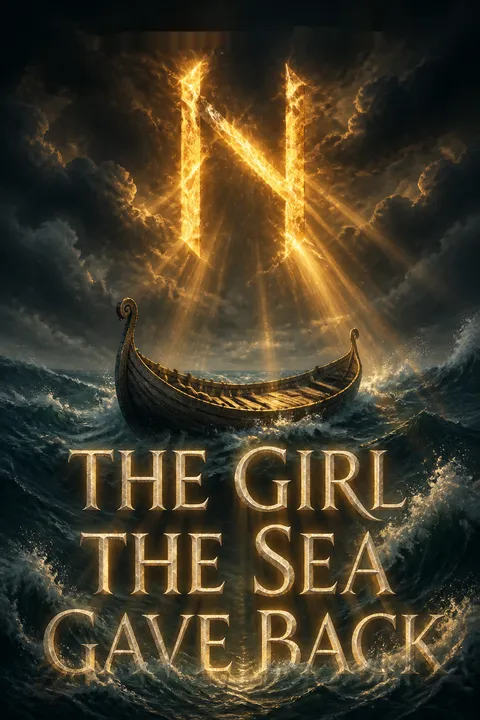
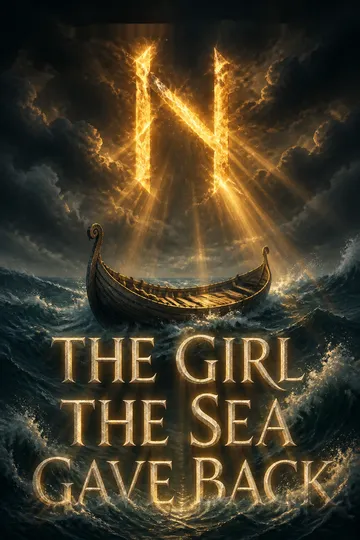
Thirteen years before the main events, a funeral unfolds on the icy Kyrr headlands. Svanhild, mourning her drowned daughter, sets the child adrift in a ceremonial boat, believing the Spinners of Fate have claimed her. The sea, however, has other plans. Far away, the Svell shaman Jorrund is led by a mysterious Spinner to a charred funeral boat washed ashore. Inside, he finds the girl alive, marked with the runes of a Truthtongue—one who can read fate. Jorrund, torn between fear and awe, decides to raise her among the Svell, setting in motion a destiny that will entwine clans and gods. The girl, Tova, is both a gift and a curse, her presence a living omen that will shape the fate of all.
Orphan Among Enemies
Tova grows up as an outsider in the Svell village of Liera, shunned and feared for her Kyrr markings and her power to cast the runes. Jorrund, the Svell's spiritual leader, protects her, but the villagers see her as a harbinger of misfortune. Tova's existence is precarious, her every action scrutinized, her only value in her ability to interpret fate. Meanwhile, the Svell are restless, their chieftain Bekan struggling to hold his people together as tensions with the neighboring Nādhir—an alliance of former enemies, the Aska and Riki—threaten to erupt into war. Tova's identity is a mystery even to herself, her memories of the headlands and her family lost to the sea and time.
Stones Foretell Ruin
When the Svell leaders, divided and hungry for power, force Tova to cast the stones, she sees a vision of utter ruin: the hailstone rune, Hagalaz, alone at the center, foretelling the destruction of the Svell. The leaders ignore the warning, their ambitions overriding fear of fate. Bekan's brother Vigdis, impatient and vengeful, orchestrates a brutal attack on the Nādhir border village of Ljós, slaughtering innocents and igniting a blood feud. Tova, haunted by her vision, is powerless to stop the tide of violence. The runes' prophecy becomes a self-fulfilling curse, as the Svell march toward a war that will consume them all.
Chieftains and Betrayals
In the aftermath of the massacre at Ljós, the Nādhir—led by the young, reluctant Halvard—grapple with grief and the threat of annihilation. Espen, the Nādhir chieftain, seeks peace, but the Svell's offer of reparation is a ruse. At a tense parley in a sunlit glade, Vigdis betrays his brother and the peace, murdering Espen with a ceremonial sword. The glade erupts into chaos and bloodshed. Halvard, wounded and desperate, avenges his fallen mentor and flees with the help of outcast raiders. The old order is shattered; both clans are leaderless, and the path to reconciliation is lost in a storm of vengeance.
Blood Feud Rekindled
The Svell, now under Vigdis's ruthless command, unleash their full might on the Nādhir, razing villages and slaughtering the defenseless. Tova, coerced into using her powers to hunt Halvard, is wracked with guilt as her visions are twisted to justify atrocity. Halvard, bearing the weight of leadership and loss, struggles to unite his people and outmaneuver the Svell's overwhelming numbers. The war becomes a crucible, forging new alliances and exposing old wounds. Both sides are haunted by the ghosts of the past, and the line between justice and revenge blurs as the valley is soaked in blood.
The Glade's Treachery
The pivotal battle in the glade leaves the Nādhir decimated and the Svell triumphant but fractured. Halvard, barely escaping with his life, is forced to confront his own doubts and the expectations of his people. Tova, witnessing the carnage her runes foretold, begins to question the nature of fate and her role in the unfolding tragedy. The glade becomes a symbol of betrayal and the futility of violence, its memory seared into the survivors. The war's momentum accelerates, and the possibility of peace seems more distant than ever.
Survivors and Outcasts
As the Svell army advances, Halvard finds refuge with outcast raiders, including the enigmatic Kyrr man Kjeld. Bonds of loyalty and kinship are tested as the survivors of both clans are forced to choose sides. Tova, increasingly isolated, seeks answers about her origins and the true meaning of her marks. The outcasts, once shunned, become crucial to the Nādhir's survival, their knowledge of the land and unconventional tactics offering a glimmer of hope. The boundaries between friend and foe blur, and the fate of the valley hangs on the choices of those who have lost everything.
Fate's Web Tightens
Tova's visions grow more intense as the Spinners of Fate weave the threads of the living and the dead. She discovers that her life was never a simple sacrifice, but a pivotal knot in the web of destiny. Halvard, haunted by the weight of leadership, is drawn inexorably toward Tova, their fates bound by forces beyond their understanding. The Kyrr, long absent from the mainland, stir in the north, their return heralded by omens and the call of the All Seer. As the final battle approaches, the true nature of sacrifice, forgiveness, and fate is revealed.
The Truthtongue's Burden
Tova is forced to confront the consequences of her prophecies and the blood spilled in their name. Manipulated by Jorrund and threatened by Vigdis, she must choose between obedience and conscience. Her growing connection to Halvard offers both solace and torment, as she realizes that her visions can destroy or save. The burden of being a Truthtongue—one who sees but cannot always change fate—becomes almost unbearable. In a moment of defiance, she risks everything to alter the course of the war, setting the stage for redemption or ruin.
War on the Fjord
The Svell descend on the Nādhir's last stronghold, Hylli, determined to wipe them out. Halvard, now chieftain, rallies his people for a desperate defense, aided by Tova and the returning Kyrr. The battle is brutal and chaotic, the forest and fjord echoing with the clash of blades and the cries of the dying. Tova's intervention—using fire and cunning—turns the tide, but not before great loss. The arrival of the Kyrr fleet, led by Tova's true family, brings both salvation and uncertainty. The war's end is not a simple victory, but a reckoning with the cost of survival.
The Kyrr Return
The Kyrr, mysterious and powerful, reclaim Tova as their own, revealing her true lineage and the meaning of her marks. The reunion with her parents and uncle Kjeld is bittersweet, as Tova grapples with her dual identity and the pain of belonging to two worlds. The Kyrr's arrival forces the Nādhir and Svell to confront the limits of vengeance and the possibility of coexistence. The fate of the valley is no longer in the hands of warriors, but in the choices of those who can see beyond the cycle of blood.
Truths from the Deep
In the aftermath, Tova learns the truth of her past: she was not sacrificed, but mourned and sent to the sea in love. Her survival was a miracle, a sign from the Spinners that fate can be rewritten. Halvard, scarred but unbroken, finds strength in vulnerability and the bonds of family. The survivors of both clans must reckon with their losses and the possibility of a future not dictated by old hatreds. Tova and Halvard, drawn together by fate and choice, become symbols of a new era—one where forgiveness is possible, and the past does not dictate the future.
Forgiveness and New Dawn
As the funeral fires burn and the drums of the Kyrr echo through Hylli, Tova casts the stones one final time. The runes speak of hope, sacrifice, and a new dawn. The Spinners' web, once a snare, becomes a lifeline. Tova and Halvard, united by love and loss, stand at the threshold of a world remade. The clans, once enemies, are offered a chance at peace—not through conquest, but through understanding and the courage to forgive. The story ends not with triumph or defeat, but with the promise that fate, though powerful, can be shaped by the choices of those who dare to hope.
Analysis
A meditation on fate, agency, and reconciliationThe Girl the Sea Gave Back is a powerful exploration of how individuals and communities are shaped by the stories they inherit and the choices they make. Through the intertwined journeys of Tova and Halvard, the novel interrogates the tension between destiny and free will, showing that while the past exerts a powerful pull, it is possible to break cycles of violence through acts of courage, forgiveness, and love. The runes and the Spinners serve as metaphors for the narratives we tell ourselves—sometimes as prisons, sometimes as guides. The book's ultimate message is one of hope: that even in a world scarred by loss and betrayal, new beginnings are possible if we dare to imagine them. The emotional arc is one of moving from isolation and guilt to connection and redemption, offering readers not just the gist of the story, but the full weight of its emotional and philosophical resonance.
Review Summary
People Also Read
Characters
Tova
Tova is the heart of the novel—a Kyrr girl marked as a Truthtongue, able to read the runes and glimpse fate. Raised among the Svell after being set adrift in a funeral boat, she is both revered and reviled, her power a source of fear and manipulation. Tova's journey is one of self-discovery and agency: she must reconcile her guilt over the blood spilled in her name with her longing for belonging and love. Her psychological struggle is profound—torn between obedience to those who use her and the moral imperative to change fate. Her reunion with her Kyrr family and her connection to Halvard catalyze her transformation from passive oracle to active shaper of destiny.
Halvard
Halvard is the young chieftain of the Nādhir, chosen for his compassion and integrity rather than his thirst for power. Orphaned by war and raised by a patchwork family, he embodies the possibility of reconciliation between enemies. Halvard's arc is defined by doubt, loss, and the burden of leadership. He is forced to make impossible choices, balancing the survival of his people with the hope for a better future. His relationship with Tova challenges his beliefs about fate and agency, and his willingness to forgive—even those who have wronged him—marks him as a new kind of leader in a world shaped by old wounds.
Jorrund
Jorrund is the Svell Tala, a spiritual leader who adopts Tova for her power but ultimately uses her as a tool to influence fate. His relationship with Tova is complex—part protector, part exploiter. Driven by fear and ambition, Jorrund's actions catalyze much of the tragedy, as he twists Tova's prophecies to justify violence. Psychologically, he is a man haunted by his own limitations and the knowledge that he cannot control the Spinners. His downfall is marked by regret and the realization that love cannot be forced or fate commanded.
Vigdis
Vigdis, Bekan's brother, is the primary antagonist—a man consumed by envy, grief, and the desire for power. His betrayal of his brother and the massacre at the glade set the war in motion. Vigdis is psychologically driven by a need to prove himself and avenge perceived wrongs, but his actions ultimately destroy what he seeks to protect. His inability to break the cycle of violence makes him a tragic figure, doomed by his own choices and the fate he tries to outrun.
Bekan
Bekan is the Svell chieftain whose attempts at diplomacy and restraint are undermined by his brother and his own grief. The loss of his daughter and the fracturing of his clan leave him vulnerable, and his death at Vigdis's hands marks the end of an era. Bekan's psychological arc is one of resignation and sorrow, a man who sees the cost of war too late.
Svanhild
Svanhild is Tova's mother and the leader of the Kyrr. Her grief at losing her daughter is matched only by her faith in the Spinners and the power of the runes. Svanhild's return to the mainland and her reunion with Tova are moments of healing and revelation. She represents the possibility of forgiveness and the strength found in vulnerability.
Kjeld
Kjeld is Svanhild's brother and Tova's uncle, living as an outcast among raiders. His knowledge of the runes and the Kyrr's ways is crucial to the unfolding events. Psychologically, Kjeld is marked by guilt and the desire to atone for his perceived failures. His actions help reunite Tova with her heritage and offer a model of redemption.
Gunther
Gunther is a Svell warrior tasked with watching Tova, but his actions reveal a hidden compassion. He teaches Tova to defend herself and ultimately sacrifices himself to save her. Gunther's arc is one of quiet heroism, his loyalty shifting from clan to conscience.
Espen
Espen is the Nādhir chieftain whose murder in the glade shatters the fragile peace. He is a father figure to Halvard, embodying the values of unity and restraint. His death is a catalyst for Halvard's rise and the escalation of the conflict.
Asmund
Asmund, once a Nādhir, now lives as a raider with his brother Bard and Kjeld. His loyalty to Halvard and his willingness to risk everything for friendship highlight the novel's themes of chosen family and the possibility of redemption outside traditional clan structures.
Plot Devices
Prophecy and the Runes
The runes, cast by Tova, are the central plot device, serving as both literal and metaphorical guides to the story's events. Their ambiguity allows for manipulation by those in power, but they also represent the tension between destiny and agency. The runes' prophecies drive the actions of the Svell and Nādhir, justify violence, and ultimately offer hope for change. The narrative structure is cyclical, with past and present echoing each other, and the runes' meanings shifting as characters grow. Foreshadowing is woven through Tova's visions, the omens of the All Seer, and the recurring motif of the sea as both destroyer and deliverer.
Dual Narration
The story alternates between Tova and Halvard's perspectives, allowing readers to experience both the internal and external conflicts of war, identity, and fate. This structure deepens the emotional resonance, as each character's choices ripple across the other's life. The dual narration also highlights the theme of interconnectedness—how individual actions, even those born of pain or fear, can shape the fate of many.
Cycles of Violence and Forgiveness
The novel's plot is driven by the repetition of ancient feuds, betrayals, and the longing for vengeance. Yet, it is also about the possibility of breaking these cycles through acts of mercy, understanding, and love. The arrival of the Kyrr, the revelation of Tova's true past, and Halvard's refusal to perpetuate blood feuds all serve as turning points where fate is challenged and remade.
Symbolism of the Sea and Fire
The sea is both a grave and a cradle, taking Tova from her family and returning her to them. Fire, from funeral pyres to the burning of villages, represents both destruction and purification. These elements underscore the novel's exploration of transformation, loss, and the hope of renewal.
Sky and Sea Series
About the Author

Download PDF
Download EPUB
.epub digital book format is ideal for reading ebooks on phones, tablets, and e-readers.








































