
Plot Summary
Strangers at the Five-Hop
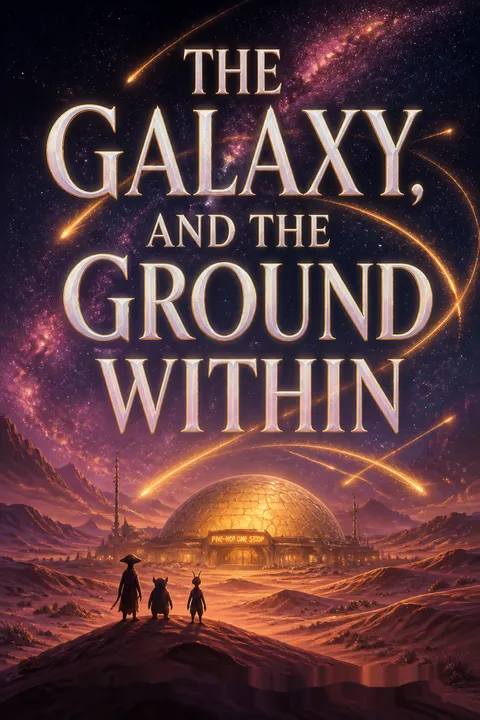
On the barren planet Gora, Ouloo and her child Tupo run the Five-Hop One-Stop, a rest stop for travelers. On this unremarkable world, three ships arrive: Pei, an Aeluon cargo captain; Roveg, an exiled Quelin artist; and Speaker, an Akarak in a life-support suit. Each is from a different species, with different needs and histories, but all are simply passing through. Their only connection is the random intersection of their journeys and Ouloo's determined hospitality. The mood is one of routine, anticipation, and the subtle awkwardness of strangers forced into proximity, each carrying their own secrets and expectations.
Unexpected Grounding
Suddenly, a catastrophic satellite collision fills Gora's sky with debris, disabling communications and grounding all ships. The travelers, expecting only a brief layover, are now stranded indefinitely. Anxiety and frustration ripple through the group as they realize their plans—business, reunions, appointments—are on hold. Ouloo scrambles to reassure her guests, while each visitor must confront the loss of control and the uncertainty of when, or if, they'll be able to leave. The forced pause exposes vulnerabilities and sets the stage for unexpected connections.
Worlds Collide, Skies Fall
As the sky burns with falling satellites, the group's differences become stark. Speaker's suit and alien biology unsettle the others; Pei's military past and Roveg's exile color their interactions. Tupo, curious and awkward, bridges gaps with childlike honesty. The disaster outside mirrors the internal chaos within each character. The group's initial discomfort gives way to a fragile camaraderie as they share food, stories, and the surreal experience of watching the world above them unravel.
Shelter and Uncertainty
Ordered to shelter in place, each character withdraws to their own space—ships, rooms, or memories. Ouloo worries over her guests and her child. Pei, used to action, is forced into stillness and self-reflection. Roveg obsesses over missed opportunities and the risk of losing his chance to see his sons. Speaker, separated from her twin, battles anxiety and the ache of disconnection. The enforced waiting strips away distractions, leaving only themselves and the company of strangers.
Waiting and Worrying
With nothing to do but wait, the travelers begin to talk. Speaker interviews each guest, cataloging their skills in case of further emergency—a gesture rooted in her own culture's values. Roveg and Speaker share a meal and a moment of mutual understanding. Pei and Tupo bond over dessert and curiosity. Ouloo tries to keep everyone comfortable, but feels the weight of responsibility. The group's initial wariness softens into tentative trust, as they realize they are all, in their own ways, outsiders.
Small Comforts, Big Questions
Ouloo organizes a communal meal, determined to create comfort amid chaos. The group shares food, laughter, and awkward questions about biology, culture, and prejudice. Speaker explains her suit and the Akarak's tragic history; Roveg reveals the pain of exile; Pei's military background and hidden relationship surface. The meal becomes a microcosm of the galaxy's complexity—misunderstandings, empathy, and the slow work of building bridges. Each character is both host and guest, teacher and student.
Sharing Stories, Sharing Space
As the hours pass, the travelers open up about their pasts. Roveg tells of his lost home and sons; Speaker describes the Akarak's struggle for survival and dignity; Pei wrestles with her forbidden love and the expectations of her species. Tupo, ever curious, asks questions that adults avoid. The sharing of stories becomes an act of survival, a way to make sense of their predicament and to find meaning in the company of others. Vulnerability becomes a source of strength.
Fault Lines and Frictions
The group's fragile harmony is tested by deeper disagreements. Pei and Speaker clash over the ethics of war and colonization, each carrying the wounds of their people. Roveg, caught between worlds, tries to mediate. Ouloo, overwhelmed, pleads for simple kindness. The argument exposes the limits of understanding, but also the necessity of facing uncomfortable truths. The group is forced to confront not only the galaxy's injustices, but their own complicity and pain.
Repairs and Realizations
As the satellite crisis drags on, the group tries to repair both technology and relationships. Roveg and Speaker work together to boost the comms tower, hoping to contact Speaker's twin. Pei seeks solace in the bathhouse and in Ouloo's company, wrestling with her own body's changes and the choices ahead. Tupo gives Roveg a tour of the museum, revealing the child's longing for connection and meaning. Small acts of care and creativity become lifelines in the face of uncertainty.
The Emergency Within
Just as hope returns, disaster hits: Tupo, in an attempt to bring Speaker a treat, enters the Akarak's ship without a suit and collapses from oxygen deprivation. The group springs into action, improvising medical care and fighting panic. Ouloo is consumed by fear and guilt; Speaker and Pei work together to keep Tupo alive. Roveg, helpless, offers comfort. The crisis crystallizes the bonds formed in adversity, as each character is called to act beyond their own fears.
Holding On, Letting Go
A doctor finally arrives, reviving Tupo and bringing the ordeal to an end. The group is exhausted but changed. Ouloo and Tupo cling to each other, grateful for a second chance. Pei and Speaker, having clashed, find a wary respect. Roveg, reminded of his own children, faces the cost of exile. The experience leaves scars, but also a sense of shared survival. The crisis has forced each character to confront what matters most—and what they must release.
All Clear, All Changed
The satellite debris is cleared; ships are cleared for launch. The travelers prepare to depart, each carrying new burdens and new hopes. Tupo, recovering, hosts a farewell party, offering gifts from the museum to each guest. The group lies together under the stars, sharing a rare moment of peace and wonder. The sky, once filled with danger, is now a canvas for dreams and farewells. The time together has left an indelible mark on each of them.
Departures and Decisions
Pei, shimmering with the onset of her species' reproductive cycle, must choose between duty and desire. She decides, at last, to pursue her forbidden love, changing her course and her future. Roveg, with unexpected help, secures a permit to see his sons' coming-of-age ceremony. Speaker, reunited with her twin, receives a gift that opens new worlds. Ouloo and Tupo return to their routines, forever altered by the strangers who became, briefly, family. Each departure is both an ending and a beginning.
Ripples Beyond Gora
The travelers' experiences on Gora ripple outward. Pei's decision to embrace her love challenges her society's taboos. Roveg's return to his homeworld, though fraught, is made possible by the kindness of a new friend. Speaker and Tracker share the gift of simulated experience with their people, offering a taste of what was lost. Ouloo's garden grows with new plants, a living testament to the bonds formed. The small acts of care and courage on Gora echo far beyond its barren surface.
Gifts, Growth, and Goodbyes
At the farewell party, Tupo gives each guest a piece of the museum, symbolizing the exchange of stories and selves. Roveg receives a poem stone, a bittersweet reminder of home. Speaker is given a crystal for her twin. Pei is gifted a stone that matches her shimmering scales. These tokens, humble yet profound, embody the transformation each character has undergone. The goodbyes are tender, awkward, and real—proof that even brief encounters can leave deep roots.
New Beginnings, Old Wounds
Roveg faces the pain and hope of returning to his homeworld, marked as an exile but determined to see his sons. Pei, freed from the weight of expectation, sets a new course for love. Speaker and Tracker, with Roveg's gift, bring a piece of the galaxy to their people. Ouloo and Tupo, back to daily life, carry the memory of crisis and connection. Each character steps into the future changed, bearing both scars and seeds.
The Shape of Home
In the aftermath, Ouloo tends her garden, planting new life from seeds given by Speaker. The Five-Hop is quiet, but the echoes of those days linger in every corner. The garden, like the galaxy, is never finished—always growing, always changing, shaped by every hand that tends it. The story ends not with grand resolutions, but with the quiet, ongoing work of care, curiosity, and hope. Home, the book suggests, is not a place, but the ground we make together, wherever we are.
Analysis
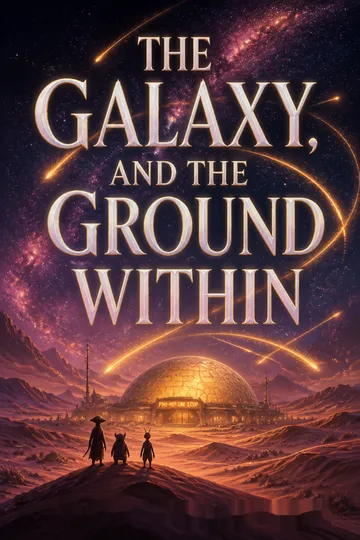
Becky Chambers' The Galaxy, and the Ground Within is a masterclass in "quiet" science fiction—a story that eschews epic battles and galaxy-spanning plots in favor of the intimate, the everyday, and the deeply human (or sapient). By trapping a group of strangers from wildly different backgrounds in a single, unremarkable place, Chambers explores the possibilities and limits of empathy, hospitality, and connection. The novel's central lesson is that home is not a fixed place or a matter of blood, but something we build together through care, curiosity, and the willingness to be changed by others. The book interrogates the costs of prejudice, the pain of exile, and the courage required to choose authenticity over safety. Its structure—alternating perspectives, slow-burn revelations, and a focus on small moments—invites the reader to inhabit the lives of others, to see the galaxy not as a backdrop for adventure, but as a web of relationships, responsibilities, and hopes. In a world (and a genre) often obsessed with spectacle, Chambers reminds us that the most radical act is to care for the stranger, to listen, and to plant seeds whose fruit we may never see. The story's ultimate message is one of hope—not naïve or easy, but hard-won and ongoing. In the end, the galaxy is vast and indifferent, but the ground within—the space we share, the home we make—is ours to shape, together.
People Also Read






Characters
Ouloo
Ouloo is the Laru proprietor of the Five-Hop One-Stop, fiercely dedicated to making every guest feel welcome. Her relationship with her child, Tupo, is central—she is both nurturing and exasperated, struggling with the challenges of single parenthood and the desire to raise Tupo with openness to the galaxy. Ouloo's psychoanalysis reveals a deep need for control and order, which is tested by the chaos of the crisis. She is the emotional heart of the group, her hospitality both a shield and a gift. Through the ordeal, she learns to accept help, to let go of perfection, and to see the value in vulnerability. Her development is marked by a growing humility and a recognition that care is a communal act, not a solitary burden.
Tupo
Tupo, Ouloo's pre-adolescent child, is awkward, inquisitive, and often the first to ask the questions adults avoid. Tupo's nonbinary identity and struggle with growing up are woven throughout, as is xyr longing for belonging and understanding. Tupo's museum, filled with rocks and found objects, symbolizes the search for meaning in a world that feels both empty and full. The near-fatal accident brings Tupo's vulnerability to the fore, forcing the adults to unite in care. Tupo's recovery and the gifts xe gives at the end show a growing sense of agency and gratitude. Psychologically, Tupo embodies the openness and confusion of youth, serving as both mirror and challenge to the adults' certainties.
Pei
Pei is an Aeluon cargo runner, outwardly competent and controlled, inwardly torn by the demands of her culture and her forbidden love for a Human. Her military background and experience with violence shape her worldview, making her both pragmatic and guarded. Pei's psychoanalysis reveals a deep fear of vulnerability and a longing for acceptance—both from others and herself. The onset of her reproductive cycle (shimmer) forces her to confront the expectations of her species and her own desires. Her journey is one of self-acceptance, as she chooses love over duty, and honesty over secrecy. Her relationship with the others, especially Speaker, is marked by tension, misunderstanding, and ultimately, respect.
Roveg
Roveg is a Quelin sim designer, marked by the scars of exile and the ache of separation from his sons. His outward sophistication and humor mask a profound loneliness and a sense of loss. Roveg's psychoanalysis centers on the tension between loyalty to self and loyalty to community; his art is both a refuge and a rebellion. The crisis on Gora forces him to confront his regrets and to accept help, both practical and emotional. His gift to Speaker—a sim of his homeworld—symbolizes his hope that beauty and connection can transcend boundaries. Roveg's development is a movement from isolation to engagement, from bitterness to generosity.
Speaker
Speaker is an Akarak, a species marginalized and forced to live in life-support suits. Her role as a "Speaker" is both literal and symbolic—she bridges worlds, interprets needs, and negotiates survival. Her relationship with her twin, Tracker, is foundational, and her separation during the crisis is a source of deep anxiety. Speaker's psychoanalysis reveals the burden of being both representative and invisible, always adapting to others' expectations while longing for recognition. Her honesty and directness can be abrasive, but are rooted in a fierce integrity. The gift of the sim from Roveg, and her decision to share it with her people, mark a turning point—a reclaiming of agency and a gesture of hope.
Tracker
Though physically absent for most of the story, Tracker's relationship with Speaker is ever-present. She represents the other half of Speaker's self, the one who understands without words. Tracker's skills in navigation and technology are crucial to the Akarak way of life, and her absence during the crisis heightens Speaker's sense of vulnerability. Psychologically, Tracker embodies the longing for connection and the pain of separation. Her eventual reunion with Speaker, and their shared experience of Roveg's sim, is a moment of healing and possibility.
Dr. Miriyam
The Human doctor who arrives to save Tupo is a minor but pivotal character. Her professionalism, empathy, and Exodan background highlight the diversity and interconnectedness of the galaxy. She represents the possibility of help from unexpected quarters, and her presence is a reminder that expertise and care can cross species lines. Psychologically, she is a stabilizing force, bringing relief and closure to the crisis.
Ouloo's Neighbors (offstage)
Though not directly present, Ouloo's neighbors and the wider Goran community are referenced throughout. They symbolize the broader web of interdependence that sustains life on the margins. Their presence is felt in the exchange of goods, the flashing of lights during the blackout, and the shared vulnerability of the crisis. Psychologically, they represent the tension between self-reliance and mutual aid.
Ashby (offstage)
Pei's Human partner, Ashby, is never seen but is central to her emotional arc. He represents the possibility of love across boundaries, and the cost of secrecy. Psychologically, Ashby is both anchor and risk, the reason Pei must choose between safety and authenticity.
The Five-Hop One-Stop
The rest stop itself is more than a backdrop—it is a living, evolving space shaped by Ouloo's care and the needs of its guests. It embodies the themes of hospitality, adaptation, and the ongoing work of making a home in a hostile universe. Psychologically, it is both sanctuary and crucible, a place where transformation is possible.
Plot Devices
Forced Proximity and Closed Setting
The central plot device is the sudden disaster that grounds all ships and isolates the characters together. This forced proximity strips away the distractions of travel and routine, compelling the characters to interact, confront their differences, and rely on one another. The closed setting of the Five-Hop One-Stop becomes a crucible for transformation, echoing classic "bottle episode" structures in fiction. The narrative structure alternates between individual perspectives, deepening empathy and revealing the inner lives of each character.
Multispecies Perspective and Cultural Translation
The story employs multiple points of view, each shaped by the character's species, history, and psychology. Language, biology, and custom become both barriers and bridges, with misunderstandings and revelations driving the plot. Speaker's role as a cultural translator is mirrored by the narrative's own work of translation—inviting the reader to inhabit alien perspectives and to question the boundaries of empathy.
Foreshadowing and Symbolism
Early references to the fragility of infrastructure, the unpredictability of travel, and the hidden wounds of each character foreshadow the crises to come—both external and internal. Objects like Tupo's museum pieces, Roveg's sim, and the garden's evolving plants serve as symbols of memory, loss, and hope. The recurring motif of hospitality—food, shelter, care—becomes a metaphor for the work of building community in a fractured world.
Parallel Arcs and Mirrored Conflicts
Each character faces a personal crisis—Pei's forbidden love, Roveg's exile, Speaker's separation from her twin, Ouloo's fear for her child—that mirrors the larger themes of belonging, loss, and the search for home. The plot weaves these arcs together, showing how individual choices ripple outward, affecting others in ways both subtle and profound.
Resolution Through Small Acts
The story resists grand resolutions or heroic triumphs. Instead, change comes through small acts of kindness, honesty, and creativity—sharing a meal, telling a story, saving a life, planting a seed. The ending is open, emphasizing the ongoing nature of growth and the unfinished work of making a home.
Wayfarers Series





Download PDF
Download EPUB
.epub digital book format is ideal for reading ebooks on phones, tablets, and e-readers.








































