
Plot Summary
Losing My Religion
Bob Howard, once a comfortable atheist, is now a computational demonologist for the Laundry, the UK's secret occult intelligence agency. He's learned the universe is not only stranger than he imagined, but actively hostile, with ancient, godlike entities waiting beyond the veil. Bob's job is to keep these horrors at bay, but the knowledge has cost him his peace of mind and his faith in a rational, uncaring cosmos. He's haunted by the certainty that the apocalypse—CASE NIGHTMARE GREEN—is coming, and that his own survival, and that of humanity, is far from assured. The story opens with Bob's wry, traumatized voice, setting the tone for a tale of cosmic dread, bureaucratic absurdity, and personal loss.
Ghosts in the Machine
Sent to RAF Cosford to investigate a haunted jet, Bob expects a simple job. Instead, a chain of small mistakes and hidden histories leads to disaster. The airframe, once part of the secretive 666 Squadron, is more than just haunted—it's contaminated by exposure to otherworldly horrors. During the exorcism, a bystander is killed in a flash of necromantic energy, leaving Bob traumatized and wracked with guilt. The incident triggers an internal investigation, and Bob is forced to confront the dangerous entanglement of the mundane and the supernatural in his daily work, as well as the personal cost of his failures.
Bureaucratic Aftershocks
The accidental death at Cosford launches a bureaucratic inquest. Bob is interrogated, his every action scrutinized. His manager Iris, both supportive and formidable, orders him off active duty to recover. The Laundry's unique blend of civil service protocol and occult paranoia is on full display, as Bob navigates guilt, paperwork, and the subtle politics of blame. Meanwhile, his wife Mo, herself a combat epistemologist, is called away on a harrowing mission, leaving Bob isolated and vulnerable. The emotional toll of their work strains their relationship, even as they cling to each other for sanity.
The White Elephant's Shadow
Bob's curiosity about the "white elephant" at Cosford leads him into the shadowy history of 666 Squadron and the secret war fought with occult weapons. Angleton, his enigmatic boss, hints at deeper mysteries—missing files, secret squadrons, and the legacy of Major-General Fuller, the Laundry's founder. As Bob digs into the archives, he uncovers connections between Cold War occult operations, Russian interest in arcane artifacts, and the looming threat of CASE NIGHTMARE GREEN. The past is not dead; it's waiting to be weaponized.
Cultists and Cover Stories
Mo returns from Amsterdam shattered by her encounter with a cult cell—the Free Church of the Universal Kingdom—intent on accelerating the apocalypse through ritual murder. The cultists' willingness to sacrifice innocents, including children, for their dark gods horrifies both Mo and Bob. Their home is attacked by a possessed assassin, forcing them to upgrade their defenses and confront the reality that the enemy is not just cosmic, but human. The personal and professional dangers blur, as the couple struggles to protect each other and maintain their grip on reality.
The Teapot and the Baron
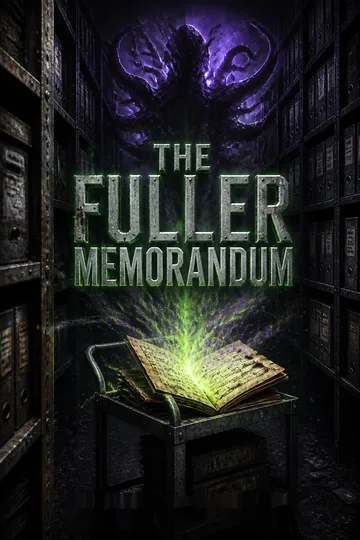
The Laundry's adversaries are not just cultists but rival intelligence agencies. The Russian Thirteenth Directorate is searching for the "Teapot"—a codeword for a powerful, reincarnated preta (hungry ghost) once bound by the British. Their interest centers on the legacy of Baron Ungern Sternberg, a White Russian warlord and occultist, and the mysterious Fuller Memorandum, a document that may hold the key to controlling the Eater of Souls. Bob's investigation reveals a tangled web of historical atrocities, occult artifacts, and international espionage, all converging on a single, missing file.
The Baited Trap
Angleton, suspecting a mole within the Laundry, uses Bob as bait, planting a false version of the Fuller Memorandum in the archives. The hope is to draw out the infiltrator and the cultists seeking to unleash the Eater of Souls. Bob, suspended and stripped of his protections, becomes a target. The tension mounts as he is stalked, abducted, and subjected to ritual mutilation by the cultists, who believe he is the perfect vessel for their summoning. The lines between hunter and hunted blur, as Bob's survival depends on his wits and the loyalty of his few remaining allies.
Nightmares in the Archives
Bob's journey into the Laundry's underground archives is both literal and metaphorical—a descent into the buried secrets and traumas of the organization. He navigates zombie staff, arcane wards, and the ever-present risk of magical contamination. Meanwhile, the mole—revealed to be his own manager, Iris—moves to deliver Bob into the hands of the cultists. The sense of claustrophobia and paranoia intensifies, as Bob realizes he has been outmaneuvered and is now at the mercy of enemies both within and without.
The Goatfuckers' Gambit
Captured by the cultists, Bob is subjected to a brutal, cannibalistic ritual intended to prepare him as a vessel for the Eater of Souls. The cultists' ideology is revealed as a twisted survivalism—willing to sacrifice anything and anyone to ensure humanity's continuity under the rule of the elder gods. Bob's pain, fear, and anger are palpable, but so is his determination to resist. The chapter is a harrowing exploration of the limits of endurance, the horror of betrayal, and the thin line between victim and survivor.
Summoning the Dead
The cultists' ritual, performed in the necropolis of Brookwood Cemetery, goes catastrophically wrong. Instead of summoning the Eater of Souls, they unleash a horde of feeders—hungry ghosts that possess the dead and attack the living. The cemetery becomes a battlefield, as the Laundry, Russian operatives, and cultists are all caught in the chaos. Mo, wielding her bone violin, leads the counterattack, while Angleton's true nature as a bound preta is revealed. The boundaries between life and death, self and other, are shattered in the ensuing carnage.
The Eater of Souls
Bob, intended as the vessel for the Eater of Souls, instead becomes the locus of a recursive possession—bound to his own body by the cultists' botched ritual. He turns the tables, unleashing the feeders on the cultists and their allies. The cost is immense: Bob's soul is scarred, his sense of self fractured, and the Laundry's secrets are exposed to their enemies. The chapter is a nightmarish inversion of the cultists' plans, as the tools of apocalypse are turned against their wielders.
Aftermath in the Necropolis
The aftermath of the Brookwood disaster is grim. The Laundry, with Mo's help, rescues Bob and suppresses the outbreak, but not before hundreds are dead or possessed. The mole is unmasked, but the damage is done—trust is shattered, and the organization is left reeling. Bob's recovery is slow and uncertain, haunted by what he has become and what he has done. The personal and institutional costs of the battle are laid bare, as the survivors struggle to make sense of the horror.
The Price of Survival
The Laundry's victory is pyrrhic. The cultists' ideology—that survival at any cost is justified—echoes uncomfortably with the organization's own compromises. Bob, Mo, and Angleton are left to ponder the meaning of survival in a world where the apocalypse is not just possible, but inevitable. The boundaries between heroism and monstrosity, loyalty and betrayal, are blurred. The chapter is a meditation on the cost of fighting monsters, and the danger of becoming what you oppose.
The Enemy Within
The revelation of Iris as the mole forces a reckoning within the Laundry. The organization's reliance on secrecy, compartmentalization, and personal loyalty is both its strength and its weakness. Bob's trust in his colleagues, his superiors, and even himself is shaken. The chapter explores the psychological toll of espionage, the corrosive effects of suspicion, and the difficulty of distinguishing friend from foe in a world of shifting allegiances.
The End of Innocence
Bob's journey from naive atheist to scarred survivor is complete. He has lost his innocence, his faith in institutions, and much of his sense of self. The knowledge he has gained—of the true nature of the universe, the fragility of sanity, and the inevitability of loss—cannot be unlearned. The chapter is a quiet, painful reflection on the price of knowledge, the impossibility of returning to ignorance, and the necessity of carrying on despite the cost.
The Sleeper in the Pyramid
The final chapter looks to the future. CASE NIGHTMARE GREEN is still coming; the Sleeper in the Pyramid still stirs. The Laundry has survived another crisis, but the existential threat remains. Bob, Mo, and Angleton are left to prepare for the next battle, knowing that victory is temporary and the end is only postponed. The story closes with a sense of weary determination, dark humor, and the knowledge that, when the apocalypse comes, they will be waiting—with whatever weapons they can muster, and the last shell saved for themselves.
Analysis
The Fuller Memorandum is a masterful fusion of cosmic horror, espionage thriller, and bureaucratic satire. At its core, the novel is an exploration of survival—personal, institutional, and species-wide—in the face of inevitable catastrophe. Charles Stross uses the trappings of British civil service to ground the unimaginable, making the horror both more absurd and more immediate. The story interrogates the cost of knowledge, the dangers of compromise, and the thin line between heroism and monstrosity. Through Bob's journey, we see the erosion of innocence, the corrosive effects of secrecy and suspicion, and the necessity of carrying on despite the certainty of loss. The novel's central lesson is that survival is not victory, and that the tools we use to fight monsters can make monsters of us in turn. In a world where the apocalypse is always just over the horizon, the only choices are how to face it, and what we are willing to become in the process. The Fuller Memorandum is both a warning and a call to arms—a reminder that, even in the face of cosmic indifference, the struggle for meaning, agency, and humanity is worth the cost.
Review Summary
The Fuller Memorandum receives mostly positive reviews (4.19/5 average), with readers praising its blend of Lovecraftian horror, British spy thriller elements, and bureaucratic humor. Fans appreciate the darker tone, expanded world-building, and character development, particularly regarding Angleton's backstory. The series' unique premise combining computational demonology with office comedy resonates strongly. Some readers found the pacing slow initially and the Cold War espionage elements less engaging. A few noted the book's grimness and anti-religious themes. Overall, reviewers consider it an improvement over previous installments, successfully balancing humor with cosmic horror.
People Also Read
Characters
Bob Howard
Bob is the everyman thrust into cosmic horror, a computer geek turned occult intelligence officer. His journey is one of disillusionment and endurance—he loses his faith in a rational universe, his innocence, and nearly his sanity. Bob's relationships—with Mo, with Angleton, with his colleagues—are marked by loyalty, guilt, and the constant threat of loss. Psychologically, he is defined by anxiety, self-deprecating humor, and a stubborn refusal to give in to despair. His development is a descent into darkness, tempered by moments of courage and compassion.
Mo O'Brien
Mo is Bob's wife and equal, a combat epistemologist whose weapon is a violin made from human bone. She is both a source of strength and a mirror for Bob's trauma, sharing in the dangers and the emotional fallout of their work. Mo's own experiences with horror and violence leave her scarred but resilient. Her relationship with Bob is complex—marked by love, frustration, and mutual dependence. Psychologically, she is driven by a fierce sense of responsibility, a need for control, and a deep empathy for the victims of the horrors they fight.
Angleton (Teapot)
Angleton is the Laundry's Detached Special Secretary, a being of immense power and ambiguous loyalty. Once a human, now a bound preta (hungry ghost), he is both protector and potential threat. His relationship with Bob is paternal, manipulative, and enigmatic—he uses Bob as both tool and student. Psychologically, Angleton is defined by alienation, a dry sense of humor, and a deep understanding of both human and inhuman motivations. His development is a slow revelation of his true nature and the limits of his control.
Iris Carpenter
Iris is Bob's manager, a model of bureaucratic competence and apparent empathy—until revealed as the cultist mole. Her betrayal is both personal and institutional, shaking the foundations of trust within the Laundry. Psychologically, Iris is driven by a survivalist ideology, a willingness to sacrifice anything for the greater good, and a chilling capacity for compartmentalization. Her development is a study in the banality of evil—the danger of good intentions twisted by fear and desperation.
Jonquil
Jonquil is Iris's daughter and a high-ranking member of the cult. She embodies the cultists' ideology of ruthless survival, combined with a personal sadism and a taste for ritual violence. Her relationship with Bob is one of tormentor and victim, but also of ideological adversaries. Psychologically, Jonquil is defined by narcissism, cruelty, and a desperate need for approval from her mother and the cult. Her development is a cautionary tale of the dangers of inherited fanaticism.
Panin
Panin is an officer of the Russian Thirteenth Directorate, the Laundry's counterpart and occasional adversary. He is both a threat and an uneasy ally, motivated by a pragmatic desire for survival in a world on the brink of apocalypse. His relationship with Bob and Mo is marked by mutual suspicion, respect, and the recognition of shared interests. Psychologically, Panin is defined by cynicism, adaptability, and a willingness to compromise. His development reflects the shifting allegiances and moral ambiguities of the intelligence world.
Mo's Violin (The Erich Zahn)
The bone violin is both a literal weapon against the supernatural and a symbol of the personal cost of fighting monsters. It is made from human remains, imbued with power and trauma. Its relationship with Mo is intimate and dangerous—using it exacts a physical and psychological toll. Psychologically, the violin represents the thin line between tool and curse, and the danger of becoming what one fights. Its development parallels Mo's own journey, as she learns to wield it without losing herself.
The Eater of Souls (Preta)
The Eater of Souls is the ultimate threat—a being of immense power, hunger, and alien intelligence. Bound by the Laundry, sought by cultists, it is both weapon and apocalypse. Its relationship with Bob and Angleton is complex—at times adversary, at times reluctant ally. Psychologically, it represents the inhuman, the unknowable, and the danger of power without empathy. Its development is a slow encroachment on the boundaries of the human, a reminder of what is at stake.
The Cultists (Brotherhood of the Black Pharaoh)
The cultists are the human face of apocalypse—willing to do anything, sacrifice anyone, to ensure their own survival under the rule of the elder gods. Their relationships are defined by hierarchy, fear, and the suppression of empathy. Psychologically, they are driven by a mix of terror, ambition, and ideological certainty. Their development is a descent into monstrosity, as their actions become increasingly desperate and inhuman.
The Laundry
The Laundry itself is a character—a sprawling, secretive bureaucracy tasked with defending humanity from cosmic horror. Its relationships with its staff are paternalistic, demanding loyalty and sacrifice. Psychologically, it is defined by paranoia, compartmentalization, and the constant tension between mission and morality. Its development is a slow erosion of certainty, as the boundaries between protector and oppressor blur.
Plot Devices
Bureaucratic Horror and Paranoia
The narrative structure of The Fuller Memorandum is built on the juxtaposition of cosmic horror and bureaucratic absurdity. The Laundry's protocols, investigations, and paperwork are both a defense against chaos and a source of vulnerability. The story uses the slow, grinding machinery of government as a means of building tension, foreshadowing betrayal, and highlighting the personal cost of institutional survival. The constant threat of audits, inquiries, and internal politics mirrors the external threat of the supernatural, creating a pervasive atmosphere of paranoia and dread.
Foreshadowing and Misdirection
The novel is structured around a series of mysteries—missing files, secret squadrons, hidden moles—that are gradually revealed through Bob's investigation. Foreshadowing is used to build suspense and misdirect both the protagonist and the reader. The true nature of the threat, the identity of the mole, and the intentions of the cultists are all concealed until the final act, creating a sense of mounting unease and inevitable catastrophe.
Recursive Possession and Identity
The central plot device—the attempted possession of Bob by the Eater of Souls—serves as both a literal and metaphorical exploration of identity, agency, and the danger of becoming what one fights. The recursive nature of the possession (a soul bound to its own body) mirrors the recursive dangers of bureaucracy, secrecy, and ideological certainty. The device is used to explore the psychological cost of survival, the fragility of self, and the thin line between hero and monster.
Historical Resonance and Alternate History
The story is deeply rooted in the alternate history of the Laundryverse, drawing on real and imagined events from the Cold War, the Russian Civil War, and the occult arms race. Historical documents, letters, and artifacts are used as plot devices to connect past atrocities to present dangers. The legacy of figures like Major-General Fuller and Baron Ungern Sternberg is not just background, but an active force shaping the present. The use of history as both source of horror and tool of survival is central to the narrative.
Cosmic Horror and Inevitability
The looming threat of CASE NIGHTMARE GREEN—the inevitable awakening of the elder gods—is a constant presence, shaping every decision and action. The story uses the inevitability of apocalypse as both motivation and source of despair, forcing characters to confront the limits of their agency and the meaning of survival. The cosmic horror is not just external, but internalized—manifesting as trauma, paranoia, and the erosion of hope.
Laundry Files Series
About the Author
Other books by Charles Stross

Download PDF
Download EPUB
.epub digital book format is ideal for reading ebooks on phones, tablets, and e-readers.








































