
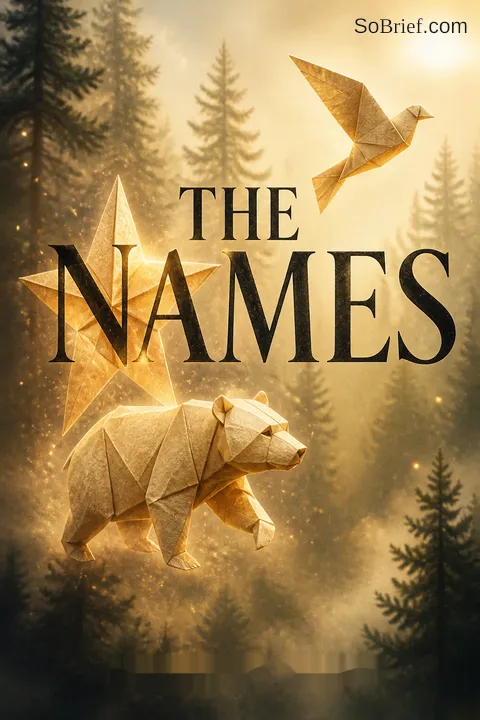


Plot Summary
Prologue
On the night of the Great Storm of 1987, Cora1 sits in a nursery cradling her newborn son while gusts batter the fir trees outside. Her husband — a GP named Gordon2 — expects the baby to carry his family name, as every firstborn son has for generations. But Cora1 hates the name and the dynasty of domineering men it represents.
Walking through the storm-altered landscape the next morning, nine-year-old Maia4 suggests Bear — soft and cuddly, she says, but also brave and strong. Cora1 has her own preference hidden away: Julian, meaning sky father. Three names circle the same child: the one his father demands, the one his mother wants, and the one his sister dreams up. Each carries a different life inside it.
Bear's Name Draws Blood
In the first of three parallel lives, Cora1 names her son Bear3 — Maia's4 choice, not the family name. The joy evaporates within hours. That evening, she presents the birth certificate. Gordon2 smashes a water jug, seizes her hair, and slams her head against the refrigerator.
When Cora1 screams, a neighbor — Vihaan, the quiet man from two doors down12 — breaks through the front door to intervene. Gordon2 hurls him backward through the patio glass. Police arrive to find Cora1 barely conscious, Baby Bear3 hidden in the bedroom closet, and Vihaan12 mortally wounded on the patio.
A young officer retrieves the infant from the wardrobe, jigging him gently until his sobs quiet. Gordon2 is cuffed and led away. Cora's1 act of defiance has cost one man his life — and ended another man's hold over hers.
Sky Father at the Dinner Table
In the second timeline, Cora1 registers the baby as Julian3 and presents it to Gordon2 as a personal tribute — Julian means father. Nine-year-old Maia4 has prepared moon and star decorations for his plate and explains the name with rehearsed confidence, interrupting his anger like a tiny diplomat.
Gordon2 sits through dinner in silence, then sends Maia4 to run a bath. The moment water runs through the pipes, he pushes Cora's1 face into the uneaten lasagne, plate hard against her nose, sauce covering her lashes. He tells her he will not be letting this go.
But Cora,1 spine straight, sauce dripping, resolves this will be the last time she sits like this. She will make a plan. In this timeline, the abuse continues for years — and eventually, Gordon2 kills her. The children are sent to Cora's mother, Sílbhe,6 in Ireland.
The Name She Cannot Love
In the third timeline, Cora1 follows Gordon's2 instructions and registers the baby as Gordon3 — his family name. Walking home, the infant who seemed full of possibility minutes ago now looks alien to her. She cannot breastfeed.
She stares at walls while the baby cries, turns up the radio to drown him out, finds herself organizing plastic bags on the kitchen floor. Gordon2 comes home to find his namesake screaming in vomit-soaked sheets and holds the infant above his head, out of Cora's1 reach, threatening to take both children if she ever fails again.
He controls everything — no money, no phone calls, no formula until the baby's fontanelle sinks with dehydration. This is the timeline where the name fits like a cage, and Cora1 shrinks inside it for decades.
Bees, Bear, and Borrowed Family
By 1994, in the Bear3 timeline, Cora1 and her children live in a flat near Mehri8 and her daughter Fern14 — the swimming-class mother who always offered help. Bear,3 now seven, runs with arms outstretched to greet sixteen-year-old Maia,4 whom he calls Bees because she once chased him buzzing around the house.
Their life is small but warm: pizza dinners, strawberry milkshakes, the mozzarella cheese stretched between box and plate. Cora1 works as a gardener at a stately home.
Sometimes, when Maia4 is at school, she pushes back the kitchen table and pirouettes while Bear3 laughs from his bouncer. Maia4 still wets the bed and flinches when teachers shout her name, but she carries a therapist's handkerchief in her blazer pocket — proof that someone outside the family sees her too.
Sílbhe's Unwanted Second Youth
In the Julian3 timeline, seven-year-old Julian3 lives in rural Ireland with his silver-haired grandmother Sílbhe,6 who abandoned a budding romance with Cian7 — a local jeweler — to take in her murdered daughter's children.
Julian3 threads beads onto wire for a neighbor's lacework, preferring the quiet company of adults to other boys. He reveals himself during hide-and-seek before Maia4 can find him, unable to bear causing even mock surprise. Maia,4 sixteen, asks to take ballet — not because she loves it, but because it connects her to her dead mother.1
Sílbhe6 agrees, swallowing regret about having let Cora1 leave Ireland too young. She drives the children to counseling, ballet, art classes. Her planned retirement has been replaced by a fierce, unasked-for second parenthood — and she does not resent them for it.
The Letter That Changes Nothing
In the Gordon3 timeline's 1994, seven-year-old Gordon Jr.3 tries to write Luke on his school name card; the teacher tears it up and prints GORDON in indelible black ink. He learns that pleasing his father2 means betraying his mother1 — inventing stories about her misdeeds over pizza, feeding his father's surveillance.
Maia,4 meanwhile, witnesses Cora1 on her knees eating from a bowl on the kitchen floor while Gordon2 crouches over her, wrists pinned behind her back. She vomits across the landing carpet and secretly writes to grandmother Sílbhe6 in Ireland.
Sílbhe6 calls, offers money, plane tickets. But Cora1 explains Gordon2 has prescribed antipsychotics under her name — if she left, she would lose the children. When a police officer comes to investigate, Cora1 tells him her mother has dementia. He laughs with relief: Gordon2 is his own doctor.
The Murderer's Children
By 2001, fourteen-year-old Bear3 takes the train to visit Maia4 in Brighton, charming a crying child with paper origami along the way. Over chips on the seafront, they confront something each has carried privately: what it means to be the murderer's son, the murderer's daughter.
Bear3 mentions their father's2 impending release from prison. Maia4 deflects, though she lies awake imagining him behind every dark corner. Bear3 also mentions Lily5 — the girl beside him in maths, their surnames almost identical — quiet but confident, someone who treats him gently for no reason.
Meanwhile, Cora1 goes on a date with Felix,11 a vet arranged by Mehri's8 husband Roland. She likes him but cannot trust kindness; every warm gesture registers as reconnaissance for future cruelty. She ends it the next morning by text.
Silver, Solder, Surrogate Father
In the Julian3 timeline, Sílbhe6 asks Cian Brennan7 — the local jeweler she once nearly loved — to teach fourteen-year-old Julian3 silversmithing, since adult education courses will not accept a minor. From the first session, Julian3 feels set alight.
He sketches chestnut-leaf pendants in the margins of his exercise books, lies awake vibrating with creative energy. The old wavery feeling inside him — anxiety, loneliness — finds a new shape: excitement. His sessions overrun, and Cian7 begins staying for dinner. Then Saturdays. Then Sundays.
Gradually, this quiet man fills the role no one asked him to play. Driving Maia4 home from her job at a sandwich bar one snowy evening, Cian7 listens as she speaks about her mother's1 murder for the first time. He does not probe. He stays on the road and lets her talk.
Pinned Against the Tree
In the Gordon3 timeline, fourteen-year-old Gordon Jr.3 is invited to a party by Lily,5 the one kind girl in his class. They drink his father's gin on the walk over and kiss against a tree in the dark garden — soft and exploratory at first — until Gordon3 forces his hand beneath her skirt.
She struggles, tries to speak into his covered mouth, but he holds her there, astonished by his own strength. When she breaks free and runs, he feels anger rather than remorse. Inside, he tells the other boys she stinks, and they welcome him as one of them.
Meanwhile, Gordon Sr.2 takes Cora1 to a couples' weekend where he charms the other wives, carries Cora1 across a buttercup field, then privately mocks her weight and engineers a dinner scene that makes her appear aggressive before their friends.
A Vet's Waiting Room
In the Gordon3 timeline's 2008, Cora1 — now fifty-four, without television, phone, or even a door key — intercepts a solicitor's letter that slips past her husband's2 locked mailbox. Her mother Sílbhe6 is dead. Gordon2 hid the death and diverted the inheritance.
Cora1 flees without keys or money, finds Mehri's8 old house occupied by strangers, and walks into a veterinary surgery to beg for help. A curly-haired vet11 wraps her in an animal blanket, phones a refuge, and places a purring cat in her lap while they wait.
When a worker from Bowen House arrives, Cora1 believes her: she is safe. But Gordon2 later recaptures her using a Lasting Power of Attorney obtained by staging her cognitive decline — feeding her wrong dates and prime ministers, arranging a rigged assessment, showing her a dementia ward as a warning.
Two Messages on One Screen
November 2015. Bear3 is finishing archaeological work in Egypt; Lily5 lives in Paris, employed at the national library. She texts Bear3 a playful nickname for the restaurant where she is meeting her friend Veronique for dinner. Bear3 is playing cards when his phone lights up beneath an abandoned novel.
Lily's5 text sits directly above a BBC newsflash: multiple attacks in Paris, at least eighteen killed. Two days of unanswered messages follow — then a staccato text from Lily's5 parents: Found. In ICU. Alive. Shot. Bear3 redirects his taxi and sobs in the backseat.
Packing up her Paris apartment afterward, he discovers boxes of his letters carefully preserved, a collection of keepsakes cataloging their fifteen years: ticket stubs, a butterfly wing, a heart-shaped pebble. He has been careless with the only treasure that matters.
The Gym Card Proposal
Months later, sitting by a lake as Lily5 recovers in a wheelchair, Bear3 pulls out a gym membership card. He took it out before the attacks, he explains — before applying for a permanent museum job in England — because he needed to test how staying in one place felt without messing her around.
Lily,5 who has spent years molding herself into the independent woman she assumed Bear3 wanted, finally unloads the truth: she needs a partner who comes home each night, wants children soon, and is done apologizing for wanting ordinary things.
Bear3 kneels before her and delivers a rambling, specific declaration of love — her ankles in summer jeans, the cats that follow her home, her surname signed at the end of every letter. They move to Brighton. Pearl13 is born. Bear3 runs children's archaeology workshops at the museum, teaching small hands to find treasure in the dirt.
A Wasp in the Loft
A Thursday during Covid lockdown. Bear3 and four-year-old Pearl13 are in the loft fixing a banging water tank and reading old picture books when a wasp stings Bear3 near his nose. He manages to settle Pearl13 with cartoons and stumble downstairs, but his throat swells shut, his face expanding beyond recognition.
Lily5 finds him on the sofa, tongue too thick for words. Pearl's13 small fingers dial emergency services on her mother's5 phone. Paramedics arrive under blue lights — but there is no one left to save. In the silence that follows, Lily5 and Pearl13 move through the house like creatures lost in the woods.
They bake scones and do jigsaw puzzles. Pearl13 asks if Papa will be dead forever. Lily5 says yes. Months later, a car dealer calls Bear's3 phone: he had secretly ordered Lily5 an electric car, paid in full. It is black — exactly what she would have chosen.
Boxes Bound for England
In the Julian3 timeline's 2022, after years of refusing to sell across the Irish Sea — England being the land that failed his mother1 — Julian3 watches his first wholesale consignment loaded for Liberty department store in London.
The pandemic had shattered his marriage: his wife Orla9 left with their daughters when money vanished and arguments about expanding to England turned caustic. It was Cian7 who finally broke through with five quiet words: it is just a place, not your father.
Meanwhile, Maia4 shared childhood memories — their mother's1 herb garden, her voice behind the fir trees during what she called Picnic Time — that helped Julian3 realize the chasm between himself and his father2 was uncrossable. When Orla9 texts that she has come home, Julian3 sprints through the streets, bursts through the door breathless, and asks her to come back. She nods against his chest.
Cameras in the Smoke Detectors
In the Gordon3 timeline, Gordon Jr.'s3 liberation of his mother1 begins not with courage but with a car wreck. A banking career imploded by alcoholism sends him through the windshield of a Porsche on the motorway.
Sobriety, a sponsor named Rob16 who paints in a studio above a pet shop, and a gallery job rebuild him into someone who can finally see. Moving back home, he brings Cora1 chocolate and shows her art on his phone. Before leaving again, he plants cameras inside the smoke detectors.
A week of filmed abuse later, he confronts his father2 with the footage and two choices: leave quietly or face prison. Gordon Sr.2 hands over the keys. Cora,1 sixty-eight, now lives in a small London terrace with window boxes, fresh herbs, and a Roberts radio playing women's voices into her kitchen. She is free.
Epilogue
Gordon Sr.2 dies of a heart attack on his kitchen floor, coffee seeping into his sleeve. In his final moments, he sees Cora's1 bruised face, his own brutal hands, and grasps with terrible clarity that he had one life and could have spent it differently.
As his last breath escapes, he imagines letting go of Cora's1 hand in Embankment Gardens on the day they met — watching her turn a corner and disappear from view.
The air quivers with alternate paths that shimmer and dissolve: a girl who chose Irish step dancing over ballet and never left home; a young GP killed in a sports car before he could become a monster; a mother at the registrar's office who named her son Hugh — her own father's name — and felt it settle over the baby like something that had always been waiting.
Analysis
The Names pushes nominative determinism to its structural extreme — not because a name magically shapes destiny, but because the act of choosing one reveals the degree of power a person holds over their own life. Cora's1 naming decision functions as a seismograph of domestic freedom: defiance triggers immediate violence but leads to liberation; compromise buys time but not enough; submission preserves the status quo at the cost of selfhood.
The three-timeline structure resists the simplistic narrative of 'if only she had left sooner.' By presenting three outcomes simultaneously, Knapp demonstrates that no single choice guarantees safety. In one timeline, Cora's1 defiance costs an innocent man his life; in another, her compliance costs her own. The third shows decades of entrapment followed by liberation from the most unlikely source — the very child who was weaponized against her. The novel refuses to let readers settle into a comfortable moral position about what an abused woman should do.
Generational transmission operates differently across timelines: Bear,3 raised in freedom, inherits gentleness; Julian,3 raised in grief, inherits caution; Gordon Jr.,3 raised inside the abuser's household, inherits cruelty before painstakingly unlearning it. The novel argues that what children inherit is not genetic destiny but environment — and that environment can be changed, though the cost is never evenly distributed.
The father's2 essential tremor — the shaking hands that ended his surgical career — literalizes the instability beneath his compulsion for control. His own father's contempt created the wound; Cora1 and the children merely occupied the blast radius. That the son's recovery requires acknowledging both his manipulation and his complicity, without either excusing or being destroyed by the knowledge, is the novel's most psychologically demanding proposition. The deepest insight may be its simplest: naming a child is the first story a parent tells about who that child might become, and the freedom to tell that story is itself a measure of how much freedom the parent possesses.
Review Summary
The Names by Florence Knapp is a highly praised debut novel exploring how a name can shape a person's life. The story follows three alternate timelines based on different names given to a newborn boy. Readers found the book emotionally powerful, thought-provoking, and beautifully written. Many praised its unique premise, complex characters, and exploration of domestic abuse. While some found parts difficult to read, most reviewers were captivated by the storytelling and considered it a standout novel of 2025.
People Also Read







Characters
Cora
Trapped dancer, defiant motherA former Irish ballet dancer who married a charming English GP and found the charm was a mask. Cora's body remembers ballet's discipline: she straightens her spine in moments of terror, plants her feet in first position before confrontations. Her psychology is shaped by a fundamental tension between self-preservation and maternal devotion. She stays in her marriage not from weakness but from a calculated wager that proximity to her abuser is safer for her children than the court system that would award him custody. Across the novel's three timelines, she embodies the impossible arithmetic of domestic abuse: every choice carries a cost, every escape route loops back toward danger. Her relationship with Maia4 operates through coded gestures—a glance over lasagne, a shared distaste neither can safely name aloud.
Gordon (the father)
Doctor, husband, domestic tyrantThe abusive husband whose shadow falls across every timeline. A GP whose essential tremor ended his surgical ambitions, Gordon carries the wound of his own father's contempt—a renowned brain surgeon who mocked his son's career as glorified waiting-room attendance. This humiliation curdles into a need for absolute domestic control: financial, social, physical. He is terrifyingly competent at appearing kind—his patients adore him, his friends' wives declare him the ideal husband. His abuse is systematic rather than impulsive: prescribing medication under Cora's1 name, intercepting her mail, removing the television remote. He manipulates his children differently—rewarding his son's3 betrayals of Cora1, exploiting his daughter's4 fear as leverage. The gap between his public persona and private cruelty is the novel's central horror.
Bear / Julian / Gordon Jr.
One child, three destiniesOne baby, three names, three entirely different lives. As Bear, he grows up free and loved, becoming a gentle archaeologist with a gift for connecting with children and strangers—the kind of person who makes paper animals for crying toddlers on trains. As Julian, he is raised in rural Ireland by his grandmother6, channeling his anxious inner life into silversmithing, struggling to open himself to love because he fears carrying his father's2 capacity for violence. As Gordon Jr., he is weaponized against his own mother1 from childhood, absorbing his father's2 cruelty as currency for approval, only to crash spectacularly before finding his way back. Across all three lives, the same misshapen heart-shaped birthmark marks the forearm of a body that might have been anyone.
Maia
The sister who sees everythingCora's1 eldest child, nine years older than her brother3, who appears in all three timelines as the family's most perceptive and burdened member. She learned to read danger before she could read books—tracking her parents' moods through the tension in a room, catching spilled crumbs before they could spark her father's2 rage. A therapist identifies her childhood survival strategy as fawning—the instinct to soothe, placate, perform normalcy. This makes her extraordinarily capable professionally (she becomes a doctor in two timelines, a homeopath in the third) but leaves her struggling with intimate relationships. She is gay but takes decades to acknowledge it, the vulnerability of self-revelation too closely associated with danger. Her bond with her brother3 is the novel's most tender constant across all three lives.
Lily
Bear's love, Gordon's victimBear's3 lifelong love in one timeline, a sexual assault survivor in another—demonstrating how the same person can be sanctuary or harm depending on who encounters them. She speaks multiple languages, keeps meticulous boxes of keepsakes, and possesses a grace that makes cats follow her home. Her patience with Bear's3 nomadic restlessness is both her strength and her sacrifice, though she eventually demands the ordinary life she's always wanted.
Sílbhe
Silver-haired guardian of orphansCora's1 Irish mother who abandons her budding romance with Cian7 to raise her daughter's children. A fierce runner who pictures her grandchildren's milestones as she loops through fields each morning, she represents the quiet heroism of choosing duty over desire. She feels guilt for having let Cora1 leave Ireland too young and channels that guilt into a second parenthood so devoted it leaves no room for self-pity.
Cian Brennan
Jeweler, mentor, patient loverA jeweler and Sílbhe's6 late-life love, who first kissed her at sixteen before they married other people. Patient and generous, he teaches Julian3 metalwork without payment and gradually becomes the family's surrogate patriarch. His gentle persistence—waiting decades for Sílbhe6, welcoming her grandchildren—embodies a masculinity entirely opposite to Gordon's2: present without demanding, strong without dominating.
Mehri
Cora's steadfast chosen familyCora's1 anchor across the Bear and Gordon timelines—the swimming-class mother who offered help before Cora1 knew she needed it. Warm, direct, and bossy in equal measure, she feeds Cora's1 family home-cooked stews and unsolicited wisdom. She calls Cora1 azizam—darling—and treats parenting like seasoning a pot: a pinch of this, a pinch of that, trusting it will turn out fine.
Orla
Julian's bold, golden partnerJulian's3 partner in the Julian timeline—a blonde artist who makes tessellating wall hangings from reclaimed yardsticks. Tactile, fearless, and unimpressed by Julian's3 self-protective aloofness, she pushes him to confront his passivity. Her Catholic faith grounds her in community and forgiveness, while her fiery temperament demands he stop hiding behind the past. Their pandemic separation forces both to reckon with what they are willing to fight for.
Kate
Maia's hidden partnerMaia's4 partner in the Gordon timeline—a red-haired, cigarette-smoking doctor with Pre-Raphaelite features who meets Maia4 on a hospital rooftop and flirts with disarming directness. For seven years she endures being hidden from Maia's4 family, her existence a secret kept not from shame but from Maia's4 paralyzing fear that her father2 might weaponize the information.
Felix
The vet who offers shelterA curly-haired vet who appears at pivotal moments across timelines. His kindness—wrapping Cora1 in an animal blanket, placing a cat on her lap—represents the ordinary human decency that Gordon's2 world systematically denied her. That Cora1 initially rejects his warmth and later finds herself in desperate need of it mirrors the novel's broader argument about trust and its slow reconstruction.
Vihaan
The neighbor who broke throughThe quiet neighbor who once commented on the weather and later crashed through a door to stop Gordon2 from killing Cora1. His death becomes the family's annual pilgrimage, their private saint whose name they refuse to let fade.
Pearl
Bear and Lily's daughterA child who builds miniature creature homes in the garden and carries her father's3 gentleness and curiosity. She completes the family's trinity of animal, vegetable, mineral—Bear3, Lily5, Pearl.
Fern
Maia's fierce best friendMehri's8 mouthy, confident daughter who treats Bear3 like an adopted little brother and provides Maia4 with the uninhibited sibling bond her own home denied.
Charlotte
Maia's wife, quiet protectorAn architect with sleek black hair who provides Maia4 steady companionship in the Bear3 timeline—instinctively resting her arm across the passenger seat like a second seatbelt when traffic stops.
Rob
Gordon Jr.'s sponsor and witnessA painter with permanently red-rimmed eyes who creates a space where Gordon Jr.3 can confess his cruelties—past and inherited—without being dismissed or destroyed by them.
Comfort
Gordon Jr.'s grounding partnerGordon Jr.'s3 partner whose simple analogy—that a child manipulated by a parent is no different from one who believes in the Tooth Fairy—helps him begin forgiving the boy he once was.
Plot Devices
The Three Names
Splits one life into threeThe novel's central structural device: one baby is given three different names in three parallel timelines, each representing a different degree of maternal agency. Bear3—chosen by nine-year-old Maia4—is pure defiance, naming the child entirely outside patriarchal tradition. Julian3—Cora's1 own choice, meaning sky father—is diplomatic compromise, rebellion repackaged as tribute. Gordon3—the family name—is full submission. Each triggers a different chain of consequences across thirty-five years, demonstrating how a single act at the registrar's office reverberates through generations. The device transforms a domestic-abuse narrative into an architectural triptych where the same characters live radically different lives based on one moment of choice—or its absence.
The Birth Certificate
Catalyst and evidence in oneThe physical document formalizing each name serves as both catalyst and quiet accusation throughout the story. In the Bear3 timeline, it is hidden between cookbooks, presented trembling, and triggers the violence that kills Vihaan12 and sends Gordon2 to prison. Its issue date—October 16—later proves significant when Bear3 notices it matches the anniversary of Vihaan's12 death, the date his family visits the grave each year. This convergence of birth registration and death raises an unspoken question that haunts multiple characters: did Cora's1 act of naming Bear3 cause Vihaan's12 death? The certificate functions as the story's origin document—paper trail connecting an act of love to an act of violence, forcing characters to weigh whether freedom was worth its cost.
Saturn Devouring His Son
Thematic mirror for the familyGoya's painting of a mythological god consuming his child appears when Maia4 and Gordon Jr.3 visit a London gallery together. Maia4 asks whether it reminds him of their father2. The image crystallizes the family's central dynamic: a patriarch so terrified of being overthrown that he consumes his own children's autonomy. But mythology contains its own resolution—Saturn's son Jupiter escaped because his mother hid him, and later returned to defeat his father. This parallel illuminates the arc of the son who was most consumed by his father's2 influence and who ultimately overthrows him. The painting functions as both diagnosis and prognosis, encoding the family's pathology and its potential for redemption within a single frame.
The Hidden Cameras
Surveillance turned against abuserIn the Gordon3 timeline, the son3 plants miniature cameras inside the smoke detectors of his parents' house before moving out. After a week of recorded abuse, he confronts his father2 with the footage and forces him to leave or face prosecution. The cameras invert the novel's surveillance dynamic: throughout the story, Gordon Sr.2 monitors Cora1 obsessively—intercepting mail, removing phones, locking the mailbox, controlling every entrance and exit. The cameras turn this architecture of control back on the abuser, transforming domestic space from prison into courtroom. That the smoke detectors' original purpose—detecting danger, saving lives—takes on a literal second meaning gives the device both practical and symbolic weight.
The Fir Trees and Picnic Time
Sensory portal to lost motherThe fir trees behind the family home recur across all timelines as sites of both danger and refuge. In the prologue, their storm-tossed silhouettes loom ominously. Decades later in the Julian3 timeline, touching the firs in his Irish garden unlocks vivid memories of his mother1—her voice coaxing him from behind the trunk where she had hidden him during what she called Picnic Time. Maia4 later reveals that their mother1 kept Tupperware bowls of dried fruit ready to send the children outside whenever violence was imminent—a yellow bowl for Maia4, a blue one for Julian3. The trees transform from menacing backdrop to sensory portal, their resinous scent carrying childhood across thirty years and converting a survival strategy into something Julian3 can almost remember as love.
FAQ
Synopsis & Basic Details
What is The Names about?
- Generational trauma and identity: The Names explores how the legacies of violence and control, particularly within a patriarchal family, shape the lives and identities of its members across several generations.
- The power of naming: The novel centers on the symbolic and literal act of naming, showing how names can be used to confine, control, rebel, or assert one's own destiny.
- Breaking cycles of abuse: Through a multi-generational narrative, the story follows characters as they grapple with inherited trauma, seek healing, and forge new paths defined by love, resilience, and self-determination.
Why should I read The Names?
- Deep psychological insight: The novel offers a nuanced exploration of the emotional and psychological toll of abuse and the complex process of healing and recovery.
- Rich character development: You'll witness characters evolve over decades, grappling with difficult choices and finding strength in unexpected places and relationships.
- Subtle, layered storytelling: Florence Knapp employs literary devices, symbolism, and a unique structure to create a deeply resonant reading experience that rewards close attention to detail.
What is the background of The Names?
- Focus on domestic dynamics: The core conflict stems from domestic abuse and control within a seemingly ordinary family, highlighting how private struggles can have profound, long-lasting impacts.
- Spans several decades: The narrative unfolds across multiple seven-year intervals, starting in 1987, allowing for a longitudinal study of trauma and its effects over time.
- Explores Irish and English identity: The story touches on themes of cultural connection and disconnection, particularly through the character of Cora and her Irish mother, Sílbhe, and the children's relationship with their Irish heritage.
What are the most memorable quotes in The Names?
- "We're creatures. I'm Bear, she's Bees.": This quote, spoken by young Bear, encapsulates the powerful bond between him and Maia and their creation of a private world of identity outside their father's control.
- "You don't deserve children if this is how you look after them... This is neglect, Cora. It's actual neglect.": Gordon's cruel words reveal the depth of his manipulation and control, weaponizing Cora's struggles against her to assert his power.
- "He said that was how it had always been for him: that you were always there, always making him feel safe and loved.": Lily recounting Bear's dream to Maia highlights the enduring, protective bond between the siblings, a source of comfort even in the face of trauma and death.
What writing style, narrative choices, and literary techniques does Florence Knapp use?
- Multi-perspective narration: The story shifts focus between key characters (Cora, Julian/Bear, Gordon Jr., Maia, Lily, Pearl, Sílbhe, Gordon Sr.), offering varied insights into shared events and individual experiences.
- Seven-year time jumps: The narrative structure leaps forward in fixed intervals, revealing the long-term consequences of past actions and the gradual process of change and healing.
- Symbolism and Motifs: Recurring elements like names, storms, art, and animals are used symbolically to deepen thematic exploration of identity, trauma, and resilience.
Hidden Details & Subtle Connections
What are some minor details that add significant meaning?
- The broken watering can: In the prologue, the watering can crashing against the house during the storm foreshadows the violent disruption that will shatter the family's fragile peace later that night. It's a seemingly mundane object made significant by the context of impending chaos.
- The discarded radio: Gordon Sr. throwing away Cora's Roberts radio after finding her "neglecting" the baby symbolizes his control over her access to the outside world and her personal connections (the radio was a gift from her mother), highlighting his isolation tactics.
- The curling rug: Cora's excuse for her injuries ("That damn rug. The corner curls up") is a callback to her history of minimizing or fabricating reasons for her physical harm, revealing the ingrained habit of concealment even when speaking to her son.
What are some subtle foreshadowing and callbacks?
- Maia's "freeze" response: Maia's description of her trauma response as "freeze" rather than fight or flight foreshadows her later tendency to become still or withdraw when confronted with difficult situations or her father's presence, even as an adult doctor.
- The Saturn Devouring His Son painting: Gordon Jr.'s visceral reaction to the Goya painting in the gallery foreshadows his later understanding of his father's destructive, consuming nature and his own eventual escape from that dynamic, mirroring the myth's outcome.
- The buried phone and money: Gordon Jr. burying a phone and money for Cora under the hydrangea before he moves out is a subtle act of preparation and care, foreshadowing his later intervention to help her escape permanently, showing his underlying protective instincts despite his own struggles.
What are some unexpected character connections?
- Julian's connection to Cian: Julian (Bear) develops a close bond with Cian, his grandmother Sílbhe's partner, finding a mentor and father figure in him, which is unexpected given Cian's peripheral role in their lives initially and Julian's own complex feelings about fatherhood.
- Cora's later connection with Felix: Cora reconnects with Felix, a man she went on one awkward date with decades earlier, finding companionship and understanding in her later years, highlighting the possibility of new connections emerging long after past traumas.
- Gordon Jr.'s connection to Rob: Gordon Jr.'s friendship with Rob, his sponsor, provides him with a crucial source of support and accountability in his recovery, an unexpected bond formed outside his family that helps him confront his past actions.
Who are the most significant supporting characters?
- Sílbhe: Cora's mother is a vital anchor, providing refuge, stability, and unconditional love to her daughter and grandchildren, embodying resilience and the strength of the maternal line. Her relationship with Cian adds a layer of late-life hope.
- Mehri: As Cora's friend and neighbor, Mehri offers essential practical and emotional support, becoming chosen family and a symbol of community healing and healthy relationships outside the abusive dynamic.
- Cian: Sílbhe's partner becomes a quiet, enduring presence, offering mentorship to Julian and a model of gentle, reliable masculinity, contrasting sharply with the children's biological father.
Psychological, Emotional, & Relational Analysis
What are some unspoken motivations of the characters?
- Cora's decision to stay/return: Beyond fear for her children, Cora's returns are subtly motivated by a deep-seated need for love and validation, even from her abuser, as highlighted by Gordon Sr.'s cruel observation, "so desperate to be loved."
- Gordon Sr.'s need for control: His insistence on naming and his violence stem from profound insecurity and a fear of inadequacy, particularly in the eyes of his own demanding father, revealing a cycle of inherited emotional damage.
- Maia's fawning response: Maia's tendency to placate and caretake is an unspoken survival mechanism developed in childhood to navigate her father's unpredictable anger and protect her mother and brother.
What psychological complexities do the characters exhibit?
- Trauma-induced detachment: Cora exhibits dissociation, viewing herself from "above" as she performs daily tasks, a psychological coping mechanism to distance herself from the painful reality of her life.
- Internalized shame and fear: Julian (Bear) grapples with the fear of inheriting his father's "darkness," leading to awkwardness in relationships and a reluctance to fully embrace his own potential, revealing the psychological burden of a violent legacy.
- Complex relationship with the abuser: Maia and Gordon Jr. both exhibit complicated feelings towards their father, oscillating between fear, resentment, and moments of seeking his approval or finding unexpected connection, highlighting the confusing nature of familial abuse.
What are the major emotional turning points?
- Cora's decision to name Bear: This act of defiance is a pivotal emotional shift, moving Cora from passive endurance to active rebellion, despite the immediate fear it ignites.
- Maia witnessing the abuse: Seeing her father force her mother to eat from the floor is a traumatic turning point that shatters Maia's remaining illusions and spurs her to seek outside help from her grandmother.
- Julian's realization about his name: Discovering the true meaning and context behind his name "Julian" and his mother's intention is a profound emotional release, allowing him to finally see himself as separate from his father's legacy.
How do relationship dynamics evolve?
- Cora and Gordon Sr.'s power shifts: Their relationship is marked by cycles of abuse, brief periods of apparent kindness (often manipulative), and shifts in power dynamics, culminating in Cora's final escape facilitated by Gordon Jr.'s intervention.
- Maia and Gordon Jr.'s sibling bond: Despite their age difference and separate paths, Maia and Gordon Jr.'s relationship deepens over time, becoming a source of mutual support, shared understanding of their past, and eventual forgiveness.
- Julian and Orla's push-and-pull: Their relationship evolves from initial attraction complicated by Julian's hidden past to a period of friendship, then partnership, facing challenges during lockdown that test their ability to communicate and prioritize their shared life.
Interpretation & Debate
Which parts of the story remain ambiguous or open-ended?
- The full extent of Gordon Sr.'s later life: While the epilogue depicts his final moments and reflections, the details of his life after signing over the house and his relationship with his half-sister remain largely unknown, leaving his path to "peace" or lack thereof open to interpretation.
- The long-term impact on Lily's health: The narrative mentions Lily's physical struggles after the Paris attack (hip reconstruction, potential replacement) and cognitive difficulties ("thinking feels jerky"), but the full extent of her recovery and long-term health status is not definitively resolved.
- The future of Julian and Orla's relationship: While the ending suggests a hopeful reconciliation and renewed commitment, the challenges they faced during lockdown and their differing communication styles imply their future together will require continued effort and understanding.
What are some debatable, controversial scenes or moments in The Names?
- Cora's repeated returns to Gordon Sr.: Readers might debate the psychological complexities behind Cora's decisions to return to her abuser multiple times, questioning her agency versus the manipulative control exerted by Gordon Sr. and the systemic barriers she faced.
- Maia's initial reluctance to fully help Cora: Maia's struggle to intervene more directly in her mother's situation as an adult, despite her awareness of the abuse, could be debated – is it understandable self-preservation or a failure to act given her position and knowledge?
- Gordon Jr.'s method of intervention: Gordon Jr.'s decision to secretly film his father's abuse to force his departure, while effective, raises ethical questions about surveillance and manipulation, even in the context of protecting his mother.
The Names Ending Explained: How It Ends & What It Means
- Gordon Sr.'s final moments: The novel ends with Gordon Sr.'s death from a heart attack. His final thoughts are consumed by regret, specifically focusing on his abusive actions towards Cora and the missed opportunity to let her go early in their relationship, highlighting the ultimate failure of his life.
- Cycles broken, new beginnings: The epilogue shows the children and grandchildren building lives free from Gordon Sr.'s direct influence. Julian and Orla reconcile, embracing a future together; Maia finds love and stability with Meg; Cora finds peace and companionship with Felix, demonstrating that the cycle of abuse has been broken and healing is possible across generations.
- The enduring power of choice and connection: The final scenes emphasize that despite past trauma and loss (like Bear's death), life continues, marked by resilience, chosen family, and the small, deliberate acts of love and connection (like Pearl's cat, Cat, or Julian's decision to sell to England) that define a life lived on one's own terms, fulfilling the promise of the names they chose.
Download PDF
Download EPUB
.epub digital book format is ideal for reading ebooks on phones, tablets, and e-readers.








































