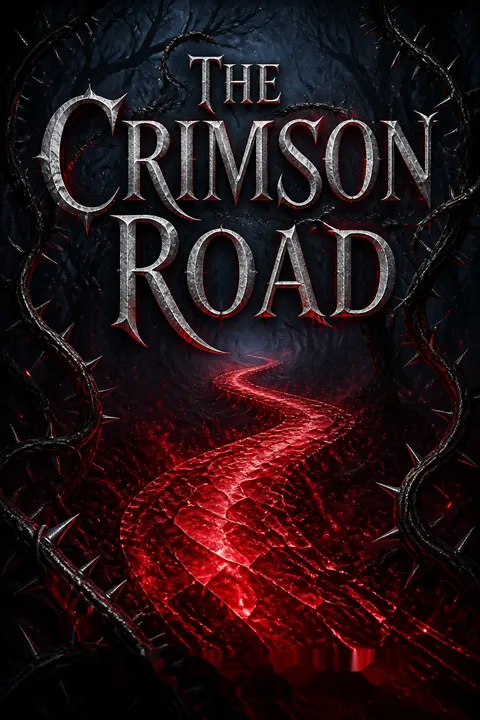

Plot Summary
Death and Inheritance
Violet Zennor wakes from a nightmare of patricide to find her father, Hedrek, truly dead. The relief is short-lived as she's thrust into the rituals of mourning and the machinations of inheritance. The Zennor fortune is vast, but it comes with strings: a mission dictated by her father's will. Violet is to travel north, find the Anchorhold, and save her brother—dead for thirteen years. The weight of expectation, resentment, and unresolved grief presses on her. Violet's world is one of gothic decay, family secrets, and a legacy she never wanted. The chapter sets the emotional tone: a young woman's struggle for autonomy in the shadow of a domineering, haunted father and a world where the past refuses to stay buried.
The Unwanted Mission
Violet's inheritance is conditional: she must fulfill her father's final, obsessive wish. Solicitor Titus Pendergast and Bishop Walter press her to accept the mission—journey north, destroy the Anchorhold, and save her brother. Violet resists, desperate for freedom after years of control. But the threat is real: if she refuses, everything goes to the Church. The Anchorhold, a place of myth and dread, looms as both origin and end. Violet's internal battle is fierce—resentment, duty, and the lure of escape war within her. The chapter explores the psychological toll of parental expectation and the impossibility of escaping a legacy written in blood and fear.
Ghosts and Guardians
Violet's world is populated by ghosts—literal and figurative. She's attacked after her father's funeral, saved only by her training and the intervention of Mrs. Medway, her loyal housekeeper. The city of St Sinwin's is alive with intrigue, suitors, and the ever-present threat of violence. Violet's childhood friend, Jack Seven-Gates, reappears, but comfort is elusive. The house is emptying, servants dismissed, and Violet is left with the echoes of her father's demands. The chapter delves into the loneliness of inheritance, the dangers lurking in the shadows, and the fragile bonds of chosen family.
Mothers, Memories, and Motives
Violet's memories of her mother, Vesper, and her beloved stepmother, Temperance, shape her sense of self. Temperance's return brings comfort and unresolved questions—why did she leave, and what secrets did she carry? The chapter explores the fairy-tale tropes of wicked stepmothers and subverts them: Temperance is kind, a source of grace in Violet's harsh upbringing. The pain of maternal loss, the longing for approval, and the complexity of blended families are laid bare. Violet's identity is forged in the crucible of love, loss, and the relentless demands of her father's obsession.
Smugglers and Shadows
Violet is drawn into a web of smuggling and betrayal, led by her old mentor, the Harbour Mistress Talwyn Enys. A sting operation in the caves beneath St Sinwin's turns deadly, revealing the city's underbelly and the ever-present threat of the supernatural. Explosions, ambushes, and the specter of the Leech Lords—vampiric rulers of the Darklands—haunt Violet's steps. The chapter is a crucible of action and revelation, testing Violet's training and resolve. The city's darkness mirrors the darkness within Violet, as she confronts the reality of her father's fears and the monsters that may be more than myth.
Blood and Betrayal
Violet's world is one of blood—literal and metaphorical. The Leech Lords' history is revealed: cursed immortals, rulers of the Darklands, held at bay by witchcraft and the Church. Violet learns of her own tainted lineage—her mother's heritage, her brother's monstrous conception, and the prophecy that binds them all. The Anchorhold's assassins close in, and Violet is forced to confront the reality that she is both weapon and pawn. The chapter is a meditation on the cost of survival, the legacy of violence, and the inescapable pull of destiny.
The Weight of Legacy
Violet's attempts to escape her fate are thwarted at every turn—her funds frozen, her options limited, her every move anticipated by her father's old allies. The city's suitors circle, drawn by wealth and power, but Violet is isolated by her reputation and her own defenses. The return of Temperance brings both solace and the revelation of further manipulation—her stepmother was sent on a wild goose chase by Hedrek, a final act of spite. The chapter explores the psychological toll of legacy, the impossibility of true freedom, and the ways in which the past shapes the present.
Old Friends, New Foes
Jack Seven-Gates, once Violet's confidant, reveals his true colors—ambition, resentment, and a willingness to betray. The city is no longer safe; assassins strike at home, and even old friends may be enemies. Violet's training is tested as she defends her household, but the cost is high—innocence lost, trust shattered. The chapter is a turning point, as Violet realizes that survival requires ruthlessness, and that the line between friend and foe is perilously thin.
Secrets in the Dark
The history of the Leech Lords and the Anchorhold is revealed through journals, prophecies, and the testimony of survivors. The Anchorhold is not merely a place, but a force—ancient, patient, and hungry. Violet's journey becomes one of discovery as much as survival; she must gather allies, weapons, and knowledge to face what lies ahead. The chapter is rich with lore, exploring the origins of the curse, the role of witches, and the nature of evil. The past is not dead—it is waiting.
The Road Northward
Violet flees St Sinwin's, accompanied by the streetwise Freddie and, eventually, Rab Cornish—a man with secrets of his own. The journey north is perilous, marked by encounters with ogres, witches, and the ever-present threat of the Anchorhold's assassins. Along the way, Violet gathers the tools she will need: O'Malley silver, the aid of the Briar witches, and the hard-won trust of her companions. The road is both literal and metaphorical—a path toward destiny, and a crucible in which Violet's character is tested and transformed.
The Witch's Bargain
In the village of Silverton, Violet bargains with the Briar witches for the secret of their power—the ability to repel Leeches. The witches' magic is rooted in sacrifice, in the bones of their own ancestors. Violet's quest becomes one of negotiation and compromise, as she must convince the witches to aid her, and accept the cost of their help. The chapter explores the ethics of power, the necessity of sacrifice, and the ways in which women's knowledge is both feared and needed.
The O'Malley Silver
Violet's journey takes her to Blackwater, home of the last O'Malleys and the source of the legendary silver that can kill Leeches. The estate is haunted by its own tragedies—lost children, broken fortunes, and the lingering presence of the supernatural. Violet's relationship with Rab deepens, offering a glimpse of the life she might have had. But the quest is never simple: the silver is guarded by ancient bargains, and the cost of its acquisition is high. The chapter is a meditation on loss, love, and the price of hope.
The Briar Witches' Secret
The Briar witches reveal their secret: the border that holds the Leeches is not merely magical, but physical—woven from the bones of their own dead. Violet's weapon is forged from O'Malley silver and witch-bone, a symbol of the alliance between mortal and magical. The chapter is a reckoning with the cost of protection, the legacy of sacrifice, and the ways in which women's bodies are both shield and sword.
Forging the Weapon
The forging of the dagger is a ritual of pain and power—Violet's blood, the witches' bones, and the mer-queen's silver are fused into a weapon capable of killing the Anchorhold's master. The process is both physical and symbolic, a binding of Violet to her purpose and her allies. The chapter is a meditation on agency, the acceptance of fate, and the transformation of suffering into strength.
Into the Darklands
Disguised as an Anchorhold agent, Violet enters the Darklands, leaving behind her companions and the safety of the known world. The land is in chaos—Leech Lords are vanishing, cities are leaderless, and the old order is crumbling. Violet's journey is one of solitude and danger, as she navigates a world on the brink of transformation. The chapter is a descent into the heart of darkness, both literal and psychological.
The Anchorhold Revealed
Guided by prophecy and the journal of Murciana, Violet finds her way to the Anchorhold—a battle abbey turned fortress, ruled by the ancient Magister. The truth is revealed: the Anchorhold's master is the source of the Leech curse, a being neither living nor dead, seeking to escape his prison by inhabiting Violet's brother. The chapter is a confrontation with the origin of evil, the culmination of prophecy, and the testing of Violet's resolve.
The Magister's Game
The Magister's plan is laid bare: to use Tiberius as a vessel, to break the border and unleash a new age of darkness. Violet faces betrayal from Jack Seven-Gates, the loss of her brother, and the full weight of her father's legacy. The final battle is both physical and metaphysical—a struggle for agency, for the right to choose, and for the hope of redemption. The chapter is a reckoning with the past, a confrontation with the self, and the breaking of generational curses.
Sacrifice and Survival
With the Magister destroyed, the Leech Lords perish, and the Darklands are freed from their ancient curse. Violet, wounded and feverish, is rescued by her companions—Rab and Freddie—who have become her chosen family. The journey home is one of healing, reconciliation, and the tentative hope of a future unbound by the sins of the past. The chapter is a meditation on survival, the cost of victory, and the possibility of new beginnings.
Analysis
A.G. Slatter's The Crimson Road is a masterful meditation on legacy, agency, and the cost of survival. At its heart, the novel interrogates the ways in which the past shapes the present—how the sins, secrets, and sacrifices of one generation become the burdens of the next. Violet Zennor's journey is both personal and archetypal: she is the reluctant heroine, forged by trauma, compelled by prophecy, and ultimately transformed by her own choices. The novel subverts gothic and fairy-tale tropes, offering complex, nuanced portraits of women's power, suffering, and resilience. The Leech Lords are both monsters and mirrors—symbols of the ways in which power corrupts, but also of the possibility of redemption. The narrative is rich with psychological insight, exploring the dynamics of family, the lure of power, and the necessity of sacrifice. In a modern context, The Crimson Road speaks to the struggle for agency in a world defined by inherited trauma, the courage to break cycles of violence, and the hope that new beginnings are possible—even when bought at great cost. The novel's ultimate lesson is one of endurance: survival is not triumph, but the refusal to be defined by the past, and the courage to choose one's own path, no matter how crimson the road.
Review Summary
People Also Read
Characters
Violet Zennor
Violet is the daughter of Hedrek Zennor, raised in isolation and rigorously trained to be a weapon against the supernatural. Her psyche is marked by loss—of her mother, her brother, and her own agency. Violet's relationships are fraught: she loves and resents her father, clings to the memory of her mother, and is wary of intimacy. Her journey is one of reluctant acceptance—she does not seek heroism, but is compelled by duty, guilt, and the hope of freedom. Violet's development is a study in resilience: she transforms suffering into strength, and ultimately claims her own destiny, even as she is haunted by the cost.
Hedrek Zennor
Hedrek is a man consumed by guilt and fear, his life defined by the loss of his wife and son. His love for Violet is twisted by obsession—he trains her as a weapon, seeking redemption through her actions. Hedrek's psyche is fractured: he is both victim and perpetrator, haunted by the consequences of his choices. His legacy is a prison for Violet, but also the catalyst for her transformation. In death, he remains a presence—his will, his secrets, and his failures shaping the narrative long after he is gone.
Tiberius Zennor
Tiberius is both catalyst and victim—a child conceived in violence, born dead, and sold to the Anchorhold. His existence is defined by absence: he is the object of Violet's quest, the focus of prophecy, and the vessel for the Magister's ambitions. Tiberius is a symbol of lost innocence, the price of survival, and the inescapable pull of destiny. His fate is tragic—used, consumed, and ultimately freed only through Violet's intervention.
Temperance Zennor
Temperance is a subversion of the wicked stepmother trope—gentle, nurturing, and a source of grace in Violet's harsh world. Her relationship with Violet is one of genuine affection, but also marked by secrets and manipulation—she is sent on a futile quest by Hedrek, a pawn in his final act of control. Temperance's development is a study in endurance: she survives loss, betrayal, and exile, and ultimately finds solace in chosen family.
Mrs. Medway
Mrs. Medway is the anchor of Violet's world—a figure of stability, practicality, and fierce loyalty. She is both protector and confidante, patching Violet's wounds and offering hard-won wisdom. Her relationship with Temperance is a source of quiet strength, a testament to the power of chosen family. Mrs. Medway's development is subtle but profound: she endures, adapts, and ultimately finds happiness in the face of adversity.
Jack Seven-Gates
Jack is a study in resentment and ambition—once Violet's confidant, he is undone by envy, loss, and the lure of power. His betrayal is both personal and symbolic: he sells Violet to the Anchorhold, hunts his own half-sister, and becomes a tool of the very forces Violet must destroy. Jack's development is a cautionary tale—the corrosive power of bitterness, the ease with which the familiar becomes the enemy, and the tragedy of wasted potential.
Freddie
Freddie is a survivor—resourceful, clever, and fiercely independent. Her relationship with Violet is one of mutual recognition: both are outsiders, shaped by loss and the need to fend for themselves. Freddie's presence is a source of hope and levity, a reminder of the possibility of new beginnings. Her development is a testament to the power of chosen family, and the ways in which love can heal even the deepest wounds.
Rab Cornish
Rab is a man of mystery—adopted, loyal, and quietly competent. His relationship with Violet is marked by patience, understanding, and a willingness to accept her scars. Rab's development is a study in the search for home: he finds family in Blackwater, love with Violet, and purpose in the fight against the Anchorhold. His presence is a grounding force, a reminder that healing is possible, and that the future need not be defined by the past.
Adlisa the Bloodless
Adlisa is a survivor of centuries, a Leech Lord who has learned the cost of power and the necessity of restraint. Her relationship with Rikke is one of deep companionship, forged in blood and loss. Adlisa's development is a meditation on the burden of immortality, the possibility of redemption, and the courage to choose sacrifice over survival. She is both warning and guide—a mirror for Violet's own journey.
Sister Rikke
Rikke is a former Little Sister of St Florian, turned Leech by necessity and loyalty. Her life is defined by the pursuit of knowledge, the preservation of history, and the acceptance of change. Rikke's relationship with Adlisa is one of mutual dependence and affection, a partnership that endures beyond death. Her development is a testament to the power of memory, the importance of bearing witness, and the possibility of finding meaning in the face of loss.
Plot Devices
Prophecy and Predestination
The narrative is driven by a prophecy—cryptic, mutable, and open to interpretation. Violet is both subject and object: the "flower of faith" who must atone, but also a woman struggling to claim agency in a world determined by others' expectations. The prophecy is both burden and guide, shaping choices and justifying sacrifices. The tension between destiny and free will is central: Violet's journey is one of reluctant acceptance, but also of subversion—she fulfills the prophecy on her own terms, transforming victimhood into agency.
Inheritance and Legacy
Inheritance is both material and psychological: Violet's fortune is conditional, her training a form of imprisonment, her very existence shaped by her father's guilt and fear. The legacy of violence, secrecy, and sacrifice is inescapable—each generation is marked by the failures of the last. The plot interrogates the cost of survival, the impossibility of true freedom, and the ways in which the past shapes the present. The forging of the weapon is both literal and symbolic—a transformation of suffering into strength, and a reclamation of agency.
Betrayal and Trust
The narrative is rich with betrayals—Jack's treachery, Temperance's manipulation, the Anchorhold's false promises. Trust is a scarce commodity, earned through sacrifice and tested by adversity. The formation of chosen family—Freddie, Rab, the witches, the ancient Leeches—is a counterpoint to the betrayals of blood. The plot is structured around the forging and breaking of alliances, the necessity of compromise, and the courage to risk vulnerability.
Sacrifice and Survival
The plot is marked by sacrifice—of comfort, of innocence, of life itself. The witches' bones, the O'Malley silver, the deaths of Adlisa and Rikke—all are prices paid for the hope of a better future. Survival is not triumph; it is endurance, adaptation, and the willingness to bear the cost. The narrative structure is cyclical: each victory is bought with loss, each new beginning haunted by the ghosts of the past.
Foreshadowing and Revelation
The narrative is rich with foreshadowing—dreams, prophecies, and the slow revelation of hidden histories. The journals of Murciana, the testimony of survivors, and the gradual unveiling of the Anchorhold's true nature create a sense of inevitability and dread. The structure is one of gradual revelation: each new truth reframes the past, and the final confrontation is both culmination and catharsis.
Download PDF
Download EPUB
.epub digital book format is ideal for reading ebooks on phones, tablets, and e-readers.








































