
Plot Summary
Arrival and Unease Begin
Still reeling from heartbreak and job loss, Jan Hamlin steps into rural seclusion, caretaking Ivy Cottage and its steadfast dog, Tinder. The woods' edge is both a balm and a source of mounting discomfort. Night brings unfamiliar tensions; twitching ears and low growls from Tinder suggest presences moving beyond her sight. The isolation nourishes both healing and fear, as the cottage's charm is slowly offset by the creeping sensation that Jan is watched. Early forays on country lanes and tentative steps into the nearby village hint at both the kindness and insularity of rural life. Beneath it all, Jan's anxieties begin to crystallize an overarching unease, setting the emotional tone of her stay—a delicate balance between much-needed peace and the edges of barely-suppressed dread.
First Shadows in the Garden
Jan's peaceful evenings are disrupted when Tinder senses something outside, sparking fearful curiosity and persistent vigilance. Strange growling, frantic pawing at doors, and the recurrence of unexplained events create mounting suspense. Reassurance from local friend Chris does little to dispel the mysterious happenings: tracks appear in the earth, hints of intelligent intrusion seem more than mere wildlife. Jan's rational searches for rural explanations collide against what her senses cannot explain. The unease grows sharper as Tinder returns from the woods with food that does not belong to Jan, escalating her sense of being encroached upon by something unknown. The sense of violation and vulnerability in the darkened cottage accretes, drawing Jan deeper into obsession with the nightly disturbances and the nature of whatever comes so close through the garden shadows.
Grief at Midnight Delivery
The narrative shifts to Emma and Ian Jennings, their lives haunted by a prior loss. Their homebirth, attended by experienced midwife Anne Long, is permanently colored by fear—after a former stillbirth, hope and panic intertwine. Emma delivers a malformed, non-viable son, David, in a traumatic, spirit-shattering night. The dreary aftermath is handled with quiet, devastating professionalism by Anne: the grieving parents never see their child again, allowing themselves a modicum of closure. Anne quietly removes the body, shielding Ian and Emma from its reality—and, as will later become clear, from a deeper secret. Trauma and secrecy thread through the Jennings household as the couple attempt to recover, but the wound remains raw, and the mystery is just beginning.
Strange Tracks and Village Concerns
Jan, haunted by her nightly tormentors, discovers a web of tracks and evidence that something—or someone—hunts her garden. Her efforts to identify the source sharpen her paranoia; her fixation on the holes in the hedge mirrors the growing rift between isolation and imagined threat. Despite logical explanations from Chris or the soothing patterns of country routines, Jan's intuition rebels. Meanwhile, Detective Beth Mayes is drawn into neighbor Angela Slater's fervent suspicions about missing babies next door—a collision between village curiosity and tragic private sorrow. As the police probe these seemingly unconnected mysteries, themes of unspoken grief, rural gossip, and the clash of the ordinary with the inexplicable emerge, tightening the suspense.
Living Alone, New Friendships
As Jan adjusts to her new life, routine tasks—mowing the lawn, visiting the village shop—become charged with both normalcy and tension. Her bond with Chris, initially a comfort, edges towards complexity as she notices underlying secrets and shifting affections. Isolated by day yet surrounded by friends and neighbors, Jan's perspective swings between skepticism and wonder, groundedness and anxiety. Her relationship with Tinder deepens; the dog acts as both anchor and early warning system. The rhythms of rural life—house calls, eggs on the doorstep, coffee in the living room—contrast with Jan's underlying feeling that Ivy Cottage is at once too empty and too crowded with unseen eyes.
Police Investigations Twice Over
Detective Beth Mayes's investigation into a missing child in Booth Lane intertwines with Jan's own growing pleas for help and neighborly suspicions. The police find no cause for legal action after Emma and Ian's alleged missing baby; the administrative checks, interviews, and sterile procedures contrast with the deep, unspoken suffering of those involved. Elsewhere, Beth and her colleague Matt begin following up on the strange happenings in Coleshaw Woods and Merryless, tipped by local complaints. Both inside the police force and without, the limits of rational explanation and official channels become clear. Real answers evanesce through procedural cracks, leaving unresolved danger and the specter of mysteries for which the law—and science—may have no category.
Secrets, Scars, and Searches
Both Jan and Emma probe old wounds and uncover hidden secrets—Jan's unease leads her to search out explanations in nature and online mythology, while Emma's desperate bid for another child is complicated by her mother's long-held secret: Emma's father is not biological, conceived instead at a now-mysterious fertility clinic. Ian, too, plunges into genealogical obsession to root out the cause of his family's tragedies. The past, genetic and emotional, becomes an inescapable presence, echoing through every failed hope, every locked box, and every spectral visit outside the cottage. These desperate searches expose the fragility of identity and the terror that the truest dangers might already be written in private histories and buried genes.
Watching from the Woods
The border between imagined and real is breached as Jan, determined to capture her harassers, sets food traps and waits in darkness with her camera. What she finally films shocks her: not animals, but disturbingly human—small, feral children, accompanied by an indistinct adult presence. Her attempts to share this evidence with Chris are thwarted—the video erased, suspicions redirected to village wanderers such as "Bill Smith," explanations never quite convincing. Jan's distress is dismissed even as others in town report strange visitations. Desperation mounts; she is drawn closer to the dark heart of Ivy Cottage and the woods, no longer able to tell the difference between folklore, fear, and something unspeakably real.
Escalation and Missing Evidence
The nightly disturbances in Jan's world intensify: not only does the evidence of visitors escalate—balls of twine moved, footprints on cars—but her attempts to share and validate her reality are erased or ignored. Even the police, when finally convinced to intervene, encounter nothing but silence and plausible deniability. Friends advise her to leave, neighbors gossip, and her uncertainty spirals into self-doubt. Yet each new sign—objects rearranged, tapped windows, the urgent cry of a woman in the woods—fuels her determination to uncover the truth, even as her accumulated proof vanishes, replaced by gaslighting and soothing lies from those closest to her.
Family Secrets Revealed
In a series of emotionally charged revelations, both Emma and Ian—and later, Chris and Jan—uncover that they were conceived at the same local fertility clinic, the Moller Clinic. Amid pressure and subterfuge, Ian learns that not only are he and Emma both products of donor insemination, but they share the same biological father: Carstan Moller himself, who sired dozens—perhaps hundreds—of children via his clinic. The ramifications are shattering: children unwittingly sired by the same parent, now marrying and having (malformed) children together. The consequences—the central tragedy—are not only medical but existential, laying bare the psychological and ethical abyss into which all involved now stare.
The Clinic's Past Unfolds
Ian, driven by guilt and rage, hacks into the clinic's records and discovers no histories of legitimate donors—only mountains of evidence of Moller's singular, dictatorial involvement in countless conceptions. Worse still, a "Second Generation" file traces the fate of these coupled offspring: a ledger of babies dying, malformed, or disappearing into state care. The file also traces a chilling pattern—whenever certain midwife initials (A.L.: Anne Long) accompany births, a higher rate of macabre outcomes is found. Ian, now possessed by the need for justice, engineers the clinic's downfall via whistleblowing, anonymous threats, and financial sabotage, bringing public and criminal scrutiny. The full horror of what has been done in the name of fertility and pride is finally illuminated.
Outsiders and Dangerous Dogs
The true nature of the nocturnal visitors becomes clear: they are not animals nor merely feral children, but atavistic throwbacks—genetically mutated "outsiders," born of incestuous pairings enabled by Moller's reckless inseminations. Midwife Anne, more than any other, is instrumental in protecting them, posing as a dog owner to allow the "children" to run free in the woods under cover of night, while the village and police accept the story of dangerous dogs. Now living at Ivy Cottage, Anne safeguards the secret of these "outsiders," shielding them from both scientific curiosity and villagers' suspicion. The balance between secrecy and accidental revelation—seen in Jan's ordeal—strains at the edges.
Truths in the Woods
With Camile's return—and Jan's departure—the final, shattering conversation occurs. Jan is entrusted with the secret: the children haunting Ivy Cottage are genetic throwbacks, victims of a chain of incestuous inseminations, cared for by Anne and hidden by Chris and Camile. The circle of secrecy closes, as Jan promises to safeguard the knowledge even as she struggles with the implications. The police, misled to believe dangerous dogs are roaming, shift their attention away. The cost of discovery—destabilizing for Jan, redemptive and necessary for Anne and Camile—is both a lament for lost innocence and a meditation on the burden and ethics of keeping terrifying secrets for the sake of the vulnerable.
Genetic Web Untangled
With the Moller Clinic dismantled by evidence of financial crimes and widespread notification of its victims, Ian, Emma, and Chris grapple with the aftermath. The chilling possibility of countless other "outsiders," the threat of future incestuous unions, and the burden of unacknowledged grief shadow the survivors. Some couples, learning they are siblings, part ways; others, like Jan and Chris, attempt to rebuild amidst ambiguity and pain. Anne continues her silent work, caring for the few who remain, while the village, satisfied with the narrative of dangerous dogs, lets secrets rest. Justice is poetic, incomplete, but final for Moller. For everyone else, ambiguity remains.
Decisions, Departures, Discoveries
With Ivy Cottage vacated and the past (temporarily) at bay, Jan and Chris attempt to find peace and joy, forging love and planning a family. Their happiness is clouded by the specter of genetics and the unresolved danger that history may repeat itself. The tension between knowing and not knowing, between risk and acceptance, shapes their decisions. Anne's silent, continuous work guarantees that some secrets—born of compassion—are worth keeping. The lines between normal birth, atavism, and compassion are blurred irrevocably, but there is the faint hope that with knowledge, vigilance, and kindness, cycles of pain may finally be interrupted.
What Survives After Night
In the novel's coda, Jan and Chris, finally convinced that their child's oddities are benign and unconnected to the past, celebrate the joys of new parenthood. Others, like Ian and Emma, are left picking through the emotional aftermath of exposure and separation, seeking peace in honesty and renewal. In the woods, the legacy of the "outsiders" flickers on as myth and memory—nightly hauntings fading into the resonance of fairy tale, scientific warning, and rural legend. The lessons remain uneasily embedded: the costs of secrecy, the horrors of unchecked hubris, and the enduring need for acceptance and protection of the different. Above all, a sense of fragile hope survives inside both cottage and forest, precariously negotiated at the edge of human possibility.
Analysis
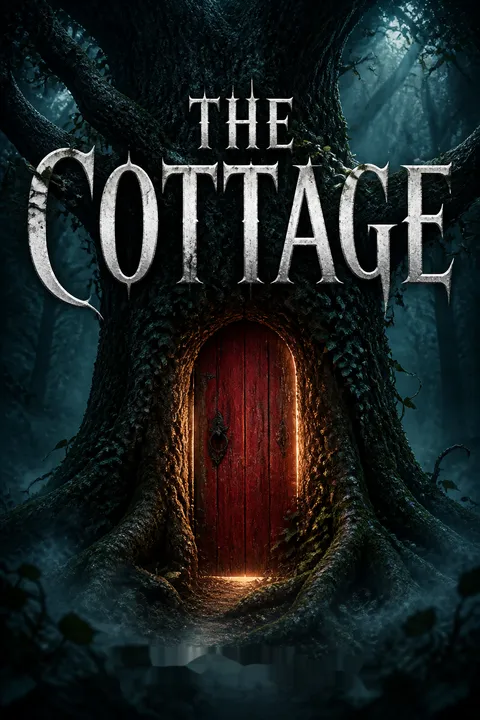
Outsiders, secrets, and the price of unchecked powerLisa Stone's The Cottage is a gothic thriller unfolding at the crossroads of domestic drama, science fiction, and psychological suspense. At its heart is an indictment of scientific hubris—the danger of unchecked, unregulated fertility technology and the arrogance that allows a single man's ambition to entwine and ruin countless lives. The eugenic overtones of Carstan Moller's actions parallel historical atrocities, but the narrative never leaves the intensely personal perspective: grief, denial, and the search for meaning weigh on each character. The "outsiders"—atavistic children—become symbols for the unwanted truths families, villages, and institutions will contort themselves to avoid, and the story's moral ambiguity is unflinching: Anne's mercy is bought at the cost of deception; Chris and Camile's love is doomed by genetics; Jan's sanity is always at risk. The policing of boundaries—between human and animal, self and other, real and imagined—remains porous, and this permeability is both the engine of horror and the possibility of compassion. Ultimately, the novel asks how much we can or should know about our origins, what secrets are necessary for survival, and whether acceptance, rather than purity, can be the foundation for community—even when the shadow of the woods never truly recedes.
Review Summary
The Cottage receives mixed reviews, averaging 3.69/5. Many readers praise its compelling, page-turning atmosphere and clever plot connections, while critics highlight repetitive pacing, flat characters, and an implausible storyline. Several reviewers appreciated the creepy, isolated setting and multiple interweaving storylines, though many found the central mystery predictable. Common criticisms include overly detailed mundane descriptions, unrealistic plot developments involving fertility fraud and genetics, and weak character development. Trigger warnings for child loss and fertility issues are frequently mentioned by reviewers.
People Also Read
Characters
Jan Hamlin
Jan, shell-shocked from a dual loss—job and love—seeks healing in the quiet of Ivy Cottage, only to be gripped by growing isolation and, eventually, terror as nightly disturbances and inexplicable events chip away at her sense of security. Her psychological journey tracks the arc from rational self-doubt, through mounting paranoia, to reluctant acceptance of the supernatural horrors inhering at the cottage's edge. Her relationships—with Tinder (her anchor), Chris (her intermittent protector and source of suspicion), and her friends—mirror her quest for belonging amid fracture and threat. Ultimately, Jan's empathy and courage run counterpoint to her vulnerability; she becomes both the audience's entry point and the victim who, by learning the secret, is transformed into a guardian of truth and a cautionary witness at the edge of the uncanny.
Chris Giles
Local, practical, and emotionally scarred by his own entanglement with the secrets of Ivy Cottage and the "outsiders," Chris is at first an uncomplicated comfort to Jan but slowly emerges as morally ambiguous and deeply haunted. His history—once in a relationship with Camile, fathering one of the atavistic children, discovering his illicit parentage—makes him both participant and unwilling accomplice in the tragedies of the cottage and the clinic. His emotional arc carries him from denial, to complicity (deleting Jan's evidence), to hesitant redemption as he finally chooses openness and love with Jan. Chris embodies rural stoicism and suppressed trauma, negotiating protection, guilt, and renewal in the face of the unknowable.
Anne Long
Anne is the masterful village midwife, stoic and gentle, yet torn by the role she fulfills in both mitigating and perpetuating the tragedies at the heart of the story. Her psychoanalytic depth surfaces in her careful tending of the "outsiders"—the genetically mutated children she quietly removes and protects. Haunted by professional guilt and a personal bargain with Carstan Moller, Anne lives in a liminal state between healer and concealer, her choices born from compassion yet complicated by moral ambiguity. Her fate is to both bear and assuage the burden of communal guilt, playing a crucial part as the connector and shield between secrets and the wider world.
Camile
As Ivy Cottage's owner and Chris's ex-partner, Camile is a background source of strength, a victim of both personal and biological tragedy. Her coping mechanisms—retreat, control, organizing caretakers and tenancy—disguise deep wounds: a lost, inhuman child, a destroyed relationship, and knowledge she cannot share. In her later openness to Jan, Camile reveals suppressed pain, acceptance, and a determination to protect future victims. Hers is the arc of reluctant acceptance and sacrifice, always shadowed by the horrors she has helped conceal.
Emma Jennings
Emma's journey is defined by cycles of hope and despair, stricken by the unexplainable deaths and deformities afflicting her children. Her psychoanalytic portrait is one of desperation to assemble meaning out of loss, and when faced with the truth of her own conception and marital relationship to Ian, she is forced to reckon with the dissolution not just of her family, but of her very identity. Emma's responses—denial, search for external blame, eventual exhaustion—illustrate the human limits of what trauma, secrecy, and revelation can cost.
Ian Jennings
Ian's character is defined by his need to solve, rectify, and avenge. Plagued by inexplicable family tragedy, his psyche is destabilized by the dual discovery that both his and Emma's origins are tainted—and that, in their union, they have both continued, and suffered from, the errors of Moller's hubris. Ian's intelligence is double-edged, serving both to illuminate horror and to bring about institutional downfall, but leaves him emotionally adrift. His sense of justice, grief, and helplessness reflect the novel's central tension: the price of knowing.
Carstan Moller
As the founder of the fertility clinic—a self-anointed demiurge—Moller is a study in unchecked power and denial. His guile, hidden behind the mask of professional assurance, enables decades of incestuous, careless creation. Moller displays a dispassionate, even proud, removal from the suffering he perpetuates, blinded by belief in his own genetic superiority. As the truth is wrenched into view, his delusions of godliness are reduced to shame, but never true contrition.
Tinder
More than a dog, Tinder's acute perceptions foreshadow every crucial incursion of the "outsiders." A source of comfort and early warning, he is both the emotional substrate for Jan and a silent witness to the horror unfolding. His reactions demarcate the lines between natural and supernatural, visible and hidden—the subtle shift that sets the human characters off-guard.
Beth Mayes
Detective Beth is the voice of process and skepticism but is ultimately limited by bureaucracy and her own assumptions. Sympathetic yet powerless, she reflects the system's inability to grapple with the uncanny; her narrative thread highlights the gap between procedural truth and the deeper, hidden realities disturbing Coleshaw Woods and Merryless.
Angela Slater
Analytical, nosy, and persistent, Angela is the archetype of rural busybody but also inadvertently helps surface the novel's secrets. Her ricocheting reports to authority are driven by a mix of anxiety, curiosity, and a desire for control. Though often dismissed, her insistence propels the police toward painful revelations—and underlines the consequences of communal secrecy and inaction.
Plot Devices
Shifting narrative perspectives to amplify tension
The novel's use of first- and third-person limited narratives, shifting between Jan, Emma, Ian, Chris, and Anne, both disorients and engages. This multiplicity enables opposing viewpoints on seemingly identical events—one person's nightmare is another's routine. The layering of country routines, police logic, and outsider strangeness becomes a device for generating dread, as neither reader nor character can ever access the whole truth at once. The effect is a growing paranoia—no single, stable reality exists until the climactic reveals.
The unreliable senses and gaslighting
Throughout, Jan and others are led to doubt their own perceptions—creaks in the night are explained away, video evidence erased, official channels deflect, and friends suggest she leave for her own sanity. This device intensifies the gothic undertones and highlights social mechanisms for discarding inconvenient truths. The erasure of evidence and memory is used as both literal and metaphorical motif for social and personal denial.
Gradual unmasking via investigation and hacking
Characters' attempts to dig—searching the internet, hacking clinic records, prodding family to reveal painful history—are central devices for both plot and psychology. Each revelation comes at personal cost, and the act of hacking (Ian's, and later Chris's) is at once a violation and a pursuit of justice. The plot's structure is scaffolded around these forbidden acts of inquiry: each one peels back another layer, alternating between illumination and horror.
Symbolic boundary-crossing and liminal spaces
The woods are the literal and symbolic boundary between ordinary rural life and the realm of the "outsiders." Hedges, doors, shed roofs, and gardens become sites of negotiation between inside and outside, normal and uncanny, self and other. The plot's central events are all keyed to these crossings—wandering dogs, children in the woods, cryptic calls at the door, midnight walks by Anne, and at last police intervention.
Foreshadowing via animal and child behavior
Tinder and the mysterious children display behaviors that go unexplained for most of the narrative—untying knots, avoiding light, targeting food, hiding from and seeking out humans. The behaviors foreshadow the ultimate reveal of atavistic mutation, and the liminality of their existence. Children—lost, malformed, or missing—are throughout the story signs of both innocence and contamination.
Download PDF
Download EPUB
.epub digital book format is ideal for reading ebooks on phones, tablets, and e-readers.








































