


Plot Summary
A Hand in the Barn Field
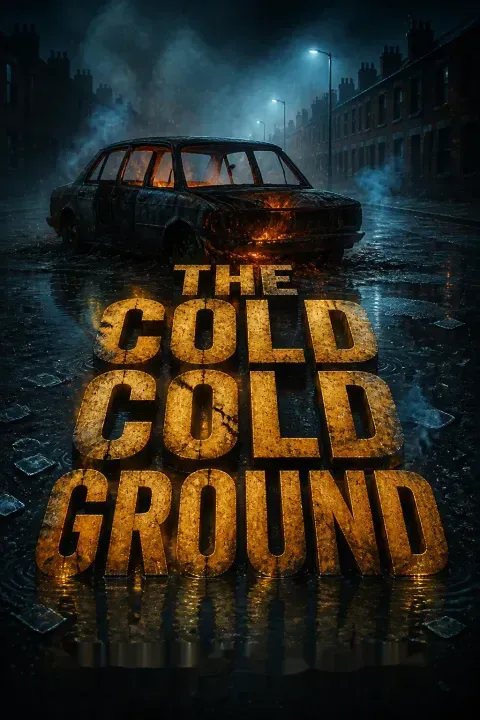
In May 1981, while Belfast erupts in riots after the death of an IRA hunger striker, Detective Sergeant Sean Duffy1 is called to Barn Field in Carrickfergus. Inside a rusted, burnt-out Ford Cortina sits a young man, shot in the chest and back of the head, his right hand hacked off and left on the accelerator pedal.
The corpse wears an AC/DC jacket, bleached-blond hair, Doc Martens. Duffy1's boss, Chief Inspector Brennan,6 and a forensics officer have already contaminated the scene with their footprints. No identification, no witnesses, no shell casings. The severed hand and the execution-style killing suggest a paramilitary informer disposal, but something feels off.
The body was deliberately left where it would be found quickly, yet no organization has claimed responsibility. Duffy,1 a Catholic cop in a fiercely Protestant town, pockets his questions and walks home through the drizzle, the case beginning to coil around him.
The opening crime scene introduces the novel's central tensions: a Catholic policeman investigating murders in a Protestant enclave, during a political crisis that has stretched the state to its breaking point. The severed hand, an iconic gesture of informer betrayal, will prove to be a counterfeit, setting the pattern for an investigation where every surface reality conceals a deeper deception. The procedural language, grounded in forensic details and institutional banality, establishes the quotidian texture of police work against which the increasingly baroque crimes will stand out in high relief.
Your Tiny Hand Is Frozen
At Carrick Hospital, Dr Laura Cathcart,3 a sharp, attractive Catholic pathologist with a South Belfast accent, delivers the first shock: the severed hand does not belong to the victim. It came from a different, older man, possibly a guitarist. The victim's own right hand was removed after death.
Second shock: a piece of paper recovered from the corpse's rectum is a musical score, the aria from Puccini's La Bohème. Translated, the lyrics read about warming a tiny frozen hand. Cathcart3 also finds semen in the rectum, suggesting the dead man had a homosexual encounter, possibly postmortem.
This is no routine IRA execution; it is something stranger. Duffy1 takes the bullet, the sheet music, and the fingerprint data back to his team. The case has shifted from paramilitary housekeeping into uncharted territory, and Duffy1 knows it.
Dr Cathcart's forensic discoveries transform the narrative from a political killing into a psychological puzzle. The swapped hand foreshadows a pattern of substitution and misdirection that will dominate the investigation. The operatic aria, with its lyrics about warming a frozen hand, is the killer's first message, a grotesque intimacy imposed on a corpse. That the victim was penetrated both sexually and textually, his body made a receptacle for hidden signs, speaks to the killer's theatricality and his contempt for both his victims and the police. The case now belongs less to sectarian violence than to something personal.
The Music Teacher's Hand
Two days later, a postman finds the door ajar at a cottage in Boneybefore. Inside lies Andrew Young,14 a sixty-year-old music teacher at Carrickfergus Grammar, shot once through the forehead as he opened his front door. His right hand has been cut off and replaced with the right hand of the first victim, now identified as Tommy Little.13
Clutched in Young14's left fist is another musical score: the Galop from Offenbach's Orpheus in the Underworld, the famous Can-can. Detective Constable McCrabban4 quietly informs Duffy1 that Young14 was a known homosexual.
The pattern snaps into focus: the killer targets gay men, swaps their hands, and leaves operatic clues. The switched hands link the murders forensically, while the music mocks both victims and investigators. Duffy1 now believes he is hunting Northern Ireland's first non-sectarian serial killer, a predator using the chaos of the hunger strikes as cover.
The second murder confirms the serial killer profile and introduces a politically explosive element: homosexuality. In 1981 Northern Ireland, gay men are criminalized by statute, condemned by both Catholic and Protestant churches, and violently policed by paramilitaries. Andrew Young's death is not merely a murder but a piece of gruesome theater designed to exploit this pervasive homophobia. The Can-can, a musical joke, adds a layer of mockery: the killer is not merely killing but performing, turning the investigation into an audience for his dark comedy. That a music teacher should be silenced by a musical score is the killer's grim pun.
The Labyrinth Postcard
Among his morning mail, Duffy1 finds a postcard bearing a picture of Andrew Jackson's homestead in Boneybefore. The typed message addresses him by name. The writer claims they are eternal duellists forced into the fray, sharing a path through the labyrinth, written in Greek letters as λαβρινθος.
He insists he does not hate homosexuals but pities them, claiming he merely frees them from this world for divine judgment. The killer2 found Duffy1's name through the police switchboard and his address in the phone book. No forensic clues survive except smudged prints.
Duffy1 orders a phone tap from Special Branch and adds the postcard to his evidence board. The labyrinth reference, the classical allusion, the literate menace: this is not a typical paramilitary thug. Someone educated, patient, and theatrical is playing a game with him.
The postcard marks the moment when the case becomes personal for Duffy. The killer has researched his name and breached his domestic space. The use of Greek and the labyrinth metaphor signals erudition and an intellectual ego, but the actual function of the message is tactical: it establishes a profile of a homophobic maniac, a narrative that will absorb attention and obscure the political murder at the case's origin. The labyrinth, traditionally a structure with a single path to the center, becomes the novel's governing metaphor for an investigation that leads through layers of false signs toward a truth nobody wants uncovered.
The Hanged Woman's Secret
While the serial killer investigation stalls, another case resurfaces. Lucy Moore,10 a young Catholic woman who vanished from Barn Halt train station on Christmas Eve 1980, has been found hanging in Woodburn Forest.
She was the ex-wife of an IRA hunger striker, Seamus Moore,15 and had been sending postcards from the Irish Republic for six months, reassuring her family she was alive and well. Dr Cathcart3's autopsy reveals disturbing details: Lucy10 had given birth approximately a week before her death, yet the infant is nowhere to be found.
She also notes a thumb-shaped bruise on Lucy10's neck, inconsistent with suicide by hanging, though she will formally rule the death suicide. Brennan,6 who handled the original disappearance, orders Duffy1 to close the case, but the loose ends nag at him: where was Lucy10 living, who fathered the child, and why would a new mother kill herself?
Lucy Moore's story introduces a gendered counterpoint to the male-on-male violence of the main case. Her body, like Tommy Little's, conceals evidence within its violated interior. The thumb bruise that the system will officially ignore represents the institutional willingness to accept convenient narratives over uncomfortable truths. Her fake postcards, written under duress and mailed from another country, are another form of misdirection, a performance of normalcy that conceals captivity and eventual murder. Duffy's refusal to close the case, against orders, marks his transition from institutional loyalist to stubborn moral actor.
The IRA's Enforcer
Duffy1 tracks down Tommy Little13's boyfriend, Walter Hays,12 who lives in a remote Ballycarry cottage under an IRA threat. Hays12 reveals that on the night of his death, Tommy13 was headed to meet Billy White,8 a UVF commander in Rathcoole, and then to see Freddie Scavanni,2 a Sinn Fein press officer.
The real bomb drops when Duffy1 interviews Billy White,8 who laughs at the cops' ignorance: Tommy Little13 was not some minor driver. He was the head of the IRA's Force Research Unit, the feared internal security squad that roots out informers through torture and execution.
Killing the FRU chief would invite devastating retaliation, which means the killer2 is either insane or so protected that he fears no blowback. Duffy1's investigation has strayed onto paramilitary turf, and the stakes have just escalated to a level he never anticipated.
The revelation of Tommy Little's true role transforms the case from a homophobic murder into something politically radioactive. The FRU's function, identifying and eliminating informers, makes its chief both feared and indispensable. His murder, disguised as a gay-panic killing, is thus doubly convenient: it removes a powerful IRA officer and shames his memory, accelerating the organization's impulse to erase him. The involvement of both UVF and IRA figures in his final hours suggests the killing touches multiple power centers, each with their own reasons for letting the serial killer story stand unchallenged.
The Letter S
Matty,5 Duffy1's young forensics officer, makes a breakthrough on the Lucy Moore10 case. Using ultraviolet light on one of the envelopes Lucy10 sent to her sister, he discovers an indentation in the upper-left corner: the trace of a letter S left by someone writing a return address on a stack of envelopes, pressing through to the one Lucy10 used.
The implication is clear: the person who sheltered Lucy10 had a name starting with S. Two names fit the wider investigation: Freddie Scavanni2 and Shane Davidson.9
Around the same time, Laura3 casually mentions she is moving to the village of Straid, where her great-aunt owns a house backing onto Woodburn Forest. Duffy1's mind races: Scavanni2 lives in Straid, just minutes from where Lucy10's body was found. The pattern of proximity and the mysterious S finally snaps into an accusatory shape.
The envelope indentation is the novel's most exquisite piece of deductive reasoning. A literal impression, an indexical trace of someone's handwriting, becomes the thread that leads through the labyrinth. It connects the forensic labor of policing—the patient examination of physical evidence—to the psychological act of uncovering buried connections. The letter S, a single character, links Scavanni, Straid, and the secret of Lucy's hiding place. In a world of elaborate misdirection, this tiny, inadvertent mark points unerringly toward the truth, proving that even the most careful deceptions leave traces.
The Wrong Monster
A new body forces a detour. In the public toilets at Loughshore Park, the young male prostitute Duffy1 had seen with Shane Davidson9 is found dead, tortured and suffocated with a swimmer's nose clip, his eyelids cut off. This is not the serial killer's work; it is a paramilitary punishment killing.
Billy White8 and Shane9 are eliminating the witness to Shane9's secret homosexual encounters, which also involved Tommy Little.13 Enraged, Duffy1 storms into Billy8's snooker hall, presses a revolver against his face, and tries to arrest him.
But Billy8's barrister materializes, demanding warrants and evidence. Duffy1 retreats with a fractured wrist, realizing the serial killer case has become buried under layers of paramilitary misdirection, personal vendettas, and his own escalating desperation. The real quarry remains free while Duffy1 chases a sideshow.
The rentboy's murder functions as a brutal corrective to Duffy's investigative focus. While he hunts a phantom serial killer, a parallel system of extra-judicial violence operates according to its own lethal logic. Shane's homosexuality is a capital crime in his world, and the rentboy's eyelids are cut off so he can be forced to witness his own death—a ritual of domination that mirrors the 'serial killer's' theatricality. The episode reveals that Duffy has been pursuing the wrong monster, misdirected by the very homophobia the killer exploited. The real violence is embedded in the social structure, not external to it.
Break-In at Straid
Abandoning procedure, Duffy1 drives with Laura3 to 19 Siskin Road, Straid. He picks the electronic gate and the massive oak door to enter a fortified seventeenth-century farmhouse, Scavanni2's home. Inside, they find a piano but no incriminating evidence.
Then, behind the house in Woodburn Forest, they discover the burnt-out shell of Tommy Little13's Ford Granada, its serial numbers blow-torched away. Before they can leave, Scavanni2 arrives, opens fire. Duffy1 outflanks him in the woods, places his revolver against the man's neck, and has Laura3 handcuff him.
Back in the house, Scavanni2 calmly offers Duffy1 a London phone number and a codeword. When Duffy1 dials, he reaches the Home Secretary. The man he has arrested is not just a Sinn Fein press officer but a high-level British spy.
The break-in at Straid represents Duffy's final abandonment of legal procedure in favor of personal action. He has become a burglar, an investigator untethered from institutional authority, driven by a conviction that official channels will never reach this place. The burnt-out car, hidden in the same forest where Lucy was hanged, is a silent monument to Scavanni's frantic night of improvisation. The moment when he tells Duffy to phone London and the Home Secretary answers collapses the distance between a local murder investigation and the architecture of state power, revealing that the labyrinth leads not to a monster but to the crown.
Codeword Stakeknife
MI5 agents arrive within the hour and drive Duffy1 and Laura3 to Thiepval Army Barracks. There, after hours of security briefings and threats, they are forced to sign the Official Secrets Act. The truth is laid bare: Freddie Scavanni2 is Stakeknife,2 a deep-cover agent embedded in the IRA's highest echelons.
He is now the head of the Force Research Unit, the IRA's internal security apparatus, while secretly working for British intelligence. As the most valuable asset in the conflict, he cannot be touched.
Duffy1's serial killer case is officially closed; Billy White8 and Shane9 will be posthumously blamed. The real murderer,2 the man who killed Tommy Little,13 Lucy Moore,10 Andrew Young,14 a midwife, and at least one other, will walk free. Duffy1 understands the big picture but feels the ground beneath his moral footing crack wide open.
The Stakeknife revelation functions as the novel's central moral earthquake. The law Duffy serves deliberately shelters a multiple murderer because his intelligence value outweighs his crimes. The Home Secretary's voice on the telephone makes explicit what the investigation has implied: the British state is not a neutral arbiter of justice but an active participant in the dirty war, protecting assets who operate beyond legal accountability. Duffy's forced signature on the Official Secrets Act marks his conscription into the conspiracy of silence. The thin green line now separates not order from chaos but the visible from the hidden architecture of power.
The Coronation Road Siege
That night, Billy White8 sends a six-man UFF assassination team to Duffy1's home. Shane9 leads two gunmen up the stairs while men with an AK-47 and an RPG wait in a van outside. Awakened by the sledgehammer on his front door, Duffy1 and Laura3 fight back.
Together they lift the blazing hot paraffin heater and hurl it down the staircase; it explodes, engulfing Shane9 and his partner in flames. Duffy1 grabs his neglected Sterling submachine gun from the hall table and walks into the street, cutting down the RPG crew and the man with the Kalashnikov.
The driver shoots him with a sawed-off shotgun, and as Billy White8 stands over him preparing to fire the final shot, a loud crack echoes: Bobby Cameron,11 the local UDA commander from Coronation Road, has shot Billy8 dead. Cameron11's motive is territorial: nobody operates on his street without permission. Duffy,1 bleeding from dozens of pellets in his chest and neck, fades into unconsciousness.
The siege on Coronation Road is the novel's most visceral action sequence, but its underlying logic is purely political. The attack is not about the serial killer case but about Billy White protecting his own secrets. Duffy's survival through improvised violence and the intervention of Bobby Cameron, a paramilitary rival protecting his turf, illustrates the feudal structure of Northern Irish society. The law is irrelevant here; what matters is territory, loyalty, and brute force. Cameron's act of killing White is presented not as heroism but as the natural consequence of breaking local codes. Duffy is saved by the same tribalism that endangers him.
An Italian Holiday Tip
Duffy1 survives multiple surgeries and months of recovery. In September 1981, still convalescing at home, he receives a visit from Peter Evans,16 an elderly MI5 officer. Evans16 assures him that he and Laura3 are trusted and will not be harmed.
The gay serial killer case is officially closed, with Billy White8 and Shane Davidson9 named as the perpetrators, two self-hating homosexuals who murdered Tommy Little13 and the others.
Then, in a gesture loaded with implication, Evans16 produces a copy of Architectural Digest open to an article about Scavanni2's holiday home in Campo, on Lake Como, where he will remain until the end of the month. He leaves the magazine on Duffy1's coffee table. The message is clear: Duffy1 has a window of opportunity if he wishes to pursue his own form of justice.
Evans's visit is a masterclass in plausible deniability. The Architectural Digest is not an instruction but an invitation, a death warrant delivered as interior design. MI5 has determined that Scavanni, once an asset, has become a liability; his messy personal killings threaten the entire operation. By giving Duffy the address, the agency subcontracts the execution to a man whose motives are personal, not organizational. The state can maintain its innocence while achieving its desired outcome. This is the dark logic of intelligence work: the official story remains clean, and the dirty work is done by those with nothing left to lose.
Justice on Lake Como
In a chalet overlooking Lake Como, Freddie Scavanni,2 at gunpoint, untangles the entire web with a grin and a cigarette. He admits his affair with Lucy Moore,10 her pregnancy, the aborted Scottish abortion, and the six months she hid in his house. After she gave birth and he gave the baby away, their argument escalated.
She found his MI5 receipts and called Tommy Little.13 When Scavanni2 came home, Tommy13 was there, holding the evidence. Scavanni2 shot him in the chest, then choked Lucy10 dead. With hours before the IRA would investigate, he staged the serial killer: cut off Tommy13's hand, killed Andrew Young14 to swap hands, planted the music, sent the postcards, bombed the gay bar, murdered the midwife.
All to bury the truth beneath a sensational smokescreen. Duffy1 listens, then they struggle. Duffy1 takes Scavanni2's pistol and shoots him dead. He pockets the MI5 recording tapes as leverage and slips away into the snow.
Scavanni's confession is a performance of amoral virtuosity. He recounts his crimes with the pride of an artist revealing his technique, genuinely admiring his own improvisational genius. The serial killer ruse was not planned in advance but invented in the hours after he killed Tommy and Lucy, a testament to his cold imagination under pressure. His murder of Andrew Young and the midwife, purely instrumental killings of convenience, reveal the true depth of his sociopathy. Duffy's decision to kill him is not rage but a considered act of extra-legal justice, undertaken with full awareness that the state has authorized it through its silence.
Inspector Duffy
Back in Northern Ireland, Duffy1 is pulled from his home by Special Branch. They drive him to the top of Knockagh Mountain, shove him to the ground, and press a pistol to his head. The hammer clicks on an empty cylinder. They call him Inspector Duffy1 and tell him the Moore case10 is closed forever.
The intimidation carries a peculiar approval: the powers that be are grateful he eliminated a problem that had become too messy, even for them. Duffy1 walks back to Carrickfergus along the coastal road, his promotion already a tacit reward.
With Scavanni2 dead, the IRA's internal security is in disarray; British intelligence can cultivate a new asset. Duffy1 knows he has been made complicit in a larger game, a darkness that has merely changed shape. He returns to Coronation Road, pours a vodka gimlet, and waits for whatever case comes next.
The mock execution is a ritual of state power that simultaneously punishes and rewards. Pulling the trigger on an empty chamber establishes the state's ultimate authority over Duffy's life while the promotion to Inspector acknowledges his value to the system. The gesture's ambivalence captures the novel's moral universe: Duffy has been absorbed into the machinery he once merely served, his extra-legal violence repurposed as a form of sanctioned enforcement. The thin green line has held, but the cost is his complicity in the very corruption he once sought to expose. He is now part of the labyrinth, not its explorer.
Epilogue
In March 1982, on a warm spring afternoon, Sean Duffy1 lies in a barley field behind Coronation Road, listening to Barbra Streisand drift from open windows. That night, he attends midnight mass at an ancient chapel beneath Kilroot Power Station's towering chimney.
The young priest, Father O'Hare, conducts the service in Latin for his tiny congregation. Afterward, Duffy1 kneels in the confessional. He admits to the mortal sin of murder and the venial sins of pride, lust, and adultery. He tells the priest he does not regret what he did and would do it again.
The priest, worn down by the darkness of Ulster and the scarcity of his flock, murmurs the words of absolution nevertheless. Duffy1 walks home under a red Sicilian sky, the secret settled inside him, ready to resume the thin green line that holds back the chaos.
The confession at midnight mass distills the novel's central ethical problem into a single scene. Duffy admits to murder and refuses to repent. The young priest absolves him anyway, not out of conviction but because his congregation is dying and the old rituals must continue. The sacramental framework of Irish Catholicism becomes a space where sin is acknowledged but not resolved, where guilt and justification coexist without synthesis. Revenge, the foolish stepbrother of justice, has settled something inside Duffy that the law could never reach. The novel ends not with triumph or despair, but with a man who has made his peace with damnation, ready to carry the secret into whatever comes next.
Analysis
The Cold Cold Ground operates in the space where law enforcement, political tribalism, and personal morality collide, producing a justice that is neither clean nor satisfying. Set during the 1981 IRA hunger strikes, the novel interrogates the very concept of justice in a society where the rule of law has fractured along sectarian fault lines. Duffy,1 a Catholic in a Protestant-dominated police force, embodies the internal contradictions of Northern Ireland: he is simultaneously an outsider and an agent of the state, bound by procedure yet driven by a personal ethics that ultimately leads him outside the law. The labyrinth, invoked by the killer in his first postcard, is the novel's master metaphor. Every investigation Duffy1 undertakes appears to be a maze with a single truth at its center, yet each revelation uncovers another layer of deception. The killer2 is not a homophobic psychopath but a state asset. The crime is not a hate crime but a hastily improvised cover-up for a political murder. The justice system is not a refuge of truth but a mechanism for protecting power. When Duffy1 finally confronts Scavanni,2 he learns that the law cannot punish him because the law depends on him. The novel thus poses an uncomfortable question: in a world where institutional justice is structurally corrupted, what is the moral status of individual vengeance? Duffy1 kills Scavanni2 not as a policeman but as a private person, and he feels no remorse. Yet the narrative does not celebrate this act. It frames it as a sin confessed but not repented. The Catholic sacrament of penance becomes a site of profound moral ambiguity, the priest absolving a man who will not express regret because he believes his act was justified. The serial killer narrative, with its lurid sexual crimes and classical music, serves as a deliberate misdirection both within the plot and as a meta-commentary on crime fiction itself. The readers, like the police, are lured into expecting a certain kind of story: the antisocial predator, the psychological profile, the procedural hunt. Instead, they find that the true monster is woven into the political establishment, protected by the very institutions that purport to uphold civilization. The real horror is not the breakdown of order but the nature of the order that holds.
Review Summary
The Cold Cold Ground receives mostly positive reviews for its vivid portrayal of 1981 Northern Ireland during the Troubles. Readers praise McKinty's atmospheric writing, complex plot, and the compelling protagonist Sean Duffy, a Catholic detective in a Protestant-dominated police force. The book's blend of historical context, dark humor, and gritty crime fiction appeals to many. Some critics find the ending unsatisfactory, but overall, the novel is praised for its authenticity and engaging narrative. Many reviewers express eagerness to continue the series.
People Also Read

Characters
Sean Duffy
Catholic detective in Protestant RUCA thirty-year-old Detective Sergeant newly posted to Carrickfergus, Duffy is a Catholic in a predominantly Protestant police force, a psychology graduate from Queen's University Belfast, and a man haunted by the 1974 Rose and Crown pub bombing that drove him to join the police. He is sardonic, literate, and isolated, living alone in a house he painted lavender on a fiercely Protestant estate. He plays classical records, drinks vodka gimlets, and navigates the sectarian fault lines of Northern Ireland with a weary, self-protective irony. His investigation into the murders forces him to confront the limits of legal justice and his own capacity for violence. Over the course of the novel, he moves from institutional loyalty to a personal moral code that ultimately places him outside the law. He carries the weight of his choices without seeking absolution from anyone but a tired priest.
Freddie Scavanni
Sinn Fein press officer and spyThe Italian-Irish son of an immigrant family, Scavanni was educated at Portora Royal School, interned as an IRA member in 1972, and later earned a journalism degree at Queen's University. He is tall, dark, impeccably dressed, and exudes a charisma that shifts the gravity of any room he enters. He speaks Italian and Ancient Greek, plays the piano, and collects rare classical records. Outwardly a Sinn Fein press officer, he moves between worlds with unnerving ease: the Republican movement, the British intelligence services, and his own private realm of manipulation and violence. His psychology is that of a supreme narcissist who treats people as expendable instruments. His double life as an MI5 agent embedded in the IRA's highest echelons requires constant performance, and he has learned to enjoy the game. He is charming, amoral, and genuinely believes his exceptionalism justifies any act.
Dr Laura Cathcart
Pathologist and Duffy's love interestA sharp, attractive pathologist from an affluent Catholic family in South Belfast, Laura studied medicine at the University of Edinburgh and returned to Northern Ireland to be near her ailing father and younger sisters. She is independent, professionally meticulous, and cautious about emotional entanglement after a recent long-term relationship ended. Her forensic work provides the crucial early revelations that transform the murder investigation—the swapped hand, the hidden musical score, the thumb bruise on Lucy Moore10's neck, and the evidence of pregnancy. Her relationship with Duffy1 begins as a brief encounter she tries to keep casual, but deepens under shared danger and the burden of the secrets they are forced to keep. She is pragmatic, intelligent, and ultimately complicit in Duffy1's choice to pursue justice outside the law.
Crabbie McCrabban
Duffy's CID partnerA tall, ginger-haired Detective Constable from a farming family in Ballymena, McCrabban is a devout Free Presbyterian whose stolid, methodical nature provides a grounding counterpoint to Duffy1's mercurial investigations. He is married with a pregnant wife, and his dour exterior conceals a dry wit and a deep, unspoken loyalty to his Catholic partner. His investigative instincts are sound, and his conservative moral compass anchors the team amid the chaos of the Troubles.
Matty McBride
Young forensics officerA short, impish twenty-three-year-old who joined the police right out of high school, Matty is clever but unfocused, more passionate about fly fishing than forensic science. His attention to detail is inconsistent, but his breakthrough use of ultraviolet light on Lucy Moore10's envelopes provides the crucial "S" indentation that leads Duffy1 to Scavanni2. He represents the new generation of police officers, technically capable but emotionally uninvested in the old codes.
Chief Inspector Tom Brennan
Duffy's boss at Carrick stationA burly, blond-haired officer with a crushing handshake and a pragmatic view of police work, Brennan runs the Carrickfergus station with a blend of bluster and shrewd political calculation. He initially supports Duffy1's investigation but pulls him off the case when pressure from the Chief Constable and the intelligence services becomes overwhelming. He is a career survivor navigating the treacherous waters between local policing and the demands of the British state, and his moral flexibility is both a strength and a failing.
Sergeant Alan McCallister
Veteran sergeant and press liaisonNear fifty with twenty-five years of service, McCallister is an old-school peeler who handles the press conference about the serial killer with unexpected finesse. He serves as an informal mentor to Duffy1, offering counsel and covering for his unorthodox methods. His experience predates the Troubles, and he carries a weary wisdom about the limits of police work in a society that has largely abandoned the rule of law.
Billy White
UVF commander in RathcooleA former policeman in Rhodesia, expelled for unspecified reasons, Billy returned to Northern Ireland in 1974 and rose through the UVF ranks to become a divisional commander. He runs a snooker hall that fronts his cigarette smuggling and drug operations. A square-faced, cold-eyed man with the look of a predator, he is intelligent and capable of charm, but his violence is absolute. His ambiguous relationship with his young assistant Shane Davidson9 and his connections to Tommy Little13 form a key subplot. He sends the hit squad to kill Duffy1 when his own secrets are threatened.
Shane Davidson
Billy White's assistantA handsome, blond young man in his early twenties, Shane works for Billy White8 and secretly has homosexual encounters, including an affair with Tommy Little13. His relationship with Billy8 appears to be both subordinate and intimate. When the rentboy who witnessed his activities becomes a liability, Shane participates in the murder and later leads the attack on Duffy1's house. He is trapped between his desires and a violently homophobic subculture that would kill him if the truth emerged.
Lucy Moore
Dead woman linking both casesThe ex-wife of IRA hunger striker Seamus Moore15, Lucy was a bright, impulsive young woman who became pregnant by Freddie Scavanni2 while her husband was imprisoned. She vanished from Barn Halt train station on Christmas Eve 1980 and was found hanging in Woodburn Forest months later. Her body reveals she gave birth shortly before death. Her story, unspooling through postcards and letters, haunts the investigation and eventually provides the thread that connects the two cases.
Bobby Cameron
Local UDA commander and neighborDuffy1's neighbor on Coronation Road, a plump, ginger-haired man in his late twenties who runs protection rackets and distributes European surplus food to the estate's unemployed. He is a divisional officer of the Ulster Freedom Fighters, a UDA faction, yet he saves Duffy1's life by killing Billy White8 during the hit squad attack. His motive is not friendship but territorial control: nobody operates on his street without permission. His code is tribal, not moral, and his intervention underscores the feudal power structures that govern life in the estate.
Walter Hays
Tommy Little's boyfriendA tall, thin forestry worker with a posh South Belfast accent, Walter lived with Tommy Little13 for four years until the IRA threw him out after Tommy13's murder. Grieving and terrified, he initially points a shotgun at Duffy1 but eventually provides the crucial information about Tommy13's final destinations. His vulnerability and his isolation after Tommy13's death illustrate the human cost of the conflict's homophobia.
Tommy Little
First murder victim, IRA security chiefA twenty-eight-year-old carpenter from the Ardoyne who rose to become the head of the IRA's Force Research Unit, its feared internal security apparatus. He was secretly gay, living with his boyfriend Walter Hays12, a fact tolerated only because of his value to the organization. He was killed by Freddie Scavanni2 when he confronted him about being a British agent. His body, found with a swapped hand and a musical score hidden in his rectum, launches the entire investigation.
Andrew Young
Second murder victim, music teacherA sixty-year-old music teacher at Carrickfergus Grammar School who ran the local music festival and met Princess Anne. He was a covert homosexual in a town where such things were an open secret and a legal offense. Scavanni2 killed him simply because he knew he was gay and lived nearby, needing a second body to establish the serial killer pattern. His hand was swapped with Tommy Little13's.
Seamus Moore
Lucy's ex-husband, hunger strikerAn IRA prisoner serving a short sentence for weapons possession who joined the 1981 hunger strike to establish his credentials. He shows callous indifference to Lucy10's death during Duffy1's prison interview, but his status as a hunger striker gives political weight to her disappearance. He eventually ends his fast when the strikes collapse.
Peter Evans
MI5 handlerAn elderly, courtly MI5 officer with a West Country accent who visits Duffy1 during his recovery. He reassures Duffy1 that he and Laura3 are trusted and will not be harmed, then casually provides the magazine article revealing Scavanni2's Italian holiday home. His avuncular manner masks the cold pragmatism of the intelligence services, who have decided their asset has become a liability and require a deniable instrument to eliminate him.
Councillor George Seawright
Extremist DUP politicianA Glasgow-born Unionist politician notorious for violent anti-Catholic and anti-homosexual rhetoric. He shares an office building with Scavanni2, participates in illegal pickets, and once beat transvestite prostitutes nearly to death in Scotland. He appears as a red herring in the investigation, his public extremism making him an initially plausible suspect who turns out to be merely a useful decoy.
Plot Devices
Swapped Hands
Forensic misdirection and calling cardThe killer2 removes the right hands of his victims and swaps them between bodies, placing each severed hand with a different corpse. This mimics the paramilitary tradition of cutting off informers' hands along with thirty pieces of silver as a gesture of betrayal, but here the swapping confuses identification and creates a macabre signature. The first victim's hand is found with the second body, and an older man's hand is left with the first. This deliberate forensic confusion forces the police to use fingerprints and other markers to identify the dead, while simultaneously establishing the impression of a ritualistic serial killer rather than a politically motivated assassination. The hands become both a practical obstruction and a symbolic message: identity itself is being traded and misattributed, just as the killer2's own identity will prove to be a series of deceptive layers.
Musical Scores
Operatic clues and psychological tauntsWith each body, the killer2 leaves a piece of classical sheet music. Tommy Little13 receives the aria from Puccini's La Bohème, whose lyrics translate to 'Your tiny hand is frozen. Let me warm it for you.' Andrew Young14 is left with the Galop from Offenbach's Orpheus in the Underworld, the famous Can-can. The music serves multiple functions: it creates the profile of a cultured, theatrical killer obsessed with opera, it mocks the victims (the 'frozen hand' is literally severed, the 'Underworld' is where the dead gay men are being sent), and it provides a trail of intellectual breadcrumbs that Duffy1 follows obsessively. The pieces are chosen for their ironic commentary on the murders, but they are also deliberate misdirection, making the crimes seem like the work of an artistic psychopath rather than a hurried cover-up by a spy2.
The Postcards
Killer communication and public narrativeThe killer2 sends typed postcards to both Duffy1 at his home address and to the Sunday World newspaper in Dundalk. The first postcard, featuring Andrew Jackson's homestead, addresses Duffy1 by name, references the labyrinth in Greek letters, and claims the killer2 is 'freeing' homosexuals for divine judgment. The Sunday World receives a typed hit list of prominent gay men in Northern Ireland, with the first two names already crossed out. These communications are designed to generate a public narrative of a homophobic serial killer, ensuring the media and the police focus on the sexual angle rather than the political assassination at the case's core. The postcards also establish a direct, taunting relationship between the killer2 and detective1, drawing Duffy1 personally into the labyrinth of deception.
The Envelope Indentation
Hidden forensic clue connecting casesAmong the letters Lucy Moore10 sent to her family during her disappearance, one envelope bears an almost invisible indentation in the upper-left corner, visible only under ultraviolet light. It is the letter 'S,' imprinted when someone writing a stack of return addresses pressed through the top envelope onto the one Lucy10 used. Matty McBride5 discovers this singular letter, which points to the name of the person who sheltered Lucy10 during her pregnancy. When combined with the location of Woodburn Forest and the village of Straid, the 'S' narrows the suspect pool to two names: Freddie Scavanni2 and Shane Davidson9. This tiny, inadvertent mark becomes the crucial thread that pulls together the two parallel investigations, proving that even the most meticulous cover-ups leave physical traces behind.
The MI5 Recording Tapes
Insurance against state retaliationInside Freddie Scavanni2's study in Italy, a sophisticated MI5 recording device captures his conversations with IRA colleagues who visit his Lake Como chalet. When Duffy1 kills Scavanni2, he takes the spool of tape from the machine before leaving. These tapes, containing sensitive intelligence about British operations and agent handlers, serve as Duffy1's insurance policy. If MI5 or Special Branch decide to eliminate him as a loose end, the existence of the tapes, which Duffy1 has hidden, threatens to expose the entire Stakeknife2 operation. The tapes are a classic piece of spycraft, converting clandestine information into personal leverage. They are never played in the narrative, but their mere possession ensures Duffy1's survival and his mock-execution ends not with a bullet but with a promotion.
FAQ
0. Synopsis & Basic Details
What is The Cold Cold Ground about?
- A Detective's Baptism by Fire: Set in Northern Ireland in 1981, the novel follows Detective Sergeant Sean Duffy, a Catholic RUC officer, as he navigates the intense sectarian violence of the Troubles during the IRA hunger strikes. He's tasked with investigating a series of brutal murders that initially appear to be paramilitary executions but quickly reveal a disturbing, non-sectarian pattern.
- Unraveling a Twisted Mystery: Duffy's investigation begins with the discovery of a young man's body, shot and with a severed hand, leading him into a labyrinth of hidden motives, cryptic clues, and unexpected connections. The case escalates with more victims, all homosexual men, forcing Duffy to confront societal prejudices and the limitations of a police force stretched thin by civil unrest.
- A Personal and Political Gauntlet: As Duffy delves deeper, he receives taunting messages from the killer, drawing him into a dangerous psychological game. The murders become intertwined with high-stakes political intrigue, forcing Duffy to question loyalties, challenge authority, and ultimately risk his own life to uncover a truth far more complex and disturbing than he could have imagined.
Why should I read The Cold Cold Ground?
- Immersive Historical Thriller: Readers seeking a crime novel deeply embedded in a specific historical context will find McKinty's portrayal of 1981 Northern Ireland gripping. The backdrop of the hunger strikes, riots, and political tension isn't just scenery; it's a living, breathing character that shapes every aspect of the plot and characters, offering a unique blend of historical fiction and police procedural.
- Complex Moral Landscape: The novel excels in presenting a morally ambiguous world where traditional notions of good and evil are blurred. Sean Duffy, a Catholic in the Protestant-dominated RUC, constantly grapples with his identity and the compromises required to seek justice in an unjust society. This psychological depth and ethical dilemma make for a profoundly thought-provoking read.
- Intricate Plot & Rich Symbolism: Beyond the thrilling plot, McKinty weaves in layers of literary and musical symbolism, inviting readers to engage with the story on a deeper intellectual level. The killer's cryptic messages, classical music references, and allusions to mythology add a unique interpretive challenge, rewarding close reading and discussion.
What is the background of The Cold Cold Ground?
- The Troubles' Peak in 1981: The novel is set during a particularly volatile year in Northern Ireland, dominated by the IRA hunger strikes in the Maze Prison. This period saw widespread rioting, bombings, and assassinations, pushing the region to the brink of civil war. The author, Adrian McKinty, grew up in Carrickfergus in 1968 and vividly recalls the claustrophobic atmosphere and breakdown of civilization, directly influencing the novel's setting and tone.
- Sectarian Divide & Police Force Dynamics: Sean Duffy's identity as a Catholic RUC officer is central to the narrative. The RUC (Royal Ulster Constabulary) was predominantly Protestant, and Catholic officers like Duffy were rare and often viewed with suspicion by both sides. This internal conflict within the police force, coupled with external pressures from paramilitaries and the British government, forms a crucial socio-political backdrop.
- Homosexuality's Illegality: A key element of the historical context is the illegality of homosexual acts in Northern Ireland in 1981, punishable by up to five years in prison. This legal and societal prejudice significantly impacts the investigation into the murders of gay men, creating an environment where victims are marginalized and the police are reluctant to pursue leads that might expose "deviant" behavior.
What are the most memorable quotes in The Cold Cold Ground?
- "I'd love to see things from your point of view but I can't get my head that far up my arse.": This early retort from Duffy to Constable Price (Chapter 1) perfectly encapsulates his sardonic wit and defiant attitude. It highlights his intellectual superiority and refusal to tolerate bigotry, immediately establishing him as an outsider within his own force and a character who speaks his mind, regardless of consequence.
- "Your tiny hand is frozen. Let me warm it for you. What's the use of looking? We won't find it in the dark. But luckily it's a moonlit night, and the moon is close to us.": The translation of the Puccini aria (Chapter 2) found with the first victim is chillingly poetic. It serves as a direct, taunting message from the killer, revealing his intellectual arrogance and the macabre symbolism he weaves into his crimes, directly referencing the severed hand and the hidden nature of his deeds.
- "War is so much easier than this business that we're in. You know who your friends are and, most of the time, who your enemies are. Usually they're the ones shooting at you.": Spoken by MI5 agent Peter Evans (Chapter 22), this quote distills the novel's core theme of moral ambiguity and the blurred lines of conflict in Northern Ireland. It underscores the complex, often invisible, nature of the "wilderness of mirrors" Duffy operates in, where identifying true allies and adversaries is a constant, perilous challenge.
What writing style, narrative choices, and literary techniques does Adrian McKinty use?
- Hardboiled Noir with Literary Depth: McKinty employs a classic hardboiled detective style, characterized by Sean Duffy's cynical first-person narration, dry wit, and unflinching portrayal of violence. This is elevated by literary allusions, classical music references, and philosophical musings, creating a unique blend of genre fiction and intellectual exploration.
- Immersive First-Person Perspective: The narrative is told entirely from Sean Duffy's perspective, immersing the reader directly into his thoughts, anxieties, and observations. This choice allows for a deeply personal and subjective experience of the Troubles, highlighting Duffy's isolation and the psychological toll of his work, while also providing his unique, often sarcastic, commentary on events.
- Sensory-Rich and Atmospheric Prose: McKinty's writing is highly atmospheric, using vivid sensory details to bring 1981 Northern Ireland to life. Descriptions of the "oleaginous Belfast rain," the "smell of peat smoke," and the visual chaos of riots create a palpable sense of place and time, grounding the complex plot in a gritty, realistic environment.
1. Hidden Details & Subtle Connections
What are some minor details that add significant meaning?
- The "S" on Lucy Moore's Envelope: A seemingly insignificant detail—the faint imprint of an "S" on an envelope Lucy Moore sent to her sister (Chapter 19)—becomes a crucial, almost overlooked, clue. This subtle mark, left by a heavy-handed writer addressing a stack of envelopes, points directly to Freddie Scavanni ("S" for Scavanni), revealing his hidden connection to Lucy and her disappearance, a detail easily missed by readers focused on the letter's content.
- The Killer's Typewriter Model: Matty's forensic work identifies the killer's typewriter as an "old manual Imperial 55" (Chapter 6). This specific detail, while seemingly technical, later gains significance when Duffy considers who would have learned to type flawlessly on such a machine—police officers and journalists like Freddie Scavanni. It subtly narrows the suspect pool to individuals with specific professional backgrounds, hinting at the killer's identity long before it's revealed.
- The Kilroot Power Station as a Motif: The Kilroot Power Station, with its "sixty-storey chimney, an enormous penile tumour" (Chapter 22), is a recurring landmark. Beyond its literal presence, it symbolizes the industrial decay and environmental blight of the region, mirroring the moral and societal corruption Duffy investigates. Its phallic imagery also subtly connects to the sexual nature of the crimes and the killer's twisted motivations.
What are some subtle foreshadowing and callbacks?
- Duffy's "Serpico Moustache" Contemplation: Early in the novel, Duffy repeatedly considers growing a "Serpico moustache" (Chapter 1, 2). This seemingly trivial detail foreshadows his eventual transformation into a maverick detective, willing to defy authority and conventional police procedure, much like the iconic Frank Serpico. It hints at his growing disillusionment and his readiness to operate outside the system to achieve justice.
- The "Thin Blue Line" Metaphor: Chief Inspector Brennan's impassioned speech about the RUC being "the thin blue line" (Chapter 1) is a direct callback to the novel's initial chapter title. This phrase, meant to inspire, ironically highlights the RUC's stretched resources and moral compromises. Duffy later reinterprets it as the "thin green line" (Chapter 2), acknowledging his Catholic identity and the complex, often contradictory, loyalties he embodies, subtly undermining the official narrative.
- Icarus and Daedalus Allusions: Victor Combs's cryptic remark, "I flew too close to the sun" (Chapter 14), directly references the myth of Icarus, son of Daedalus, the builder of the labyrinth. This callback, combined with the killer's own use of "labyrinth" in his postcard (Chapter 5), subtly foreshadows the themes of ambition, hubris, and inevitable downfall that permeate the narrative, linking the killer's intellectual arrogance to classical tragedy.
What are some unexpected character connections?
- Freddie Scavanni and George Seawright's Shared Office Building: The discovery that Sinn Fein press officer Freddie Scavanni and DUP Councillor George Seawright share offices in Bradbury House (Chapter 15) is a shocking revelation. These two figures represent the extreme ends of the sectarian divide, making their proximity highly unusual and hinting at a deeper, clandestine cooperation or manipulation that transcends public political animosity, foreshadowing Scavanni's true role.
- Billy White's Rhodesian Police Background: The revelation that Protestant paramilitary leader Billy White served in the Rhodesian police (Chapter 11) is an unexpected detail. This connection suggests a shared history of state-sanctioned violence and counter-insurgency tactics, linking the seemingly disparate worlds of colonial policing and paramilitary activity. It implies a professional ruthlessness and a potential network of ex-Rhodesian officers within the RUC, adding a layer of institutional corruption.
- Lucy Moore's Midwife as a Victim: The casual confession by Freddie Scavanni that he "disappeared" Lucy Moore's midwife (Chapter 24) is a chilling, unexpected connection. This reveals a previously unknown victim and underscores Scavanni's ruthless efficiency in eliminating loose ends. It highlights the hidden human cost of his elaborate cover-up, extending the web of murder beyond the initial "serial killer" narrative.
Who are the most significant supporting characters?
- Sergeant Alan McCallister: More than just a senior colleague, McCallister acts as a pragmatic mentor and a moral compass for Duffy, especially in navigating the RUC's internal politics and public relations. His "old-school" wisdom and surprising media savvy (Chapter 9) provide a foil to Duffy's intellectual intensity, offering a grounded perspective on police work and the realities of the Troubles.
- Detective Constable "Crabbie" McCrabban: Crabbie serves as Duffy's loyal, if sometimes reluctant, partner. His down-to-earth, conservative Protestant background and dry humor provide a constant counterpoint to Duffy's Catholic, university-educated worldview. His unwavering support and practical skills are essential to Duffy's investigation, highlighting the possibility of cross-community cooperation amidst division.
- Chief Inspector Tom Brennan: Brennan is Duffy's immediate superior, a complex figure who embodies the RUC's internal struggles. He is both a protector and a constraint for Duffy, initially giving him autonomy but later reining him in due to political pressure. His personal investment in the Lucy Moore case (Chapter 6) reveals a deeper humanity beneath his gruff exterior, showcasing the personal toll of the Troubles on even senior officers.
2. Psychological, Emotional, & Relational Analysis
What are some unspoken motivations of the characters?
- Freddie Scavanni's Drive for Power and Recognition: Beyond his MI5 handler's directives, Freddie's elaborate scheme to cover up Lucy and Tommy's murders is fueled by a deep-seated ambition to ascend the IRA ranks and prove his intellectual superiority. His meticulous planning and taunting messages to Duffy suggest a desire for recognition, even from his adversaries, as a master manipulator, as revealed in his self-congratulatory monologue (Chapter 24).
- Duffy's Quest for Personal Redemption: Duffy's relentless pursuit of the killer, even after being taken off the case, is driven by an unspoken need for personal redemption. The "incident" of the Rose and Crown bombing (Chapter 2) that led him to join the RUC instilled in him a profound desire to "be some small part of ending this madness." Solving this complex case becomes his way of making sense of the chaos and atoning for his past neutrality.
- Laura Cathcart's Search for Connection: Laura's initial reluctance to engage with Duffy, followed by her growing involvement in the case and their relationship, hints at an unspoken desire for connection and meaning beyond her professional life. Her decision to return to Northern Ireland despite opportunities abroad (Chapter 2) and her empathy for the victims suggest a yearning to contribute to a society grappling with profound trauma, finding solace in shared purpose with Duffy.
What psychological complexities do the characters exhibit?
- Duffy's Existential Disillusionment: Sean Duffy grapples with profound existential disillusionment, particularly evident in his internal monologues about the futility of his work and the cyclical nature of violence. His sardonic humor and intellectual detachment serve as coping mechanisms against the overwhelming absurdity and brutality of the Troubles, as seen when he muses, "This was a city poisoning its own wells, salting its own fields, digging its own grave…" (Chapter 2).
- Freddie Scavanni's Sociopathic Grandiosity: Freddie exhibits classic sociopathic traits: a lack of empathy, manipulative charm, and a grandiose sense of self-importance. His ability to casually recount multiple murders, including that of Lucy and her midwife, while simultaneously expressing pride in his "outsmarting" the police and IRA (Chapter 24), reveals a chilling detachment from human suffering and a profound narcissism.
- The Collective Trauma of Northern Ireland: The characters, both police and civilians, display psychological complexities rooted in the collective trauma of the Troubles. From Mrs. Campbell's casual racism (Chapter 1) to the paramilitary enforcers' hardened indifference (Chapter 10), the constant exposure to violence has normalized extreme behaviors and distorted moral perspectives, creating a society where "normal" is a constantly shifting concept.
What are the major emotional turning points?
- The Discovery of the "Wrong" Hand: The revelation by Dr. Cathcart that the severed hand found with Tommy Little's body belongs to a different person (Chapter 2) is a major emotional turning point for Duffy. It shatters his initial, conventional understanding of the crime as a simple paramilitary execution, forcing him to confront a far more disturbing and personal motive, igniting his deeper investigative drive.
- Duffy's Confrontation with Billy White's Crew: The violent encounter at Duffy's house, where he single-handedly fends off Billy White's assassination team (Chapter 21), is a critical emotional climax. This raw, visceral fight for survival strips away Duffy's intellectual detachment, forcing him to confront his own mortality and the direct, brutal consequences of his investigation, solidifying his commitment to justice.
- The MI5 Revelation and Freddie's Confession: The moment Duffy realizes Freddie Scavanni is an MI5 agent (Chapter 20) and subsequently extracts his full confession (Chapter 24) is the ultimate emotional turning point. It transforms the entire narrative, revealing the vast, cynical conspiracy at play and forcing Duffy to reconcile his pursuit of justice with the "big picture" of state-sanctioned manipulation, leaving him profoundly disillusioned.
How do relationship dynamics evolve?
- Duffy and Laura's Deepening Bond: Their relationship evolves from professional colleagues to intimate partners, forged in the crucible of shared trauma and moral compromise. Laura's initial professional distance gives way to emotional vulnerability and trust, culminating in her driving Duffy to Scavanni's house and witnessing his confrontation. Their shared secret about Freddie Scavanni (Chapter 20) binds them in a unique, perilous intimacy.
- Duffy's Shifting Authority with His Team: Duffy's relationship with McCrabban and Matty evolves from a somewhat detached leadership to a bond of mutual respect and loyalty. Initially, they are skeptical of his "book-learning" (Chapter 1), but as the case progresses, they come to trust his instincts and unconventional methods. Their willingness to defy Brennan's orders and assist Duffy in his rogue investigation (Chapter 19) demonstrates this deepened loyalty.
- The RUC's Internal Fissures: The novel highlights the evolving, often strained, dynamics within the RUC. Duffy, as a Catholic, is an anomaly, and his intellectual approach often clashes with the "old-school" Protestant officers. The case exposes the RUC's internal politics, its vulnerability to external pressures (from paramilitaries and the British government), and the moral compromises made to maintain order, culminating in Duffy's forced removal from the case by Special Branch (Chapter 18).
4. Interpretation & Debate
Which parts of the story remain ambiguous or open-ended?
- The True Extent of MI5's Manipulation: While Freddie Scavanni is revealed as an MI5 agent, the full scope of MI5's involvement and manipulation remains ambiguous. The question of whether they actively orchestrated or merely exploited the "gay serial killer" narrative to protect their asset is left open. Peter Evans's cryptic remarks about the "wilderness of mirrors" (Chapter 22) suggest a deeper, more cynical game where even Duffy's actions might have been subtly guided.
- Duffy's Future in the RUC: Despite being offered a medal and a promotion to Inspector, Duffy's long-term future in the RUC remains uncertain. His defiance of orders, his knowledge of MI5's operations, and his personal vendetta against Scavanni place him in a precarious position. The final scene, where he is mock-executed and warned to "watch his step" (Chapter 25), leaves his career path and personal safety open-ended, hinting at continued danger.
- The Psychological Impact on Laura Cathcart: Laura's emotional state after witnessing Duffy's confrontation with Scavanni and learning about his MI5 role is left largely unexplored. While she is "shivering" and asks, "What will happen to us if we talk?" (Chapter 20), the long-term psychological impact of this exposure to state-sanctioned murder and deception on her character is not fully resolved, leaving her future emotional well-being ambiguous.
What are some debatable, controversial scenes or moments in The Cold Cold Ground?
- Duffy's Sexual Encounter in the Public Toilets: Duffy's unexpected sexual encounter with a young rentboy in the Loughshore Park public toilets (Chapter 13) is highly controversial. This scene challenges conventional detective tropes and raises questions about Duffy's professional conduct, personal ethics, and sexual identity. It sparks debate about whether it's a moment of genuine vulnerability, a lapse in judgment, or a deliberate exploration of the very subculture he's investigating.
- The Justification of Freddie Scavanni's Actions: Freddie Scavanni's cold, calculated murders are presented as necessary evils to protect his MI5 cover and advance the "big picture" of ending the Troubles (Chapter 24). This raises a controversial ethical debate: can the murder of innocent civilians be justified for a greater political good? The novel forces readers to confront the uncomfortable reality of state-sanctioned violence and the moral compromises made in covert operations.
- The RUC's Handling of the "Gay Serial Killer" Case: The RUC's initial dismissal of the murders as "informer hits" and their subsequent eagerness to label it a "gay serial killer" case (Chapter 6, 9) is a controversial portrayal of institutional prejudice. This highlights the societal homophobia of the era and the police's willingness to accept a convenient narrative, even if it means ignoring deeper truths, sparking debate about police accountability and bias.
The Cold Cold Ground Ending Explained: How It Ends & What It Means
- The Unmasking of Stakeknife: The ending of The Cold Cold Ground reveals that Freddie Scavanni, the Sinn Fein press officer, is actually "Stakeknife," a high-ranking MI5 agent embedded within the IRA's Force Research Unit (Chapter 20). He orchestrated the "gay serial killer" murders as an elaborate smokescreen to cover up his killing of Tommy Little (the actual head of the FRU) and Lucy Moore (who discovered his MI5 receipts). Scavanni killed Tommy to take his position and Lucy because she was a witness. The subsequent "serial killer" attacks were designed to divert police attention and discredit Tommy Little's memory within the IRA, ensuring his death was attributed to a "sordid homosexual affair" rather than an internal power struggle.
- Justice Denied, Order Maintained: Duffy confronts Scavanni in Italy, forcing a confession at gunpoint. However, MI5 intervenes, revealing Scavanni's critical importance to British intelligence in ending the Troubles. Duffy is forced to sign the Official Secrets Act, effectively silencing him and ensuring Scavanni faces no legal repercussions for his murders. This ending powerfully illustrates the theme of justice being sacrificed for political expediency, where the "big picture" of state security overrides individual accountability. Duffy's personal quest for justice is thwarted by the machinations of a higher, unseen power.
- Duffy's Transformation and Lingering Trauma: Duffy returns to Carrickfergus, physically scarred and profoundly disillusioned. He is mock-executed by MI5 agents (Chapter 25) as a final warning, cementing his understanding of the "wilderness of mirrors" he inhabits. Despite the trauma, he is offered a promotion and a medal, symbolizing the state's attempt to co-opt and control his narrative. The ending leaves [Duffy](#sean-duffy
Detective Sean Duffy Series
About the Author
Download PDF
Download EPUB
.epub digital book format is ideal for reading ebooks on phones, tablets, and e-readers.








































