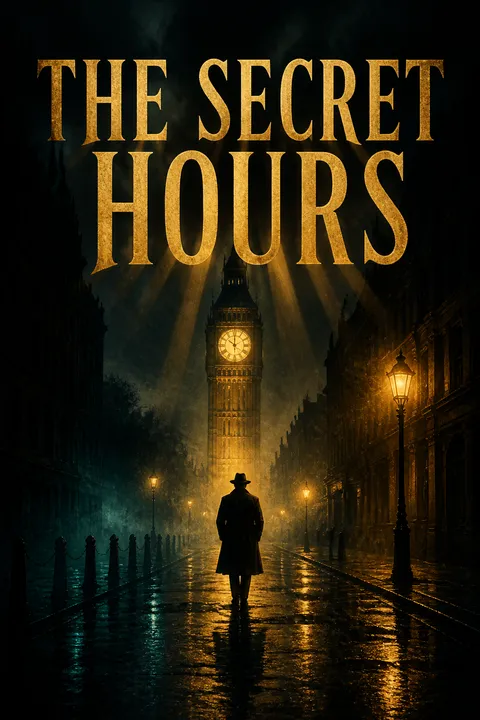

Plot Summary
Devon Night Intrusion
Max Janáček, living a peaceful, almost anonymous existence in rural Devon, is jolted from his routine when his cottage is invaded by a group of armed intruders. The attack is swift and professional, but Max's instincts and old training kick in. He escapes through the darkness, evading his pursuers with a mix of cunning and luck, using the landscape he knows intimately. The chase is brutal, forcing Max to confront the reality that his past is not as buried as he hoped. The violence and confusion of the night leave him battered, suspicious, and on the run, with no idea who is after him or why. The intrusion marks the end of his quiet retirement and the beginning of a new, dangerous game.
Monochrome Inquiry Unveiled
In London, the Monochrome Inquiry is established under the guise of investigating historical overreach by the intelligence services. But beneath the surface, it is a tool of political revenge, set in motion by a Prime Minister with a grudge against Regent's Park, the heart of British intelligence. The inquiry is staffed by civil servants and a panel of public figures, each with their own ambitions and insecurities. Griselda Fleet, the reluctant chair, and Malcolm Kyle, her ambitious but anxious deputy, find themselves navigating a bureaucratic minefield. The inquiry's remit is broad but toothless, hampered by deliberate obfuscation and a lack of real access to the Service's secrets. The stage is set for a farce of accountability, where truth is elusive and everyone is playing a part.
Bureaucratic Labyrinths
Griselda and Malcolm, along with the rest of the Monochrome panel, are quickly mired in the procedural and political complexities of their task. Their first encounter with First Desk, the formidable head of Regent's Park, is a masterclass in intimidation and misdirection. The Service's records are labyrinthine, and the inquiry's access is carefully circumscribed. The panel's work is further complicated by the personal ambitions and rivalries of its members, as well as the ever-present threat of political interference. The inquiry becomes a daily grind of witness interviews, expense claims, and endless paperwork, with little hope of uncovering anything of substance. The civil servants' frustrations mount as they realize they are pawns in a larger game.
The Panel of Pretenders
The Monochrome panel hears testimony from a parade of witnesses, most of whom offer little more than confusion, self-justification, or outright irrelevance. Some are disgruntled former employees with axes to grind; others are conspiracy theorists or fantasists. The panelists themselves are a mix of career politicians, minor celebrities, and business figures, each more interested in their own image than the truth. The inquiry's proceedings are marked by petty squabbles, procedural wrangling, and a pervasive sense of futility. Yet beneath the surface, real secrets are at stake, and the panel's bumbling progress occasionally brushes up against dangerous truths. The farcical atmosphere masks the genuine peril lurking in the shadows.
Leaks, Lies, and Loyalties
As the inquiry drags on, leaks and betrayals become commonplace. Files go missing, rumors swirl, and loyalties are tested. Malcolm, feeling sidelined and desperate to salvage his career, becomes the unwitting recipient of a mysterious classified file—OTIS—planted in his shopping by an unknown hand. The file's contents hint at serious wrongdoing in the Service's past, but its provenance is murky and its implications explosive. Griselda and Malcolm are torn between their duty to the inquiry and their fear of the consequences. Meanwhile, elsewhere in the intelligence world, old alliances are fraying, and the boundaries between friend and foe are increasingly blurred.
The Archive's Silent Power
Deep within Regent's Park, the archive is tended by Molly Doran, a wheelchair-bound veteran whose knowledge of the Service's secrets is unparalleled. The archive is a place of silence and shadows, where the past is preserved, revised, and sometimes erased. Molly's assistant, Erin Grey, is quietly conducting her own research, uncovering connections between the Service's privatization (the Green Shoots initiative) and the ambitions of powerful outsiders like Fabian de Vries. The archive's files hold the keys to understanding the present crisis, but accessing them requires cunning and courage. Molly's own history is entwined with the events now coming to a head, and she is determined to see justice done, even if it means breaking the rules.
The Trap is Set
In Berlin, years earlier, a young compliance officer named Alison North is sent to audit the British Station House. She becomes entangled with Brinsley Miles, a legendary field agent haunted by the loss of his asset—Otis's sister—who was murdered by a Stasi officer named Karl Schenker. Miles and Otis (Max) set a trap for Schenker, using rumors of incriminating records to draw him out. Alison, caught between her duty to the Service and her loyalty to her new friends, is forced to choose sides. The trap is a dangerous game, with betrayal and violence lurking at every turn. The consequences will echo for decades, shaping the lives of all involved.
Berlin's Ghosts Awaken
The Berlin operation ends in tragedy. Schenker, tipped off by a mole in the Service, evades the trap and retaliates with a car bomb that maims Alison and kills others. Otis disappears into witness protection, Miles is recalled to London, and the Station House is left in ruins. The secrets of that time are buried, but not forgotten. In the present, the reemergence of the OTIS file threatens to expose the truth about Schenker—now living as Fabian de Vries, a powerful businessman with designs on the Service's future. The ghosts of Berlin are stirring, and the reckoning is at hand.
Betrayals and Bombs
The narrative weaves together the personal betrayals of the Berlin years with the institutional betrayals of the present. Alison's trust in Miles and Otis is shattered by the violence that follows their failed operation. In London, Griselda's own compromises—accepting money from her ex-husband's family, leaking information to De Vries—mirror the moral ambiguities of the intelligence world. The Service's leaders, past and present, are revealed to be masters of manipulation, willing to sacrifice anyone to protect their own interests. The cost of secrets is measured in lives ruined and friendships destroyed.
The Secret in the File
The OTIS file, containing evidence of the Service's darkest hour, becomes the focal point of the drama. Its appearance in Monochrome is no accident; it is a calculated move by Molly and Erin to flush out De Vries and force a confrontation. The file's contents implicate not only Schenker/De Vries but also senior figures in the Service, including the legendary David Cartwright, who used the Berlin operation for his own ends. The file is both a weapon and a shield, its secrets capable of toppling governments or protecting the status quo. The struggle over its fate is a battle for the soul of the Service.
The Tiger's Shadow
Max, once Otis, is drawn back into the game by the attempt on his life and the reappearance of old enemies. He teams up with Shelley, a former handler, to track down those responsible. Their investigation leads them to Carl Singer, a business figure with ties to De Vries and the privatization of the Service. The lines between hunter and hunted blur as Max confronts the reality that the tiger he and Miles once hunted has become a pillar of the establishment. The pursuit is both personal and political, a quest for justice and a reckoning with the past.
The End of Monochrome
As the Monochrome panel finally begins to uncover the truth, the inquiry is abruptly shut down by political fiat. The panelists disperse, their work unfinished, but Griselda and Malcolm refuse to let the matter drop. In a closed session, they hear the rest of Alison's story, piecing together the full extent of the Service's complicity and the dangers still lurking in the present. The end of Monochrome is not the end of the story; it is the beginning of a new phase, where unofficial actors take matters into their own hands.
The Past Strikes Back
With the truth about Schenker/De Vries now out in the open, the Service moves to neutralize the threat. First Desk, ever the pragmatist, orchestrates a confrontation that ends with De Vries's death, staged as self-defense. The operation is swift and ruthless, a reminder that the Service's methods have not changed, even as its enemies have. The past has claimed its due, but the cost is high, and the future remains uncertain. The survivors are left to reckon with what they have done and what they have become.
The Final Reckoning
In the aftermath of De Vries's death, the balance of power shifts once more. First Desk consolidates her position, using the leverage gained from the operation to control the privatization process and ensure the Service's survival. Griselda and Malcolm, having risked everything to uncover the truth, are left with ambiguous rewards—new roles, new compromises, and the knowledge that justice is always partial. Molly and Max, reunited after decades, find solace in shared memory and the knowledge that some debts have finally been paid.
Aftermath and Alliances
The dust settles, but the world of British intelligence is forever altered. The Service remains, battered but unbroken, its secrets safe for now. The privatization of its functions continues, but under new management, with old hands pulling the strings behind the scenes. The characters who have survived—Griselda, Malcolm, Molly, Max—find new roles, new alliances, and new reasons to keep going. The cost of survival is high, but the alternative is unthinkable. The story ends with a sense of hard-won equilibrium, but the threat of future upheaval always lingers.
The Cost of Secrets
In the end, The Secret Hours is a meditation on the cost of secrets—personal, institutional, and national. The characters have all paid a price for their involvement in the world of espionage, whether in lost innocence, broken bodies, or compromised ideals. The Service endures because it is willing to do what others cannot or will not, but its survival comes at a cost. The final lesson is that in the world of secrets, there are no clean hands, and every victory is tinged with regret. The past is never truly buried, and the future is always uncertain.
Analysis
A meditation on the corrosive cost of secrets and institutional survivalThe Secret Hours is both a gripping espionage thriller and a darkly comic exploration of the British state's capacity for self-preservation. Through its dual timelines and ensemble cast, the novel interrogates the ways in which institutions—whether intelligence services or government bureaucracies—protect themselves by burying the truth, sacrificing individuals, and perpetuating cycles of betrayal. Herron's characters are deeply human, marked by regret, compromise, and resilience; their struggles reflect the broader moral ambiguities of a world where the line between right and wrong is always shifting. The novel's satire of bureaucratic absurdity is leavened by genuine emotional depth, and its ultimate message is both sobering and timely: in the world of secrets, there are no clean hands, and the price of survival is paid in silence, loss, and the slow erosion of ideals. The Secret Hours asks whether justice is ever truly possible in such a world, and whether the pursuit of truth is worth the cost—a question that lingers long after the final page.
Review Summary
The Secret Hours receives mostly glowing reviews, averaging 4.25 stars. Fans of Herron's Slough House series find particular delight in recognizable characters appearing under code names, with Berlin's post-Wall era providing rich historical backdrop. Reviewers praise the sharp wit, dark humor, and satisfying plot resolution, though some note a slow middle section. The dual timeline structure, shifting between 1994 Berlin and present-day London, is widely appreciated. Occasional critics found the spy bureaucracy tedious, but most consider it an essential companion to the Slough House universe.
People Also Read





Characters
Max Janáček (Otis)
Max is a former intelligence asset who has spent decades in hiding, living under an assumed identity in rural Devon. His past as Otis, a fixer and brother to a murdered Stasi asset, is never far from the surface. Max is resourceful, wry, and deeply scarred by the betrayals and violence of his Berlin years. His relationships—with Miles, Alison, and his handlers—are marked by loyalty and loss. When his quiet life is shattered by an attempted abduction, Max is forced to confront the ghosts of his past and the unfinished business of justice. His journey is one of reluctant re-engagement, as he navigates a world that has moved on without him but still demands his reckoning.
Alison North (Molly Doran)
Alison begins as a junior compliance officer sent to Berlin, but her experiences there—her affair with Otis, her involvement in the failed operation against Schenker, and the car bomb that costs her her legs—transform her into Molly Doran, the formidable archivist of Regent's Park. Molly is fiercely intelligent, unsentimental, and driven by a sense of justice that is both personal and institutional. Her disability has made her both vulnerable and resilient, and she wields her knowledge of the Service's secrets as both shield and sword. Molly's actions in the present—manipulating the release of the OTIS file, orchestrating the downfall of De Vries—are motivated by a desire to see old wrongs righted, even at great personal risk.
Brinsley Miles
Miles is a legendary figure in the Service, known for his time behind the Wall in Berlin and his unorthodox methods. He is abrasive, foul-mouthed, and deeply loyal to those he considers his own. The murder of his asset (Otis's sister) by Schenker is the defining trauma of his life, driving him to set a trap for her killer and ultimately to betray his own ideals. Miles's relationship with Alison is complex—part mentorship, part rivalry, part doomed romance. In the present, he is a shadowy presence, still pulling strings and settling scores. His psychological landscape is one of guilt, anger, and a desperate need for meaning in a world that has little use for old warriors.
Griselda Fleet
Griselda is the chair of the Monochrome Inquiry, a civil servant whose career has been shaped by both ambition and adversity. She is intelligent, principled, and quietly determined, but her personal life is marked by disappointment and financial struggle. Griselda's involvement in the inquiry exposes her to new dangers and moral ambiguities, as she is drawn into the orbit of De Vries and forced to confront her own capacity for compromise. Her relationship with Malcolm is both collegial and competitive, and her ultimate decision to pursue the truth, even after the inquiry is shut down, marks her as a figure of quiet courage.
Malcolm Kyle
Malcolm is Griselda's deputy on the Monochrome panel, a young civil servant with dreams of advancement and a deep-seated insecurity. His journey is one of disillusionment, as he realizes the limits of his own power and the futility of the inquiry. Malcolm's accidental acquisition of the OTIS file makes him a key player in the unfolding drama, and his partnership with Griselda becomes a test of loyalty and nerve. Malcolm is both comic and tragic—a man out of his depth, but determined to do the right thing, even when he is not sure what that is.
First Desk
First Desk is the head of Regent's Park, a woman of formidable intellect and iron will. She is a master of political maneuvering, willing to bend or break the rules to protect the Service and her own position. First Desk's actions are always calculated, and her moral compass is set by the demands of survival rather than sentiment. She is both feared and respected by those around her, and her ultimate decision to orchestrate De Vries's death is a testament to her pragmatism. First Desk embodies the paradox of intelligence work: the necessity of doing bad things for good reasons.
Fabian de Vries (Karl Schenker)
De Vries is the novel's central antagonist, a former Stasi officer who has reinvented himself as a British businessman and political player. He is charming, ruthless, and utterly without remorse, having orchestrated murders and betrayals in his past life as Schenker. De Vries's pursuit of power through the privatization of the Service is both a personal ambition and a threat to national security. His ability to evade justice for decades is a commentary on the failures of institutions and the dangers of unchecked ambition. De Vries is ultimately undone by the very secrets he sought to bury.
Shelley McVie
Shelley is a former "milkman" (handler of retired assets) whose injury and disillusionment have left her on the margins of the Service. She is tough, resourceful, and deeply skeptical of authority. Shelley's relationship with Max is marked by mutual respect and a shared sense of having been used and discarded by the system. Her decision to help Max in his quest for answers is both an act of solidarity and a final gesture of defiance against a Service that no longer values her. Shelley represents the human cost of institutional change and the resilience of those left behind.
Erin Grey
Erin is Molly's assistant in the archive, a young woman with her own ambitions and a keen sense of justice. Her research into the Green Shoots initiative and her role in planting the OTIS file make her a key catalyst in the novel's climax. Erin is both a product of the new generation—tech-savvy, skeptical, and unafraid to challenge authority—and a bridge to the old, learning from Molly and ultimately choosing her own path. Her actions demonstrate the power of individual agency in a world dominated by institutions.
Carl Singer
Singer is a business figure whose company is poised to take over key functions of the Service through privatization. He is ambitious, self-serving, and ultimately out of his depth, manipulated by De Vries and later by First Desk. Singer's willingness to do whatever is necessary to advance his own interests makes him both a threat and a tool. His fate is a cautionary tale about the dangers of unchecked ambition and the ease with which the powerful can be used by those even more ruthless.
Plot Devices
Dual Timelines and Interwoven Narratives
The novel's structure alternates between the present-day Monochrome Inquiry and the events of Berlin in the 1990s, gradually revealing the connections between them. This dual timeline allows for a slow unspooling of secrets, as the consequences of past actions become clear in the present. The interwoven narratives create suspense and deepen the emotional impact, as characters are forced to confront the long shadows of their earlier choices. The device also highlights the cyclical nature of institutional betrayal and the persistence of unresolved trauma.
The MacGuffin File
The OTIS file serves as the novel's central MacGuffin—a seemingly innocuous piece of evidence that holds the key to the entire plot. Its mysterious appearance, uncertain provenance, and explosive contents drive the action forward, forcing characters to make choices that reveal their true loyalties. The file is both a symbol of the power of information and a literal threat to the powerful. Its journey from the archive to the inquiry to the hands of those who would use or suppress it is a masterclass in narrative suspense.
Bureaucratic Satire and Irony
Herron uses the machinery of government and intelligence bureaucracy as both setting and satirical target. The Monochrome Inquiry is a farce of accountability, hamstrung by deliberate inefficiency and self-interest. The characters' struggles with paperwork, protocols, and office politics are both comic and tragic, highlighting the ways in which institutions protect themselves at the expense of truth and justice. The irony is sharpened by the contrast between the high stakes of espionage and the low-level pettiness of bureaucratic life.
Foreshadowing and Misdirection
Throughout the novel, Herron employs foreshadowing and misdirection to keep readers guessing. Early references to the Berlin operation, the mysterious deaths, and the privatization of the Service all hint at deeper connections that are only revealed late in the story. Characters' motives are often ambiguous, and apparent allies may turn out to be enemies—or vice versa. The use of unreliable narrators and shifting perspectives adds to the sense of uncertainty, mirroring the world of espionage itself.
Psychological Realism and Character Depth
The novel's emotional power derives from its deep psychological insight into its characters. Herron explores the ways in which trauma, guilt, ambition, and loyalty shape individual choices and institutional outcomes. The characters' inner conflicts are as important as the external plot, and their development over time is both believable and affecting. The interplay between personal and political stakes gives the story its resonance and complexity.
Slough House Series
Download PDF
Download EPUB
.epub digital book format is ideal for reading ebooks on phones, tablets, and e-readers.








































