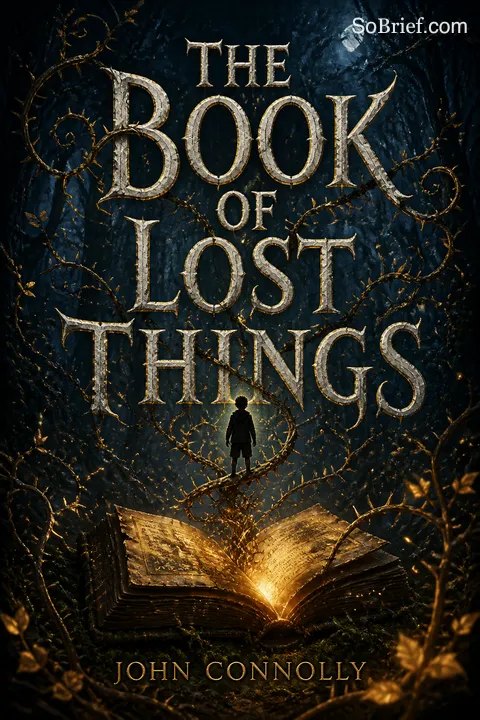
Plot Summary
A Boy, A Loss
David, a solitary, imaginative twelve-year-old, is adrift after his beloved mother succumbs to illness. He clings to obsessive routines, convinced they might keep her alive, but the world swallows her anyway. His father tries to comfort, but the void is immeasurable. David is staggered by the bluntness of grief; he wanders through days thick with loss, books his only comfort, haunted by the sense that if he'd just done more, she would still be here. The first cracks of magical realism slip in as stories start whispering from the shelves at night, blurring the line between reality and imagination. These tales, once a family breeze, shift into unsettling presences, propelling David toward the edge of innocence.
Whispers in the Walls
In the bleak aftermath, David's home transforms into a space both sacred and suffocating. His late mother's books, once shared with warmth, now speak to him—literally—challenging his sanity and sanity's boundaries. Old routines give way to compulsions, each little ritual charged with anxiety and guilt. The world outside grows more dangerous: whispers of war in Europe, air raid precautions, darkening London skies. Meanwhile, something else stirs within the house and David's mind: a Crooked Man with dreams of possession watches, marking David out. As grief mutates, David senses that stories and reality are interlocking, and something ancient waits in the shadows.
Wolf Kings and War
David's father, desperate for stability, remarries Rose, now pregnant. Soon a half-brother, Georgie, is born, and the family relocates to Rose's ancestral, ivy-clad house amid encroaching woods. The move is as much exile as escape from bombed London. David feels doubly disinherited—his mother gone, his father's affection divided, and a crying new sibling in her place. The world beyond pulses with war's promise and fear; inside, stories in books, and darker, rewoven fairy tales, begin to suck David deeper, merging with his homesickness for a world that no longer exists.
The Crooked Man Appears
The Crooked Man's presence grows tangible—first glimpsed in nightmares, soon in the actual corners of David's bedroom. David's struggles with compulsions, "fits," and a creeping sense of being watched compel his father to take him to a psychiatrist. But nothing soothes his mounting agitation. The Crooked Man hints, tempts, and smiles with ghastly promise, radiating the threat of stories gone awry. His attention is clear: he wants to broker a bargain, one that will have consequences for innocent children. The fabric of David's reality thins as the world teeters on the knife-edge between grief and something far darker.
A Blended Family Fractures
Domestic life in Rose's mansion is brittle. David's animosity toward Rose, Georgie, and his distracted father erupts regularly, peaking in angry outbursts and deepening isolation. Haunted by the vanished child-occupant of his new bedroom, Jonathan Tulvey, David starts piecing together the tale of Jonathan and Anna, two children who vanished long ago—an omen, perhaps, for the cycles of abandonment and betrayal children suffer in this world of fairy tales. Meanwhile, the Crooked Man, the magic in the books, and a growing sense of doom escalate, blurring remorse, resentment, and guilt.
Crossing Into Elsewhere
A fight with Rose, another fit, and his mother's voice—calling from the darkness outside—pull David toward the garden's sunken stone. As a German bomber flares overhead, he desperately slips into a hidden gap in the garden wall. The world he emerges in is all shadows and ancient trees—a fairytale land where everything is wrong and everything is dangerous. He realizes that, in passing through, hope for restoring his old life has become snared in quests and threats more terrifying than he imagined. Home is gone; now, survival means navigating stories come hideously to life.
Woodsman's Refuge
Rescued from immediate peril by the Woodsman, David learns that this is a world where fairy tales are predatory and literal. The Woodsman—gruff, haunted, hiding his own grief—provides shelter and wisdom, teaching David about the rules, monsters, and fading power of the land's distant king. David, gradually, finds kinship and the hint of purpose under the Woodsman's roof—until the wolves arrive, hunger sharpening their cunning. As the safety of their world collapses, David is forced to journey deeper into the kingdom, propelled by the faint hope of finding his mother, or at least a way home.
Wolves, Loups, and Blood
The Woodsman reveals the evolving danger: not just wolves, but Loups—man-wolf hybrids born from twisted fairy tales, ruled by their brutal king Leroi. These aren't just animals; they hunger for political dominion. Both children and adults—Woodsman, David, and allies found and lost—must fight them, but growing chaos means the world is spinning out of human control. The narrative fractures further: Red Riding Hood seduces wolves; the forest itself fights against its own abominations. The only clear lesson is that stories here never end happily ever after, and even the most basic rules of morality and nature are up for slaughter.
Fairy Tales Are Broken
David's journey is punctuated by warped fairy tales: Hansel and Gretel become a story of abandonment, cannibalism, and cognitive dissonance; Snow White is a monstrous, self-absorbed tyrant, tormenting the dwarfs via class and appetite. The dwarfs are left riven by political squabbles, setting up a world where no character can trust thematic redemption. Every old story is inverted: endings become warnings not to trust structure or convention. David comes to realize that this place is built from the fragments, fears, and losses of children like Jonathan before him—and that its most dangerous denizens were, in life, children themselves.
The Deadly Trickster
Threading through every misadventure is the Crooked Man, master trickster, crosser of borders, and collector of suffering. Unlike the Woodsman or visible monsters, his power is subtle: he plants doubt, breeds jealousy, and hopes for betrayal—the true currency of fairytales. David learns that bargains can never be innocently struck with such figures: the price is always someone else's innocence. The Crooked Man preys on jealousies between siblings, driving wedges into the deepest wounds. Every story is a double-edge, as David's attempt to save his mother becomes tangled in the Crooked Man's campaign to steal another child's soul.
Monsters Hunt in Dreamland
David's journey turns darker as he faces predatory hybrids and madmen. He is taken by a huntress who fuses children to animal bodies, seeking sport and transformation. Escaping her by wit, risk, and empathy, he sees ever more clearly that these monsters are not random—they are the products of children's fears and hatred spun loose. His mother's voice—real or an echo of his own longing—pulls him onward, but the world's rules are crumbling. David comes to realize his journey is not just physical but spiritual: he must grow or perish, learn to outwit cruelty or become part of the darkness.
Dwarfs and Doctrines
David's brush with the dwarfs—now Marxist revolutionaries—sends up the idea of "seven helpers," showing that even comic relief is only temporary. The old fairy tales lose their innocence, repurposed as cautionary tales about greed, power, and adult appetites. Meanwhile, David feels the call of home and adulthood: the connections that would keep children safe are always precarious, always vulnerable to betrayal, hunger, or the simple passage of time. Grown-up stories don't bring safety; they bring disappointment or oblivion.
The Deer-Girl's Plight
A fleeting moment of beauty—a deer-girl fleeing for her life—ends in violence and exploitation. Kindness offers no protection from predation: the hunter, a woman hiding her own monstrous curiosity, wants to fuse David with a fox, forever erasing his human self. David's refusal to become another victim, and his escape through cunning and luck, reinforce the horror at the heart of the place: even beauty and innocence are trapped and brutalized by stories gone wrong. The peril is as much moral as physical: to survive, David must ruthlessly refuse the logic of this kingdom.
The Huntress's Game
The huntress bargains with David, promising freedom if he takes part in a fatal experiment—to make a centaur, fusing her humanity with her horse. Betrayal is the only constant: David tricks her, dooming her to destruction at the hands of her own wretched creations. Everywhere, acts of domination dissolve into chaos and suffering. David's realization that the only way forward is not through violence but through unpredictable, original choices marks his emergence as something more than a pawn in other people's stories.
Surviving the Dark Forest
Escaping the huntress, David is joined by Roland, a knight-errant on a quest of love. Together, they traverse battlefields, ruined landscapes, and the hollowed-out remnants of honorable tales. The pair's journey is both literal and metaphorical: friendship, love, and trust are reimagined in a place where self-sacrifice and hope can be fatal. Their travels are stalked by the Crooked Man and the wolf pack, whose menace steels David for the final, shattering confrontations with evil and his own failings.
Roland's Companionship
With Roland, David learns about unspoken love—the knight's quest is for Raphael, slain in a castle haunted by a monstrous enchantress. Together, they fight impossible battles, rescue villagers from supernatural beasts, and spar with questions of justice, revenge, and forgiveness. But meanings are slippery: Roland cannot save his beloved, the villagers turn resentful, and every boon is paid for with blood. Roland's ultimate sacrifice, and David's grief, signal that growing up means enduring, not avoiding, loss.
Love, Betrayal, and Capture
As war looms, David discovers Anna's murder at the Crooked Man's hands, and the truth of Jonathan's original bargain. The kingdom has been built on betrayals: a child's jealousy, a sister's sacrifice, a trickster's lies. The wolf army, guided by Leroi, storms the castle. The Crooked Man, almost dead, pleads with David to surrender his brother's name, promising salvation. At last, David faces the central test: Will he betray Georgie as Jonathan betrayed Anna? The cycle of pain and abandonment reaches its climax.
Castles and Kings in Shadow
In the onslaught's chaos, Leroi slays the king; Jonathan dies, undone by his own legacy. David is cornered by both wolves and the Crooked Man: naming Georgie would save him, but damn another. Instead, David names his brother "brother"—refusing the curse of selfishness and breaking the Crooked Man's hold at last. The monsters fall, the fairy tale world cracks apart, and the tormented children's souls are freed. Weakness, guilt, and death were not conquered by heroism or ritual, but by a simple renunciation of hate.
The True Book of Lost Things
At last, David examines the mysterious Book of Lost Things—expecting magical answers, but discovering instead a scrapbook of childhood memories: tokens and mementos, the story of Jonathan's heartbreak, rage at Anna, and his final act. The book's real magic is recognition: the only way to heal the wounds of the past is to acknowledge them. David understands how grief and envy twisted the world and why the Crooked Man could only prey on children to perpetuate his power. There are no easy returns, no rescues by ritual.
The Crooked Bargain
The Crooked Man, desperate for life, makes one final pitch, offering power and safety in return for David's brother's name. But through agony and fear, David refuses, breaking the contract. The Crooked Man's power drains away; the monstrous wolf-Loups crumble. The trickster's defeat frees the spirits trapped by bargains made in pain. The kingdom itself collapses: destruction is as much liberation as loss. David's choice, to embrace love rather than spite, is the only magic strong enough to undo the past.
The Battle for the Kingdom
The wolves breach the castle, defenders die, and the king falls to Leroi in a frenzy of blood. David—wounded, desperate, but resolute—climbs above the last of the horror, watching the old world dissolve in dust and ruin. The Woodsman reappears, bearing the scars and wisdom of one who has seen how children are both the shapers and the victims of tales. He leads David back to the tree at the world's border, where all journeys must end and begin again, and where home is no longer the golden land it seemed.
Names, Sins, and Salvation
David's refusal to become another in the line of betrayers is the book's true act of resistance. At last, the only victory over evil is to refuse the trap of selfishness: David names his brother only "brother," refusing to indulge his worst instincts, and so the cycle ends. The Crooked Man rips himself apart, the world collapses, and David finds the way home not through ritual or violence, but through mercy. Siblings lost and found; families fractured and remade. There is no reset, only weary wisdom.
The Journey Home
David's odyssey has cost him dearly. He returns to his bed, battered, bandaged, and changed. Rose—no longer the ogre but a loving mother—tends him as he wakes. The loss of childish anger makes space for acceptance and gratitude. The world outside is still dangerous and sad, but David—now both child and adult—accepts that love and loss are intertwined. He grows, ages, and faces happiness and tragedy in turn, carrying debts, scars, and hope.
Into Adulthood and Memory
David's life, in time, is seeded with both joy and devastation: the deaths of family, the birth and loss of his child, the long years tending the wounds of memory and time. He grows old, sheltering children, telling new stories, and coming to rest in the house where all began. As he nears death, the books begin whispering again, calling him home, promising that in stories—and in forgiveness—all that is lost may finally be found. The ending is tender, ambiguous, and quietly transcendent.
Analysis
The Book of Lost Things is a bracingly honest reimagining of the coming-of-age tale, using the scaffolding of fairy tales to probe the most painful aspects of growing up: loss, jealousy, betrayal, and the often-fatal tendency to blame others for our wounds. John Connolly's achievement lies in his willingness to strip stories of their innocent veneer, exposing the cycle of trauma that underpins both families and folklore. Modern readers will recognize in David's journey not a simple fantasy, but an allegory of therapy and recovery from grief: it is only by confronting and refusing the demand to scapegoat (whether sibling or self) that healing can occur. The book rejects "magical endings," emphasizing that growing up is a passage through suffering, not a route around it. Only by choosing compassion, accepting the imperfect love of new family, and relinquishing the desire to be avenged or restored can adulthood begin. For anyone who has mourned, feared, or longed to rewrite their personal story, The Book of Lost Things is a powerful reminder that we are all children lost—and found—through the stories we dare to live and tell.
Review Summary
Reviews of The Book of Lost Things are largely positive, averaging 3.96/5. Readers praise its dark reimagining of classic fairy tales, rich world-building, and compelling protagonist David. Many note it is deceptively adult despite its child hero and fairy tale framework. Standout elements include the terrifying Crooked Man villain, twisted retellings, and a moving exploration of grief, loss, and coming-of-age. Some critics cite pacing issues, weak female characters, and overly simplistic writing. The bittersweet ending is widely acclaimed.
People Also Read
Characters
David
David is the emotional and narrative center of the story—a bookish, sensitive, deeply wounded twelve-year-old devastated by his mother's death and haunted by compulsive rituals. Initially self-absorbed, resentful of his stepfamily, and guilt-wracked, David's journey into the fairy-tale world forces him to repeatedly choose between selfishness and compassion. The psychoanalysis of David's arc follows the classic course of trauma: he is driven inward, then outward, learning empathy, resourcefulness, and at last, a hard-won moral clarity. His relationships oscillate between longing for parental comfort, sibling rivalry, and a need to punish and forgive himself. By refusing to betray his half-brother, David disrupts the cycle of pain, choosing adulthood and responsibility, and returns home able to love and lose without being undone by loss.
The Crooked Man
The Crooked Man is both trickster and parasite—a fantastical embodiment of all the worst aspects of grief, jealousy, and narrative corruption. He haunts the spaces between worlds, preying on emotionally vulnerable children, offering them their darkest wishes in return for betrayals. Psychoanalytically, he is the Id unbound, seeding doubt and jealousy, dangling power in exchange for cruelty. His relationship to David is one of seduction and predation, seeking to trap the boy in the same cycle that destroyed Jonathan. The Crooked Man's demise comes not through violence, but when the adult refuses to scapegoat the innocent—showing that his power lies not in magic, but in the convincing of children to hate.
The Woodsman
The Woodsman, an archetypal mentor, is softened by tragedy and solitude—the loss of all he loved has made him both wiser and more sorrowful. He is David's first real anchor in Elsewhere, exemplifying the tested goodness that can persist in a corrupted world. He challenges David to grow up, to reframe his anxieties into action, and to move beyond childish compulsions. The Woodsman's psychoanalytic role is as surrogate father—offering what David's own father cannot: unconditional support, practical wisdom, and eventually, the benediction that helps David accept the necessary losses of growing up.
Roland
Roland is everything a storybook hero should be—honorable, steadfast, loyal—but his quest is tragic, seeking a lost love in a world that cannot return it. His sexuality, unspoken but clear, marks him as a man condemned to sorrow by societal norms. Roland's friendship with David is both platonic and parental, teaching him integrity, courage, and the loneliness of the outcast. In his death, Roland imparts to David the lesson that love is always accompanied by loss, and that sometimes heroism means accepting the impossibility of complete redemption.
Rose
Initially perceived by David as an antagonist—a usurper of his mother's place—Rose's character deepens as David matures. She is both vulnerable and determined, seeking to build a family amid the wreckage of loss and war. Psychoanalytically, she serves as the "good enough" mother—never perfect, but ultimately loving, patient, and forgiving. David's eventual apology and acceptance of Rose represent his movement from narcissism to relational adulthood, able to differentiate between his own pain and the needs of others.
Jonathan Tulvey / The King
Jonathan, the vanished predecessor and eventual king, is David's cautionary shadow: the child who, consumed by jealousy, struck a fatal bargain with the Crooked Man, sacrificing Anna for the throne. The adult king is wasted by guilt, unable to die, and trapped in the world he helped corrupt. He embodies the psychoanalytic consequences of emotional abandonment and envy—how a child's pain, left unchecked, can poison not only his own life but the world around him. By breaking the cycle, David redeems both Jonathan and himself.
Anna
Anna, Jonathan's adopted sister, is the most direct victim of the Crooked Man's bargains. Her suffering and eventual forgiveness are pivotal: it is her ability to love Jonathan, rather than hate him for his betrayal, that signifies genuine redemption is possible. Anna is the child who never gets to grow up, a reminder that our grievances too often blot out real connections. She embodies the tragic cost of unchecked sibling rivalry and the possibility of release through empathy.
Georgie
David's half-brother, Georgie, exists mostly as a symbol: the much-maligned "intruder" whose peril becomes the linchpin of the Crooked Man's final test. His role is to embody the spark of vulnerability that demands protection. David's willingness to claim him not as rival but brother is both a rejection of scapegoating and an embrace of the adult's responsibility to the young.
Leroi
Leroi is the apex predator—the wolf become man, the story become predator. His desires are lust for power, consumption, and transformation—they are Jonathan's nightmares made flesh. Leroi is both the enemy and a warning: to lose oneself in appetite is to forfeit everything human.
The Huntress
The Huntress is David's most literal antagonist: the one who fuses children with animals for sport, playing at nurturer and destroyer. She embodies unchecked curiosity, domination, and the capacity of adults to exploit the vulnerable.
Plot Devices
The Merging of Fairy Tale and Reality
The narrative framework depends on a literalization of story: David's grief and guilt, and the longings and fears of children like Jonathan, bleed into Elsewhere, a zone where fairy tales—always darker than remembered—come alive. This blurring between reality and fantasy is amplified through foreshadowing (David's compulsions, the whispers of books) and the cyclical structure of stories: each moral failing, each act of betrayal, births monsters and repeats the cycle for the next lost child. The final triumph, then, is not to "defeat" the stories, but to rewrite them by refusal—to make new choices, and accept painful growth.
The Crooked Man's Bargain
Central to the plot is the Crooked Man's scheme—always offering gifts in exchange for the betrayal of the innocent, usually a sibling. The device is literalized as contracts, exchanges, and the "naming" motif: to name is to doom, to refuse is to redeem. This mirrors classic fairy tale bargains (Rumpelstiltskin, etc.) but is reimagined as psychological growth: rejecting the terms of the curse is the act of maturation and agency.
Betrayal and Cycles of Trauma
The core narrative structure is recursive: Jonathan's betrayal sets up the corrupted kingdom, each king or queen-forged-by-jealousy perpetuates the cycle, and only a refusal to betray can break it. The book is full of false "redemptions"—magic battles, clever riddles, fairy tale tropes—none of which leads to safety. Only the painful, anti-narrative act of mercy ends the story.
The Book of Lost Things as Metacommentary
Foreshadowed throughout, the Book of Lost Things is revealed to be not an instrument of power but a scrapbook of memory: a vessel for love, regret, and loss. The narrative's greatest twist is that stories—however dark—are tools for reckoning, not weapons of escape. The act of remembering, of grieving, is the "magic" strong enough to end old curses.
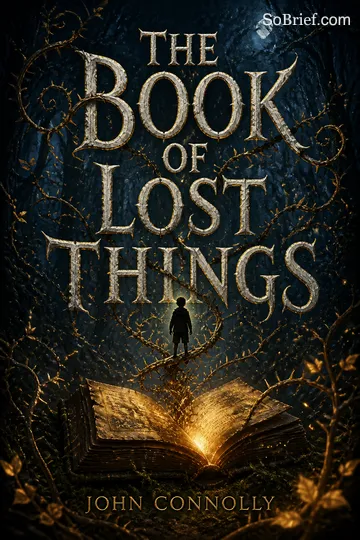
The Book of Lost Things Series
Download PDF
Download EPUB
.epub digital book format is ideal for reading ebooks on phones, tablets, and e-readers.








































