
Key Takeaways
1. The "Bloody Shirt" Metaphor: A Southern Inversion of Truth
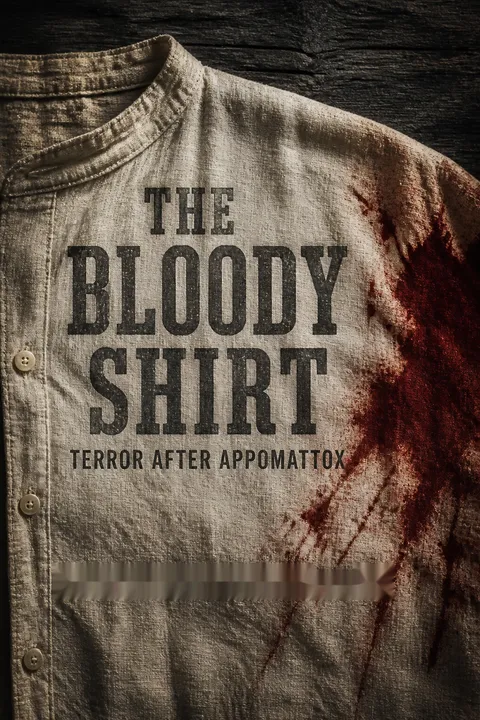
Waving the bloody shirt: it would become the standard retort, the standard expression of dismissive Southern contempt whenever a Northern politician mentioned any of the thousands upon thousands of murders, whippings, mutilations, and rapes that were perpetrated against freedmen and freedwomen and white Republicans in the South in those years.
Origin of the phrase. The iconic phrase "waving the bloody shirt" emerged from a real incident in 1871, where a Northern school superintendent, Allen P. Huggins, was savagely beaten by the Ku Klux Klan in Mississippi for educating Black children. The story, though embellished with the detail of a bloodstained shirt being waved in Congress, became a powerful symbol. However, white Southerners quickly co-opted and inverted its meaning.
Dismissing Southern criminality. Instead of acknowledging the violence, the phrase became a sarcastic dismissal, implying that any mention of atrocities against Black people or white Republicans was mere political rabble-rousing. This inversion allowed white Southerners to deflect accusations of their own brutality and portray themselves as the aggrieved party. The underlying criminality was ignored, and the act of exposing it was deemed the true offense.
A fictionalized reality. The most astonishing aspect was that the core story of Huggins's beating was true, yet the "bloody shirt" detail was a fabrication. This mirrored an earlier incident involving Senator Charles Sumner, whose bloody coat was also falsely claimed by Southerners to be a "holy relic" fetishized by Northerners. This pattern revealed a deep-seated Southern contempt for victims and a remarkable unconcern for the implications of their own violence.
2. Post-War South: White Resistance and the Denial of Black Rights
“The African has been, in all ages, a savage or a slave,” Perry declared. “God created him inferior to the white man in form, color, and intellect, and no legislation or culture can make him his equal."
Immediate reassertion of control. As the Civil War ended, white Southerners, despite military defeat, immediately sought to re-establish their dominance. Provisional Governor Benjamin F. Perry of South Carolina, a pre-war Unionist who feared secession would endanger slavery, quickly reappointed Confederate officials and declared that while slavery was abolished, Black people were not citizens and were inherently inferior.
Black Codes and systemic oppression. Southern states enacted "Black Codes" to control the freedmen, effectively creating a new form of servitude. These laws:
- Re-enacted penal laws for slaves, applying them to freedmen.
- Ordered "apprenticing" of Black children to former owners.
- Declared unemployed Black people as vagrants, auctioning off their labor.
- Forbade Black people from renting land or possessing arms.
- Established white militias to guard against Black insurrections.
Defiance of federal authority. This systematic denial of rights was a direct challenge to the spirit of emancipation and federal Reconstruction efforts. White leaders openly stated that "this is a white man's government, intended for white men only," and that they would "never quietly submit to negro rule," viewing Black suffrage as "folly and madness." This defiance set the stage for the violent conflict that would define Reconstruction.
3. Northern Eyes on the South: Documenting a Society in Flux
“The people here look for some heavy visitation of Divine Providence upon you. But God will judge.”
Journalistic mission. John Richard Dennett, a Harvard-educated journalist for The Nation, embarked on an eight-month journey through the defeated South in 1865 to report on its true condition. His mission was to observe and report without bias, allowing the public to draw its own conclusions about the mood and realities of the post-war Southern states.
Contrasting realities. Dennett meticulously documented the stark differences between Northern and Southern perceptions. While Northerners believed they had fought for "humanity and true democracy," Southerners felt "unjustly, most tyrannically oppressed" and expected divine retribution upon the North. He observed widespread white idleness contrasted with Black people diligently working, yet white Southerners universally predicted the "extinction" of the Black race due to their supposed laziness.
Pervasive violence and white impunity. Dennett's reports were filled with accounts of violence against freedmen, from beatings for "insolence" to murders for leaving plantations. He noted the "raw and familiar edge" of this violence, rooted in the slaveholder's instinct to maintain control. White communities consistently shielded perpetrators, making justice impossible. Dennett's journey revealed a society deeply resistant to change, where the "war still exists" in a different form.
4. Hamburg's Promise: The Rise and Violent Fall of Black Self-Governance
“This is the beginning of the redemption of South Carolina.”
A haven for freedmen. Hamburg, South Carolina, a former ghost town, became a beacon of hope for freedmen after the war. Its population swelled with Black families seeking a new life, free from the quasi-slavery of contracted farm work. They established businesses, schools, and held public offices, with Prince Rivers, a former slave and Union soldier, rising to become magistrate and intendant (mayor).
White resentment and provocation. This Black self-governance was intolerable to the surrounding white communities, particularly the notoriously violent Edgefield County. White rowdies frequently provoked confrontations in Hamburg, asserting their perceived superiority and challenging Black authority. Martin Witherspoon Gary, a former Confederate general, and his "Sweetwater Sabre Club" actively sought an opportunity to "provoke a riot and teach the negroes a lesson."
The Hamburg Massacre. The opportunity arose on July 4, 1876, when two white men deliberately obstructed a Black militia parade. The ensuing legal dispute escalated into a full-scale attack by hundreds of armed white men, led by General Matthew C. Butler and including Ben Tillman. After a siege, the Black militiamen were captured, and six were executed in cold blood. This "passion-stirring event" was hailed by white Southerners as "the beginning of the redemption of South Carolina," marking a violent turning point in the overthrow of Reconstruction.
5. "Carpetbaggers" and "Scalawags": Northern and Southern Allies for Reconstruction
“The only people I find that a Northern man can make a friend of, the only ones that like the Government and believe in it, are the Negroes. I’m convinced they can vote just as intelligently as the poor whites. A Southerner would knock me down if I said that to him; but it’s true."
Northern idealists and opportunists. "Carpetbaggers" were Northerners who moved South after the war, often for economic opportunity or idealistic reasons. Albert T. Morgan, a Union veteran, sought fortune in Mississippi cotton but became a Republican politician, fighting for Black rights. Adelbert Ames, another Union general, became Mississippi's provisional governor, then senator, then governor, committed to protecting freedmen.
Southern white Republicans. "Scalawags" were white Southerners who supported Reconstruction and the Republican party. They faced intense ostracism and violence from their communities. Morgan's experience in Yazoo City, where he was physically assaulted and his family threatened for his political views and marriage to a Black woman, exemplifies the extreme hostility directed at these allies.
Shared struggle and personal cost. These individuals, alongside Black leaders like Prince Rivers and Charles Caldwell, formed the backbone of Reconstruction governments. They faced constant threats, social isolation, and economic ruin. Their commitment to equality often came at immense personal cost, highlighting the deep divisions and the brutal nature of the struggle to redefine citizenship and power in the post-war South.
6. The Ku Klux Klan and White Leagues: Organized Terror as Political Strategy
“The war still exists in a very important phase here.”
Terror as a tool of political control. Major Lewis Merrill, a Union cavalry officer sent to Yorkville, South Carolina, in 1871, initially doubted the extent of Ku Klux Klan violence. However, he quickly discovered a deeply organized and pervasive campaign of terror aimed at suppressing Black political participation and driving out white Republicans. This violence was not random but a calculated strategy to regain white supremacy.
Systematic intimidation and complicity. Merrill's investigations revealed hundreds of whippings, murders, and arsons, with prominent white citizens often involved or complicit. Local authorities, including sheriffs and grand juries, actively obstructed justice, refusing to prosecute or even acknowledge the crimes. This widespread complicity created an environment where victims feared testifying, knowing their lives would be at risk.
The "haven't done nothing" men. Merrill observed that the true leaders of the terror were often the "respectable" white men who publicly deplored violence while secretly orchestrating it. Their goal was to "breed a distrust of each other" among their opponents and to "impress on the leaders, the individual danger each of them ran if any disturbance took place." This systematic terror, as Merrill noted, meant that "the war still exists" in a new, insidious form.
7. Federal Retreat: The Nation's Waning Will to Protect Reconstruction
“The whole public are tired out with these annual autumnal outbreaks in the South.”
Initial federal intervention. The federal government, through the Enforcement Acts and military presence, initially attempted to suppress the Ku Klux Klan and protect Black civil rights. Major Merrill's successful arrests of hundreds of KKK members in York County, South Carolina, demonstrated the effectiveness of decisive federal action. Attorney General Amos T. Akerman, a former Confederate who became a Republican, was a staunch advocate for enforcing these laws.
Political fatigue and shifting priorities. However, the political will in Washington began to wane. Akerman was forced to resign, and his successor proved less committed. The army grew "antsy" to return to fighting Indians out West, viewing Southern policing as a "degrading business." President Grant, reflecting national sentiment, expressed that "the whole public are tired out with these annual autumnal outbreaks in the South."
Consequences of withdrawal. This federal fatigue led to a gradual withdrawal of troops, pardons for convicted Klansmen, and a reluctance to intervene in state affairs. Despite pleas from governors like Adelbert Ames, who warned of "cold-blooded murder" and "a revolution... by force of arms," federal protection became increasingly limited. This retreat effectively abandoned Black citizens and their white allies to the violence of white supremacists, paving the way for the complete overthrow of Reconstruction.
8. The Mississippi Plan: Systematic Disenfranchisement Through Violence
“CARRY THE ELECTION, PEACEABLY IF WE CAN, FORCIBLY IF WE MUST.”
A blueprint for white supremacy. The "Mississippi Plan" of 1875 was a systematic, violent campaign by white Democrats to regain political control of the state. It served as a blueprint for other Southern states. The plan involved:
- Organizing armed "White Leagues" and rifle clubs.
- Intimidating Black voters and white Republicans through threats, beatings, and murders.
- Disrupting Republican meetings and destroying ballots.
- Forcing Republican officeholders to resign or flee.
The Yazoo City and Clinton massacres. Albert T. Morgan, sheriff of Yazoo County, witnessed firsthand the brutality of this plan. A Republican meeting he was addressing was attacked, resulting in deaths and his own escape. In Clinton, a Republican barbecue was fired upon, killing dozens of Black men, women, and children. These acts of violence were designed to "so intimidate the poor Negroes that they can in all human probability prevail over them at the election."
The "peace treaty" farce. Governor Adelbert Ames's attempts to secure federal troops were largely denied. A "peace treaty" negotiated with Democrats, ostensibly to end the violence, was a sham. White leaders continued their campaign, often claiming "profound peace" while orchestrating further atrocities. The result was a Democratic landslide, achieved through "violence, murder and intimidation," effectively disenfranchising Black voters and ending Republican rule in Mississippi.
9. James Longstreet: A Confederate General's Ostracized Loyalty
“The highest of human laws is the law that is established by appeal to arms. The sword has decided in favor of the North, and what they claimed as principles cease to be principles, and are become law."
A soldier's pragmatism. James Longstreet, Robert E. Lee's "old war horse" and one of the Confederacy's most capable generals, was unique among his peers. After the war, he publicly advocated for accepting the Union's victory and embracing Reconstruction, arguing that the "plain honest convictions of a soldier" dictated obedience to the new laws. He believed the issues of secession and slavery were "buried upon the fields that marked their end."
Political and social ostracism. Longstreet's pragmatic stance and his eventual embrace of the Republican party led to his widespread condemnation across the South. His businesses suffered, and he and his family were shunned. Former comrades, like General D. H. Hill, questioned his "theology or his loyalty." This ostracism intensified after Lee's death, when Longstreet became a scapegoat for Confederate defeats, particularly at Gettysburg.
Historical revisionism and "Judas." The "Lost Cause" mythmakers, led by figures like Reverend William Nelson Pendleton, systematically rewrote history to blame Longstreet for Lee's failures at Gettysburg, accusing him of "culpable disobedience" and "treachery." He was branded a "renegade" and a "viper," effectively becoming the "Judas" of the Confederacy. This campaign of defamation served to discredit his political views and reinforce the narrative of Southern victimhood and righteousness.
10. The Personal Toll: Sacrifices and Disillusionment of Reconstruction's Defenders
“My friend, I fought four years; was wounded several times; suffered in hospitals, and as a prisoner; was in twenty-seven different engagements to free the slave and save our glorious Union—to save such a country as this! I have some love left for my country, but what is country without it protects its defenders?"
Unwavering commitment amidst danger. Albert T. Morgan's heartfelt plea to Governor Ames encapsulates the profound disillusionment of those who fought for Reconstruction. Despite facing constant threats, violence, and the murder of allies, he and others like Prince Rivers and Charles Caldwell remained committed to the ideals of equality and justice. They risked everything, often with little support from the federal government.
Loss and betrayal. The personal cost was immense. Morgan's wife, Carolyn Highgate, endured social ostracism and the tragic death of her sister, a fellow teacher, due to a secret interracial marriage. Prince Rivers, stripped of his offices and facing trumped-up charges, was forced back into the very job he held as a slave. Charles Caldwell, a Black state senator, was brutally assassinated on Christmas Day, a stark reminder of the ultimate price paid.
Lingering bitterness and unfulfilled promises. Many, like Morgan, were forced to abandon the South, their dreams of a new society shattered. Their experiences highlighted the federal government's ultimate failure to protect its citizens and enforce the constitutional amendments. The "political death of the Negro" and the return to "a condition of serfdom" left a bitter legacy for those who had fought so hard, a testament to the nation's abandonment of its promises.
11. The "Lost Cause" Myth: Rewriting History to Justify White Supremacy
“The most fertile imagination, if it had been given a thousand years to concoct a scheme of revenge, could not have surpassed it.”
A fabricated narrative. After Reconstruction's overthrow, white Southerners meticulously crafted the "Lost Cause" myth, a romanticized and false narrative that justified their actions and absolved them of guilt. This myth claimed the South fought not for slavery, but for "constitutional principle" and "self-government," portraying abolitionists as "fanatical" and Northern radicals as "vengeful."
Reconstruction as "negro misrule." In this narrative, Reconstruction was depicted as a "frightful experiment" of "negro domination," imposed by "scheming carpetbaggers" and "ignorant negroes." The Ku Klux Klan and White Leagues were recast as heroic "self-protection" forces, necessary to "redeem" the state from "tyranny and oppression." This inversion of truth became the universally accepted history for generations.
Disenfranchisement and historical amnesia. The "Mississippi Plan" and similar tactics, which systematically disenfranchised Black voters through fraud, violence, and discriminatory laws (like the "understanding clause"), were presented as intelligent solutions to "negro misrule." Figures like "Pitchfork Ben" Tillman openly boasted of using violence and fraud, yet framed it as a necessary evil to preserve "Anglo Saxon civilization." This deliberate rewriting of history ensured that the true story of Reconstruction, and the sacrifices of its defenders, faded from national memory.
Review Summary
The Bloody Shirt receives mostly positive reviews (3.85/5) for exposing the brutal terrorism against freed slaves during Reconstruction. Readers praise Budiansky's use of primary sources and vivid storytelling that brings this overlooked history to life. Many call it essential reading for understanding ongoing racial issues. Critics note the emotionally draining content, repetitive examples of violence, and excessive focus on white Republican protagonists over African Americans. Some find the narrative style overly dramatic or lacking broader political analysis. Despite these concerns, most reviewers consider it an important, eye-opening work that fills gaps in standard American history education.
People Also Read



About the Author
Other books by Stephen Budiansky
Download PDF
Download EPUB
.epub digital book format is ideal for reading ebooks on phones, tablets, and e-readers.








































