
Key Takeaways
1. Reconstruction's Fragile Promise and Grant's Vision.
But for Grant, freedom and equal rights were matters of principle, not symbolism.
Grant's commitment. Following Lincoln's assassination, President Ulysses S. Grant inherited a fractured nation and a contentious Reconstruction. Unlike his predecessor Andrew Johnson, who ceded control of Southern legislatures to former Confederates, Grant was deeply committed to ensuring equal rights for all, especially the newly freed African Americans. He championed the 13th, 14th, and 15th Amendments, which abolished slavery, granted citizenship, and secured voting rights regardless of race.
Federal enforcement. Grant's administration actively combated white supremacist violence, particularly the Ku Klux Klan. He established the Department of Justice and, through the Enforcement Act and Ku Klux Klan Act, empowered federal authorities to prosecute racist terrorism. This led to hundreds of arrests and convictions, notably in South Carolina, bringing a temporary halt to Klan activities.
Political backlash. Despite Grant's efforts, a significant political backlash emerged. Many Northern whites grew weary of Reconstruction's "violent slog," while Liberal Republicans, led by Horace Greeley, criticized Grant's policies as corrupt and despotic. Though Grant secured re-election in 1872, his victory masked deepening racial and political fissures that continued to threaten the fragile gains of Reconstruction.
2. Louisiana's Political Chaos and the Birth of Grant Parish.
The state could not pick a U.S. senator, since that required a vote by the legislature—and in Louisiana, two bodies, one dominated by Fusionists, the other by Republicans, claimed to be the legislature.
Post-war turmoil. Louisiana was a crucible of Reconstruction's challenges, marked by intense racial animosity and political instability. Andrew Johnson's lenient policies allowed former Confederates to enact "Black Codes" that effectively re-enslaved freedmen, culminating in the brutal New Orleans Massacre of 1866, which James Beckwith witnessed firsthand. The state's Republican government, established in 1868, faced constant threats.
A Republican haven. Amidst this chaos, William Smith Calhoun, a wealthy white planter with Unionist sympathies, defied local white supremacists by embracing Republicanism and supporting black suffrage. He spearheaded the creation of Grant Parish in 1869, carving it out of hostile territory and naming its seat Colfax, after Grant's vice president. This new parish, with a black majority, became a Republican stronghold.
White resentment. Calhoun appointed white Republicans like William B. Phillips as judge and Delos White as sheriff, further infuriating local whites who viewed these "scalawags" as traitors. The parish became a symbol of "Negro domination" and miscegenation, fueling deep-seated resentment among former Confederates and poor white farmers who clung to racial superiority as their last vestige of pride.
3. Escalating White Terror: The Murder of Delos White.
But to most white people in Grant Parish, the Republicans’ little domain was a confused, sickening place, in which all the most sacred values of the South were being mocked and trampled.
Targeting Republican leaders. The establishment of Grant Parish as a Republican stronghold intensified white supremacist opposition. Local groups, often linked to the Knights of the White Camellia, saw the presence of black officeholders and white Republicans like Phillips (who lived with a mulatto mistress) as an affront to their "sacred values." Death threats against Phillips and Sheriff Delos White became common.
Warmoth's political shifts. Governor Henry Clay Warmoth, a Republican, initially appointed Phillips and White but later fired them in a bid to appease conservative whites and consolidate his power. However, Phillips and White, with strong black support, were re-elected, demonstrating the deep divisions within the Republican Party and the community.
Delos White's murder. Sheriff Alfred Shelby, a Confederate veteran, refused to enforce laws against white vigilantes, including the notorious Yawn brothers. On September 25, 1871, Shelby, Christopher Columbus Nash, and a mob attacked Phillips and White's home, setting it ablaze. Nash shot White dead as he emerged, burning his body in the process. Phillips escaped, vowing to bring White's killers to justice, marking a tragic escalation of violence.
4. The Colfax Massacre: A Bloody Easter Sunday.
If the freedmen laid down their arms, they would be at the mercy of these killers.
Disputed election. The 1872 Louisiana gubernatorial election was fiercely contested, leading to two rival governments. In Grant Parish, Fusionist candidates, including Christopher Columbus Nash for sheriff, claimed victory despite widespread voter intimidation and fraud. Republican officials, backed by Governor Kellogg, asserted their legitimate claim to local offices, leading to a standoff over the courthouse.
White mobilization. In late March 1873, Republicans, led by William Ward and Daniel Shaw, occupied the courthouse. White supremacists, including Jim Hadnot and Nash, mobilized armed posses, spreading inflammatory rumors of a "Negro riot" and threats of mass rape. The murder of black farmer Jesse McKinney by whites further escalated tensions, driving hundreds of terrified black families to seek refuge at the courthouse.
The massacre. On Easter Sunday, April 13, 1873, Nash's force, armed with rifles and a cannon, attacked the courthouse. After a brief battle, they set the building on fire. As the black defenders, including Alexander Tillman, attempted to surrender under a white flag, whites opened fire, slaughtering dozens. Prisoners, including Levi Nelson and Benjamin Brim, were marched away and executed in cold blood, a horrific act of racial terrorism.
5. Prosecuting the Unthinkable: James Beckwith's Challenge.
Of all James Beckwith’s radical notions, his most audacious was that a white man should face the same "severe punishment" for murdering a black man that a black man would surely face if the roles were reversed.
A lawyer's conviction. James Beckwith, the U.S. Attorney for Louisiana, was profoundly outraged by the Colfax Massacre. A staunch abolitionist from New York, he believed in equal justice for all, regardless of race. He committed himself entirely to prosecuting the perpetrators, a task unprecedented in the South where white violence against blacks had long gone unpunished.
Legal complexities. Beckwith's challenge was immense. He had to frame the mass murder as a federal crime under the Enforcement Act, which aimed to protect civil rights, not prosecute murder directly. This required proving a conspiracy to violate constitutional rights, a difficult legal hurdle. He faced a hostile white community, widespread witness intimidation, and a Justice Department increasingly wary of Reconstruction-era prosecutions.
Limited resources. Despite his determination, Beckwith's requests for mounted troops to apprehend the nearly 100 indicted men were denied by Attorney General George H. Williams, who cited budget constraints and a desire to scale back federal intervention. This forced Beckwith to rely on limited resources and the courage of black witnesses, making the pursuit of justice an uphill battle.
6. The Slaughterhouse Cases: A Constitutional Blow to Federal Power.
Miller still had to address Campbell’s broad argument: that the plain language of the Fourteenth Amendment, whatever its framers’ intentions, had the effect of nationalizing citizenship—black and white—and putting the states "under the oversight and restraining and enforcing hand of Congress," such that "every member of the empire shall understand and appreciate the fact that his privileges and immunities cannot be abridged by State authority."
Louisiana's public health law. While Beckwith prepared for the Colfax trials, a separate legal battle in Louisiana, the Slaughterhouse Cases, reached the Supreme Court. This case challenged a state law that created a monopoly for a single slaughterhouse, a measure aimed at improving public health in New Orleans. White butchers, represented by former Confederate official John Archibald Campbell, argued the law violated their rights under the 13th and 14th Amendments.
Campbell's broad claims. Campbell contended that the slaughterhouse monopoly constituted "involuntary servitude" and abridged the "privileges or immunities" of U.S. citizenship, including the right to pursue one's trade. Ironically, a staunch white supremacist was using Reconstruction amendments, designed to protect freedmen, to argue for the rights of white businessmen.
Miller's narrow interpretation. In April 1873, Justice Samuel F. Miller, a former abolitionist, delivered the Court's majority opinion. While upholding the state law, Miller severely narrowed the scope of the 14th Amendment's "privileges or immunities" clause. He distinguished between state and federal citizenship, arguing that the amendment primarily protected only a limited set of federal rights, leaving most civil rights to state protection. This ruling significantly curtailed federal power to enforce civil rights, creating a major legal obstacle for Beckwith.
7. The Colfax Trials: Justice Derailed by Prejudice and Legal Maneuver.
Defying deep-rooted tradition, Beckwith would have to rely on the testimony of Negroes.
First trial's challenges. The first Colfax trial began in February 1874, with a jury of nine whites and three blacks. The defense, led by prominent white supremacists Robert H. Marr and E. John Ellis, mounted a vigorous campaign of witness intimidation and propaganda, portraying the massacre as a justified response to a "Negro riot." Beckwith faced the daunting task of securing convictions based almost entirely on black testimony, a radical departure from Southern legal tradition.
Beckwith's relentless pursuit. Beckwith presented compelling evidence, including the harrowing accounts of survivors like Levi Nelson and Benjamin Brim, who identified the defendants as their attackers. His cross-examination of key defense witnesses, like Daniel Shaw, exposed inconsistencies and outright perjury, demonstrating the defendants' culpability and the falsity of the "flag of truce" story.
Hung jury and political exploitation. Despite Beckwith's efforts, the first trial ended in a hung jury, with a clear racial split in the votes. The defense immediately exploited this outcome, portraying the defendants as martyrs and intensifying their political campaign against Reconstruction. This result underscored the deep-seated racial prejudice that permeated the Southern justice system, even in federal courts.
8. Justice Bradley's Decisive Intervention and its Far-Reaching Impact.
Bradley’s opinion in New Orleans on June 27, 1874, was certainly not in the spirit of his Blyew dissent, but, in a formal sense, the two were consistent.
Second trial and Bradley's arrival. The second Colfax trial commenced in May 1874, with Justice Joseph P. Bradley joining Judge William B. Woods on the bench. The defense, sensing an opportunity, immediately renewed its constitutional challenge to the Enforcement Act, arguing that federal courts lacked jurisdiction over crimes committed by individuals, even if they violated civil rights.
Bradley's ruling. Bradley, a conservative justice with a history of opposing abolition, delivered a decisive ruling. He dismissed most of Beckwith's indictment counts, asserting that the 14th Amendment primarily prohibited "state action" and did not empower Congress to punish crimes by private individuals. He further ruled that for the 13th and 15th Amendments to apply, the indictment must explicitly allege a racial motive, a new and stringent requirement.
Crippling federal enforcement. Bradley's decision effectively crippled the Enforcement Act in the Fifth Circuit, making it nearly impossible for federal prosecutors to bring successful cases against white terrorists. He granted bail to the convicted defendants, who were celebrated as heroes upon their return to Colfax. This ruling signaled a significant retreat from federal protection of civil rights and set the stage for the Supreme Court's final verdict.
9. The Supreme Court's Cruikshank Ruling: A Retreat from Federal Protection.
The Court did not quite declare section 6 of the Enforcement Act unconstitutional as Marr, Field, and Johnson had demanded. But as the Philadelphia Inquirer noted, the ruling 'breaks whatever force the Enforcement Act may have possessed.'
Williams's uphill battle. Attorney General George H. Williams, despite his personal commitment to civil rights, presented a weak argument before the Supreme Court in United States v. Cruikshank. His brief focused on narrow technicalities and failed to effectively distinguish the case from Minor v. Happersett, which had already rejected the idea that the 14th Amendment conferred a federal right to vote. The political climate, increasingly hostile to Reconstruction, further stacked the odds against the government.
Waite's unanimous opinion. In March 1876, Chief Justice Morrison R. Waite delivered the unanimous opinion of the Supreme Court, affirming Bradley's circuit court ruling. Waite reiterated the narrow interpretation of the 14th Amendment from Slaughterhouse, emphasizing the distinction between state and federal citizenship. He dismissed all counts of Beckwith's indictment, primarily due to the lack of explicit allegations of racial motive or a direct federal purpose in the conspiracy.
End of federal protection. While the Court did not explicitly strike down the Enforcement Act, its stringent requirements for proving racial intent and limiting federal jurisdiction to "state action" rendered the law largely ineffective. The ruling effectively shifted the burden of protecting civil rights from the federal government back to the states, many of which were unwilling or unable to do so. This decision was a devastating blow to Reconstruction and the promise of equal rights.
10. The White League's Rise and the Violent End of Reconstruction.
The Union was to be preserved at the risk of the rights of four million Americans of African descent.
Escalating violence. Bradley's ruling in Cruikshank emboldened white supremacists across the South. In Grant Parish, the murders of Frank Foster and Jim Cox, followed by the lynching of Hamp Henderson, demonstrated the renewed impunity of white vigilantes. A new paramilitary organization, the White League, emerged, openly dedicated to restoring "white supremacy" through intimidation and violence.
Coushatta Massacre and New Orleans coup. The White League's terror campaign culminated in the Coushatta Massacre, where six white Republican officials were executed, and a brazen coup attempt in New Orleans, known as the Battle of Liberty Place, which briefly overthrew Governor Kellogg's government. President Grant, facing immense political pressure and a fatigued Northern public, intervened with federal troops to restore order, but the message was clear: federal intervention was increasingly unpopular and unsustainable.
The Compromise of 1877. The disputed 1876 presidential election, with electoral votes from Louisiana, South Carolina, and Florida hanging in the balance, led to the Compromise of 1877. In exchange for the presidency, Republicans agreed to withdraw federal troops from the South, effectively ending Reconstruction. This grand bargain sacrificed the rights of African Americans for national political stability, ushering in an era of white Democratic control.
11. Enduring Legacy: Colfax, Jim Crow, and Modern Civil Rights.
To this day, the Supreme Court has not overruled its Reconstruction cases, and this has had consequences.
Disenfranchisement and Jim Crow. The Cruikshank ruling and the Compromise of 1877 paved the way for the systematic disenfranchisement of black voters through poll taxes, literacy tests, and property requirements. Southern states enacted "Jim Crow" laws, segregating public life and enforcing racial hierarchy. The Colfax Massacre, once a symbol of federal impotence, was re-written in local history as a heroic stand for "white supremacy," culminating in a monument erected in 1921.
Judicial erosion of rights. Subsequent Supreme Court decisions further eroded civil rights. United States v. Harris (1883) struck down federal laws against private lynching, and The Civil Rights Cases (1883) declared Congress powerless to legislate "social equality," effectively sanctioning segregation. Plessy v. Ferguson (1896) solidified "separate but equal" as constitutional doctrine, legitimizing racial discrimination for decades.
Modern implications. While the Civil Rights Movement of the 20th century overturned Jim Crow, the legal precedents set during Reconstruction continue to resonate. The Supreme Court has never fully overturned Cruikshank or The Civil Rights Cases, impacting modern interpretations of federal power to protect individual rights against private discrimination. The legacy of Colfax and the legal retreat from Reconstruction highlight the enduring struggle for racial justice and the delicate balance between state and federal authority in American law.
Review Summary
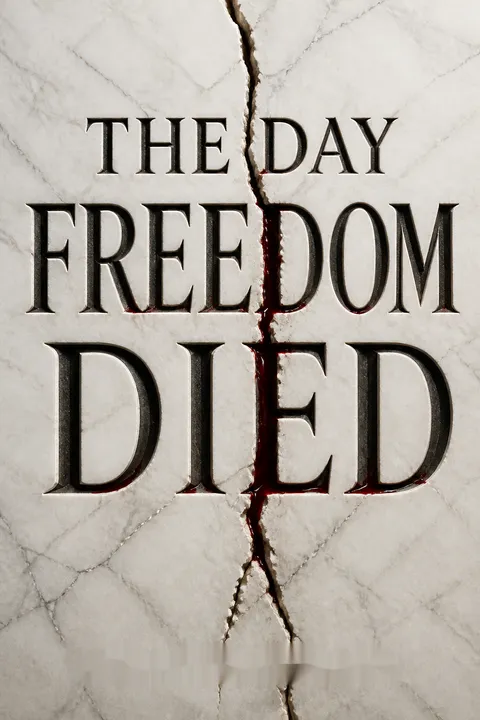
The Day Freedom Died examines the 1873 Colfax Massacre in Louisiana, where white supremacists killed over 60 African Americans, and the subsequent failed legal proceedings. Readers praise Charles Lane's extensive research and detailed account of how the Supreme Court case United States v. Cruickshank effectively ended Reconstruction. Reviews note the book requires focus due to numerous characters and legal complexity, but consider it essential reading for understanding racial violence, the failure of Reconstruction, and lasting impacts on civil rights. Many describe it as heartbreaking yet crucial for comprehending contemporary America's racial dynamics.
People Also Read
Download PDF
Download EPUB
.epub digital book format is ideal for reading ebooks on phones, tablets, and e-readers.








































