
Plot Summary
Cairo Confession, Crooked Roots
Charles Hayward and Sophia Leonides first meet in Cairo during WWII, connecting over wit and friendship beneath the dusty air of their diplomatic lives. Charles discovers, almost seamlessly, that his feelings for Sophia are love—but Sophia remains enigmatic about her family and their tangled existence in England, only offering the mysterious phrase: "We all lived together in a little crooked house." The backdrop of war and distant longing sets the emotional tone as these two promise to reunite and pursue a future together. Though their hearts are aligned, there's a shadow over Sophia's home—a house emblematic of complex bonds, unspoken histories, and a future steeped as much in uncertainty as in hope.
Sudden Death at Swinly Dean
Charles' return to England is charged with anticipation for Sophia, only to be upended by the sudden death of her grandfather, Aristide Leonides. The grand patriarch of the Leonides family, Aristide's wealth and authority held the household together—a multi-generational nest brimming with secrets and suppressed hostilities. Sophia confides to Charles that her grandfather's death is not simple—there's talk of murder, and Charles feels the distance between them widen. The ominous suggestion of foul play turns family tragedy into a mystery, as the lives and motives of everyone in Three Gables are abruptly laid bare beneath the scrutiny of both love and law.
Suspicions and Shadows Gather
Charles, drawn inextricably into the drama through his love for Sophia, meets with his father—the Assistant Commissioner of Scotland Yard. They discuss the bizarre circumstances: Aristide was poisoned, a crime easily pinned on Brenda, his much younger second wife, especially given her closeness to Laurence Brown, the family's fragile tutor. Yet, the family structure is complex—resentments run deep, and each member has as much motive as opportunity. Charles is urged to be an inside observer, hoping familiarity will tease out truth, but the web of relationships is sticky with pride, money, jealousy, and the lingering sense that, in the Crooked House, everyone is potentially crooked in their own way.
Into the Crooked House
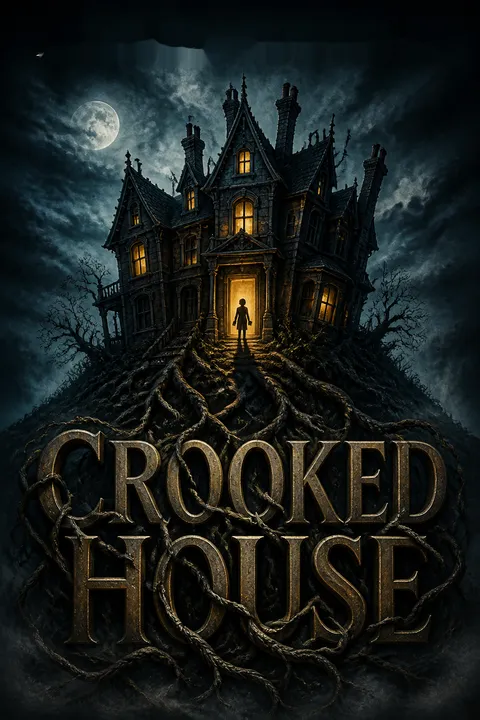
Charles enters Three Gables, immediately struck by its off-kilter, mushroomed architecture: a visual metaphor for its lopsided household. Each resident presents a façade of normalcy, yet the air is thick with suspicion, masked kindness, and forced civility. As he reacquaints with Sophia, he's told bluntly that suspicion lingers over everyone—especially Brenda and Laurence. The architecture reflects the psychological corners and shadows within. Charles begins his unofficial investigation, knowing the only way to save his future with Sophia is to unearth the truth, even if it means exposing the people she loves most.
Ruthlessness Revealed
In candid conversation, Sophia reveals her family's history of ruthlessness—each member possessing a particular, sometimes dangerous, brand of self-preservation. There is Grandfather Aristide's brutal pragmatism, Magda's emotional egotism, Clemency's ice-cold detachment, Roger's tempestuous heart, Philip's brooding silence, and even the children's eerie precocity. The atmosphere is loaded, and Charles realizes that in this world, love and hate, protection and destruction, are frighteningly intertwined. Sophia admits: the only thing she fears more than knowing is not knowing—this need for certainty is driving everyone to the edge.
The Family Within Walls
Charles meets the stern Philip, theatrical Magda, volatile Roger, and Clemency, all living together due to the disruptions of war—and held in place by the gravity of Aristide's wealth and willpower. Old alliances and grudges surface as detectives question the family. The investigation turns mundane routines—dinners, school lessons, teatime—into opportunities for observation and deflection. Each family member's psychology is laid bare: children are burdened by secrets, marriages by bitterness and unmet desires. Charles, torn between duty and empathy, begins to see through the roles people play to the emotional truths beneath.
Games, Guilt, and Guile
Inspector Taverner and Charles conduct interviews that expose the intricate games and roles the Leonides play: Magda, forever an actress, puts on a show of grief; Roger swings between guilt and defensive anger; Clemency is unflinching and practical; Philip is an unreadable mask. Brenda, isolated and anxious, becomes the house scapegoat, even as evidence remains thin. With every answer, doubt deepens—nobody's story is quite complete or convincingly sincere. Emotional alliances are as critical as alibis, and what's genuine is hard to discern. The investigation is as much psychological as procedural; truth is a moving target.
The Innocence of Brenda?
Charles finds himself drawn to Brenda's vulnerability, her loneliness and naivety in the midst of hostility. Her story of marrying Aristide for safety and affection, not greed, challenges the family's narrative. The possibility that Brenda and Laurence are lovers, plotting for freedom and fortune, seems too obvious—perhaps a convenient fiction. Even Sophia can't hide her mixed feelings about her step-grandmother; the younger generation grapples with their own biases and fears. Charles realizes the danger of simple answers—every defense turns suspect, every kindness is a potential cunning.
Josephine Plays Detective
Josephine, Aristide's precocious granddaughter, emerges as an unsettling force—playing detective, listening at doors, and taking gleeful note of everyone else's secrets. She cryptically claims to know things even the police do not, hinting at family scandals and possible motives. Her childish curiosity about violence, combined with her eerie detachment from grief, adds to the house's pervasive sense of threat. While the adults maneuver around the official investigation, Josephine's snooping seems simultaneously comic, irritating, and dangerous—a wildcard whose role in the real mystery goes unnoticed.
Letters, Lies, and Love
When love letters between Brenda and Laurence are discovered, the investigation takes a sharp turn: their affection now evidence, their denials, and nervous behaviors damning. The family's relief is visible—someone to blame, a neat solution. Charles and Inspector Taverner, however, hesitate; the crime's mechanics—substituting eyedrops for insulin, the orchestration of opportunity—seem just a little off for either lover. Meanwhile, Josephine's secret notebook goes missing, and she's nearly killed in an accident that looks more and more like a clumsy murder attempt. Someone, or something, is desperate to keep their secrets hidden.
Motives, Money, and Misjudged
As financial stakes and sibling rivalries become clearer, everyone seems to lose. The intricacies of Aristide's will and the ambiguous disappearance of documents suggest both logic and caprice, with Gaitskill the lawyer and the police growing frustrated. Roger's mismanagement of the family's business, Clemency's cold independence, Magda's theatrical distractions, and Philip's icy bitterness contribute to a morass of motives that ultimately serve mostly to muddle. The discovery that Sophia is the primary heir only complicates matters, breeding both resentment and fear. Through it all, Charles is haunted by the sense that the "obvious" solution is a trap.
A Murderer Among Us
Brenda and Laurence are arrested. Brenda's panic and Laurence's collapse look like guilt, but unease remains; the real story seems unfinished. Sophia confesses that she all along knew she was Aristide's chosen heir, deepening the ambiguity of her own motives. The house relaxes prematurely, but the shadow of Josephine lingers—her performative sleuthing hiding something graver. Then, tragedy strikes again: a new death, the family's loyal Nannie poisoned by cocoa intended for Josephine. The cycle of violence resumes, prompting new terror and soul-searching among the survivors.
Child's Logic, Dark Deed
As Nannie dies, the investigation takes on a new shape. Charles and Sophia review the psychology and possible culpability of everyone: bitter Philip, defeated Roger, obsessively loving Clemency, and Magda, whose maternal intuition borders on panic. But most disturbing is the dawning realization about Josephine: her manipulations, egotism, and inexplicable narrow escapes mark her as more than a precocious child. The "ruthlessness" Sophia once described reappears, now terrifyingly embodied in the smallest and most overlooked household member. Edith de Haviland's actions—protective, secretive—hint at a desperate plan to end the pattern of suffering.
The Second Attempt
In a last act of horror and care, Edith de Haviland takes Josephine for a drive, leaving behind confessional letters. When their bodies are discovered at the bottom of a quarry, her suicide note takes responsibility for the family deaths, exonerating Brenda and Laurence. But the truth comes in Josephine's own notebook, left for Charles and Sophia: "Today I killed grandfather." The confession reveals the chilling reality that a child's ego and resentment catalyzed the tragedy. Edith's suicide was a final, terrible act—removing Josephine from a world she could only harm, and shielding others from the consequences of her cruelty.
Letters of the Crooked Will
The late emergence of Aristide's true will—leaving everything to Sophia—shatters family bonds, exposing old resentments and rivalries. Sophia inherits a legacy not only of wealth, but of burden and isolation; the family's gratitude rapidly shifts to suspicion and jealousy. The cycle of generational expectation and disappointment mirrors the crookedness of the house itself—no straight lines, only tangled loyalties and self-interests. Charles stands by Sophia, but the pair understands that the true inheritance is a house haunted by trauma and unacknowledged truths.
Breakthrough, But Not Closure
Despite the evidence against Brenda and Laurence, both the authorities and Charles remain uneasy—there is space between legal guilt and moral certainty. As cracks appear in the "solved" case, it's clear the house remains crooked as ever. The eventual revelation—that Josephine was the murderer—comes not from procedure, but from her own vanity, her craving for attention, and her inability to see others as real. Edith's intervention is both a mercy and a tragedy, ending the cycle by a desperate act of love and self-sacrifice.
The Final Act Unfolds
In the aftermath, Charles and Sophia reflect on the meaning of family and the dangers of unchecked pride, neglect, and emotional blindness. The lesson of the crooked house is less about crime than about the spaces where love, resentment, and denial coexist. The survivors, especially Sophia and Charles, must look beyond the sorrow and horror to imagine a future—one that values truth above comfort, and that, despite the family's failings, chooses compassion over cruelty. In the end, understanding is incomplete, and yet, healing is possible.
Ruthless Love, Ruthless Endings
Sophia and Charles, faced with the family's devastation, commit themselves to each other, vowing not to recreate the cycles of secrecy and emotional neglect that have marred the Leonides. The question of nature versus nurture, the seductive power of secrecy, and the limits of rationality all linger. But love, tested by horror, holds—a crooked gift, perhaps, but one worth cherishing. The Crooked House stands, as it always has, as a testament not just to the mysteries of murder, but to those within the human heart.
Analysis
Agatha Christie's Crooked House is as much a sharp psychological study as a classic murder mystery. The "crookedness" of the house and its inhabitants is no mere gimmick; it's a profound meditation on the secrets and suppressed hostilities that poison familial love. Christie's greatest subversion is making the murderer a child—symbolizing both the ultimate honesty and the ultimate tragedy of a family's failures. Josephine's crime is not an aberration, but the culmination of years of neglect, emotional coldness, and dangerous pride. Through Charles, the reader is challenged to consider both the nature of evil and the limitations of rational investigation—how prejudice, self-protection, and wishful thinking blind even the most careful observer. At its core, the novel warns against generational arrogance, the perils of placing appearance over empathy, and the consequences of denying uncomfortable truths. In modern terms, it is a warning: violence festers where love is conditional, where communication fails, and where psychological wounds are left to grow unchecked. In the end, catharsis comes at immense cost, yet points the way toward healing and honesty—a lesson as relevant today as in Christie's time.
Review Summary
Crooked House is widely praised as one of Agatha Christie's finest standalone novels, celebrated for its shocking, unexpected ending that left many readers stunned. Reviewers appreciate the richly drawn, eccentric Leonides family, where every member is a convincing suspect. The absence of Poirot or Miss Marple is rarely missed, as the tight plot and atmospheric tension more than compensate. Christie's clever red herrings consistently outwit readers. A minority found it slow or underwhelming, but the bold, daring conclusion earns near-universal admiration, with Christie herself reportedly considering it among her personal favorites.
Characters
Charles Hayward
As both narrator and protagonist, Charles straddles the line between insider and outsider. His love for Sophia initially brings him to the Crooked House, but his role quickly shifts to sleuth—at the urging of his Scotland Yard father. Charles is analytical, but also deeply empathetic; he is sensitive to the emotional nuances of each family member, often doubting himself and the conclusions the evidence demands. His journey is one of both external investigation and inner growth: from optimism and romantic simplicity to a sobering, painful awareness of the complexities of love, loyalty, and inherited trauma.
Sophia Leonides
Sophia is Charles' beloved, Aristide's favorite granddaughter, and ultimately, the reluctant inheritor of both the Leonides fortune and its burdens. Intelligent, fiercely independent, and emotionally complicated, Sophia's loyalty is both her strength and her flaw. Psychoanalytically, she is torn between devotion and the desperate need for truth, refusing to marry Charles unless the shadow of suspicion is lifted. Her psychological arc is shaped by fear, pride, and an almost obsessive commitment to certainty, even if it means facing the worst about those she loves.
Aristide Leonides
The murder victim in life—and influence after death—Aristide is a self-made man whose magnetism and ruthlessness shape his descendants. A survivor and manipulator, his crookedness is not outright criminality, but an inclination for getting around rules—emotional, legal, or social. He is a loving, if controlling, patriarch, but his legacy is ambiguous: dependence, rivalry, and the seeds of tragedy sown by his own eccentric decisions, including the secret will and the psychological hold he maintains over his family.
Brenda Leonides
Brenda, the much younger second wife, becomes the favored suspect due to her age, outsider status, and ambiguous relationship with Laurence Brown. Superficially gentle and somewhat naive, Brenda's affected innocence harbors genuine vulnerability. The family's relentless distrust and her own lack of self-assuredness leave her emotionally alone, susceptible to dangerous liaisons and tragic missteps. Brenda is less a schemer than a survivor—her psychology marked by defensiveness, longing for acceptance, and the ultimately fatal error of trusting the wrong people.
Laurence Brown
Laurence exemplifies the "conscientious objector"—sensitive, neurotic, teetering on the brink of breakdown. He is despised and patronized by the family, drawn to Brenda's neediness, and almost destroyed by the web of suspicion. His psychological frailty and aversion to violence ironically place him at the center of a murder case. Laurence is wired for guilt—haunted by the suspicion that merely desiring something might bring about evil. His eventual arrest is less about evidence than about collective projection.
Miss Edith de Haviland
Edith is the stern, principled sister-in-law of Aristide's first wife, living on out of duty and affection for the children. Fierce and self-sacrificing, she esteems "duty" above comfort and is often the only adult to challenge the family's blind spots. Her psychology is marked by strong will, honest introspection, and ultimately, profound love—leading to her self-chosen death, as she saves Josephine from consequences the child cannot comprehend. Edith's ambiguous moral act—killing to protect—haunts the family and reframes the narrative's closure.
Roger Leonides
Eldest son of Aristide, Roger is friendly but inept—trusted with the family business, he drives it to ruin. His devotion to his father borders on dependency; his marriage to Clemency is his only emotional salvation. Roger swings between guilt and relief, never quite able to take control of his life or legacy. His psychology is dominated by insecurity, desperation for approval, and, eventually, gratitude for escape from responsibility.
Clemency Leonides
Clemency, Roger's wife, is a research scientist and the antithesis of the emotional Leonides brood—cold, analytical, and fiercely independent. Her love for Roger is possessive but genuine; she loathes luxury and craves a simpler life, even if it means poverty. Clemency's psychological drama is one of control: her refusal to bail Roger out reflects her own deep values, even as she fights for their escape from the family's unhealthy gravity. Her brand of ruthlessness is self-sacrificial but uncompromising, a modern update of ancient loyalty.
Magda Leonides
Magda, Sophia's actress mother, turns every event into high drama. Endlessly theatrical, she manipulates her family and her own feelings, using performance as a defense against reality's pain. Her moods and outbursts mask an emotional emptiness; though not malevolent, she neither restrains nor recognizes her daughter Josephine's dangerous temperament. Magda's psychology is driven by the need for attention and affirmation, which often disrupts rather than bonds the family.
Josephine Leonides
Josephine is at the psychological core of the novel's darkest questions about nature, nurture, and evil. She is hyper-intelligent, egotistical, and obsessed with both detective stories and the power of holding secrets. Lacking empathy, Josephine's "games" are lethal—she poisons her grandfather and later attempts to kill herself for the thrill of being at the story's center once again. Her childish logic fuses with the house's "crookedness"; unchecked vanity becomes pathological, and her notebook confessions reveal both the tragedy and terror of her character. In the end, she is a victim of the family's psychological legacy as much as a perpetrator.
Plot Devices
The Crooked House and Crookedness
The house—distorted cottage, "crooked" in architecture and spirit—embodies the Leonides family itself: appearances of English domesticity masking deep dysfunction, secrets, and warped emotional bonds. Christie uses the house's physical oddities as a recurring motif, paralleling the crookedness in relationships, motives, and ultimately, the crimes themselves.
Unreliable Perspectives and Psychological Depth
By placing Charles both inside and outside the family, Christie creates constant uncertainty. Information is filtered through affect, bias, and misunderstanding. The reader is encouraged to judge everyone, then judge again. The family's psychological profiles (ruthlessness, narcissism, emotional neglect) serve both as red herrings and real clues, as psychological motives become as important as material ones.
Children as Unseen Dangers
Josephine is a masterstroke: her incessant detective play and braggadocio mask the true threat. Her notebook, her joy in being "important," and her obliviousness to the harm she causes are repeatedly signposted by both plot and dialogue. This device inverts expectations, as the ultimate crime emerges from the least suspect—but, in retrospect, the most "crooked"—member.
The False Solution and Its Undoing
The arrest of Brenda and Laurence, spurred by love letters and social prejudice, provides a classic "false closure" device. The reader is lulled into relief only for violence to recur—an elderly, trusted servant poisoned in mimicry of the original crime. The unraveling of this closure makes the real solution resonate with greater horror and sadness.
Ruthlessness as Thematic Motif
"Ruthlessness" is a constant subject of discussion and introspection—each family member's personality (coldness, pride, egoism, devotion) is scrutinized for its potential to breed violence. The revelation that such traits converge most powerfully in a child emphasizes the dangers of unchecked psychological inheritance and the limits of nurture. This motif operates both in individual characterization and as foreshadowing.
Foreshadowing Through Domestic Detail
The Crooked House's mundane rituals—meals, school lessons, gardening—both conceal and reveal: the murderer acts within routines, not in dramatic departures from them. Child's play, cocoa, and bedrooms become sites of deadly drama, forcing the reader to question how easily violence hides within the veneer of normal life.
About the Author
Other books by Agatha Christie





Download PDF
Download EPUB
.epub digital book format is ideal for reading ebooks on phones, tablets, and e-readers.








































