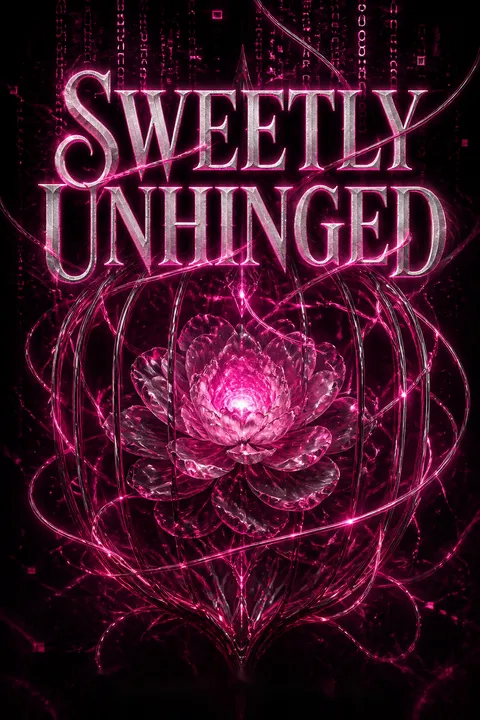

Plot Summary
Tension in the Office Air
Violet Carter's world is a precarious climb through the male-dominated, cutthroat field of politics. Eager for a future in political analysis, she's secured a prized internship with Isaac Stengal, a charismatic but predatory campaigner. Her daily life is a tightrope—juggling ambitious academic goals, fragile job security, and the chilling presence of her boundary-crossing boss, Isaac. His intimidating advances force Violet into defensive performances: politeness for survival, sharp retorts for dignity. These encounters sap her confidence but harden her resolve. In the suffocating office, Isaac's charm hides the abuse of power, the threat always present yet shrouded. Despite this, Violet commits herself to the work and dreams of making her mark—if she can navigate the labyrinth of danger and survive the office's toxic undercurrents.
Hacker in the Shadows
Beyond the glare of New York's corporate towers, Cade Maddox thrives in his digital den as a world-class hacker, infamous online as "The Ghost." By day, he's an IT consultant; by night, he unearths the vilest secrets, exposing criminals while moonlighting for dangerous syndicates. Though he projects an aura of unshakable control, Cade's world is ruled by obsessions—his need for power, surveillance, and forbidden connection. Cade's moral ambiguity intensifies as his brother Jack—a perennial slacker—squats in his apartment, oblivious to the extent of Cade's double life. A thin line separates justice from criminality as Cade's covert acts bring retribution to the corrupt. Yet emotionally, he remains a ghost, untouched, until a certain Violet Carter enters his orbit, challenging his carefully maintained boundaries.
Crack in the Facade
As Violet fends off another uncomfortable encounter with Isaac, her self-assurance begins to erode. Isaac's coercion escalates into thinly veiled threats, and the absence of concrete support leaves Violet more isolated than ever. Social niceties mask her anxiety; only her best friend Lia urges her to take a stand, though Violet feels trapped by financial need and fear of professional ruin. With each unwanted advance and dismissive retort, cracks split open Violet's initial expectations of her internship. She is confronted by the harsh reality that survival depends on self-reliance, calculated risk, and sometimes, strategic silence. As she weighs her options between exposure and endurance, trust in the system collapses—leaving her more vulnerable and determined.
Lines Crossed, Lines Drawn
Violet retreats to recuperate with Lia and navigates the emotional wasteland of her relationship with Jack. Jack is inattentive, absorbed in his own world of video games and distractions, offering little comfort or protection. Cade emerges as a silent observer—and more. He listens, offers frontline advice, and quietly takes note of every injustice done to Violet. Loyalty to family, respect for boundaries, and inexplicable attraction tangle together. As secrets multiply and frustrations peak, the siblings' rivalry for Violet's attention draws invisible battle lines in the apartment. Old loyalties waver as new connections tease the possibility of real partnership, while the threat of crossing lines—emotionally and physically—grows ever more ominous.
Crushes, Confessions, and Creeps
The confines of Cade's apartment sharpen the triangle among Violet, Jack, and Cade. Violet, increasingly disillusioned by Jack's obliviousness and lack of support, finds herself invigorated by Cade's integrity and attentiveness—even as it feels forbidden. Cade, hiding behind glasses and humor, quietly defends Violet against Jack's ignorance and Isaac's predation, while Violet's inner world churns with unspeakable desires. She is drawn to The Ghost's justice, mythologizing his digital Robin Hood exploits and secretly fantasizing about the man behind the moniker. In a fevered late-night haze, boundaries slip further: dark confessions are made in anonymous emails, and Violet's craving for control and surrender is exposed to the one man capable of answering them.
Dangerous Desires Ignite
Violet's foray into the corners of online kink, under the name "Peony," unleashes her forbidden fantasies—submission, stalking, non-consent—into the void. She is stunned when The Ghost (Cade, unseen) replies, indulging her with cryptic lines that blur fantasy and reality. Their digital cat-and-mouse game, risky and electrifying, evolves into calculated surveillance and orchestrated dominance. Meanwhile, Cade's hacker instincts and obsession collide: he invades and protects, cloaking Violet's life in a network of hidden cameras and clandestine interventions. As the boundaries between watcher and watched vanish, Violet's trust in anonymous connection is tested, and the seeds of real jeopardy and real pleasure germinate in both their lives.
Digital Guardian Angel
Using subtle sabotage, exposé, and digital manipulation, Cade uses his hacking prowess to upend the power dynamics threatening Violet. He orchestrates public humiliation campaigns against Isaac, disrupts Violet's stalkers, and ties up digital loose ends with masterful precision. While Violet navigates the fallout and workplace emergencies caused by The Ghost's hacks, she becomes increasingly aware of a silent protector working in her favor. The city's political landscape shifts as secrets are spilled and predators unmasked. But every act of digital justice draws Cade deeper emotionally—no longer just a ghost, he is becoming Violet's unseen ally, confidant, and something more intimate and terrifying.
Unraveling Sage, Unraveling Self
As Violet comes to terms with her break-up and workplace scandal, her attraction to Cade intensifies, laced now with suspicion and longing. Digital flirtation becomes physical as Violet's anxieties and pleasures entwine—the sense of being watched, manipulated, and cherished fuses panic with need. Cade, discovering Violet's most private yearnings in her browser history and email, is rocked by both arousal and guilt. Longing to be Violet's master as The Ghost and her partner as Cade, he is caught in a hall of mirrors: double lives, split personalities, blurred ethics. Both struggle to keep secret selves hidden while craving release, even if it risks everything they value.
Control, Power, and Consent
The relationship escalates into explicit, consensual power play—submission, domination, and surveillance are taken into the physical realm. Public spaces become sites of secret transgression; toys and cameras are wielded to orchestrate exquisite tension and public embarrassment. Scene after scene is set with The Ghost manipulating Violet's body and mind, pitting desire against discretion, pleasure against shame. But beneath the games lies the truth that the real thrill is trust—real surrender, real respect for boundaries, and the exhilaration of knowing someone sees all of you and wants it anyway. However, with each escalation, the risks grow graver, and the line between consensual danger and real peril trembles.
Cyber Confessions and Secrets
Personal and digital secrets collide catastrophically as Cade's interventions unravel Isaac's career, triggering his disgrace and eventual arrest for sexual predation. But Cade's intricate web of deception catches up with him when Violet discovers his double identity—lover and hacker, protector and spy. The revelation stuns her, rupturing trust and kindling her fury. Meanwhile, Cade's enemies multiply: criminal syndicates, jealous rivals, and the vengeful shadows of the men he has exposed. Violet grapples with the ethics of justice done outside the law, her own culpability, and the terror of loving a man who is both savior and deceiver.
Lines Blur, Ties Bind
As Isaac's and Cade's criminal entanglements ensnare both Violet and Cade, reality turns deadly. When rivals kidnap both of them, the most harrowing boundaries are crossed: physical violence replaces fantasy, abduction becomes all too real. Locked in a cell, Violet is haunted by guilt, shame, and the terrifying knowledge that there may be no rescue, no safe word this time. Cade, battered and desperate, faces brutal retribution for his hacker justice and is coerced into one final, perilous job to save Violet's life. The true costs of living "sweetly unhinged" come due, with no guarantee of escape or absolution.
The Fallout of Fantasies
Captive and separated, Violet and Cade play out the ultimate non-consent scenario where power—and all illusions of control—are lost. Violet's psychological strength is tested in a cell meant to break her, finding unexpected kinship in another captive, and promise to fight for both their freedoms. Cade, physically shattered, faces the reality that his brilliant digital games have turned deadly, and that his love for Violet is both her best chance and greatest risk. Trust, the very currency of their kink and connection, is all that's left to gamble with violent, real-world consequences closing in.
Threats Real and Imagined
Every mask is stripped away: Cade's alter ego is unmasked, their enemies hold every card, and the risk is no longer staged but existential. Cade's willingness to give his life and career for Violet is the final, irreversible proof of his love and guilt. Violet confronts the depth of her longing—not just for pleasure but for acceptance of all her complexities. They are forced to admit the danger was never just in their fantasies; loving unguardedly is the truest, riskiest submission. Freedom, if it comes, will cost everything.
Inside the Predator's Lair
Locked in the oppressor's den, Violet and Cade are forced to reckon with the monstrosity of their enemies and the limits of their own monstrousness. Cade, battered and forced into submission, learns exactly how far he is willing to go for redemption. Violet, refused comfort or rescue, discovers resilience in the company of a shattering despair. What once was a game—voyeurism, surveillance, obedience—becomes a fight for dignity and self. Shadowed by literal and figurative darkness, both must decide what survival—and love—really means when the ghosts are real and the world unmasked.
Fighting for Survival
Their fight culminates in violence, desperate plans, and alliances bent by necessity. Physical survival and psychological scars intertwine. Each action has irreversible consequences; freedom's cost is steep. The world will never again be safe or innocent—except in the moments they find each other, battered but alive. Reckoning with their choices, Violet and Cade lay bare all sides of themselves and each other, forging a bond built not on illusions, but on scars, confessions, and the ongoing willingness to walk the razor's edge—together.
Truths Exposed, Masks Off
After crisis and rescue, Cade faces Violet's fury for his deceptions. Trust, more than pleasure, becomes the prize—and the challenge. Through pain, confrontation, and confession, the absolutes of the past—good-guy, villain, victim, savior—are abandoned. Healing requires not more control, but surrender: of pride, of shame, of masks. Despite everything, their desire is ultimately grounded in consent and honesty, a passionate acceptance of imperfection. They forge a new dynamic—romantic, erotic, and boldly truthful.
Forgiveness at Knifepoint
Forgiveness is neither simple nor immediate. Guilt, anger, and desire churn as Violet and Cade test the boundaries of forgiveness, pushing one another into new erotic and emotional frontiers. They negotiate new rules and invent new rituals for safety, healing, and mutual pleasure. Apologies and explanations are demanded, while acceptance—or at least the honest longing for it—forms the foundation for their future. The violence that once threatened to destroy them is sublimated into transformative passion, unapologetically "sweetly unhinged."
A Chain of Protection
Though threats remain on the horizon and the world remains profoundly dangerous, Violet and Cade choose one another—imperfect, haunted, and radically honest. Their protection of each other becomes a chain, not a cage—binding not through fear or control, but consent, desire, and a shared resolve to live bravely. Their story is unfinished, but they face whatever comes with eyes open, with trust forged in fire, and kink rekindled as both shield and celebration.
Analysis
"Sweetly Unhinged" is a feverish, razor-edged exploration of power, shame, obsession, and the longing to be seen—even at one's most monstrous or vulnerable. In its collision of political thriller and kinky romance, the novel uses its characters' dark desires and dangerous environments to interrogate the true meaning of consent, justice, and connection. Through alternating perspectives, "Sweetly Unhinged" destabilizes reader sympathies—inviting us to empathize with both victim and vigilante, sometimes in the same person. The narrative blurs the moral boundaries between protector and predator, lover and liar, arguing that self-knowledge and healing often require rupturing old illusions and embracing the whole self—shadow and light, pleasure and pain. For contemporary readers, the novel's most urgent lesson is the insistence that safety and trust can only be forged through radical honesty, mutual respect, and the courage to risk both pleasure and pain. By refusing easy redemption, the book insists that forgiveness must be earned, and that true freedom—sexual, emotional, existential—demands an ongoing willingness to walk unguarded into the unknown, hand-in-hand with those who see and want all of us.
People Also Read



Characters
Violet Carter
Violet is a young, fiercely intelligent, and ambitious woman determined to break into the world of political analysis. Her calm exterior hides deep wounds: family loss, financial struggle, and sexual trauma inflicted by entitled men in power. She relies on her mind but is haunted by her inability to control her body's responses to submission and danger. Violet's journey is a collision of ambition and vulnerability—her drive to be recognized and respected in a corrupt world repeatedly endangered by predatory authority figures. Psychologically, she is torn: craving safety and control yet seeking catharsis through risk, surrender, and dark fantasies. Her relationships—especially with Jack, Lia, and Cade—push her to grown painful self-realization, as she learns that true power sometimes lies in choosing who she lets see, touch, and love her most unguarded self.
Cade Maddox / The Ghost
Cade exists on multiple planes: reserved big brother, digital vigilante, protector, and predator. His life is partitioned into public respectability and secret power. Cade's prowess as a hacker ("The Ghost") is both salvation and curse: it gives him control in a chaotic world but breeds isolation and obsession. His psyche is defined by deep shame about his desires, guilt over Jack's failures, and overwhelming need to both watch and be seen by Violet. Both protector and manipulator, Cade's love language is surveillance and control. He embodies ethical ambiguity—using illegal skills for justice, indulging in kink, and crossing boundaries with the best intentions. His arc is one of increasing self-awareness and vulnerability—he risks everything to win Violet's trust, discovering that real power is found in honest surrender and the capacity to heal.
Isaac Stengal
Isaac is the archetype of a charming, dangerous narcissist. Outwardly magnetic and successful, he manipulates systems and people alike for personal gratification. A master at leveraging power dynamics, he grooms subordinates across professional and sexual lines. Isaac is symbolic of institutional rot—the predator protected by bureaucracy and privilege. Psychologically, he is damaged and entitled, capable of shocking cruelty but skilled at feigning remorse. His downfall, orchestrated by Cade and The Ghost, is an act of both personal and systemic justice. Isaac's legacy lingers as trauma for Violet and as a warning about the darkness that attends unchecked power.
Jack Maddox
Jack serves as a pointed contrast to Cade. Lazy, inattentive, codependent, and self-pitying, he's more adolescent than adult. His inability to support Violet emotionally or protect her when threatened highlights the stakes for both Cade and Violet. Psychologically, Jack is a portrait in arrested development, crippled by guilt and envy toward his brother, and incapable of self-rescue or meaningful growth without the harshest consequences. Ultimately, he's less villain than warning—love and attraction, without adult responsibility, are fragile and doomed.
Lia
Lia injects levity, honesty, and unconditional support into Violet's life. Outspoken and often irreverent, she is Violet's moral counterweight, always pushing her to assert boundaries and recognize her worth. Lia serves both as comic foil and emotional anchor, representing female solidarity and the everyday bravery that often goes unnoticed. Psychologically, she is both more grounded and more conventional, and her skepticism about Violet's obsession with The Ghost serves as necessary reality check.
Enzo
Enzo is Cade's partner in crime—literally and metaphorically. He's irrepressible, risk-loving, and more comfortable with moral ambiguity than even Cade. His friendship grants Cade the freedom and skills to pursue justice (and pleasure), but he's also the narrative's barometer for how far is too far. Enzo's humor masks a painful past, and his darker inclinations force Cade toward introspection and, eventually, lines even he will not cross.
Miriam
Miriam, the unflappable secretary, is a stabilizing presence in the maelstrom of political upheaval. Her pragmatic wisdom and subtle mentorship sustain Violet in moments of despair, modeling the reality that survival in a corrupt system takes not just bravery, but cunning, solidarity, and sometimes silent rebellion.
Jean
A captive with Violet in the kidnappers' lair, Jean is the embodiment of what happens when institutions and individuals fail their most vulnerable. Her broken spirit is a stark warning to Violet: without luck, love, or resistance, the world can grind anyone into despair. Her presence clarifies Violet's resolve to fight for herself—and others—at any cost.
Ivan Andronski
Ivan is sophistication with a backbone of violence; his world is built on intricate alliances and ruthless pragmatism. He represents the danger of corrupted power—father, criminal, and kingpin—demanding loyalty and extracting payment in blood. His confrontation with Cade is the ultimate crossing-of-paths between old and new orders of control, justice, and family.
The City (New York)
While not a character in the conventional sense, the book's urban setting acts as a crucible—amplifying danger, isolating the vulnerable, rewarding cunning, and occasionally providing shelter for the strange and the brave. In its constant pulse, the city both mirrors and tests every character's boundaries.
Plot Devices
Dual Narration & Unreliable Perspective
The shifting perspectives allow readers to dip into Violet's vulnerabilities and Cade's moral currents, amplifying dramatic irony as both characters withhold truths from each other—and themselves. The alternating chapters also foster empathy while building suspense, as readers see how miscommunication and hidden motives shape tragedy and intimacy.
The Mask: Anonymity, Voyeurism, and the Double Life
Anonymity is both protection and prison for Cade and Violet. Their digital masked ball enables confessions, desire, and danger, pushing both to their limits. Voyeurism—through literal surveillance (cameras), digital stalking, and kink—drives both the erotic and narrative tension. The eventual collapse of anonymity's mask destabilizes and, paradoxically, enables healing and new honesty.
Foil Characters & Triangles
The novel's central triangle (Violet-Jack-Cade) and secondary triangles (Violet-Isaac-Cade; Cade-Enzo-Jack) allow for contrasting values and drives: responsibility vs. avoidance; power vs. helplessness; affection vs. exploitation. As each character's loyalty shifts, the pressure forces confessions and decision points central to the plot.
Power Play and the Contract of Consent
The book interrogates the nature of consent—not just in sex but in all human exchanges of power. Explicit contracts (safe words, boundaries) contrast with real-world predation (Isaac, abduction), forcing characters to grapple with trust, surrender, and the ethical weight of fantasy versus lived risk.
Justice Outside the Law—Hacker as Vigilante
Cade's hacks serve both as catharsis and polemic—the triumph of justice when institutions fail. The hacking sequences are more than plot mechanics; they grapple with the ethics of who gets to expose, who gets protected, and who profits from the shadows.
The City as Maze and Tribunal
Urban chaos is more than backdrop—it is the arena where every secret and desire is amplified, and where there is no guaranteed rescue. The relentless pace and compressed geography enable both surveillance and isolation, creating a crucible for forging (or shattering) character bonds.
Escalating Stakes & No Easy Outs
In the world of "Sweetly Unhinged," there are no saviors from above, and no convenient endings. Each attempt at escape, forgiveness, or justice spawns new dangers, requiring fresh ingenuity and risk. The story's incomplete resolution promises that survival—and healing—are not destinations, but ongoing acts of courage.

Download PDF
Download EPUB
.epub digital book format is ideal for reading ebooks on phones, tablets, and e-readers.








































