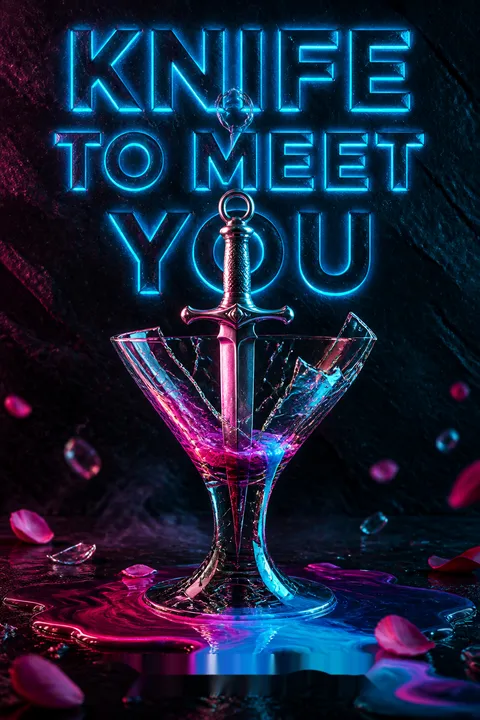

Plot Summary
The Hunt Begins
—Jiya, a pink-haired bartender who moonlights as an avenger, and Calloway Frost, the enigmatic and artistic killer dubbed The Gallery Killer. When Jiya sets her sights on Frost as her next target, a deadly and seductive game of cat and mouse begins in Boston's shadowy corners. Every glance and conversation at the bar is laced with double meaning. Their mutual awareness as predators creates a pulse of unavoidable attraction, an edge-of-danger thrill. Jiya watches, plans, and prepares, peeling back layers of lies as she follows Calloway outside her comfort zone. As the tension builds, the thrill of the hunt collides with forbidden desire, setting the tone for their darkly comedic and sensual journey into each other's secrets.
An Artist's Dark Secret
—Calloway meticulously arranges the aftermath of his kills as masterpieces, expressing both rage and longing for justice through grotesque homages to canon artists. His kills are directed at monsters who escaped the law—abusers, predators, and hidden criminals—each death transformed into a message: the predator unmasked and unmade. Yet behind each composition, Calloway's artistic ritual hides deep wounds from childhood abuse and isolation. He craves connection but is lost in shame and secrecy. His best friend, Xander, knows Calloway's darkness but urges him to stay hidden, fearing his artistic signature will be his downfall. The Gallery Killer's legend grows, but so does the risk—to his freedom, and his soul.
Attempted Murder, Meet Cute
—Fate throws Jiya and Calloway together when an armed robbery erupts at her bar. Calloway's lethal instinct kicks in, disarming the gunman with brutal grace. In the aftermath, Jiya, shaken but exhilarated—deeply, disturbingly aroused—watches the killer who was her intended prey now turned protector. The chemistry is undeniable, their connection fueled as much by shared trauma as by adrenaline. Jiya's resolve to kill him wavers in the face of his attraction, but neither can ignore the unmistakable realization: the other truly sees them—down to the monster within.
Poisons, Passions, Failures
—Jiya, determined to eliminate Calloway, shadows him to a posh café. She slips monkshood into his coffee, but fate intervenes with a clumsy stranger and a spilled drink. Frustrated, she breaks into Calloway's studio, searching for evidence. Instead she finds flawless photography, methodical neatness, and personal artifacts that complicate her certainty about his "evil". Their erotic tension peaks unexpectedly when Jiya witnesses Calloway's private vulnerabilities and rituals, blurring the battlefield between hunter and hunted. The line between violence and desire wavers dangerously.
Bathroom Confessions
—At a glamorous gala, Jiya's plot to drug and seduce Calloway backfires when she consumes the aphrodisiac herself. Overcome with overwhelming lust and need, she becomes vulnerable to another predator. Calloway intervenes, rescuing her from assault, and realizes the depth of his own feelings as he cares for her fragile, flailing state. For once, the hard edges around both their hearts soften, and secrets are confessed, if only in fevered fragments. In the aftermath, a line is crossed—they can no longer see each other as just threats.
Sabotage and Subtlety
—Jiya and Calloway spiral into mutual obsession and sabotage, trying to kill each other in increasingly elaborate ways. Jiya plots to drop a chandelier on Calloway at a gallery, but the trap kills the wrong man. Both are forced to confront the consequences of collateral damage. Meanwhile, Calloway's secret society—The Hemlock Society—warns him that his signature kills have attracted too much attention. He's ordered to lay low, but obsession with Jiya and fear for his own life make withdrawal impossible. Each new attempt on one another's lives deepens their entanglement—professionally and emotionally.
Predators as Prey
—A failed assassination at a lake house puts Jiya in real danger against a sexual predator. Calloway, tracking her, intervenes as their respective poisons begin to work, but their target proves harder to kill than expected. The kill, usually sanitized and symbolic, becomes shockingly intimate—a battle for survival, not just justice. In adrenaline-soaked aftermath, their union is violent and passionate. Bodies, blood, and desire twist together as Calloway and Jiya finally submit to the hunger and horror that connect them.
Drowning in Rain
—Forced to hide from the police, share clothes, and huddle through a Boston rainstorm, Jiya and Calloway are stripped of their facades. Wet, cold, half-naked in a laundromat, they drop pretense and share real laughter, awkwardness, and stories. Their chemistry deepens, moving beyond predator and prey to something more human. For the first time, both wonder: if not for the blood between them, could this be love?
Forced Proximity, Magnetic Pull
—Thrown together by circumstance and mutual enemies, Jiya and Calloway repeatedly fail to kill each other—not because of lack of opportunity, but because of shifting desire. Their banter turns from weapons to honesty. They exchange gifts, share inside jokes, and become each other's best mark and best secret. Yet, both remain haunted—their past traumas and trust issues war with their growing need for each other. The question looms: is intimacy possible between people built for violence?
Shotguns and Seductions
—Jiya, unable to follow through on a long-distance rifle shot, realizes her method of killing is as intimate as her budding relationship. Calloway senses someone is hunting him, setting off a defensive chain reaction within The Hemlock Society. Forced to consult his brothers-in-arms, Calloway realizes what he and Jiya have is not just a job or a hunt—it's a threat and a hope: she could expose them all, but she might also save him from himself.
Rooftop, Crosshairs, and Pigeons
—Every attempt at precision is upended as pigeons interfere with Jiya's rooftop sniper shot. Fate, chaos, and incompetence from the universe and herself throw Jiya's assassin identity into crisis. Afterward, forced into each other's orbit again, both must ask whether their inability to kill each other is a sign of weakness, or the start of something new. Their failures at violence become a weird, savage form of flirting that strips away old definitions of control and power.
The Society Beneath Boston
—Calloway, under suspicion and threat, brings Jiya into his secret world: a society of vigilante murderers who police their own ethics and identity, and rule Boston's underworld behind a club's innocuous doors. Thorne, the enigmatic leader, sizes up Jiya as both a risk and an asset. Membership offers protection, resources, and meaning, but only if both accept new rules: mutual trust, radical honesty, and the dangerous intimacy of working (and killing) together. The monster in each finds a family more accepting than the world above.
Shadows in the Gutter
—As law enforcement closes in and betrayals mount, Calloway and Jiya are forced to choose between freedom and each other, between secrecy and vulnerability. Evidence mounts, deepfakes and alibis blur, and Jiya, finally cornered, is arrested for a murder she committed. The Hemlock Society must act, balancing the need for justice with a new, unfamiliar urge: to protect the killer they now call their own. Calloway, finally admitting the depth of his feelings, makes his move—and learns to trust Jiya not just with his crimes, but with his heart.
The Worst Date Ever
—Sex, fear, and jokes in police custody—Jiya's worst night becomes a twisted proof of what's real between her and Calloway. Their shared vulnerability is more frightening than violence. They see each other's wounds, and voice what they might need—a partner, not just an accomplice. Confession, loyalty, and a plan to escape: the beginning of a real romance, forged in the crucible of mortal risk.
Traps, Truce, and Truths
—Relationships become negotiations. Jiya and Calloway finally admit to love, tentatively, messily, amid chaos. Both confess what violence has cost them—and what connection might restore. But nothing is easy: trust must be earned with more than words. Partners in crime become partners in survival. Vulnerability, once a weapon, is now the only way to win.
Predators Down by the Lake
—Calloway and Jiya unite to kill a particularly egregious predator at a remote lakehouse. Their teamwork and mutual recognition turn the act of murder into a new form of intimacy—charged, dark, and oddly healing. Fighting, cleaning, disposing, and loving—they discover the macabre joy of being themselves with the only person who could ever hope to understand. After a close call with death and police, camaraderie with their Society brothers becomes a lifeline.
Double Poison, Double Trouble
—In a comic ballet of overkill and chaos, both Jiya and Calloway realize they've dosed their target. Survival and disposal become more dangerous than the kill itself. As they flounder through beaver-guarded graveyards and accidental evidence-destruction attempts, their criminal competence is tested. The farce binds them—because nothing proves love like teamwork in burying a body.
Kill or Be Killed
—In the midst of their most disastrous kill, both are forced to rely on each other and the Society. When things come to a bloody head, their relationship is both origin story and catharsis—a declaration that in a world of monsters, only another monster truly understands. For Calloway and Jiya, love is not trust; it's a willingness to share the knife.
Blood as Intimacy
—For Jiya and Calloway, sex is inseparable from the violence that defines them. Blood, pain, pleasure, ruin, and reverence—they abandon all barriers, breaking each other open and piecing each other back together. Marks and wounds are tokens of devotion; mutual "ruin" is the greatest intimacy possible. Their bodies become sanctuaries for each other's sense of safety, acceptance, and even healing.
Beavers and Burial Fails
—Trying and failing to bury a corpse becomes hilarious when nature turns against them—in the form of territorial beavers. Blood, mud, tears, and laughter bond Calloway and Jiya awkwardly but authentically. They learn to become domestic in the weirdest ways: showering away evidence, caring for bruises, and sharing in the aftermath. Their relationship solidifies not just through passion or violence, but through shared absurdity.
Thorne's Rules Reveal
—The Hemlock Society reveals its truth: survival depends on mutual secrecy, trust, and adherence to Thorne's rules. There is no turning back, no "normal" life possible. Jiya, now fully integrated, must decide whether to embrace family and protection, or yearn for freedom and control. Rejecting loneliness, both lovers learn the pleasure (and difficulty) of being seen—no more lies, no more isolation.
The Head-Bowling Initiation
—Initiation into this found family isn't hazing, but a macabre rite: bowling with preserved human heads, each a trophy for justice. Jiya's acceptance of this gruesome ritual is a sign she truly belongs—not just to the club, but to a creed: sometimes, only monsters can kill monsters. The experience is both disgusting and exhilarating; she is no longer alone.
Evidence, Alibis, and Deepfakes
—Jiya's trial (and her freedom) turns on the new world of digital evidence: AI fakes, corrupted files, media manipulation. The Society's reach and Xander's hacking become her salvation; her enemies' faith in video evidence becomes their undoing. Yet, even as charges are dismissed, Detective Ramirez lingers—a symbol that in an unjust world, their fight is far from over.
Trust, Trials, and Testimonies
—While the legal system stumbles, it's the pressures of trial, false evidence, and the specter of exposure that most test Jiya and Calloway. Trauma, confession, and vulnerability become weapons and medicine alike. They are no longer just killers, but healers for each other's wounds. Their survival depends not only on competence, but on the trust they have built in battle.
Freedom and Family
—Charges dropped, Jiya is welcomed fully into the Hemlock Society—not just as an associate, but as the hub of a new found family. The club's elders embrace her, boundaries fall away, and isolation gives way to belonging. Shadows linger, but together they plan for a future beyond violence. Their love, once destructive, is now redemptive—a force for both personal and social justice.
Hemlock Hearts Abroad
—On a sun-drenched beach in Belize, Jiya and Calloway enjoy a twisted version of bliss. Even as they dispatch another deserving monster, their intimacy is now playful, consensual, and healing. Free from shame, and surrounded by Society family, they choose each other again and again—not because they must, but because no one else will ever truly understand who they are. The story closes not with finality, but the promise of more adventures and justice—laced with the danger, laughter, and ardor that only two killers in love can bring.
Analysis
Knife To Meet You is a wild, genre-busting ride—equal parts dark romantic comedy, psychological thriller, and meditation on justice and trauma. At its core, the novel is a love story about two killers who find, in each other, the only true refuge for their pain and power. By flaying open the wounds of abuse, isolation, and the corrosive effect of violence, the book explores how the very qualities that make the protagonists dangerous—hyper-vigilance, cunning, and an amoral edge—are also the keys to their salvation when paired with someone who understands. The Hemlock Society is both a satire of elitist clubs and a touching portrayal of found family; its rituals and codes provide order in a chaotic world. Through clever use of modern tech (deepfakes, AI, hacking), the plot dramatizes contemporary fears around evidence, authority, and the impossibility of believing what you see. The writing's humor is not just a garnish; it's a strategy for coping with horror, deftly balancing the grotesque with the genuinely tender. Ultimately, the message is subversively hopeful: justice, love, and even healing may be possible—but only in the company of other monsters. The novel asks us to question our idea of what "good" is, and whether redemption is earned by repentance, companionship, or simply the refusal to give up on broken things. It stands as both a twisty romantic thriller and a darkly comic primer on the necessity—and dangers—of loving, and being loved, for everything you are, shadows and all.
Review Summary
Most reviewers praise Knife to Meet You as a worthy, entertaining sequel, highlighting the sharp dark humor, compelling chemistry between Calloway and Jiya, and the beloved Hemlock Society ensemble. Many note it carries a darker tone than the first book while maintaining laugh-out-loud moments. Standout elements include Jiya's repeatedly failed murder attempts, the "beaver mafia" scene, and tender emotional depth beneath the gore. A few readers found it slightly inferior to the first installment, but the majority eagerly anticipate book three.
People Also Read
Characters
Jiya Kline
—Jiya Kline is the beating heart of this dark romantic comedy. Driven by the trauma of her murdered best friend and the world's indifference, she evolves from bartender to meticulous vigilante, hunting predators with poison and precision. Her pink hair and changing aesthetic mirror her internal instability—a search for control in chaos. Jiya is intelligent, resourceful, and ethical (in her own way), refusing to harm innocents. Yet her inability to feel "normal" love makes her both invulnerable and desperately lonely. Her hunting of Calloway opens her to vulnerability, trust, and, ultimately, the healing that only another broken soul can provide. By the end, Jiya is not only a killer, but also a lover, friend, and vital member of The Society, learning to wield her darkness for purpose and belonging.
Calloway Frost
—Calloway is The Gallery Killer, a predator with an artist's soul and survivor's scars. Childhood sexual abuse left him with deep trauma, a warped sense of intimacy, and a need to control both his violence and his vulnerability. His kills are justice disguised as art, and each tableau is as much confession as condemnation. His friendship with Xander, and eventual love with Jiya, pull him out of isolation and toward healing, though always at risk of relapse into shame and escapism. Calloway's path is a journey from careful detachment (sex as maintenance, not connection) to the fierce, hungry intimacy of true partnership. His willingness to trust Jiya with every part of himself makes him both dangerous and, finally, whole.
Thorne
—Thorne heads The Hemlock Society as a mixture of mentor, mastermind, and ruthless protector. His charisma, discipline, and subtle warmth keep his family from self-destruction. He is unwavering in his code: no innocents, no contracts, no egos, only justice. He recognizes the risk in admitting Jiya, but also the promise—the Society is as much about giving killers a home as it is about removing monsters. Underneath his suave exterior is a profound loneliness and an urge to create meaning out of violence. Thorne's value system turns a group of murderers into a force capable of true justice—and unexpected grace.
Xander
—Xander is the Society's digital ghost, and Calloway's oldest friend. Sarcastic, brilliant, and occasionally exasperated, he is the man behind every erased trail and corrupted database. Xander's trauma is quieter but no less real; his compulsion to control everything online mirrors Calloway's need for ritual in art. His romance with Oakley gives him the courage to embrace vulnerability and complicity, making him more than just a hacker—he's a vital emotional glue holding the Society together.
Lazlo
—Lazlo tempers the group's darkness with morbid humor, endless medical facts, and anxious overpreparation. Though he is technically skilled, he is both less sophisticated and more endearing than his counterparts, giving the Society a soft side. His unfailing eagerness to assist and unwillingness to judge make him the "little brother" of the group—frequently wounded, occasionally useful, and always ready with a fresh perspective (and a first-aid kit).
Darius Evers
—Darius embodies competence and composure. As the Society's legal counsel, he provides the crucial bridge between the underworld and the courts. Darius is methodical, intensely calm, and dedicated to maintaining the Society's integrity; his razor-sharp intellect is matched only by his willingness to bend rules for people he loves. His presence in court is Jiya's salvation, and his ability to anticipate threats makes him indispensable.
Ambrose Thatcher
—Ambrose is the group's "ancient" yet ageless muscle, telling increasingly dubious war stories with comic seriousness. Beneath his bravado is real skill and a surprising dignity. His role as protector and enforcer is balanced by a willingness to nurture the group's younger members, whether by teaching technique or offering surprisingly wise advice. Ambrose embodies the Society's mix of deadly professionalism and found-family warmth.
Detective Sofia Ramirez
—Ramirez is the police detective who circles both Jiya and Calloway. Dogged and sharp-eyed, she represents the force of conventional morality the main characters must constantly evade. Ramirez's competence makes her a true threat, while her empathy for victims partially aligns her with the Society's goals. She is a mirror for the protagonists: relentless in her pursuit of justice, but ultimately blind to the ways her system fails the vulnerable.
Oakley
—Oakley, Xander's partner, is the Society's link to the outside world. Courageous, creative, and practical, she is instrumental in discrediting the prosecution's case against Jiya. Oakley's willingness to embrace both justice and darkness makes her an invaluable ally, and her relationship with Xander serves as a model for what true partnership can look like—even for monsters.
Marcel Durand
—Durand is the lake house abuser whose death forces Jiya and Calloway, for the first time, to work as a team. His catastrophic demise and chaotic disposal prove catalytic for both the plot and the protagonists' emotional growth. As with all Society targets, Marcel's monstrousness is not just narrative justification—it is a meditation on justice in a world where systems fail.
Plot Devices
Dual Protagonist Structure
—The story alternates deep third-person perspectives, immersing the reader in the parallel journeys of Jiya and Calloway. Their inner lives—pain, trauma, humor, and desire—fuel the narrative's propulsion at every turn, keeping the focus on survival, justice, and the search for human connection in a predatory world.
Dark Comedy as Catharsis
—Wildly inappropriate banter, ironic commentary, and slapstick mishaps (mud-wrestling beavers, catastrophic body disposal attempts) both ground the story and elevate its emotional stakes. Laughing in the face of trauma becomes both a plot device and a survival mechanism for the characters, manipulating reader sympathies while lightening the narrative's darkest moments.
The Monster's Mirror
—Structured as a dance of mutual discovery, the protagonists' traumas echo and feed off each other, drawing them (unwillingly at first) toward healing through shared vulnerability. The narrative repeatedly foregrounds mirrored experiences (abuse, loneliness, violence as control) before asking: can two monsters save instead of consume?
The Secret Society / Found Family
—A club of vigilante killers—complete with its own rules, rituals, codes of conduct, and initiation ceremonies—serves as both narrative structure (allies, threats, institutional rules) and central metaphor for the quest for acceptance in a world unwilling to accommodate the broken or dangerous.
Modern Tech and Deepfake Evidence
—Security cameras, hacking, AI-generated deepfakes, and digital forensics form the backbone of both the legal threat and the protagonists' defense. Xander's manipulation of evidence and Oakley's media strategy highlight contemporary anxieties around truth, justice, and systemic failure.
Sensuality and Violence as Double-Edged Intimacy
—Sex and violence are never cleanly divided, but are intertwined into a language that is as much about survival as pleasure. Whether through bondage, sharing bruises, or collaborative body disposal, the protagonists' union is entirely unique: built not despite their violence but because of it.
Nonlinear, Circular Structure
—Chapters revisit the same motifs—failures, confessions, sabotage, escape—deepening with each turn. Every failed kill becomes another step toward true intimacy as scripts are rewritten: the hunter becomes the protector, the loner becomes a partner, and the joke becomes a lifeline.
Foreshadowing and the Ritual of Secret Societies
—The Society's rituals (bowling with heads, rules for justice, contracts written in blood) foreshadow both threats (betrayal, exposure) and hope (acceptance, redemption). The "Monster's Mirror" (trauma reflected in another's pain) and the use of recurring symbols (knives, poison, chains) deepen the sense of inexorability and choice.
The Cycle of Violence and Healing
—Justice can only be achieved outside the system, by monsters doing monstrous things for a redemptive purpose. The narrative confronts the limits of healing: neither Jiya nor Calloway will ever be "normal," but together, they might build something approaching wholeness.
Download PDF
Download EPUB
.epub digital book format is ideal for reading ebooks on phones, tablets, and e-readers.








































