
Plot Summary
Orphaned in the Blitz
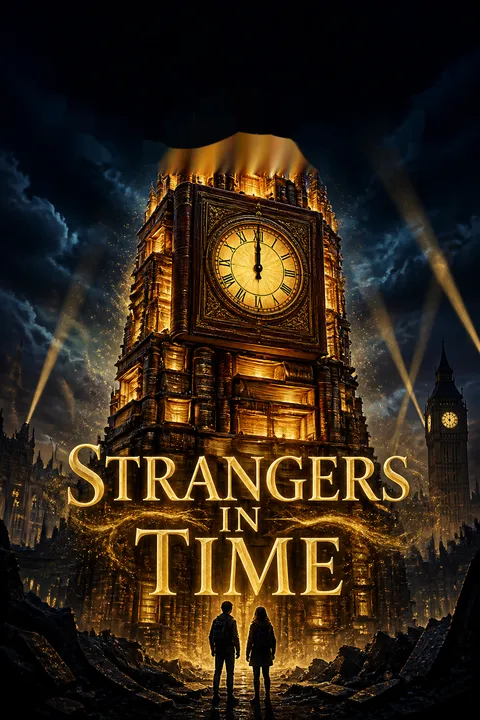
In war-torn 1944 London, fourteen-year-old Charlie Matters navigates the bombed-out streets, orphaned and scraping by with his aging grandmother. The city is a landscape of loss, hunger, and fear, where every day is a battle for food, warmth, and dignity. Charlie's parents are gone—his father lost at Dunkirk, his mother killed in a bombing. His gran, his last anchor, works herself to exhaustion to keep them afloat. Charlie's resourcefulness is born of necessity: he steals, lies, and hustles, but always with a code—never from those as poor as himself. The trauma of the Blitz is ever-present, shaping his worldview and hardening his resolve, yet beneath his tough exterior, Charlie's heart aches for connection and hope.
The Bookshop Encounter
One rainy night, Charlie's desperate search for shoes leads him to The Book Keep, a cluttered, magical bookshop run by the gentle Ignatius Oliver. Caught in the act of stealing, Charlie is surprised when Oliver shows him unexpected compassion, returning a lost tag and offering him a blank journal instead of punishment. This encounter plants a seed of trust and curiosity in Charlie, who is unused to such generosity. Oliver, haunted by his own losses and secrets, recognizes something in the boy—a spark of decency amid hardship. Their brief exchange marks the beginning of a subtle, life-altering bond, as both are drawn together by loneliness and the need for understanding in a fractured world.
Molly's Return to Ruins
Molly Wakefield, nearly sixteen, returns to London after years evacuated to the countryside. Expecting a joyful reunion, she finds her family home in Chelsea diminished, her mother absent in a sanatorium, and her father missing. The city she remembers is now a scarred, anxious place, its people changed by war. Molly's old life of comfort and certainty is gone, replaced by confusion and a gnawing sense of abandonment. Her only companion is Mrs. Pride, the family's loyal nanny, who shields her from painful truths. As Molly searches for answers, she is forced to confront the reality of loss, mental illness, and the fragility of the world she once took for granted.
Two Worlds Collide
A chance nighttime encounter brings Charlie and Molly together—two teenagers from opposite ends of London's social spectrum, both adrift and searching for meaning. Molly, practical and compassionate, offers Charlie food and medical help for his infected hand, while Charlie, wary but intrigued, guides her through the city's dangers. Their initial mistrust gives way to a tentative friendship, forged in shared vulnerability and the recognition of each other's pain. Together, they navigate the city's perils, from blackout streets to the bureaucracy of the Ministry of Food, discovering that survival in wartime requires not just cunning, but also kindness and solidarity.
The Night of Loss
Charlie's fragile world collapses when his beloved gran dies suddenly, leaving him utterly alone. In the same breath, Molly's hopes for family are dashed as she learns the full extent of her parents' absence and her mother's decline. Both are forced to confront the raw reality of guilt, grief and the terror of being unmoored in a city that offers little mercy to the vulnerable. Charlie's desperation leads him into dangerous company, culminating in a botched burglary that results in the deaths of a friend and a policeman. The event brands him with guilt and fear, driving him into hiding and deepening his sense of isolation.
A Friendship Forged
In the aftermath of loss, Molly takes Charlie in, offering him shelter and dignity when he has nowhere else to turn. Their bond deepens as they share their stories, secrets, and dreams, each recognizing in the other a kindred spirit shaped by hardship. Together, they navigate the practicalities of survival—finding work, securing food, and arranging a proper burial for Charlie's gran. Their friendship becomes a lifeline, a source of hope and resilience in a world that seems determined to break them. Through small acts of care and loyalty, they begin to heal, discovering that family can be chosen as much as inherited.
Secrets in the Shadows
As Charlie and Molly settle into a precarious routine, they become entangled in the mysteries surrounding Ignatius Oliver and The Book Keep. Strange visitors, coded messages, and clandestine meetings hint at a deeper intrigue. Molly's curiosity and Charlie's street smarts lead them to uncover Oliver's double life as a British double agent, feeding false information to the Germans through a network of cut-out books and coded devices. The revelation is both thrilling and terrifying, as they realize the stakes of trust and betrayal in wartime. Their own secrets—Charlie's involvement in the burglary, Molly's father's disappearance—intertwine with Oliver's, binding their fates together.
The Cost of Survival
The trio's survival depends on difficult choices and moral ambiguity. Charlie, wracked with guilt over his friend's death and his own criminal acts, struggles to reconcile his actions with his conscience. Molly, forced to lie to authorities and neighbors, grapples with the erosion of her innocence. Oliver, burdened by the memory of his wife's suicide and his own complicity in espionage, faces the limits of atonement. The war's relentless pressures force each to confront the boundaries of right and wrong, loyalty and self-preservation. Their shared hardships forge a deeper understanding of the complexities of human nature under duress.
The Burden of Guilt
As the truth about their pasts comes to light—Charlie's role in the fatal burglary, Molly's father's vigilante justice, Oliver's wife's betrayal and death—each must reckon with guilt and the longing for forgiveness. The trio supports one another through confessions and tears, offering compassion where the world offers only judgment. Their willingness to see the good in each other, despite flaws and mistakes, becomes a source of strength. Through acts of honesty and vulnerability, they begin to shed the weight of shame, learning that redemption is possible, even in the darkest times.
The Spy's Dilemma
The web of espionage tightens as Oliver's double life is exposed, putting all three in mortal danger. A staged confrontation with his German handler, Cedric, and a brush with death force Oliver to choose between self-preservation and the safety of his found family. The children, caught in the crossfire, experience firsthand the peril of secrets and the unpredictability of war. The episode cements their bond and underscores the necessity of courage, quick thinking, and trust. Oliver's ultimate sacrifice—risking and eventually losing his life to protect Molly and Charlie—becomes the defining act of his character.
The Truth About Family
Molly's journey to Cornwall to see her dying mother brings long-buried family secrets to the surface. She learns the full truth of her mother's trauma and her father's descent into vengeance and exile. The reunion is bittersweet, marked by moments of connection and devastating loss. Molly must accept the limits of what can be healed and the necessity of moving forward. Charlie, too, finds closure as he lays his past to rest and embraces the possibility of a new future. Together, they redefine family—not as a matter of blood, but of shared experience, loyalty, and love.
The Final Bombardment
As the war's final bombs fall, tragedy strikes again: Oliver is killed in an air raid while performing his duties as an air warden. His death leaves Molly and Charlie bereft but determined to honor his legacy. The end of the war brings relief and the promise of peace, but also the challenge of rebuilding lives shattered by conflict. The two friends, now orphans in every sense, inherit The Book Keep and the responsibility to carry forward the lessons and love they received. Their resilience in the face of relentless adversity becomes a testament to the endurance of the human spirit.
Aftermath and New Beginnings
In the postwar years, Molly and Charlie find new homes and opportunities. Molly, supported by distant relatives, pursues her dream of becoming a doctor, inspired by her experiences as a nurse and the suffering she witnessed. Charlie, ever resourceful, travels the world, writes of his adventures, and eventually finds a family of his own. Their enduring friendship, maintained across continents and decades, is a source of comfort and joy. The Book Keep, preserved as a living memorial to Oliver and Imogen, becomes a haven for future generations seeking solace and wisdom in stories.
The Legacy of The Book Keep
Decades later, Molly, now a renowned psychiatrist and author, reflects on the journey that began in the ruins of wartime London. The Book Keep stands as a symbol of survival, resilience, and the transformative power of literature and human connection. Through her writing, Molly completes the unfinished novel of Imogen Oliver, weaving together the threads of loss, hope, and redemption that defined their lives. The story of three strangers—Charlie, Molly, and Oliver—becomes a testament to the possibility of healing and the enduring need for friendship, compassion, and the courage to begin again.
Analysis
A meditation on resilience, loss, and the redemptive power of human connectionStrangers in Time is more than a wartime coming-of-age story; it is a profound exploration of how ordinary people endure extraordinary hardship and find meaning amid devastation. Through the intersecting lives of Charlie, Molly, and Oliver, the novel examines the psychological toll of war—not just the visible wounds, but the hidden scars of guilt, grief, and longing. It challenges simplistic notions of heroism and villainy, showing that survival often requires moral compromise and that redemption is a process, not a destination. The book's central lesson is that family is not defined by blood, but by the bonds we choose and the compassion we extend. In a world where institutions fail and fate is capricious, it is the small acts of kindness, the willingness to forgive, and the courage to begin again that sustain us. The Book Keep, with its jumble of stories and memories, stands as a testament to the enduring need for narrative, community, and hope. In the end, Strangers in Time reminds us that even in the darkest hours, we are never truly alone if we dare to reach out and connect.
Review Summary
Strangers in Time by David Baldacci receives overwhelmingly positive reviews (4.15/5). Set in 1944 London during the Blitz, the novel follows three unlikely companions: Charlie, a poor East End teenager; Molly, a wealthy fifteen-year-old; and Ignatius Oliver, a grieving bookshop owner. Reviewers praise Baldacci's departure from thrillers into historical fiction, highlighting the emotional depth, well-developed characters, and vivid depictions of wartime London. The audiobook's full-cast narration receives exceptional acclaim. While most appreciate the found-family narrative and themes of resilience and survival, some critics found it slow-paced, overly long, or depressing.
People Also Read





Characters
Charlie Matters
Charlie is a fourteen-year-old East End boy, orphaned by the Blitz and hardened by deprivation. His life is a daily struggle for survival, marked by hunger, loss, and the constant threat of violence. Despite his criminal activities—stealing, lying, hustling—Charlie maintains a core of decency, refusing to prey on those as desperate as himself. His relationship with his gran is the last vestige of family, and her death leaves him adrift. Charlie's journey is one of reluctant vulnerability: he learns to trust, to accept help, and to offer it in return. His friendship with Molly and Oliver becomes his salvation, teaching him that even in a world of chaos, kindness and loyalty endure. Over time, Charlie's guilt and trauma are tempered by forgiveness and the discovery of his own worth.
Molly Wakefield
Molly is a bright, compassionate teenager from a well-off Chelsea family, whose life is upended by war, mental illness, and abandonment. Sent to the countryside for safety, she returns to a city and home transformed by loss. Her mother's decline and her father's disappearance force Molly to grow up quickly, shedding illusions of security and privilege. Practical, intelligent, and empathetic, Molly becomes a nurse auxiliary, channeling her pain into service. Her friendship with Charlie bridges class divides and teaches her the value of resilience and chosen family. Molly's arc is one of self-discovery, as she confronts the limits of love, the complexity of forgiveness, and the necessity of forging her own path in a broken world.
Ignatius Oliver
Oliver is a gentle, scholarly man, owner of The Book Keep, and a widower devastated by the suicide of his wife, Imogen. His outward kindness masks a life of secrets: he is a double agent, feeding false intelligence to the Germans while working for British intelligence. Oliver's compassion for Charlie and Molly is rooted in his own loneliness and regret. He becomes a surrogate father, offering shelter, wisdom, and unconditional support. Oliver's internal conflict—between duty, guilt, and the longing for redemption—drives much of the novel's tension. His ultimate sacrifice, dying to protect the children, cements his legacy as a quiet hero whose greatest gift is the family he creates.
Imogen Oliver
Imogen, Oliver's late wife, is a shadowy presence whose choices reverberate throughout the story. Exceptionally intelligent and passionate, she is drawn into espionage, first betraying her country out of disillusionment, then seeking redemption by becoming a double agent. Her suicide, driven by guilt and despair, leaves Oliver with a burden he can never fully lay down. Imogen's unfinished novel becomes a symbol of lost potential and the possibility of healing through storytelling. Her memory shapes Oliver's actions and Molly's eventual path as a writer and psychiatrist.
Mrs. Pride
Mrs. Pride is Molly's childhood caretaker, embodying steadfastness and quiet suffering. She shields Molly from painful truths, maintaining the illusion of stability as the world crumbles. Her death in a bombing is a stark reminder of the indiscriminate cruelty of war. Mrs. Pride's presence lingers as a symbol of the old world's values—duty, sacrifice, and the quiet heroism of ordinary people.
Lonzo Rossi
Lonzo is Charlie's friend and occasional antagonist, an older boy hardened by neglect and the brutality of the streets. His desperation leads him into crime and ultimately to a violent end at the hands of corrupt police. Lonzo's fate is a cautionary tale about the costs of poverty, the failures of society, and the thin line between victim and perpetrator. His relationship with Charlie is fraught with rivalry, loyalty, and the shared trauma of abandonment.
Cedric Axmann
Cedric is Oliver's German contact, a cunning and ruthless spy who embodies the dangers of trust and deception in wartime. His interactions with Oliver are fraught with tension, as both men play a dangerous game of double-cross. Cedric's presence is a constant reminder of the stakes of espionage and the ever-present threat of betrayal.
Dr. Thaddeus Stephens
Dr. Stephens oversees the Beneficial Institute, where Molly's mother is treated. He represents the limitations of wartime medicine, particularly in the realm of mental health. His compassion is genuine, but his tools are blunt—lobotomies, sedation, and resignation. Stephens's inability to save Molly's mother underscores the novel's themes of helplessness and the search for better ways to heal.
Herbert Wakefield
Molly's father is a complex figure, a former intelligence officer whose inability to protect his wife leads him to murder her attackers. His actions, while understandable, place him beyond the law and ultimately destroy him. Herbert's story is one of love curdled into obsession, justice warped by grief, and the tragic consequences of a world where institutions fail the vulnerable.
Eloise Wakefield
Molly's mother is a gentle, loving woman shattered by violence and neglect. Her descent into mental illness and eventual death is a devastating portrait of the war's collateral damage. Eloise's suffering shapes Molly's vocation and her understanding of the limits of love and the necessity of compassion.
Plot Devices
War as crucible and backdrop
The novel uses the Blitz and its aftermath not just as a historical backdrop, but as a crucible that tests and transforms every character. The constant threat of death, deprivation, and displacement strips away illusions and forces characters to confront their deepest fears and desires. The war's randomness—who lives, who dies, who is spared—mirrors the unpredictability of fate and the fragility of human plans. The city's ruins become a landscape of both loss and possibility, where new families and futures can be forged from the ashes.
Double lives and coded messages
The motif of double agents, secret codes, and hidden compartments runs throughout the novel, reflecting the characters' own concealed wounds and unspoken truths. Oliver's work as a spy, Imogen's betrayal and redemption, and the children's own secrets all underscore the theme that survival often requires concealment, adaptation, and the courage to reveal oneself at the right moment. The use of books with cut-out pages, coded journals, and cryptographic devices literalizes the idea that meaning is often hidden beneath the surface, waiting to be discovered.
Found family and chosen bonds
The central plot device is the creation of a chosen family among strangers. Charlie, Molly, and Oliver, each orphaned or abandoned in their own way, find in each other the acceptance, support, and love denied them by fate. Their bond is tested by external threats—war, poverty, betrayal—but endures through acts of sacrifice, forgiveness, and mutual care. The Book Keep itself becomes a symbol of this found family, a sanctuary where stories and lives are preserved and shared.
Guilt, confession, and redemption
The narrative is structured around moments of confession and reckoning: Charlie's admission of guilt, Molly's confrontation with her father, Oliver's revelation of his and Imogen's secrets. These moments are foreshadowed by earlier lies and omissions, and their resolution is essential for the characters' growth. The novel suggests that healing is only possible through honesty, empathy, and the willingness to forgive oneself and others.
The unfinished story
Imogen's incomplete novel, later finished by Molly, serves as a meta-narrative device, symbolizing the unfinished business of grief, trauma, and hope. The act of writing—whether in journals, letters, or fiction—becomes a means of making sense of chaos, preserving memory, and asserting agency in a world that often denies it. The Book Keep, as both a literal and figurative repository of stories, embodies the idea that narrative is essential to survival and meaning-making.
About the Author
Other books by David Baldacci


Download PDF
Download EPUB
.epub digital book format is ideal for reading ebooks on phones, tablets, and e-readers.








































