


Plot Summary
Prologue
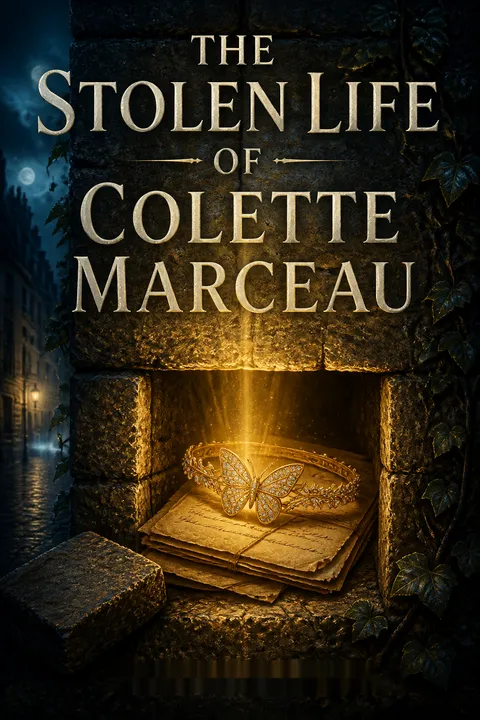
In 1927 Paris, diamond broker Salomon Rosman commissions jeweler Max Besner to create twin bracelets for his wife Hélène,12 each honoring one of their newborn twins. A butterfly drifting through the workshop window inspires the design: apart, the bracelets resemble lilies; clasped together, they form a single butterfly.
Hélène12 wears them every day for fifteen years — until July 1942, when a German officer named Möckel10 forces his way into the Rosmans' apartment, strips the bracelets from her wrist, and sends the family to their deaths. The jeweler himself will perish in Auschwitz. But the bracelets survive, as diamonds always do.
Robin Hood's Last Descendant
In 2018 Boston, Colette Marceau1 is nearly ninety — and still stealing. She has spent months researching tonight's mark: Linda Clyborn, a neo-Nazi millionaire at an orchestra benefit. Wearing a gray wig and a nondescript cocktail dress, Colette1 is invisible the way elderly women always are at events like these.
She pinches Clyborn's side with one hand while sliding an eight-carat yellow diamond from her finger with the other. The woman never registers her existence. Colette1 has been doing this since childhood, trained by her mother2 in a family tradition stretching back to Robin Hood — stealing only from the cruel, giving everything to charity.
Over eight decades, she has funneled more than thirty million dollars to worthy causes without keeping a cent. By morning, a photographer's candid shot in the newspaper will crack her anonymity for the first time.
First Score at the Opéra
Colette's1 training began in their Paris apartment, where her British mother Annabel2 explained that their family descended from the real Robin Hood of Wentbridge. Stealing was a calling, governed by a strict code: take only from the wicked, never profit personally.
Annabel2 taught Colette1 to unhook any clasp by touch, to run through rough terrain, to blend into any crowd. Her father Roger,11 a headmaster, disapproved but said nothing. In the autumn of 1938, Annabel2 took ten-year-old Colette1 to the Palais Garnier for her first major score — a diamond choker from the wife of a Nazi propaganda official.
The opera that night was Wagner's Tristan und Isolde, a story of forbidden, all-consuming love that left Colette1 weeping. After the curtain fell, she unclasped the choker from the German woman's neck in the crush of departing crowds and disappeared.
The Thief Confesses Everything
When Aviva Haskell3 — the young attorney who has been Colette's1 surrogate daughter for twenty years — spots Colette1 in a newspaper photo from the gala, the walls of Colette's1 double life begin to buckle. A detective appears at Colette's1 door asking witness questions; Aviva3 deflects him with lawyerly precision.
But once he leaves, Aviva3 confronts Colette1 directly. Over cooling Dijon chicken, Colette1 cannot bring herself to lie. She confesses: she has been a jewel thief since childhood.
She founded the Boston Center for Holocaust Education anonymously in 1972, funded entirely by diamonds taken from Nazis and their sympathizers — the same organization that Aviva3 and her late mother dedicated their lives to. Aviva,3 trained to uphold the law, is staggered. But what shakes her most is the realization that the woman she trusts completely has been someone else entirely.
The Missing Butterfly Wing
Marty Weaver,5 the diamond broker who has fenced Colette's1 stolen jewels for six decades, arrives at her door looking shaken. He holds up a magazine open to a photograph of a diamond bracelet about to go on display at the Boston Diamond Museum.
Colette1 knows it instantly — half of a pair stolen from her mother's friend Hélène Rosman12 during the war. In 1942, Colette's mother2 sewed one bracelet into each daughter's nightgown for safekeeping. On the night German officer Möckel10 arrested the Marceau family, four-year-old Liliane7 was taken through a bedroom window by a man in uniform.
Her body was later found in the Seine, the nightgown's hem ripped open, the bracelet gone. Colette1 has kept her own half for seventy-six years, worn like a wound. She asks Aviva3 — still reeling — to visit the museum and find out where the bracelet came from.
Tristan and Isolde Reborn
In the summer of 1942, fourteen-year-old Colette1 defies her mother's2 ban on stealing and snatches a bangle from a collaborator who had Jewish families arrested. A German soldier chases her, but a Jewish boy wearing the yellow star deliberately blocks the soldier's path, risking arrest or worse.
He leads Colette1 to a hidden courtyard, where a loose brick conceals a space perfect for secrets. They begin exchanging poems through the wall, signing themselves Tristan and Isolde — the forbidden lovers from the opera Colette1 saw years before.
She never learns his real name. He writes that she sparkles like all the diamonds in Paris; she responds with verses about crossing the divide between them. They fall in love without ever touching, their entire romance folded into slips of paper tucked behind a brick.
Tracing the Bracelet's Owner
Aviva3 arrives at the Diamond Museum unannounced and talks her way past the locked door. Director Lucas O'Mara6 — handsome, guarded, a widowed father — lets her examine the bracelet from the safe. It matches Colette's1 piece exactly: the same gold filigree, the same constellation of diamonds shaped like lilies.
Lucas6 confirms the anonymous owner is originally from France but will say nothing more. He invites Aviva3 to the exhibit opening, where Colette1 sees the bracelet behind glass for the first time and nearly collapses from emotion. Afterward, Aviva3 digs deeper.
She traces Lucas's6 deceased wife's maiden name — Verdier — to a French grandfather. A newspaper profile leads to Hubert Verdier,8 102 years old, residing in an assisted-living facility in Braintree — described as a Paris immigrant who arrived just after the war.
A Promise at the Vél d'Hiv
On July 16, 1942, French police arrest thirteen thousand Jewish men, women, and children across Paris. Annabel's2 friend Hélène Rosman12 — whom she had begged to flee with false papers — refused to believe the worst could happen.
Days later, Colette,1 Annabel,2 and little Liliane7 go to the cycling stadium where thousands are held in squalor. Among the prisoners shuffling toward transport buses, Annabel2 spots Hélène12 — gaunt, filthy, her children already taken.
In a final moment of freedom, Hélène12 trips forward and tosses something to Annabel:2 her emerald ring, sewn into her dress lining as Annabel2 had taught her. An officer named Möckel10 took everything else — including the butterfly bracelets. Annabel2 vows to recover them. She has no idea this promise will cost her life.
Annabel's Fatal Theft
Three weeks later, the Rosman bracelets surface on the wrist of Möckel's10 French mistress at a German-frequented brasserie. Annabel2 slides through the crowded restaurant, bumps a young officer into the mistress, and unclasps the twin bracelets in a single motion.
The gems fall into her palm and disappear into her brassiere. But a broad-shouldered French policeman locks eyes with her across the room. She runs, makes it home, but he has seen her face. That night, she sews one bracelet into the hem of Colette's blue nightgown and the other into Liliane's — each girl always carries hidden jewels.
If anything happens to Annabel,2 the girls will have something to trade for safety. The bracelets, she believes, will protect them. Within weeks, the policeman's identification of Annabel2 will reach the Germans.
The Rosman Son Calls
A man named Daniel Rosman4 phones the Boston Center for Holocaust Education after reading Aviva's3 newsletter article about the museum bracelet. He is Hélène Rosman's12 son — the twin whose birth inspired the bracelets in 1927.
His voice trembles as he describes the unique clasps: one engraved with an R for his sister Ruth, the other a D for Daniel,4 each set with four tiny diamonds representing his family. Colette1 is stunned — she believed the entire Rosman family had perished. Daniel's4 parents died, but he and Ruth survived.
When Daniel4 arrives in Boston, Colette1 does something that costs her the last physical connection to her mother2 and sister:7 she unclasps her half of the bracelet and places it in his hands, fulfilling at last the promise Annabel2 made to Hélène12 at the Vél d'Hiv.
Liliane Vanishes Through the Window
On the night Germans smash through the Marceaus' door in August 1942, Annabel2 screams for Colette1 to take Liliane7 out the bedroom window. Colette1 lifts her four-year-old sister toward the opening — but hears Möckel's10 men strike her mother,2 and something inside her breaks.
She sets Liliane7 down, tells her to wait, and runs to the parlor, where Möckel10 taunts Annabel2 about stolen bracelets. Germans seize all three. When Colette1 tears back to the bedroom, the window gapes open, curtains fluttering, and Liliane7 is gone.
In the distance, she glimpses a man in dark uniform rounding the corner with a bundle over his shoulder. The last thing Liliane7 whispered was the eagle's call their mother taught them — kyi-kyi-kyi — the sound of Robin Hood's protector. No one answered ko-ko-ko.
Annabel's Last Embrace
In her cell at Cherche-Midi prison, Annabel2 knows she will die. Möckel10 wants the bracelets hidden in her daughters' nightgowns, and she will never reveal them. She bribes the German overseer with a diamond ring — arranged through a letter smuggled to Roger11 via Uncle Frédéric14 — in exchange for one midnight visit.
In the dark corridor, she holds Colette1 and makes her promise to find Liliane.7 She whispers that she will love them both for eternity. Roger11 pulls Colette1 away without looking back.
In the days that follow, Möckel's10 men beat Annabel2 until her last breath. Her final vision is of her two daughters as old women, holding hands beneath hazel trees, surrounded by children she will never know. She moves toward death smiling, certain they will carry on.
One Hundred Fifty-Eight Lives
Roger11 and Colette1 are released the next morning. They return home to find Liliane7 gone — the building's concierge reports a child's body in the Seine, wearing a matching nightgown with the hem ripped open. Roger11 blames Colette1 for leaving Liliane7 alone and deposits her with Uncle Frédéric,14 their mother's2 trusted jewel broker.
He vanishes to Brittany without looking back. Colette1 is fourteen, orphaned in every way that matters. She tracks down Le Paon's13 Resistance group and offers her skills. Over the next two years, the jewels she steals fund the rescue of one hundred fifty-eight refugees through forged papers and safe passage.
Before leaving Paris with Uncle Leo, her mother's2 brother, she meets a policeman named Verdier who hints that a colleague betrayed Annabel2 — but will not name him. At the courtyard wall, her last poem to Tristan is gone. No note waits. She walks away from Paris forever.
Verdier Dies Unspeaking
Colette,1 Aviva,3 Marty,5 and Daniel4 confront Hubert Verdier8 at his assisted-living facility. The 102-year-old reacts to questions about the bracelet with unmistakable guilt — crying, insisting he promised never to tell. But lucidity flickers like a failing bulb.
Lucas,6 protective of his wife's grandfather, forces them out when Verdier8 becomes dangerously agitated. On a second visit, Colette1 and Daniel4 try gentleness, pretending to be old friends from Paris. Verdier8 nearly opens up — mentions his shame over wartime deportation orders he carried out as a French policeman — then panics and calls the nurses.
That evening, Hubert Verdier8 suffers a fatal heart attack in the ambulance. Colette's1 best lead is dead. Lucas6 tells her his own grandfather might know something about the bracelet, but the old man refuses to discuss Hubert8 at all.
A Note Behind the Brick
Daniel4 invites Colette1 to Paris to collect the original bracelet documentation from the jeweler's great-nephew. Before leaving, she confesses everything — her thieving life, the Holocaust center's illicit funding, his mother's12 emerald ring that helped launch it. Daniel4 laughs with delight.
In Paris, they receive the original designs and his father's handwritten invoice, legal proof of provenance. Daniel4 stuns Colette1 by requesting both bracelets be transferred to her name. Alone later, she visits her old street and slides a brick from the courtyard wall where she and Tristan once exchanged love letters.
Inside is a yellowed note dated 1952. Tristan survived Auschwitz. He returned to Paris and searched for her, but the concierge — following her father's11 wartime instructions — told him the whole Marceau family was dead. They missed each other by months.
Guillaume Charpentier Unmasked
At Hubert Verdier's8 funeral, Lucas6 introduces Colette1 to his grandfather9 — an old man with a walker and a French accent hidden beneath the anglicized name Bill Carpenter. Colette1 looks into his face and the decades fall away. She sees the policeman from her old neighborhood, a former student of her father's.11
Guillaume Charpentier.9 She whispers his real name and the world goes black. When she revives on the pavement, she demands answers. Guillaume9 weeps: he ran to warn the Marceaus that night but arrived too late.
He took Liliane7 from the window trying to save her — accidentally smothering her into unconsciousness while keeping her quiet. She survived. His wife Francine found the bracelet in the nightgown's hem and insisted on keeping both child and jewel. They raised Liliane7 as their daughter Anne. Lucas O'Mara6 is Colette's1 nephew.
The Eagle's Call Answered
Lucas6 drives Colette,1 Daniel,4 Aviva,3 and Millie15 to a small town in Vermont. On the front porch of a modest house, a seventy-nine-year-old woman with green eyes rises from her chair. Colette1 can barely breathe. She says the name that has haunted her for seventy-six years: Liliane.7
The woman says her name is Anne — but even as the denial leaves her mouth, something ancient stirs behind her eyes. Colette1 makes the sound their mother taught them, the call of the white-tailed eagle who watched over Robin Hood: kyi-kyi-kyi.
Liliane's7 face transforms. Ko-ko-ko, she answers, and recognition floods in like a dam giving way. They fall into each other's arms on the porch, two old women completing a circle that began in a Paris bedroom when the world was still whole.
Daniel Was Tristan All Along
Days later, the whole unlikely family gathers at Colette's1 table — Liliane,7 Lucas,6 Millie,15 Daniel,4 Aviva,3 and Marty.5 While reminiscing, Liliane7 mentions something she has recently remembered: Colette1 sitting at her desk as a teenager, writing poems to a boy named Tristan.
At the name, Daniel4 rises from his chair. He recites the opening lines of the first poem he wrote for Colette1 in 1942 — she is his shelter in the conflict, she sparkles like all the diamonds in Paris. Tristan was never his real name. It was a pen name borrowed from the opera, chosen by a fifteen-year-old trying to be romantic.
His real name was Daniel Rosman.4 He pulls her poem from his wallet — the one he found in the wall after the war, carried ever since. The boy she loved at fourteen and the man she has been falling for at eighty-nine were always the same person.
Epilogue
Two months later, Colette1 marries Daniel4 in her backyard, beneath hazel trees wrapped in honeysuckle — plants she chose years ago, unknowingly echoing the medieval poem of Tristan and Isolde. Liliane7 walks her sister down the aisle.
Both women wear their halves of the butterfly bracelet. The ring Daniel4 places on Colette's1 finger is Hélène Rosman's12 emerald-and-diamond ring, the one Annabel2 caught at the Vél d'Hiv, which Marty5 spent weeks tracking down and buying back.
Colette1 arranges for her bracelet half to pass to Aviva,3 and Liliane's7 to Millie15 — connecting the next generation to the same constellation of loss and love. The diamonds have done what they were always meant to do: outlast the darkness, carry memory forward, and bring the people who needed each other home.
Analysis
The Stolen Life of Colette Marceau1 interrogates a question most historical fiction sidesteps: what happens to heroic wartime actors who survive to live with consequences for another seven decades? Colette1 is not merely a WWII survivor — she is a woman whose identity has calcified around a single moment of failure, her entire adult life organized as elaborate penance for turning away from a window in 1942. Harmel constructs the novel around the proposition that objects outlive their owners and carry unresolved stories forward. The bracelets function not as simple MacGuffins but as embodiments of intergenerational trauma — each person who touches them absorbs grief, guilt, or greed. The novel argues that stolen property is never truly about the object; it is about what was taken alongside it: dignity, identity, the possibility of being remembered.
The Robin Hood framework raises genuinely thorny ethical questions. Colette's1 code grants moral license to redistribute wealth, but it also permits her to avoid the harder work of confronting her own emotional paralysis. Stealing gives her purpose without requiring vulnerability. Daniel Rosman4 represents the road she did not take: a survivor who chose to grieve openly and build a quiet life rather than construct an elaborate identity around resistance. Their eventual pairing suggests meaningful healing requires both impulses — the courage to act and the willingness to receive love.
Perhaps most striking is how the novel treats memory itself as a stolen artifact. Guillaume Charpentier9 does not merely take Liliane7 from a window — he takes her memories, her name, her knowledge of who she was. The concierge's lie steals Colette's1 chance to reunite with Tristan. Roger's11 abandonment steals Colette's1 sense of worth. In each case, the most devastating thefts are not of diamonds but of identity, and the resolution argues that what has been stolen can sometimes — against extraordinary odds and across the full span of a human life — be returned.
Review Summary
The Stolen Life of Colette Marceau is a compelling dual-timeline historical fiction novel about a family of jewel thieves who steal from Nazis to fund the French Resistance. Readers praise Harmel's storytelling, character development, and ability to evoke emotions. The book explores themes of identity, family, and moral ambiguity. Most reviewers found it engaging and thought-provoking, with a satisfying mystery and heartwarming relationships. Some critiqued the implausibility of certain plot elements and character actions. Overall, it's highly recommended for historical fiction fans.
People Also Read








Characters
Colette Marceau
Ninety-year-old jewel thiefColette is a paradox wrapped in red lipstick and Breton stripes—an eighty-nine-year-old Parisian transplant in Boston who has spent eight decades stealing from the wicked and giving to the powerless. Trained by her mother2 in occupied Paris, she carries forward a family tradition descending from Robin Hood, governed by a strict moral code. She anonymously founded the Boston Center for Holocaust Education with proceeds from Nazi jewels. Beneath her meticulous professionalism lies a woman hollowed by guilt over wartime losses she believes were her fault. She has never married, never had children, convinced she forfeited the right to happiness when she failed to protect someone she loved. Her armor is competence; her vulnerability is the conviction that no amount of good can atone for a single catastrophic moment of indecision.
Annabel Marceau
Colette's thief-motherColette's1 British-born mother, raised near Robin Hood's legendary homeland of Barnsdale Forest. Annabel married Frenchman Roger Marceau11 and moved to Paris, where she continued the family tradition of stealing from the cruel. During the German Occupation, she throws herself into increasingly dangerous work—funding the Resistance through theft while hiding stolen jewels in the linings of her daughters' nightgowns. She is fierce, principled, and deeply loving, a woman who tells her girls stories of eagles and ancestors to prepare them for a world she fears will swallow them whole. Her fatal flaw is identical to her greatest strength: she cannot stand idle while injustice thrives. She steals not for glory but from an almost biological imperative to right what has been wronged, whatever the personal cost.
Aviva Haskell
Colette's surrogate daughterAn attorney in her late thirties who serves as Colette's1 closest confidant, surrogate daughter, and the person most likely to hold her accountable. Aviva lost her mother in a car accident at eighteen, was abandoned by her father and aunt, and was rescued from a hospital waiting room by Colette1, who simply offered her a home. She volunteers at the Holocaust center her mother directed, carrying forward Rachel's legacy alongside her legal career. Fiercely loyal, doggedly investigative, and instinctively protective, Aviva makes an excellent lawyer and a relentless amateur detective. Her deepest wound is the belief that the people she needs most will eventually leave, making her slow to trust and guarded about attachment—until someone arrives who makes her question those defenses.
Daniel Rosman
Hélène Rosman's surviving sonThe ninety-one-year-old son of Hélène12 and Salomon Rosman, the couple whose twin bracelets set the entire story in motion. Daniel survived Auschwitz as a teenager while his parents perished. He has volunteered for decades at the New York Holocaust center, unaware of its connection to his family. Gentle, erudite, and unexpectedly playful, he enters Colette's1 life when he calls the center after spotting his mother's bracelet in a newsletter. He carries his losses with a grace Colette1 finds both humbling and magnetic—a man who chose to look forward after unspeakable loss rather than build an identity around resistance. His calm is not passivity but hard-won wisdom. He and Colette1 share a connection that feels like it predates their meeting, as if their stories were always intertwined.
Marty Weaver
Colette's fence and friendColette's1 lifelong fence and closest friend, a ninety-one-year-old diamond broker whose family has worked with Colette's1 since the 1950s. Charming, flirtatious, and fiercely loyal, Marty has carried a torch for Colette1 for decades, having asked her out eight times over the years. He still calls her 'kid' and looks at her in ways everyone notices but Colette1 refuses to acknowledge. His shop, Weaver's Diamond Exchange, serves as the laundering point for Colette's1 stolen goods and a safe harbor for their friendship.
Lucas O'Mara
Diamond Museum directorDirector of the Boston Diamond Museum, a widowed father in his mid-forties who curates rotating exhibits of extraordinary gems. Broad-shouldered with green eyes and deep dimples, Lucas is protective of his family and meticulous about provenance. His connection to the bracelet is more personal than he initially reveals, and his growing feelings for Aviva3 complicate the loyalties pulling him in multiple directions. Raised largely by his grandfather9 after losing his mother young, Lucas carries a sense of responsibility toward the old man that will be tested severely.
Liliane Marceau
Colette's lost little sisterColette's1 younger sister, four years old when she disappeared from the Marceau apartment window on the night of their mother's2 arrest. Bright, curious, and devoted to Colette1, Liliane loved her mother's2 Robin Hood stories and the eagle calls that accompanied them. Her absence is the gravitational center of Colette's1 guilt—a void that shapes every choice Colette1 has made for seventy-six years. What became of Liliane, and where her bracelet has been, are the twin mysteries driving the entire narrative.
Hubert Verdier
Bracelet's current ownerA 102-year-old former French policeman in a memory-care facility, Hubert participated in deporting Jewish families during the Occupation—a role that haunts him even through dementia's fog. He possesses the bracelet Colette1 has been seeking, and his agitated, guilty reactions when questioned suggest he is hiding more than failing memory can excuse. His connections to multiple characters from the wartime era make him a nexus of unresolved secrets.
Guillaume Charpentier
Lucas's grandfather, renamed BillLucas O'Mara's6 elderly grandfather, a French immigrant who anglicized his name to Bill Carpenter upon arriving in America. A former student of Colette's father11 and a policeman in wartime Paris, he carries himself with the rigid posture of a man still at attention decades later. His refusal to discuss the past and his bitter falling-out with Hubert Verdier8 hint at guilt buried so deep it has calcified into silence. His wife Francine's jealousy and possessiveness shaped many of his worst decisions.
Möckel
Nazi officer and antagonistA German Sturmbannführer and avid jewelry collector who orchestrated the Rosman family's arrest specifically to seize their diamonds. Cold, vindictive, and intoxicated by petty power, Möckel represents the banality of evil—a lackluster man elevated by ideology into believing he deserves everything he covets. His obsession with recovering the stolen bracelets drives him to interrogate and ultimately destroy Annabel Marceau2.
Roger Marceau
Colette's disapproving fatherA school headmaster who tolerated but never supported his wife's2 thieving. The war and the loss of Liliane7 shatter him. His grief hardens into blame directed at Colette1, and he ultimately abandons her—a betrayal she carries for the rest of her life.
Hélène Rosman
Annabel's doomed friendDaniel's4 mother and Annabel's2 friend—a stylish, warm woman who wore her butterfly bracelets every day. She refused Annabel's2 urging to flee Paris with forged papers, believing reason would prevail. Her final act of defiance is tossing her hidden ring to Annabel2 before disappearing onto a transport bus.
Le Paon
Resistance group leaderA pediatrician operating under a code name who leads the neighborhood Resistance cell that Annabel2 and later Colette1 serve. He reveals to Colette1 after the war that her stolen jewels funded the rescue of one hundred fifty-eight refugees.
Uncle Frédéric
Annabel's jewel broker friendAnnabel's2 trusted Parisian jewel broker who takes Colette1 in after Roger11 abandons her. He and his wife Marie provide stability and love, while gently cautioning Colette1 not to let the past dictate her future.
Millie
Lucas's daughterLucas O'Mara's6 nineteen-year-old daughter, a college student who lost her mother to cancer at fourteen. She carries the Marceau green eyes and dimples without knowing their origin, connecting Colette1 to a family line she believed was severed forever.
Plot Devices
The Twin Butterfly Bracelets
Thread connecting all charactersCommissioned in 1927 for the Rosman twins, these diamond bracelets appear as separate lilies when worn apart but form a butterfly when clasped together. Each clasp is engraved with a child's initial and set with four tiny diamonds. They pass through the hands of their original owners, a Nazi officer10, a French thief, two little girls, a kidnapper9, and a museum director6—accumulating the weight of every touch. They function simultaneously as the novel's central MacGuffin, its emotional throughline, and its argument that objects carry memory. Tracing one bracelet's journey from a child's nightgown to a Boston museum drives the entire modern plot, while the other bracelet's journey from Colette's1 wrist to Daniel Rosman's4 palm enacts the promise Annabel2 made to Hélène12 before she vanished.
The Loose Brick in the Wall
Secret mailbox for forbidden loveEleven rows up, five across, in a hidden courtyard on the rue Pasteur—a loose brick that a Jewish boy shows Colette1 in 1942. It becomes their clandestine postal system, a place to exchange poems and confessions that the Occupation forbids them from sharing openly. The brick outlasts the war, the boy's deportation, and seven decades of Parisian change. As both a physical hiding spot for stolen jewels and a vessel for words more precious than diamonds, it embodies the novel's tension between what can be taken and what endures. Its contents carry the power to rewrite what Colette1 believes about the past, making it the story's most quietly devastating plot device.
The Eagle's Call
Family recognition signalAnnabel2 teaches her daughters the call of the white-tailed eagle that watched over Robin Hood—kyi-kyi-kyi answered by ko-ko-ko. It serves as a family password, a bedtime ritual, and a rallying cry during the Occupation's darkest hours. For Colette1, repeating it becomes a way of summoning her mother's2 spirit. The call functions as the novel's emotional fingerprint—a sound so specific to the Marceau bloodline that it becomes the ultimate proof of identity, more convincing than any document or DNA test. When it is exchanged for the first time in seventy-six years, it confirms what neither sister fully dares to believe.
Sewn-In Nightgown Hems
Hidden insurance for childrenAnnabel2 hides stolen jewels in the double-lined hems of her daughters' nightgowns—yellow pair and blue pair, each marked with the girls' initials. The technique creates a portable safety net that moves wherever the children go. Even four-year-old Liliane7 understands the secret. The sewn-in treasures represent a mother's inability to guarantee her own survival and her determination to extend protection beyond her reach. When the hem of Liliane's7 nightgown is found ripped open after her disappearance, it signals both the theft of the bracelet and the violation of a mother's last line of defense—proof that whoever took the child knew exactly what they were looking for.
Robin Hood's Code
Moral framework for theftThe centuries-old principle that one may steal only from the cruel, never for personal gain, and must always use the proceeds to help others. The code governs Colette's1 entire life—her months-long research into each mark, her donations of over thirty million dollars, her refusal to keep any piece. It also creates the novel's central moral tension: Aviva3 must decide whether funding a Holocaust center with stolen Nazi diamonds constitutes justice or crime, and Colette1 must determine whether retrieving her sister's7 bracelet falls within the code or represents the kind of personal theft Robin Hood forbade. The code ultimately proves both Colette's1 greatest strength and her emotional cage, giving her purpose while shielding her from vulnerability.
FAQ
Synopsis & Basic Details
What is The Stolen Life of Colette Marceau about?
- A Legacy of Justice: The Stolen Life of Colette Marceau follows Colette, an elderly Parisian woman living in Boston, who has secretly continued her family's centuries-old tradition of jewel theft, taking from the cruel and unjust to fund charitable causes, including the Boston Center for Holocaust Education she anonymously founded. This unique premise explores the blurred lines between crime and virtue.
- Echoes of Wartime Paris: The narrative weaves between Colette's present-day heists and her traumatic childhood in Nazi-occupied Paris, where her mother, Annabel, also a "Robin Hood" thief, fought for the French Resistance. This dual timeline reveals the profound impact of the Holocaust on Colette's life, particularly the disappearance of her younger sister, Liliane, and her mother's arrest.
- A Quest for Truth: When a long-lost diamond bracelet, once belonging to a family friend and last seen with Liliane, resurfaces in a Boston museum, Colette embarks on a desperate quest to uncover its provenance. This search forces her to confront buried secrets, unexpected family connections, and the enduring weight of her past, ultimately leading to a shocking revelation about her sister's fate.
Why should I read The Stolen Life of Colette Marceau?
- Compelling Moral Dilemmas: The novel masterfully explores the complex ethics of "doing good" through illicit means, prompting readers to question societal definitions of right and wrong. Kristin Harmel invites readers to debate whether Colette's thefts, though illegal, are morally justifiable given her targets and beneficiaries, making for a thought-provoking analysis of The Stolen Life of Colette Marceau.
- Rich Historical Tapestry: Harmel intricately blends a gripping contemporary mystery with a vivid portrayal of Nazi-occupied Paris, offering a deeply researched and emotionally resonant look at the French Resistance and the human cost of war. The historical details, from the Vél' d'Hiv roundup to the Cherche-Midi prison, provide a powerful backdrop to Colette's personal journey.
- Heartfelt Exploration of Family: Beyond the suspense, the book is a poignant story about the enduring bonds of family—both biological and chosen—and the healing power of truth and forgiveness. Readers will be moved by Colette's lifelong quest for her sister, the unexpected reunion, and the profound connections forged through shared trauma and resilience.
What is the background of The Stolen Life of Colette Marceau?
- Historical Context of WWII France: The novel is deeply rooted in the historical realities of World War II, particularly the German Occupation of Paris and the French Resistance. It highlights the complicity of French police in events like the Vél' d'Hiv roundup (July 1942), where thousands of Jews were arrested and deported, and the brutal conditions in prisons like Cherche-Midi, providing a stark backdrop to Colette's family tragedy.
- The Robin Hood Legend: The core premise is built upon the legend of Robin Hood, with Colette's family tracing their lineage back to the benevolent thief. The author's note explicitly links Robin Hood's origins to Wentbridge and the Barnsdale Forest in West Yorkshire, grounding the fictional family tradition in historical debate and giving a unique twist to the concept of inherited duty.
- Author's Personal Journey: Kristin Harmel reveals in her author's note that the book was written during her own battle with breast cancer, influencing the themes of identity, loss, and finding one's way back to self. This personal connection imbues Colette's struggle with a deeper layer of authenticity, as Colette's journey of realizing "she's more than just a thief" mirrors Harmel's own discovery of identity beyond her writing.
What are the most memorable quotes in The Stolen Life of Colette Marceau?
- "If you can take from people who are cruel and unkind and use what you've taken to make the world a better place, then what you have done is heroic, not criminal.": This quote, spoken by Annabel to young Colette, encapsulates the central moral philosophy of the Marceau family's thievery. It defines their unique code of honor and sets the stage for the ethical debates woven throughout the narrative, highlighting the themes in The Stolen Life of Colette Marceau.
- "One should always help if one can.": Uttered by Tristan, the Jewish boy Colette meets in wartime Paris, this simple yet profound statement becomes a guiding principle for Colette's life. It underscores the novel's broader message about individual agency and the power of small acts of kindness and courage in the face of overwhelming darkness, resonating with the idea of selfless action.
- "Diamonds have witnessed the past, and they will witness a future we can't begin to imagine.": This recurring sentiment, first attributed to Daniel Rosman's father and later echoed by Daniel himself, speaks to the enduring nature of the jewels as silent observers of history. It symbolizes memory, resilience, and the hope that even after profound loss, life, love, and connection can continue to sparkle across generations, offering a deep symbolism analysis.
What writing style, narrative choices, and literary techniques does Kristin Harmel use?
- Dual-Timeline Narrative: Harmel employs a compelling dual-timeline structure, alternating between Colette's present-day life in 2018 Boston and her formative experiences in 1930s-1940s Paris. This technique allows for gradual revelation of secrets, building suspense and demonstrating the long-lasting impact of historical events on individual lives, a key aspect of The Stolen Life of Colette Marceau analysis.
- First-Person Limited & Shifting Perspectives: While primarily told from Colette's first-person perspective, the narrative occasionally shifts to other characters (like Annabel, Aviva, Lucas, Liliane, and Guillaume Charpentier) in their respective timelines. This choice provides a multifaceted view of events, deepening character motivations and revealing the subjective nature of memory and truth, enhancing the psychological depth.
- Symbolism and Motif: The novel is rich with recurring symbols, most notably the interlocking butterfly bracelets, which represent unity, loss, and enduring connection. Other motifs include the Robin Hood legend, the eagle's call, and the concept of "invisibility" (Colette as an old woman, as a thief), all of which add layers of meaning and thematic resonance to the story.
Hidden Details & Subtle Connections
What are some minor details that add significant meaning?
- Colette's Red Lipstick: Beyond a personal preference, Colette's signature red lipstick (Chapter 3) symbolizes her true, vibrant identity that she reserves for her private life, contrasting with the "dishwater" wigs and understated makeup she uses for her thefts. It's a subtle rebellion against the invisibility of old age and her secret life, a small act of self-expression.
- The Courtyard Garden: The hidden courtyard with its "flowers survive against the odds" (Chapter 6) where Colette and Tristan exchange notes is more than just a secret meeting spot. It symbolizes hope and resilience flourishing amidst urban decay and wartime oppression, mirroring the characters' own enduring spirits and their clandestine acts of resistance.
- Roger's Pipe Smoke: Liliane's faint memory of "the smell of a pipe—it must have been our father's" (Chapter 36) is a poignant detail. It highlights the fragmented nature of her suppressed memories and the sensory anchors that can unexpectedly trigger the past, emphasizing the deep psychological impact of her early trauma.
What are some subtle foreshadowing and callbacks?
- The Opera's Tragic Love Story: Colette's first major heist at the Opéra, witnessing Wagner's Tristan und Isolde (Chapter 4), foreshadows her own star-crossed connection with Tristan Berousek. The opera's themes of forbidden love, sacrifice, and enduring passion mirror Colette's brief, intense epistolary romance and the tragic circumstances that separate them, adding a layer of literary allusion to her personal narrative.
- The "Weasel" Policeman: Colette's initial impression of Monsieur Charpentier as having a "weasel's" face (Chapter 12) and later, Verdier's dismissive "That weasel?" (Chapter 29) when Colette mentions Charpentier, subtly foreshadows his true, duplicitous nature. These early, seemingly throwaway descriptions hint at his untrustworthiness long before his identity as Liliane's kidnapper is revealed.
- Liliane's "Kyi-kyi-kyi": Liliane's repeated "Kyi-kyi-kyi" (Chapters 6, 12, 14) is a callback to Annabel's Robin Hood stories and the eagle's call. This seemingly innocent childhood game becomes a profound symbol of her suppressed identity and a key to her eventual reunion with Colette, demonstrating how deep-seated memories can persist despite attempts to erase them.
What are some unexpected character connections?
- Daniel Rosman as Tristan: The most significant unexpected connection is the revelation that Daniel Rosman, the son of the bracelet's original owners, is also Tristan, Colette's wartime pen pal (Chapter 36). This twist profoundly recontextualizes their relationship, transforming a new friendship into a rekindled, decades-old romance, and tying together multiple narrative threads in a surprising and emotionally resonant way. This is a major The Stolen Life of Colette Marceau ending explained element.
- Lucas O'Mara as Colette's Nephew: The discovery that Lucas O'Mara is Liliane's son, and thus Colette's nephew (Chapter 31), creates a powerful new family bond. This connection not only provides Colette with living relatives but also links the museum, the bracelet, and the search for truth directly to her newfound family, highlighting the theme of family legacy and unexpected kinship.
- Hubert Verdier's Affair with Lucas's Grandmother: The revelation of Hubert Verdier's long-standing affair with Lucas's paternal grandmother (Chapter 25) adds a layer of complex, messy human relationships to the historical trauma. It explains the animosity between Lucas's grandfather and Hubert, and further complicates the moral landscape, showing that personal betrayals can exist alongside larger historical ones.
Who are the most significant supporting characters?
- Madame Nadaud, the Concierge: Though a minor character, Madame Nadaud plays a pivotal role in shaping Colette's life by falsely informing Tristan that the Marceau family is dead (Chapter 28). Her nosy, self-serving nature and casual disdain for Jews highlight the pervasive indifference and complicity that enabled wartime atrocities, profoundly impacting Colette's future and her lifelong guilt.
- Le Paon (Docteur Robillard): The enigmatic leader of the French Resistance group, Le Paon, serves as a crucial mentor for both Annabel and Colette. He represents the organized, yet often morally ambiguous, efforts of the underground. His later identity as a pediatrician (Chapter 30) underscores the quiet heroism of ordinary people and the lasting trauma of war, even for those who fought against it.
- Uncle Frédéric and Aunt Marie: These adoptive guardians provide Colette with a safe haven after her family's arrest and death. Their unwavering kindness and practical support (Chapter 24) offer a stark contrast to Roger's abandonment and highlight the importance of chosen family in times of crisis, providing a stable, loving environment for Colette during her most vulnerable years.
Psychological, Emotional, & Relational Analysis
What are some unspoken motivations of the characters?
- Colette's Self-Punishment: Colette's lifelong refusal to marry or have children, despite her deep capacity for love, is an unspoken motivation rooted in her profound guilt over Liliane's death. She believes she "failed" her sister and is "terrified of failing again" (Chapter 28), subconsciously denying herself happiness as a form of penance. This reveals a core psychological complexity in Colette Marceau's motivations.
- Roger's Abandonment: Colette's father, Roger, abandons her after Annabel's arrest and Liliane's death, not just out of grief, but from a deep-seated resentment towards Annabel's "lunacy" (Chapter 16) and the perceived danger her thievery brought. His actions are driven by a desire for normalcy and a rejection of the chaos and loss that Annabel's choices brought into his life, a complex character analysis.
- Guillaume Charpentier's Desire for Redemption: Charpentier's decision to kidnap Liliane is driven by a desperate, misguided attempt to "save" a child and, in doing so, earn God's favor for his wife Francine, who suffered multiple miscarriages (Chapter 32). His actions are motivated by a profound personal grief and a desire for a child, revealing the tragic consequences of good intentions gone horribly wrong.
What psychological complexities do the characters exhibit?
- The Burden of Survival Guilt: Both Colette and Daniel Rosman grapple with profound survivor's guilt, a central psychological theme. Colette feels responsible for Liliane's death, while Daniel carries the weight of his parents' demise. This shared trauma creates an immediate, deep bond between them, as Daniel articulates, "The guilt of living while they died, it never really leaves you, does it?" (Chapter 19).
- Identity Forged by Trauma: Colette's identity is inextricably linked to her role as a thief, a legacy passed down through generations. The author's note highlights this, stating Colette "has essentially spent her whole life clinging to the sense of identity that comes with being a thief." Her journey is about realizing her value "goes beyond just the millions of dollars she has 'redistributed'," a profound psychological shift.
- Suppressed Memory and Dissociation: Liliane's experience of having her past erased and her memories suppressed by her adoptive parents (Chapter 34) showcases the psychological complexity of dissociation. Her fragmented recollections, like the "kyi-kyi-kyi" eagle call, are powerful examples of how the mind protects itself from trauma, yet how deeply ingrained truths can resurface.
What are the major emotional turning points?
- Colette's Confession to Aviva: Colette's decision to reveal her lifelong secret as a jewel thief to Aviva (Chapter 5) is a major emotional turning point. It marks a shift from self-imposed isolation to vulnerability, risking her most cherished relationship for the sake of truth and a desperate plea for help, highlighting the depth of her trust in Aviva.
- The Discovery of Tristan's Letter: Colette finding Tristan's letter in the wall in Paris (Chapter 29), revealing he survived Auschwitz and came looking for her, is a devastating emotional climax. It shatters her long-held beliefs about his death and forces her to confront a "what if" scenario that profoundly impacts her understanding of her past and her choices.
- Liliane's Recognition of Colette: The moment Liliane says "Kyi-kyi-kyi" and Colette responds "Ko-ko-ko" (Chapter 34), leading to Liliane's whispered "You're my sister," is the emotional crescendo of the novel. This reunion, built on a shared childhood memory, represents the ultimate healing of Colette's deepest wound and the restoration of a lost family bond.
How do relationship dynamics evolve?
- Colette and Aviva: From Mentor to Mutual Support: Their relationship evolves from Colette being a maternal figure and anonymous benefactor to Aviva becoming Colette's attorney and emotional anchor. Aviva's initial shock and ethical conflict give way to fierce loyalty and active participation in Colette's quest, demonstrating a reciprocal bond of chosen family.
- Colette and Daniel: From Shared Trauma to Romantic Love: Initially connected by their families' shared history and wartime loss, Colette and Daniel's relationship deepens through their joint pursuit of truth. Their shared understanding of survivor's guilt and the weight of memory allows for a profound emotional intimacy that blossoms into a late-in-life romance, fulfilling the "Tristan and Isolde" prophecy.
- Lucas and Aviva: From Suspicion to Partnership: Their dynamic begins with professional suspicion, as Lucas guards museum secrets and Aviva probes for answers. However, their shared desire for truth and their personal experiences with loss (Lucas's wife, Aviva's mother) foster empathy and mutual respect, leading to a romantic connection that bridges their families' complicated pasts.
Interpretation & Debate
Which parts of the story remain ambiguous or open-ended?
- The Full Extent of Charpentier's Remorse: While Guillaume Charpentier expresses deep regret and tears, the narrative leaves some ambiguity about the true depth of his remorse versus his self-preservation. His initial denial and the fact that he only confesses when cornered raise questions about whether his tears are purely for Liliane or also for his own ruined life, inviting debate on his character motivations.
- The Future of the "Robin Hood" Legacy: Colette states that with no biological heirs, the family's centuries-old tradition of jewel theft "will die with me" (Chapter 27). However, she also suggests training Lucas and Millie "only if they want to" (Chapter 35), implying the legacy might continue in a new form, or that its spirit of "doing good in the world" will live on through their charitable work, leaving the ultimate fate of the "Robin Hood" code open to interpretation.
- The Nature of Forgiveness: The story explores forgiveness on multiple levels (Colette forgiving her father, Liliane forgiving Charpentier, Colette forgiving herself), but it doesn't explicitly state that all characters achieve complete forgiveness. The lingering pain and the complexity of their pasts suggest that forgiveness is an ongoing process, not a definitive endpoint, leaving readers to ponder the true meaning of peace after trauma.
What are some debatable, controversial scenes or moments in The Stolen Life of Colette Marceau?
- The Justification of Theft: The central premise of Colette's family code—that stealing from "cruel and unkind" people is "heroic, not criminal"—is inherently controversial. The novel directly asks readers to debate whether this justification for illegal activity is valid, especially when Colette funds the Holocaust Center with stolen jewels. This challenges conventional notions of law and morality, making it a key point for The Stolen Life of Colette Marceau discussion questions.
- Guillaume Charpentier's "Saving" of Liliane: Charpentier's claim that he "saved" Liliane by kidnapping her, believing he was protecting her from the Nazis, is a highly debatable moment. While it leads to her survival, it also causes decades of grief and guilt for Colette and her father. This scene forces readers to confront the ethical complexities of wartime choices and whether a "good" outcome can justify a morally reprehensible act.
- Colette's Treatment of Hubert Verdier: Colette's aggressive confrontation with Hubert Verdier, accusing him of murder and pushing him to a cardiac episode, is a controversial scene. While driven by understandable grief and a desperate need for answers, her actions raise questions about the ethics of pursuing truth at any cost, especially when dealing with an elderly, frail individual, prompting readers to consider the limits of justice.
The Stolen Life of Colette Marceau Ending Explained: How It Ends & What It Means
- Reunion and Reconciliation: The novel culminates in a series of profound reunions and reconciliations. Colette discovers that her sister, Liliane, is alive and living in Vermont, having been raised by Guillaume Charpentier (Lucas's grandfather) as his own daughter, Anne
About the Author
Other books by Kristin Harmel



Download PDF
Download EPUB
.epub digital book format is ideal for reading ebooks on phones, tablets, and e-readers.








































