
Key Takeaways
1. Reconstruction: A Brief Dawn of Black Freedom, Swiftly Undone
What confounds me is how much longer the rollback of Reconstruction was than Reconstruction itself; how dogged was the determination of the “Redeemed South” to obliterate any trace of the marvelous gains made by the freedpeople, especially the prodigious number of black men who exercised the right to vote and the emergence of a black political leadership class within just a few years of emancipation.
A revolutionary period. Reconstruction (1865-1877) was a monumental effort to create a biracial democracy from the ashes of the Civil War, aiming to institutionalize "a new birth of freedom" for African Americans. This era saw the passage of crucial civil rights laws and constitutional amendments, fundamentally altering the status of formerly enslaved people. Black men, for the first time, gained the right to vote and held approximately two thousand official positions, from sheriffs to senators, demonstrating remarkable political agency.
Optimism and progress. Freedpeople embraced their new opportunities with immense hope, reconstituting families, establishing businesses, churches, and schools, and pursuing literacy. Key legislative achievements included:
- Civil Rights Act of 1866
- Thirteenth Amendment (abolishing slavery)
- Fourteenth Amendment (birthright citizenship, equal protection)
- Fifteenth Amendment (black male suffrage)
- Military Reconstruction Acts (requiring black suffrage for readmission to the Union)
Tragic unraveling. Despite these gains, Reconstruction was painfully short-lived, systematically dismantled by a "Redemption" movement in the South. This rollback, fueled by white supremacist ideology, violence, and economic pressures, effectively erased black political power and paved the way for Jim Crow segregation. The period's brevity and the subsequent decades of oppression highlight the profound challenge of transforming a society rooted in slavery.
2. White Supremacy: An Ideology That Outlived Slavery
Slavery is indeed gone, but its shadow still lingers over the country and poisons more or less the moral atmosphere of all sections of the republic.
Persistent prejudice. The Civil War abolished slavery, but it did not eradicate antiblack racism. Proslavery rhetoric and white supremacist ideology, once intertwined, continued to evolve independently, adapting to justify the subjugation of newly freed black citizens. This enduring prejudice manifested in both the South and, to a lesser extent, the North, shaping post-war American society.
"War of ideas." Key figures like Edward A. Pollard and Frederick Douglass recognized that a new battle, a "war of ideas," would determine the status of freedpeople. Pollard's "Lost Cause" myth romanticized the Confederacy and denied slavery as the war's cause, arguing that "the war did not decide Negro equality." Douglass, conversely, saw the war as a battle between "slavery and freedom, barbarism and civilization," emphasizing that the work of true freedom had only just begun.
Neo-enslavement. The economic imperative to maintain cheap black labor led to systems like sharecropping and convict leasing, which imposed a "neo-enslavement" on African Americans. This economic exploitation was justified by a pervasive white supremacist discourse that sought to permanently devalue black humanity. The goal was to reestablish the old order as seamlessly as possible, neutralizing black political and economic gains.
3. "Scientific Racism": Fabricating Black Inferiority
When men oppress their fellow-men, the oppressor ever finds, in the character of the oppressed, a full justification for his oppression.
Pseudo-scientific justification. Nineteenth-century racial science provided a "scientific" basis for white supremacy, attempting to prove inherent, biologically based differences between black and white people. This pseudo-science, often ignoring evolutionary theories, served to justify racial slavery and, later, de jure segregation. It sought to define black people as inherently inferior, even subhuman.
Key theories and proponents:
- Monogenesis: All races descended from a single Adam and Eve, but black people "degenerated" (e.g., "mark of Cain," "curse of Ham").
- Polygenesis: Different races originated from different "creation centers" and were distinct species (e.g., Louis Agassiz, Samuel George Morton).
- Phrenology: Measuring skulls to determine mental capacity and moral character (e.g., Morton).
- Medical theories: Claiming unique diseases for black people, like "Drapetomania" (disease causing slaves to run away) and "Dysaethesia Aethiopica" ("rascality") (e.g., Samuel Cartwright).
Eugenics and its impact. The early 20th-century eugenics movement, advocating for selective breeding and sterilization, further cemented these racist ideas. Figures like Charles Davenport and Madison Grant used "scientific" data to argue for white racial superiority and the decline of the "white race" due to "unconstrained breeding of the poor and feeble-minded" and "the spread of Negro blood." These theories, widely accepted in academia and popular culture, provided a "scientific" rationale for Jim Crow.
4. The "Old Negro" Myth: Romanticizing Servitude, Justifying Jim Crow
The old Negro, we must remember, was a creature of moral debate and historical controversy. His has been a stock figure perpetuated as an historical fiction partly in innocent sentimentalism, partly in deliberate reactionism.
Literary propaganda. Plantation literature, a popular genre in the post-Reconstruction era, depicted black people as infantile, devoted, and incapable of self-governance, serving as a "kindred discourse" to racial science. Authors like Joel Chandler Harris and Thomas Nelson Page created characters like Uncle Remus and "Marse Chan" to romanticize slavery and justify the new racial order. These narratives often portrayed former slaves as nostalgic for bondage, preferring it to the responsibilities of freedom.
Stereotypes in fiction. Sterling A. Brown identified seven key stereotypes prevalent in white American literature about black people, all serving to justify Jim Crow:
- The Contented Slave
- The Wretched Freeman
- The Comic Negro
- The Brute Negro
- The Tragic Mulatto
- The Local Color Negro
- The Exotic Primitive
"Negro misrule." These fictional portrayals reinforced the idea that black political participation during Reconstruction was a "terrible mistake," leading to "Negro misrule." Authors like Joel Chandler Harris and Thomas Dixon depicted black legislators as corrupt and incompetent, and Northern "carpetbaggers" as evil agitators. This narrative aimed to prove that black people were "hopelessly unequipped for freedom," thereby legitimizing the re-imposition of white control.
5. Visual Terrorism: Mass-Producing Racist Stereotypes
One cannot ignore the extraordinary fact that a world campaign beginning with the slave-trade and ending with the refusal to capitalize the word “Negro,” leading through a passionate defense of slavery by attributing every bestiality to blacks and finally culminating in the evident modern profit which lies in degrading blacks—all this has unconsciously trained millions of honest, modern men into the belief that black folk are sub-human . . . a mass of despicable men, inhuman; at best, laughable; at worst, the meat of mobs and fury.
Ubiquitous Sambo art. Following the Civil War, technological innovations like chromolithography enabled the mass production of "Sambo art"—a deluge of racist imagery depicting black people as subhuman, ignorant, and animalistic. These caricatures, found on everyday consumer products, postcards, and advertisements, served as a "visual mantra" reinforcing negative stereotypes and naturalizing the "separate but equal" system of Jim Crow.
The "already read text." This pervasive imagery created a societal lens through which actual black individuals were viewed, regardless of their personal qualities or achievements. As Barbara Johnson noted, a black person became "an already read text," their identity pre-defined by these fixed, negative images. This practice of "xenophobic masking" imposed a "mask of blackness" on African Americans, making it difficult for them to be seen as complex human beings.
Reinforcing oppression. The sheer volume and repetition of these images aimed to stabilize a single, degraded "black image," reducing the complexity of black humanity into unchangeable signifiers of blackness. This visual rhetoric, coupled with legal and social mechanisms, reinforced white power and justified the stripping of black rights. The most horrifying examples were lynching postcards, which normalized extreme violence against black bodies.
6. The Black Rapist Trope: Fueling Fear and Lynchings
The Negro as a political factor can be controlled. But neither laws nor lynchings can subdue his lusts. Sooner or later it will force a crisis.
Irrational fears. The stereotype of the black male as a sexual predator and rapist was a core component of white supremacist ideology, emerging from irrational fears of miscegenation. This trope was used as anti-Republican propaganda during Lincoln's re-election and intensified dramatically after the Civil War, becoming a pervasive justification for violence and segregation. The "mixing of the races" was presented as a threat to white purity and social order.
Rape as justification. The myth of the omnipresent black rapist became an obsession in the post-Reconstruction South, leading to the belief that lynchings were necessary to protect white womanhood. Editorials openly argued that black men possessed "horrible and beastial propensities" that only "prompt, speedy and extreme punishment" could control. This twisted logic fueled a wave of lynchings, with claims of rape often serving as a pretext for racial terror.
Repression and projection. This stereotype was a classic instance of psychological repression and projection, diverting attention from the historical reality of white male rape of black women during slavery. DNA analysis reveals that a significant portion of African American males carry white male Y-DNA signatures, indicating widespread sexual violence against black women. The black rapist trope served as a "substitutive satisfaction," projecting white guilt and fear onto black men.
7. The "New Negro": A Strategic Self-Reinvention
The New Negro, we must remember, was a creature of moral debate and historical controversy. His has been a stock figure perpetuated as an historical fiction partly in innocent sentimentalism, partly in deliberate reactionism.
A counter-narrative. In response to the collapse of Reconstruction and the rise of Jim Crow, a "New Negro" leadership class emerged in the 1890s. This concept was a metaphorical "reconstruction," an attempt to redefine black identity as modern, educated, and sophisticated, directly challenging the "Old Negro" stereotypes propagated by white supremacists. It aimed to transform the image of the race's upper classes.
Early definitions. The term "New Negro" was first coined by white abolitionist Reverend W. E. C. Wright in 1894, linking it to black economic success. Black newspapers like the Richmond Planet quickly adopted it, emphasizing the "education, refinement and money" of this new class, who "refuse to be kept in the relative condition once occupied by their ancestors." This early framing highlighted class distinctions within the black community.
Booker T. Washington's embodiment. Booker T. Washington, with his "Atlanta Compromise" speech in 1895, was quickly anointed as the embodiment of the "New Negro" by the white press. His emphasis on industrial education and economic progress over political agitation, while controversial, was seen by some as a pragmatic path forward. However, this accommodationist stance would soon be challenged by more militant "New Negroes" who prioritized political rights and self-assertion.
8. Respectability Politics: Navigating Class and Race
The thinking Negro even has been induced to share this same general attitude, to focus his attention on controversial issues, to see himself in the distorted perspective of a social problem. His shadow, so to speak, has been more real to him than his personality.
Cultural resistance. Middle-class black people, both North and South, engaged in "the politics of respectability" to symbolically fight against Jim Crow. This involved adopting white Victorian middle-class social and moral values, presenting themselves as educated, well-dressed, and articulate. The goal was to demonstrate that they were "exceptions to the rule" of black inferiority and deserving of equal treatment.
Internal divisions. This strategy, however, often exacerbated existing class and color divisions within the black community. Some "New Negroes" sought to distinguish themselves from the "lower-class" black masses, whom they sometimes found embarrassing. W. E. B. Du Bois, while advocating for the "Talented Tenth" to lead the race, also acknowledged the need for this elite to serve the "lowest classes," recognizing the inherent tension in such differentiation.
Challenging stereotypes. The "politics of respectability" aimed to counter pervasive racist caricatures by presenting counter-images of dignity and achievement. Figures like Fannie Barrier Williams championed the "New Negro Woman" as educated and morally upright, directly refuting stereotypes of black women as Jezebels or mammies. This cultural battle sought to restore dignity and self-esteem within the black community, even as external oppression persisted.
9. Art as Resistance: The Harlem Renaissance's Cultural Battle
The final measure of the greatness of all peoples is the amount and standard of the literature and art they have produced. The world does not know that a people is great until that people produces great literature and art. No people that has produced great literature and art has ever been looked upon by the world as distinctly inferior.
"Civil rights by copyright." The Harlem Renaissance (or New Negro Renaissance) was a pivotal cultural movement where art and literature became central to the fight for civil rights. Leaders like Alain Locke, James Weldon Johnson, and W. E. B. Du Bois believed that demonstrating black intellectual and artistic genius could implicitly challenge white supremacist notions of inferiority and elevate the race's status. This was a strategic shift from overt political militancy to cultural assertion.
A new aesthetic. Victoria Earle Matthews, as early as 1895, articulated the "Value of Race Literature" as a means to "dissipate the odium conjured by the term 'colored' persons." She, and later Locke, encouraged black artists to draw inspiration from African art and black vernacular traditions, like spirituals, to create an authentic "race literature" that would "undermine and utterly drive out the traditional Negro in dialect." This aimed to replace derogatory stereotypes with images of beauty and sophistication.
Ambitions and limitations. Locke's The New Negro anthology (1925) served as the movement's manifesto, showcasing a diverse array of black artistic and intellectual talent. While it fostered a "glorious awakening of creativity and self-consciousness," the Renaissance had its limitations. It often struggled with internal class biases, a cautious approach to overtly political themes, and an ambivalent relationship with vernacular art forms like jazz, which some elites deemed "vulgar."
10. The Enduring Lesson: Political Agency Trumps All
Without the political agency exemplified by the astonishing turnout of the freedmen in the local and national elections between 1867 and 1872, no firm ground could have been secured for the advancement of the race.
The primacy of politics. Despite the ingenuity and creativity of the "New Negro" cultural movements, the ultimate lesson from the long struggle against white supremacy is the indispensable role of political agency. As Bishop Henry McNeal Turner presciently observed in 1895, the issue was never truly about who or what "a Negro" was, but about the systematic deprivation of constitutional rights and economic potential, which only political power could restore.
Du Bois's evolution. W. E. B. Du Bois, a central figure in both early "New Negro" movements and the NAACP, eventually recognized that cultural constructions, however laudable, were "woefully inadequate without actual political agency." His later work, like Black Reconstruction (1935), not only corrected the historical record but also emphasized the economic and political underpinnings of white supremacy, underscoring the need for direct political action.
A continuous struggle. The period from Reconstruction through the Harlem Renaissance reveals a relentless "long Reconstruction" locked in combat with an equally "long Redemption." The fight against antiblack racism and white supremacy is ongoing, as evidenced by contemporary challenges to voting rights and the persistence of hateful imagery. The legacy of this era is a stark reminder that "one cannot launch a political revolution through art alone," and that constant vigilance and political agitation remain essential for achieving true racial justice.
Review Summary
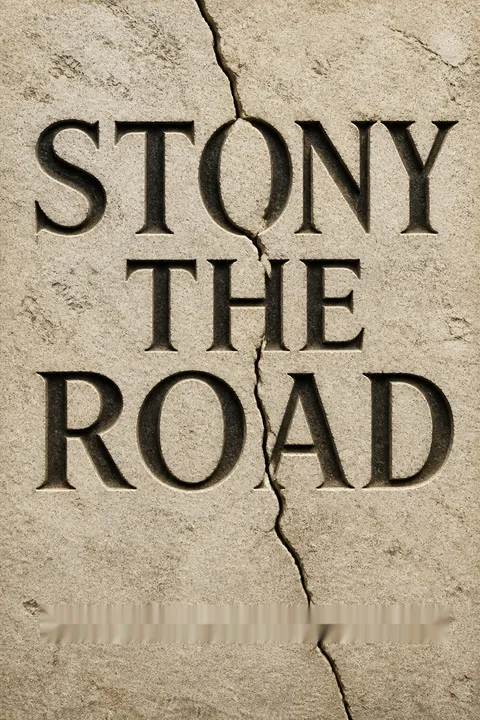
Stony the Road receives overwhelmingly positive reviews (4.16/5 stars) for its examination of Reconstruction's failure and white supremacy's rise. Readers praise Gates's thorough documentation of how racist imagery, pseudoscience, and propaganda systematically dehumanized Black Americans after emancipation. The book explores Jim Crow laws, voter suppression, Supreme Court reversals of civil rights legislation, and violent intimidation. Many appreciate the visual essays showing disturbing historical images and the analysis of Black intellectual responses—from Booker T. Washington to W.E.B. DuBois to the Harlem Renaissance. Some find it academic and dense, but most consider it essential reading for understanding America's ongoing racial struggles.
People Also Read
Download PDF
Download EPUB
.epub digital book format is ideal for reading ebooks on phones, tablets, and e-readers.








































