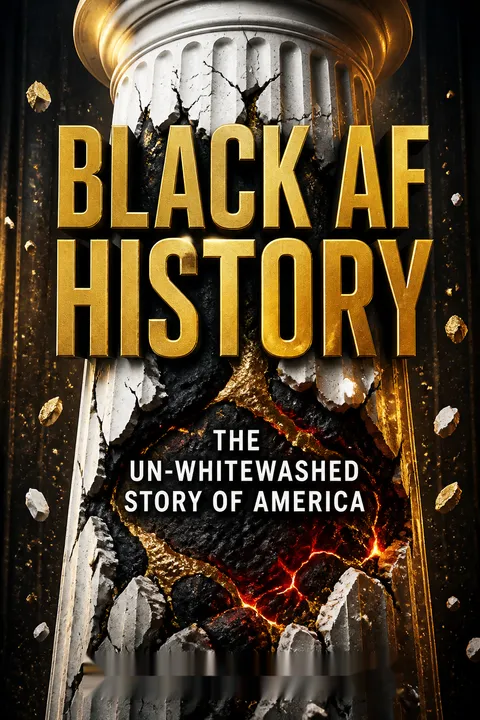

Key Takeaways
1. America's Origin Story: A Whitewashed Fantasy of Incompetence and Theft
The history I discovered in the middle room wasn’t just an alternative version of American history; it was the story of an entirely different place, wholly incompatible with the whitewashed mythology enshrined in our collective memory.
Founding incompetence. The initial English colonists in Jamestown were largely incompetent aristocrats, ill-suited for manual labor, farming, or survival in the new land. They struggled with disease, starvation, and basic hygiene, often relying on the indigenous Powhatan nation for food and assistance. This contrasts sharply with the heroic narratives often taught.
Land theft and deception. The English declared vast territories their own, ignoring existing civilizations and their rulers like King Wahunsenacah. Their initial attempts at colonization failed due to a lack of skills and understanding of the environment. The narrative of "discovery" and "settlement" masks a brazen act of theft and disregard for the people already inhabiting the land.
Slavery as salvation. The failing Jamestown project was "saved" not by ingenuity, but by the arrival of enslaved Africans in 1619. These kidnapped individuals, skilled in agriculture and labor, transformed the land into a profitable enterprise, particularly with tobacco cultivation. This pivotal moment, often downplayed, highlights how the foundation of American wealth was built on stolen human capital.
2. Slavery: An American Invention, Constitutionally Codified and Race-Based
Unlike in Europe or elsewhere in the world, color-based slavery was regulated as a part of America’s founding document.
Unique American institution. American slavery was distinct from other forms of servitude globally. It was:
- Race-based: Exclusively targeting Black people.
- Intergenerational: Passed down from mother to child, ensuring perpetual bondage.
- Constitutional: Embedded in the nation's founding laws, like the Three-Fifths Compromise.
- Chattel slavery: Reducing human beings to mere property, devoid of rights.
Economic engine. This codified system of racial peonage, particularly in South Carolina with "Carolina Gold" rice, became the economic engine of the colonies. African women, with their advanced horticultural knowledge, were crucial to this success, leading to a demand for female slaves and a more balanced gender ratio in some areas. This ingenuity, however, only fueled further exploitation.
White supremacy's genesis. The legal framework of American slavery established white supremacy as a foundational principle. Laws like Virginia's 1662 statute, declaring children's status based on the mother, solidified a permanent, oppressed class. This wasn't a product of the times, but a deliberate American idea to maximize profit and control.
3. Black Ingenuity Built America's Wealth, Despite Brutal Exploitation
Every time these rice plantation owners imported more Africans, their empire expanded.
Agricultural expertise. Enslaved Africans brought invaluable agricultural knowledge, particularly in rice cultivation, which the white colonists lacked. They engineered complex irrigation systems, developed specialized tools, and adapted West African farming techniques to the American environment, transforming barren lands into highly profitable plantations. This expertise was stolen, not learned by the enslavers.
Economic backbone. The forced labor and intellectual property of Black people were the bedrock of the Southern economy. Crops like "Carolina Gold" rice and Sea Island cotton, cultivated by enslaved hands, generated immense wealth for plantation owners and the broader colonial economy. This wealth, however, was built on the backs of people whose lives were valued at less than their labor.
Cultural creation. Despite brutal conditions, enslaved communities forged new cultures and languages, like Gullah-Geechee, blending West African dialects, Caribbean patois, and English. This cultural resilience allowed for covert communication and resistance, demonstrating an unyielding spirit of humanity and self-determination even under extreme oppression.
4. Resistance and Self-Emancipation: The Constant Pursuit of Freedom
For everyone else, the irrepressible compulsion for liberty is viewed as a symptom of a craven, barbaric psychopathy.
"Drapetomania" as delusion. The medical diagnosis of "drapetomania" by Dr. Samuel Adolphus Cartwright, labeling the desire for freedom as a mental illness, exemplifies the narcissistic delusion of whiteness. This pseudo-science justified brutal oppression by pathologizing Black people's natural inclination towards liberty, framing it as a criminal impulse rather than a human right.
Everyday acts of defiance. Resistance was woven into the fabric of enslaved life, manifesting in both overt and subtle ways. This included:
- Reducing productivity and sabotaging equipment.
- Feigning illness or working slowly.
- Stealing from enslavers (seen as reclaiming stolen labor).
- Running away to "maroon" communities like the Great Dismal Swamp.
Organized rebellion. From the Stono Rebellion led by Jemmy to the Igbo people's mass drowning, organized acts of resistance were frequent and terrifying to white society. These actions, often met with extreme violence, demonstrated a persistent belief in personhood and a willingness to die for freedom, challenging the very notion of "property."
5. Black People Won the Civil War and Freed America from Itself
Black people freed themselves. And in doing so, they defeated the Confederacy and freed America from its most undemocratic institution.
Strategic self-liberation. The Civil War, initially a "white man's war" to preserve the Union, became a catalyst for Black self-emancipation. Thousands of enslaved people, like Robert Smalls, absconded to Union lines, depriving the Confederacy of its labor force and providing invaluable intelligence and manpower to the Union army. This mass exodus crippled the Southern economy.
Black military might. Despite initial resistance from Union leaders like George Washington, Black soldiers proved indispensable. The United States Colored Troops (USCT), comprising approximately 185,000 Black men, including 93,796 from Confederate states, turned the tide of the war. Figures like Harriet Tubman, who led military operations, demonstrated strategic brilliance and unwavering commitment to freedom.
Emancipation as formality. Lincoln's Emancipation Proclamation, often hailed as the act that freed slaves, was largely a performative gesture. The Confiscation Acts and military orders, driven by the actions of escaped slaves and radical generals like David Hunter, had already begun the process of liberation. Black people's agency, not presidential decree, was the true force behind the end of slavery.
6. Reconstruction: Black Progress Met by White Terrorism and Systemic Undoing
The lesson of Reconstruction is us. That we exist and breathe and love and sing and laugh and are still here is not a miracle or a revelation.
A new Black America. After the Civil War, Black Americans, now citizens by the Fourteenth Amendment and voters by the Fifteenth, began to build a new society from the ashes of slavery. They established schools, churches, banks, and businesses, acquiring land and exercising political power, particularly in states like South Carolina where they formed a majority electorate. This period saw unprecedented Black political representation.
White backlash and terrorism. This era of Black progress was met with a brutal, organized campaign of white terrorism. Groups like the Ku Klux Klan, White League, and Knights of the White Camellia engaged in widespread violence, lynchings, and massacres (e.g., Colfax massacre) to suppress Black voting and economic advancement. This was not "racial unrest" but a deliberate war to reassert white supremacy.
Compromise and undoing. The Compromise of 1877 effectively ended Reconstruction, removing federal troops from the South and allowing white Democrats to re-establish control. This led to the systematic disenfranchisement of Black voters and the implementation of "Black Codes" and Jim Crow laws, legally stripping Black Americans of their hard-won rights and wealth, proving that white supremacy was prioritized over democratic ideals.
7. Jim Crow: A National System of White Supremacy, Not Just Southern Segregation
White supremacy was never a Southern thing; it is an American thing.
Northern precedent. Jim Crow, often associated with the South, had its roots in Northern states that practiced de facto segregation and disenfranchisement long before the Civil War. Northern cities had segregated public transportation and denied Black citizens voting rights, demonstrating that white supremacy was a national, not regional, phenomenon.
"Separate but equal" as theft. The Supreme Court's 1896 Plessy v. Ferguson decision legalized "separate but equal," effectively sanctioning racial segregation nationwide. This ruling, however, was a thinly veiled justification for unequal treatment, leading to:
- Inferior Black schools and public facilities.
- Disproportionate funding for white institutions.
- Systematic economic disadvantage for Black communities.
Redlining and wealth theft. Federal policies like redlining, implemented during the New Deal, explicitly designated Black neighborhoods as "risky" investments, denying Black Americans access to home loans and wealth accumulation. This government-sanctioned discrimination created a staggering racial wealth gap that persists today, with white families benefiting from policies that actively devalued Black property and opportunities.
8. Black Women: The Unsung Architects and Fearless Leaders of Liberation
I most sincerely doubt if any other race of women could have brought its fineness up through so devilish a fire.
Foundational activism. Black women were central to the civil rights movement from its earliest days, often leading with courage and strategic brilliance despite facing double marginalization due to race and gender. Figures like Mary Church Terrell, a millionaire's daughter, broke barriers in education and activism, leading to the desegregation of Washington D.C. through direct action.
Undercover powerhouses. Mary Ellen Pleasant, a self-made millionaire, secretly funded abolitionist efforts and civil rights cases in California, earning the nickname "Harriet Tubman of California." Her wealth and cunning allowed her to challenge segregation and advocate for Black rights, often operating behind the scenes to influence powerful white men.
Grassroots organizers. Callie Guy House, a washerwoman, built the largest Black grassroots organization in America, the National Ex-Slave Mutual Relief, Bounty and Pension Association, advocating for reparations. Ella Baker, a key figure in every major civil rights organization, championed participatory democracy and mentored young activists, including Rosa Parks, shaping the movement's strategic direction.
9. Mass Incarceration: The Thirteenth Amendment's Loophole for Modern Enslavement
Now, instead of calling it slavery or involuntary servitude, they could call it “mass incarceration.”
Constitutional loophole. The Thirteenth Amendment, while abolishing slavery, included a critical loophole: "except as a punishment for crime whereof the party shall have been duly convicted." This clause allowed for the continuation of forced labor through systems like convict leasing and, later, mass incarceration, disproportionately targeting Black Americans.
Convict leasing. Post-emancipation, "Black Codes" criminalized unemployment and minor infractions for Black people, leading to their arrest and forced labor in mines, factories, and plantations. This "convict lease system" became a highly profitable industry, with states generating significant revenue from the exploitation of Black prisoners, effectively re-enslaving them.
War on Drugs and racial disparity. The "War on Drugs," initiated in the 1970s, dramatically increased incarceration rates, particularly for Black Americans, despite similar or higher drug usage rates among whites. This policy, coupled with systemic biases in policing and sentencing, has created a modern system of racialized control and profit, where Black people are incarcerated at five times the rate of whites.
10. Reparations: A Debt Owed for Centuries of Systemic Theft and Dispossession
If the Fourteenth Amendment was meant to function as a reset button to offer the American dream to the millions of Black hostages whose involuntary sweat equity built this country into a superpower, then the time since July 9, 1868, can only be described as a period of illegal theft.
Beyond slavery. The call for reparations extends beyond the initial period of slavery to encompass the ongoing economic and social theft perpetrated against Black Americans since the Fourteenth Amendment. This includes wealth lost due to Jim Crow, redlining, unequal education funding, and discriminatory lending practices.
Systemic wealth transfer. The staggering racial wealth gap, where white families possess significantly more net wealth than Black families, is a direct result of policies that systematically transferred wealth from Black communities to white ones. Every white American, regardless of direct slave ownership, has benefited from this historical and ongoing economic advantage.
Precedent for restitution. The United States has a history of paying reparations for historical injustices, including:
- Japanese American internment camp survivors ($20,000 each).
- Tuskegee Experiment participants and descendants ($10 million).
- Victims of forced sterilizations in North Carolina ($10 million).
- Support for German payments to Holocaust victims.
This demonstrates that reparations are not a novel concept, but a matter of political will.
11. American Politics: A Two-Party System Rooted in White Supremacy
White supremacy is the defining characteristic of America’s politics.
Historical party shifts. The political landscape has seen dramatic shifts, with Democrats initially being the party of slavery and Jim Crow, and Republicans being the anti-slavery party. However, this changed after the Civil Rights Act of 1964, when Southern white voters, alienated by Democratic support for civil rights, migrated to the Republican Party.
The Southern Strategy. Republican strategists, notably Richard Nixon and Lee Atwater, developed the "Southern Strategy" to appeal to white racial resentment. This involved using coded language ("states' rights," "welfare queens," "soft on crime") to attract white voters without explicitly using racist slurs. This strategy successfully cemented the South as a Republican stronghold.
Enduring racial polarization. The result is a racially polarized two-party system where the Republican Party largely represents white voters, and the Democratic Party relies heavily on Black and other non-white voters. This polarization reflects an underlying continuity of white supremacy as an organizing principle in American politics, regardless of party affiliation.
12. Black Culture: The Undeniable Foundation of American Identity
Most of the artistic creations commonly referred to as “American art” originated from the brains, hearts, and hands of Africans in America.
Cultural genesis. From jazz and blues to rock and roll, Black Americans are the originators of many quintessential American art forms. Sister Rosetta Tharpe, for instance, is recognized as the "godmother of rock and roll," influencing legends like Elvis and Little Richard long before the genre gained mainstream recognition. This highlights how Black creativity is foundational to America's cultural identity.
Humor and storytelling. The art of stand-up comedy, a uniquely American form of entertainment, is attributed to Black comedian Charles Case. His innovative style of direct address, personal storytelling, and "punch lines" revolutionized live performance, even as he navigated the racist landscape of minstrelsy and vaudeville.
Resilience and truth-telling. Black culture is not just about entertainment; it's a testament to resilience and truth-telling in the face of oppression. The ability to find joy, create art, and maintain humanity amidst "so devilish a fire" is a core aspect of the Black experience, continually shaping and challenging America's self-perception.
Review Summary
Black AF History is praised for its engaging, humorous approach to often painful historical truths. Readers appreciate Harriot's ability to blend personal anecdotes, pop culture references, and well-researched facts to create an accessible narrative. Many found the book eye-opening, highlighting overlooked aspects of American history from a Black perspective. While some criticized the writing style as overly casual or distracting, most reviewers found it refreshing and effective in making complex topics digestible. The book is widely recommended as essential reading for understanding the full scope of American history.
People Also Read




Download PDF
Download EPUB
.epub digital book format is ideal for reading ebooks on phones, tablets, and e-readers.








































