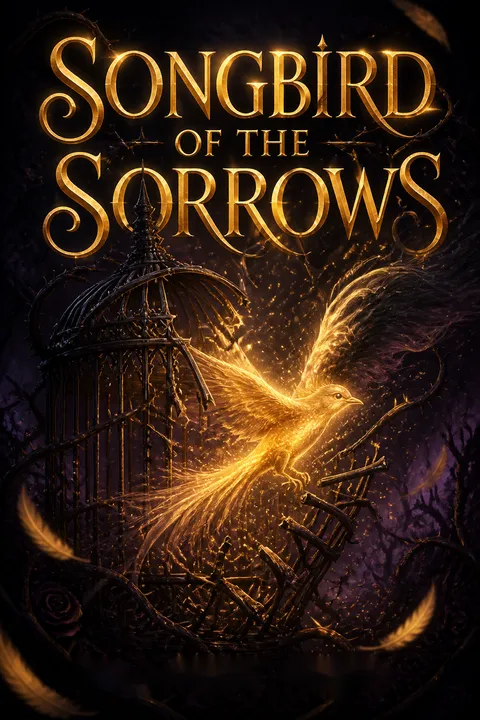

Plot Summary
Born Dead, Bound to Shadows
Aella is born dead, only to be revived by her mother's sacrifice—a moment that shapes her reckless, haunted nature. Her earliest memory is of death's embrace, and it becomes the silent rhythm of her life. Raised in the sun-drenched Sorrows, she is an outcast princess, her father's disappointment, and a secret within the Aviary—a clandestine order of spies and assassins. The Aviary's hierarchy is strict: Fledglings train in shadows, Songbirds gather secrets, Nightwings kill, and the Eagle rules. Aella's true name is a closely guarded secret, her identity hidden even from most within the order. Her life is a dance between longing for freedom and the iron bars of duty, her soul marked by the magic that saved her and the trauma that follows.
The Aviary's Final Test
Aella's final test as a Fledgling is to steal three significant items from the Aviary's most dangerous masters without being seen. She scales the blinding white tower, her body aching, her mind racing against the setting sun. Each item—blade, pendant, quill—represents a piece of the Aviary's power structure. Success means survival and advancement; failure means punishment or worse. The Aviary's philosophy is clear: knowledge is power, and survival depends on secrecy and skill. Aella's recklessness is both her weapon and her curse, and as she completes her test, she is reminded that her life is not her own. The order's history is one of blood, war, and the gods' indifference—a world where the only constant is betrayal.
Songbirds and Secrets
Aella finds solace in the Aviary's kitchen, where Maria, the cook, offers warmth and food—a rare kindness in a world of manipulation. Her friendship with Nyssa, another Fledgling, is a lifeline; together, they share secrets, laughter, and the pain of abandonment. Aella's hoarding of coins and mementos is a symptom of her trauma, a desperate attempt to buy freedom from a life she never chose. The Aviary's magic—goiteía—comes at a cost: each use drains the soul, shortening life. Aella's mother's sacrifice haunts her, and she refuses to waste the magic that is both a gift and a curse. The world outside is vibrant and dangerous, filled with rumors, betrayals, and the ever-present threat of being discovered.
Alpha Flight Returns
News spreads that Alpha Flight, the Aviary's elite, has returned after a year-long mission. The order is abuzz with speculation, and Aella's heart is caught between hope and dread. She watches the ship Nightingale dock, knowing someone she cares for is aboard. The return of Raven, a Nightwing with whom she shares a complicated, forbidden history, stirs old wounds and desires. The Aviary's rules are clear: love is forbidden, for it shifts loyalties and endangers the mission. Yet, the pull between Aella and Raven is undeniable, a dangerous thread that could unravel everything. The order's next move is shrouded in secrecy, and Aella senses that her life is about to change forever.
The Naming and the Kylix
The Naming ceremony is both a graduation and a test of loyalty. Fledglings become Songbirds, pledging their lives to the Aviary and the Sorrows. Each must drink from the Eagle's Kylix, a vessel infused with deadly magic. When one of Aella's cohort dies screaming, the brutality of the order is laid bare. Aella survives, her soul magic flaring in defiance, and is named Starling. The ceremony is a reminder that the Aviary's love is conditional, its punishments swift. The Eagle, Lord Malis, is both mentor and tormentor, his ambitions stretching beyond the Sorrows. Aella's new name is both a badge of honor and a shackle, binding her to a fate she cannot escape.
Nightingale's Arrival
Aella and Nyssa are summoned to the Eagle's study, where they learn the true purpose of Alpha Flight's mission: to infiltrate Eretria and steal a weapon that could end the world. The assignment is fraught with peril—failure means death, not just for them, but for those they love. The Eagle's threats are personal: Nyssa's life is leverage to ensure Aella's obedience. The mission requires Aella to assume her true identity as Princess Aella Sotiría, competing in Eretria's deadly Royal Trials for the prince's hand. The cost of failure is not just personal loss, but the potential destruction of the Sorrows. The lines between duty, love, and survival blur as the mission begins.
The Princess in Disguise
Aella is forced to return to the palace as the lost princess, her every move scrutinized by her father and the court. The reunion with her brother Kal is bittersweet—a reminder of the life she lost and the love that endures. The palace is both home and prison, its walls echoing with memories of betrayal and longing. Aella's role is a performance, her true self hidden beneath layers of deception. The court's politics are deadly, and every gesture is a potential weapon. The past is never far behind, and Aella must navigate a world where trust is a luxury she cannot afford.
The Sorrows' Golden Cage
In Eretria, Aella is thrust into a world of opulence and danger. The Royal Trials are a spectacle, designed to test and break the competitors. Prince Keres is both charming and cruel, his interest in Aella a double-edged sword. The court is a nest of vipers, each lady a rival, each alliance a potential betrayal. Aella's only allies are Nyssa, Myna, and the enigmatic Titaia, whose loyalties are as uncertain as the shifting winds. The trials are more than a contest for the prince's hand—they are a crucible that will reveal the true nature of power, love, and sacrifice.
The Prince's Deadly Trials
The first trial is a riddle posed by the Sphinx, a mythical creature bound by goiteía and forced to kill those who fail. Aella's wit and courage see her through, but the cost is high—each trial claims lives, and the court's applause is a mask for its bloodlust. The Sphinx is both prisoner and guardian, her suffering a mirror of Aella's own. Aella's compassion for the Sphinx forges a dangerous bond, and she vows to free her. The trials grow deadlier, each one a test of body and soul. The line between victim and victor blurs, and Aella's resolve is tested to its breaking point.
Sphinx and the Riddle
Aella's encounter with the Sphinx reveals the true nature of the weapon: it is not an object, but a person—Xan, a being of immense power, bound and tortured for his theïkós. The Sphinx's collar is a symbol of the court's cruelty, and Aella's promise to free her is a rebellion against the system that enslaves them both. The trials become a backdrop for a deeper struggle—the fight for agency, dignity, and the right to choose one's fate. Aella's alliances with Titaia and Myna deepen, and the mission's stakes become personal. The weapon's secret is a ticking bomb, and time is running out.
The Labyrinth's Blood Price
Aella's victory in the trials is overshadowed by betrayal. Keres, enraged by the theft of his weapon and the loss of his prize, reveals his true nature. Aella is captured, tortured, and drugged, her mind and body broken by days of pain and madness. The collar at her throat is both a literal and metaphorical shackle, a reminder that even victory can be a cage. The Flight's rescue is a desperate gamble, and Aella's survival is as much a testament to her will as to her friends' loyalty. The scars she bears are both visible and invisible, marking her as a survivor in a world that devours its own.
The Weapon in Chains
The Flight flees through the haunted forests of Eretria, pursued by the prince's soldiers and their own demons. The weapon—Xan—is revealed to be a living being, his power both a blessing and a curse. Aella's own theïkós, long suppressed, erupts in a moment of desperation, saving her friends but exposing her to new dangers. The journey home is a gauntlet of nightmares, trauma, and fractured trust. The Flight is changed, their bonds tested by secrets and the weight of survival. The Sorrows is no longer a sanctuary, but a battleground for the soul.
The Masked Ball
Back in the Sorrows, Aella is celebrated as a hero, but the victory is hollow. The Eagle's ambitions are revealed: he plans to steal Xan's theïkós, using forbidden magic to claim power for himself. The court's masks are thicker than ever, and Aella's own identity is a shifting mirage. The cost of freedom is steep, and the lines between friend and foe blur. The masked ball is both a celebration and a funeral, a moment of beauty before the storm. Aella's choices will determine not just her fate, but the fate of the realm.
Betrayal and Capture
Aella risks everything to free Xan, forging an alliance with Myna and Nyssa. The rescue is a desperate act of rebellion, a refusal to let another soul be devoured by the system. The cost is high—trust is shattered, and the future is uncertain. Xan's escape is both a victory and a betrayal, his parting words a promise and a curse. Aella's own power is both weapon and wound, her scars a map of survival. The world is changed, and the old order is dying. The songbird's flight is both an ending and a beginning.
Torture, Madness, and Escape
Aella's recovery is slow and painful, her mind haunted by nightmares and her body marked by scars. The Flight is fractured, each member carrying their own wounds. The Sorrows is no longer home, but a place of exile and suspicion. The Eagle's plans move forward, and the threat of war looms. Aella's relationships—with Raven, Nyssa, and her brother Kal—are tested by secrets, trauma, and the need for healing. The cost of survival is high, and the future is uncertain. The songbird's song is one of sorrow, but also of hope.
The Forest of Scars
The Flight's return to the Sorrows is both a homecoming and a reckoning. The Eagle's ambitions threaten to consume everything, and Aella must decide where her loyalties lie. Her bond with Xan is both a source of strength and a reminder of the world's cruelty. The scars she bears are a testament to her survival, and her refusal to be broken. The world is changing, and the old rules no longer apply. The songbird's flight is a challenge to the gods themselves—a refusal to accept the cage, and a promise to break it.
The Flight's Fractures
The Eagle's plan to steal Xan's theïkós is revealed, and the Flight is torn between duty and conscience. Aella's own power is both a weapon and a liability, her identity a secret that could change everything. The bonds of friendship and love are tested by betrayal, ambition, and the need for survival. The world is on the brink of war, and the cost of power is measured in blood. The songbird's last flight is a leap into the unknown, a refusal to be caged by fate.
The Weapon's True Nature
Aella's final act is to free Xan, risking everything to save a soul as broken as her own. The escape is both a victory and a loss, a moment of freedom bought with betrayal and sacrifice. Xan's parting words are a promise of forgiveness, and a challenge to the world that made them both weapons. The songbird's last flight is a testament to the power of choice, the possibility of redemption, and the refusal to be defined by the past.
The Eagle's Ambition
The Eagle's ambitions are laid bare, his willingness to sacrifice anything for power a mirror of the world's cruelty. Aella's rebellion is both personal and political, a refusal to let another soul be devoured by the system. The cost of knowledge is high, and the price of freedom is paid in blood. The songbird's last flight is a challenge to the gods, a promise that the cage will not hold forever.
The Songbird's Last Flight
Aella's journey ends where it began: on the edge of freedom, her wings battered but unbroken. The scars she bears are a testament to her survival, and her refusal to be defined by the world's cruelty. The songbird's last flight is a promise—to herself, to those she loves, and to the world—that the cage will not hold forever. The story ends with hope: the possibility of healing, the promise of new beginnings, and the certainty that even in a world of sorrow, the songbird's song endures.
Analysis
A modern fantasy of trauma, agency, and the cost of survivalSongbird of the Sorrows is a searing exploration of trauma, agency, and the struggle for dignity in a world built on secrets and power. At its heart is Aella—a survivor whose journey from caged songbird to self-possessed woman is both deeply personal and universally resonant. The novel interrogates the cost of survival: the scars we bear, the masks we wear, and the choices we make when the world offers only cages. The weaponization of people, the dehumanization of the "other," and the refusal to accept the roles assigned by fate are central themes. The story's emotional arc is one of endurance, hope, and the possibility of healing—not through erasure of pain, but through the forging of new bonds and the reclamation of agency. In a world where love is forbidden, knowledge is dangerous, and power is always hungry, Songbird of the Sorrows offers a powerful meditation on what it means to break free, to choose one's own path, and to sing a song of sorrow that is also a song of hope.
Review Summary
Reviews for Songbird of the Sorrows are generally positive, averaging 3.94/5. Readers praise the lyrical prose, rich world-building inspired by Greek mythology, and the strong female friendships, particularly between Aella and her best friend Nyssa. Common criticisms include underdeveloped romance between Aella and Raven, trials that felt insufficiently high-stakes, and pacing issues in the first half. Most reviewers found the final chapters compelling, with a shocking cliffhanger generating excitement for the sequel, due October 2026.
People Also Read
Characters
Aella Sotiría (Starling)
Aella is the outcast princess of the Sorrows, born dead and revived by her mother's sacrifice. Her life is marked by trauma, abandonment, and the relentless demands of the Aviary—a secret order of spies and assassins. She is fiercely intelligent, reckless, and driven by a longing for freedom she can barely articulate. Her relationships—with Nyssa, Raven, Kal, and others—are lifelines in a world that seeks to break her. Aella's soul magic is both a gift and a curse, her refusal to waste it a tribute to her mother's love. Her journey is one of survival, healing, and the refusal to be defined by the world's cruelty. She is both weapon and wound, her scars a map of her resilience. Her arc is one of transformation: from caged songbird to a woman who dares to break the bars.
Raven
Raven is a Nightwing, the Aviary's most dangerous weapon, and Aella's forbidden love. His loyalty to the order is absolute, but his heart is torn by his feelings for Aella—a love that is both salvation and damnation. Raven is haunted by his own past, his need for control a shield against the chaos of the world. His relationship with Aella is a dance of longing and restraint, passion and pain. He is both protector and jailer, his love a double-edged sword. Raven's arc is one of reckoning: with his own desires, his loyalty to the Aviary, and the cost of survival in a world that punishes love.
Nyssa (Sparrow)
Nyssa is Aella's closest friend, a fellow Songbird whose loyalty is unwavering. She is quick-witted, compassionate, and fiercely protective of those she loves. Nyssa's humor and warmth are a balm in a world of shadows, her friendship a lifeline for Aella. She is not without her own scars—her brother Lark is her anchor, and her past is marked by abandonment and survival. Nyssa's arc is one of resilience: she endures loss, betrayal, and the constant threat of death, but never loses her capacity for love and hope.
Lord Amon Malis (The Eagle)
The Eagle is the head of the Aviary, a man whose ambition knows no bounds. He is both mentor and tormentor, his love conditional and his punishments swift. Malis is a master of secrets, his every move calculated for maximum advantage. His willingness to sacrifice anything—and anyone—for power is a mirror of the world's cruelty. He is both the architect of Aella's suffering and the embodiment of the system she seeks to escape. His arc is one of hubris: his ambition is both his strength and his downfall.
Prince Keres Selmonious
Keres is the prince of Eretria, a man whose beauty masks a heart of cruelty. He is both seducer and tormentor, his interest in Aella a game with deadly stakes. Keres is a product of his world—a court that rewards cunning, ambition, and the ability to break others. His power is both seductive and destructive, his need for control a reflection of his own wounds. Keres's arc is one of exposure: his true nature is revealed in his treatment of Aella and the weapon, his cruelty a warning of what unchecked power can become.
Xan (Lyxander)
Xan is the weapon at the heart of the story—a being of immense power, bound and tortured for his theïkós. He is both victim and threat, his suffering a mirror of Aella's own. Xan's relationship with Aella is one of mutual recognition: both are caged, both are survivors, both refuse to be defined by the world's cruelty. His arc is one of liberation: from object to person, from weapon to ally, from victim to survivor. His forgiveness is both a gift and a challenge, a promise that healing is possible even in a world of sorrow.
Myna (Melantha)
Myna is a Nightwing whose loyalty is tested by the Aviary's cruelty. She is both ally and skeptic, her intelligence and skill matched by her capacity for compassion. Myna's relationship with Aella is one of growing trust, forged in the crucible of shared trauma and rebellion. Her arc is one of awakening: from loyal servant to active resistor, from shadow to light. She is a reminder that even in a world of secrets, truth and kindness can survive.
Titaia
Titaia is the prince's cousin and Aella's mentor during the trials. She is sharp, witty, and deeply aware of the court's dangers. Her loyalty is to herself and those she chooses to trust, and her alliance with Aella is both strategic and genuine. Titaia's arc is one of quiet rebellion: she navigates the court's dangers with grace, but refuses to be complicit in its cruelties. Her friendship with Aella is a rare gift in a world of masks.
Kal
Kal is Aella's half-brother, the only family member who truly loves her. Their bond is a lifeline, a reminder of the world that could have been. Kal's presence is both comfort and pain—a symbol of what Aella has lost and what she still fights for. His arc is one of endurance: he survives in a world that seeks to break him, his love for Aella a beacon in the darkness.
Sphinx
The Sphinx is both guardian and victim, bound by goiteía and forced to kill those who fail her riddles. Her suffering is a mirror of Aella's own, and their bond is forged in compassion and rebellion. The Sphinx's arc is one of tragic endurance: she is both a warning and a promise, a reminder that even the most powerful can be caged, and that freedom is worth any price.
Plot Devices
Dual Identity and Disguise
The narrative is driven by Aella's dual identity: outcast princess and secret Songbird. Her ability to shift between roles—Fledgling, Songbird, princess, spy—is both her greatest weapon and her deepest wound. Disguise is not just a physical act, but a psychological necessity; survival depends on the ability to hide, to perform, to become what others need her to be. This device is mirrored in the court's endless masquerade, the Aviary's layers of secrecy, and the world's refusal to see the truth behind the mask.
The Trials and the Sphinx
The Royal Trials are both literal and metaphorical: a series of deadly tests designed to break the competitors and reveal their true nature. The Sphinx's riddle is a classic device, a test of intellect and courage with life-or-death stakes. Each trial is a crucible, forging or destroying those who enter. The trials are also a commentary on power: who gets to set the rules, who survives, and at what cost.
The Weapon as Person
The revelation that the weapon is not an object, but a person—Xan—is a powerful inversion of the usual fantasy trope. Xan's suffering is a mirror of Aella's own, and his liberation is both a personal and political act. The device forces characters (and readers) to confront the cost of power, the meaning of agency, and the right to choose one's fate. The weapon's true nature is a ticking bomb, its secret a catalyst for rebellion and change.
Trauma, Memory, and Healing
The narrative is structured around trauma: Aella's nightmares, her scars, her struggle to distinguish memory from reality. The use of dreams, hallucinations, and flashbacks blurs the line between past and present, forcing the reader to experience the world as Aella does. Healing is not linear; it is a process of survival, reckoning, and the refusal to be defined by wounds. The story's emotional arc is one of endurance, hope, and the possibility of redemption.
Foreshadowing and Fate
The story is laced with foreshadowing: Calliope's warnings, the Sphinx's riddles, the ever-present threat of the gods' return. Fate is both a cage and a challenge, and the characters' struggle is to break free from the roles assigned to them. The narrative structure mirrors this tension: each chapter is a step toward an uncertain future, each choice a defiance of the world's expectations.
Download PDF
Download EPUB
.epub digital book format is ideal for reading ebooks on phones, tablets, and e-readers.








































