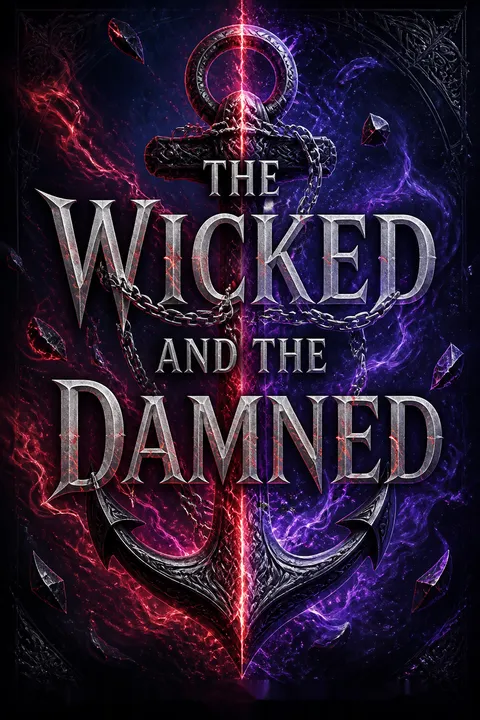

Plot Summary
Midnight Rescue and Illusion
In the icy darkness of a prison cell, Vaasa is rescued by Reid—or so she believes. The moment is both salvation and heartbreak, a desperate illusion conjured by her mind to survive the torture and isolation. When reality returns, she is still chained, her magic suppressed by iron, and Lord Vlacik and Ozik are her only company. The line between memory, hope, and hallucination blurs, revealing the psychological toll of captivity. Vaasa's longing for freedom and love is weaponized against her, and the only escape is within her own mind. The emotional devastation is palpable, as is the flicker of hope that refuses to die, even in the darkest place.
Prison Chains and Bargains
Dragged from her cell, Vaasa is paraded through the cold, hostile prison and city, her body and spirit battered. Ozik reveals his control over her fate, using her friend Amalie as leverage to force Vaasa's compliance. The threat is clear: any rebellion will cost Amalie her life. Vaasa's powerlessness is total—her magic suppressed, her body broken, her hope nearly extinguished. Yet, even as she is forced onto a ship and into Ozik's hands, a core of defiance remains. The emotional stakes are sharpened by the presence of Amalie, whose own suffering becomes a mirror for Vaasa's guilt and rage. The chapter is a crucible of fear, loyalty, and the beginnings of a new, darker resolve.
Ozik's Proposal Unveiled
In a tense, private confrontation, Ozik reveals his true intentions: Vaasa is to be the empress, a figurehead through whom he will rule Asterya. He manipulates law, religion, and Vaasa's own trauma to position her as the only legitimate heir, dissolving her marriage to Reid and offering her as a political prize to the highest bidder. Ozik's mastery of psychological warfare is on full display, as he alternates between threats and twisted mentorship. Vaasa's agency is stripped away, but her mind races, searching for cracks in his scheme. The emotional arc is one of humiliation, anger, and the first stirrings of a plan to reclaim her power.
Blood on the Border
Reid, driven by love and fury, leads a brutal campaign across the Asteryan border, leaving villages in ruin. The violence is relentless, and the cost is high—innocents suffer, and the line between justice and vengeance blurs. When presented with the dissolution of his marriage to Vaasa, Reid rejects the legality, clinging to the truth of their bond. The emotional toll of war, the weight of leadership, and the agony of separation from Vaasa drive him forward. The chapter is a meditation on the cost of love and the darkness that can grow in its absence.
Fortress of Ghosts
Returned to the Iron Fortress, Vaasa is forced to inhabit the rooms of her dead parents, surrounded by memories and ghosts. Ozik's control is absolute, and the fortress itself becomes a symbol of generational trauma and violence. Vaasa's psychological unraveling is matched by her growing determination to survive and subvert Ozik's plans. The emotional landscape is one of grief, fear, and the slow, painful process of reclaiming agency in a world built to destroy her.
Secrets in the Study
Alone in her father's study, Vaasa uncovers Dominik's secret journal, filled with coded notes, drawings, and evidence of Asterya's systematic torture of witches. The discovery of her mother's letter and the missing necklace reveals a legacy of bargains, betrayals, and a weapon that may be the key to defeating Ozik. The emotional impact is devastating—Vaasa is forced to confront her family's complicity and her own role in the cycle of violence. Knowledge becomes both a burden and a source of hope.
Pirate Waters and Promises
Reid, Koen, and Melisina escape Asteryan pursuit by allying with Sachia, a pirate witch with her own vendetta. The journey through treacherous waters is fraught with danger, but also with the possibility of new alliances and the hope of reaching Vaasa. The emotional arc is one of desperation, resourcefulness, and the forging of bonds in adversity. The pirates' world is brutal but honest, a stark contrast to the duplicity of Asteryan court.
The Lords' Deadly Dance
Vaasa is paraded before Asterya's nobility, forced to play the role of the broken, cleansed heiress. The lords vie for her hand, each with their own agenda, while Ozik orchestrates the spectacle to consolidate his power. The public's cruelty is matched by the private machinations of Vlacik and Karev, who seek to use Vaasa as a pawn. The emotional tension is high, as Vaasa navigates humiliation, rage, and the necessity of deception.
Ghosts of the Past
Vaasa is confronted by Roman, her first love, now returned as her lead sentinel. Their reunion is fraught with unresolved grief, suspicion, and the shadow of betrayal. Roman's presence complicates Vaasa's plans, as old feelings war with new realities. The emotional core is the impossibility of returning to innocence, and the necessity of choosing who to trust in a world where every relationship is a potential weapon.
Pirate Deals and Salt
Vaasa, Karev, and Sachia broker a deal involving salt, black powder, and the promise of a prison break. The negotiations are layered with hidden motives, as each party seeks to use the others for their own ends. Vaasa's role as translator and double agent is both empowering and perilous. The emotional stakes are heightened by the knowledge that every alliance is temporary, and betrayal is inevitable.
The Necklace's Warning
Vaasa, guided by visions from Veragi, discovers the true nature of her mother's necklace: it is a piece of an anchor that can suppress or channel godly power. The visions reveal Ozik's tragic past, his love for Vaasa's mother, and the bargain that doomed them all. The emotional impact is profound—Vaasa is both weapon and victim, inheritor of a legacy she never chose. The necklace becomes a symbol of both hope and the terrible cost of power.
Bargains and Betrayals
The bond between Vaasa and Ozik is exposed as a double-edged sword—he is both mentor and jailer, victim and vessel. Zetyr, the god of bargains, possesses Ozik, and Vaasa realizes she is being trained to kill him and reseal the god. The emotional arc is one of horror, pity, and the grim acceptance of her role in a cosmic struggle. Every relationship is recast in the light of ancient bargains and the inevitability of sacrifice.
Magic's Double-Edged Bond
As Vaasa's mastery of magic grows, so does the danger of losing herself to the emotions and power of others. The bond with Ozik allows her to channel his magic, but also threatens to consume her. The emotional tension is the fear of becoming what she hates, and the realization that survival may require embracing the darkness within.
The Pirate's Price
The prison break reveals the true cost of rebellion—Sachia's brother is found dead, a casualty of Karev's cruelty. Sachia's grief and rage become a force of nature, and her alliance with Vaasa and Reid is sealed in blood. The emotional core is the solidarity of the broken, and the necessity of vengeance in a world that offers no justice.
The Dress and the Signal
A simple dress becomes a lifeline, as Reid's leather tie is sewn into its lining, signaling his presence and love. Vaasa is forced into an engagement with Karev, using the arrangement as cover for her true plans. The emotional arc is one of longing, hope, and the bittersweet knowledge that every gesture of love is also a risk.
Schemes in the Shadows
The engagement party becomes the stage for assassination, betrayal, and the unraveling of Asterya's power structure. Vaasa kills Karev, using her magic to claim agency and vengeance. Roman's true loyalties are revealed, and every alliance is tested. The emotional stakes are at their highest, as love, power, and survival collide.
The Prison's True Cost
The prison break is a crucible of violence, loss, and revelation. Amalie is possessed by Veragi, and the battle between gods erupts on the bridge. Vaasa must choose between love and power, between saving Reid and fulfilling her destiny. The emotional climax is one of agony, sacrifice, and the forging of a new self in the fires of conflict.
The Anchor's Secret
Vaasa's visions reveal the full tragedy of Ozik's life—his love for Julianna, the bargains that doomed them, and the cost of sealing a god. The anchor is both weapon and curse, and Vaasa must decide whether to finish what her mother could not. The emotional resolution is one of sorrow, understanding, and the acceptance of a burden that cannot be refused.
The Executioner's Mask
As the city burns, Reid dons the executioner's mask to save Koen, while Vaasa unleashes her magic to destroy her enemies. The collapse of Asterya is both literal and symbolic, as the old order is swept away in fire and blood. The emotional arc is one of catharsis, liberation, and the terror of what comes next.
The Witch Unleashed
In the chaos of escape, Vaasa's magic becomes a force of nature, devastating friend and foe alike. Only Reid's presence can anchor her, reminding her of love and humanity. The emotional core is the danger of unchecked power, and the necessity of connection to survive it.
The Bridge of Gods
On the bridge, gods and witches clash—Veragi and Zetyr, Vaasa and Ozik, love and power. The battle is both physical and metaphysical, a struggle for the soul of the world. Vaasa's choices are irrevocable, and the cost of victory is steep. The emotional climax is one of loss, triumph, and the forging of a new destiny.
The Gap and the Escape
With Asterya in flames and the gods' war unresolved, Vaasa, Reid, and their allies escape through the treacherous river gap, pursued by enemies and haunted by the bargains that bind them. The emotional resolution is one of exhaustion, hope, and the knowledge that the true cost of freedom is yet to be paid.
Analysis
A modern epic of trauma, agency, and the cost of powerThe Wicked and the Damned is a dark, emotionally charged fantasy that interrogates the legacy of violence, the dangers of unchecked ambition, and the possibility of redemption through connection. At its core, the novel is about the psychological scars left by generational trauma—how the sins of the past are visited upon the present, and how survival often requires becoming what one hates. Vaasa's journey is emblematic of the struggle to reclaim agency in a world that seeks to define and destroy her. The novel's use of magic as both a weapon and a curse is a powerful metaphor for the inheritance of trauma and the double-edged nature of power. The relationships between characters—especially the bonds of love, mentorship, and betrayal—are rendered with psychological depth, revealing the ways in which intimacy can be both a source of healing and a tool of manipulation. The war between gods is both literal and symbolic, a backdrop for the personal battles that define each character's arc. Ultimately, the novel suggests that freedom is never free, that every bargain has a cost, and that the only way to break the cycle of violence is to confront the darkness within and choose, again and again, to love in spite of it.
Review Summary
Most readers praise The Wicked and the Damned as a strong, darker sequel with expanded world-building, compelling political intrigue, and impressive character development, particularly for Vaasa. Many loved her resilience and cunning, and Reid remains a fan-favorite MMC. Common critiques include the reduced Reid and Vaasa shared page time due to their separation, occasional pacing issues in the middle sections, and some readers feeling the romance lacked sufficient angst. Overall, the majority found it a satisfying continuation, with the final act receiving particular praise.
People Also Read






Characters
Vaasa Kozár
Vaasa is the last living Kozár, heir to Asterya, and a Veragi witch whose power is both her curse and her salvation. Her journey is one of relentless trauma—imprisonment, torture, betrayal by family and lovers—but also of fierce resilience and cunning. Psychoanalytically, Vaasa is shaped by generational trauma, forced to navigate a world where every relationship is transactional and every act of love is weaponized. Her bond with Ozik is both a source of power and a chain, and her love for Reid is the anchor that keeps her from losing herself to darkness. Vaasa's development is a descent into the heart of power, where she must embrace both her capacity for violence and her longing for connection. Her arc is one of self-forgiveness, agency, and the acceptance of a destiny she never chose.
Ozik Vichardi
Ozik is a master of political and magical manipulation, serving as both Vaasa's tutor and her jailer. His tragic love for Vaasa's mother, Julianna, and his centuries-long struggle as the vessel of Zetyr, the god of bargains, define his character. Ozik is both victim and perpetrator, a man whose attempts to control fate only deepen his own suffering. His relationship with Vaasa is complex—part mentorship, part rivalry, part desperate plea for redemption. Psychoanalytically, Ozik embodies the dangers of unchecked ambition and the impossibility of escaping the consequences of one's bargains. His development is a slow unraveling, as the god within him gains dominance, and his final act is to arm Vaasa with the means to end his torment.
Reid of Mireh
Reid is Vaasa's husband, the headman of Icruria, and a man driven by love, loyalty, and the scars of war. His journey is one of violence and tenderness, as he leads armies and risks everything to save Vaasa. Psychoanalytically, Reid is shaped by the tension between his capacity for brutality and his longing for peace. His relationship with Vaasa is the emotional core of the story—a partnership forged in trauma, tested by separation, and redeemed by mutual sacrifice. Reid's development is a movement from vengeance to hope, from isolation to connection.
Roman Katayev
Roman is Vaasa's childhood love, returned as her lead sentinel and ultimately revealed as a pawn of greater powers. His arc is one of longing, jealousy, and the corrosive effects of ambition. Psychoanalytically, Roman represents the dangers of nostalgia and the inability to move beyond the past. His love for Vaasa is genuine but twisted by resentment and the desire for power. Roman's development is a tragic descent into betrayal, as he becomes both victim and perpetrator in the cycle of violence.
Amalie
Amalie is Vaasa's closest friend and a fellow witch, whose possession by the goddess Veragi becomes a turning point in the war of gods. Her suffering is both personal and cosmic, as she becomes the battleground for forces beyond her control. Psychoanalytically, Amalie represents the cost of loyalty and the dangers of self-sacrifice. Her relationship with Vaasa is one of unconditional love, and her fate is a mirror for Vaasa's own struggles with agency and destiny.
Lord Karev
Karev is a powerful lord who seeks to use Vaasa as a means to the throne. His charm masks a ruthless ambition, and his willingness to betray and kill marks him as a true product of Asterya's brutal politics. Psychoanalytically, Karev is the embodiment of patriarchal power and the dangers of unchecked confidence. His relationship with Vaasa is transactional, and his downfall is a testament to the perils of underestimating those one seeks to control.
Lord Vlacik
Vlacik is the architect of Vaasa's suffering in prison, a man obsessed with weaponizing magic and maintaining his family's legacy. He is both a personal and systemic antagonist, representing the cruelty of Asterya's old guard. Psychoanalytically, Vlacik is driven by fear and the need to dominate, and his death is both a personal victory for Vaasa and a symbolic end to an era.
Sachia
Sachia is a pirate captain and Imros witch whose quest to save her brother brings her into alliance with Vaasa and Reid. Her grief and rage are transformative, turning her from a self-interested survivor into a force for vengeance and solidarity. Psychoanalytically, Sachia represents the power of found family and the necessity of violence in a world without justice. Her development is a movement from isolation to community, from vengeance to purpose.
Melisina
Melisina is Reid's mother and the high witch of Veragi, a figure of wisdom, compassion, and quiet strength. She is the emotional and magical anchor for Vaasa and the other witches, guiding them through trauma and teaching them to wield their power. Psychoanalytically, Melisina represents the possibility of healing and the importance of intergenerational knowledge. Her presence is a reminder that love and power need not be mutually exclusive.
Zetyr
Zetyr is the ancient deity possessing Ozik, the embodiment of the dangers of unchecked ambition and the consequences of broken bargains. He is both a literal and symbolic antagonist, representing the destructive potential of power unmoored from compassion. Psychoanalytically, Zetyr is the shadow self, the part of every character that seeks control at any cost. His war with Veragi is the cosmic backdrop for the personal struggles of the characters.
Plot Devices
Duality of Magic and Power
The narrative is structured around the duality of magic—sentimental (emotional, internal) and corporeal (physical, external)—and the bargains that bind characters to gods and to each other. The anchor, split into three pieces, is both a literal and symbolic device, representing the fragmentation of power and the impossibility of wholeness without sacrifice. The bond between Vaasa and Ozik is a living plot device, allowing for the transfer of magic, the sharing of pain, and the possibility of channeling or defeating gods. Foreshadowing is woven through visions, dreams, and the repetition of motifs (the necklace, the wolf, the serpent), creating a sense of inevitability and tragic destiny. The narrative structure alternates between personal trauma and cosmic conflict, using parallel arcs (Vaasa/Ozik, Vaasa/Reid, Vaasa/Roman) to explore the psychological costs of power, love, and survival.
Download PDF
Download EPUB
.epub digital book format is ideal for reading ebooks on phones, tablets, and e-readers.








































