
Key Takeaways
1. Centuries of Blindness: The Slow Dawn of Microbial Awareness
Yet that crucial connection remained out of reach for years, decades, for a full two centuries.
Early glimpses. Antonie van Leeuwenhoek's discovery of "animalcules" in the late 17th century revealed a hidden world of microscopic life. His detailed observations, shared with the Royal Society, were seen as wonders, but their significance for human health was entirely missed.
Missed connections. Despite the Great Plague of London in 1665 and the urgent need for explanations, neither Leeuwenhoek nor his contemporaries, including Robert Hooke, linked these tiny beings to human suffering. The idea that something so small could cause such devastation was simply not conceived.
The long gap. This intellectual blindness persisted for nearly two hundred years. While the existence of microbes was known, the leap to understanding their pathogenic role in diseases like plague, smallpox, or puerperal fever remained unmade, highlighting a profound conceptual barrier.
2. The Great Chain of Being: A Mental Fetters on Discovery
Deeply held and often unstated assumptions about humanity’s place in nature made it difficult, and at times almost impossible, to imagine that something so diminutive as a microbe might matter to human beings.
Hierarchical worldview. The prevailing "Great Chain of Being" cosmology placed humans firmly above all other creatures, including the "contemptible vermine" of the microscopic world. This ingrained belief fostered a sense of human dominion, making it hard to accept that tiny, unseen life forms could exert control over human fate.
Social hierarchies. This worldview extended to human society, where concepts like "a gentleman's hands are clean" (Meigs) implicitly rejected the idea that doctors could transmit disease. Such social assumptions reinforced resistance to early contagion theories, as they challenged the perceived purity and authority of the medical elite.
Obstacle to inquiry. If microbes were merely curiosities or part of God's grand design, their potential as agents of disease was overlooked. This cultural and intellectual framework acted as a powerful "mental fetter," preventing scientists from asking the right questions or pursuing the implications of early observations.
3. Empirical Victories: Saving Lives Without Knowing the Germ
This was germ theory without germs.
Smallpox inoculation. Cotton Mather and Zabdiel Boylston championed smallpox inoculation in Boston in 1721, based on African and Ottoman practices. They observed that introducing a mild form of the disease conferred immunity, saving lives, but lacked a biological explanation for how it worked.
Puerperal fever. Alexander Gordon (1795), Oliver Wendell Holmes (1843), and Ignaz Semmelweis (1847) independently identified that childbed fever was transmitted by doctors' unwashed hands. Their insistence on cleanliness drastically reduced mortality, demonstrating effective intervention without identifying the specific bacterial pathogen.
Civil War antisepsis. Middleton Goldsmith's use of bromine to treat hospital gangrene during the American Civil War (1863) saved thousands of soldiers. He understood that a "poison" was at work and could be neutralized, but like his predecessors, he lacked the specific microbial identification. These empirical successes proved that interventions could work, even in the absence of a complete germ theory.
4. Pasteur's Fermentation Revolution: Life is a Germ
Life is a germ and a germ is Life.
Fermentation's secret. Louis Pasteur's investigations into why beet juice, wine, and beer spoiled (1856-1860) revealed that living microorganisms, like yeast and bacteria, were responsible for specific chemical transformations. He showed that different microbes produced different fermentation products, challenging the prevailing chemical-only theories.
Disproving spontaneous generation. Using his famous swan-necked flasks (1864), Pasteur definitively demonstrated that microbes do not spontaneously arise from inert matter. Instead, they are ubiquitous, carried by air, and only grow from pre-existing "germs," solidifying the concept of microbial agency.
Ubiquitous actors. This work established microbes as active, living agents capable of profound chemical changes in their environment. It shifted the scientific understanding from viewing microbes as mere byproducts of decay to recognizing them as vital, omnipresent actors in the natural world, setting the stage for their role in disease.
5. Koch's Postulates: Linking Specific Germs to Specific Diseases
In the bacillus we have, therefore, the actual tubercule virus [pathogen].
Anthrax breakthrough. Robert Koch, a country doctor, definitively linked a specific bacterium (Bacillus anthracis) to anthrax in 1876. Through meticulous experiments, he isolated the microbe, cultured it, and showed that it alone could cause the disease in healthy animals, proving it was the cause, not just a consequence.
Tuberculosis solved. Applying new staining techniques and culture methods, Koch identified Mycobacterium tuberculosis as the cause of tuberculosis in 1882. This was a monumental achievement, as TB was the leading cause of death in Europe and North America, and its microbial origin had long been elusive.
Koch's Postulates. These successes led Koch to formalize criteria for proving a causal link between a microbe and a disease. This framework, known as Koch's Postulates, transformed bacteriology into a predictive science, enabling the systematic identification of pathogens:
- The microorganism must be found in all organisms suffering from the disease but not in healthy organisms.
- The microorganism must be isolated from a diseased organism and grown in pure culture.
- The cultured microorganism should cause disease when introduced into a healthy organism.
- The microorganism must be reisolated from the inoculated, diseased experimental host and identified as being identical to the original specific causative agent.
6. Cholera's Lesson: Epidemiology Meets Bacteriology
It can now be taken as conclusive that the comma bacillus is the actual cause of cholera.
Snow's epidemiological map. John Snow's investigation of the 1854 Broad Street cholera outbreak in London demonstrated that the disease was waterborne. His meticulous mapping of deaths around a contaminated pump, and his broader comparison of water company service areas, provided compelling evidence for a specific, transmissible agent, even though he couldn't identify it.
Koch's microbial identification. In 1883-1884, Robert Koch traveled to Egypt and India, where he isolated the comma-shaped bacterium, Vibrio cholerae, from cholera victims and contaminated water sources. This confirmed Filippo Pacini's earlier, ignored discovery and provided the specific germ Snow's epidemiology had predicted.
Hamburg's tragedy. The 1892 Hamburg cholera epidemic starkly illustrated the consequences of ignoring germ theory. While neighboring Altona, with filtered water and proactive public health, suffered minimally, Hamburg's denial and delayed action led to thousands of deaths. This event served as a powerful, real-world validation of Koch's findings and the importance of public health measures.
7. The Magic Bullet Era: Antibiotics and Vaccines Transform Medicine
We now possess a vaccine of anthrax which is capable of saving animals from this fatal disease... a technique that we believe can be generalized.
Pasteur's vaccines. Building on Jenner's empirical smallpox vaccine, Pasteur developed attenuated vaccines for chicken cholera (1880) and anthrax (1881). His work established the principle that weakened pathogens could confer immunity, laying the theoretical groundwork for widespread vaccine development.
Ehrlich's Salvarsan. Paul Ehrlich's systematic search for a "magic bullet" led to Salvarsan (Compound 606) in 1910, the first synthetic drug to specifically target and cure a bacterial infection (syphilis) within the human body. This opened the door to chemotherapy for infectious diseases.
Penicillin and sulfa drugs. Alexander Fleming's accidental discovery of penicillin (1928) and Gerhard Domagk's development of sulfa drugs (Prontosil, 1932) ushered in the antibiotic era. These drugs proved effective against a wide range of bacterial infections, transforming the treatment of diseases like pneumonia, meningitis, and wound infections, and dramatically reducing mortality in World War II.
8. The Triumph of Life Expectancy: Germ Theory's Greatest Gift
These last seventy or eighty years form the only time in history in which humans—at least those in reach of adequate healthcare systems—have not had to fear either the most prolific childhood killers or the worst pandemic assassins.
Dramatic increase in lifespan. Germ theory, coupled with public health interventions and later antibiotics and vaccines, led to an unprecedented increase in human life expectancy. Global life expectancy at birth, around 30 years in 1870, soared past 70 by the turn of the millennium, largely due to the conquest of infectious diseases.
Childhood saved. The most significant impact was on child mortality. Diseases like measles, diphtheria, and whooping cough, once rampant killers of infants and young children, were largely brought under control through vaccination, allowing millions more to survive into adulthood.
Eradication of smallpox. The ultimate triumph was the global eradication of smallpox in 1980, a feat of human ingenuity and collective action. This demonstrated that a deadly pathogen could be completely eliminated from the wild, offering a powerful vision of what germ theory could achieve.
9. The Shadow of Resistance: Microbes Fight Back
Then there is the danger that the ignorant man may easily underdose himself and by exposing his microbes to non-lethal quantities of the drug make them resistant.
Fleming's prophecy. As early as 1945, Alexander Fleming warned that misuse of penicillin could lead to antibiotic resistance. His "Mr. X" parable vividly illustrated how underdosing could "educate" microbes to resist drugs, a phenomenon that quickly became a reality with both sulfa drugs and penicillin.
The rise of superbugs. Antibiotic resistance emerged rapidly across various pathogens, from streptomycin-resistant TB (1948) to MRSA (1961) and extensively drug-resistant tuberculosis (XDR-TB). This ongoing microbial evolution, driven by selective pressure from drug use, has created "superbugs" resistant to multiple or all available treatments.
A global threat. The consequences are dire, with millions of antibiotic-resistant infections and tens of thousands of deaths annually in the US alone. The case of the woman in Reno, killed by a Klebsiella pneumoniae strain resistant to all 26 available antibiotics, starkly illustrates the return of untreatable infections, threatening to squander germ theory's greatest gift.
10. Hubris and Humanity: Squandering Our Microbial Inheritance
We are not smarter than the microcosmos, not in any way that creates a lasting hierarchy.
The illusion of dominion. Despite germ theory's revelations about our interconnectedness with microbes, an old assumption of human dominion over nature persists. This hubris, fueled by technological triumphs, leads to the belief that human cleverness can always overcome microbial adaptation, ignoring the evolutionary capacity of pathogens.
Misuse and inaction. This overconfidence manifests in the overuse of antibiotics in agriculture, underdosing in medicine, and the rejection of basic public health measures (e.g., during the COVID-19 pandemic). Such human choices, driven by economic interests, political agendas, or individual liberty claims, actively accelerate resistance and undermine collective defense.
A call for adaptation. The ongoing struggle with antibiotic resistance and new pandemics like COVID-19 highlights the need to shift from a "war against microbes" metaphor to one of adaptation and coexistence. Recognizing our embeddedness in natural systems, rather than standing above them, is crucial for rebuilding public health systems, fostering new research, and ensuring the long-term effectiveness of our microbial defenses.
Review Summary
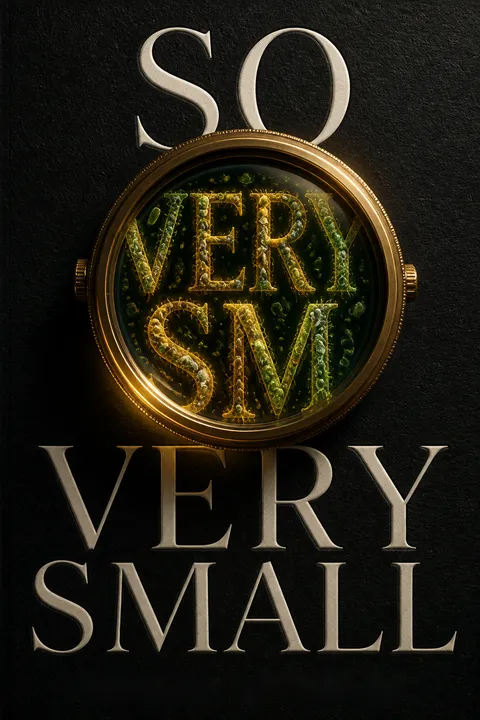
So Very Small receives strong praise (4.3/5) for its accessible, engaging history of germ theory—from early microscopy to COVID-19. Readers appreciate Levenson's narrative style, which makes complex science feel like a detective story. Many highlight its timely warnings about antibiotic resistance, vaccine misinformation, and declining public health investment. Common criticisms include wanting more coverage of modern microbiology, occasionally excessive disease descriptions, and a perceived contradiction in criticizing both historical and contemporary scientific skeptics. Most agree it's an informative, thought-provoking read for non-scientists.
People Also Read






About the Author
Other books by Thomas Levenson

Download PDF
Download EPUB
.epub digital book format is ideal for reading ebooks on phones, tablets, and e-readers.








































