
Key Takeaways
1. A Flawed Genesis: Covert Action Trumps Core Mission
"It was not intended as a 'Cloak & Dagger Outfit'!" he wrote. "It was intended merely as a center for keeping the President informed on what was going on in the world."
Truman's vision. President Harry Truman, thrust into office in 1945, initially envisioned the Central Intelligence Agency (CIA) as a global news service, a central hub for coordinating intelligence to keep him informed. He explicitly stated it was "not intended as a 'Cloak & Dagger Outfit'," reflecting a desire for objective information rather than clandestine intervention. This foundational intent was quickly subverted.
Donovan's ambition. General William J. Donovan, head of the wartime Office of Strategic Services (OSS), advocated for a "global and totalitarian" intelligence service capable of both understanding and changing foreign events through "subversive operations abroad." Despite Truman's initial dismissal of Donovan and the disbanding of the OSS, Donovan's vision for a proactive, covert agency laid the blueprint for the CIA's eventual direction, setting the stage for a long-standing internal conflict over its core mission.
Blueprint for subversion. The National Security Act of 1947, which formally created the CIA, contained vague language allowing for "other functions and duties related to intelligence affecting the national security." This loophole, championed by figures like James Forrestal and George Kennan, was immediately exploited to launch covert actions, transforming the nascent agency from a mere information gatherer into a clandestine operational force, often without explicit presidential oversight or congressional approval.
2. The Dominance of Covert Operations, Often Disastrous
"The agency's triumphs have saved some blood and treasure. Its mistakes have squandered both. They have proved fatal for legions of American soldiers and foreign agents..."
Blind stabs in the dark. Under Allen Dulles and Frank Wisner, covert operations became the CIA's dominant force, consuming most of its budget and personnel. These operations, often conceived as "blind stabs in the dark," aimed to change the course of history through coups, propaganda, and paramilitary actions, frequently without adequate doctrine or experience. Early failures, such as the disastrous Albanian and Ukrainian infiltration missions, resulted in hundreds of foreign agents being captured or killed.
Early "triumphs" built on deception. The successful coups in Iran (1953) and Guatemala (1954) cemented the CIA's reputation as a "silver bullet" in the arsenal of democracy, despite being achieved through bribery, coercion, and brute force, not subtle espionage. These operations were often based on fabricated intelligence and involved lying to presidents and the public, creating an illusion of omnipotence that masked deep-seated operational flaws and set dangerous precedents for future interventions.
A cycle of overreach. The allure of covert action led to a continuous cycle of overreach, with the CIA undertaking 170 new major covert actions in 48 nations under Eisenhower alone. These interventions, often in countries where American spies lacked cultural or linguistic understanding, frequently backfired, destabilizing regions and fostering anti-American sentiment, as seen in the failed Indonesian coup (1958) and the long-term consequences in Iraq and Syria.
3. Systemic Intelligence Blindness: Repeated Failures to Foresee
"The one crime of lasting consequence has been the CIA's inability to carry out its central mission: informing the president of what is happening in the world."
Consistent misjudgment. From its inception, the CIA repeatedly failed to provide timely and accurate warnings of major global events. Key examples include:
- Missing the Soviet atomic bomb (1949)
- Failing to predict the Korean War (1950) and Chinese intervention
- Being surprised by the 1956 Hungarian uprising and the Suez crisis
- Underestimating Soviet strategic capabilities for decades
- Missing the collapse of the Soviet Union (1991)
Lack of deep understanding. This systemic blindness stemmed from a profound lack of human intelligence, particularly within the Soviet Union and other hard targets. Analysts often resorted to "guesstimates" or "mirror imaging," projecting American intentions onto adversaries. The agency's reliance on foreign intelligence services and technological solutions like spy planes (U-2) and satellites, while providing valuable data, could not compensate for the absence of genuine insight into enemy intentions and political dynamics.
Ignoring inconvenient truths. The CIA's internal culture often prioritized conformity over critical analysis, leading to "wishful blindness" where reporting was rejected if it did not fit presidential preconceptions. This tendency to tailor intelligence to policy, rather than the reverse, meant that crucial warnings were often dismissed or suppressed, leaving presidents "blind and crippled" at critical junctures.
4. Political Weaponization and Internal Deception
"There are some things he doesn't tell the President," his sister confided to a State Department colleague. "It is better that he doesn't know."
Presidential manipulation. Presidents, from Eisenhower to Nixon, frequently used the CIA for political ends, demanding covert actions that served their agendas rather than national security. This often involved pressuring the agency to produce intelligence that supported pre-determined policies, leading to the "politicization" of analysis and a blurring of the lines between objective assessment and political advocacy.
CIA's self-preservation. To maintain its standing and budget in Washington, the CIA often engaged in deception, not only with foreign adversaries but also with its own government. This included:
- Lying to Presidents Eisenhower and Kennedy about the true prospects of the Bay of Pigs.
- Falsifying reports on the Vietnam War to align with White House narratives.
- Concealing operational failures and exaggerating successes to Congress.
Erosion of plausible deniability. The U-2 incident (1960) and the Bay of Pigs (1961) publicly exposed presidential deception, shattering the doctrine of "plausible deniability" and eroding public trust. This forced presidents to lie directly to the American people, a practice that continued through the Vietnam War and Iran-Contra, fundamentally altering the relationship between the government and its citizens.
5. Ethical Lapses and Moral Compromises
"It is inconceivable," he said, "that a secret arm of the government has to comply with all the overt orders of the government."
Crossing moral boundaries. The CIA's pursuit of "dirty tricks" led to profound ethical compromises, often justified by the existential threat of the Cold War. These included:
- Assassination plots: Against Fidel Castro, Patrice Lumumba, and Rafael Trujillo, often initiated or approved at the highest levels of government.
- Mind control experiments: Project Artichoke and Ultra involved drug-induced interrogations and tests on unwitting human subjects, including prisoners.
- Domestic spying: Operations like CHAOS involved illegal surveillance of American citizens and anti-war groups, violating the CIA's charter.
Angleton's "wilderness of mirrors." James Angleton, the long-serving chief of counterintelligence, became consumed by a "master plot" theory, believing the KGB had deeply penetrated the CIA. His paranoia led to:
- The illegal imprisonment and torture of Soviet defector Yuri Nosenko.
- False accusations against loyal CIA officers.
- Paralysis of Soviet operations for a decade.
A culture of impunity. The agency's internal investigations into these abuses were often suppressed or whitewashed, protecting individuals and the institution from accountability. This lack of transparency and self-correction allowed morally reprehensible practices to persist, damaging the CIA's integrity and fostering a sense of exceptionalism that placed it above the law.
6. Vietnam: The War of Ignorance and Falsified Truths
"The great sadness," Helms said in an oral history recorded for the LBJ Library, "was our ignorance--or innocence, if you like--which led us to mis-assess, not comprehend, and make a lot of wrong decisions."
Profound ignorance. The Vietnam War became a stark illustration of the CIA's "national ignorance of Vietnamese history, society, and language." Despite a massive commitment of resources and personnel, the agency failed to understand the enemy's motivations, capabilities, or will to fight, leading to a prolonged and ultimately unwinnable conflict.
Manipulated intelligence. The White House and Pentagon consistently pressured the CIA to produce optimistic reports, leading to the falsification of crucial data, such as the "order of battle" estimates of enemy strength. This deliberate distortion of intelligence, exemplified by the Gulf of Tonkin incident, served political agendas but blinded policymakers to the realities on the ground, prolonging the war and costing countless lives.
Covert action's futility. The CIA's extensive covert operations in Southeast Asia, from Project Tiger's disastrous infiltration missions into North Vietnam to the Phoenix program's controversial counterinsurgency efforts, proved largely ineffective. These efforts, often conducted with "more courage than wisdom," failed to stem the tide of the insurgency and further alienated local populations, demonstrating the limits of clandestine intervention without a fundamental understanding of the conflict.
7. Post-Cold War Identity Crisis and Decline
"The only remaining superpower doesn't have enough interest in what's going on in the world to organize and run an espionage service," Richard Helms said a decade ago.
Loss of purpose. The collapse of the Soviet Union in 1991 left the CIA in an existential crisis, having lost its primary enemy and defining mission. This led to a period of "disarray" and "spiritual" decline, as the agency struggled to redefine its role in a rapidly changing world, grappling with a "multiplicity of tasks" from climate change to cybercrime.
Budget cuts and brain drain. The "peace dividend" led to significant budget cuts and a mass exodus of experienced personnel, including senior spies and analysts. This "brain drain" left the clandestine service "in disarray" and "bottom-heavy with beginners," severely diminishing its operational and analytical capabilities at a time when new, diffuse threats like terrorism were emerging.
Inability to adapt. Despite warnings of "catastrophic systemic intelligence failure," the CIA struggled to adapt its antiquated structures and recruitment practices to the demands of the information age. Its cultural myopia meant a severe lack of linguistic and cultural expertise in critical regions, rendering it incapable of understanding new adversaries or effectively recruiting diverse talent.
8. Iraq WMD: The Catastrophic Culmination
"We were almost all wrong," he said.
A "grave mistake." The CIA's assessment of Iraq's weapons of mass destruction (WMD) prior to the 2003 invasion represented the "worst body of work in its long history." Driven by political pressure and institutional weakness, the agency produced a "special national intelligence estimate" that confidently asserted Iraq possessed chemical, biological, and nuclear weapons programs, despite "completely frail" and "faulty" evidence.
Politicized intelligence. The agency's desire for White House approval led it to "sell" intelligence, presenting secondhand hearsay and uncorroborated defector accounts as "slam dunk" evidence. This included relying on a single, unreliable source ("Curveball") for biological weapons claims and misinterpreting aluminum tubes for nuclear weapons. The CIA's reports were "more alarmist and less nuanced," reinforcing presidential preconceptions rather than challenging them.
Devastating consequences. The failure to accurately assess Iraq's arsenal led to a war based on false premises, costing thousands of American lives and hundreds of billions of dollars. The subsequent inability to find WMDs shattered the CIA's credibility, leading President Bush to dismiss its reports as "just guessing." This ultimate intelligence failure underscored the agency's inability to learn from its past mistakes and its vulnerability to political manipulation.
9. Erosion of Trust and the Rise of Militarized Intelligence
"The potential for the disastrous rise of misplaced power exists and will persist."
Loss of presidential trust. Decades of intelligence failures, ethical breaches, and perceived political bias led to a profound erosion of trust between the CIA and the White House. Presidents increasingly bypassed the agency or viewed its intelligence with skepticism, culminating in President Bush's public dismissal of its Iraq assessments as "just guessing," a "death knell" for its influence.
Congressional oversight failures. Despite periodic investigations and calls for reform, congressional oversight of the CIA remained "dysfunctional." Committees often lacked the expertise or political will to effectively scrutinize the agency, leading to a cycle of public outrage followed by superficial fixes, rather than fundamental structural change. This allowed the agency to operate with insufficient accountability for decades.
Militarization and outsourcing. The post-9/11 era saw a dramatic "militarization of intelligence," with the Pentagon increasingly usurping the CIA's traditional roles in covert operations, espionage, and analysis. Simultaneously, a booming "intelligence-industrial complex" emerged, with former CIA officers leaving to work for private contractors, creating a "brain drain" and raising questions about loyalty and accountability. This shift further diminished the CIA's independence and civilian character.
Review Summary
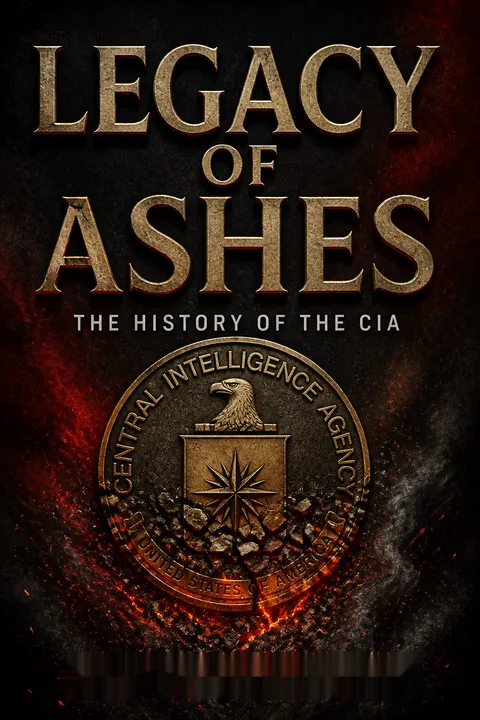
Legacy of Ashes receives mixed reviews averaging 3-4 stars. Readers praise Tim Weiner's extensive research using 50,000 declassified documents and interviews with CIA directors. The book chronicles decades of CIA failures: missed predictions, botched covert operations, penetration by foreign agents, and catastrophic intelligence errors. Critics note the overwhelmingly negative portrayal may lack balance, with successes barely mentioned. Some find the writing dry and episodic, jumping rapidly between events. Reviewers appreciate the documentation of CIA involvement in coups, assassinations, and regime changes worldwide. Many found the book eye-opening, revealing incompetence rather than omnipotence, though some question the bias and political agenda.
People Also Read



Download PDF
Download EPUB
.epub digital book format is ideal for reading ebooks on phones, tablets, and e-readers.








































