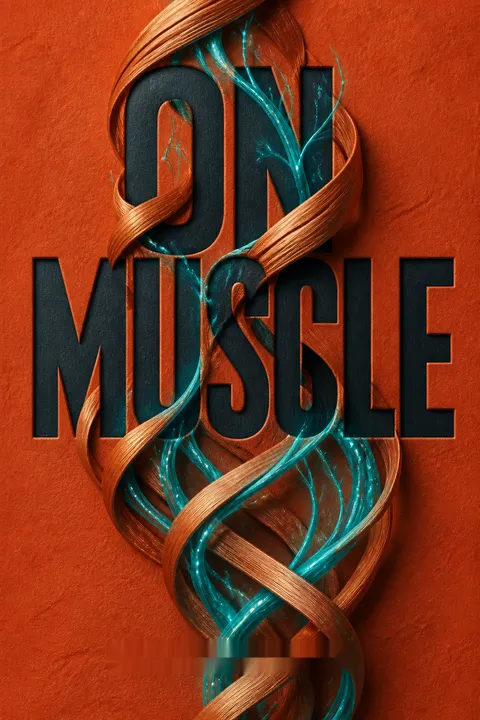

Key Takeaways
1. Muscle: The Engine of Existence and Self-Expression
At the most basic level, muscle powers and animates our existence.
Fundamental power. Muscle is the literal engine of our lives, driving everything from the tiniest flea to the largest whale. Evidence of muscle flexing dates back 560 million years, highlighting its ancient and universal role in animating creatures. In humans, three types of muscle—cardiac, smooth, and skeletal—work individually and collectively to make our hearts beat, move food, pump blood, and enable us to navigate the world.
Beyond biology. Muscle transcends its physical form, serving as a rich metaphor in language and culture. We speak of "flexing our muscles" to show power, "muscle memory" for embodied knowledge, and "muscling through" challenges to demonstrate grit. This linguistic connection underscores how deeply muscle is intertwined with our understanding of character, capability, and our very presence in the world.
A cycle of growth. Building muscle is a process of breaking down and regenerating. Muscle fibers sustain damage from strain, then repair themselves by activating stem cells to increase size and mass. This constant cycle of breakdown and regrowth is essential for existence, allowing us to get stronger through a series of small transformations.
2. Strength: A Societal Construct of Power and Potential
What’s different is the permission that society gives us to use it.
Hysterical strength. Extraordinary displays of human strength, often in life-threatening situations, are known as "hysterical strength," a term historically tied to women. Jack Kirby, creator of The Incredible Hulk, was inspired by a mother lifting a car off her child. However, female strength has often been deemed unnatural, with societal norms dictating who is "allowed" to be strong.
Historical significance. Across civilizations, lifting heavy objects has conferred status and power. From ancient Egyptian sand sacks and Chinese dings to Scottish lifting stones and Hawaiian legends, physical strength has long been a proxy for worthiness and leadership. Yet, this historical narrative has predominantly skewed male, with women like Jan Todd, the "World's Strongest Woman," challenging centuries of tradition by lifting the Dinnie Stones.
Unlocking potential. Jan Todd's journey, from bending bottle caps to setting world records in powerlifting, illustrates how individual potential can be unleashed when given the opportunity and encouragement. Her story, and those of other strongwomen like Katie Sandwina, highlight that strength is not merely a physical attribute but a profound expression of self, often discovered when societal barriers are overcome.
3. The Body's Innate Intelligence: Brain-Muscle Cross-Talk
In essence, your muscles and brain are talking to each other all the time.
Movement's purpose. The very existence of our brains, as neuroscientist Daniel Wolpert suggests, is primarily to facilitate movement. The humble sea squirt, for instance, digests its brain once it no longer needs to move, illustrating that brains are crucial for interacting with and influencing the world through muscle action.
A chemical conversation. Muscles are not just passive movers; they are endocrine tissues that release signaling molecules called myokines when they contract. These myokines travel to the brain, regulating physiological and metabolic responses, influencing:
- Cognition
- Mood
- Emotional behavior
- Learning and memory (by stimulating new neuron formation and synaptic plasticity)
The body's pharmacy. Exercise triggers a cascade of neurochemical signals, creating a "pharmacy in your muscles" that promotes well-being and euphoria. Conversely, lack of movement leads to rapid physical and mental decline, demonstrating the critical, constant, and beneficial dialogue between our muscles and brain for overall health and vitality.
4. Movement as a Path to Joy and Human Connection
This is about me trying to fly.
Joy in motion. Charles Darwin observed that "under a transport of Joy or of vivid Pleasure," humans and animals exhibit "purposeless movements" like jumping. This innate connection between movement and joy is evident in children's play, dogs' bounding, and even whales breaching. Dan O'Conor's daily jumps into Lake Michigan, a personal quest to "fly," became a source of collective effervescence, lifting the spirits of thousands during the pandemic.
The message of movement. Emotions are action-oriented, and the body is a powerful tool for communication. Research shows that happiness can be recognized from body movements alone, even without facial cues. Jumping, in particular, signals joy across cultures, making it a universal language. The communal act of double Dutch, for instance, is described as ecstatic, building confidence and fostering connection through shared rhythm and movement.
Jumpology and identity. Photographer Philippe Halsman's "jumpology" theory posited that jumping reveals one's "real self" as artifice falls away. This unfiltered expression of character, whether cautious or gleeful, highlights how our movements are deeply intertwined with our identity. From childhood games to adult practices, jumping not only brings pleasure but also strengthens bones, improves balance, and connects us to a fundamental human experience of freedom and vitality.
5. Adaptive Flexibility: Reclaiming the Body Through Change
It’s the only body you ever get to have.
Disconnection and trauma. Life inevitably brings changes to our bodies through age, injury, illness, or trauma. Matthew Sanford, paralyzed from the chest down after an accident, experienced a profound "body ghost" sensation, a disconnection from parts of himself. The medical world often encourages forgetting paralyzed areas, but Matthew's journey with yoga taught him to resist this, seeking synthesis and re-integrating his entire body.
Yoga as connection. The practice of yoga, meaning "to yoke," is fundamentally about dissolving the separation between body, mind, and breath. Adaptive yoga, pioneered by Matthew, helps individuals with disabilities restore shape, strength, flexibility, and balance by grounding the body and fostering awareness of subtle sensations. It's a choice to begin anew, to reestablish one's body in the world, regardless of its limitations.
Interoception and presence. While direct voluntary movement may be lost, the body still transmits signals. Matthew's fMRI scans showed his sensory and motor cortex lighting up during yoga poses, demonstrating that his brain received sensation from his paralyzed limbs. This "interoceptive" listening, an awareness of the body from within, helps restore a sense of "peripersonal space representation" and presence, proving that connection can be found even in profound change.
6. Muscle Memory: The Science of Renewal and Resilience
Muscle is the ability to change.
Beyond anecdote. The concept of "muscle memory" extends beyond simply remembering how to ride a bike. Research by Adam Sharples and his team has shown that human skeletal muscle possesses an epigenetic memory of past growth. This means that genes involved in muscle building are "primed" to respond more quickly to exercise, even after periods of inactivity, accelerating the return to strength.
Aging and intervention. This scientific understanding has profound implications, especially for an aging population. Sarcopenia, the age-related loss of muscle mass, is a major cause of frailty and falls. Strength training is crucial for slowing or reversing this decline, and muscle memory suggests that even starting later in life can yield remarkable benefits. Gene therapies, like targeting UBR5, are being explored to protect against muscle wasting and enhance recovery after injury.
A continuous adaptation. Muscle is one of the body's most adaptable tissues, constantly changing in response to its environment. From the unique muscle types of different athletes to the resilience of cancer survivors who can reset their muscle's epigenetic profile through exercise, muscle health reflects overall well-being. This inherent flexibility offers a powerful tool for longevity, allowing us to inoculate ourselves against the ailments of age by staying active.
7. Endurance: Running with Purpose and Collective Healing
So much of endurance is having a good reason to persist, when everything in your body is telling you to stop.
The human design. The human body is uniquely evolved for long-distance running, with adaptations like abundant sweat glands, efficient foot arches, and a large gluteus maximus. Running is a controlled fall, stabilized by the glutes, allowing us to cover vast distances. This innate capacity for endurance is not just physical; it's deeply intertwined with mental fortitude and purpose.
Running to remember. Ku Stevens's "Remembrance Run" exemplifies endurance with profound purpose. Tracing his great-grandfather Frank Quinn's 50-mile escape from the Stewart Indian School, Ku runs to honor ancestors, acknowledge historical trauma, and foster community healing. This collective act of physical suffering transforms into spiritual understanding, demonstrating that running can be a powerful form of prayer and a means to deliver messages of resilience and hope.
Beyond the finish line. Endurance, when driven by purpose, transcends mere physical exertion. It becomes a way to confront and process trauma, build social ties, and effect generational change. The shared struggle of the Remembrance Run, where participants endure heat and pain, fosters a deep sense of community and empathy, proving that physical effort can be a tangible demonstration of care and commitment to a cause.
8. The Ideal Body: Challenging Societal Norms and Finding Self-Acceptance
“Too muscular” means “too masculine.”
Conflicting ideals. The perception of beauty in the muscular form is heavily influenced by gender and societal norms. Historically, muscular women have been seen as "difficult" or "unnatural," disrupting traditional gender roles. The phrase "too muscular" often carries veiled accusations of masculinity, cheating, or even racism, as seen in the experiences of athletes like Misty Copeland and Serena Williams.
Superhero archetypes. Even in popular culture, male superheroes are typically depicted with exaggerated upper body musculature (triangle shape, six-pack), while female superheroes maintain an hourglass figure with "controlled" muscularity, avoiding "too extra" bulk. This conditioning, embedded in everything from comic books to medical atlases, shapes our subconscious ideals of what constitutes an "ideal" body, often leading to body dysmorphia and unhealthy aspirations for both men and women.
Beyond superficiality. Anatomists like Amber Fitzsimmons highlight that these ideals are often superficial, prioritizing appearance over function. The true beauty of muscle lies in its intricate complexity and dynamic capabilities, not just its visible prominence. Challenging these entrenched biases and embracing the diverse forms and functions of the human body is crucial for fostering self-acceptance and a healthier societal perspective on strength and beauty.
9. Grace in Motion: The Art of Effortless Presence
Grace, in part, is about restraint, physical calm in the face of uncertainty.
The essence of grace. Grace in movement, as Anton Chekhov described, is about expending the "least amount of motion on a given action," creating a seeming effortlessness. This restraint and physical calm are evident in complex activities like surfing, where measured, unhurried steps and precise weight shifts are crucial for dancing on an unstable water surface. It's a symphony of muscles working in concert, refined through years of practice.
Proprioception and presence. Surfing, like many physical practices, demands a four-dimensional proprioception—an awareness of the body's movement in space and its predictive ability over time. This deep engagement with the body, paying close attention to its signals, cultivates presence and a profound connection to the world. The "persistence high" from enduring physical effort, as Kelly McGonigal notes, quiets the restless mind and restores a sense of self.
Muscle as metaphor and memory. Our bodies prime our metaphors, and muscle signifies capability, potential, and the promise of future action. The author's journey, from her father's early lessons to her own surfing practice, reveals how movement is a language, a memory, and a way to connect across time and space. It's about honoring the effort behind apparent ease, finding joy in motion, and embracing the continuous process of rediscovery and self-acceptance.
Review Summary
On Muscle explores the science, culture, and personal significance of muscles through a blend of research, interviews, and memoir. Readers appreciate Tsui's engaging writing style and diverse perspectives, from weightlifting to yoga. While some found the book's structure disjointed or lacking focus, many were moved by its emotional depth and unique insights. Critics praised the balance of scientific information and personal anecdotes, though some desired more scientific content. Overall, the book offers a thought-provoking examination of muscles' role in human life, inspiring readers to reconsider their relationships with their bodies.
People Also Read



Download PDF
Download EPUB
.epub digital book format is ideal for reading ebooks on phones, tablets, and e-readers.








































