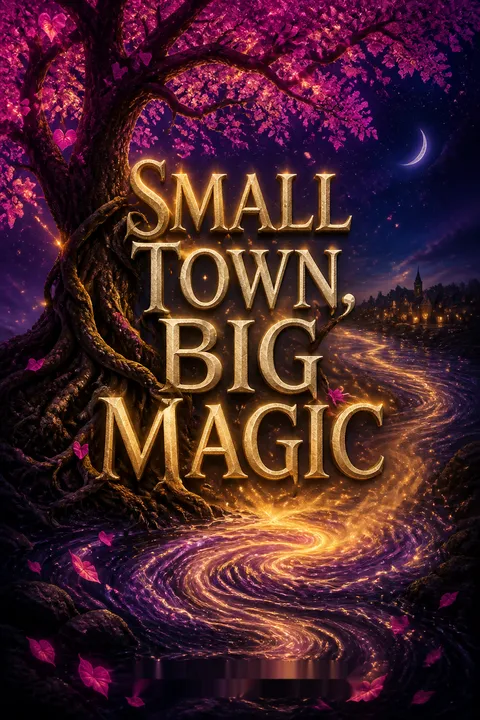

Plot Summary
Legacy and Local Power
Emerson Wilde, proud descendant of a supposed Salem witch, is the heart and engine of St. Cyprian, Missouri. She's a bookstore owner, the youngest chamber of commerce president, and a tireless advocate for her beloved small town. Her life is a blend of tradition, ambition, and a fierce sense of responsibility to the women who came before her. Emerson's days are filled with community projects, festival planning, and the constant push-pull of small-town politics. Her friends are her chosen family, and her sense of purpose is rooted in the legacy of strong, independent women. But beneath the surface, the town's history—and Emerson's own—holds secrets that are about to awaken.
Friends, Foes, and Festivals
Emerson's world is defined by her close-knit group of friends: Georgie, Ellowyn, Zander, and Jacob. Each brings their own quirks and strengths, supporting Emerson's relentless drive to improve St. Cyprian. Yet, not all relationships are easy. The town's mayor, Skip Simon, is both a childhood rival and a persistent obstacle, embodying the resistance to change that Emerson constantly battles. As the Redbud Festival approaches, tensions rise. Emerson's efforts to modernize the event put her on a collision course with Skip, setting the stage for a confrontation that will test loyalties and reveal deeper undercurrents in the town's fabric.
The Mayor's Challenge
Skip's opposition to Emerson's festival plans becomes personal and public. Their history of accidental humiliations and misunderstandings fuels a rivalry that's as much about pride as it is about policy. Emerson's friends rally around her, brainstorming ways to outmaneuver the mayor without further inflaming old wounds. The town watches, eager for drama, as Emerson and Skip's feud becomes a spectacle. But beneath the surface, something darker is brewing—strange occurrences and a sense of unease hint that the stakes are higher than a simple festival rivalry.
Nightmares in the Cemetery
Emerson is lured to the cemetery by a cryptic warning, only to find the town's sacred redbud trees destroyed and the gravestones disturbed. As she investigates, a supernatural storm descends, and monstrous creatures with red eyes attack. Emerson's reality shatters as she's saved by Jacob, who wields impossible magic, and a stag that fights at his side. Her friends arrive, revealing powers of their own. The attack leaves Emerson shaken, but it's only the beginning—her world is about to be upended as the truth about St. Cyprian and herself comes to light.
The Awakening
Emerson wakes to a new reality: she is a witch, and so are her friends. The town is a haven for magical beings, its history intertwined with witchcraft and secrecy. Emerson's memories have been altered—her true power suppressed by a spell after she failed a coming-of-age test. Now, with her magic awakened by the cemetery attack, she must relearn who she is and what she's capable of. The revelation is both exhilarating and terrifying, as Emerson grapples with the responsibilities and dangers that come with her newfound identity.
Secrets and Revelations
As Emerson learns the rules of the witching world, she discovers the cost of secrecy. Her friends have protected her for years, bound by magical law and loyalty. The town's ruling coven, the Joywood, enforces harsh justice on those who break the rules. Emerson's sister, Rebekah, was exiled for lacking power; Emerson herself was mind-wiped to remain in St. Cyprian. The group realizes that the recent supernatural attacks and the imbalance in the town's magic are connected. Emerson's awakening is not an isolated event—it's a symptom of a greater threat.
The Witching World Unveiled
Emerson's days become a crash course in witchcraft, as her friends teach her spells, history, and the delicate balance of power in St. Cyprian. She learns to mask her golden eyes, to fly, and to sense the hidden magical infrastructure of the town. The lines between the mundane and the magical blur, and Emerson must navigate both worlds while keeping her true nature secret from those who would punish her for breaking the rules. The town's festivals, once simple community events, are revealed as magical rituals designed to protect and conceal.
The Price of Power
The threat escalates as Skip, revealed to be a witch dabbling in dark magic, attacks Emerson directly. She survives with the help of her friends and her own burgeoning power, but the encounter leaves scars—physical, emotional, and magical. The group realizes that the imbalance in the confluence of the rivers, the source of the town's magic, is growing. A catastrophic flood looms, both literal and metaphorical. To stop it, they must perform a powerful ritual, but the spell requires a full coven and a sacrifice. Emerson faces the possibility that saving her town may cost her everything.
Rivalries and Old Wounds
As the group prepares for the ritual, old wounds resurface. Emerson's complicated relationship with Jacob deepens, moving from rivalry to romance as they confront their shared past and the feelings they've long denied. Zander and Ellowyn's unresolved history simmers beneath the surface, threatening the unity of the coven. Rebekah's absence is a constant ache, and the enigmatic immortal witch, Nicholas Frost, refuses to help. The Joywood's scrutiny intensifies, and the threat of mind-wiping or exile hangs over them all. The bonds of friendship and love are tested as the group faces their greatest challenge.
The Gathering Storm
The night of the ritual arrives. The group gathers in the cemetery, drawing on the power of their ancestors and the land itself. The confluence churns with dark magic, the floodwaters rising. Emerson leads the ritual, channeling the combined strength of her coven. But the spell falters—something is missing. The true cost of victory becomes clear: a sacrifice is required. Emerson realizes that she must enter the heart of the confluence, risking her life to save the town. The choice is hers alone, but her friends' support gives her the strength to face the darkness.
The Ritual's Call
Emerson plunges into the confluence, battling the physical and metaphysical forces that threaten to consume her. She confronts visions of loneliness, failure, and the fear that she is unlovable and alone. The darkness tries to convince her to surrender, to sacrifice herself and let the town be saved at the cost of her own life. But Emerson's true power lies in her connections—to her friends, her family, her town. With the help of her familiar and the magic of her coven, she fights back, shattering the darkness at the heart of the confluence.
The Warrior's Choice
Emerson emerges from the confluence, alive but changed. The flood is stopped, the town saved, but the cost is real. The group is exhausted, their magic spent, but their bonds are stronger than ever. Rebekah, brought back by Frost, chooses to help her sister before returning to exile. The Joywood arrives, ready to mete out punishment, but the group stands united. Emerson's journey from solitary leader to the heart of a true coven is complete. She embraces her love for Jacob, her place in the magical world, and the legacy of the women who came before her.
Love, Trust, and Light
In the aftermath, Emerson and her friends face the future with hope and determination. The town is safe, the darkness beaten back, but challenges remain. The Joywood's judgment looms, and the balance of power in the magical world is shifting. Emerson and Jacob commit to each other, choosing love and partnership over fear and isolation. The group's victory is not just over dark magic, but over the forces that would keep them small and divided. Together, they prove that light, love, and trust are the greatest magic of all.
Analysis
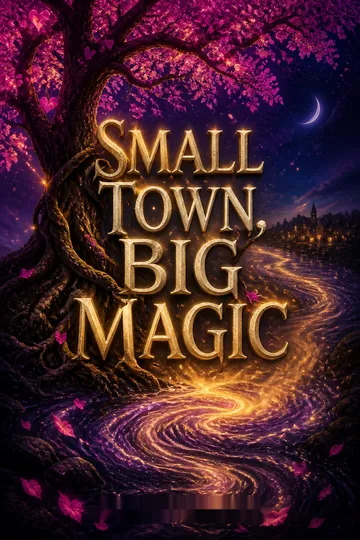
Hazel Beck's Small Town, Big Magic is a vibrant, feminist reimagining of the contemporary fantasy genre, blending the charm of small-town life with the high stakes of magical destiny. At its heart, the novel is about legacy, agency, and the power of community—especially among women. Emerson's journey from self-reliant leader to the heart of a true coven mirrors the broader struggle for female empowerment: the need to reclaim erased histories, to balance independence with vulnerability, and to challenge the systems that police and punish women's power. The book interrogates the costs of secrecy, the dangers of tradition, and the necessity of change. Its use of memory manipulation as both plot device and metaphor is particularly resonant, highlighting the ways women's stories are rewritten or suppressed. Ultimately, the novel argues that true magic lies in connection—love, trust, and collective action are the forces that beat back the dark, both literal and figurative. The story's emotional arc, from rivalry and isolation to unity and hope, offers a powerful lesson: that light, once kindled, can never be fully extinguished, and that the future belongs to those brave enough to claim it together.
Review Summary
Small Town, Big Magic receives heavily polarized reviews averaging 3.32 stars. Most criticism targets protagonist Emerson Wilde's insufferable narcissism, excessive feminist rhetoric, and unlikeable personality. Reviewers found constant "patriarchy" references grating and the romance weak or nonexistent. Many criticized a scene shaming sensual content in romance novels. Positive aspects include the magic system, small-town atmosphere, strong friendships, and witch lore. Several readers noted the book felt more YA than adult rom-com. Multiple reviewers expressed shock at its traditional publication quality, with many refusing to continue the series.
People Also Read

Characters
Emerson Wilde
Emerson is the driving force of St. Cyprian—a fiercely ambitious, organized, and passionate woman who channels her energy into community, legacy, and self-improvement. Her identity is shaped by the women who came before her, especially her martyred ancestor and her grandmother. Emerson's psychological journey is one of self-discovery: from believing she's merely human to embracing her true power as a witch and a Warrior. Her relationships—with friends, rivals, and especially Jacob—are marked by loyalty, vulnerability, and the struggle to balance independence with the need for connection. Emerson's arc is about reclaiming agency, accepting help, and redefining what it means to be strong.
Jacob North
Jacob is Emerson's childhood friend, rival, and eventual lover. As a Healer, he embodies steadiness, practicality, and a deep sense of responsibility. Jacob's psychological complexity lies in his struggle to reconcile his protective instincts with respect for Emerson's autonomy. He carries guilt over past failures—especially Emerson's mind-wipe—and fears losing her again. His love for Emerson is unwavering, but he must learn to trust her choices and accept vulnerability. Jacob's development is about moving from silent suffering to open partnership, embracing both his power and his heart.
Georgie Pendell
Georgie is Emerson's closest confidante, a free-spirited witch with a passion for history, crystals, and chaos. She provides comic relief and emotional support, but beneath her quirky exterior is a deep well of wisdom and loyalty. Georgie's role is to ground Emerson, reminding her of the importance of joy, friendship, and the past. Her psychological journey involves stepping out of Emerson's shadow, asserting her own strengths, and helping the group navigate the complexities of magical tradition and change.
Ellowyn Good
Ellowyn is the group's summoner, marked by a family curse that prevents her from lying. Her wit and cynicism mask deep pain—over lost love, family trauma, and the burden of her magical limitations. Ellowyn's relationship with Zander is fraught with unresolved tension, and her loyalty to Emerson is fierce but complicated. Psychologically, Ellowyn grapples with feelings of inadequacy and the fear of being a liability. Her arc is about embracing her power, accepting help, and finding healing in community.
Zander Rivers
Zander is Emerson's cousin and the group's Guardian, responsible for protecting the confluence and the town. Outwardly charming and easygoing, Zander hides deep fears—about his mother's illness, the weight of legacy, and his unresolved feelings for Ellowyn. He uses humor to deflect pain, but his loyalty is absolute. Zander's development centers on accepting vulnerability, stepping into leadership, and reconciling the past with the present.
Rebekah Wilde
Rebekah is Emerson's estranged sister, exiled for failing the magical test. She represents the road not taken—the cost of magical law and the pain of separation. Rebekah's relationship with Emerson is fraught with love, resentment, and longing. Psychologically, she embodies the fear of rejection and the struggle to define oneself outside of family and tradition. Her return is a catalyst for Emerson's final transformation, and her choice to help, then leave, underscores the theme of agency and sacrifice.
Skip Simon
Skip is the mayor, Emerson's lifelong rival, and ultimately a tragic figure corrupted by dark magic. His psychological makeup is defined by insecurity, resentment, and a desperate need for validation. Skip's actions are driven by a sense of entitlement and a refusal to accept change. As he succumbs to darkness, he becomes both a personal and existential threat, embodying the dangers of unchecked power and the refusal to grow.
Nicholas Frost
Frost is the town's mysterious immortal witch, a Praeceptor with vast knowledge and ambiguous motives. He is both a source of wisdom and a reminder of the costs of isolation and detachment. Frost's psychological complexity lies in his weariness, his refusal to engage, and his eventual decision to help. He challenges Emerson to think beyond herself, to consider the broader consequences of power and sacrifice.
Carol Simon
Carol is the head of the Joywood, the town's ruling coven, and Skip's mother. She represents the weight of tradition, the dangers of rigid authority, and the complexities of female power. Carol's actions are driven by a desire to protect the magical community, but her methods are harsh and often unjust. Psychologically, she is both a cautionary tale and a mirror for Emerson—a woman who wields power but fears change.
Cassie (Familiar)
Cassie is Emerson's familiar, a magical dog who provides guidance, sarcasm, and unwavering support. She represents Emerson's connection to her true self and her magical heritage. Cassie's presence is both comforting and challenging, pushing Emerson to confront uncomfortable truths and embrace her full power.
Plot Devices
Dual Worlds and Hidden Magic
The narrative structure relies on the interplay between the ordinary and the extraordinary. St. Cyprian is both a typical small town and a secret haven for witches. The use of festivals, local politics, and community rituals as both real-world events and magical ceremonies creates layers of meaning and tension. The gradual unveiling of the magical world mirrors Emerson's journey of self-discovery, using foreshadowing (strange events, family legends) and dramatic irony (the reader suspects more than Emerson does) to build suspense.
Memory, Identity, and Mind-Wiping
Emerson's mind-wipe is both a literal and metaphorical device, representing the erasure of female power and the struggle to reclaim agency. The gradual return of her memories, triggered by love and crisis, serves as both a plot engine and a psychological exploration. The threat of mind-wiping or exile hangs over all witches, raising the stakes and forcing characters to confront the costs of secrecy and conformity.
Coven Structure and Ritual
The need for a full coven to perform the ritual creates urgency and tension, as the group must reconcile old wounds, recruit reluctant allies, and face the consequences of breaking magical law. The ritual itself is a classic set piece, combining personal sacrifice, ancestral power, and the theme of balance. The requirement of a sacrifice, and the question of who or what must be given up, is foreshadowed throughout and becomes the emotional and narrative climax.
Love as Power and Salvation
The story uses the romance between Emerson and Jacob, as well as the deep bonds of friendship, as both emotional core and magical engine. Love is not just a reward but a source of literal power—breaking spells, fueling rituals, and enabling survival. The narrative structure uses parallel arcs (romantic, familial, communal) to explore the ways love can heal, empower, and transform.
The Immortal Outsider
Nicholas Frost serves as both a plot device and a thematic counterpoint. His refusal to help, then eventual participation, forces the group to confront questions of legacy, responsibility, and the dangers of detachment. His presence foreshadows the ongoing struggle between change and stasis, and his ambiguous motives keep the reader—and the characters—off balance.
Download PDF
Download EPUB
.epub digital book format is ideal for reading ebooks on phones, tablets, and e-readers.








































