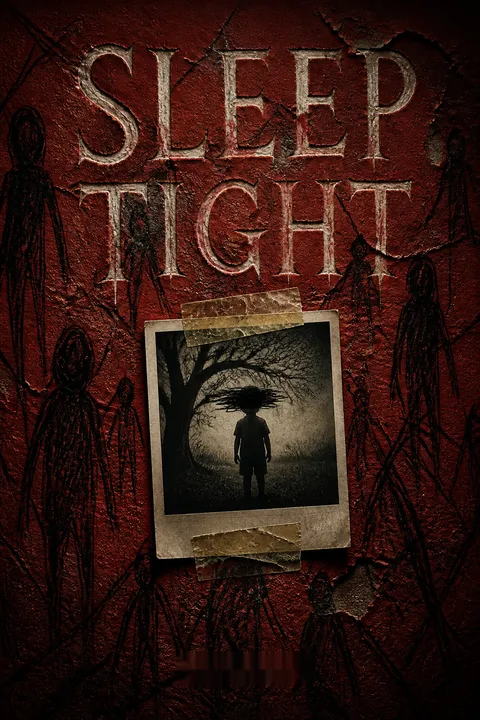

Plot Summary
Black Crayons and Eyes
In a Kentucky bedroom, young Noah Nichols frantically colors black eyes on paper, haunted by memories he can't name and a mother's rage he can't escape. The darkness he draws is more than crayon—it's a psychic wound, a premonition of horrors to come. Noah's art, signed by names not his own, hints at fractured identities and a legacy of violence. The chapter sets the tone: innocence corrupted, the unseen lurking in every shadow, and the first glimpse of the "eyes in the darkness" that will haunt the story's victims and survivors alike.
Execution Night Storms
As serial killer Jeff Pritchard—dubbed Father Silence—faces execution, a literal and emotional storm descends on the Claiborne family. Tess, a detective, struggles with her own storm phobia and the fallout of her husband Justin's betrayal. The execution is a media spectacle, but for Tess and her father Leland, it's personal closure for old wounds. Yet, as the electric chair's current surges, Pritchard whispers cryptic last words, and the darkness outside mirrors the darkness within. The storm's violence foreshadows the chaos about to be unleashed, and the execution's aftermath will prove anything but final.
Family Fractures, Old Wounds
Tess's family is unraveling: her marriage to Justin is strained by infidelity, her daughter Julia is distant, and her father is haunted by the Pritchard case. The execution brings no peace—only old memories and new anxieties. Tess's own childhood traumas, buried and fragmented, begin to resurface. The chapter explores the cost of obsession, the pain of being the "bad parent," and the way trauma is inherited. As Tess tries to hold her family together, she's blind to the new threat gathering in the shadows, and her own vulnerabilities will soon be exploited.
Father Silence's Legacy
In Twisted Tree, Kentucky, the legacy of Father Silence lingers. The house where Pritchard killed is now owned by Lisa Buchanon, who faces harassment and vandalism from locals and cultists alike. The town is a character itself—scarred, superstitious, and unable to move on. Meanwhile, the narrative introduces the idea of "outcasts"—the unwanted, the abused, the forgotten—who become both victims and perpetrators. The cult of Father Silence, the Lost Children, is rising, and the line between justice and vengeance blurs. The past is not dead; it's waiting to be reborn.
The Outcast Calls
Tess receives a call from a man calling himself "the Outcast," who claims responsibility for the brutal murder of her parents. The killer's voice is eerily familiar, his words laced with regret and compulsion. The murder is ritualistic—black paint over the eyes, a newspaper headline about Pritchard's execution pinned to the wall. The Outcast leaves fingerprints everywhere, as if daring the police to catch him. But the true horror is personal: Julia's school photo is missing from her grandfather's wallet, and the Outcast's next target is clear. The game has begun.
Double Murder, Double Loss
Tess rushes to her parents' cabin, only to find them both murdered in a manner echoing Father Silence's crimes. The killer's signature—blackened eyes, a hammer, and a taunting message—suggests both imitation and escalation. The investigation is frantic, but the real terror is Julia's disappearance. The Outcast has taken her, leaving behind a note: "Don't worry, I'll keep her safe." The chapter is a masterclass in dread, as Tess's personal and professional worlds collapse. The sense of helplessness is overwhelming, and the stakes are now life and death.
Julia Disappears
Julia is abducted in broad daylight, lured away from school by a man posing as her uncle. The abduction is meticulously planned, exploiting Tess's guilt and Justin's absence. The police scramble, but the Outcast is always a step ahead, leaving Polaroids of Julia and another boy, both smiling, as if complicit in their own kidnapping. The narrative tightens, focusing on the parents' anguish, the community's fear, and the Outcast's twisted logic. The abduction is not just a crime—it's a message, a ritual, and a challenge to Tess's very identity.
The Outcast's Game
The Outcast taunts Tess and Justin with phone calls, cryptic clues, and psychological warfare. He paints eyes on windows, leaves evidence in plain sight, and manipulates the investigation at every turn. The killer's knowledge of Tess's past is intimate, suggesting a connection deeper than mere revenge. Meanwhile, the cult's influence grows, and copycat crimes spread. The Outcast's motives are murky—part vengeance, part salvation, part compulsion. The game is not just about murder; it's about forcing Tess to confront her own darkness, her buried memories, and the legacy of Father Silence.
Cults and Copycats
The Lost Children cult escalates its activities—animal masks, blood rituals, and the exhumation of Father Silence's body. The line between followers and leaders blurs, as the cult's true mastermind, "Mother," emerges. Lisa Buchanon, the enigmatic owner of Pritchard's house, is revealed to have a fractured identity and a history of violence. The cult's goal is resurrection—of Father Silence, of old traumas, of the cycle of abuse. The narrative explores the psychology of cults, the allure of belonging, and the danger of mythologizing evil. The past is being reenacted, with new victims and new monsters.
The Survivor's Mind
Noah Nichols, the only child to survive Father Silence's basement, is now an adult in an asylum, diagnosed with dissociative identity disorder. His mind is a battleground of personalities—some his own, some absorbed from the other murdered children, and some darker still. The Outcast, Oskar, Ruth, and others vie for control, each holding pieces of the truth. Through interviews and psychological probing, Tess and Justin uncover the existence of an "eighth window"—a personality more dangerous than all the rest. Noah's mind is both a map and a maze, and the key to stopping the Outcast may lie within.
The Playhouse Revealed
The Outcast's lair is the Playhouse, a twisted sanctuary built in the ruins of an old distillery. Here, abducted children are kept, indoctrinated, and used as pawns in the cult's rituals. The Playhouse is both a physical and psychological prison, filled with art, games, and terror. Julia and the other children are forced to play roles in a reenactment of the Last Supper, their fates tied to the cult's apocalyptic plans. The Playhouse is a microcosm of the story's themes: innocence corrupted, trauma repeated, and the desperate search for love and belonging.
The Eighth Window
The investigation uncovers the true mastermind: "Mother," a woman with a history of abuse, multiple identities, and a talent for manipulation. She is both victim and villain, having survived her own childhood horrors only to become the architect of new ones. The "eighth window" in Noah's drawings represents her—a presence both inside and outside the minds of the survivors. The revelation is devastating: the cycle of violence is not just inherited, but actively perpetuated. The final confrontation is set, not just with the Outcast, but with the Mother who made him.
Mother's True Face
Tess, Justin, and the authorities close in on the Playhouse and Rose Island, where the cult prepares for a final ritual. Mother, revealed as Lisa Buchanon/Diane Cherry, orchestrates a mass sacrifice to resurrect Father Silence's legacy. The children are pawns, the parents are bait, and the Outcast is both executioner and savior. In a storm of violence, betrayal, and revelation, Tess confronts her own role in the cycle—her childhood complicity, her buried guilt, and her capacity for both harm and healing. The past and present collide, and the true cost of survival is laid bare.
Under the Twisted Trees
Tess's repressed memories resurface: as a teenager, she witnessed and participated in violence under the twisted trees, complicit in the deaths of two boys who were not heroes, but predators. The trauma was buried, but its effects have shaped her life, her family, and the current crisis. The narrative weaves past and present, showing how cycles of abuse, silence, and complicity perpetuate evil. The twisted trees are both a literal and symbolic site of trauma—a place where innocence was lost, and where the possibility of redemption begins.
The Devil's Backbone
The climax unfolds on Rose Island, the Devil's Backbone, as the cult gathers for a final, bloody ritual. Tess is to be sacrificed, Julia is in mortal danger, and the Outcast must choose between obedience and rebellion. The authorities arrive, gunfire erupts, and the carefully constructed world of the cult collapses. Mother and her followers are killed or captured, but not before the true horror of their plans is revealed. The children are saved, but the scars—physical and psychological—will linger. The Devil's Backbone becomes a graveyard for old ghosts and new beginnings.
The Final Sacrifice
In the chaos, Benjamin/Outcast turns on Mother, killing her to save the children. Tess and Justin are reunited with Julia, but not before enduring further violence and loss. The authorities round up the cultists, but Benjamin is gunned down, a tragic figure both victim and perpetrator. The children are freed, but their futures are uncertain. The cycle of trauma is broken, but at great cost. The narrative refuses easy answers—justice is incomplete, healing is ongoing, and the line between good and evil remains blurred.
Aftermath and Unfinished Stories
Weeks later, the Claiborne family tries to heal. Julia is safe but changed, Tess and Justin are reunited but haunted, and the community struggles to process the horror. The Playhouse's secrets are unearthed, the cult is dismantled, and the true story of Father Silence is finally told. Yet, some mysteries remain: Noah and Ruth escape, Oskar sends a postcard from afar, and the possibility of new nightmares is never far away. The story ends not with closure, but with the recognition that trauma, like evil, is never truly vanquished—only survived.
Analysis
A meditation on trauma, complicity, and the cycle of violenceSleep Tight is more than a thriller—it's a psychological excavation of how evil is born, perpetuated, and, sometimes, survived. The novel interrogates the legacy of abuse, the allure of cults, and the ways in which victims can become perpetrators. Through its use of dissociative identity disorder, the story literalizes the fragmentation of the self under trauma, showing how memory, guilt, and violence are inherited and enacted across generations. The cult of Father Silence is both a literal threat and a metaphor for the seductive power of myth, ritual, and belonging. Tess's journey—from denial to confrontation, from complicity to agency—mirrors the reader's own reckoning with uncomfortable truths: that evil is not always "other," that silence can be as deadly as action, and that healing requires both honesty and courage. The novel refuses easy answers, ending with survivors who are changed but not unbroken, and with the recognition that the past is never truly past. In a world obsessed with true crime and the search for monsters, Sleep Tight asks: what if the monster is us? And what will it take to finally break the cycle?
Review Summary
People Also Read
Characters
Tess Claiborne
Tess is the emotional and narrative core of the story—a homicide detective whose childhood trauma underpins her adult life. Daughter of the cop who caught Father Silence, she's driven by a need for justice and control, but plagued by guilt, addiction, and repressed memories. Her marriage to Justin is strained by betrayal and her own emotional distance. As a mother, she's fiercely protective but fears passing on her damage to Julia. Tess's arc is one of painful self-discovery: she must confront her complicity in past violence, her role in perpetuating silence, and her capacity for both harm and healing. Her journey is a meditation on the cost of survival and the possibility of redemption.
Justin Claiborne
Justin is Tess's husband and professional foil—a psychologist who both loves and analyzes her, often to her frustration. His infidelity is a symptom of deeper issues: a longing for connection, a sense of inadequacy, and a struggle with his own demons. As a father, he's playful and nurturing, the "good cop" to Tess's "bad cop." When Julia is taken, Justin's guilt and desperation drive him to the edge, but his expertise becomes crucial in unraveling the Outcast's mind. His arc is one of humility and growth, as he learns to listen, forgive, and fight for his family.
Julia Claiborne
Julia is the story's most vulnerable and precious character—a bright, sensitive girl caught in the crossfire of adult trauma. Her abduction is the narrative's inciting crisis, and her resilience is both a source of hope and a reminder of what's at stake. Julia's experience in the Playhouse is harrowing, but she finds ways to communicate, resist, and survive. Her relationship with her parents is central, and her safety becomes the measure of the story's success or failure. Julia embodies the possibility of breaking the cycle, but also the fragility of innocence.
Benjamin Knowles / The Outcast
Benjamin is the most complex antagonist—a man shaped by childhood abuse, isolation, and the manipulations of "Mother." He is both victim and perpetrator, a protector of children who becomes their captor, a killer who seeks redemption. His dissociative identity disorder mirrors Noah's, and his struggle for control is both internal and external. Benjamin's relationship with Tess is fraught—he is both her enemy and her mirror, forcing her to confront her own darkness. His final act is one of sacrifice, saving the children at the cost of his own life, and his legacy is both cautionary and redemptive.
Lisa Buchanon / Diane Cherry / Mother
Lisa is the true architect of the cult's evil—a woman with a history of abuse, multiple identities, and a genius for manipulation. As "Mother," she is both nurturing and monstrous, creating a family of outcasts only to destroy them. Her own childhood horrors are the root of her violence, but she chooses to perpetuate the cycle rather than break it. Lisa's relationship with Benjamin is both maternal and abusive, and her influence extends to the cult, the community, and the survivors. She embodies the story's central question: are monsters born, or made?
Noah Nichols
Noah is the only child to survive Father Silence's basement, but survival comes at a cost. His mind is a battleground of personalities—some his own, some absorbed from murdered children, and some darker still. Noah's dissociative identity disorder is both a defense and a prison, and his struggle to remember, confess, and heal is central to the investigation. He is both a witness and a warning, showing how trauma can fragment the self and perpetuate violence. Noah's fate is ambiguous—he escapes, but the cycle may continue.
Oskar, Ruth, Amelia, Dean, Tom, Stephen (Noah's Alters)
These personalities within Noah represent both his own coping mechanisms and the absorbed identities of other victims. Oskar is the protector, Ruth the seductress, Amelia the innocent, Dean and Tom the lost boys, Stephen the observer. Each holds pieces of the truth, and their interactions reveal the complexity of survival. They are both evidence of Noah's suffering and agents in the unfolding drama, sometimes helping, sometimes hindering the search for Julia and the truth.
Danny Gomes
Danny is Tess's detective partner and closest friend, married to Eliza and godfather to Julia. He provides comic relief, emotional support, and a moral compass. Danny's own family life is chaotic but loving, and his loyalty to Tess is unwavering. He is wounded—literally and figuratively—by the events of the story, but his resilience and humor help ground the narrative. Danny represents the possibility of chosen family and the importance of connection in the face of horror.
Eliza Gomes
Eliza is Danny's wife and Tess's best friend, a social worker who understands trauma from both professional and personal perspectives. She is nurturing, practical, and unflappable, providing a safe space for Tess to break down and rebuild. Eliza's own experiences with loss and motherhood mirror Tess's, and her advice is both compassionate and hard-won. She is the story's emotional ballast, reminding the characters—and the reader—of the importance of self-care, honesty, and forgiveness.
Barrett Stevens
Barrett is Jeff Pritchard's former defense attorney, now a key member of the Lost Children cult. He embodies the story's theme of complicity—once a defender of the law, he becomes an agent of chaos, donning animal masks and participating in ritual violence. Barrett's transformation is both shocking and believable, a testament to the seductive power of evil and the ease with which boundaries can be crossed. He is both a tool and a victim of Mother's manipulation, and his fate is a warning about the dangers of moral compromise.
Plot Devices
Dissociative Identity Disorder and Absorbed Personalities
The novel's central device is the use of dissociative identity disorder—not just as a psychological condition, but as a metaphor for generational trauma, inherited violence, and the porous boundaries between victim and perpetrator. Both Noah and Benjamin are hosts to multiple personalities, some created as defenses, others absorbed from murdered children or abusers. This device allows the narrative to explore memory, repression, and the way evil is both internalized and externalized. The "eighth window" becomes a symbol of the unknown, the unspeakable, and the ever-present threat of recurrence.
Ritual, Symbolism, and Cult Behavior
The story is saturated with ritual—blackened eyes, animal masks, painted symbols, and reenactments of the Last Supper. These devices serve both as plot mechanisms (clues, signatures, red herrings) and as thematic explorations of how evil is mythologized, repeated, and justified. The cult's obsession with resurrection, sacrifice, and belonging mirrors the characters' own struggles with identity and connection. The use of art—drawings, murals, and games—blurs the line between play and horror, innocence and corruption.
Nonlinear Narrative and Repressed Memory
The novel employs a nonlinear structure, weaving together present-day investigation, flashbacks, interviews, and recovered memories. Tess's journey is both external (the search for Julia) and internal (the search for her own lost memories). The use of blackout episodes, triggered by storms and trauma, allows the narrative to withhold and reveal information in a way that mirrors the characters' psychological states. The final revelations are both shocking and inevitable, as the past is re-experienced and reinterpreted in light of new knowledge.
Foreshadowing and Symbolic Motifs
The recurring motifs of eyes in the darkness, violent storms, and the twisted trees of Tess's hometown serve as both literal and symbolic foreshadowing. Eyes represent both surveillance and blindness, storms signal emotional upheaval and revelation, and the twisted trees are a site of both trauma and transformation. These motifs tie together the personal and the communal, the psychological and the supernatural, creating a sense of inevitability and interconnectedness.
The Unreliable Narrator and Shifting Perspectives
The novel frequently shifts perspectives—between Tess, Justin, Noah, Benjamin, and others—allowing the reader to experience events from multiple, often conflicting, viewpoints. The use of unreliable narration, especially in the depiction of repressed memories and dissociative episodes, creates suspense and ambiguity. The reader, like the characters, must piece together the truth from fragments, lies, and half-remembered horrors.
Download PDF
Download EPUB
.epub digital book format is ideal for reading ebooks on phones, tablets, and e-readers.








































