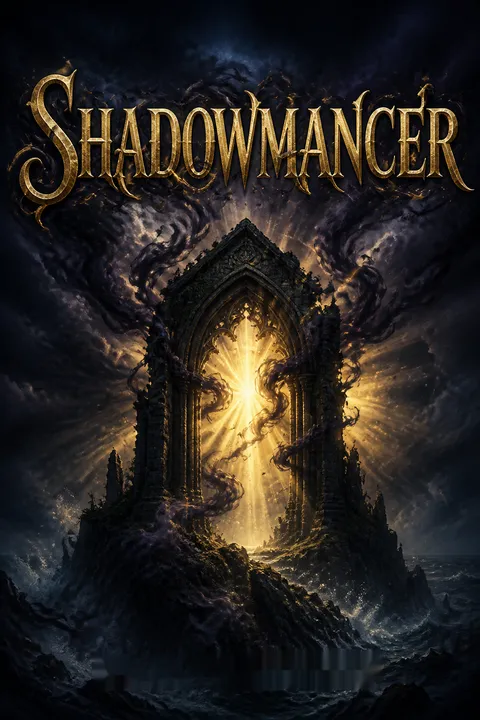

Plot Summary
Storm and Shipwrecked Fates
On a still October night, Parson Demurral, vicar of Thorpe, uses forbidden magic to summon a storm and wreck a ship carrying a sacred artifact, the Keruvim. His servant Beadle, fearful and superstitious, witnesses the dark ritual. The storm devastates the coast, killing the crew and scattering the ship's cargo. Among the survivors is Raphah, a mysterious youth from Africa, whose destiny is entwined with the Keruvim. The villagers, led by the orphaned Thomas Barrick, scavenge the wreckage, unaware of the supernatural forces at play. The storm's aftermath sets the stage for a struggle between light and darkness, as ancient powers awaken and destinies collide.
Demurral's Dark Ambition
Demurral's obsession with the Keruvim grows, believing it will grant him dominion over nature and even God. He manipulates the villagers, claiming rights to the wreck's salvage, and reveals his cruelty by evicting Thomas and his ailing mother. Demurral's mastery of shadow magic—becoming a "Shadowmancer"—is revealed as he commands spirits and conjures terrors in the woods. His ambition is not just personal gain but cosmic upheaval, seeking to unite the Keruvim and unleash powers that could reshape the world. The vicar's descent into darkness is mirrored by the growing unease and suffering of those under his rule.
Thomas and Raphah's Pact
After a harrowing encounter with a shadow creature, Thomas is rescued by Raphah, who reveals his quest to recover the stolen Keruvim. In the safety of a cave, Raphah shares visions of his homeland and the spiritual war at hand. Despite initial mistrust, Thomas is moved by Raphah's sincerity and the healing peace he brings. They form a pact to retrieve the Keruvim from Demurral, joined by the bold Kate Coglan. Their alliance is sealed by shared dreams and a sense of destiny, as they prepare to confront the vicar's growing evil and the supernatural threats gathering in the shadows.
Shadows in the Woods
The trio's journey is fraught with peril as they navigate haunted woods and secret tunnels beneath the vicarage. They are hunted by the Varrigal, spectral warriors bound to Demurral's will, and encounter otherworldly creatures that test their courage and faith. Kate's bravado falters in the face of true terror, while Thomas's resolve is strengthened by visions of a kingly figure offering hope and purpose. The friends learn that the battle is not just physical but spiritual, requiring trust in each other and in forces beyond their understanding. The woods become a crucible, forging them into reluctant heroes.
The Gathering at Boggle Mill
Fleeing danger, Thomas and Kate find refuge at Boggle Mill, home to the enigmatic Wayfoot family, rumored to be boggles—supernatural beings themselves. The mill offers warmth, food, and a glimpse of a different kind of magic: one rooted in kindness, resilience, and community. Here, the children rest and recover, learning from Rueben and Isabella about the persecution of the different and the power of forgiveness. The mill becomes a temporary haven, but the shadow of Demurral's schemes looms, and the children realize they cannot hide forever. Their time at Boggle Mill steels them for the trials ahead.
Secrets Beneath the Vicarage
Raphah infiltrates the vicarage through hidden tunnels, seeking the Keruvim. He witnesses Demurral's dark rituals and is eventually captured, branded as a slave, and thrown into the alum mines. Meanwhile, Thomas and Kate, aided by smugglers and outcasts, plot a daring rescue. The vicarage's labyrinthine passages become a battleground of wits and wills, as secrets are uncovered and alliances are tested. Demurral's cruelty is laid bare, and the children's resolve is hardened by the suffering they witness. The tunnels symbolize the hidden currents of power and resistance running beneath the surface of their world.
The Oak King's Warning
As the children flee through the woods, they find shelter beneath an ancient oak, reflecting on the changing seasons and the loss of innocence. The Oak King, a symbol of nature's cycles, reminds them that darkness is always followed by renewal. Kate's tears and Thomas's fears are soothed by the promise of dawn, even as supernatural threats close in. The oak's presence is a quiet reassurance that the world's magic is not solely in the hands of evil, and that hope persists even in the bleakest moments. The children's bond deepens, preparing them for the coming storm.
The Golden Altar Dream
Thomas dreams of a golden altar and a kingly figure who offers him gifts of truth and a sword for the coming battle. The dream is both a warning and a blessing, revealing the cosmic stakes of their struggle. Thomas is shown that faith and courage are as vital as weapons, and that the true enemy is not flesh and blood but the rulers of darkness. The dream's imagery—angels, books of life, and radiant light—contrasts with the shadowy threats they face, inspiring Thomas to embrace his role in the unfolding drama. The dream becomes a touchstone for his journey.
Raphah's Captivity
Imprisoned in the mines, Raphah endures cruelty but also brings healing and hope to fellow captives. His faith and compassion transform those around him, culminating in a miraculous healing of a deaf boy. The episode demonstrates the power of goodness to break chains—literal and metaphorical—even in the darkest places. Raphah's suffering is not in vain; it becomes a catalyst for change, inspiring others to resist Demurral's tyranny. The mines, a symbol of exploitation and despair, are briefly illuminated by acts of kindness and the possibility of redemption.
Crane's Bargain and Betrayal
Jacob Crane, the ruthless smuggler, becomes an uneasy ally, motivated by self-interest and a grudging respect for the children's courage. He bargains with Demurral, betrays and rescues in turn, and is haunted by visions of the supernatural. Crane's world of lawlessness and pragmatism collides with the spiritual war unfolding around him. His choices reveal the complexity of human motives—greed, loyalty, and the longing for redemption. Crane's actions have far-reaching consequences, setting in motion the final confrontation between the forces of light and darkness.
The Burning Man's Path
As the children and their allies journey toward the final confrontation, they are beset by omens: burning effigies, spectral pursuers, and storms that signal the awakening of Pyratheon, the ancient adversary. The landscape itself seems to rebel, with landslides and unnatural weather reflecting the cosmic upheaval. The boundaries between worlds grow thin, and the children realize that their struggle is part of a much larger battle. The burning man and other portents underscore the urgency of their quest and the magnitude of the threat they face.
Pyratheon's Awakening
Demurral's rituals succeed in summoning Pyratheon, the fallen Seruvim and true enemy of Riathamus. Covens gather, witches and warlocks perform rites, and the boundaries between the natural and supernatural dissolve. Pyratheon's arrival is both seductive and terrifying, promising power but demanding absolute allegiance. Demurral and his allies are caught in forces beyond their control, as Pyratheon manipulates them for his own ends. The children, now fugitives, must evade both human and inhuman pursuers as the world teeters on the brink of darkness.
The Witch of White Moor
Jacob Crane encounters the Witch of White Moor, who offers cryptic warnings and demonstrates the ambiguous nature of magic. Her prophecies and illusions unsettle Crane, forcing him to confront his own mortality and the limits of power. The witch's presence is a reminder that not all supernatural forces are aligned with evil, and that wisdom often comes in unexpected forms. Her riddles and rituals foreshadow the choices and sacrifices that will be required in the final battle.
The Keruvim's Pursuit
The children, now in possession of the Keruvim, are pursued relentlessly by Demurral, Pyratheon, and their minions. They seek sanctuary but are betrayed, captured, and forced to confront the seductive allure of power. The Keruvim itself becomes a symbol of temptation and responsibility, its true nature revealed only in moments of crisis. The pursuit tests their loyalty, ingenuity, and faith, as they navigate shifting alliances and the ever-present threat of betrayal.
Sanctuary and Sacrifice
The climax unfolds in the sanctuary of Whitby church, where the children, Raphah, and their allies make a last stand against Demurral, Pyratheon, and the Varrigal. The sanctity of the place offers protection, but only for a time. Sacrifices are made—Raphah is struck down, Thomas faces death, and Kate's tears become an offering. The battle is as much spiritual as physical, with faith, love, and selflessness proving as powerful as swords and spells. The sanctuary becomes a crucible where destinies are fulfilled and the true nature of power is revealed.
The Battle for Light
As Pyratheon claims victory and darkness falls, the world seems lost. Time accelerates, the sun and moon vanish, and despair threatens to overwhelm all. Yet, in the darkest moment, the intervention of Abram—revealed as the archangel Raphael—restores hope. Raphah is resurrected, the Keruvim's true power is unleashed, and the forces of evil are driven back. The battle is won not by might but by faith, forgiveness, and the refusal to surrender to despair. Light returns, and the promise of renewal is fulfilled.
Pyratheon's Fall
Pyratheon's triumph is short-lived, undone by his own arrogance and the resilience of those he sought to destroy. The cosmic balance is restored, the Keruvim is returned to its rightful place, and the boundaries between worlds are reestablished. Demurral and his allies are scattered, their ambitions thwarted. The survivors are changed by their ordeal, bearing scars but also wisdom. The fall of Pyratheon is both an ending and a warning: evil can never fully triumph while hope endures.
Dawn and Departure
With the battle over, the children and their allies prepare to leave, carrying the lessons and wounds of their journey. Raphah, now whole, returns the Keruvim to his people. Thomas and Kate, forever changed, look to the future with hope and humility. Jacob Crane, touched by grace, finds a measure of redemption. The dawn brings light not just to the world but to their hearts, as they set sail for new horizons, knowing that the struggle between light and darkness is eternal, but so too is the promise of renewal.
Analysis
Shadowmancer is a dark, atmospheric fantasy that explores the eternal struggle between light and darkness, faith and despair, power and humility. Set against the brooding backdrop of the Yorkshire coast, the novel weaves together elements of folklore, Christian allegory, and supernatural adventure. At its heart, the story is about the choices individuals make when confronted by evil—whether to seek power or to serve, to surrender to fear or to hope. The characters' journeys are marked by suffering, loss, and moments of grace, reflecting the complexities of human nature. The novel critiques the corruption of religious authority (embodied by Demurral) while affirming the possibility of redemption and the transformative power of compassion. The Keruvim, as both artifact and symbol, represents the temptation to control the divine, but its true power is revealed only through selflessness and faith. Shadowmancer ultimately suggests that the battle between good and evil is fought not just in grand gestures but in everyday acts of courage, forgiveness, and love—and that even in the darkest night, the dawn will come.
Review Summary
Shadowmancer receives a poor overall rating of 2.83/5, with most reviewers criticizing its heavy-handed Christian messaging, two-dimensional characters, and weak plot. Many feel the book functions more as a religious sermon than an adventure story, drawing unfavorable comparisons to C.S. Lewis's subtler allegories. Positive reviews come primarily from Christian readers who appreciate its faith-based themes and fast-paced action. Common criticisms include a generic villain, underdeveloped world-building, stilted dialogue, and an overly black-and-white moral framework condemning non-Christian beliefs as devil worship.
People Also Read
Characters
Thomas Barrick
Thomas is a thirteen-year-old boy hardened by loss and poverty, yet fiercely loyal and brave. Orphaned by the sea and rendered homeless by Demurral's cruelty, he survives through wit and resilience. His journey is both external and internal: from anger and vengeance to faith and self-sacrifice. Thomas's relationship with Raphah and Kate draws out his capacity for friendship and leadership. Haunted by dreams and visions, he becomes a reluctant hero, ultimately embracing a destiny larger than himself. His psychological arc is one of transformation—from bitterness to hope, from isolation to community.
Raphah
Raphah is a young African priest, the last of his line, tasked with recovering the Keruvim. Marked by wisdom, compassion, and unwavering faith, he serves as both guide and healer. Raphah's suffering—captivity, branding, and loss—deepens his empathy and resolve. He is a bridge between worlds, embodying the struggle between light and darkness. His miracles inspire those around him, and his willingness to sacrifice himself becomes the turning point in the battle. Raphah's psychological strength lies in his humility and his ability to see the divine in the midst of suffering.
Kate Coglan
Kate is a fourteen-year-old girl who masks her pain with bravado and sarcasm. Scarred by her mother's death and her father's neglect, she trusts few and fears little—until confronted by true evil. Kate's journey is one of vulnerability: learning to accept help, to grieve, and to hope. Her loyalty to Thomas and Raphah is unwavering, and her courage is tested repeatedly. Kate's psychological complexity is revealed in her struggle with faith, her anger at injustice, and her ultimate willingness to risk everything for her friends.
Obadiah Demurral
Demurral is the vicar of Thorpe, a man consumed by ambition and bitterness. Once a servant of God, he turns to shadowmancy, seeking power over nature and the divine. His cruelty is both personal and cosmic, as he manipulates, betrays, and destroys those around him. Demurral's psychological descent is marked by paranoia, arrogance, and a desperate need for control. He is both a villain and a cautionary figure, illustrating the dangers of unchecked desire and the seduction of forbidden knowledge.
Beadle
Beadle is Demurral's long-suffering servant, physically deformed and emotionally battered. His cowardice and superstition make him both pitiable and endearing. Beadle's journey is one of reluctant courage: he betrays, aids, and ultimately redeems himself through small acts of kindness and defiance. His psychological arc is shaped by fear—of Demurral, of the supernatural, of himself—but he finds moments of bravery when it matters most.
Jacob Crane
Crane is a hardened smuggler, motivated by greed and survival. His world is one of shifting alliances and moral ambiguity. Crane's encounters with the supernatural force him to confront his own mortality and the limits of power. He is both betrayer and savior, his actions driven by self-interest but tempered by flashes of conscience. Crane's psychological complexity lies in his struggle between cynicism and the longing for meaning.
Pyratheon
Pyratheon is the ancient adversary, a being of immense power and seductive charm. He manipulates mortals, covets the Keruvim, and seeks to overthrow the divine order. Pyratheon's psychological makeup is defined by pride, envy, and a profound sense of loss. He is both tempter and destroyer, offering power but demanding souls. His defeat is as much a result of his own hubris as of the courage of his adversaries.
Rueben and Isabella Wayfoot
The Wayfoots are the millers at Boggle Mill, rumored to be boggles but embodying kindness and hospitality. They offer sanctuary to the children and model a different kind of magic—one rooted in love and community. Their psychological strength lies in their resilience and their refusal to be defined by others' prejudices.
Mrs. Landas
Mrs. Landas is the harsh mistress of the alum mine's workhouse, hardened by loss and disappointment. Her encounter with Raphah's healing transforms her, awakening a capacity for love and forgiveness. She represents the possibility of redemption even for the most wounded souls.
Abram / Raphael
Abram appears as a traveler and helper, later revealed as the archangel Raphael. He guides, protects, and ultimately intervenes at the story's climax. His psychological role is that of mentor and catalyst, embodying the presence of the divine in the midst of chaos.
Plot Devices
Dual Worlds and Spiritual Warfare
The narrative is structured around the interplay between the physical world and the spiritual realm. Characters experience visions, dreams, and supernatural encounters that reveal the true stakes of their struggle. The battle is not just against human adversaries but against cosmic forces—embodied by Pyratheon and the Glashan. This duality is reinforced by recurring symbols: light and darkness, sanctuary and wilderness, the Keruvim as both artifact and spiritual key.
Foreshadowing and Prophecy
The story is rich in foreshadowing: Thomas's dreams of the golden altar, the Oak King's seasonal wisdom, the Witch of White Moor's riddles, and the recurring motif of the Keruvim's pull. Prophecies and visions guide the characters, warning of dangers and hinting at the choices they must make. These devices create a sense of inevitability while allowing for moments of agency and surprise.
The Quest and the MacGuffin
The pursuit of the Keruvim drives the plot, serving as both a literal and symbolic MacGuffin. Its power is coveted by all—Demurral, Pyratheon, Raphah, and even the children. The quest structure allows for episodic adventures, shifting alliances, and escalating stakes. The Keruvim's true significance is revealed only in the climax, when its power is unleashed not through domination but through sacrifice and faith.
Transformation and Redemption
Many characters undergo profound transformations: Thomas from orphan to hero, Kate from cynic to believer, Raphah from exile to savior, Beadle from coward to helper, Crane from villain to ally, Mrs. Landas from abuser to mother. These arcs are achieved through suffering, acts of kindness, and encounters with the divine. Redemption is a recurring theme, suggesting that no one is beyond hope.
Sanctuary and Sacred Space
Sacred spaces—caves, churches, ancient stones—serve as both refuge and battleground. The sanctity of these places offers protection but also demands sacrifice. The final confrontation in the church underscores the story's spiritual dimension, as the boundaries between worlds are tested and ultimately restored.
Shadowmancer Series
About the Author
Download PDF
Download EPUB
.epub digital book format is ideal for reading ebooks on phones, tablets, and e-readers.








































