
Plot Summary
Flight from Whitby's Shadows
Thomas, Kate, and Raphah flee the ruined Whitby, haunted by the memory of their battle with the vicar Demurral. Their escape is bittersweet—Raphah is lost to the sea, and the children, with Jacob Crane, sail for London, hoping for a new beginning. Yet, evil lingers. Demurral, vengeful and undeterred, pursues them from the shadows. The journey is fraught with omens: a burning sky, a cursed beast, and the sense that their victory is only temporary. The friends are separated, each carrying wounds—physical and emotional—left by their ordeal. The world feels unstable, as if the darkness they fought in Whitby has only shifted, not vanished. Their hope is fragile, but it is all they have as they approach the unknown dangers of London.
The Whale's Secret Miracle
On a lonely shore, Beadle, Demurral's former servant, discovers a beached whale groaning with life. Inside, impossibly, is Raphah—alive, saved by a miracle. Their reunion is awkward but heartfelt, shadowed by Beadle's guilt and Raphah's gratitude. Raphah's faith in Riathamus (God) is unshaken, and he urges Beadle to join him in seeking Thomas and Kate in London. Beadle, fearful of Demurral's reach, chooses to travel alone, but their bond is undeniable. The encounter is a turning point: Raphah's survival is a sign that hope endures, even when all seems lost. The world is full of strange wonders and dangers, and the friends' destinies are still entwined, even as they part ways on the muddy road to the city.
London's Treacherous Welcome
The Magenta docks in a chaotic London, where the city's teeming masses and corrupt officials are as dangerous as any sorcery. Thomas and Kate, disguised as powder monkeys, slip into the city with Crane, only to find themselves hunted by the King's men—on Demurral's orders. The city is a labyrinth of suspicion and greed. Crane's ship is seized, and the children are accused of abduction and theft. Their only refuge is Salamander Street, a place whispered about in riddles and warnings. The sense of being hunted intensifies, and the children realize that evil has followed them, adapting to the city's shadows. Their trust in adults is shaken, and their friendship becomes their only anchor.
The Cursed Street Beckons
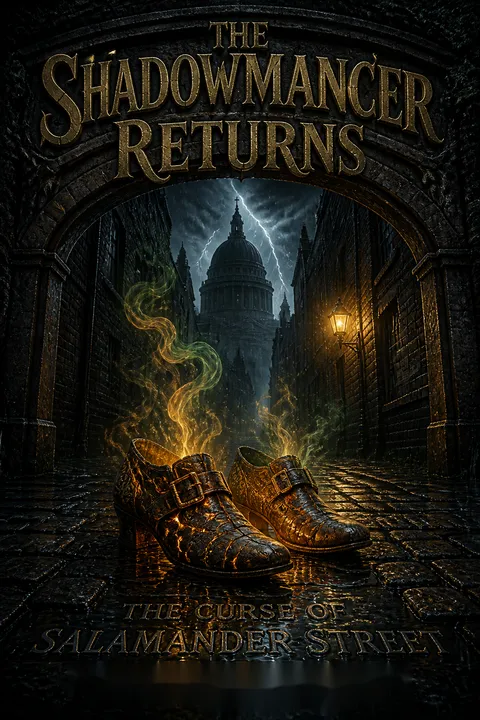
Salamander Street is a place out of time, hidden from the world and ruled by strange laws. Crane's old friend Pallium offers them shelter, but the house is cold, haunted by secrets and the obsessive counting of coins. The street is empty, its residents withdrawn and fearful. Kate and Thomas sense that they are being watched, and the house itself seems to resist comfort. The children's dreams are troubled by visions and ghostly music. Salamander Street is both sanctuary and trap—a place where fate is decided, and old enemies gather. The children's sense of unease grows, as if the street itself is alive and waiting for them to play their part in a larger, darker story.
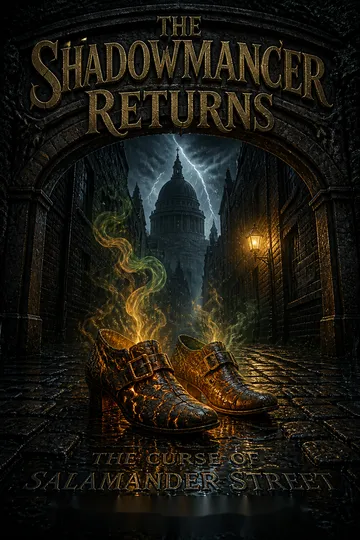
Ghosts and Golden Shoes
Kate is visited by the ghost of Isabella, a girl trapped in her own portrait, who warns her of the dangers lurking in Salamander Street. Pallium's obsession with his enchanted shoes hints at the street's deeper magic—shoes that bind their wearer, just as the street binds its residents. The ghost's presence is both comforting and unsettling, a reminder that the past is never truly gone. Kate's longing for home and Thomas's anger at betrayal simmer beneath the surface. The children are caught between worlds: the living and the dead, freedom and captivity, hope and despair. The ghost's warnings become more urgent as the children are drawn deeper into Salamander Street's web.
The Devil's Bargain
Galphus, the enigmatic shoemaker and alchemist, offers Thomas an apprenticeship, revealing that Crane has sold the children into indenture in exchange for his ship. Thomas is trapped in a factory where boys are worked to exhaustion and controlled by magical shoes. The betrayal cuts deep, and Thomas's sense of agency is stripped away. Galphus's power is insidious—he manipulates desires and fears, binding his victims with promises and enchantments. Kate, too, is marked for captivity. The children's trust is shattered, and their struggle becomes not just for freedom, but for their very souls. The factory is a microcosm of Salamander Street: a place where dreams are twisted into nightmares.
The Factory of Lost Boys
Inside the factory, Thomas faces Smutt, the brutal enforcer among the boys. Violence is the only law, and Thomas must fight to survive. The magical shoes threaten to enslave him forever, and escape seems impossible. Smutt's own pain and self-harm reveal the depth of despair among the boys. Thomas's determination to escape is fueled by memories of friendship and betrayal. The factory is a place of broken spirits, where hope is a dangerous thing. Yet, Thomas's refusal to submit inspires Smutt to help him, and together they plot a desperate escape. The cost of freedom is high, and the line between victim and oppressor blurs in the darkness of Salamander Street.
The Hand of Glory
Lady Tanville Chilnam, searching for her family's stolen portrait, uses the Hand of Glory—a severed, enchanted hand—to steal and uncover secrets. Beadle, caught in her schemes, is drawn into a world of magical artifacts and hidden agendas. The Hand's power to induce sleep and reveal hidden things is both a blessing and a curse. The boundaries between friend and foe, magic and faith, become increasingly blurred. The search for the portrait becomes a quest for identity and justice, as Lady Tanville's past and present collide. The Hand of Glory is a symbol of the dangerous allure of forbidden knowledge and the price of meddling with forces beyond human control.
The Hellhound's Hunt
A hellhound stalks the travelers, killing and sowing terror. Ergott, a dowser hired by Demurral, is revealed as a changeling—able to transform into the beast. The line between hunter and hunted is erased, as trust is shattered and alliances shift. The hellhound's attacks are both physical and psychological, forcing the characters to confront their own fears and guilt. Barghast, the immortal wanderer, recognizes the curse at work and seeks redemption. The hunt culminates in violence and revelation, as the true nature of the beast—and those who serve it—is exposed. The hellhound is a manifestation of the evil that has followed the children from Whitby, now given new form in the city's shadows.
The Green Man's Warning
As the travelers near London, they encounter the Green Man, a symbol of ancient nature and warning. The journey is marked by supernatural signs: storms, omens, and the restless dead. Demurral's pursuit grows ever closer, and the sense of impending catastrophe intensifies. The Green Man's presence is both a comfort and a threat—a reminder that the world is full of powers beyond human understanding. The travelers are tested by fear, temptation, and the lure of easy answers. The city looms ahead, promising both salvation and destruction. The Green Man's warning is clear: the final confrontation is near, and not all will survive.
The Alchemist's Prison
Kate is imprisoned by Galphus, who uses the drug Gaudium-auctus to enslave her will. The drug induces visions, euphoria, and ultimately madness. Kate's struggle is both physical and spiritual, as she battles the compulsion to betray Thomas in exchange for another dose. The factory becomes a prison of the mind, where freedom is an illusion and every desire is twisted against its owner. Galphus's power is absolute, and his cruelty is masked by charm and reason. Kate's descent into addiction is a metaphor for the seductive nature of evil—a force that promises happiness but delivers only despair. Her only hope lies in the intervention of friends and the strength of her own will.
The Queen of Heaven Descends
On Dog Island, Demurral and Galphus prepare a ritual to summon Hertha, the Queen of Heaven—a demon masquerading as a goddess. The children are to be sacrificed, their blood used to open a portal to hell. The ritual is a perverse inversion of faith, blending Christian and pagan symbols in a blasphemous ceremony. Hertha's arrival is heralded by storms, serpents, and the voices of the dead. The boundaries between worlds dissolve, and the characters are caught in a vortex of supernatural power. The final battle is not just for their lives, but for the fate of the world. The cost of victory will be measured in blood and sacrifice.
The Final Sacrifice
As the ritual reaches its climax, alliances are tested and secrets revealed. Barghast, the immortal, finds peace in death; Isabella's ghost helps the children resist Hertha's power. Thomas, driven by love and desperation, strikes the fatal blow against Hertha, ending her reign of terror. Kate is lost to the vortex, her fate uncertain. Demurral and Galphus are undone by their own hubris, consumed by the forces they sought to control. The breaking of curses and the triumph of self-sacrifice over selfish desire mark the turning point. The survivors are left to mourn their losses and reckon with the consequences of their choices.
The End of Demurral
Demurral, wounded and desperate, tries to claim Thomas as his son and heir. Thomas rejects him, choosing instead the memory of his true family and the hope of redemption. Beadle, once Demurral's servant, delivers the final blow, ending the vicar's reign of terror. The world is changed, but not healed—evil is defeated, but at great cost. The survivors are left to rebuild, haunted by memories and the knowledge that darkness is never truly vanquished. The end is both an ending and a beginning—a chance to choose a different path, guided by love and faith rather than fear and ambition.
The Return to Light
The survivors return to Chilnam Castle, where the portrait of Isabella is restored and peace returns. Raphah and Crane bury the Grail Cup, ensuring that its power will not be abused. Thomas mourns Kate, but finds comfort in the company of friends and the promise of new adventures. The castle becomes a place of healing, where the scars of the past are acknowledged but not allowed to define the future. The story ends with a sense of closure and renewal—a reminder that even in the darkest times, light can be found, and that the bonds of friendship and love endure beyond death.
The Portrait's Last Secret
The portrait of Isabella, once a prison, becomes a symbol of redemption. Kate's spirit is seen within the painting, smiling beside Isabella—a sign that she has found peace. The curse is broken, and the restless dead are laid to rest. The power of art, memory, and forgiveness is affirmed. The survivors are changed by their ordeal, but not destroyed. The story's final secret is that love endures, even when all else is lost. The portrait is both a memorial and a promise: that those who are lost are never truly gone, and that every ending is also a beginning.
Farewell to Salamander Street
Salamander Street, once a place of fear and captivity, is left behind. The survivors choose to move forward, carrying with them the lessons of their ordeal. The street fades from memory, its power broken. The world is still dangerous, but hope has been restored. The story ends with a sense of possibility and renewal—a farewell to the darkness, and an embrace of the light. The journey is not over, but the worst is behind them. The friends look to the future, knowing that they have faced evil and survived, and that together, they can face whatever comes next.
Analysis
A modern parable of temptation, sacrifice, and hopeThe Shadowmancer Returns: The Curse of Salamander Street is a dark, atmospheric fantasy that explores the enduring struggle between good and evil, faith and despair, freedom and captivity. Through its richly drawn characters and intricate plot, the novel examines the psychological toll of trauma, the seductive nature of power, and the redemptive possibilities of love and forgiveness. The story's use of magical artifacts, curses, and prophecy serves as both metaphor and mechanism, driving the characters toward moments of crisis and transformation. At its heart, the novel is a meditation on the nature of choice: the temptation to surrender to despair, the courage to resist evil, and the hope that even in the darkest times, light can be found. The lessons are clear—evil cannot be destroyed by force alone, but by the willingness to sacrifice, to forgive, and to choose hope over fear. The book's relevance endures in its portrayal of a world where darkness is ever-present, but never absolute, and where the bonds of friendship and love offer the only true path to redemption.
Review Summary
Reviews for The Shadowmancer Returns are mixed, averaging 3.42 out of 5. Many readers found it an enjoyable but weaker sequel, praising its Gothic atmosphere and dual storylines while criticizing its rushed, unsatisfying ending. Common complaints include poor character development, unresolved subplots, and excessive dialogue. Some preferred it over the original, appreciating its mystery and page-turning quality. The faith-based themes were noted as both a strength and weakness depending on the reader's perspective.
People Also Read

Characters
Thomas Barrick
Thomas is the emotional heart of the story—a boy thrust into a world of magic, betrayal, and danger. His journey is one of loss and growth: from the trauma of Whitby to the horrors of Salamander Street, he is repeatedly betrayed by adults he trusts, especially Jacob Crane. Thomas's resilience is tested in the factory, where he must fight for his identity and freedom. His relationship with Kate is central, marked by loyalty, frustration, and ultimately, sacrifice. Thomas's refusal to submit to evil, even when tempted by power or despair, marks his development from victim to hero. His final act—striking down Hertha and rejecting Demurral—cements his role as the story's moral center, choosing love and friendship over vengeance and ambition.
Kate Coglan
Kate is both a victim and a fighter, struggling with the trauma of loss and the seductive power of Gaudium-auctus. Her journey is marked by longing—for home, for love, for escape—and by the constant threat of being consumed by forces beyond her control. The ghost of Isabella becomes both a guide and a mirror, reflecting Kate's own fears and desires. Kate's addiction and near-betrayal of Thomas are deeply human moments, revealing the story's psychological depth. Her ultimate fate—lost to the vortex, yet at peace in the portrait—underscores the story's themes of sacrifice, redemption, and the enduring power of love. Kate's arc is a testament to the difficulty of choosing hope over despair.
Raphah
Raphah is the embodiment of faith and hope, surviving against all odds and serving as a guide for the other characters. His belief in Riathamus (God) is unwavering, and his miracles—surviving the whale, healing the madman—are signs of a higher power at work. Raphah's role is both practical and symbolic: he is the keeper of the Keruvim, the one who knows the true names of angels, and the voice of forgiveness and mercy. His struggle is not just against external evil, but against despair and the temptation to give up. Raphah's presence brings comfort and courage to his friends, and his final act—invoking the true name of God—breaks the power of evil and restores balance.
Jacob Crane
Crane is a complex figure: a smuggler, a father-figure, and ultimately, a betrayer. His decision to sell Thomas and Kate into indenture is a devastating blow, but his remorse and efforts to rescue them reveal his capacity for change. Crane's relationship with the children is fraught with tension, but also genuine affection. His willingness to sacrifice himself for their safety, and his role in the final battle, mark his redemption. Crane's arc is one of atonement—he is haunted by his past, but chooses to fight for a better future. His partnership with Raphah and his final acts of courage affirm his place among the story's heroes.
Beadle
Beadle begins as a comic figure—Demurral's bumbling servant, eager to escape his master's shadow. His journey is one of self-discovery and unexpected bravery. Beadle's fearfulness is matched by his loyalty, and his actions—rescuing Raphah, aiding the children, and delivering the final blow to Demurral—reveal a hidden strength. Beadle's psychological complexity lies in his struggle with guilt and the desire for freedom. His transformation from coward to hero is gradual, marked by small acts of kindness and courage. Beadle's story is a reminder that even the least likely among us can rise to the occasion when it matters most.
Obadiah Demurral
Demurral is the story's primary antagonist—a vicar consumed by the desire for power and revenge. His mastery of dark magic and manipulation of others make him a formidable foe. Demurral's psychological profile is one of obsession and self-loathing; he is haunted by his failures and driven by a need to control the world around him. His relationship with Beadle is abusive, and his pursuit of the children is relentless. Demurral's ultimate downfall is his inability to understand love or forgiveness—he is undone by his own hubris and the very forces he sought to command. His end is both just and tragic, a warning against the dangers of unchecked ambition.
Galphus
Galphus is a sinister figure, blending charm and cruelty in equal measure. His factory is a prison, and his drug Gaudium-auctus is a tool of enslavement. Galphus's psychological complexity lies in his ability to rationalize evil—he sees himself as a benefactor, even as he destroys lives. His obsession with collecting souls and breaths in jars is a metaphor for his inability to connect with others. Galphus's downfall is inevitable, as his schemes unravel and his victims turn against him. He is a cautionary figure, representing the dangers of unchecked intellect divorced from empathy.
Lady Tanville Chilnam
Lady Tanville is driven by a quest to recover her family's stolen portrait and break the curse that haunts her lineage. Her use of magic and willingness to bend the rules make her both an ally and a potential threat. Tanville's psychological depth comes from her struggle with grief, guilt, and the desire for justice. Her alliance with Raphah and the others is uneasy, but ultimately redemptive. Tanville's actions in the final battle—killing Ergott, aiding the children—mark her as a force for good, even as she grapples with the consequences of her choices. Her story is one of reconciliation with the past and the hope of a better future.
Barghast
Barghast is a tragic figure, cursed to walk the earth until he finds forgiveness. His immortality is a burden, and his knowledge of magic and curses makes him both wise and weary. Barghast's relationship with the other characters is marked by secrecy and longing—he desires connection, but is haunted by his past. His final act—embracing death and finding peace—serves as a counterpoint to Demurral's refusal to change. Barghast's story is a meditation on the nature of redemption and the possibility of grace, even for the most lost among us.
Isabella (The Ghost)
Isabella is both a victim and a catalyst, trapped in her portrait and longing for release. Her interactions with Kate and Thomas are by turns playful, mournful, and urgent. Isabella's psychological complexity lies in her dual role as guide and tempter—she offers wisdom, but also embodies the dangers of unresolved grief and longing. Her redemption comes through helping the living, and her final peace is a testament to the power of forgiveness and the enduring bonds between the living and the dead.
Plot Devices
Intertwined Fates and Mirrored Journeys
The narrative structure weaves together multiple storylines—Thomas and Kate's struggle for freedom, Raphah's quest for the Keruvim, Beadle's journey from cowardice to courage, and Demurral's relentless pursuit. Each character's arc mirrors the others, creating a tapestry of intertwined destinies. Betrayal and redemption are recurring motifs, as trust is broken and restored in unexpected ways. The use of parallel journeys—physical, emotional, and spiritual—heightens the story's tension and underscores its themes of sacrifice, forgiveness, and the search for meaning.
Magical Artifacts and Curses
The story is rich with magical devices: the Hand of Glory, enchanted shoes, the Grail Cup, and the portrait of Isabella. Each artifact serves as both a plot device and a symbol—of power, temptation, and the consequences of meddling with forces beyond human understanding. Curses and blessings are two sides of the same coin, and the characters' interactions with these objects drive the narrative forward. The artifacts are not merely tools, but reflections of the characters' desires and fears.
Foreshadowing and Prophecy
Prophecy and foreshadowing are woven throughout the narrative, creating a sense of inevitability and suspense. Characters receive warnings in dreams, visions, and the words of ghosts. The sense that events are being guided by a higher power—or manipulated by dark forces—adds depth to the story's psychological and spiritual dimensions. The use of prophecy heightens the stakes, as characters struggle to fulfill or escape their destinies.
The Blurring of Worlds
The story repeatedly blurs the lines between worlds: the living and the dead, the mundane and the magical, the past and the present. Ghosts walk among the living, dreams become reality, and the boundaries of time and space are dissolved in the final confrontation. This blurring creates a sense of unease and wonder, forcing the characters—and the reader—to question what is real and what is illusion. The ultimate message is that the choices we make in the face of uncertainty define who we are.
Shadowmancer Series
About the Author
Other books by G.P. Taylor
Download PDF
Download EPUB
.epub digital book format is ideal for reading ebooks on phones, tablets, and e-readers.








































