
Plot Summary
Moonfall: The Agent Strikes
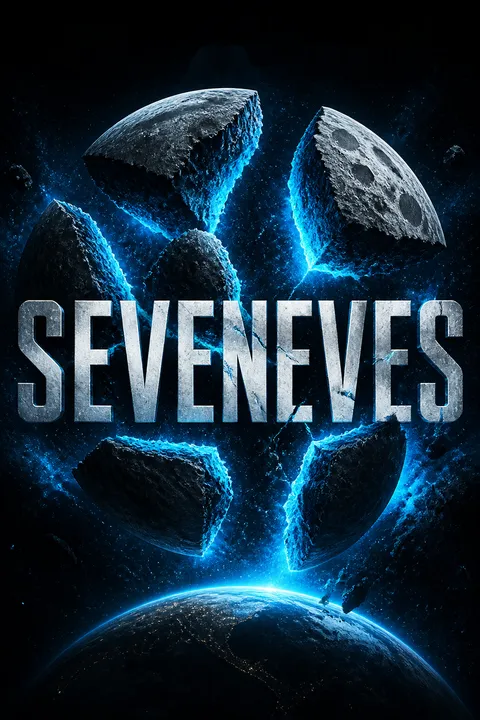
Without warning, the moon explodes into seven massive fragments, an event soon attributed to an unknown "Agent." The world is stunned, and scientists scramble to understand the consequences. As the fragments begin to collide, it becomes clear that the debris will eventually rain down on Earth, threatening all life. The event marks the end of the familiar world and the beginning of a desperate countdown. Humanity is forced to confront its own fragility, and the first seeds of panic and hope are sown as the night sky is forever changed.
Humanity's Reckoning Begins
Astrophysicist Dubois Harris calculates that the moon's fragments will trigger an exponential chain reaction, leading to a catastrophic meteor storm—the "Hard Rain"—that will render Earth uninhabitable for thousands of years. The world's leaders, scientists, and engineers unite in a last-ditch effort to save a remnant of humanity. Plans are made to build an orbital "ark," and the public is told the truth: survival means leaving the planet behind. The emotional weight of imminent extinction is felt worldwide, as people grieve, rage, and cling to the hope of legacy.
The Ark in the Sky
The International Space Station, "Izzy," becomes the nucleus of the Cloud Ark, a rapidly expanding orbital refuge. Engineers, astronauts, and scientists—led by Ivy Xiao and Dinah MacQuarie—work feverishly to prepare for a massive influx of people and supplies. Political and technical challenges abound, as nations jostle for influence and resources. The Ark's design evolves into a distributed swarm of small "arklets," each capable of independent survival. The race against time intensifies, as the first waves of "Scouts" and "Pioneers" arrive, and the station transforms into humanity's last sanctuary.
Choosing the Few
With only a fraction of humanity able to escape, a global "Casting of Lots" selects young men and women from every region to represent the genetic and cultural diversity of Earth. The process is fraught with heartbreak, competition, and political manipulation. Training camps are established, and the chosen few are prepared for life in space. Meanwhile, scientists collect and digitize the world's genetic heritage, hoping to one day restore lost species. The Ark's population swells with astronauts, engineers, and the "Arkies"—the next generation of survivors.
The Cloud Ark Rises
The Cloud Ark takes shape as a swarm of interconnected arklets, each with its own life support and propulsion. The distributed design is meant to maximize survival, allowing the swarm to scatter and regroup in the face of danger. Social tensions rise as the Arkies, General Population, and national contingents struggle to adapt to cramped quarters and new hierarchies. The arrival of billionaire Sean Probst and his asteroid-mining robots brings hope for long-term survival, as the need for water and propellant becomes critical. The Ark's leaders must balance technical, social, and political crises as the Hard Rain approaches.
Hard Rain, Last Days
The White Sky event marks the exponential fragmentation of the moon's debris, followed by the Hard Rain—a relentless meteor bombardment that incinerates Earth's surface. The Ark's inhabitants watch in horror as their home is destroyed, communications with the ground are lost, and the reality of permanent exile sets in. The Ark must now survive on its own, facing the dangers of space: radiation, micro-meteoroids, and the psychological toll of isolation. The survivors mourn the dead, cling to ritual and memory, and begin to forge a new identity as the last humans.
Survival in the Void
Life aboard the Cloud Ark is a constant battle against entropy, scarcity, and human frailty. Technical failures, resource shortages, and social fractures threaten to unravel the fragile society. The death toll mounts from accidents, disease, and suicide. Ivy, Dinah, and the other leaders must make impossible decisions, including the "casting out" of troublemakers and the management of limited genetic resources. The arrival of the comet Ymir, piloted by a dying Sean Probst, offers a lifeline of water and propellant, but also brings new dangers and sacrifices. The Ark's survival depends on ingenuity, discipline, and the willingness to adapt.
The Fracture and the Swarm
Tensions between the Ark's central authority and the Arkies erupt into open conflict. Julia Bliss Flaherty, former U.S. president, leads a breakaway faction—the Swarm—advocating for a decentralized, market-driven society. The Ark splits, with some following Julia into higher orbits and others remaining with the battered core. The Swarm's experiment ends in disaster: resource shortages, radiation, and social collapse reduce their numbers to a handful of cannibal survivors. The main Ark, now called Endurance, embarks on the "Big Ride"—a perilous journey to a safe haven in the moon's debris field, carrying the genetic legacy of humanity.
The Big Ride to Cleft
Endurance, a hybrid of asteroid, ice, and space station, undertakes a years-long migration to the iron-rich moon fragment "Cleft." The journey is marked by relentless attrition: radiation, malnutrition, and the hazards of space claim most of the survivors. The last remnants—eight women—reach Cleft and establish a permanent settlement in its sheltering crevasse. The "Council of the Seven Eves" decides to use advanced genetic engineering to found seven new human races, each embodying different traits and values. The future of humanity is entrusted to their choices, as they begin the long wait for Earth's renewal.
The Seven Eves' Legacy
The Seven Eves—Dinah, Ivy, Tekla, Moira, Camila, Julia, and Aïda—each shape a new lineage, using parthenogenesis and genetic editing to maximize diversity and resilience. Their decisions, alliances, and rivalries set the template for the next five thousand years. The new races—Dinan, Ivyn, Teklan, Moiran, Camite, Julian, and Aïdan—develop distinct cultures, abilities, and worldviews. The survivors' stories become the Epic, a foundational myth for the future. As the Hard Rain abates and the surface of Earth is slowly remade, the descendants of the Eves look to the stars and the ruined planet below, dreaming of return.
Five Thousand Years Forward
Five millennia later, humanity thrives in a vast ring of habitats in geosynchronous orbit, numbering in the billions. The races of the Eves have diverged and specialized, each dominating different segments of the ring. The surface of Earth, now called New Earth, is being terraformed by swarms of robots and carefully reintroduced life. The Eye, a colossal moving city, connects the habitats and the surface. Old rivalries persist, especially between the Red and Blue factions, but the memory of the Epic and the Purpose—an elusive sense of destiny—binds them together. The dream of returning to Earth is alive.
Races of the Ring
The descendants of the Seven Eves have become distinct races, each with unique strengths and weaknesses. Dinans are leaders and explorers; Ivyns are logical and methodical; Teklans are disciplined warriors; Moirans are adaptable and epigenetically flexible; Camites are peaceful and communal; Julians are introspective and mystical; Aïdans are competitive and diverse. The ring civilization is a tapestry of alliances, rivalries, and cultural exchange. The legacy of the Eves' choices is visible in every aspect of life, from politics to technology to art. The question of identity—rootstock or Spacer, Red or Blue—remains central.
Surface Awakenings
Surveyors like Kath Two explore the recovering surface, encountering new ecosystems, engineered animals, and the first human settlements. The rediscovery of "Indigens"—descendants of those who survived the Hard Rain underground—shocks the ring. These rootstock humans, with their own culture and history, challenge the Spacers' claim to Earth. Tensions rise as the Indigens assert their rights, and the Spacers must decide whether to share the planet or risk another cycle of conflict. The surface becomes a stage for first contact, negotiation, and the testing of old prejudices.
Red and Blue Divide
The ring is divided between Red and Blue, rival superpowers with different philosophies and technologies. Red, dominated by Aïdans and Camites, builds the Gnomon—a rival to the Eye—and seeks to control the surface through alliances with the Indigens. Blue, led by Dinans, Ivyns, and Teklans, emphasizes order, science, and the Purpose. The two sides compete for influence, resources, and the future of humanity. The legacy of the Swarm and the Break lingers, as old wounds and ambitions shape the politics of the new world.
The Diggers and the Pingers
The Indigens ("Diggers") and the aquatic "Pingers"—descendants of submarine survivors—emerge as new players in the human story. First contact is fraught with misunderstanding, violence, and the risk of war. The Diggers, shaped by millennia underground, are wary and proud; the Pingers, adapted to the sea, possess their own technology and culture. The Seven, a new alliance of Spacers and Indigens, must navigate these encounters, seeking peace and mutual recognition. The rediscovery of lost kin forces all to reconsider what it means to be human.
The Purpose and the Future
As the new world takes shape, the question of Purpose—an elusive sense of destiny or higher meaning—haunts the survivors and their descendants. The Epic of the Seven Eves becomes a touchstone, shaping identity and aspiration. The choices of the past echo into the future, as humanity faces the challenge of unity amid diversity, and the temptation to repeat old mistakes. The story ends with a sense of possibility: the dream of returning to Earth, the hope of reconciliation, and the enduring mystery of why the moon fell, and what humanity is meant to become.
Analysis
Neal Stephenson's Seveneves is a sweeping meditation on catastrophe, adaptation, and the meaning of legacy. By destroying the moon and forcing humanity into a desperate struggle for survival, the novel explores the limits of ingenuity, cooperation, and moral choice. The creation of the Seven Eves and their races is both a literal and symbolic rebirth, raising questions about identity, diversity, and the ethics of shaping the future. The novel's time jump allows for a profound reflection on how stories, myths, and decisions echo across millennia. The division between Red and Blue, the rediscovery of lost kin, and the elusive Purpose all speak to the enduring human need for meaning and connection. Seveneves ultimately suggests that survival is not enough; what matters is the kind of world we choose to build, the stories we tell, and the values we pass on. The book is a warning against complacency, a celebration of resilience, and a call to imagine a future worthy of our sacrifices.
Review Summary
Seveneves by Neal Stephenson receives polarized reviews centered on its extensive technical detail. Fans praise the hard science fiction approach, ambitious scope, and fascinating premise: the moon explodes, humanity has two years to prepare for extinction. Many appreciate Stephenson's meticulous research into orbital mechanics, engineering, and genetics. Critics find the info-dumps tedious and character development lacking. The narrative structure divides readers—two-thirds covers Earth's final years and space survival, while the final third jumps 5,000 years forward. Reviewers consistently note the book feels like two separate novels, with mixed reactions to pacing and the abrupt ending.
People Also Read
Characters
Dinah MacQuarie
Dinah is a brilliant roboticist and asteroid miner, the daughter of a rugged Alaskan prospector. Her practical skills and emotional resilience make her indispensable to the Ark's survival. Initially introverted and focused on her work, Dinah is thrust into leadership as the crisis deepens. Her relationship with Ivy Xiao evolves from rivalry to deep partnership. Dinah's psychological arc is one of reluctant heroism: she is forced to make hard choices, including the use of genetic engineering to found a new race. Her legacy is the Dinans—explorers, leaders, and builders—who carry her drive and adaptability into the future.
Ivy Xiao
Ivy is the commander of the International Space Station and the de facto leader of the Cloud Ark. Trained as a physicist and pilot, she combines technical brilliance with a calm, authoritative presence. Ivy's leadership is tested by crisis, betrayal, and the burden of impossible decisions. Her relationship with Dinah is complex—part rivalry, part sisterhood. Ivy's psychological strength lies in her ability to balance empathy with discipline, and to hold the Ark together through sheer will. Her descendants, the Ivyns, are logical, methodical, and often serve as the conscience of the ring civilization.
Tekla Ilyushina
Tekla is a Russian cosmonaut and Olympic athlete, chosen for her physical prowess and mental toughness. She endures the most grueling conditions as a Scout, living in a "Luk" bubble outside the station. Tekla's stoicism and discipline make her both respected and feared. She is shaped by trauma and isolation, but finds purpose in service and sacrifice. Her legacy is the Teklans—a race of disciplined warriors and protectors, whose culture values order, strength, and self-control. Tekla's psychological journey is one of endurance, loyalty, and the search for meaning in suffering.
Moira Crewe
Moira is a brilliant biologist and the architect of humanity's genetic future. Tasked with preserving the genetic archive, she becomes the "mother of races," using parthenogenesis and gene editing to found the Moirans—epigenetically flexible, adaptable, and introspective. Moira's psychological complexity lies in her role as both scientist and creator, burdened by the responsibility of shaping the future. She is a keeper of secrets, trusted by all, but often isolated by her knowledge. Her descendants are known for their adaptability, long sleep cycles, and capacity for change.
Camila
Camila is chosen in the Casting of Lots and becomes the founder of the Camites—a race engineered for peace, cooperation, and communal living. Her psychological arc is one of transformation: from a frightened survivor to a moral force advocating for nonviolence and empathy. Camila's choices during the Council of the Seven Eves set the template for her descendants, who become the social glue of the ring civilization. The Camites' culture is marked by humility, service, and a deep aversion to aggression, often serving as mediators in times of conflict.
Julia Bliss Flaherty
Julia is the President of the United States at the time of the disaster, a master of political maneuvering and public persuasion. Her ambition and charisma make her a natural leader, but also a source of division. Julia's psychological profile is marked by narcissism, paranoia, and a need for control. She leads the Swarm in rebellion against the Ark's central authority, with disastrous results. Her legacy is the Julian race—introspective, mystical, and often alienated from the others. Julia's arc is a cautionary tale of leadership corrupted by ego and fear.
Aïda
Aïda is a young Italian woman chosen for the Ark, whose intelligence and ambition drive her to become a key player in the Swarm and later the founder of the Aïdan race. Aïda's psychological makeup is shaped by trauma, rivalry, and a deep sense of otherness. She is both a victim and a perpetrator, leading her followers through cannibalism and social collapse. Her descendants are diverse, competitive, and often serve as wild cards in the ring's politics. Aïda's legacy is one of adaptability, cunning, and the burden of being the "cursed" Eve.
Dubois "Doob" Harris
Doob is the scientist who first understands the true scale of the disaster and becomes the public face of the crisis. His role is to explain, persuade, and comfort, but he is haunted by the knowledge that most will die. Doob's psychological arc is one of guilt, responsibility, and the search for meaning. He becomes a leader on the Ark, guiding the survivors through the Big Ride and the final settlement on Cleft. His death marks the end of the old world and the beginning of the new.
Sean Probst
Sean is a tech billionaire and asteroid miner who risks everything to bring water and propellant to the Ark. Driven by vision and a sense of duty, he undertakes a suicidal mission to capture a comet, becoming a legend among the survivors. Sean's psychological profile is marked by pragmatism, courage, and a willingness to act when others hesitate. His death is both a sacrifice and a catalyst for the Ark's survival.
Kath Two
Kath Two is a Moiran surveyor in the far future, tasked with exploring the surface of New Earth. Her adaptability, curiosity, and epigenetic flexibility make her a bridge between the ring civilization and the rediscovered Indigens. Kath Two's psychological journey is one of self-discovery, as she navigates the complexities of identity, loyalty, and the legacy of the Eves. She embodies the hope of reconciliation and the possibility of a new Purpose for humanity.
Plot Devices
Exponential Catastrophe and Survival Swarm
The narrative is driven by the exponential fragmentation of the moon, leading to the "Hard Rain" that forces humanity to abandon Earth. The use of exponential processes—both in the disaster and in the Ark's population dynamics—creates a sense of inevitability and urgency. The swarm architecture of the Cloud Ark, with its distributed, self-organizing structure, is both a plot device and a metaphor for resilience. The story uses foreshadowing (the Agent, the White Sky) and a three-act structure: the fall, the struggle for survival, and the rebirth. The "Council of the Seven Eves" is a pivotal device, allowing the author to explore themes of choice, legacy, and the shaping of the future.
Genetic Engineering and the Seven Races
The survival of humanity depends on advanced genetic engineering, including parthenogenesis, gene editing, and the deliberate creation of new races. The Seven Eves' choices become the foundation for the next five thousand years, with each race embodying different traits and values. The story uses the device of the Epic—a foundational myth and historical record—to explore how memory, identity, and narrative shape civilization. The divergence and specialization of the races serve as both a source of strength and a cause of conflict.
Time Jump and Dual Perspective
The novel's structure includes a massive time jump, moving from the immediate aftermath of the disaster to a fully realized future civilization. This allows for a dual perspective: the emotional immediacy of survival, and the long-term consequences of choices made under pressure. The use of parallel plotlines—space and surface, Red and Blue, Spacers and Indigens—creates a rich tapestry of conflict and reconciliation. The rediscovery of lost cousins (Diggers, Pingers) and the question of Purpose provide narrative closure and open-ended possibility.
About the Author
Other books by Neal Stephenson
Download PDF
Download EPUB
.epub digital book format is ideal for reading ebooks on phones, tablets, and e-readers.








































