
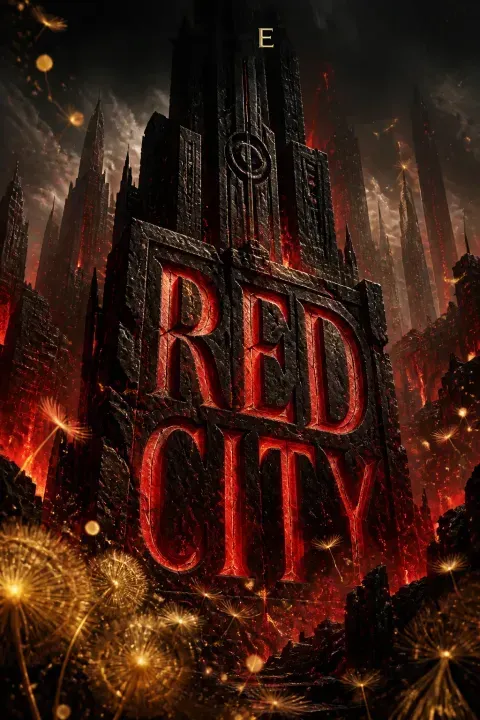


Plot Summary
The Fork Becomes a Spoon
Sam,1 a twelve-year-old with a flawless memory, sits unnoticed in the corner of Mandarin Palace Chinese Food while her mother5 waits tables. Two men in fine suits, gold fox pins gleaming on their lapels, discuss a boy named Will Taylor3 and his mother Diamond.4
One man toys with his fork, and between one glance and the next, the fork is a spoon. Sam's1 quicksilver mind cannot unsee it. Later, she searches online for alchemy, and her exhausted mother5 discovers the search history. Furious in a way Sam1 has never witnessed, her mother5 takes a knife from the kitchen, saws off both ears of Sam's1 stuffed rabbit, stabs its belly, and throws the gutted carcass at her daughter.1
She forbids Sam1 from ever looking up alchemy again. But the prohibition only deepens the hunger. Sam1 now knows something vast and secret exists beyond her reach, and the not-knowing begins to fester like an untreated wound.
This opening crystallizes the book's central tension: the collision between a child's boundless curiosity and the adult world's terror of exposure. Sam's mother destroys Rabbit not because of disobedience but because she recognizes the danger her daughter has stumbled toward. The fork-to-spoon transmutation is Sam's first glimpse of a hidden order beneath reality, but her mother's violent reaction teaches her something more immediate: knowledge can be lethal. The destruction of the stuffed animal functions as a psychological circumcision, cutting away Sam's innocent perception and forcing her to see ugliness where she once saw only beauty. From this moment forward, Sam's relationship to knowledge and power will be shaped by the traumatic lesson that looking too closely at forbidden things costs you what you love.
The Stranger's Ice Cream
In Surat, young Ari2 runs an errand for his uncle when a well-dressed stranger6 with a golden fox pin kneels before him. The man6 scoops up a handful of mulch from a tree bed, and when he opens his fingers, the debris has become a pristine ice cream bar.
He tells Ari2 that people stare because he has a strong soul, calls himself Prometheus,6 and says he will see Ari2 again. The next morning, the stranger's6 voice echoes from the sitting room of Ari's2 home, negotiating with his mother. Ari2 will go to America, live in luxury, receive a monthly stipend for his family.
No, not a loan. Yes, he can come back. Ari2 lies on his mat, listening to his sister Kriti laughing outside, his brother Dev pushing curls from his forehead, his father fanning himself in the sun. He will replay this memory for years, the last moment before everything changed.
Ari's recruitment mirrors the predatory grooming inherent in how syndicates acquire talent. Rudra does not ask the child what he wants; he bypasses Ari entirely and deals with his parents, weaponizing poverty against familial love. The transmuted ice cream is both miracle and lure, a demonstration of power that makes refusal seem irrational. Yet the sensory details Ari fixates on, his sister's soapy hands, his father's shirt flapping, suggest a soul already grieving what it intuits it will lose. The name Prometheus, the Titan who stole fire from the gods and suffered eternal punishment, foreshadows the Faustian bargain: Ari will gain world-altering power, but the cost is the ordinary life he is about to watch recede forever.
Letters Between Shadows
On the first day of seventh grade, Ari2 glances up from his doodles and watches Sam1 enter the classroom. She hesitates, scans for the seat farthest from the teacher, and settles beside him. He catches the scent of scrambled eggs and chives on her clothes. A nearby kid snickers about the smell, but no one else looks her way.
Ari2 whispers hello, and Sam's1 wide, luminous eyes turn to him in genuine surprise. He feels a sudden urge to draw her. Within weeks, they begin a daily ritual: every morning Ari2 hands her a letter, every afternoon she returns one. Their correspondence spirals through philosophy, dreams, favorite colors, the nature of the universe.
But an unspoken rule governs every page: they share nothing personal. No questions about the black car that picks Ari2 up each afternoon. No mention of why Sam's mother5 trembles around well-dressed men. The letters bridge their loneliness while preserving the secrets neither dares expose.
Their friendship is built on a paradox of perfect intimacy and total concealment. They recognize in each other a kindred invisibility: Ari is hypervisible, stared at and desired by everyone, while Sam is invisible, ignored by everyone except him. Their letters become a third space where they can be fully themselves precisely because they edit out the parts of their lives too dangerous to share. This dynamic of mutual protection through mutual silence is both profoundly loving and fundamentally unsustainable. The letters are practice for the adult relationship to come: two people who know each other's souls intimately while standing on opposite sides of an unspoken war.
Fire Season Reckoning
A gas leak at Mandarin Palace Chinese Food ignites. The blast kills the owner and covers half of Sam's mother's5 body in weeping burns. She leaves the hospital after a week, unable to afford the bills. Sam1 drifts through school in a fog, watching her mother's5 job applications fail one by one: her English is not good enough, her scarred face frightens customers, her injuries slow her down.
Then a yellow eviction notice appears on their door. Sam1 remembers the Lumines men mentioning Diamond Taylor,4 recalls neighbors gossiping that Diamond4 can make anything happen.
With three days until they lose their apartment, Sam1 lies to her mother5 about a school project and takes the bus to the Odyssey Theatre on opening night of a show called Firefly. She slips through a cracked side door, climbs to the balcony shadows, and scans the crowd until she spots a plain-faced woman in black whom everyone orbits like a dark sun.4
The explosion that scars Sam's mother is both literal catastrophe and symbolic initiation. Connie's burned body makes visible the violence that syndicates inflict on ordinary people, yet Sam, in her desperation, turns toward that same world for salvation. This is the central irony of the novel: the system that harmed her becomes the only escape route she can see. Sam's journey to the Odyssey is an act of profound agency wrapped in desperation. She does not stumble into the alchemical world by accident; she hunts for it, chooses it, even as she cannot fully comprehend what she is choosing. The invisible girl is learning to weaponize her invisibility into a tool of access.
Blindfolded on Sacred Ground
Will Taylor3 catches Sam1 eavesdropping behind the Odyssey and holds a transmuted gun to her head. To save herself, Sam1 recites Diamond's4 entire overheard conversation verbatim, then launches into the digits of pi. Diamond4 tests her with a handwritten page of names and numbers; Sam1 repeats every line perfectly.
The next day, Will3 drives her to the Red City, fifty acres of Spanish villas and climbing roses. In the Observatory courtyard, he blindfolds her, administers her first dose of sand, and demands she identify the tiles beneath her fingers by touch alone. The sand ignites something in her blood.
She senses the lattice structure of silver, magnesium, tungsten. She gets every tile right, something no untrained apprentice has ever done. Diamond4 watches from the shadows. By afternoon, Sam1 holds a white envelope containing two thousand dollars a week and a new identity: Mozart,1 Grand Central's newest alchemist.
Sam's recruitment scene inverts the typical hero's journey. She is not chosen for her moral qualities but for her utility: perfect memory, natural invisibility, desperate hunger for approval. The blindfold, which Will will later repurpose during their sexual encounters, introduces the eroticized power dynamic that will define their relationship. Sand's first touch on Sam is revelatory and seductive, making her feel powerful, seen, and capable of anything. The test in the courtyard is nominally about alchemical aptitude, but it is equally a test of compliance: can she perform under pressure, accept the rules, and desire the approval of those who hold her life in their hands? She passes because her entire childhood has trained her to.
Ice from Water at Last
For weeks, Ari2 fails to perform even the simplest transmutation. Rudra6 presses his hand against Ari's2 chest, pulls his soul forward, and each attempt is pure agony: blinding white pain, screaming, collapse. Sweat soaks through his shirt. The glass of water on the table remains stubbornly liquid.
One evening, after yet another failure, Rudra6 slams his hand against the table and transmutes a knife from the wood and iron, stabbing it inches from Ari's2 fingers. He tells Ari2 that if he cannot perform, he is worthless, and Rudra6 does not keep what has no value. In that moment, something shifts in Ari's2 chest.
Rage crystallizes into stillness. He puts his hand in the spilled water, grips something deep inside himself, and pulls. The water freezes so instantly that his fingers are trapped in the ice. Rudra6 claps, delighted, and tells Ari2 he has grown teeth at last. The family stipend resumes. The real training begins now.
Ari's first transmutation is an act of survival, not mastery. The knife on the table is not a metaphor; it is the literalization of what Rudra has always implied: failure means death. Ari's success comes not through discipline or study but through the activation of a survival instinct so deep it bypasses conscious thought. This moment establishes the core wound of his relationship to alchemy: power is extracted through trauma, and every transmutation will cost a fragment of his soul. Rudra's delight at Ari's rage is the delight of a craftsman who has finally found the right tool to shape his material. Ari is being forged into a blade, and the forging requires breaking him first.
Mozart and Shakespeare
Years pass. Sam,1 now twenty, has become Grand Central's ghost: a polemist whose sand-enhanced invisibility lets her slip through security, gather intelligence, and eliminate targets without leaving a trace. She lives at the Red City, rarely sees her mother,5 and has buried her feelings for Ari2 beneath an obsessive attraction to Will Taylor.3
Ari2 has become Lumines's Shakespeare:2 a bioalchemist and negotiator whose charisma, amplified by sand, can sway politicians, seduce business rivals, and seal deals worth millions.
He attends galas on Alexander Reed's7 arm, sleeps with Isla8 occasionally, and catches glimpses of his family only through photographs and receipts. Both have killed. Both have sacrificed fragments of their souls. Both still think of each other when they cannot sleep. On the last day of high school, at a secret beach, they said goodbye. They have not spoken since.
The five-year ellipsis is the novel's most brutal narrative choice. We do not watch them transform; we see only the before and after, forcing us to measure the distance between the children they were and the weapons they have become. Both have achieved exactly what they wanted: survival, money, importance. Both have lost what they did not know they were sacrificing: themselves. Sam's invisibility has been professionalized into a combat skill, but it mirrors her emotional vanishing. Ari's charisma has been weaponized into manipulation, but it cannot fill the hollow where his family used to be. They are successes in every external measure and failures in every internal one. The five-year gap is the space where their souls were gradually chipped away.
The Hotel Hallway Standoff
At a downtown hotel, Sam1 accompanies Will3 to a tense negotiation with Lumines. She is there to observe, unnoticed. Then she sees him: Ari,2 taller, sharper, a golden fox on his lapel, walking beside Rudra6 as an equal. Recognition hits like a physical blow. Later, in a hallway, they round a corner and crash into each other.
Instantly, both transmute knives from the walls and press blades to each other's throats. Ari's2 voice is colder than she remembers, his eyes more calculating. They exchange terse, wounded words. Then gunfire erupts: the meeting was an ambush. Will3 staggers out, bleeding heavily from a gunshot.
Sam1 helps him escape. Ari2 could stop her, but he lets her go. In the chaos, he whispers a location: the secret beach, at the next full moon. She drives Will3 to a hidden alchiatrist while her mind reels. She knows now: Ari2 is Shakespeare.2 Lumines's golden boy. Her enemy.
The hallway confrontation is the moment their carefully maintained ignorance collapses. They cannot unknow what they have just learned about each other. Yet even as they hold knives at each other's throats, the muscle memory of their bond overrides their training. Ari lets Sam go because he cannot kill the girl he once traced the symbol for gold onto her palm. Sam drives away with another man's blood on her hands, but her mind is fixed on the boy she once loved. This scene establishes the central conflict of the novel's second half: they are now defined by their institutional loyalties, but those loyalties sit atop a foundation of genuine love that neither can fully repress. The secret beach becomes the third space where their true selves might still meet, if only they can survive long enough to get there.
Moonlight on Secret Sand
Under a full moon, Sam1 finds Ari2 waiting in the stone arches of their childhood beach. She holds a transmuted gun on him; he holds a marble-hilted knife at his side. Their conversation is a fencing match of accusations and guarded answers. She demands to know why he disappeared.
He admits he wanted to protect her from his world. She reveals she joined Grand Central because her family needed money. He confesses he missed her. Slowly, the weapons lower. Sam1 transmutes her gun into sand. Ari2 dissolves his knife into salt water. They do not touch, but the space between them hums with everything unspoken.
He tells her he will come here at every full moon, and she can choose to meet him or not. She gives no promise, but she does not refuse. When she leaves, he stays on the sand until dawn, knowing they have just made themselves vulnerable to destruction.
The beach scene is the novel's emotional fulcrum. In a story about people who transmute matter and manipulate souls, this is the one thing they cannot fake: the gravitational pull between two people who have known each other since before they became monsters. Their lowering of weapons is a mutual disarmament more profound than any treaty between syndicates, because it violates every survival instinct their training has instilled. Ari's promise to return each full moon is both romantic and reckless: he is building a secret bridge between enemy fortresses, knowing that if either side discovers it, the bridge becomes a trap. Sam's silence is her form of hope. She does not say yes, but she does not destroy the possibility.
Blood in the Bathroom
In retaliation for the hit on Will,3 Sam1 accompanies Sebastian,9 a serial killer turned Grand Central polemist, to a rooftop bar called Minnow. Their target is Henry Maclan,15 the Lumines factory director. Sebastian9 corners him in the bathroom, slams his head into a urinal, and transmutes the man's skin into porcelain, then melds his arms into the floor tiles.
The man screams through sewn-shut lips. Sebastian9 orders Sam1 to finish him. She freezes. He hisses at her to do her job. Sam1 transmutes a jagged tile shard into a steel blade and drives it through Maclan's15 skull.
Later, she and Sebastian9 capture Zhukov,16 the man who shot Will,3 and deliver him to Diamond,4 who personally tortures him to death in a Confession Room while a camera records. Sam1 receives a million-dollar deposit. She begins washing her hands obsessively until they crack and bleed.
Sam's first kill is the point of no return for her soul. Sebastian functions as her dark mentor, a man who genuinely believes murder is an art form and who wants to initiate her into its pleasures. Her hesitation marks her as still human; her eventual compliance marks her as a survivor. The million dollars that follows is the novel's most damning detail: it quantifies the exact price of her moral disintegration. Diamond's filmed torture of Zhukov serves a dual purpose: it is both punishment and documentation, evidence that can later be used against her. Sam's compulsive hand-washing is the body's refusal to accept what the mind has rationalized. She cannot transmute guilt, so she scrubs until she bleeds.
A Philosopher's Final Breath
Diamond4 orders Sam1 to assassinate Dominique St. Clair,10 Lumines's young philosopher, at the Oxford conference. Sam1 tracks Dominique10 through the gala in a pale blue backless dress. In a narrow cobblestone alley, she pulls a knife from the wall, shatters Dominique's10 hastily formed shield, and stabs her through the chest.
She closes the wound, transmutes the blood into water, and walks away. The body is found hours later. That night, trembling and desperate to forget, Sam1 knocks on Will's3 hotel room door in London. He blindfolds her with his necktie, just as he did during her first test.
Their sex is rough and consuming, a mutual obliteration of grief and conscience. She does not know if she loves him or if she is using him to survive herself. He whispers her name when he breaks. For the first time, she feels truly seen and truly lost.
The murder of Dominique is the act that shatters the syndicates' most sacred rule: philosophers are untouchable. Sam's choice to kill an unarmed woman who smiled at her, who was Ari's friend, who made sand for a living, marks her full transformation into what Grand Central needs her to be. Her immediate turn to Will for sex is not desire but anesthesia. She uses his body to silence the scream in her head. Will's blindfold, which began as a test of alchemical aptitude, has become their erotic ritual, a symbol of how thoroughly their relationship is built on power, control, and the obliteration of self. They fuck like they are angry at each other but do not know why. It is the closest thing to intimacy either of them has ever had.
The Footage That Ended Everything
Sam's mother, Connie,5 has pieced together that her daughter1 is entangled in the alchemical world. She withdraws her savings, books passage on a cargo ship to Shanghai, and calls Sam,1 pleading for a meeting to discuss everything. Will,3 lying beside Sam1 in bed, overhears the conversation.
The next day, he intercepts Connie5 in a grocery store parking lot, touches her shoulder, and transmutes something lethal inside her. She collapses dead on the asphalt. Sam1 spends days unable to reach her mother5 until Detective Edward Sinclair,11 a young and dogged investigator, sends her deleted surveillance footage.
Sam1 watches the video on her phone, alone in her apartment, and sees Will3 approach her mother,5 sees her mother5 fall. She remembers Will's3 tenderness in bed, his confession about his father's suicide, his whispered claim that he loved her. Her grief calcifies into a single, focused purpose: she will destroy Grand Central from within, even if it destroys her.
This is the novel's irreversible rupture. Sam's entire adult identity was built on the belief that Grand Central saved her and her mother, that Diamond was a benevolent matriarch, that Will's cruelty was directed only at enemies. The video footage shatters all of it. Will's murder of Connie is both a strategic move (preventing Sam's escape) and a possessiveness so absolute it becomes lethal. The betrayal is compounded by intimacy: Will killed her mother after holding her in bed, after telling her his deepest childhood wounds. Sam's pivot to revenge is not heroic but tragic: she is not becoming a better person, merely redirecting her capacity for violence toward a target that deserves it. Her alliance with Edward is her first moral act in years, and it requires her to sacrifice the last thing she has: her freedom.
Traps and Confessions
At the next full moon, Sam1 goes to the beach with Grand Central crewmen hidden on the cliffs above. She is there to capture Ari.2 Ari2 arrives with Lumines operatives concealed in the shadows. He is there to deliver Sam1 to Reed7 for execution.
They face each other in the silver moonlight, both knowing the other's betrayal, both too exhausted to pretend. Sam1 tells Ari2 her mother is dead. He tells her Dominique10 was his friend. Their accusations crack open into grief. Ari2 confesses he has loved her since they were children, that he hates how much he still loves her.
He leans close and whispers a warning: Lumines is here to kill her. Gunfire erupts from both sides. In the chaos, Ari2 is captured by Will3 and Sebastian.9 Sam1 is injured. As Ari2 is dragged away with a bag over his head, their eyes meet one final time, and she knows she will burn the world down to save him.
The beach trap is a perfect narrative symmetry: both protagonists arrive as weapons of their respective syndicates, both choose to become human instead. Their mutual confession of love is not a solution to their dilemma but a deepening of it. Love does not save them; it makes them more vulnerable, more dangerous, more willing to sacrifice everything. Ari's whispered warning costs him his freedom but preserves something essential in both of them: the refusal to let the other die at their hands. The battle that follows is almost irrelevant compared to the emotional warfare that has preceded it. They have already done the hardest thing: admitted, in the presence of their respective armies, that they belong to each other more than to any syndicate.
Invisible on the Wet Pavement
Sam1 has made a deal with Detective Edward Sinclair:11 she provides evidence of Grand Central's crimes, including the Zhukov16 torture footage, in exchange for a police raid during the prisoner exchange. She visits the captive Ari,2 loosens his bonds, and kisses him, a butterfly brush of lips that is both promise and farewell.
But Diamond4 and Will3 have discovered her treachery. When Sam1 arrives at the Winged Towers for the negotiation meeting, Will3 seizes her by the neck and floods her body with transmuted agony. Sebastian9 melts the skin of her wrists and ankles into the pavement, pinning her to the street.
Diamond4 tells her that her mother5 was killed because she planned to flee the country with Sam.1 Will's3 final words are that she is alone. They leave her to bleed out as rain begins to fall. Passersby step around her collapsing body. The sand in her system ensures no one notices the dying girl on the sidewalk.
Sam's near-death on the pavement is the novel's darkest irony: the invisibility that was her weapon and her curse becomes the instrument of her destruction. Will's punishment is exquisitely psychological: he does not kill her quickly but leaves her to experience the full horror of being unseen, the thing she has feared since childhood. Diamond's revelation that Connie was killed for planning Sam's escape adds a layer of tragic guilt: Sam's mother died trying to save her, and Sam was too trapped in her own secrets to recognize the rescue attempt. The scene strips Sam of everything: her physical autonomy, her syndicate protection, her belief that she was valued, and finally her hope. She is left with only the raw fact of her body, broken on the street, waiting to die.
Gold Through the Heart
Dr. Amerson,12 the elderly alchiatrist who has tended Will3 since childhood, secretly rescues Sam1 from the street and heals her wounds. Sam1 refuses to flee the city. During the prisoner exchange at the Red City estate, Edward's11 police force storms the compound. In the chaos, Rudra6 shoots Alexander Reed7 dead and disappears.
Sam1 finds Ari,2 leads him to the Observatory, and opens a tunnel hidden beneath the courtyard's elemental tiles. But Will3 blocks their escape. A brutal duel erupts. When Will3 pins Sam's1 throat under his knee, she reaches for the gold tile beneath her fingers and transmutes a needle-thin spike upward through his chest.
Will's3 eyes fill with grief and something like relief. Ari2 begs her to flee with him, but Sam1 chooses to stay and face the police. Ari2 vanishes into the tunnel. Sam1 raises her hands as officers flood the courtyard. She watches the darkness where Ari2 disappeared and tries to imagine the life they might have had.
Sam's killing of Will is the climax of her entire arc: she uses the symbol he once taught her (gold, the alchemical sign for perfection) to destroy him. The gold tile in the courtyard, where he first blindfolded her and tested her worth, becomes the instrument of his death. Will's grief in his final moments suggests he knew, on some level, that this was always where their relationship would end: two damaged people who loved each other in the only way they could, through power and violence. Sam's choice to stay rather than flee with Ari is the novel's most adult moment. She understands that running would only postpone the reckoning. By facing the authorities, she gains the leverage to actually change something. Ari's escape is not abandonment but the fulfillment of her promise: she saved him.
Two Paths Toward Dawn
Weeks later, Sam1 sits across from Sebastian9 at the Huntington Gardens. He survived the raid and now brings an offer from Belle Epoque: a majority stake in what remains of Grand Central, a ten-million-dollar signing bonus, a seat at the table of global syndicate power.
Sam1 signs the contract, knowing she will use her position to feed information to Edward11 and dismantle the system from within. Meanwhile, in Gotham, Ari2 meets Isla8 one last time. His family in Surat is finally free of Lumines's surveillance, but he cannot go back to them; they are strangers now.
He pulls a folded letter from his pocket, an unsent message to Sam,1 and reads the final line about how she is his beginning and end. Then he turns his steps toward the sea, toward a flight to Londinium, toward the woman who is now a syndicate leader herself. They are still on opposite sides. They are still heading toward each other.
The ending refuses easy resolution. Sam's decision to accept Belle Epoque's offer is morally ambiguous: she tells herself she is working for justice from the inside, but the thrill she feels at belonging, at wielding power, at being seen, is genuine. She is not fully a hero or fully a villain; she is a survivor adapting to an impossible world. Ari's choice to pursue her rather than return to his family completes his character arc: he has accepted that his home is no longer a place but a person. His unsent letter, the novel's final image of yearning, suggests that some transmutations cannot be rushed. They are still enemies by every institutional definition. But they have chosen each other over their institutions once, and the novel's final gesture is the hope that they will do so again. Love, the book suggests, is the one alchemy that no syndicate can control.
Analysis
[Red City] is fundamentally a novel about the cost of transformation. Its alchemical magic system literalizes a truth that applies to every character: you cannot become something new without destroying something of what you were. Every transmutation requires a fragment of soul, and by the novel's end, every surviving character has paid that price so many times that they are fundamentally diminished, even when they have 'won.' Sam's1 perfect memory, once a gift, becomes the recording device of her own moral decay. Ari's2 charisma, once a natural trait, becomes a weapon that isolates him from genuine connection. Will's3 elemental power cannot transmute the grief of his childhood. Diamond's4 empire cannot reverse her cancer. The novel argues that the drive toward perfection, toward becoming 'more desirable,' is the engine of human achievement and also the engine of human destruction. What makes the book emotionally devastating is that the characters are not wrong to want more. Sam's1 hunger to be seen, to matter, to escape poverty, is entirely legitimate. Ari's2 desire to protect his family, to find belonging, is universally human. The tragedy is that the only system offering them a path to these things is a system that will consume them. The novel's final gesture, Ari2 heading toward Sam1 while she signs a contract with yet another syndicate, is neither happy nor hopeless. They have chosen each other, but they have not escaped the machine. The question the ending leaves open is whether love can survive inside a system designed to commodify everything, including souls.
Review Summary
Red City receives mostly positive reviews, with readers praising its gritty urban fantasy setting, complex characters, and intricate alchemy-based magic system. Many compare it to works like Jade City and Babel. The book explores themes of immigration, family dynamics, and moral ambiguity. Some criticize pacing issues and underdeveloped relationships. The romance and character development receive mixed reactions. Readers appreciate the vivid worldbuilding and intense action scenes. Overall, it's seen as a compelling adult debut with potential for a strong series.
People Also Read
Characters
Samantha 'Sam' Lang (Mozart)
Invisible prodigy turned syndicate weaponSam arrives in America as an infant with her single mother Connie5, growing up poor in Angel City. She possesses a photographic memory so flawless she can recall entire books after a single reading, yet she consistently fails in school because she cannot give the 'correct incorrect answers' teachers want. Her defining childhood wound is invisibility: no one notices her, no one values her, and her mother's5 exhaustion leaves little room for emotional connection. This invisibility, amplified by the drug sand, becomes her alchemical specialty, allowing her to pass unseen through crowds and security. Her driving motivation is a desperate hunger to be seen, to matter, to become 'more desirable.' She joins Grand Central initially to save her mother5 from poverty but stays because the syndicate gives her what she has always craved: purpose, power, and the focused attention of powerful people. Her relationship with Will3 is a dark mirror of her need for approval; her relationship with Ari2 is the love she cannot fully claim because they belong to enemy worlds.
Ari Rathod (Shakespeare)
Charismatic bioalchemist torn between duty and loveTaken from his family in Surat, India, at age seven by Rudra Mahajan6, Ari is raised in isolated luxury and trained to be an alchemist for Lumines. His defining trait is a powerful soul that draws others to him magnetically, a charisma that sand amplifies to near-supernatural levels. People stare at him, desire him, hate him for making them desire him. Underneath the polished exterior is a shy, anxious boy who misses his family desperately, writes letters he can never send, and has been systematically cut off from every connection except his work. His bioalchemy specialty allows him to transmute emotions and sensations in others, making him an unparalleled negotiator and seducer, but every transmutation costs a fragment of his soul. His love for Sam1 is the one thing Lumines could not train out of him. He is both Lumines's most valuable asset and its most vulnerable one.
William 'Will' Taylor (Constantine)
Heir to Grand Central, elementalist, and dark love interestThe only child of Diamond4 and Peter Taylor, Will was experimented on with early batches of sand from age four, his body and soul ravaged repeatedly so his parents could perfect the drug. He found his father's hanged body at age nine. These traumas forged him into a man of controlled cruelty and hidden vulnerability. As an elementalist, he transmutes air, fire, water, and earth with lethal precision. He is cold, intimidating, and effortlessly commanding, yet beneath the ice is a boy who still longs for his mother's4 approval and who keeps his dead father's journals. His relationship with Sam1 begins as mentorship, escalates into a violent sexual entanglement, and becomes genuine love, though he expresses it through possession and punishment. He murders Sam's mother5 to prevent Sam1 from being taken away, an act of love so twisted it destroys everything between them.
Diamond Taylor
Matriarch of Grand Central, creator of modern sandBorn the daughter of a trucker, Diamond rose from poverty through a Harvard scholarship, where she met her husband Peter, the chemist who discovered the philosopher's stone. She is the architect who turned his discovery into the global sand trade, building Grand Central into a multi-billion-dollar empire. Not an alchemist herself, she wields power through money, strategy, and an uncanny ability to identify and recruit talented souls. She is dying of pancreatic cancer and has been for over a decade. Her relationship with Will3 is cold and transactional on the surface, built on data journals rather than maternal warmth, yet she genuinely loves him in her own damaged way. She sees in Sam1 a younger version of herself: hungry, brilliant, and desperate to be seen. Her fatal flaw is the belief that loyalty can be purchased and that love is a variable she can control.
Connie Sun
Sam's mother, protector, and tragic catalystConnie brought infant Sam1 to America seeking the dream of factory wealth. Instead, she worked grueling jobs, stretched every dollar, and tried to shield her daughter1 from the predatory world of alchemy that she glimpsed while employed at a Lumines chemical factory, where a supervisor named Maclan15 sexually assaulted her. She carries the physical scars of the restaurant explosion and the deeper scars of knowing she cannot protect her daughter1 from the forces that have marked her own life. Her relationship with Sam1 is strained by mutual incomprehension: she loves her daughter1 fiercely but cannot express it, and Sam1 craves an emotional openness her mother cannot provide. When she finally realizes Sam1 is involved in alchemy, she plans a desperate escape, and this attempt to save her daughter1 costs her life.
Rudra Mahajan (Prometheus)
Ari's mentor, Lumines recruiter, and would-be successorRudra scours the world for children with powerful souls, bringing them to Lumines for training. He discovered Ari2 in Surat and has shaped him into Shakespeare2, but his own position is threatened when Reed7 begins favoring Ari2 for succession. Long-term alchemy use has aged him prematurely, leaving his eyes sunken and his temper volatile. He is capable of both paternal fondness and brutal violence. His relationship with Ari2 is complex: he genuinely believes he saved Ari2 from poverty, but his methods are abusive, and he cannot accept being surpassed by his protégé. His murder of Reed7 during the police raid is both revenge for years of being undervalued and a final, desperate grab for power.
Alexander Reed
Ruthless leader of Lumines syndicateReed built Lumines into Grand Central's primary rival, pursuing a strategy of flooding the market with cheaper sand rather than Diamond's4 exclusive luxury model. He is manipulative, strategic, and utterly unsentimental. He uses photographs of Ari's2 family to coerce obedience and sees people as assets to be deployed. His decision to bypass Rudra6 in favor of Ari2 as successor destabilizes Lumines from within. His glasses often hide his eyes, making him unreadable, and his calm demeanor masks a capacity for sudden, lethal decisions. He is killed by Rudra6 during the police raid, a death that is both shocking and inevitable given the resentments he has cultivated.
Isla (Archimedes)
Ari's colleague, fellow bioalchemist, and occasional loverBlonde, sharp, and pragmatic, Isla has been with Lumines since she was young. She trained alongside Ari2 and Dominique10, and her specialty also lies in bioalchemy. She suffers from ocular migraines as a side effect of heavy sand use, which sometimes blinds her temporarily during combat. Her relationship with Ari2 is a mix of genuine friendship, professional partnership, and casual sex; she taught him how to use his bioalchemy for pleasure and manipulation. Beneath her sardonic exterior is someone who understands the cost of their world: she once fell in love with an outsider and was beaten severely by Rudra6 as punishment. She warns Ari2 about the dangers of his feelings for Sam1, recognizing the pattern she herself survived.
Sebastian Van Den Berg (Hades)
Serial killer turned Grand Central executionerSebastian was on death row for murdering thirty-four people when Diamond Taylor4 arranged his pardon in exchange for his services as a polemist. He genuinely believes killing is an art form and speaks about death with the reverence others reserve for religion. His eyes are curiously empty, as if his soul has been entirely consumed by a lifetime of violence. He becomes Sam's1 dark mentor, teaching her how to kill efficiently and without hesitation. Despite his monstrous nature, he is oddly professional and non-judgmental; he follows the best deal and offers genuine, if disturbing, advice. His loyalty is purely transactional, and he will work for whoever holds his contract.
Dominique St. Clair (Cleopatra)
Lumines philosopher and Ari's kind classmateDominique was one of the friendliest students in Ari's2 alchemy cohort, the one who patiently helped him through difficult concepts when others mocked him. As a philosopher specializing in creating sand, she is among the most valuable and protected members of the syndicate, as her work requires fragmenting her soul tens of thousands of times and will lead to an early death. Her engagement to a Wall Street heir suggests a future outside alchemy. Her murder at Sam's1 hands during the Oxford conference is the act that breaks the syndicates' most sacred rule and escalates the war beyond any possibility of diplomacy. She is killed not because of who she is but because of what she represents to Lumines.
Edward Sinclair
Determined young detective seeking truthEdward is a relatively new detective on the Angel City force, a Black man whose parents taught him that hard work and integrity are non-negotiable. He is the only officer seriously investigating the string of impossible murders connected to Grand Central and Lumines, despite mockery from older colleagues who have long since been bought off or intimidated into silence. He is methodical, earnest, and perhaps naively courageous. His decision to contact Sam1 directly with the deleted surveillance footage is a massive risk that pays off when she becomes his inside source. He offers her immunity in exchange for testimony, not realizing how much deeper the alchemical world goes than his evidence can capture.
Dr. Erin Amerson (Demeter)
Grand Central's alchiatrist with a conscienceAn elderly Black woman who has served as Grand Central's healer for over thirty years, Amerson was recruited from Harvard Medical School by Diamond4 and has tended Will3 since his childhood. Her soul is deeply scarred from decades of transmutations, and she is nearing the end of her life. She carries profound guilt over her complicity in the experiments performed on young Will3, whom she loves almost as a son, yet she never found the moral courage to intervene. Her decision to secretly rescue Sam1 after the pavement attack is her final act of atonement, one she knows will cost her life. Sebastian9 kills her shortly afterward, on Diamond's4 orders, transmuting the chemicals in her brain into acid.
Hanover
Diamond's loyal assistant and Sam's first friend at Grand CentralHanover is Diamond Taylor's4 manservant, a kind-eyed man who welcomes Sam1 on her first day at the Red City with a warm smile and a wink. He manages Diamond's4 schedule and delivers Sam's1 payments. His murder by Lumines, where his body is returned with the skin peeled from his arms, devastates Sam1 and triggers Diamond's4 order to kill Dominique10.
Nicolas
Grand Central apprentice philosopher scarred by SamA fellow student at Grand Central's Observatory, Nicolas is training to be a philosopher. He is envious of Sam's1 rapid advancement and attempts to intimidate and assault her in the courtyard. Sam's1 instinctive transmutation burns his throat so deeply that he carries the scar permanently, a constant reminder of her deadly potential.
Henry Maclan (Kafka)
Lumines factory director and Connie's abuserMaclan supervised the Lumines chemical factory where Connie5 worked years ago. He sexually assaulted her when she refused his advances. Years later, he is part of the Lumines crew that ambushes Will3. Sam1 and Sebastian9 track him to a rooftop bar and kill him in the bathroom, making him Sam's1 first murder.
Kane Zhukov
Lumines polemist who shot Will TaylorZhukov is the Lumines polemist who fired the near-fatal shot at Will Taylor3 during the hotel ambush. Sam1 captures him unconscious and delivers him to Diamond4, who tortures him to death in a Confession Room while filming the ordeal. The footage of this murder later becomes key evidence in the case against Diamond4.
Plot Devices
Sand (Philosopher's Stone drug)
Enhances all traits, good and badSand is the philosopher's stone distilled into a consumable drug. When ingested, it temporarily enhances everything about the user: strengths, talents, beauty, charisma, but also weaknesses, vices, and psychological vulnerabilities. For Sam1, it amplifies her natural invisibility, causing people to overlook her entirely. For Ari2, it amplifies his charisma, making him almost supernaturally compelling. For Isla8, it triggers debilitating ocular migraines. The drug is manufactured by philosophers, alchemists who specialize in fragmenting their souls tens of thousands of times to create each batch, a process that shortens their lifespans dramatically. Sand is the economic foundation of all modern syndicates, generating billions in revenue, and its widespread use has transformed global society, accelerating technological and scientific breakthroughs while also correlating with increases in violence, suicide, and mental illness.
Alchemical Transmutation
Soul-powered matter transformationThe core magic system of the novel. Alchemists can transmute any substance into any other substance by visualizing its geometric structure and sacrificing a fragment of their soul. The equation must be balanced: mass and energy are conserved. Organic matter can be changed into inorganic matter, but never the reverse, because the soul of a living thing is uniquely powerful and, once gone, cannot be restored. This makes healing wounds possible but imperfect, and resurrection impossible. Specializations include bioalchemy (manipulating living bodies and emotions), polemics (combat transmutation), philosophy (creating sand), elementalism (controlling classical elements), and alchiatry (medical transmutation). Every transmutation causes physical pain and slowly depletes the soul, leading to shortened lifespans for alchemists.
Syndicate Attributions
Secret identities honoring historical alchemistsEvery alchemist receives an attribution, a secret name taken from a historical figure associated with alchemy, science, or mythology. These are chosen by other alchemists and function as both honor and mask. When one alchemist dies, another may take up their attribution, creating the illusion of immortal continuity. Sam1 becomes Mozart1 (named not for Wolfgang but for his equally talented but overlooked sister), Ari2 becomes Shakespeare2, Will3 is Constantine3, Rudra6 is Prometheus6, Isla8 is Archimedes8, Dominique10 is Cleopatra10. The attributions serve to separate the alchemist's public identity from their syndicate identity and to create a lineage that transcends individual mortality.
The Secret Beach
Neutral ground for forbidden connectionA hidden stretch of sand beneath protruding bluffs on the Angel City peninsula, accessible only through an overgrown path. Ari2 discovered it as a teenager and showed it to Sam1 on their last day of high school, before they went their separate ways. It becomes their meeting place as adults, a liminal space where the rules of syndicate warfare are temporarily suspended. Under the full moon, beneath stone arches carved by the sea, they can be the people they were before they became Mozart1 and Shakespeare2. The beach is both sanctuary and trap, the site of their most intimate confessions and their near-destruction.
The Red City Estate
Grand Central's headquarters and training groundFifty acres of Spanish villas, rose gardens, olive trees, and terra-cotta roofs perched on a hill overlooking Angel City. The estate houses the Observatory (alchemy college), the Hotel (guest quarters and underground Confession Rooms for interrogation), Diamond's4 personal home, Will's3 house, staff quarters, and the Bibliotheca Aeternus (Eternal Library). The Observatory courtyard is paved with a mosaic of elemental tiles representing the alchemical periodic table, each square a different material. Beneath every building runs a network of emergency escape tunnels leading to the back alley. The Red City is Sam's1 gilded cage: it represents everything she thought she wanted and everything that has trapped her.
About the Author
Download PDF
Download EPUB
.epub digital book format is ideal for reading ebooks on phones, tablets, and e-readers.








































