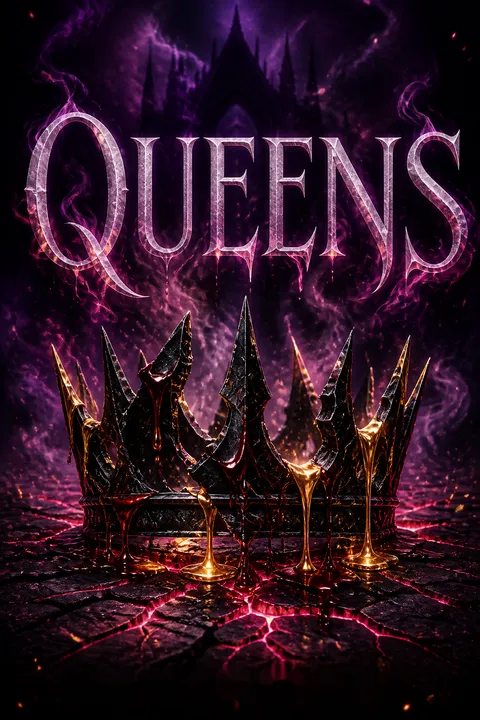

Plot Summary
Blood on the Stones
Cassia's life is forever marked by the brutal murder of her baby brother, Luca, whose body she discovers as a child. The trauma is visceral, the family's grief raw and unresolved. This foundational wound becomes the driving force behind Cassia's every action, fueling her wrath and her obsession with vengeance. The family, a complex web of demon fathers and a human mother, is powerful but fractured by loss. Cassia's memory of that day is a recurring nightmare, a scream echoing through her adulthood. The pain is not just personal—it's political, as the murder is a message from Mammon, Queen of Greed, to the ruling Wrath family. Cassia's identity, ambition, and rage are all forged in this crucible of blood and betrayal.
Wrath's Daughter Awakens
Twenty-two years later, Cassia is a woman shaped by her past. Nightmares of Luca's death still haunt her, leaving her restless and angry. She is ambitious, yearning to inherit the throne of Wrath, but her family's caution and her own volatile emotions hold her back. Cassia's relationships with her siblings are fraught—her brother David is frivolous and infuriating, her sister Valeria distant and enigmatic. Cassia's wrath is both her strength and her curse, making her a force to be reckoned with but also a danger to herself and others. Her parents, especially her demon fathers, are protective to the point of suffocation, unwilling to risk another child. Cassia's determination to avenge Luca is unwavering, even as it threatens to tear her family apart.
Siblings and Schemes
Cassia's siblings are both her allies and her obstacles. David, now King of Lust, is unreliable but occasionally useful; Valeria, touched by fate, is secretive but loyal. Together, they plot in secret, sharing stolen information and forbidden plans. Cassia's quest for vengeance against Mammon is a family secret, one that could bring ruin if discovered. The siblings' dynamic is a mix of love, rivalry, and shared trauma. They bicker, compete, and occasionally support one another, but trust is always in short supply. Cassia's anger is a constant threat, and her siblings walk a fine line between helping her and protecting themselves. The family's power is immense, but so are its divisions.
Power Dulling and Practice
To infiltrate Greed and kill Mammon, Cassia must hide her formidable Wrath power. David procures a tonic from an elven contact that dulls her abilities, leaving her weak and vulnerable. The process is humiliating and painful, forcing Cassia to relearn basic movements and control her emotions without the crutch of power. Her siblings help her train, provoking her anger to test the limits of the tonic. The experience is humbling, revealing the depth of Cassia's dependence on her strength. Yet, it also brings a rare intimacy with her siblings, as they share memories of Luca and confront the family's legacy of pain. The power-dulling is both a practical necessity and a metaphor for Cassia's struggle to master herself.
Family Ties, Family Lies
Cassia's family is a fortress and a prison. Her fathers, especially Aziel and Silas, are ever-watchful, their love expressed through control and surveillance. Cassia sneaks through the manor, stealing files and evading detection, but the family's network of shadows and informants is nearly impenetrable. The family dinner is a battleground of subtle manipulation, with Cassia and her siblings playing roles to cover their true intentions. The parents' fear of losing another child leads to overprotection and, ultimately, to the magical imprisonment of Cassia and her siblings within Wrath and Lust. The family's love is real but suffocating, and Cassia's rebellion is as much about claiming her autonomy as it is about avenging Luca.
The Plan for Revenge
Cassia's plan to assassinate Mammon is bold and reckless. She forges an alibi, convincing her parents she's attending an emotional regulation retreat while she slips into Greed. The plan is a delicate balance of deception, timing, and risk. Cassia's determination is absolute—she will kill Mammon or die trying. The mission is personal, but its consequences are political, threatening to ignite war between Wrath and Greed. Cassia's willingness to defy fate, family, and tradition marks her as both a hero and a potential villain. The stakes are nothing less than the future of the demon realms, and Cassia's every move is shadowed by the possibility of disaster.
Into Greed's Heart
Cassia's journey into Greed is arduous and isolating. Weakened by the tonic, she travels on foot, hiding her identity and power. The capital of Greed is a world apart—cold, formal, obsessed with wealth and status. Cassia rents a room overlooking Mammon's estate, watching for weaknesses and opportunities. The city is a maze of secrets, and Cassia must learn to mimic the Greeds' mannerisms to avoid suspicion. Her isolation is profound, and the memory of Luca's death is a constant companion. Yet, Cassia's resolve never wavers. She is a predator in enemy territory, waiting for the perfect moment to strike.
Stranger at the Gates
Cassia's surveillance of Mammon's estate brings her into contact with a mysterious man—Rexton. He is wealthy, connected to the royal family, and strangely lacking in power. Their encounter is charged with mutual curiosity and attraction, but also with suspicion. Rexton's presence is both an opportunity and a threat; he could be a way into Mammon's inner circle or a deadly obstacle. Cassia tests him, probing for weaknesses and information. The dance between them is a game of masks, each hiding their true intentions. The encounter sets in motion a chain of events that will change both their fates.
Dangerous Connections
Cassia and Rexton's relationship deepens, moving from wary flirtation to strategic alliance. Rexton is betrothed to Princess Amelia, Mammon's daughter, but the match is political, not romantic. Cassia uses her charm and intelligence to secure an invitation to the royal wedding, seeing it as her best chance to kill Mammon. The connection between Cassia and Rexton is electric, a mix of rivalry, attraction, and shared ambition. Yet, both are hiding secrets—Cassia her true identity and mission, Rexton his own shadowy past and divided loyalties. Their alliance is as dangerous as it is necessary, and trust is always provisional.
The Betrothal Bargain
The royal wedding is both a celebration and a battlefield. Cassia secures her invitation, choosing her dress as carefully as her weapons. The event is a convergence of power, politics, and personal vendettas. Mammon is at her most vulnerable, surrounded by allies and enemies alike. Cassia's plan is to strike during the chaos, but the risks are immense. The wedding is also a crucible for Cassia and Rexton's relationship, forcing them to confront their feelings and their fears. The bargain between them is tested, and the outcome will determine not just their futures, but the fate of kingdoms.
Shadows and Informants
As the wedding approaches, Cassia's plans are threatened by betrayal from within her own family. Aziel and Silas intervene, drugging and abducting her to prevent the assassination. The family's surveillance is total, and Cassia's autonomy is crushed by magical imprisonment. Rexton, too, is revealed to be more than he seems—a shadow, an informant, a survivor of abuse and betrayal. The web of secrets tightens, and the cost of vengeance becomes clear. Cassia's rage turns inward, and her sense of failure is overwhelming. The family's love is both a shield and a shackle, and Cassia must decide whether to forgive or to fight.
Laying the Trap
Despite setbacks, the trap is set. Rexton, now revealed as a key player, prepares to kill Mammon. The assassination is swift and brutal, a mirror of Luca's murder. The aftermath is chaos—Greed is thrown into turmoil, and the balance of power shifts overnight. Cassia's role is ambiguous; she is both avenger and bystander, her agency stolen by her family's intervention. The cost of vengeance is high, and the consequences are far-reaching. The trap has been sprung, but the prey is not the only one caught.
Aziel's Intervention
Aziel's rescue of Cassia is both a blessing and a curse. She is saved from immediate danger but imprisoned by her family's fear. The magical bracelet is both a symbol and a tool of control, trapping Cassia within the borders of Wrath and Lust. Her siblings are similarly punished, and the family's unity is strained to the breaking point. Cassia's sense of failure is acute, and her anger turns to despair. The limits of parental love are laid bare, and Cassia must confront the reality that her family's protection is also her greatest obstacle.
Chained by Family
Cassia's imprisonment leads to a spiral of depression and self-doubt. She isolates herself, refusing to leave her bed or engage with her family. The weight of failure and the loss of agency are crushing. Her siblings try to help, but trust is broken. The magical bracelet is a constant reminder of her powerlessness. Cassia's identity as the future Queen of Wrath is in jeopardy, and her sense of self is shattered. The struggle to reclaim her autonomy is both internal and external, a battle against her own demons and those of her family.
The Weight of Failure
Cassia's return to work is fraught with shame and anxiety. She is haunted by her failure to kill Mammon and by the perception that she is unfit to lead. The respect of her peers and the loyalty of her subjects are in question. Yet, Cassia's ambition is undimmed. She throws herself into her duties, determined to prove her worth. The path to redemption is long and uncertain, but Cassia's resilience is formidable. The struggle to balance vulnerability and strength becomes the heart of her journey.
Rexton's True Strength
Rexton's past is revealed in all its brutality—abuse, survival, and the struggle to claim his own power. His scars are both literal and metaphorical, a testament to his endurance and his pain. The relationship between Cassia and Rexton deepens, moving from rivalry to intimacy. They share vulnerabilities, confront their fears, and begin to trust one another. The bond between them is forged in fire, a union of equals who have both suffered and survived. The forging of trust is not easy, but it is transformative.
The Queen Falls
Mammon's assassination is the climax of years of plotting and pain. The act is both personal and political, a reckoning for Luca's death and a catalyst for war. The aftermath is chaos—Greed is leaderless, and the balance of power is upended. Cassia and Rexton are both implicated, their fates entwined. The price of vengeance is high, and the consequences are unpredictable. The fall of the queen is both an ending and a beginning.
Aftermath and Ambition
The aftermath of Mammon's death is a crucible for Cassia. War looms, and the responsibilities of leadership are thrust upon her. She must navigate the politics of power, the demands of her family, and the expectations of her people. The relationship with Rexton is tested by ambition, jealousy, and the struggle for autonomy. Cassia's journey is one of self-discovery, as she learns to balance vulnerability and strength, love and duty. The forging of a queen is a process of pain, growth, and transformation.
The Bond Forged
In the end, Cassia and Rexton's bond is both literal and symbolic. They mark each other, claiming a union that is as much about survival as it is about love. The family is reconciled, old wounds are acknowledged if not healed, and the future of Wrath is secured. Cassia's journey from traumatized child to queen-in-waiting is complete, but the story is far from over. The promise of the future is one of hope, struggle, and the ongoing battle to claim one's destiny.
Analysis
Queens is a dark, emotionally charged fantasy that uses the lens of demon royalty to explore the universal themes of trauma, power, and the search for self. At its core, the novel is about the cost of vengeance and the struggle to claim one's destiny in the face of overwhelming loss. Cassia's journey from traumatized child to queen-in-waiting is both a personal and political odyssey, marked by pain, resilience, and transformation. The story interrogates the limits of family, the dangers of unchecked ambition, and the possibility of healing through connection. The relationship between Cassia and Rexton is a study in the forging of trust between equals, each scarred by their past but willing to risk vulnerability for the promise of something more. The novel's use of trauma as both motivation and obstacle is particularly resonant in a modern context, where the legacy of pain often shapes the paths we choose. Ultimately, Queens is a meditation on the power of survival, the necessity of self-mastery, and the hope that even in a world of violence and betrayal, love and leadership can be forged from the ashes.
Review Summary
Queens receives mixed reviews averaging 3.97/5 stars. Readers are divided on protagonist Cassia, daughter of previous series characters, who seeks revenge for her murdered brother. Many find her bratty, insecure, and frustrating, with repetitive internal monologue dominating the narrative. Critics note the rushed pacing, lack of character depth, and unsatisfying ending. However, fans appreciate the slow-burn enemies-to-lovers romance with Rexton/Rock, the action-heavy plot, and world-building. Most agree the final chapters improve significantly, setting up future installments focused on Cassia's siblings.
People Also Read
Characters
Cassia
Cassia is the fierce, volatile daughter of the Wrath royal family, marked from childhood by the trauma of her brother's murder. Her psyche is a battleground of rage, ambition, and vulnerability. She is driven by a need for vengeance and a desperate desire to prove herself worthy of the throne. Cassia's relationships are complex—she loves her family but chafes under their control, trusts her siblings but competes with them, and is both drawn to and threatened by Rexton. Her journey is one of self-mastery, as she learns to balance her wrath with compassion, her ambition with humility. Cassia's development is a study in the forging of a leader from the crucible of pain.
Rexton
Rexton is a man of contradictions—a former shadow, abused and underestimated, who rises to become a key player in the fate of kingdoms. His scars are both physical and emotional, the legacy of a brutal childhood and a life spent hiding his true power. Rexton's relationship with Cassia is a dance of equals, each challenging and healing the other. He is both a weapon and a healer, capable of great violence and great tenderness. Rexton's loyalty is hard-won, and his trust is a gift. His development is a testament to the power of survival and the possibility of transformation.
Aziel
Aziel is the formidable King of Wrath, a demon of immense power and deep wounds. The loss of Luca haunts him, shaping his every decision and fueling his overprotectiveness. Aziel's love for his children is fierce but suffocating, and his inability to let go is both his strength and his weakness. He is a master of strategy but struggles with vulnerability. Aziel's relationship with Cassia is fraught, a mix of pride, fear, and regret. His journey is one of learning to trust, to let go, and to accept the limits of his power.
Silas
Silas is a fate, a being with access to knowledge and power beyond mortal comprehension. His love for his family is real, but his actions are often inscrutable, guided by visions and secrets he cannot share. Silas is both a guardian and a manipulator, his interventions as likely to harm as to help. His relationship with Cassia is marked by guilt and distance, as he struggles to balance his duties as a fate with his responsibilities as a father. Silas's development is a meditation on the cost of knowledge and the burden of foresight.
Charlie (Cassia's mother)
Charlie is the human mother at the center of the Wrath family, a survivor of trauma and a source of warmth and resilience. Her humanity is both a vulnerability and a strength, grounding her children and her mates in compassion. Charlie's relationship with Cassia is tender but strained by the dangers of their world. She is a bridge between worlds, embodying the possibility of love and healing in the midst of violence. Charlie's development is a quiet but powerful counterpoint to the demons' struggles.
David
David is Cassia's older brother, the new King of Lust, and a classic incubus—charming, irreverent, and often infuriating. He is both a source of comic relief and a surprising well of loyalty. David's inability to keep secrets is both a liability and a source of connection, and his relationship with Cassia is a mix of rivalry and genuine affection. He is less powerful than his siblings but compensates with cunning and adaptability. David's development is a reminder that strength comes in many forms.
Valeria
Valeria is Cassia's older sister, marked by her connection to the fates. She is calm, mysterious, and often distant, her loyalties divided between family and destiny. Valeria's knowledge is both a gift and a curse, isolating her from those she loves. Her relationship with Cassia is one of quiet support, even as she struggles with her own burdens. Valeria's development is a meditation on the cost of insight and the challenge of balancing personal desire with cosmic duty.
Mammon
Mammon is the antagonist, the Queen of Greed whose actions set the story in motion. She is ruthless, cunning, and unrepentant, her power matched only by her paranoia. Mammon's murder of Luca is both a personal vendetta and a political statement, and her reign is marked by fear and isolation. Her relationship with her children is transactional, and her death is both a victory and a warning. Mammon's development is a study in the corrosive effects of power and the inevitability of retribution.
Raum
Raum is the legendary general of Wrath, a figure of strength and discipline. He is both a mentor and a gatekeeper, his approval a key to Cassia's acceptance as a leader. Raum's standards are high, and his respect is hard-won. He is a stabilizing force in the chaos of war, and his relationship with Cassia is one of tough love. Raum's development is a reminder that leadership is earned, not given.
Androl
Androl is Raum's lieutenant, a survivor of torture and a model of resilience. His scars are a testament to his endurance, and his loyalty is unwavering. Androl's role is often in the background, but his support is crucial to Cassia's success. He is a reminder that strength is not always loud, and that survival is its own form of victory.
Plot Devices
Trauma as Motivation
The murder of Luca is the inciting trauma that shapes Cassia's entire arc. This personal loss is not just a backstory but the engine of the plot, driving Cassia's quest for vengeance and her struggle for autonomy. The trauma is revisited through nightmares, flashbacks, and emotional triggers, grounding the high-stakes political drama in raw, personal pain. The device is used to explore the interplay between personal and political, showing how private wounds can have public consequences.
Power Suppression and Identity
The use of a power-dulling tonic is both a practical plot device and a metaphor for Cassia's internal struggle. It forces her to confront her dependence on strength and to develop new forms of resilience. The device also enables the infiltration of Greed, setting up the central action of the story. The suppression of power is mirrored in the suppression of emotion, and the journey to reclaim both is central to Cassia's development.
Family as Fortress and Prison
The Wrath family is both a source of strength and a source of suffocation. The magical imprisonment of Cassia and her siblings is a literalization of the family's overprotectiveness. The family's surveillance, secrets, and interventions are both plot obstacles and explorations of the complexities of love. The device is used to interrogate the boundaries between care and control, autonomy and dependence.
Dual Protagonists and Mirrored Arcs
The narrative structure alternates between Cassia and Rexton, using their parallel journeys to explore themes of trauma, survival, and transformation. Both are marked by childhood wounds, both struggle with trust and vulnerability, and both must learn to balance strength and tenderness. Their relationship is a crucible in which both are tested and changed. The device allows for deep psychological exploration and a rich interplay of perspectives.
Foreshadowing and Fate
The presence of fate-touched characters and prophetic visions creates a sense of inevitability and tension. The story is laced with foreshadowing—hints of betrayal, warnings of war, and glimpses of possible futures. The device is used to build suspense and to explore the tension between destiny and free will. The characters' struggles against fate are both literal and metaphorical, raising questions about agency and choice.
Political Intrigue and War
The plot is driven by political machinations—assassinations, alliances, betrayals, and wars. The personal is always political, and every action has consequences for the balance of power. The device is used to create high stakes and to explore the costs of ambition, vengeance, and leadership. The war is both a backdrop and a crucible, testing the characters and revealing their true natures.
About the Author



Download PDF
Download EPUB
.epub digital book format is ideal for reading ebooks on phones, tablets, and e-readers.








































