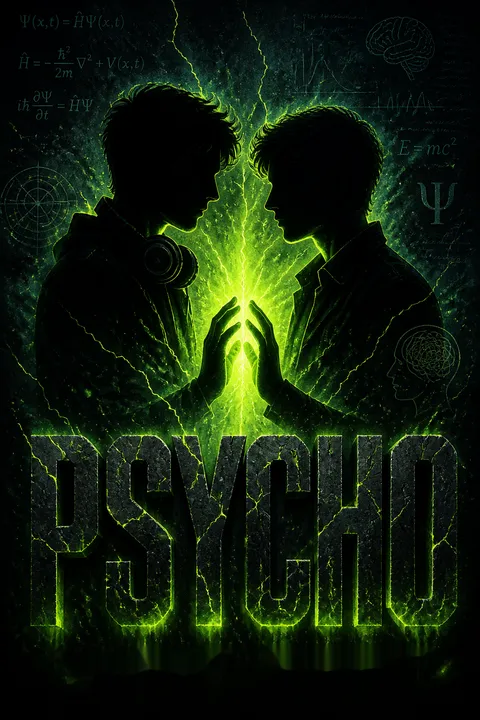

Plot Summary
The Experiment Begins
Thomas Mulvaney, a wealthy and brilliant psychologist, adopts children with psychopathic tendencies, determined to prove that even the most damaged can be shaped into something useful. Among his "sons" is August, a traumatized, ferociously intelligent boy rescued from neglect and isolation. Thomas's approach is not cruel, but calculated—he wants his boys to feel like family, not prisoners. Each child is a unique case study, and August, with his genius-level IQ and emotional detachment, becomes the most fascinating subject. Thomas's experiment is both a search for redemption and a gamble with fate, setting the stage for a family that will walk the line between justice and monstrosity.
August's Haunted Genius
Now an adult, August Mulvaney is a tenured quantum physics professor, outwardly eccentric but inwardly haunted by his past and his nature. He navigates the world with headphones and selective attention, using music to drown out the chaos of his eidetic memory. August is both predator and protector, channeling his violent urges into a secret life as a vigilante, targeting those who slip through the cracks of justice. His family of adopted brothers shares this mission, each with their own darkness. August's isolation is profound—he is brilliant, but connection eludes him, until a chance encounter threatens to unravel his carefully constructed world.
Lucas's Psychic Burden
Lucas Blackwell, a former FBI profiler, arrives at the university as a new criminal psychology professor. He is infamous for his "clairvoyant" abilities—psychometry, the power to see the past through touch. Traumatized by a career-ending breakdown and haunted by visions of violence, Lucas is fragile but determined to rebuild his life. His gift is both a curse and a weapon, making him a pariah among colleagues and a target for those who fear what he might uncover. Lucas's vulnerability is matched only by his stubbornness, and his arrival sets off a chain reaction that will force him to confront both his own demons and the monsters hiding in plain sight.
Collision of Secrets
When August and Lucas literally collide on campus, the contact is electric—Lucas's psychic gift floods him with visions of August's bloody secret life. The shock is mutual: August recognizes Lucas's reaction as something more than fear, and Lucas realizes he's touched a killer. Their mutual recognition is immediate and dangerous, sparking a tense dance of suspicion, fascination, and denial. August is both threatened and intrigued by Lucas's insight, while Lucas is drawn to August's darkness despite the danger. Their connection is undeniable, setting the stage for a relationship built on secrets, obsession, and the possibility of redemption.
Dangerous Attraction
August and Lucas are drawn together by a force neither can resist. August's predatory instincts are awakened by Lucas's vulnerability, but instead of wanting to destroy him, he wants to possess and protect him. Lucas, for his part, is both terrified and exhilarated by August's attention—he recognizes the danger but is unable to stay away. Their interactions are charged with tension, flirtation, and the constant threat of exposure. As August's family becomes aware of Lucas's knowledge, the stakes rise: can Lucas be trusted, or will he bring ruin to the Mulvaneys? The line between hunter and hunted blurs as desire and danger intertwine.
Family of Monsters
August confides in his brothers about Lucas, sparking fierce debate. The Mulvaneys are a family of vigilante psychopaths, each with their own code and trauma. Some see Lucas as a threat, others as a potential ally—or even a test case for their father's experiment. The family's dynamic is complex: loyalty, rivalry, and shared darkness bind them together. August's obsession with Lucas is both a liability and a revelation, forcing the brothers to confront their own capacity for connection and the risks of letting outsiders into their world. The family's code—never harm the innocent—becomes both shield and sword as they weigh Lucas's fate.
The Vigilante Code
The Mulvaneys' secret is revealed: they are a clandestine organization, using their unique skills to eliminate those the justice system cannot touch. August's role as both executioner and protector is explored, and Lucas is offered a glimpse into their world. The family's operations are methodical, their targets chosen with care. Yet, the moral ambiguity of their actions haunts them—are they heroes, monsters, or something in between? Lucas's own sense of justice is challenged, and he must decide whether to expose them or join their cause. The code that binds the Mulvaneys is both their salvation and their curse.
Lucas's Past Unveiled
Lucas's history is laid bare: his psychic abilities led him to uncover a serial killer within the FBI, but when he tried to expose the truth, he was branded insane and institutionalized. The killer, Kohn, is still at large, and Lucas is tormented by guilt and helplessness. August becomes both confidant and avenger, vowing to help Lucas find justice. Their bond deepens as they share their wounds, and Lucas's vulnerability becomes a source of strength. The past is not dead—it is a living force, driving both men toward a reckoning with the evil that destroyed Lucas's life.
The Threat of Kohn
Kohn, the serial killer who ruined Lucas's career, resurfaces, taunting Lucas with cryptic messages and threats. The danger is immediate and personal: Kohn knows Lucas's weaknesses and delights in tormenting him. August and his family mobilize to protect Lucas and hunt Kohn, but the killer is cunning and well-connected. The stakes escalate as Kohn's crimes are revealed to be part of a larger, more horrifying enterprise. Lucas is forced to confront his deepest fears, while August's protective instincts become increasingly possessive. The hunt for Kohn becomes a crucible, testing the limits of trust, loyalty, and love.
Obsession and Surrender
The relationship between August and Lucas intensifies, moving from wary fascination to all-consuming obsession. Their connection is physical, emotional, and psychological—each man finds in the other a mirror for his own darkness and longing. August's need to protect and possess Lucas collides with Lucas's need for safety and control. Their intimacy is fraught with risk, but also with the possibility of healing. As they surrender to each other, the boundaries between love and violence, pleasure and pain, blur. Together, they become both weapon and shield, united against the threats that surround them.
The Red Room Revelation
The investigation into Kohn uncovers a network of "red rooms"—darknet sites where women are tortured and killed for entertainment and profit. The crimes are not isolated, but systemic, involving human trafficking, organized crime, and the complicity of powerful men. The Mulvaneys and Lucas realize they are up against not just a killer, but an entire industry of violence. The stakes are no longer personal—they are existential. The family must use all their resources, skills, and ruthlessness to dismantle the operation and save the innocent. The line between justice and vengeance becomes razor-thin.
The Hunt for Cricket
When Cricket, a friend and ally, is kidnapped by Kohn's network, the mission becomes urgent and personal. Lucas's psychic abilities and August's tactical genius are put to the test as they race against time to rescue her. The family mobilizes, each member playing a role in the assault on the traffickers' stronghold. The rescue is brutal and chaotic, forcing Lucas to confront the reality of violence and his own capacity for darkness. The cost of justice is high, but the bonds of loyalty and love prove stronger than fear.
Blood and Justice
The confrontation with Kohn and his accomplices is savage and uncompromising. Lucas, guided by August, participates in the torture and execution of the man who destroyed his life. The act is both catharsis and damnation—Lucas finds no joy in violence, but neither does he flinch from it. The Mulvaneys exact their own brand of justice, erasing the threat and sending a message to those who would prey on the vulnerable. The aftermath is bloody, but necessary. The family's code is upheld, but the cost is written in scars—physical, emotional, and moral.
Aftermath and Reckoning
With the immediate threat eliminated, the family must deal with the fallout. Lucas is haunted by what he has done, struggling to reconcile his actions with his conscience. August, ever the pragmatist, offers comfort and acceptance, refusing to let Lucas drown in guilt. The rescued women begin to heal, and the Mulvaneys close ranks, protecting their own. The world remains dangerous, but the family's unity is stronger than ever. Lucas must decide whether to stay in the darkness with August or seek the light on his own. The reckoning is both personal and collective—a test of what it means to be human.
Healing in the Dark
August and Lucas, scarred but alive, begin to build a life together. Their relationship is unconventional, shaped by trauma and violence, but also by tenderness and understanding. They find solace in each other's arms, learning to trust, to forgive, and to hope. The family welcomes Lucas as one of their own, and the experiment that began with Thomas Mulvaney finds its most unexpected success: the creation of a home for the broken and the damned. Healing is slow, but possible, and love becomes the force that redeems even the darkest souls.
Love Without Limits
August and Lucas's love defies easy categorization—it is obsessive, possessive, and fiercely loyal. They challenge each other, push each other's boundaries, and find joy in their shared strangeness. The family's acceptance is hard-won but genuine, and Lucas learns that belonging is not about perfection, but about being seen and accepted for who you are. The world may never understand them, but within the walls of their chosen home, they are safe. Love, for them, is not a cure, but a sanctuary—a place where monsters can rest.
New Beginnings
With the past behind them and the threat of Kohn's network neutralized, August and Lucas look to the future. They build a life together, embracing both the ordinary and the extraordinary. The family continues its mission, but with a renewed sense of purpose and hope. August and Lucas's relationship becomes a model for what is possible when broken people find each other and choose to heal together. Their story is not one of perfect happiness, but of resilience, courage, and the refusal to be defined by trauma. In the end, they prove that even monsters can love—and be loved in return.
Analysis
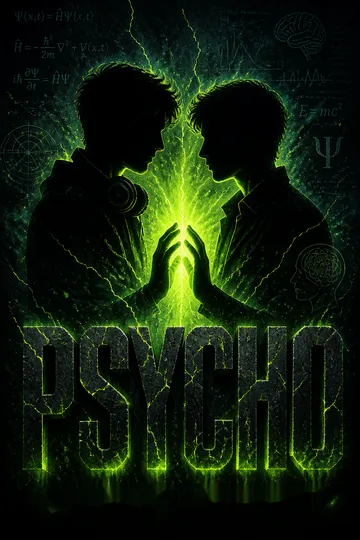
A modern gothic romance about monsters, justice, and the possibility of lovePsycho by Onley James is a daring exploration of what it means to be both damaged and redeemable. Through the lens of a found family of vigilante psychopaths and a psychic haunted by his past, the novel interrogates the boundaries between good and evil, justice and vengeance, love and obsession. The story's greatest strength lies in its refusal to offer easy answers—its protagonists are both heroes and monsters, shaped by trauma but not defined by it. The relationship between August and Lucas is both a subversion and celebration of the romance genre: their love is not about healing each other, but about accepting and thriving in their shared darkness. The novel's depiction of systemic violence, particularly against women and the marginalized, is unflinching, but it also offers hope in the form of solidarity, loyalty, and the refusal to look away. Ultimately, Psycho is a story about the power of chosen family, the necessity of confronting evil, and the radical act of loving without limits. It challenges readers to question their own definitions of morality and to believe that even monsters can find a home.
Review Summary
Psycho is the second book in the Necessary Evils series, earning an overall rating of 4.24/5. Readers largely adore August Mulvaney, a genius psychopathic professor who becomes obsessively devoted to Lucas, a clairvoyant ex-FBI agent. August's endearing, clueless romanticism combined with dark humor and graphic violence won many fans over. Common criticisms include insta-love pacing, a bland Lucas characterization, and underdeveloped kinky elements. The found family dynamic among the Mulvaney brothers was consistently praised, with readers eagerly anticipating future installments.
People Also Read

Characters
August Mulvaney
August is the product of both nature and nurture—a child born with psychopathic tendencies, shaped by trauma, and molded by a father determined to prove that monsters can be made into heroes. His intelligence is staggering, his emotional detachment profound, but beneath the surface lies a deep longing for connection. August channels his darkness into vigilantism, targeting those who escape justice. His relationship with Lucas awakens a possessive, protective side, challenging his belief that he is incapable of love. August's journey is one of self-discovery, as he learns that even the most damaged can find redemption in the arms of another.
Lucas Blackwell
Lucas is a man defined by his gifts and his wounds. His psychometry allows him to see the past through touch, but the burden of knowledge has left him isolated and traumatized. Betrayed by the FBI and haunted by the crimes he could not prevent, Lucas is both fragile and resilient. His relationship with August is transformative—he finds safety in the arms of a monster, and strength in his own darkness. Lucas's arc is one of acceptance: of his abilities, his trauma, and his capacity for both violence and love. He is the heart of the story, proving that vulnerability can be a source of power.
Thomas Mulvaney
Thomas is a brilliant psychologist whose obsession with understanding psychopathy leads him to adopt and "raise" a family of damaged boys. His methods are controversial, his motives ambiguous—he is both savior and scientist, father and warden. Thomas's love for his sons is real, but always filtered through the lens of his experiment. He is the moral center of the family, enforcing the code that separates them from true monsters. Thomas's legacy is complex: he creates both heroes and killers, and must live with the consequences of his ambition.
Adam Mulvaney
Adam is the youngest Mulvaney, a model of both charisma and ruthlessness. He is fiercely protective of his family, especially his partner Noah, and serves as both confidant and provocateur. Adam's darkness is tempered by his loyalty—he kills without remorse, but only those who deserve it. His relationship with Noah is a testament to the possibility of love among monsters, and his dynamic with August is one of both rivalry and deep affection. Adam is the family's enforcer, but also its heart.
Noah
Noah is Adam's partner and the only non-psychopath in the inner circle. His past is marked by trauma and violence, but he finds belonging and purpose with the Mulvaneys. Noah serves as a bridge between the family and the outside world, offering empathy and perspective. His acceptance of Adam's darkness is both pragmatic and loving, and his friendship with Lucas is a source of comfort and guidance. Noah's presence humanizes the family, reminding them—and the reader—of the value of compassion.
Atticus Mulvaney
Atticus is the oldest of the Mulvaney siblings, a man of intellect and caution. He is the family's planner, always thinking several steps ahead. Atticus is skeptical of outsiders and fiercely protective of the family's secrets. His relationship with August is complex—part mentor, part rival, always challenging. Atticus's arc is one of learning to trust, both in his brothers and in the possibility of change. He is the voice of reason, but also the guardian of the family's darkness.
Archer Mulvaney
Archer is the family's wild card—a professional poker player with a taste for danger and a penchant for self-destruction. His humor masks deep wounds, and his loyalty is absolute. Archer's role is often that of the fixer, cleaning up messes and providing muscle when needed. He is both comic relief and a reminder of the family's fragility. Archer's journey is one of seeking meaning in chaos, and his bond with his brothers is unbreakable.
Calliope
Calliope is the family's hacker and information broker, a woman whose skills are matched only by her loyalty. She operates in the shadows, providing the intelligence that makes the Mulvaneys' missions possible. Calliope's relationship with the family is professional, but also deeply personal—she is trusted with their secrets and relied upon in moments of crisis. Her presence is a reminder that not all heroes wear masks, and that the fight for justice requires both brains and bravery.
Cricket
Cricket is a barista and friend to Lucas and August, drawn into the family's world by circumstance and courage. Her kidnapping becomes the catalyst for the story's climax, forcing the family to act and Lucas to confront his own capacity for violence. Cricket's resilience and humor make her a memorable presence, and her survival is a testament to the power of loyalty and friendship.
Laurence Kohn
Kohn is the story's primary antagonist—a serial killer who hides behind a badge, using his position to prey on the vulnerable. He is cunning, sadistic, and utterly remorseless. Kohn's crimes are both personal and systemic, representing the worst of humanity. His obsession with Lucas is both a weapon and a weakness, and his eventual downfall is both justice and revenge. Kohn is the darkness against which the Mulvaneys define themselves, and his defeat is the story's moral center.
Plot Devices
Dual Protagonist Structure
The novel alternates between August and Lucas's points of view, allowing readers to experience both the predator's and the psychic's inner worlds. This structure creates tension and intimacy, revealing the complexity of their relationship and the ways in which their traumas and desires mirror each other. The dual narrative also enables the story to explore themes of trust, vulnerability, and redemption from multiple angles, making the eventual union of the protagonists both inevitable and hard-won.
Foreshadowing and Symbolism
The story is rich with foreshadowing—August's obsession with control, Lucas's fear of touch, the family's code—all hint at the challenges and choices to come. Symbolic elements, such as August's headphones (his shield against the world) and Lucas's psychic visions (his curse and gift), reinforce the novel's themes of isolation and connection. The recurring motif of "monsters" is subverted, challenging readers to question who the real monsters are.
The Vigilante Family
The Mulvaneys are both a literal and figurative family, bound by blood, trauma, and a shared mission. Their dynamic is central to the plot, providing both support and conflict. The family's code—never harm the innocent, punish the guilty—serves as both justification and constraint, forcing characters to grapple with the morality of their actions. The family's operations are depicted with procedural detail, lending realism to their vigilante justice.
The Red Room Conspiracy
The discovery of the red room network transforms the story from a personal vendetta to a battle against systemic evil. The conspiracy plot device raises the stakes, forcing the protagonists to confront not just individual villains, but an entire industry of violence. The investigation is driven by both traditional detective work and Lucas's psychic abilities, blending realism with the supernatural.
Trauma and Healing
Both August and Lucas are shaped by trauma—August by neglect and experimentation, Lucas by betrayal and violence. Their journey is one of healing, both individually and together. The story does not shy away from the realities of PTSD, guilt, and the struggle to trust. Healing is depicted as messy, nonlinear, and deeply personal, reinforcing the novel's central message: love is possible, even for the broken.
Necessary Evils Series

Download PDF
Download EPUB
.epub digital book format is ideal for reading ebooks on phones, tablets, and e-readers.








































