
Key Takeaways
1. The Origins of Papal Authority Remain Ambiguous and Disputed
The historian who, through the mists of time, tries to trace his way back to the origins of the Roman Church, finds very little fact and a great deal of conjecture.
Uncertain foundations. The Catholic Church asserts its authority on two New Testament verses (Matthew 16:18-19 and John 21:15-16), claiming Jesus appointed Peter as the "rock" of the Church and his successor. However, historical evidence for Peter's universal authority or even his presence and death in Rome is scarce. The New Testament itself offers no clear reference to Peter establishing or leading the Church in Rome, nor does it suggest his authority was meant to be passed exclusively to Roman bishops.
Shared leadership. Early Christian communities, particularly in the East where Christianity originated, operated with shared authority among "elders" and bishops.
- Peter was a married fisherman, impulsive, and even denied Jesus.
- The Book of Acts shows apostles sending Peter, not the other way around.
- James, Jesus's brother, headed the Jerusalem church and made universal decisions.
- Paul even rebuked Peter for hypocrisy, indicating no supreme authority.
Post-factum justification. The concept of Roman primacy developed gradually, largely due to Rome's status as the imperial capital. Later, the Roman see used biblical verses to retroactively justify its growing influence, rather than this primacy being a direct result of Christ's mandate.
2. Imperial Patronage Fueled Rome's Rise to Ecclesiastical Primacy
The Roman see used the gospels to confirm its primacy post factum rather than gaining its primacy as a result of the gospel verses, as the Church would still have us believe.
Constantine's pivotal role. Emperor Constantine I's conversion and the Edict of Milan (313 AD) transformed Christianity from a persecuted sect into a favored religion. This imperial patronage, rather than inherent spiritual supremacy, significantly elevated the Bishop of Rome. Constantine's actions included:
- Donating the Lateran Palace as the bishop's residence.
- Exempting Christian clergy from taxes and military duty.
- Authorizing the building of St. Peter's Basilica.
- Convening the first ecumenical council (Nicaea, 325 AD) to resolve doctrinal disputes, notably the Arian controversy, without the Bishop of Rome's presence.
Shift of power. The relocation of the imperial capital to Constantinople in 330 AD, while initially seen as a loss of prestige for Rome, inadvertently allowed the Bishop of Rome to consolidate power in the West. Unlike the Patriarch of Constantinople, who became subordinate to the emperor, the Roman Bishop gained a measure of independence. This unique position, coupled with Rome being the only apostolic see in the West, allowed it to become a beacon of orthodoxy amidst Eastern theological disputes.
Growing claims. Popes like Stephen I (mid-3rd century) and Damasus I (late 4th century) began explicitly asserting Rome's primacy based on the Petrine text, even calling other bishops "sons." This was reinforced by imperial decrees, such as Emperor Gratian's (367-83) grant of final jurisdiction over Church affairs in the Western Empire to the Bishop of Rome, solidifying the papacy's burgeoning authority.
3. Temporal Power Corrupted the Papacy, Leading to Centuries of Conflict
For the next eleven hundred years the popes struggled through diplomacy and war to keep or regain the Papal States. The names and nationalities of the players constantly changed but the geopolitics remained the constant.
The Donation of Pepin. The papacy's acquisition of temporal power began in earnest with the "Donation of Pepin" in 756 AD. Frankish King Pepin, seeking papal legitimacy for his usurpation of the throne, granted the pope vast territories in central Italy, creating the Papal States. This transformed the Bishop of Rome into a sovereign ruler, officially marking the beginning of the pope's temporal power on earth.
A double-edged sword. While providing independence from Byzantine and Lombard interference, temporal power proved to be a curse. The Church became deeply entangled in European political interests, intrigues, and wars.
- Popes led armies, formed alliances, and engaged in power struggles like any other secular prince.
- The pursuit of wealth and land often overshadowed spiritual duties.
- The Papal States became a strategic prize, leading to constant conflicts and invasions.
Investiture Controversy. The struggle for power culminated in the Investiture Controversy (11th-12th centuries), where popes like Gregory VII clashed with emperors over the right to appoint bishops. Gregory VII's "Dictatus papae" (1075) asserted the pope's right to depose emperors and claim universal authority, leading to Henry IV's humiliation at Canossa. This period highlighted the inherent conflict between the pope's spiritual claims and his worldly ambitions.
4. A Dark Age of Papal Depravity Plagued the Chair of St. Peter
The papacy itself lost all independence and dignity, and became the prey of avarice, violence and intrigue, a veritable synagogue of Satan.
Murder and manipulation. The 9th and 10th centuries marked a profoundly dark period for the papacy, characterized by extreme corruption, violence, and political manipulation by powerful Roman families. Popes were often victims and perpetrators of murder.
- John VIII (872-82) was murdered.
- Stephen VI (896-97) orchestrated the "Cadaver Synod," putting his predecessor Formosus on trial posthumously, only to be strangled himself.
The "Pornocracy." The early 10th century saw the papacy fall under the control of the Theophylact family, particularly the influential women Theodora and her daughter Marozia. This era, dubbed the "Pornocracy," involved:
- Popes being installed and deposed at will by these families.
- Sergius III (904-11) allegedly fathering a son, John XI (931-35), with Marozia.
- John XII (955-64), Marozia's grandson, known for extreme debauchery, turning the Lateran Palace into a "brothel."
Forgery as justification. To bolster their claims to temporal power and independence from Byzantium, papal chanceries produced forgeries like the "Donation of Constantine" and the "Pseudo-Isidorian False Decretals." These documents, later exposed as frauds, claimed Constantine had granted the pope spiritual supremacy and temporal authority over the Western regions, providing a fabricated historical basis for papal power.
5. The Church Sanctioned Violence Through Crusades and the Inquisition
Never since the barbarian invasions had Europe witnessed such an orgy of vandalism and brutality; never in history had so much beauty, so much superb craftsmanship, been so wantonly destroyed in so short a space of time.
Holy wars and massacres. Popes initiated and sanctioned numerous "holy wars," or Crusades, often with promises of immediate remission of sins. While initially aimed at liberating the Holy Land, these campaigns frequently devolved into brutal violence against non-Christians and even fellow Christians.
- The First Crusade (1095) saw thousands of Jews murdered in Europe.
- The Fourth Crusade (1204) infamously sacked Constantinople, a Christian city, destroying any remaining goodwill between Eastern and Western Churches.
Eradication of heresy. The 12th and 13th centuries saw the rise of widespread "heresies" challenging the Church's wealth and authority. Popes responded with ruthless suppression.
- Innocent III (1198-1216) launched the Albigensian Crusade against the Cathars in southern France, resulting in massacres like Béziers ("Kill them all, God will know his own").
- The Medieval Inquisition was established (1231), authorizing torture (Ad extirpanda, 1252) to extract confessions from heretics, who were then "relaxed to the secular arm" for execution.
- Augustine of Hippo's theology provided justification for using force to compel belief, arguing it saved souls from damnation.
Hypocrisy and terror. The Church, founded on principles of peace and love, became a "thuggish autocracy," employing methods of terror that would later be mirrored by totalitarian regimes. This period stands as a stark contradiction to Christian ideals, with thousands suffering torture and death under papal sanction.
6. Papal Excesses Ignited the Reformation and Divided Christendom
God has given us the papacy, let us now enjoy it.
Renaissance decadence. The Renaissance papacy (late 15th-early 16th centuries) reached new heights of self-aggrandizement, nepotism, and secularization. Popes like Sixtus IV, Alexander VI (Borgia), Julius II, and Leo X:
- Engaged in unprecedented levels of bribery to secure election.
- Lavished papal funds on personal vanity projects and family enrichment.
- Waged wars, often leading armies personally, to expand temporal power.
- Openly fathered children and maintained mistresses, despite vows of celibacy.
Indulgences and corruption. The sale of indulgences, promising reduced time in purgatory for financial contributions, became a major revenue stream. This practice, along with the widespread sale of Church offices (simony), epitomized the corruption that alienated many faithful. Leo X's re-issuance of indulgences to fund St. Peter's Basilica proved to be a critical misstep.
Luther's challenge. Martin Luther, a Catholic priest, was appalled by the blatant abuses, particularly the sale of indulgences. His 95 Theses (1517) challenged the pope's authority and the Church's doctrine, advocating:
- Salvation through faith alone (Sola Fide) and God's grace (Sola Gratia).
- The Bible as the sole authority (Sola Scriptura), not papal tradition.
- Direct prayer to Christ (Solus Christus), rejecting intermediaries.
Unwillingness to reform. The Church's intransigence and refusal to address its venality, coupled with its excommunication of Luther, led to the Protestant Reformation. This monumental schism irrevocably divided Western Christianity and marked a profound loss of moral authority for the papacy.
7. The Papacy Resisted Modernity, Losing Temporal Power and Influence
The conviction had been widely and confidently expressed by writers, thinkers and politicians across Europe…that the papacy, and Catholicism with it, had had its day.
Enlightenment and revolution. The 18th century's Enlightenment, emphasizing reason, individual rights, and religious toleration, directly challenged the Church's absolute authority and medieval worldview. The American and French Revolutions (late 18th century) put these ideas into practice, leading to:
- Nationalization of Church property in France.
- Subordination of the French Church to the state (Civil Constitution of the Clergy).
- Pius VI's condemnation of "monstrous freedoms" like freedom of speech and religion.
Loss of Papal States. Napoleon's invasion of Italy led to the deposition and exile of Pius VI and Pius VII, temporarily ending the papacy's temporal power. Though restored by the Congress of Vienna (1814), the Papal States faced relentless pressure from Italian unification movements. Popes like Gregory XVI and Pius IX fiercely resisted these liberal and nationalist aspirations, often calling on foreign armies to suppress rebellions.
Syllabus of Errors and Infallibility. Pius IX (1846-78) epitomized the Church's resistance to modernity:
- He issued the "Syllabus of Errors" (1864), condemning 80 modern ideas, including freedom of conscience and the notion that the pope should "reconcile himself...with progress, liberalism and modern civilization."
- He pushed for the dogma of Papal Infallibility (1870) at Vatican I, declaring the pope's ex cathedra pronouncements on faith and morals to be without error. This was a desperate attempt to bolster spiritual authority as temporal power waned.
End of an era. In 1870, Italian nationalists finally captured Rome, ending the thousand-year existence of the Papal States. Pius IX declared himself a "prisoner of the Vatican," refusing to recognize the new Italian state, a stance maintained by his successors until 1929.
8. Alliances with Dictators Compromised the Church's Moral Authority
The Holy See was prepared to acknowledge Hitler’s Reich, whatever its offences against human rights, whatever its offences against other confessions and other faiths, provided that the Catholic Church in Germany was left in peace.
Fear of communism. Pius XI (1922-39) and his Secretary of State, Eugenio Pacelli (future Pius XII), harbored an overriding fear of communism, viewing it as a satanic force. This fear heavily influenced their political decisions.
Pacts with fascists. The papacy, seeking to protect the Church's interests and combat communism, entered into concordats with authoritarian regimes:
- Mussolini (Italy): The Lateran Accords (1929) recognized Vatican City as a sovereign state, made Catholicism Italy's official religion, and provided financial compensation. In return, Pius XI withdrew support for Italy's Catholic democratic party, legitimizing Mussolini's dictatorship.
- Hitler (Germany): The Reichskonkordat (1933) secured rights for the Catholic Church in Germany, but at the cost of dissolving the Catholic Center Party, removing a key democratic opposition to Hitler's rise.
Silence during the Holocaust. Despite warnings from German bishops and clear evidence of Nazi atrocities, Pius XI and later Pius XII maintained a policy of public silence regarding the persecution and extermination of Jews.
- Pius XI's encyclical condemning racism was drafted but never published before his death.
- Pius XII's Christmas address (1942) made veiled references to suffering but avoided naming Jews or Nazis.
- The Vatican's priority was often the protection of Catholic institutions and the Church's financial interests, including the Kirchensteuer (church tax) from Germany.
Faustian bargain. This strategy, while arguably protecting some Catholics, effectively legitimized murderous regimes and left an indelible stain on the Church's moral record, demonstrating a preference for authoritarian stability over human rights.
9. The Sexual Abuse Scandal Exposed Deep-Seated Systemic Failures
The greatest persecution of the Church does not come from the enemies outside, but is born from the sin in the Church.
A crisis of epic proportions. The late 20th and early 21st centuries saw the eruption of a global sexual abuse scandal within the Catholic Church, revealing systemic failures and cover-ups.
- The Church had long been aware of pedophile priests, with specific orders established to deal with them as early as 1947.
- A culture of secrecy, emphasis on avoiding scandal, and protection of the Church's reputation led to abusers being transferred between parishes rather than reported to civil authorities.
Financial and moral costs. The scandal resulted in billions of dollars in legal settlements and compensation, bankrupting numerous dioceses worldwide.
- Over $4 billion in the US alone, with some dioceses paying over $100 million.
- Reports revealed thousands of accused priests and tens of thousands of abuse cases.
Vatican obstruction. The Vatican's response was often characterized by obstruction of justice:
- Claiming constitutional protection and statute of limitations.
- Imposing "pontifical secret" on investigations, forbidding sharing evidence with civil authorities.
- Threatening excommunication for whistle-blowers, not abusers.
- John Paul II and Benedict XVI were criticized for failing to act decisively, with John Paul II even promoting known abusers like Marcial Maciel Degallado.
Erosion of credibility. The scandal caused a massive erosion of public trust and moral authority, leading to widespread desertion from the Church and calls for fundamental reform of its hierarchical and secretive structures.
10. Pope Francis Seeks to Reform a Church Entrenched in Corruption
Jesus is locked inside the Church and that he is knocking because he wants to get out.
A call for change. Elected in 2013, Pope Francis, the first non-European and first Jesuit pope, signaled a clear intent for reform. His choice of name, Francis, evoked St. Francis of Assisi's call to "repair my house which...is falling into ruin." He immediately emphasized humility, collegiality, and a focus on the poor, contrasting sharply with his predecessors' more authoritarian and opulent styles.
Reforming the Curia and finances. Francis has aggressively tackled the entrenched corruption and bureaucracy within the Vatican:
- Appointed an advisory council of cardinals from every continent (G-8/G-9) to promote collegiality.
- Launched a scathing critique of curia ailments, including narcissism, greed, and "spiritual Alzheimer's."
- Established new financial transparency committees and a Secretariat for the Economy.
- Initiated audits of the Vatican Bank (IOR) and blocked thousands of suspicious accounts, aiming to make it "a model for financial management."
Mercy and challenges. Francis has sought to make the Church more merciful and inclusive, notably with his "Who am I to judge" comment regarding gay Catholics and his extension of forgiveness for abortion during the "Year of Mercy." However, he faces significant resistance from conservative cardinals who accuse him of:
- Sowing confusion and undermining traditional doctrine.
- Populism and liberalism.
- Failing to uphold strict Catholic teachings on issues like divorce and homosexuality.
An ongoing struggle. Despite his efforts, the Church remains mired in scandals and faces deepening public hostility. Francis's reforms are a slow process against a deeply entrenched bureaucracy, and the long-term impact of his papacy, and whether his changes will endure, remains to be seen.
Review Summary
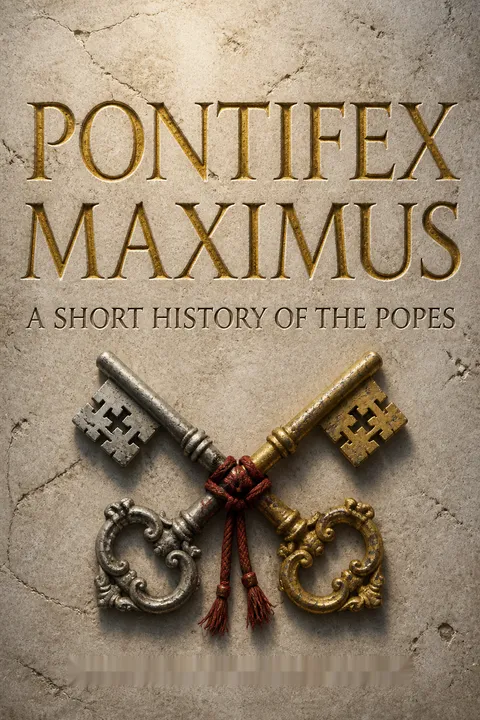
Pontifex Maximus by Christopher Lascelles receives mixed reviews averaging 3.92/5 stars. Critics note the book's heavily negative portrayal of papal history, focusing on corruption and immoral behavior while omitting positive contributions. Catholic readers particularly felt the author's bias, especially regarding twentieth-century popes. Some found it exhaustive and belabored, while others praised its research and readability. Despite concerns about bias reinforcing prejudice, reviewers acknowledged the book as thought-provoking and informative, offering a comprehensive chronological account of all 266 popes that inspired further research.
People Also Read





Download PDF
Download EPUB
.epub digital book format is ideal for reading ebooks on phones, tablets, and e-readers.








































