
Plot Summary
Family Ruin and Resolve
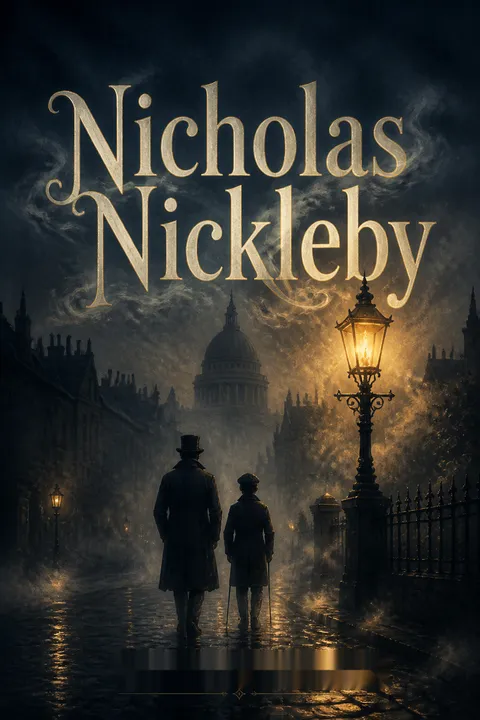
The Nickleby family's peaceful life is shattered by the death of Mr. Nickleby, leaving his widow and two children, Nicholas and Kate, destitute. With no resources, they turn to Ralph Nickleby, a cold, calculating uncle in London. Ralph's only concern is profit, and he quickly arranges for Nicholas to work as an assistant at Dotheboys Hall, a grim Yorkshire boarding school, while Kate and her mother are left to fend for themselves. The family's separation is marked by sorrow, uncertainty, and the first hints of the trials and moral tests that will define their journey.
Dotheboys Hall Exposed
At Dotheboys Hall, Nicholas is appalled by the brutal conditions and the sadistic headmaster, Squeers. The boys are neglected, starved, and abused, with Smike, a frail and gentle youth, suffering the most. Nicholas's compassion for Smike grows, and his outrage at Squeers's cruelty reaches a breaking point. The school's corruption and the suffering of its pupils become intolerable, setting Nicholas on a path of rebellion and escape, and forging a deep bond with Smike that will shape both their fates.
Kate's Trials in London
Meanwhile, Kate and her mother struggle in London. Kate finds work at Madame Mantalini's dress shop, only to encounter jealousy and mistreatment from her supervisor, Miss Knag. Worse, Ralph uses Kate as a pawn, exposing her to the predatory attentions of his wealthy, dissolute associates, including Sir Mulberry Hawk. Kate's virtue and resilience are tested as she endures humiliation and danger, but she remains steadfast, supported by her own strength and the loyalty of friends like Miss La Creevy.
Nicholas's Rebellion and Flight
Nicholas's outrage at Dotheboys Hall culminates in a violent confrontation: he thrashes Squeers for beating Smike and flees the school, taking Smike with him. The two embark on a journey to London, facing poverty and uncertainty. Nicholas's sense of justice and his protective love for Smike drive him forward, even as he struggles to find honest work and reunite his family. Their adventures lead them to the theatrical world, where Nicholas finds temporary refuge and purpose.
The Cheeryble Brothers' Kindness
In London, Nicholas's fortunes change when he meets the Cheeryble brothers, benevolent merchants who offer him employment and friendship. Their generosity and moral integrity contrast sharply with Ralph's cynicism. With their support, Nicholas is able to provide for his mother and sister, and the family is briefly reunited. The Cheerybles' kindness becomes a beacon of hope, inspiring Nicholas to acts of courage and selflessness, and setting the stage for the unraveling of Ralph's schemes.
Love, Loss, and Sacrifice
As Nicholas's life stabilizes, he falls in love with Madeline Bray, a noble young woman oppressed by her father's debts and Ralph's machinations. Kate, too, finds love in Frank Cheeryble, but both siblings are forced to confront the obstacles of poverty, pride, and social expectation. The revelation that Smike is Ralph's abandoned son adds a layer of tragedy, and Smike's untimely death leaves Nicholas grief-stricken. The family's happiness seems always shadowed by loss and the sacrifices demanded by conscience and love.
Ralph's Schemes Unravel
Ralph Nickleby's relentless pursuit of wealth and revenge leads him to conspire with Arthur Gride to force Madeline into a loveless marriage. However, Nicholas, aided by Newman Noggs and the Cheerybles, exposes the plot and rescues Madeline. The truth about Smike's parentage and Ralph's many crimes comes to light, and his allies desert him. Ralph's isolation grows as his power wanes, and the consequences of his actions close in on him from all sides.
Smike's Secret and Death
The mystery of Smike's past is finally solved: he is revealed to be Ralph's illegitimate son, abandoned and left to suffer at Dotheboys Hall. The revelation comes too late for reconciliation, as Smike succumbs to illness and dies in Nicholas's arms, comforted by love and friendship. His death is a moment of profound sorrow, but also of redemption, as it exposes the full measure of Ralph's inhumanity and the enduring power of compassion.
The Downfall of Squeers
Squeers is arrested for his crimes, including the abuse of children and the theft of Madeline's inheritance. The exposure of his cruelty leads to the closure of Dotheboys Hall, and the liberation of its pupils. The downfall of Squeers is both a personal victory for Nicholas and a symbol of the triumph of justice over exploitation. The episode marks the end of an era of suffering and the beginning of a new chapter for the story's survivors.
The End of Dotheboys Hall
The news of Squeers's arrest sparks a rebellion among the boys at Dotheboys Hall, who drive out Mrs. Squeers and her son in a final act of defiance. The school is abandoned, and the children scatter, some returning home, others finding new lives. The collapse of the institution is a moment of poetic justice, as the victims of cruelty reclaim their agency and the cycle of abuse is broken.
Justice and Redemption
Ralph, exposed and abandoned, faces the consequences of his actions. The revelation of his son's death and the collapse of his schemes drive him to despair and ultimately suicide. The Cheeryble brothers, Nicholas, and their friends embody the values of forgiveness, charity, and moral courage, offering a vision of redemption and social harmony. The story's villains are punished, and its heroes rewarded, in a final reckoning that affirms the power of goodness.
New Beginnings and Lasting Bonds
With the defeat of their enemies, Nicholas and Madeline, and Kate and Frank, are free to marry and begin new lives. Tim Linkinwater and Miss La Creevy also find happiness together. The Cheeryble brothers retire, content in the knowledge that their legacy of kindness endures. The Nickleby family, once broken and destitute, is restored and united, their trials having forged unbreakable bonds of love and loyalty. The story ends with hope, renewal, and the promise of a better future.
Analysis
Nicholas Nickleby is a sweeping social novel that exposes the abuses of Victorian England while celebrating the resilience of the human spirit. Dickens uses the Nickleby family's fall from comfort to destitution as a lens through which to examine the cruelty of institutions—schools, courts, and the marketplace—and the dangers faced by the vulnerable, especially children and women. The novel's villains, from the monstrous Squeers to the cold-hearted Ralph, embody the consequences of unchecked greed and moral indifference, while the Cheeryble brothers and their circle represent the possibility of compassion, charity, and social reform. The story's emotional arc is driven by the bonds of family and friendship, the redemptive power of love, and the necessity of hope in the face of suffering. Dickens's blend of satire, melodrama, and sentimentality creates a narrative that is both entertaining and morally urgent, urging readers to recognize injustice and to act with courage and kindness. The novel's enduring appeal lies in its affirmation that, even in a world rife with cruelty and loss, goodness can prevail and new beginnings are always possible.
Review Summary
Nicholas Nickleby receives enthusiastic praise from readers, with most awarding it 4-5 stars. Reviewers highlight Dickens's brilliant characterization, memorable villains like Wackford Squeers and Ralph Nickleby, and comedic figures including the Cheeryble brothers. The novel's episodic structure and theatrical elements are noted, as is its social criticism of Yorkshire boarding schools. Many appreciate Nicholas as an active, hot-headed protagonist who speaks up against injustice. Readers value the blend of humor, pathos, and melodrama, though some find certain sections lengthy. The book's entertainment value and Dickens's descriptive powers earn widespread acclaim.
People Also Read

Characters
Nicholas Nickleby
Nicholas is the story's protagonist, a young man whose sense of justice and loyalty to his family drive him to defy cruelty and corruption. His impulsive nature sometimes leads him into trouble, but his courage and empathy win him devoted friends and allies. Nicholas's journey is one of moral growth: from naïve idealism to mature responsibility. His love for Smike and Madeline Bray reveals his capacity for self-sacrifice, while his struggle against Ralph and Squeers tests his resolve. Nicholas's development is marked by increasing wisdom, humility, and a deepening understanding of the world's suffering and the necessity of hope.
Kate Nickleby
Kate, Nicholas's sister, endures exploitation and humiliation in London with dignity and grace. Her beauty and innocence make her a target for predatory men, but her inner strength and moral clarity allow her to resist and survive. Kate's relationship with her brother is central to her character, as is her capacity for friendship and forgiveness. Her romance with Frank Cheeryble is a reward for her steadfastness, and her journey from victim to beloved wife mirrors the story's themes of endurance and redemption.
Ralph Nickleby
Ralph is Nicholas's uncle and the story's chief antagonist. Obsessed with money and power, he manipulates and exploits everyone around him, including his own family. Ralph's emotional detachment and cynicism are rooted in past disappointments, but his refusal to show mercy or affection leads to his downfall. The revelation that Smike is his son and the collapse of his schemes drive him to suicide, making him a figure of both horror and pity. Ralph embodies the dangers of unchecked ambition and the corrosive effects of lovelessness.
Smike
Smike is a victim of neglect and abuse, first at Dotheboys Hall and then at the hands of fate. His devotion to Nicholas is absolute, and his gratitude for kindness is touching in its simplicity. Smike's frailty and innocence make him a symbol of suffering, while his secret parentage adds a layer of irony and pathos. His death is the story's emotional climax, representing both the cost of cruelty and the redemptive power of love.
Madeline Bray
Madeline is a young woman oppressed by her father's debts and Ralph's schemes. Her beauty and virtue attract Nicholas, but her willingness to sacrifice her own happiness for her father's sake reveals her strength of character. Madeline's journey from victim to beloved wife is marked by suffering, resilience, and the eventual triumph of love over adversity. She is both a romantic ideal and a figure of moral courage.
The Cheeryble Brothers (Charles and Ned)
The Cheeryble brothers are the story's moral center, embodying charity, humility, and practical wisdom. Their kindness to Nicholas and his family is matched by their commitment to justice and their ability to inspire loyalty and gratitude. They serve as father figures to Nicholas and Frank, and their example challenges the selfishness and cynicism of characters like Ralph. Their retirement marks the passing of an era, but their legacy endures in the happiness of those they have helped.
Frank Cheeryble
Frank is the Cheeryble brothers' nephew and Kate's eventual husband. His affection for Kate is sincere and respectful, and his willingness to defer to her wishes and the brothers' guidance demonstrates his maturity. Frank's character is less developed than Nicholas's, but he represents the rewards of patience, integrity, and true love.
Mrs. Nickleby
Mrs. Nickleby is a source of both comic relief and genuine pathos. Her endless anecdotes, social pretensions, and lack of self-awareness often frustrate her children, but her love for them is never in doubt. She represents the follies and foibles of middle-class respectability, but her resilience and adaptability are also sources of strength.
Newman Noggs
Newman is Ralph's downtrodden clerk, whose secret loyalty to Nicholas and the Cheerybles makes him an invaluable ally. His odd mannerisms and tragic past conceal a heart of gold, and his role as messenger, confidant, and investigator is crucial to the story's resolution. Newman's redemption and happiness are among the novel's most satisfying rewards.
Wackford Squeers
Squeers is the sadistic headmaster of Dotheboys Hall, whose abuse of children is both a personal vice and a symbol of institutional corruption. His downfall is a triumph of justice, and his exposure and punishment mark the end of an era of exploitation. Squeers's character is both grotesque and pathetic, a warning against the dangers of unchecked authority and moral blindness.
Plot Devices
Parallel Journeys and Contrasts
The novel's structure alternates between Nicholas's adventures and Kate's struggles, using parallel narratives to explore the different forms of exploitation faced by men and women. The contrast between the cruelty of Dotheboys Hall and the predatory dangers of London society exposes the pervasiveness of corruption and the vulnerability of the powerless. The siblings' eventual reunification and triumph underscore the importance of solidarity and mutual support.
Foreshadowing and Revelation
Dickens employs foreshadowing through mysterious references to Smike's origins, Ralph's past, and the Cheeryble brothers' benevolence. The gradual revelation of Smike's parentage and the exposure of Ralph's schemes create dramatic tension and emotional payoff. The use of letters, overheard conversations, and secret alliances allows the plot to unfold with both surprise and inevitability.
Social Satire and Melodrama
The novel blends biting satire of social pretensions, legal abuses, and educational malpractice with melodramatic episodes of villainy, rescue, and romance. Dickens uses caricature and irony to expose hypocrisy and injustice, while also appealing to the reader's emotions through scenes of suffering, sacrifice, and redemption. The interplay of comedy and pathos is a hallmark of the narrative.
Redemptive Justice and Poetic Irony
The story's resolution is shaped by a sense of poetic justice: Ralph's crimes lead to his ruin, Squeers is exposed and punished, and the innocent are vindicated. Fate, coincidence, and the intervention of benevolent characters like the Cheerybles ensure that good ultimately triumphs over evil. The deaths of Smike and Ralph serve as both punishment and catharsis, allowing the survivors to begin anew.
About the Author

Download PDF
Download EPUB
.epub digital book format is ideal for reading ebooks on phones, tablets, and e-readers.








































