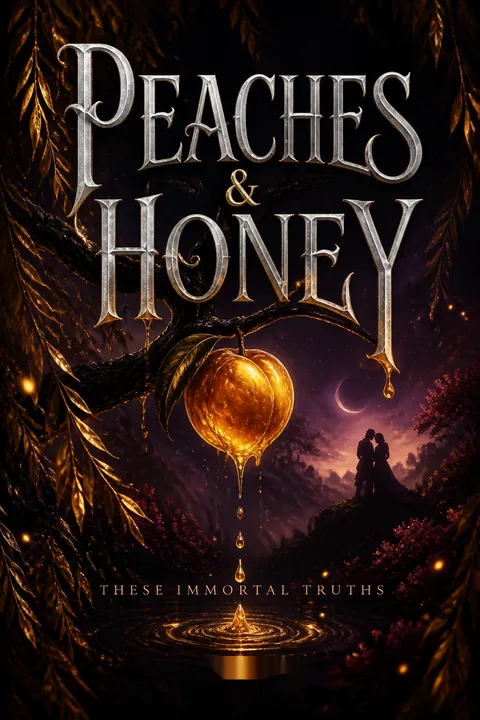

Plot Summary
Ashes and Immortality
Anna's life begins in trauma: exiled from her home, marked by mysterious pale patches on her skin, and accused of being a witch. When she saves a beautiful stranger in the woods, Anna's kindness is repaid with a magical fruit—a peach that grants her immortality. Burned at the stake by her village, Anna rises from the ashes, unscathed, and is swept into a world where death cannot touch her. The stranger, Khiran, reveals himself as something more than human, and Anna's journey as an immortal begins, haunted by the pain of her past and the uncertainty of her future.
The Gift of the Peach
Khiran, a shapeshifter with many faces, becomes Anna's enigmatic guide. He leads her away from the world that tried to destroy her, offering cryptic wisdom and a new beginning. Anna is left in the care of Eira, an ancient healer, who teaches her the difference between surviving and living. The peach's magic is both a blessing and a curse, granting Anna eternal life but separating her from the world of mortals. As Anna learns to trust again, she discovers that immortality comes with its own set of rules and sacrifices.
Lessons in Survival
Under Eira's tutelage, Anna transforms from a frightened exile into a skilled healer. She learns the secrets of plants, the rhythms of the seasons, and the art of compassion. The cottage becomes a sanctuary for the sick and desperate, and Anna finds purpose in easing the suffering of others. Yet, the marks on her skin remain a source of fear and shame, a constant reminder of her difference. Eira's wisdom helps Anna accept her uniqueness, but the longing for belonging never fully fades.
Becoming the Healer
As years pass, Anna becomes Eira's equal, trusted to treat patients and manage the cottage. She witnesses birth and death, joy and sorrow, and learns that not every life can be saved. The world outside changes, but Anna's role as a healer remains constant. When Eira leaves, Anna is forced to confront her loneliness and the reality of immortality. She must decide whether to remain in the safety of the cottage or venture into the wider world, carrying Eira's lessons with her.
The Weight of Kindness
Anna's journey takes her to new towns and new lives, always as an outsider. She befriends Giovanni, a merchant's son, and experiences the bittersweetness of human connection. When her secret is revealed, Anna is once again cast out, reminded that kindness can be both a gift and a vulnerability. Khiran reappears, offering guidance and companionship, but Anna struggles with the isolation that comes from being different. Her immortality is both shield and prison.
Hunger and Hope
The world is gripped by hunger, and Anna's immortality cannot shield her from the suffering around her. She finds Piers, a starving child, and becomes his protector and surrogate mother. Together, they endure hardship and loss, relying on each other for survival. Khiran intervenes, providing miraculous aid, but Anna learns that even gods have limits. The bond between Anna and Piers is deep and transformative, but the inevitability of loss looms over them.
Love and Letting Go
Piers grows into a man, finds love, and starts a family of his own. Anna, unchanged by time, must face the pain of letting go. She reveals her secret to Piers, and together they grieve the impossibility of a future together. Khiran comforts Anna in her sorrow, reminding her that love is worth the pain of loss. Anna learns that immortality means outliving everyone she loves, but also carrying their memories forward.
Plague and Perseverance
Anna becomes a nurse during the Black Death, risking her life to care for the dying. She contracts the plague but survives, saved by Khiran's intervention. The experience leaves her shaken, but also more determined to use her gift for good. Anna realizes that suffering is universal, and that her immortality does not exempt her from pain. She finds solace in Khiran's presence, even as she questions the nature of their connection.
The Limits of Mercy
Anna is present at the burning of Jeanne d'Arc, powerless to intervene. She confronts Khiran about the limits of his magic and the rules that bind him. Their argument exposes the gulf between mortal and immortal, and Anna is forced to accept that some tragedies cannot be prevented. The experience leaves her disillusioned, but also more aware of the complexities of mercy and justice in a world ruled by power.
Family Beyond Blood
Anna returns to Genoa and discovers the descendants of Piers, her adopted son. She is welcomed as family, finding comfort and belonging among those who carry his memory. The experience heals old wounds and reminds Anna that family is not defined by blood, but by love and shared history. Khiran encourages her to embrace happiness, even if it is fleeting. Anna learns that joy and sorrow are intertwined, and that both are necessary for a full life.
The Price of Power
As the world changes, Anna witnesses the rise and fall of empires, the spread of colonization, and the horrors of war. She meets Khiran in many forms, each time learning more about the price he pays for his defiance of the First, the original god. Anna realizes that her immortality is not just a gift, but a rebellion—a stolen magic that puts her and Khiran at risk. The First's power is absolute, and Khiran's protection comes at great personal cost.
The Shape of Love
Anna and Khiran's relationship deepens, moving from companionship to love. They share moments of intimacy and vulnerability, each revealing their fears and desires. Anna struggles with shame over her marked skin, but Khiran sees beauty where she sees flaw. Their love is both sanctuary and danger, a source of strength and a potential weakness. Together, they navigate the challenges of immortality, secrecy, and the ever-present threat of discovery.
Names and Identities
Anna adopts new names and identities as she moves through history, each time reinventing herself to survive. She witnesses the changing roles of women, the rise of new nations, and the shifting tides of culture. In America, she becomes a midwife, a nurse, a freedom fighter. She learns that identity is fluid, shaped by circumstance and choice. Through it all, she remains true to her core values of kindness, resilience, and hope.
War and Wounds
Anna serves as a healer in wars across centuries, from the American Revolution to World War I. She witnesses the brutality of battle, the suffering of soldiers, and the limitations of medicine. Her knowledge and compassion save lives, but she is haunted by those she cannot save. Khiran's presence is both comfort and torment, as he is bound by rules that prevent him from intervening directly. Together, they bear witness to the best and worst of humanity.
The Pirate's Freedom
Anna is captured by pirates and becomes the confidante of Ching Shih, a legendary female captain. On the pirate ship, Anna experiences a rare sense of safety and freedom, protected by the strict rules of the crew. Yet, violence and betrayal are never far away, and Anna is forced to confront the darkness within herself and others. The experience teaches her that freedom is always conditional, and that safety can be found in the most unexpected places.
Underground and Unseen
In the American South, Anna becomes part of the Underground Railroad, working alongside Silas, another immortal. Together, they risk everything to help enslaved people escape to freedom. Anna learns the power of community, the importance of secrecy, and the cost of courage. The work is dangerous and exhausting, but Anna finds purpose in helping others. The bonds she forms with Silas and those she saves become a new kind of family.
The Cost of Immortality
Anna is forced to confront the consequences of her immortality when Khiran is punished for intervening to save her. She witnesses the pain he endures, the bruises and wounds that mark his body, and realizes that her survival comes at a cost to those she loves. The guilt is overwhelming, but Khiran assures her that he would suffer it again for her sake. Anna learns that love and sacrifice are inseparable, and that immortality is never without price.
The World on Fire
Anna lives through the rise of fascism, the burning of books, and the horrors of the Holocaust. She helps refugees escape, risking her life to save others. The world is engulfed in violence and hatred, and Anna is forced to accept that even immortals are not immune to the suffering of history. Khiran's intervention saves her life but brings him terrible punishment. Their reunion is bittersweet, marked by pain and forgiveness.
The Dance of Centuries
After years of separation, Anna and Khiran reunite in New York during the Jazz Age. They dance, laugh, and rediscover the pleasures of living. Anna learns to embrace happiness, to find beauty in the ordinary, and to let go of guilt. Their love is rekindled, deeper and more resilient than before. Yet, the threat of the First still looms, and Anna must decide whether to risk everything for a chance at true happiness.
The Truth of the Peach
Anna finally learns the full truth of her immortality: the peach was stolen from the First, and her existence is an act of rebellion. Khiran confesses the risks he took, the pain he endured, and the love that motivated him. Anna forgives him, understanding that their bond is both a miracle and a danger. Together, they face the reality that their love may always be threatened by forces beyond their control.
The Meadow's Return
Anna is called back to Eira's cottage, where she helps rescue children from famine and war. She is reunited with Silas, and together they create a sanctuary for the lost and abandoned. The work is exhausting and heartbreaking, but Anna finds meaning in service. She reconciles with Khiran, and they begin to rebuild trust. The meadow becomes a symbol of hope, resilience, and the possibility of renewal.
The Shepherd's Path
Silas, revealed as another immortal, becomes Anna's ally in the fight to save children from suffering. Eira's distrust of Silas is rooted in ancient betrayals, but Anna's faith helps bridge the gap. Together, they navigate the complexities of trust, loyalty, and the responsibilities of power. Anna learns that even immortals are shaped by their pasts, and that forgiveness is an ongoing process.
The First and the Fallen
Anna learns about the First, the original god who controls the fate of all immortals. Khiran's rebellion has made them both targets, and the threat of discovery is ever-present. The price of magic is revealed: every act of defiance brings punishment, and every gift comes with a cost. Anna must decide whether to hide or to fight, to accept safety or to risk everything for love and justice.
Exile and Reunion
Khiran leaves Anna to protect her, exiling himself from her life. Anna builds a new existence, finding fulfillment in simple pleasures and self-sufficiency. Years pass, and Anna learns to live for herself, to find joy in solitude and creativity. When Khiran finally returns, their reunion is marked by forgiveness, understanding, and a renewed commitment to face the future together, no matter the risks.
Fear Is for Us All
Anna and Khiran accept that fear is not just for mortals, but for all who love. Their journey has been one of pain, loss, and sacrifice, but also of joy, hope, and resilience. Together, they choose to live fully, to face whatever comes with courage and compassion. The story ends with the recognition that immortality is not about escaping death, but about embracing life in all its beauty and terror.
Analysis
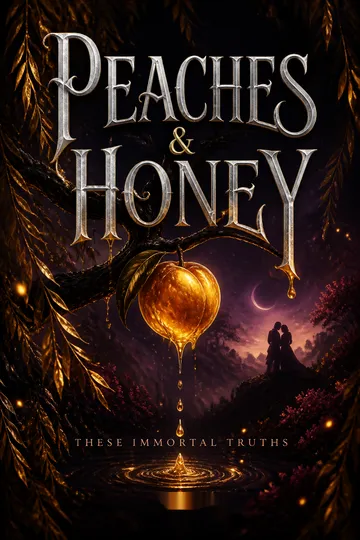
Peaches & Honey: These Immortal Truths is a sweeping, emotionally resonant exploration of what it means to live, love, and endure across centuries. At its heart, the novel is a meditation on the paradoxes of immortality: the gift of endless time is inseparable from the pain of endless loss. Through Anna's journey, the story interrogates the nature of kindness, the cost of compassion, and the necessity of hope in a world that is often cruel and indifferent. The relationships Anna forms—especially with Khiran, Eira, and Silas—serve as both anchor and crucible, testing her capacity for forgiveness, vulnerability, and growth. The novel's historical sweep allows for a nuanced examination of power, injustice, and the cycles of violence and renewal that shape human history. Ultimately, the story suggests that meaning is found not in escaping pain, but in embracing it as part of the fullness of life. The lesson is clear: to be immortal is not to be invulnerable, but to be endlessly open to change, love, and the possibility of redemption. In a modern context, the book resonates as a call to compassion, resilience, and the courage to face both the beauty and terror of existence—reminding us that fear, love, and hope are for us all.
Review Summary
Peaches & Honey receives strong praise for its lyrical writing, compelling protagonist Anna, and sweeping historical scope spanning 800 years. Many readers compare it favorably to The Invisible Life of Addie LaRue, noting it delivers what that book promised. The slow-burn romance between Anna and shapeshifting god Khiran captivates most readers despite taking centuries to develop. Common criticisms include repetitive middle sections and minimal plot progression. Most recommend approaching it as historical fiction with magical realism rather than fantasy romance.
People Also Read

Characters
Anna
Anna is the protagonist, a woman marked by mysterious pale patches and exiled from her home for being different. Her journey from frightened outcast to compassionate healer is the emotional core of the story. Anna's immortality, granted by the magical peach, is both a blessing and a curse—she is forever set apart from the world she longs to belong to. Her kindness is her greatest strength and her deepest vulnerability, drawing her into the lives of others and exposing her to repeated heartbreak. Anna's relationships—with Eira, Piers, Khiran, and countless others—shape her growth, teaching her the difference between surviving and truly living. Psychologically, Anna is driven by a need for connection, a fear of abandonment, and a relentless hope that kindness can change the world. Her development is marked by cycles of loss and renewal, ultimately leading her to embrace both her power and her vulnerability.
Khiran
Khiran is an immortal being with the power to change his form and influence the world through subtle magic. He is both guide and tempter, offering Anna the peach that grants her immortality and setting her on a path of transformation. Khiran's many names and faces reflect his complex identity—he is at once a god, a rebel, and a deeply wounded soul. His love for Anna is the source of both his greatest joy and his deepest pain, as it puts them both at risk from the First, the original god. Psychologically, Khiran is marked by guilt, longing, and a fierce protectiveness. He struggles with the limits of his power, the consequences of his rebellion, and the fear of losing Anna. Over the centuries, his relationship with Anna evolves from enigmatic benefactor to equal partner, culminating in a love that is both redemptive and dangerous.
Eira
Eira is an immortal healer who becomes Anna's teacher and surrogate mother. Wise, pragmatic, and sometimes brusque, Eira embodies the tension between mercy and detachment. She teaches Anna the skills of survival and healing, but also the importance of boundaries and self-care. Eira's own history is marked by betrayal and loss, making her wary of trust and slow to form attachments. Her relationship with Anna is transformative for both, as Eira learns to open her heart and Anna learns to stand on her own. Psychologically, Eira represents the archetype of the wise woman, but her immortality has made her both compassionate and guarded. Her development is seen in her willingness to let Anna go and in her eventual acceptance of new allies like Silas.
Silas (The Shepherd)
Silas is another immortal, known as the Shepherd, who aids Anna in her work to save the vulnerable. His calm wisdom and gentle humor make him a stabilizing presence, and his ability to lead others to safety is both literal and metaphorical. Silas's relationship with Anna is one of mutual respect and camaraderie, providing her with the support she needs when Khiran is absent. Psychologically, Silas is marked by patience, empathy, and a deep sense of duty. His own burdens are hinted at, but he chooses to use his power for good, helping Anna and Eira in their mission to rescue children and the oppressed.
Piers
Piers is a starving child whom Anna rescues during a famine. Their relationship becomes one of mother and son, offering Anna a taste of the family she thought she could never have. Piers's growth from vulnerable child to independent adult is a source of both pride and heartbreak for Anna, as she must eventually let him go. His legacy lives on in his descendants, who welcome Anna as family generations later. Psychologically, Piers represents the possibility of love and connection in a world marked by loss. His story is a microcosm of Anna's larger journey—love, growth, separation, and the enduring power of memory.
Ching Shih
Ching Shih is a legendary pirate captain who offers Anna safety and freedom on her ship. Her strict rules and fierce leadership create a rare environment where Anna feels secure, but her capacity for violence and ruthlessness challenges Anna's ideals. Ching Shih's relationship with Anna is one of mutual respect, but also tension, as Anna is forced to confront the darker aspects of survival and power. Psychologically, Ching Shih embodies the duality of mercy and cruelty, teaching Anna that freedom often comes at a cost.
The First
The First is the primordial being who controls the fate of all immortals. His power is absolute, and his wrath is the greatest threat to Anna and Khiran. The First's presence is felt more than seen, a looming force that shapes the rules of magic and the limits of rebellion. Psychologically, the First represents authority, tradition, and the dangers of unchecked power. His relationship to Khiran is one of master and rebel, and to Anna, he is both the source of her gift and the shadow that threatens to take it away.
Giovanni
Giovanni is a merchant's son who befriends Anna in Norwich. Their friendship blossoms into the possibility of romance, but is ultimately destroyed by the revelation of Anna's secret. Giovanni's rejection is a painful reminder of the risks of vulnerability and the limits of acceptance. Psychologically, Giovanni represents the world's fear of difference and the cost of honesty. His story is a turning point for Anna, reinforcing her isolation but also her resilience.
Margaret
Margaret is a fellow nurse during World War I who becomes suspicious of Anna's immortality after witnessing her survive a bombing unscathed. Her presence adds tension and realism to Anna's experience of war, highlighting the challenges of hiding in plain sight. Psychologically, Margaret represents the curiosity and skepticism of the mortal world, as well as the potential for friendship and understanding.
Jenny
Jenny is a young woman Anna helps escape slavery in the American South. Her trauma and resilience mirror Anna's own struggles, and their relationship is one of mutual healing. Jenny's story highlights the ongoing relevance of Anna's mission and the enduring need for kindness in a world marked by cruelty. Psychologically, Jenny represents the possibility of redemption and the power of survival.
Plot Devices
Immortality as both gift and curse
The central plot device is Anna's immortality, granted by the magical peach. This gift sets her apart from the mortal world, allowing her to witness centuries of change but also condemning her to endless cycles of loss and renewal. Immortality is explored as both a blessing and a burden, forcing Anna to confront the limits of compassion, the pain of outliving loved ones, and the challenge of finding meaning in an ever-changing world. The narrative uses immortality to examine themes of identity, belonging, and the search for purpose.
Shapeshifting and hidden identities
Khiran's ability to change his form and Anna's adoption of new names and roles are recurring devices that explore the fluidity of identity. These transformations allow the characters to survive in hostile environments, but also raise questions about authenticity and the cost of hiding one's true self. The motif of masks and hidden truths is used to build suspense, create dramatic irony, and deepen the psychological complexity of the characters.
The magical peach and the rules of power
The peach is both a literal and symbolic device, representing the theft of power from the First and the act of rebellion that sets the story in motion. The rules governing magic—who can intervene, who must remain hidden, and the price of breaking these rules—create tension and drive the plot. The consequences of defiance are severe, as seen in Khiran's punishment and the constant threat of discovery. This device is used to explore themes of authority, justice, and the limits of agency.
Found family and chosen bonds
Throughout the narrative, Anna forms deep bonds with those she helps—Piers, Eira, Silas, and others—creating a tapestry of chosen family that sustains her through centuries of isolation. The motif of found family is used to counterbalance the pain of loss, offering hope and resilience in the face of adversity. These relationships are tested by time, distance, and the demands of immortality, but ultimately affirm the power of love and connection.
Historical settings as mirrors of internal conflict
The story moves through centuries of real-world history—plagues, wars, famines, revolutions—using these events as both setting and metaphor for Anna's internal struggles. The external chaos mirrors her psychological battles, while her actions influence and are influenced by the tides of history. This device grounds the fantasy elements in reality, heightening the emotional stakes and allowing for rich exploration of social and ethical themes.
Foreshadowing and cyclical structure
The narrative uses foreshadowing—through dreams, riddles, and repeated motifs—to hint at future dangers and the inevitability of loss. The cyclical nature of Anna's journey—loss, renewal, love, and letting go—reinforces the themes of resilience and the search for meaning. The story's structure allows readers to see patterns across centuries, deepening the sense of fate and the possibility of change.
Peaches & Honey Series Series
Download PDF
Download EPUB
.epub digital book format is ideal for reading ebooks on phones, tablets, and e-readers.








































