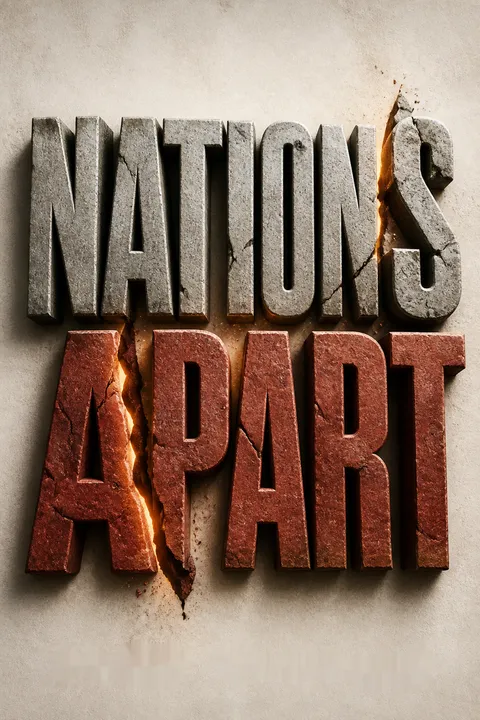

Key Takeaways
1. America is a Federation of Enduring Regional Cultures
The United States is an awkward federation of distinct regional cultures, created as an ad hoc alliance to resist a common, British, opponent.
Distinct regional cultures. The United States has never been a monolithic nation-state in the European sense, but rather a collection of distinct regional cultures, or "nations," each with its own foundational values, institutions, and historical narratives. These regions originated from different groups of European settlers—from the British Isles, France, the Netherlands, and Spain—who arrived at different times and established unique societal blueprints across the continent. This fundamental diversity has complicated efforts to find common ground on policy and core societal ideas.
Founding principles. At its inception, a handful of eloquent Founders proposed ideals of freedom for all, but these ideals have been contested ever since. The initial alliance against Britain masked deep internal divisions, which have persisted and evolved. These regional differences manifest in everything from political behavior and ideological outlook to social organization and even dialect, making the U.S. more akin to the European Union than a unified republic.
Ongoing struggle. This inherent regionalism means America has always been a place where several "Americas" wrestle over the destiny of their shared federation. Understanding these underlying cultural geographies is crucial for comprehending the nation's persistent divisions and for devising strategies to bridge them. The book identifies nine major regional cultures within the U.S. borders, plus four smaller enclaves, each contributing to the complex tapestry of American identity.
2. Centuries-Old Cultural DNA Shapes Modern America
Whenever an empty territory undergoes settlement, or an earlier population is dislodged by invaders, the specific characteristics of the first group able to effect a viable, self-perpetuating society are of crucial significance for the later social and cultural geography of the area, no matter how tiny the initial band of settlers may have been.
First Effective Settlement. The enduring divisions in the U.S. stem from the "Doctrine of First Effective Settlement," where the initial colonizers lay down the cultural DNA for a society. These founding groups imprinted their fundamental values, institutions, and mythic memories onto the land, which then expanded across the continent, assimilating later arrivals. This explains why regions settled centuries ago by distinct groups—like radical Calvinists in Yankeedom or English slave lords in the Deep South—retain their core characteristics today.
Cultural persistence. Despite centuries of migration, immigration, technological change, and economic integration, these regional cultures have largely maintained their distinct habits, beliefs, and ideals. For example:
- Yankeedom's emphasis on public education and collective institutions.
- The Deep South's legacy of aristocratic privilege and white supremacy.
- The Midlands' pluralistic, middle-class orientation.
This cultural "DNA" is so strong that it has even left a significant genetic imprint, with people tending to form families within their regional culture rather than with those from rival areas.
Geographic fissures. These settlement patterns created "tectonic cultural fault lines" that often disregard state or international boundaries, leading to internal rivalries within states (e.g., Upstate vs. Downstate New York). These deep-seated cultural differences, rather than transient political parties, explain the remarkable stability of geographical voting patterns over centuries, even when partisan alignments flip.
3. Individualism Versus Communitarianism Drives Policy Outcomes
Optimizing a free society for the long haul isn’t about one of these aspects of freedom conquering the other; it’s about keeping the two in equilibrium so individuals are neither tyrannized nor deprived of a decent chance at pursuing their freedom and happiness.
Core ideological conflict. The fundamental struggle in American life revolves around two competing visions of freedom: maximizing individual autonomy (individualism) versus building a free society through collective action and shared institutions (communitarianism). While both are essential for liberal democracy, an imbalance can lead to tyranny—oligarchy from extreme individualism or Orwellian control from extreme communitarianism. The U.S. federation, with its diverse regional cultures, constantly grapples with finding this equilibrium.
Regional approaches. Different American Nations lean heavily towards one philosophy, shaping their governance and public services:
- Aggressively Individualistic: Deep South, Greater Appalachia (prioritize minimal government, low taxes, individual sovereignty).
- Aggressively Communitarian: Yankeedom, New Netherland, Left Coast, Greater Polynesia, First Nation (emphasize social engineering, public institutions, common good).
- Passively Communitarian: Midlands, El Norte, Spanish Caribbean (community-minded but wary of top-down intervention).
- Passively Individualistic: Far West (individualistic, but tempered by environmental necessity for cooperation).
Consequences of imbalance. The "laboratories of democracy" provided by state powers reveal stark outcomes. Aggressively individualistic regions, with their underinvestment in people, institutions, and infrastructure, consistently show worse results in health, safety, wealth, and longevity. Conversely, communitarian approaches, which invest in public goods like education, healthcare, and parks, tend to foster healthier, safer, and more prosperous societies.
4. Regional Cultures Dictate Disparities in Health and Safety
The poorest quartile of U.S. counties that happen to be in Yankeedom have a higher life expectancy than the richest quartile of U.S. counties that happen to be in the Deep South, by 0.3 years.
Life and death disparities. Life expectancy varies dramatically across American Nations, with differences comparable to those between developed and developing countries. The Deep South and Greater Appalachia consistently exhibit lower life expectancies (around 77 years), similar to Albania, while the Left Coast and New Netherland boast higher figures (over 81 years), akin to Canada. These gaps persist even when controlling for wealth, education, and urban-rural divides, highlighting the profound impact of regional cultural values on public health outcomes.
Gun violence patterns. The incidence of deadly violence, particularly gun violence, also shows stark regional contrasts:
- Deep South & Greater Appalachia: Highest rates of intentional gun deaths (15.6 and 13.5 per 100,000, respectively), driven by "culture of honor" traditions and historical legacies of violence.
- New Netherland: Safest large region (3.8 per 100,000), comparable to Switzerland, despite high population density.
- Far West: High gun suicide rates, but low gun homicide rates, linked to social isolation and a stoic individualistic culture.
These patterns are reinforced by regional differences in gun ownership and attitudes towards gun control, with less safe regions being more heavily armed and less supportive of restrictions.
COVID-19 response and outcomes. The pandemic starkly revealed how regional ideologies influenced public health. Aggressively individualistic regions, prioritizing "personal freedom" over collective safety, resisted public health measures like lockdowns and vaccinations. This resulted in significantly higher COVID-19 death rates in the Deep South (505 per 100,000) compared to communitarian regions like the Left Coast (195 per 100,000) or New Netherland (17% fewer deaths than Greater Appalachia despite 30x higher density).
5. Clashing Historical Narratives Fuel America's Identity Wars
Without the collective memory embodied in a history, a people would lose their collective identity in the same way an individual suffering from amnesia loses his personal identity.
Competing origin stories. The U.S., as a federation of nations, has always struggled with a unified national history, leading to "history wars" that reflect deep regional self-conceptions. Each region developed its own "mythic story" to define its identity and purpose, often at odds with others:
- Yankeedom: A divine mission to create a perfect society, a "city upon a hill," emphasizing orderly freedom and universal rights.
- Deep South: A "Lost Cause" narrative of chivalric civilizers, defending states' rights and a hierarchical society built on slavery, with the KKK as heroes.
- Midlands: A "Holy Experiment" of cultural pluralism, welcoming diverse ethnicities to maintain their distinct ways.
- Far West: The "Frontier Thesis" of rugged individualists forged into a unified American people by the wilderness.
Controlling the past, shaping the future. These narratives are not just about the past; they are tools to control a nation's future. In the Deep South and Greater Appalachia, the Lost Cause myth was aggressively propagated through textbooks and public monuments for generations, suppressing truths about slavery and racial violence. This historical revisionism aimed to justify white supremacy and authoritarian control.
Modern history wars. Today's "history wars" are a reprise of these struggles, with some regions pushing for a narrative of America as a perpetual struggle for universal rights, while others assert a sacred, Christian founding where racism was never a serious problem. Laws banning "divisive concepts" or "critical race theory" in southern and western states aim to suppress uncomfortable truths about institutional racism, mirroring past efforts to control historical memory.
6. Immigration and Belonging Reflect Deep-Seated Regional Ethos
The South did not want foreign immigration, remaining firm in the idea of ant-bellum days that the social structure was built wholly upon negro labor, and upon that alone.
Regional attitudes toward newcomers. Questions of national identity—who is a "real American" and who belongs—have always varied regionally, profoundly influencing immigration patterns and policy debates. Yankeedom, while initially exclusive, adopted a "melting pot" assimilation model, using public schools to integrate immigrants. New Netherland embraced cultural pluralism for commercial expediency, becoming a global "Cosmopolis." The Midlands valued pluralism as a core civilizational trait, encouraging diverse groups to retain their identities.
The Great Wave's uneven impact. The Great Wave of immigration (1880-1924) dramatically amplified these regional differences. Immigrants largely avoided the Deep South, Tidewater, and Greater Appalachia, which remained ethnically and religiously homogenous (white Protestant evangelical). These regions, proud of their "Anglo-Saxon" purity, actively resisted foreign influx, fearing contamination of their social structure and labor force.
Contemporary immigration divides. Today, regions that were historical immigrant destinations (Left Coast, New Netherland, El Norte) remain welcoming, while the Deep South and Greater Appalachia, now experiencing significant in-migration, have become hotbeds of anti-immigrant sentiment. This shift has led to a policy gap:
- Pro-immigrant policies: Left Coast, Yankeedom, New Netherland, El Norte (e.g., sanctuary states, expanded ethnic studies).
- Anti-immigrant policies: Deep South, Greater Appalachia, Midlands, Far West (e.g., "check your papers" laws, restrictions on voter registration, book bans).
Public opinion, while generally supportive of immigration, shows significant regional splits on issues like border walls and deportation, with southern regions being far more hostile.
7. Abortion and Climate Debates Are Rooted in Regional Values
It’s not too much of an oversimplification to say that what happens in the South between 1780 and the Civil War is that the religion, evangelicalism, adapts to the culture.
Abortion's regional fault lines. The post-Dobbs landscape reveals stark regional divides on abortion, with states controlled by the Deep South, Greater Appalachia, and parts of the Far West and Midlands moving to ban or severely restrict the procedure. Conversely, Yankeedom, New Netherland, the Left Coast, and Tidewater have moved to protect reproductive rights. Public opinion, while generally opposing outright bans, shows significant regional differences, with support for bans nearly twice as high in New France (30.9%) than the Left Coast (15.5%).
Religion and cultural adaptation. The geography of abortion opinion is closely tied to the distribution of white evangelical Protestants, who are extreme outliers on this issue. Southern evangelicalism, unlike its northern counterpart, adapted to the region's "culture of honor" and patriarchal norms, leading to a strong defense of traditional gender roles and a hardline stance against abortion. This religious monoculture in the Deep South and Greater Appalachia, largely untouched by the Great Wave of Catholic and Jewish immigrants, gives white evangelicals outsized political influence.
Climate change consensus and resistance. Support for environmentalism and climate action also follows regional patterns. Yankeedom, New Netherland, and the Left Coast have historically driven environmental movements and show the strongest public support for climate action. The Deep South, Greater Appalachia, and New France are the least engaged, often influenced by:
- Extractive economies: Prioritizing resource exploitation over environmental protection.
- Religious interpretations: Some white evangelicals interpret biblical texts as a call to "subdue" nature or believe in "End Times" apathy.
Despite these divides, supermajorities in every region acknowledge climate change is happening, and most support capping carbon emissions and funding renewable energy, suggesting a latent consensus that often clashes with political leadership in some regions.
8. Authoritarianism's Rise is Fueled by Regional Vulnerabilities
The states controlled by these regions, University of Buffalo Law School professor James A. Gardner observed in 2021, “bear a close resemblance to countries like Hungary and Turkey, which seemed for a while to have made the transition to liberal democracy, but in which democratic backsliding has been so severe as to call into question the degree to which liberalism ever took root.”
Tea Party's regional success. The 2008 financial crisis and Obama's election ignited the Tea Party movement, which, while failing nationally, achieved significant state-level success in the Deep South, Greater Appalachia, and New France. These regions, with historical precedents of illiberal, one-party rule (e.g., Jim Crow autocracies), were receptive to the Tea Party's agenda of reduced taxes, weakened public services, voter suppression, and the promotion of evangelical Protestantism. This laid the groundwork for a dangerous authoritarian threat.
Gerrymandering and voter suppression. The Tea Party surge enabled aggressive gerrymandering after the 2010 census, allowing Republicans to secure legislative supermajorities even with minority popular votes in states like Wisconsin and North Carolina. In southern states, this was coupled with laws designed to suppress voter turnout among likely opponents, such as strict voter ID requirements, reduced early voting, and purges of voter rolls. These tactics, while often challenged and sometimes overturned in communitarian regions, largely persisted in the Deep South and Greater Appalachia.
Trumpism's regional amplification. Donald Trump's rise in 2016 amplified this authoritarian project by shedding the unpopular laissez-faire economics of the Tea Party and doubling down on ethnonationalist authoritarianism. His support was strongest in Greater Appalachia, New France, the Deep South, and the Far West, regions where:
- White Christian Nationalism is concentrated.
- Authoritarian mindsets (aggressiveness, conservatism, traditionalism) are more prevalent.
Trump's rhetoric, demonizing immigrants and attacking democratic norms, resonated deeply in these regions, leading to his narrow victory in 2016 and continued strong support despite his attempts to overturn the 2020 election.
9. White Christian Nationalism Underpins Authoritarian Support
Christian nationalists with apocalyptic views tell us that they want a theonomic state. That is, they want rule by religious law.
Ideological driver of Trumpism. White Christian Nationalism, a political project disguised as a faith movement, emerged as the most significant bloc of support for Trumpism. Adherents believe the U.S. was founded as a Christian nation for white Christians, and they seek to remake it based on their literal interpretation of the Bible. This ideology sanctions discrimination against women, LGBTQ people, and non-Christians, rejecting the Declaration's ideals of equality and self-government.
Geographic concentration. Christian nationalists are overwhelmingly concentrated in the Deep South and Greater Appalachia, where they constitute a substantial plurality of the population. This regional dominance allows them to exert outsized influence on state politics, pushing for policies that align with their theonomic vision. For example:
- Abortion bans: Driven by white evangelicals' hardline stance.
- Anti-LGBTQ legislation: Laws targeting transgender people and restricting discussions of gender/sexuality in schools.
- Book bans: Overwhelmingly concentrated in states controlled by these regions, often targeting LGBTQ-themed books.
"Great Replacement" theory. Trumpism also draws strength from the "Great Replacement Theory," which posits a liberal conspiracy to replace white people with non-white immigrants. This resonates deeply in Greater Appalachia, a region with a mythos of "pure American" ethnicity that has experienced significant demographic shifts. Trump's rhetoric, calling immigrants "vermin" and "poisoning the blood of our country," directly appeals to these ethnonationalist anxieties, further solidifying support for his authoritarian agenda.
10. A Shared Civic National Story is Essential to Preserve the Republic
We’re a people united by our commitment to uphold and defend this experiment, lest it perish from the Earth.
The crisis of national identity. The U.S. faces a profound crisis of national identity, with weakening bonds and a growing fear of collapse. As a civic nation defined by ideals rather than organic ties, America has always needed a shared story of purpose and belonging. Without a believable national myth, coherent public action becomes difficult, leaving a void that demagogues fill with hate, lies, and authoritarian promises.
The Declaration as our covenant. The Declaration of Independence offers the most powerful foundation for a renewed civic national story. It posits that Americans are united by a shared commitment to inherent and equal rights—to life, liberty, and the pursuit of happiness—and a mutual pledge to defend these rights for one another. This "American Promise" and the "American Experiment" to realize it, is a compelling narrative that resonates deeply with the vast majority of Americans, regardless of demographic or regional background.
A path forward. Polling reveals overwhelming, omni-partisan support (97-2%) for the idea of an American covenant to protect one another's natural rights. This latent supermajority, however, needs to be mobilized against the 10-20% of Americans who embrace ethnonationalist authoritarianism. By articulating a clear, emotive civic national narrative, educators, leaders, and citizens can:
- Counter ethnonationalist narratives: Reframe debates around shared ideals rather than tribal heritage.
- Inspire collective action: Emphasize the ongoing struggle to achieve freedom, justice, and equality for all.
- Promote social investment: Advocate for policies that strengthen the common good, recognizing that individual freedom thrives in a healthy, safe, and equitable society.
This renewed story is crucial not only to defend democracy but also to foster the social investments necessary for the long-term health, wealth, and resilience of all American regions.
People Also Read




Download PDF
Download EPUB
.epub digital book format is ideal for reading ebooks on phones, tablets, and e-readers.








































