
Key Takeaways
1. The Western Mind's Greek Foundation: Reason and Philosophical Inquiry
The soul takes nothing with her into the other world but her education and culture.
Alexandria's intellectual legacy. The city of Alexandria, founded by Alexander the Great, served as the crucible for Greek intellectual life, becoming the "City of the Mind." It was a hub of philosophy, mathematics, and literature, embodying rationality and inquiry. Scholars like Euclid, Erasistratus, and Eratosthenes made groundbreaking contributions in geometry, medicine, and geography, laying the groundwork for future scientific thought.
Plato's enduring influence. Plato's philosophy, particularly his concept of the immortal soul and the "World of Forms," profoundly shaped early Christian and Jewish thought. His disciple Plotinus, through Neoplatonism, further emphasized the soul's yearning to escape the material body and return to the divine "One." This Greek philosophical framework, though often at odds with Judeo-Christian views on the body and morality, became an inescapable context for minority cultures.
Philo's cultural bridge. Philo Judaeus, an Alexandrian Jew, ingeniously reconciled Jewish scripture with Greek philosophy, using allegorical interpretation to make biblical narratives palatable to Greek sensibilities. He introduced concepts like the Logos (Word) and divine Powers, which would later influence the Christian understanding of the Trinity. This synthesis allowed Jewish insights to be shared with the wider Greek-speaking world, demonstrating how deeply intertwined these traditions became.
2. Rome's Christian Transformation: From Empire to Spiritual Authority
Rome was not built in one day.
From pagan capital to Christian shrine. Rome, initially a pragmatic market town, grew into a vast empire, eventually becoming the "New York of the ancient world." Its transformation into a Christian center began with Emperor Constantine's Edict of Milan in 313, which granted religious freedom and ended Christian persecution. This shift saw Rome rebuild itself with lavish church construction, focusing on the relics of apostles and martyrs, turning the "Eternal City" into a global magnet for pilgrims.
The papacy's evolving role. As the Roman Empire in the West fractured under barbarian invasions, the popes, initially just bishops of Rome, gradually assumed imperial responsibilities. Figures like Leo the Great famously confronted Attila the Hun, bolstering the papacy's reputation. Gregory the Great, a Benedictine monk, further solidified papal authority by administering vast estates, caring for the poor, and sending missionaries, notably to England, while pragmatically integrating barbarian customs into Christian life.
Incarnation over abstraction. Unlike Greek Christians who emphasized the abstract Trinity, Roman Christians gravitated towards the concrete reality of the Incarnation—God becoming flesh in Jesus. This focus on Christ's humanity, his birth, suffering, and death, made Christianity relatable and tangible. The Roman invention of Christmas and the "Christmas Martyrology" exemplify this preference for celebrating God-with-us, laying the groundwork for a more human-centered spirituality.
3. The Rise of Female Agency: Visionaries, Queens, and Courtly Love
The highest energy ever known to man, the creator of four-fifths of his noblest art, exercising vastly more attraction over the human mind than all the steam-engines and dynamos ever dreamed of…
Hildegard of Bingen: A voice of reform. Hildegard, offered to God as a child anchorite, rose to become a powerful abbess, visionary, composer, and preacher. Despite societal constraints, she challenged lax churchmen and even emperors, asserting her authority through divine visions. Her insistence on respecting a child's consent for religious oblation and her unique, sensuous music, full of "viriditas" (greenness), showcased a burgeoning female voice in a male-dominated world.
Eleanor of Aquitaine: A modern queen. Eleanor, duchess of Aquitaine and later queen of France and England, was a woman of immense wealth, power, and modern sensibility. She chose her second husband, Henry II, led armies, and ruled vast territories, defying traditional female roles. Her patronage of troubadours and her court's culture of "courtly love" — an idealized, often adulterous, romantic pursuit — elevated the status of women and influenced European manners and literature.
The Virgin Mary's pervasive influence. The cult of the Virgin Mary, particularly in Germanic and Celtic lands, provided a powerful archetype for female veneration. From early catacomb frescoes depicting her as a nurturing mother to the soaring Gothic cathedrals dedicated to "Notre-Dame," Mary became a central figure in popular devotion and art. This widespread reverence for the Queen of Heaven, accessible to all, subtly empowered women and contributed to a broader cultural shift in their favor.
4. Francis of Assisi: Incarnational Spirituality and the Birth of Realism
I wish to make a memorial of that child who was born in Bethlehem and, as far as is possible, behold with bodily eyes the hardships of his infant state, lying on hay in a manger with the ox and the ass standing by.
A radical embrace of poverty. Francis, a spoiled rich man's son, underwent a profound conversion, renouncing his family's wealth and embracing radical poverty. He took Jesus's words literally, living as a "Lesser Brother," befriending outcasts, and preaching peace. His dramatic public renunciation of his father and his simple, unadorned prayers marked a stark departure from the worldly church of his time.
Peacemaking and interfaith dialogue. Francis's commitment to peace extended beyond Christian society. He joined the Fifth Crusade not as a warrior but as a healer, engaging in respectful dialogue with Sultan al-Malik al-Kamil in Egypt. Deeply impressed by Muslim devotion, Francis's encounter highlighted the potential for interfaith understanding, a stark contrast to the crusaders' brutality.
The birth of artistic realism. Francis's desire to experience the Nativity "with bodily eyes" led him to create the first Christmas crèche in Greccio in 1223, using live animals and people. This act was a revolutionary gesture, shifting artistic focus from abstract ikons to tangible, emotional, and historical realism. It laid the groundwork for future artists like Giotto to portray human life and suffering with unprecedented authenticity and empathy.
5. The University Revolution: Doubt, Logic, and the Synthesis of Faith and Reason
For by doubting we come to inquire, and by inquiring we perceive the truth.
The rise of structured learning. Medieval universities, like Paris and Oxford, emerged as structured centers of learning, offering rigorous curricula in the liberal arts, law, medicine, and theology. These institutions, direct ancestors of modern universities, fostered intellectual debate and attracted thousands of students and masters, creating vibrant intellectual hubs across Europe.
Abelard's challenge to tradition. Peter Abelard, a brilliant and controversial Parisian master, championed Aristotelian logic and rational inquiry. His work, Sic et Non, taught students to question and critique established ideas, even sacred ones. Abelard challenged Augustinian doctrines like Original Sin and the notion of Christ's death as a payment for sins, advocating for a more loving and rational understanding of faith.
Thomas Aquinas's grand synthesis. Thomas Aquinas, a Dominican friar, built upon Abelard's work, integrating the newly rediscovered complete works of Aristotle into Christian theology. He argued for the primacy of human reason, asserting that our senses provide accurate perceptions of a world created good by God. Thomism, though initially controversial, eventually became the official philosophy of the Catholic Church, shifting the Christian worldview from Platonic pessimism to a more incarnational and optimistic realism.
6. Oxford's Scientific Dawn: Experience, Observation, and the Seeds of Modern Science
Reasoning draws a conclusion and makes us grant the conclusion, but does not make the conclusion certain, nor does it remove doubt so that the mind may rest on the intuition of truth—unless the mind discovers it by the path of experience.
Grosseteste's experimental method. At Oxford, a new scientific sensibility emerged, spearheaded by Chancellor Robert Grosseteste. He was among the first Europeans to employ controlled experiments, emphasizing measurable, quantifiable data. His work on optics, astronomy, and natural phenomena laid crucial groundwork for empirical investigation.
Roger Bacon's vision of experience. Roger Bacon, a Franciscan friar and Grosseteste's student, took this empirical approach further, asserting that "experience alone gives certainty." He conducted experiments with lenses, demonstrated the spectrum of light, and made groundbreaking observations in optics and astronomy. Bacon even predicted future inventions like steam engines, automobiles, and flying machines, showcasing a remarkably modern scientific foresight.
Alchemy's unexpected contributions. Despite its mystical goals of transmuting base metals into gold and finding an elixir of eternal youth, alchemy served as a precursor to modern chemistry. Alchemists' patient experiments led to the isolation of alcohol and the discovery of nitric, sulfuric, and hydrochloric acids. Their laboratories, filled with diverse apparatus, were the forerunners of modern chemical labs, demonstrating how even seemingly irrational pursuits could yield practical scientific advancements.
7. Giotto's Artistic Breakthrough: Capturing Human Emotion and Tangible Reality
Many times, in fact, while looking at paintings by this man, the observer’s visual sense was known to err, taking what was painted to be the very thing itself.
Breaking from Byzantine formalism. Giotto di Bondone, a Florentine shepherd-turned-painter, revolutionized Western art by moving away from the rigid, two-dimensional Byzantine ikonographic tradition. His early works, like the Madonna of Borgo San Lorenzo, depicted real women with earthy expressions, a stark contrast to the solemn, abstract figures that previously dominated religious art.
The Assisi frescoes: A life in motion. Giotto's fresco cycle in the Basilica of Saint Francis at Assisi brought unprecedented realism and emotional depth to art. His figures, rendered with three-dimensionality and naturalistic poses, engaged with each other and their surroundings, creating a sense of "real living is meeting." Scenes like "Renunciation of Worldly Goods" and "Saint Francis Mourned by Saint Clare" captured human drama and individual psychology with profound empathy.
Padua's Scrovegni Chapel: A cosmic narrative. Giotto's masterpiece, the Scrovegni Chapel in Padua, is a breathtaking narrative of Mary and Christ's lives, painted in vibrant blues and golds. The frescoes, read chronologically and thematically, connect the Nativity and Last Supper, emphasizing the Incarnation and Eucharist. Giotto's ability to make painted figures seem to "pop out" and his focus on human suffering and compassion transformed art into a tangible, emotional, and deeply human experience.
8. Dante's Moral Compass: Navigating Sin, Suffering, and the Quest for Justice
Along the journey of our life half way I found myself in a dark wood Wherein the straight road no longer lay.
Florence: The context of his being. Dante Alighieri, a native of Florence, was deeply intertwined with his vibrant, yet politically tumultuous, city. His early life as a soldier and municipal official was shaped by the endless feuds between Guelph and Ghibelline factions. His beloved Baptistery of San Giovanni and the city's burgeoning architecture served as constant inspiration for his later work.
Exile and the Divine Comedy. Banished from Florence in 1302 due to political machinations, Dante endured nineteen years of painful exile. This personal suffering became the crucible for his masterpiece, the Divine Comedy, a meticulously structured allegorical pilgrimage through Hell, Purgatory, and Heaven. The poem, written in the emerging Italian vernacular, universalized his personal journey, offering a moral map for all humanity.
A quest for justice and truth. Dante's Inferno is a searing critique of the dishonesty and corruption he witnessed in his time, particularly among popes and politicians. He meticulously assigned punishments that fit the crimes, from the lustful blown by winds to the treacherous frozen in ice. His journey, guided by Virgil and later Beatrice, was a profound search for moral clarity and a just society, ultimately driven by "the Love that moves the sun and the other stars."
9. The Enduring Synthesis of Greek Reason and Christian Morality
The matrix of the Western world, the form that gives it shape, is a Greek matrix, the shape of reason, thought, mind, rational inquiry.
A dual heritage of competing traditions. The Middle Ages, particularly the High Middle Ages, represent a crucial synthesis of Greek reason and Judeo-Christian morality. While Greek thought provided the framework for rational inquiry and scientific method, Jewish and Christian traditions infused it with a focus on moral character, human action, and the sanctity of the individual. This ongoing tension between intellect and ethics continues to define Western civilization.
Transformation of identity. The period witnessed a profound shift in identity, moving away from the ancient Greek emphasis on "education and culture" as the soul's ultimate possession. Instead, a post-Greco-Roman identity, shaped by Christian values, prioritized moral character and actions towards others. This transformation, exemplified by figures like Francis and Dante, underscored that "who-we-are" is defined by our deeds, not just our intellect.
The lasting impact on modern society. The "jumble" of the Middle Ages, with its blend of philosophical inquiry, artistic realism, scientific curiosity, and evolving social structures, laid the essential groundwork for the modern world. From the separation of church and state (a concept Dante would have approved of) to the rise of feminism and scientific method, the medieval period was a dynamic era of "incarnation," where abstract ideas took tangible form, forever shaping our collective patrimony.
Review Summary
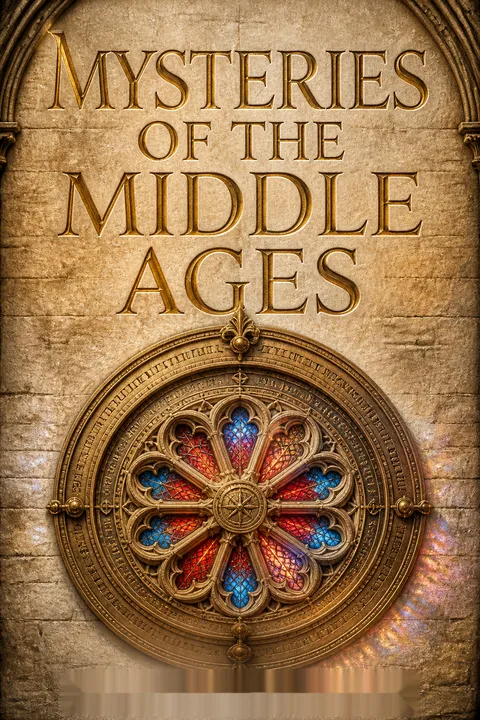
Mysteries of the Middle Ages receives mixed reviews (3.8/5 average). Readers appreciate the beautiful manuscript-style layout with illustrations and Cahill's engaging, conversational writing about key medieval figures like Hildegard, Eleanor of Aquitaine, and Dante. However, many criticize the book's lack of clear thesis, anachronistic judgments, and inappropriate modern digressions—particularly anti-Islam commentary and political rants. Several reviewers note the book feels episodic rather than cohesive. While some praise it as an accessible introduction, others find it superficial, biased, and unprofessional, with the author's Catholic perspective heavily influencing interpretations.
People Also Read


The Hinges of History Series

About the Author
Download PDF
Download EPUB
.epub digital book format is ideal for reading ebooks on phones, tablets, and e-readers.








































