
Key Takeaways
1. The Enduring Philosophical Divide: Plato vs. Aristotle Shapes Western Thought
To this day, it may be asked of anyone who cares about ideas: Are you a Platonist or an Aristotelian?
Ancient Roots. Western thought has been profoundly shaped by a centuries-long "philosophical tennis match" between Plato and Aristotle, later joined by Augustine and Aquinas. Plato, with his "lofty" style, posited a world of eternal Forms (Beauty, Truth, Goodness) beyond physical reality, influencing Augustine's view of a gloomy human existence redeemed by divine grace for a select few. This perspective often saw the material world as "slime" and human beings as inherently sinful without God's intervention.
Earthly Realities. Aristotle, Plato's pupil, countered that universal ideas exist within things themselves and in our minds, not in a separate realm. His "closer to the ground" approach championed empirical observation and "natural philosophy" (what we call science), believing the unaided human mind capable of perceiving reality. Thomas Aquinas, though "styleless," adopted this "moderate realism," offering a more optimistic view of human potential and the world.
Pendulum Swings. The popularity of these philosophical schools has swung back and forth throughout history. Plato and Augustine dominated early medieval thought, but Aristotle and Aquinas saw a renaissance in the 12th and 13th centuries. The Renaissance and Reformation, however, witnessed a renewed admiration for the "graceful team" of Plato and Augustine, influencing figures like Wyclif and Luther, who often disdained Aristotle's perceived paganism.
2. Catastrophes as Catalysts: Plague and Revolt Reshape Medieval Europe
Few events of European history have been as final as the Black Death in bringing to an end one age (which we might call the Innocently Playful Medieval) and bringing into view another (which we might call the Colder Late Medieval–Early Renaissance).
Shifting Power. The 1282 Sicilian Vespers, a revolt against French rule, signaled the decline of a universal papacy and the rise of nation-states, permanently dividing Eastern and Western Christianity. This event, planned by an international consortium, thwarted papal ambitions for reunification and highlighted growing nationalistic consciousness, setting the stage for future religious and political fragmentation.
Cultural Upheaval. The Black Death (1347-1353) devastated Europe, killing up to half its population and causing profound cultural shifts. Boccaccio's Decameron reflects this change, moving from Dante's grave vision to a cynical, pleasure-seeking worldview amidst widespread social breakdown:
- Abandonment of the sick by family and friends.
- Disappearance of reverence for law, both divine and human.
- Rise of hypocrisy and opportunism, especially within the clergy.
- Waves of accusation and intolerance, leading to massacres of Jews.
Seeds of Dissent. Peasant rebellions, like Wat Tyler's in England (1381), fueled by figures like John Ball ("When Adam dalf and Eve span, Who was thanne a gentilman?"), challenged the legitimacy of the leisured class and demanded economic freedom. These movements, alongside precursors like Wyclif and Hus, questioned church wealth, papal authority, and advocated for vernacular Bibles, laying groundwork for the Reformation.
3. Gutenberg's Press: The Engine of a Communications Revolution
In the future made possible by Gutenberg, books of all kinds would be everywhere in multiple copies, and soon enough everyone would be reading, comparing, checking, communicating.
Transforming Communication. The third great communications revolution, following writing and the alphabet, was sparked by the arrival of paper, movable type, and the printing press in Europe from East Asia in the early 15th century. Johannes Gutenberg, a German jeweler, perfected durable lead typefaces and adapted a winepress to create the first printed Bible around 1452. This innovation was far more impactful in alphabetical Europe than in pictographic Asia.
Unforeseen Impact. Gutenberg's initial print run of 180 Bibles was astounding, considering most university libraries held barely 100 titles. This invention democratized knowledge, making books widely available and affordable, fostering unprecedented literacy. While initially seen as a pious effort, it inadvertently created an "unstoppable, nearly instant, and universal marketplace of communication" for new ideas.
Cultural Shift. The printing press profoundly altered European society:
- Increased literacy: More people learned to read, driven by access to texts.
- Dissemination of ideas: Controversial texts, like Luther's, spread rapidly across the continent.
- Challenge to authority: Individuals could now read and interpret texts, including the Bible, for themselves, questioning established religious and political powers.
- Standardization of languages: Printing helped solidify vernacular languages, contributing to national identities.
4. Columbus and the "New Man": Ego, Exploration, and Exploitation
It is impossible to imagine Columbus, as he was, existing before the disaster of the Black Death, which emptied so much of Europe and opened land ownership and other enterprises for the first time to men of no provenance.
The Self-Made Man. Christopher Columbus, a Genoese weaver's son, embodied the "New Man" of the Renaissance: self-invented, entrepreneurial, and driven by an "unlimited capacity for self-deception." His audacious proposal to sail west to Asia, based on flawed calculations but accurate knowledge of trade winds, was a gamble that only the Spanish monarchs, Ferdinand and Isabella, were willing to finance after years of his persistent lobbying. His personality, a blend of charisma and ruthlessness, was central to his success.
Spanish Ambitions. The year 1492 was pivotal for Spain: the conquest of Granada (ending the Reconquista) and the expulsion of all unconverted Jews (Alhambra Decree). These acts, driven by a desire for religious unity and cash, were overseen by the brutal Spanish Inquisition, which targeted conversos and Moriscos. This period saw the rise of racialized thinking, with mentions of "Jewish blood" and "blue blood" to denote purity and status.
A World Transformed. Columbus's "discovery" of the Americas led to a brutal exploitation of indigenous populations, whom Europeans deemed "naked people" lacking "civil society." The "El Requerimiento" ritualized their subjugation, justifying enslavement and violence. This genocide, coupled with European diseases, decimated native populations. The "New World" profoundly challenged European cosmology and theology, sparking endless questions about humanity, God, and the universe, while simultaneously fueling European imagination and scientific inquiry.
5. Renaissance Humanism: A Rebirth of Classical Beauty and the Individual Self
This pleasure—in collecting, understanding, savoring, imitating (and even surpassing)—becomes the essential hallmark of the Renaissance and its rich abundance of activities.
Rediscovering Antiquity. Francesco Petrarch, considered the first Renaissance figure, initiated a "Rebirth" by rediscovering and appreciating classical Latin literature, labeling the preceding era the "Dark Ages." Humanism, focusing on human subjects rather than divine theology, emphasized pleasure in learning, textual scholarship, and the imitation of ancient authors. This movement, initially Italian, gradually spread across Europe, though Italy remained its vibrant heart.
Artistic Flourishing. Italian Renaissance artists, often patronized by wealthy families like the Medici, celebrated the human form and individual expression:
- Donatello's David: A groundbreaking nude sculpture, provocative and individualistic, marking a return to classical boldness.
- Leonardo da Vinci: A polymath whose art blended science and mystery (Annunciation, Virgin of the Rocks, Mona Lisa, Vitruvian Man), revealing a deep personal engagement with his subjects.
- Botticelli: Celebrated the female form in works like Primavera and The Birth of Venus, blending pagan mythology with Christian ideals, before turning to religious art under Savonarola's influence.
- Michelangelo: A Platonic idealist, his monumental sculptures (Pietà, David, Moses) and the Sistine Chapel ceiling redefined human and divine beauty, often clashing with papal sensibilities over nudity.
Backlash and Change. The exuberance of the Renaissance faced a stark challenge from figures like Girolamo Savonarola in Florence. This ascetic Dominican friar condemned humanistic art and pleasures, leading to "Bonfires of the Vanities" and a temporary theocracy. His influence, though short-lived, foreshadowed the Counter-Reformation's stricter stance on art and morality, leading to "pants painters" covering nudes and a shift towards more dramatic, less idealized forms in artists like Caravaggio and Bernini.
6. Luther's Defiance: Personal Conscience Ignites the Reformation
Unless I am convinced by Scripture and by plain reason (I do not believe in the authority of either popes or councils by themselves, for it is plain that they have often erred and contradicted each other) in those Scriptures that I have presented, for my conscience is captive to the Word of God, I cannot and I will not retract anything, for it is neither safe nor right to go against conscience. God help me. Amen.
Spiritual Anguish. Martin Luther, an Augustinian monk, grappled with profound spiritual torment, unable to believe he was forgiven by God despite extreme penances. He found solace in Paul's Letter to the Romans, discovering "justification by faith" – that salvation comes from God's freely bestowed grace, not human deeds or self-justification. This insight, a "reborn" feeling, became the bedrock of his theology.
The Indulgences Controversy. Luther's personal revelation collided with the rampant sale of indulgences, a papal scheme to fund St. Peter's Basilica by offering remission of temporal punishment for sins in exchange for money. Archbishop Albrecht of Brandenburg and Pope Leo X, both deeply in debt, orchestrated this "scam," which Luther vehemently opposed. His Ninety-Five Theses, initially a private letter, exposed the theological flaws and moral corruption of the practice.
Worms and the Rise of Ego. The printing press rapidly disseminated Luther's Theses across Europe, making him a household name. Summoned to the Diet of Worms in 1521, Luther, despite immense pressure from Emperor Charles V and papal legates, famously refused to recant. His declaration, "my conscience is captive to the Word of God," marked a pivotal moment:
- Individual conscience: Elevated personal conviction over institutional authority.
- Scriptural authority: Asserted the Bible as the sole source of theological truth.
- Ego as historical force: Demonstrated the power of a single individual's defiance against established powers.
This act of monumental courage, though rooted in personal struggle, irrevocably altered the course of Western history.
7. The Reformation's Fractured Landscape: From Unity to Inter-Christian Conflict
If what it takes to tell the truth—from a Christian point of view (or from a Muslim one, for that matter)—is a pure heart, we can expect soon enough to be surrounded by a veritable Babel of conflicting truth tellers, for the pure of heart are just as careful cultivators of their own egos as are painters and princes.
A Babel of Truths. Luther's challenge, born of personal conviction, quickly fragmented into a "Babel of conflicting truth tellers," each claiming divine inspiration and scriptural authority. This era saw the rapid rise of diverse Protestant movements, often intolerant of one another, and fueled by the shifting tides of European power politics. The principle of Cujus regio, ejus religio (Whose region, his religion) solidified territorial religious divisions.
Radical Reformers and Persecution. Beyond Luther, figures like Huldrych Zwingli in Zurich initiated their own reforms, stripping churches of images and music. More radical groups, like the Anabaptists, advocated for adult baptism, pacifism, communal living, and universal literacy. They faced brutal persecution and execution by both Catholics and mainstream Protestants, often drowned for their "rebaptizing" practices. Luther himself condemned the Peasants' War, aligning with princes and diminishing his moral standing.
Calvin's Order and Intolerance. Jean Calvin, a lawyer-preacher in Geneva, established a rigorous, committee-based Reformation, emphasizing God's predestination and a strict separation of church and state. His Institutes of the Christian Religion became a foundational text for Presbyterian and Reformed churches worldwide. However, Calvin's Geneva was also a place of severe discipline, banning prostitution and theater, and famously executing Michael Servetus for questioning the Trinity and predestination, an act widely praised by other reformers.
8. Northern Art: Apocalyptic Visions and the Realism of Everyday Life
The strongest and most enduring manifestation of the Northern Renaissance, however, was not really dependent on Luther, for it is to be found in the images of Albrecht Dürer, many of which were known before Luther was even heard of.
Apocalyptic Visions. Albrecht Dürer, the first pan-European artist, captured the anxieties of the approaching year 1500 with his Apocalypse woodcuts. These powerful images, like The Four Horsemen, depicted gruesome retribution against contemporary figures, including the pope and emperor, reflecting widespread dissatisfaction with both sacred and profane rulers. Dürer's blend of Italianate skill and Germanic gloom created nightmarish yet compelling visuals.
Realism and Humanity. Despite his dramatic apocalyptic themes, Dürer also excelled at capturing quotidian reality with honesty and detail. His works, such as The Fall of Man, The Prodigal Son, and Peasant Couple Dancing, opened the door to northern European genre painting. He celebrated not just the ideal human body but also the vulnerability and ordinariness of everyday life, often with a hidden, Luther-like humor.
Bruegel's Profound Gaze. Pieter Bruegel, a Dutch master, further deepened this northern realism, depicting ordinary life with unparalleled insight. His early Bosch-like works, like Big Fish Eat Little Fish, satirized human greed. Later, in works like Beggars and The Wedding Dance, he offered complex sociograms, revealing the dignity and struggles of peasants, often with subtle critiques of societal conventions. His final painting, The Magpie on the Gallows, is a poignant meditation on life, death, and human resilience amidst political and religious instability.
9. The Vernacular Bible: Empowering the People and Forging National Languages
In making his translation accessible to the man and the woman in the street, he translated the coinage of the ancient world into its Germanic equivalents: the shekel became the Silberling, the Greek drachma and the Roman denarius became the groschen.
Luther's German Bible. While confined in Wartburg Castle, Luther undertook the monumental task of translating the New Testament from its original Greek into idiomatic German. He effectively "invented literary German" by blending the official language of the Saxon court with the earthy, colorful speech of common people. This translation, published in 1522, was a sensation, making the Bible accessible to millions and profoundly shaping the German language and national identity.
Tyndale's English Legacy. William Tyndale, an English priest and scholar, inspired by continental reformers, translated the New Testament into exquisite English using Erasmus's Greek text. His goal was to make scripture understandable even to "a boy that driveth the plough." Tyndale's translations were revolutionary, not just linguistically but theologically:
- "Congregation" for "church"
- "Elder" for "priest"
- "Repentance" for "penance"
- "Love" for "charity"
These choices directly challenged Catholic doctrines and the hierarchical structure of the Church.
Martyrdom and Enduring Influence. Tyndale faced relentless persecution from figures like Thomas More and Henry VIII, who saw his translations as treasonous heresy. Despite living as a fugitive and enduring imprisonment and torture, he continued his work, translating much of the Old Testament. He was eventually strangled and burned at the stake in 1536. His dying prayer, "Lord, open the King of England's eyes," was answered posthumously, as over 80% of the King James Version (1611) is credited to Tyndale's inspired work, making it the most printed book in history and a cornerstone of the English language.
10. Humanism's Diverse Expressions: Utopia, Laughter, and Spiritual Discipline
For laughter is the proper human thing.
More's Ideal Society. Thomas More, an English humanist and counselor to Henry VIII, invented the concept of "utopia" (meaning both "good place" and "no place") in his influential book. Utopia critiqued contemporary European society, particularly its wars, poverty, and social injustices, by imagining an ideal communist society with:
- No private property or locks.
- Universal farming and six-hour workdays.
- Religious tolerance and free healthcare.
- Permitted divorce and euthanasia.
More's complex, often ironic, vision reflected his own monastic leanings and his pragmatic understanding of human nature, though he would later be martyred for refusing to endorse Henry VIII's divorce and claim as head of the Church.
Rabelais's Joyful Skepticism. François Rabelais, a French priest, doctor, and satirist, offered a different humanist perspective. His Gargantua critiqued medieval education and religious formalism, advocating for absolute freedom and laughter as the "proper human thing." His utopian Abbey of Thélème, with its single rule "do what you like," was a radical departure from monastic traditions, reflecting a deep skepticism about all worldviews and a celebration of human joy.
Loyola's Internalized Discipline. Inigo (later Ignatius) Loyola, a Spanish Basque nobleman, underwent a profound spiritual conversion after a debilitating war injury. His Spiritual Exercises, born from intense personal penance and visions, offered a structured path to internalized faith. While his methods could be rigid and authoritarian ("To be right in everything, we ought always to hold that the white which I see is black, if the Hierarchical Church so decides it"), they provided a powerful framework for personal spiritual growth, forming the basis for the Jesuit order and playing a crucial role in the Counter-Reformation.
11. The Deepening of Personal Faith and Universal Love
No man is an island, entire of itself; every man is a piece of the continent, a part of the main; if a clod be washed away by the sea, Europe is the less, as well as if a promontory were, as well as if a manor of thy friend’s or of thine own were; any man’s death diminishes me, because I am involved in mankind, and therefore never send to know for whom the bell tolls; it tolls for thee.
Interconnected Humanity. The 17th century saw a profound internalization of faith, moving beyond the combative assertions of the Reformation era. John Donne, a former Catholic who became an Anglican priest and Dean of St. Paul's, articulated a powerful vision of human interconnectedness. His famous meditation on death emphasizes that all humanity is one, and every individual's fate affects us all, transcending religious or national divides. His journey from a "reckless lover" to a "thoughtful, even grave older man" reflected a deepening spiritual understanding.
Rembrandt's Empathy. Rembrandt van Rijn, the Dutch master, exemplified this deepening of personal belief through his art. Living in tolerant Amsterdam, he focused on the human condition, often using himself and his Jewish neighbors as models. His self-portraits reveal a journey from youthful seriousness to a resigned, yet ultimately joyful, acceptance of life's absurdities. His biblical scenes, like The Return of the Prodigal Son, are profoundly empathetic, emphasizing the physical tenderness of reconciliation and the universal message of forgiveness.
Beyond Partisanship. These figures, like France's Henry IV and Montaigne, represent a growing desire for moderation and an inclusive spirit that transcended rigid religious camps. They sought truth and meaning not in dogmatic pronouncements or violent conflict, but in self-knowledge, human connection, and the quiet contemplation of life's complexities. Their legacies offer a counter-narrative to the era's pervasive intolerance, pointing towards a more humane way of living on Earth.
12. Hope for Reunion: An Inclusive Vision for Christianity's Future
If Christians like Dietrich Bonhoeffer, Angelo Roncalli, and Muriel Moore could sit down together and converse for an hour or two, without interference from careerists, time-servers, and assorted fanatics, the rending of Christendom would be over, and Christians would achieve their long-sought goal of reunion.
Courageous Resistance. Dietrich Bonhoeffer, a German Lutheran theologian, exemplified costly grace and social courage in the face of Nazism. He actively opposed the nazification of the church, spoke out against the persecution of Jews, and participated in a plot to assassinate Hitler, ultimately dying naked at Flossenburg concentration camp in 1945. His life demonstrated a profound commitment to Christian ethics over blind obedience to state authority.
Ecumenical Openness. Pope John XXIII (Angelo Roncalli), a Lombardian peasant, unexpectedly elected in 1958, called the Second Vatican Council to "update" the Catholic Church. He famously sought to "open the windows and let in some fresh air," inviting observers from all Christian traditions and refusing to condemn anyone. His vision was for a "universal unity" where "Catholic" would signify embrace, not exclusion, challenging centuries of Tridentine rigidity.
Everyday Inclusivity. Muriel Moore, an American Episcopalian, embodied a quiet, practical Christianity of universal love. Despite personal hardship, she dedicated her life to Holy Apostles Church in New York, establishing the city's largest soup kitchen. Her credo, "We are all the same," transcended social, religious, and personal differences. Her funeral, attended by a diverse congregation of Episcopalians and Irish Catholics, symbolized a spontaneous act of inter-Christian unity, where traditional barriers to communion were set aside in shared love and defiance.
Review Summary
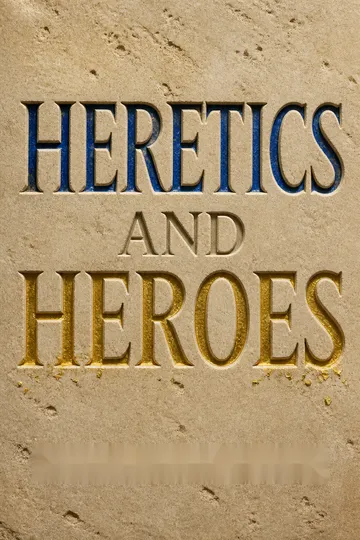
Heretics and Heroes receives mixed reviews (3.8/5) for its accessible exploration of the Renaissance and Reformation through biographical profiles of artists and religious figures. Readers appreciate Cahill's engaging, conversational writing style and his focus on humanizing historical figures. However, many criticize his frequent insertion of personal opinions, modern political commentary, and tangential asides that distract from the history. Some find his treatment of certain figures biased or dismissive. While praised as an excellent introduction to the period with beautiful illustrations, readers note the book lacks cohesion and depth compared to earlier works in his series.
People Also Read




The Hinges of History Series

About the Author
Download PDF
Download EPUB
.epub digital book format is ideal for reading ebooks on phones, tablets, and e-readers.








































