
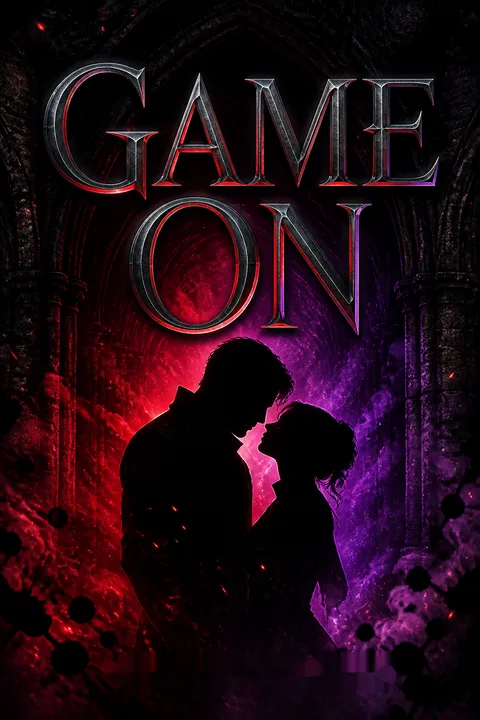


Plot Summary
The Bookie's Rigged Game
Tyler Neumann1 runs an underground gambling empire from the shadows of the city, hosting lavish illegal parties for the elite aboard an abandoned freight ship. His latest operation has a specific target: Blake McCormick,3 the twenty-year-old brother of a woman named Stella.2
Tyler1 seats Blake3 with expert poker players, has bartenders overserve him, and offers house credit whenever the kid runs dry. By night's end, Blake3 owes three million dollars — his entire inheritance. But the money was never the point.
Tyler1 needs Stella2 as his way into her family's inner circle, and specifically to their business partner Richard Lawson4 — the man Tyler1 believes is his father, the man he moved to this city to destroy. Blake's debt is just the bait on the hook.
The Kiss in the Tattoo Chair
Under the alias Theo Strickland, Tyler1 books a late-night consultation at Stella's2 Gothic tattoo parlor. She's a neo-traditionalist artist — pierced, tattooed, sharp-tongued — and she makes him wait ten minutes, which he punishes with arrogance.
Their chemistry is immediate and combative: insults traded like currency, each landing closer to flirtation. When he peels off his shirt for the consultation, she nearly loses her composure. His hand grazes her ankle. She freezes. Then she climbs into his lap, and they kiss with the ferocity of people who've been fighting for hours, not minutes.
Derrick,11 her ex-biker colleague, interrupts by returning for forgotten keys. Tyler1 had planned to reveal the blackmail tonight, but the timing is ruined. The kiss — messy, furious, electric — becomes unfinished business.
Blake's Three-Million-Dollar Confession
Blake3 shows up at Stella's2 apartment past midnight, reeking of stale alcohol, looking a decade older. He confesses he attended a masked gambling party, got blackout drunk after his boyfriend Alex cheated on him, and lost his entire inheritance to a man called Mr. Strickland — tall, blond, blue-eyed. Stella's2 blood freezes.
The name and description match the man who sat in her tattoo chair hours earlier. She tears through security footage, but the image is too pixelated for Blake3 to confirm. Her emails to the alias that night are volcanic: death threats, demands, accusations. His replies are mocking. He invites her to dinner on Sunday, promising to explain. She has no leverage, no alternative, and no choice but to show up.
Dinner with the Devil
At a secluded Italian restaurant, Tyler1 has already planted an ultrasonic jammer beneath the table to corrupt any recording. He confirms Blake's debt, dismisses Stella's2 arguments about her brother's age and intoxication, and lays out his terms: he'll transfer the debt to her instead.
When she asks how she'll pay, he proposes she fake-date him — attending her parents' social events as his girlfriend so he can recruit wealthy new gambling clients. Stella2 recognizes the trap but cannot refuse without risking her brother's3 future and her family's reputation.
She agrees, nauseated with dread. On the sidewalk afterward, she discovers her voice recording is nothing but distorted static. She has no evidence, no leverage, and a blackmailer who has anticipated every countermove.
The Wolf Among McCormicks
At the McCormick estate for their dog Tippi's birthday party, Tyler1 arrives and pulls Stella2 into a staged embrace against his car, claiming someone watches from an upstairs window. He meets her parents — warm Phil15 and sharp-tongued Georgie5 — charming them effortlessly, even identifying a rare Morisot painting by sight.
But when Blake3 tries to punch him in a private study, Tyler's1 mask drops. He blocks the strike, slams Blake3 into the wall, and drives a fist into his kidney. Stella2 watches, frozen, unable to intervene.
Later, Tyler1 comes face-to-face with Richard Lawson,4 Stella's godfather4 and her parents' business partner — his biological father, though no one else knows it. They share the same height, the same coloring. Tyler1 shakes his hand and smiles through volcanic rage.
The Passenger, Not the Driver
Stella2 visits Runa Lund7 in the hospital — the woman from a hit-and-run accident seven years prior. Runa7 lost both legs, and the public record says Stella2 was driving. The truth is devastating: Stella's best friend Maddie6 was behind the wheel.
Maddie6 fled the scene sobbing to her parents, whose lawyers systematically pinned everything on Stella.2 Though cleared criminally for lack of evidence, Stella2 voluntarily admitted guilt in a civil suit because Runa7 couldn't pay her mounting medical bills and Stella2 could.
Her entire inheritance now funds Runa's7 ongoing surgeries, which is why she tells Tyler1 her money is tied up. In the hospital room, Runa7 proposes a strategy shift: stop fighting Tyler1 and start redirecting him toward people who truly deserve ruin. Together, they draft a hit list of corrupt targets — Maddie's6 name at the top.
A Bite and a Truce
At a lavish dinner party hosted by Stella's2 great-aunt, Maddie6 corners Stella2 publicly, performing wide-eyed innocence and demanding an apology. Tyler1 intercepts after Stella2 retreats — he threatens Maddie6 with knowledge of a girl named Emily who drowned from a boat called La Mer in Turks and Caicos, a death Maddie's6 parents covered up by buying off a coroner.
Maddie6 flees. In a private study, Stella2 launches at Tyler,1 punching, clawing, finally sinking her teeth into his shoulder hard enough to break skin.
He doesn't stop her. Pinned to the door with tears streaming, she tells him she wasn't driving that night. He believes her. Something shifts between them — not trust exactly, but the fragile recognition that they might hate the same people. They form a wary truce.
AJ Makes It Three
Over weeks of parties, Tyler1 and Stella's2 bickering sharpens into something combustible. They waltz at a gala and draw the entire room's attention, forced into a public kiss when guests clink their glasses.
At a basement pool party in AJ's8 family estate, this handsome old flame of Stella's2 — one of the few decent people in their social circle — asks whether they'd be open to sharing. What begins as a game of chicken between Tyler1 and Stella2 turns real: neither will be the first to back down.
In AJ's8 bedroom, they strip away clothing and pretense together. Tyler1 watches AJ8 enter Stella2 while she takes him in her mouth, and the encounter rewires something fundamental between all three. Afterward, tangled together in silence, no one acknowledges what it means.
The Slap in the Museum
At her parents' company party in a natural history museum, Maddie6 appears uninvited, performing fragile victimhood and demanding Stella2 apologize. This time Stella2 doesn't retreat. Before witnesses, she catalogs Maddie's6 lifelong pattern of destruction: smashing antiques as a child, stealing a pony at twelve, framing Stella2 for a hit-and-run at twenty-eight.
She names Maddie6 as the real driver who fled and never paid. Maddie's6 composure finally cracks — she slaps Stella2 hard enough to split the inside of her lip.
Two older women immediately offer to testify they saw the unprovoked strike. Stella2 smiles through bloodied teeth and tells Maddie6 to run, the only thing she's ever excelled at. Maddie6 flees. In a back hallway, Stella2 collapses into Tyler's1 arms and sobs, then straightens up and adds more names to his list.
Carried Home Through Rain
In the car afterward, Tyler1 and Stella's2 most vicious argument erupts. She screams that he's as bad as the people he claims to hate. He swerves to avoid a car running a red light, triggering her flashbacks to Runa's7 accident. She stumbles out into the downpour, unable to get back in the vehicle.
Tyler1 carries her three blocks to her apartment, announces they're done — one more party should clear her debt — and helps her into the shower. Something breaks open in the steam. Stella2 kisses him without pretense.
They have sex on the edge of her bed, Stella2 ordering him to hurt her because she's exhausted from being careful, both watching in a mirror as they shatter every remaining rule. Afterward, he traces secret letters on her back. She discovers under blacklight that he wrote two profane words in body fluid — and laughs until she can't breathe.
Blake Calls the Cops
Blake3 lures Stella2 to Tyler's1 latest underground party — staged in Prohibition-era tunnels beneath the city, transformed into a Gatsby-esque spectacle of chandeliers and jazz bands. Inside, Stella2 discovers dozens of her parents' employees mingling among criminals and socialites, invited under the guise of a themed game night.
Blake3 reveals he's been watching Tyler1 for weeks, caught him cultivating these workers at prior events, and has already called the police. Before Stella2 can warn anyone or stop her brother, SWAT teams flood the tunnels.
Tyler1 finds the siblings, seizes Stella,2 and drags her through an escape passage at gunpoint while chaos erupts behind them — screaming guests, stampeding bodies, whistles echoing off stone. His carefully built operation, years in the making, collapses in minutes.
Tyler Neumann Unmasked
Fleeing through dark tunnels, Stella2 fakes an obstacle to distract Tyler1 and rips open his glove compartment, snatching the car registration: Tyler Neumann. His real name. He admits the alias never existed.
Stella2 pieces together the rest — he's Richard Lawson's4 son, and the employees were always the true targets, not wealthy gamblers. Tyler1 planned to blackmail them into gathering information that would dismantle her parents' company brick by brick, bleeding Richard4 dry. His rage that night is primal, every pretense stripped away.
But Stella2 refuses to cower. She insists the Richard4 she's known all her life is not the monster Tyler1 imagines. He drives them north through the night toward his rural hometown, to the only person left alive who witnessed what really happened between his parents.
His Mother's Lie Revealed
At a run-down ranch, Tyler's Aunt Jenny16 — the only family who helped his mother — inadvertently shatters everything. When Tyler1 mentions finding Richard,4 Jenny16 doesn't curse the man who abandoned them.
She snaps that Tyler's1 mother Meg left Richard4 voluntarily: she saw how wealth corrupted people and chose poverty to protect her son from that world. The entire revenge plot — the gambling empire, the blackmail, the manipulation of Stella2 and her family — was built on a lie his dead mother told him as a child and reinforced for sixteen years.
Tyler1 stands paralyzed on the porch, his worldview collapsing. Jenny16 storms to her minivan and tears out of the driveway, clipping Stella2 with the vehicle's tail end. Stella's2 head strikes the ground. She goes still. Tyler1 drops beside her, screaming her name.
The Brat Finally Kneels
In a roadside hotel room, both battered and spent, Tyler1 drops to his knees on the carpet before Stella.2 He confesses what a play club owner13 guessed months ago: he has a brat kink.
Every provocation, every insult, every time he pushed Stella's2 buttons — he was craving her anger, desperate for someone to put him in his place. He offers himself for whatever punishment she deems fitting. Stella2 tests him: she orders him to the floor, and he goes. She tells him to worship her feet, and he complies with reverence.
She denies him release while using his body for her own pleasure, making him watch helplessly. When she finally relents, it undoes them both. Afterward, sprawled together, she delivers her ruling: therapy, not just kink, will be mandatory.
Father and Son, Face to Face
Tyler1 drives Stella2 to his mother's grave overlooking a lake — the plot he bought with gambling money, the headstone earned one poker night at a time. Then they go to Richard's4 brownstone in the city. Richard's4 face goes white when Tyler1 says his mother's name: Meg Neumann.
He confesses that when Meg told him she was pregnant, he panicked and asked for a few days to think. He returned on day four with an engagement ring and a deposit on this very house — but Meg had already vanished, phone disconnected, apartment empty.
He searched for decades. He never recovered, never remarried. Tyler1 chooses kindness over the cruelty he once planned, sparing Richard4 the worst of what Meg endured. They make plans to visit her grave together. The rebuilding begins.
Epilogue
By autumn, the world Tyler1 nearly destroyed begins to mend. He returns Blake's3 stolen Patek Philippe watch through Stella2 — the first tentative gesture toward reconciliation with her brother. A news alert confirms the FBI has opened an investigation into a drowning connected to Maddie,6 the first of many corrupt secrets Tyler1 and Stella2 plan to expose together.
That evening, Stella2 meets Tyler's1 friends for the first time: the hacker son of a serial killer,9 an ER nurse,10 a reformed mobster,12 and others equally improbable. They welcome her without hesitation.
AJ8 arrives unexpectedly, fresh off an early flight, and the three leave together. In the car to Stella's parents'5 cocktail party, she tells Tyler1 she loves him. Then admits she loves AJ8 too. Tyler1 isn't sure he knows the precise word for what he feels — only that it's close enough, and growing.
Analysis
Game On interrogates the architecture of revenge by asking what happens when the origin story justifying every cruel act turns out to be fabricated. Tyler Neumann1 builds an entire criminal empire on one premise: that his wealthy father4 abandoned him and his mother to poverty and death. When this foundation cracks, Tyler1 doesn't just lose his purpose — he loses his identity. The novel argues that trauma doesn't require a deliberate villain to be devastating, and that the narratives we inherit from our parents can prove more destructive than the hardships themselves.
The brat kink at the story's center functions as more than sexual preference — it's a psychological skeleton key. Tyler's1 compulsive provocation of Stella2 mirrors his lifelong pattern of pushing people away before they can abandon him. His eventual desire to be dominated and disciplined isn't submission for its own sake; it represents the first time he has chosen vulnerability rather than having it imposed. That Stella2 — the very woman he blackmailed — becomes the person he trusts enough to kneel before constitutes the novel's most radical argument about intimacy: love sometimes begins precisely where control ends.
Stella's2 arc runs parallel but inverted. Where Tyler1 weaponized his pain outward, she internalized hers — literally, in chronic gastritis that worsens under stress. Her journey from passive guilt-bearer to active agent of justice through the hit list represents not regression into her reckless past but the integration of her anger into deliberate, directed force. Allen refuses to aestheticize her illness; it's presented as unglamorous reality — a body that keeps score of every lie, every confrontation, every skipped meal.
The class critique is sharp but resists easy binaries. Tyler1 is poor-born and monstrous; AJ8 is obscenely wealthy and decent. The true moral axis isn't money but accountability — who faces consequences, and who purchases immunity. By the end, the novel suggests that justice delivered through institutional channels remains unreliable, but personal reckoning, however imperfect and ethically fraught, may be the only alternative available.
Review Summary
Game On receives mixed reviews, averaging 4.17/5. Fans praise the true enemies-to-lovers tension, fast pacing, witty banter, and spicy scenes between the morally grey MMC and black cat FMC. Many consider it stronger than book two. However, critics find Tyler too mean for too long, the character development rushed, and the FMC immature for her age. The book's throuple ending and multi-partner scenes surprised some readers who felt the marketing didn't fully reflect this direction.
People Also Read



Characters
Tyler Neumann
Bookie seeking vengeanceA twenty-five-year-old underground gambling kingpin operating under the alias Theo Strickland, Tyler is brilliant, bisexual, and seething with rage. Raised in poverty by a single mother who died of cancer when he was sixteen, he believes his wealthy father Richard Lawson4 deliberately abandoned them. He built a criminal empire—rigged poker nights, lavish illegal parties for the elite—as a vehicle for revenge, planning to infiltrate Richard's4 inner circle and dismantle his life. Tyler reads people the way others read books: instinctively, completely, exploiting every tell. His constant provocations mask a deep need for connection he refuses to acknowledge, and his antagonism toward Stella2 reveals a compulsive pattern of pushing away anyone who might see through his armor. His childhood food insecurity still manifests as emergency snacks in every vehicle he drives.
Stella McCormick
Tattooed artist under siegeOwner of a Gothic tattoo parlor, Stella is thirty-five, heavily inked and pierced, with a sharp tongue and a chronic illness she manages in near-silence. Her gastritis flares under stress, restricting her to the blandest diet while peers indulge freely. Born wealthy, she was once reckless and self-destructive until a hit-and-run accident seven years ago became her turning point—she chose to pay for the victim's7 ongoing medical care, draining her inheritance. She carries the guilt of a crime she didn't commit and the resentment of a world that believes she did. Fiercely protective of her younger brother Blake3 and determined to prove she can build something independently, Stella masks vulnerability with aggression and deploys humor as armor against a lifetime of judgmental stares from the class she was born into.
Blake McCormick
Stella's sheltered younger brotherStella's2 twenty-year-old brother, a bright engineering student who became the family's golden child after watching his sister's public downfall. Recently heartbroken by his boyfriend's infidelity, Blake is kind, naïve, and far more principled than his sheltered upbringing might suggest. His gambling loss at Tyler's1 party shatters the careful identity he built as the child who never caused trouble. Beneath his compliance runs a stubborn streak that mirrors his sister's—he refuses to let someone else bear the consequences of his mistakes.
Richard Lawson
Tyler's estranged biological fatherStella's2 godfather and her parents' business partner, Richard is Tyler's1 biological father—a fact neither initially knows. Silver-haired and charming at sixty, he projects warmth and sincerity that Tyler1 is desperate to dismiss as performance. He's been a bachelor for decades, living in a modest brownstone rather than a mansion, his personal life a monument to unresolved loss. His easy manner with Phil15 and Georgie5 suggests deep, genuine friendship rather than the cold transactionalism Tyler1 expects from wealthy men.
Georgie McCormick
Stella's armored, golden-hearted motherStella's2 English-born mother, whose posh exterior conceals genuine warmth she struggles to express. Raised in a cold household where praise was forbidden, Georgie communicates love through action—dropping off Tiffany lamps, arranging pro bono lawyers for employees, organizing ruthlessly efficient charity dinners. She monitors Stella's2 gastritis with hawk-like vigilance and shares medical information with boyfriends she deems worthy. Her British accent occasionally produces malapropriations her children treasure.
Maddie Clyde
Stella's treacherous former best friendThe woman who was actually driving the car that struck Runa7 seven years ago. Maddie fled the scene, called her parents, and their lawyers systematically blamed Stella2. She performs innocence with practiced perfection—trembling chin, glistening eyes, rehearsed vulnerability—while harboring far darker secrets. She represents the worst of wealth's protective power: consequence-proof, empathy-free, and constitutionally incapable of accepting blame. Her compulsion to publicly confront Stella2 speaks to a narcissist's need to control the narrative.
Runa Lund
Accident survivor, Stella's confidanteA Norwegian woman in her early forties who lost both legs in the hit-and-run Maddie6 caused. Runa and Stella2 share a relationship built on hospital-room confessions and pitch-dark humor rather than conventional friendship. Direct and unsentimental about her condition, Runa is the first person to suggest Stella2 stop fighting Tyler1 and start redirecting his destructive talents toward people who genuinely deserve ruin. Her dark wit masks real resilience—she endures repeated surgeries with a gallows humor that keeps her sane.
AJ
Stella's decent, magnetic old flameWealthy, handsome, and genuinely decent, AJ is one of the rare good people in Stella's2 social world. He and Stella2 have an on-again, off-again history rooted in genuine affection and natural sexual compatibility. Openly attracted to both Tyler1 and Stella2, AJ serves as a stabilizing presence—the person whose calm counterbalances their combustible dynamic. His acceptance of both of them, without judgment or jealousy, offers something neither has experienced: uncomplicated warmth.
Josh
Tyler's hacker best friendTyler's1 best friend since college, a professional hacker and the son of a notorious serial killer. Chronically online and deeply loyal, Josh masks genuine concern for Tyler1 behind relentless teasing and boundary violations, including stealing Tyler's1 phone to find out who he's texting.
Aly
Josh's fiancée, ER nurseJosh's9 fiancée and an ER nurse, also Tyler's1 former casual partner. Practical and unflappable, she talks Tyler1 through a medical emergency over the phone with professional calm, proving indispensable in the crisis that finally breaks him open.
Derrick
Stella's protective ex-biker artistA silver-haired, heavily tattooed ex-biker who works as a world-class realism tattoo artist at Stella's2 shop. Fiercely protective of her, he interrupts Tyler's1 first two attempts to make a physical move, functioning as an involuntary chaperone.
Junior Trocci
Tyler's Mafia-born business partnerBorn into Mafia royalty, Junior co-owns a play club called Velvet with Tyler1 after the two blackmailed each other into a corner. Territorial and hypersensitive but shrewd with finances, he provides Tyler1 with mercenary security contacts.
Lauren
Junior's fearless girlfriendJunior's12 girlfriend and co-owner of the play club Velvet. Sharp, fearless, and known for tasing people who annoy her, Lauren is the first person to identify Tyler's1 brat kink—months before he's ready to admit it to himself.
Amos
Stella's profane parrotStella's2 African grey parrot, inherited from her grandmother. Profane, manipulative, and obsessed with pistachios, Amos greets visitors with creative obscenities and provides comic relief throughout. He calls Stella2 his designated insult with unwavering consistency.
Phil McCormick
Stella's warm, jovial fatherStella's2 genial, freckle-faced father. Warm and welcoming where Georgie5 is guarded, Phil represents the kind of genuine decency Tyler1 never expected to find among the wealthy. His easy humor and open affection for his family challenge Tyler's1 assumptions.
Aunt Jenny
Tyler's bitter maternal auntTyler's1 maternal aunt, the only family member who sheltered him and his mother. A heavy drinker living in rural poverty, Jenny resents Tyler's1 ambition while harboring a secret about his parents that she reveals under pressure—with devastating consequences.
Plot Devices
Blake's Three-Million-Dollar Debt
Incites the entire plotTyler1 deliberately engineers Blake's3 catastrophic gambling loss at an underground poker night on an abandoned freight ship, overserving the recently heartbroken twenty-year-old and offering unlimited house credit. The debt is never about money—it's a lever to force Stella2 into Tyler's1 orbit. When she takes on her brother's3 obligation, the debt transforms from financial to deeply personal, binding her to a man who controls every variable. The specific amount—Blake's3 entire inheritance—ensures the stakes are too high for the McCormick family to resolve quietly, forcing Stella2 into a private arrangement rather than involving parents or police. The debt drives every subsequent event: the fake relationship, the party attendance, and Stella's2 agonizing complicity in Tyler's1 schemes.
The Alias 'Theo Strickland'
Enables Tyler's double lifeTyler1 operates under this fabricated identity in all interactions with Stella2 and her social circle, booking his tattoo consultation, signing emails, and introducing himself at parties under the false name. The alias creates a firewall between his criminal enterprise and his real identity, allowing him to move through high society without anyone connecting him to the underground gambling world. The surname becomes a dark joke when Blake3 mentions Mr. Strickland to Stella2, triggering her realization that the man who kissed her and the man who ruined her brother are one person. The alias also functions as Tyler's1 psychological armor—performing 'Theo' lets him maintain emotional distance from the people he plans to destroy, treating the entire infiltration as a role rather than confronting what he's actually doing.
The Ultrasonic Jammer
Eliminates Stella's only evidenceA small rectangular device that emits high-frequency sound above human hearing range, the jammer is planted beneath the restaurant table during Tyler1 and Stella's2 first dinner meeting. It renders any nearby microphone useless, filling recordings with distorted noise and a continuous vibrating tone. Stella2 discovers too late that her voice recording—her only intended proof of being blackmailed—is entirely corrupted. The device crystallizes Tyler's1 meticulous nature and Stella's2 powerlessness in a single object: she cannot prove the coercion exists, leaving her with nothing but her word against a man who has anticipated every countermove. Its effect lingers throughout the story as Stella2 remains unable to produce evidence of what Tyler1 has done to her.
The Hit List
Transforms victim into co-conspiratorDrafted during a hospital visit between Stella2 and Runa7, this list names the worst people in Stella's2 parents' social circle—those who've committed serious offenses and escaped consequences through wealth and connections. Maddie's6 name sits at the top, followed by people who hazed students to death, swindled investors, and harbored predators. The list represents Stella's2 pivot from reluctant blackmail victim to willing participant in Tyler's1 schemes, redirecting his predatory talents toward targets she believes deserve ruin. It gives her agency within a situation where she previously had none, transforming the dynamic from pure coercion to grudging collaboration and ultimately changing how Tyler1 views her—from spoiled heiress to someone with genuine moral convictions about accountability.
The Underground Tunnels
Site of climax and collapseA network of Prohibition-era passages beneath the city, originally used by bootleggers and gangsters. Tyler1 discovers them through urban explorers and transforms a cavernous nineteenth-century bank basement into a spectacular gambling venue: chandeliers hung from stone arches, a jazz band echoing off brick columns, champagne towers glittering in candlelight. The tunnels' labyrinthine structure mirrors Tyler's1 own complexity—beautiful on the surface, dangerous underneath, built on foundations of buried crime. When police raid the party after Blake's3 tip-off, the tunnels become both trap and escape route. As Tyler1 and Stella2 flee through increasingly narrow and dark passages, the underground strips away every remaining pretense between them, forcing confrontations that the polished world above could never contain.
Download PDF
Download EPUB
.epub digital book format is ideal for reading ebooks on phones, tablets, and e-readers.








































