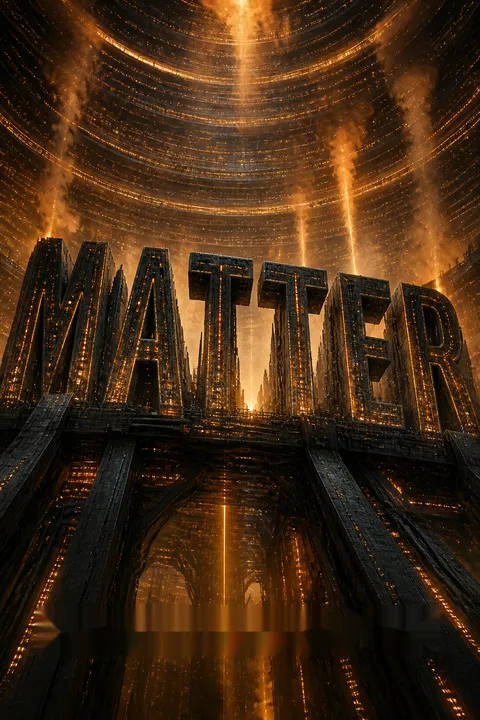

Plot Summary
Betrayal on the Battlefield
Prince Ferbin witnesses treachery in the heat of war—his father, King Hausk, is murdered not by enemy hands but by his trusted advisor, Mertis tyl Loesp. The battlefield transforms into a place of confusion and horror as Ferbin realizes the scale of the betrayal. He flees, hunted and terrified, with only his quick-witted servant Choubris Holse for company. Together, they vanish into the wreckage of their world, the knowledge of royal assassination their only certainty while the kingdom they barely escape reels from its greatest loss.
House of Mourning
Oramen, youngest surviving son, is thrust into reluctant prominence amid the somber ceremonies of the royal dead. The palace teems with intrigue, grief, and power vacuum—Mertis tyl Loesp steps forward, assuming the regency and shrouding Oramen with careful control until the boy comes of age. The air is thick with false cheer and vigilance; the assassinated king's wives, servants, and children tumble through tears, rivalries, and shifting alliances, each desperate for purpose and safety. Oramen's forced maturity is tinged with confusion, uncertainty, and quiet dread of the future.
Survivors Seek Truth
Driven by guilt and a desperate need for justice, Ferbin hides as a fugitive. He doubts everyone, trusting only Holse. Determined to reveal the murder and save his vulnerable brother, he plots passage to the Shellworld's surface—hoping to find their estranged sister, Djan Seriy Anaplian, or the Culture ally Xide Hyrlis. Both men must don disguises and brave the empire's fracturing, their journey a turbulent search for hope and a place in a world made treacherous by betrayal.
Far From Home
High above Sursamen, civilization's mentors—the Nariscene and Morthanveld—discuss the balancing act of civilization and the frailty of constructed peace. On Prasadal, Djan Seriy Anaplian, the king's estranged daughter raised among the ultra-advanced Culture, is called home after years of transformation: she has become more than a child of Sarl, forged into an agent of Special Circumstances. News of her father's death, her brother's peril, and their world's precarious fate jars her resolve. Competing duties war within her, the call of blood echoing across the stars.
Culture's Daughter
Immersed in the ideological freedoms of the Culture, Anaplian debates her role in galactic affairs. She is torn between the rules of non-interference and the pull of her family, her sense of belonging fractured by upbringing and adoption. The Culture's ambiguous morality and limitless potential contrast sharply with the primitive violence of her homeworld, and her transformation into a Culture agent—equipped with mind-altering technologies and profound self-mastery—renders her stranger than ever to her origins. Yet, as Sursamen's crisis looms, she chooses to return and intervene.
The Exiled Prince
Ferbin and Holse's journey lifts them through the Shellworld's colossal structure, exposing them to wonders and indifferent alien powers. They encounter the reticent Oct, aloof Nariscene, and inscrutable Morthanveld, each with their own priorities and history of intervention. Assisted by the culture's memory-haunted allies, the pair discover both the humility and audacity required to seek aid from "the Optimae"—the advanced species shaping their fates. Their odyssey sharpens Ferbin's sense of inadequacy, yet also his resilience and honesty about the limitations of power, loyalty, and destiny.
Suspicion and Secrets
On Sursamen, tyl Loesp consolidates power, weaving stories to justify his regency and cover up murder. Oramen, now Prince Regent, is entangled in a dense web of flattery and half-truths; even as he tries to mature and lead the court, threats multiply. Tensions between old and new elites, whispers of conspiracy, and fear of assassination haunt every royal interaction. Rumors and rivalries swirl around the unraveling family—uncertainty is the only constant, and trust is a currency easily devalued by ambition and fear.
The Shellworld's Heart
As civil war simmers, the focus shifts to Sursamen's most mysterious marvel: the Nameless City and its alien relics beneath the Hyeng-zhar cataract. Archaeologists, engineers, and Oct advisers cluster to unearth artifacts of immense age and unknown power—most notably, the enigmatic "Sarcophagus." Alerted by strange phenomena and Oct interest, Oramen oversees the dig, wary yet enthralled. The stakes accelerate as competing claims—human, Oct, Aultridia—converge on the site, each sensing a prize or a threat to their place in the galaxy.
Conspiracies in High Places
Tyl Loesp, fearing exposure, dispatches killers to silence Oramen as tensions at the Nameless City mount. Explosions and assassinations ripple through the excavation, and Oramen barely survives—bruised, betrayed, and convinced of danger. Allies are hard to distinguish from enemies. At the same time, alien voices and shadowy machines urge the exploitation of newfound technology, pushing for actions with ramifications both practical and cosmic. The Oct, in particular, push an agenda that points toward ancient destinies and an ancient, looming horror.
The Unforgiving Machine
With the opening of the Sarcophagus, an ancient sentience reveals itself, claiming to be Involucra—the race that constructed Sursamen. Its memory fractured and mind incomplete, it yearns for missing parts: black cubes scattered through the ruins. The urgency accelerates as thousands die from its awakening. Oct, humans, and Aultridia interpret its emergence as validation, opportunity, or threat—each with their own interventions, agendas, and superstitions. The shellworld's long-dormant history begins to stir dangerously to life.
The Unraveling City
Power, technology, and rumor combust as the competing species jockey for influence. Oramen, battered by assassination attempts, tries to hold together civil authority amid a mass evacuation and a siege of death and despair. Tyl Loesp's paranoia sharpens into atrocity; Oct swarm the ruins, convinced they are witnessing destiny; Aultridia maneuver for their own gain. Even as Oramen makes his final stand, those closest to him die or betray him, and the Sarcophagus is re-assembled—its awakening powers growing ever more ominous.
Emergence and Cataclysm
The Sarcophagus, reunited with its fragments, transforms—its true nature revealed: an Iln war machine, designed to destroy Shellworlds, the ancient enemy of Sursamen's makers. In a catastrophic burst of energy, it devastates the Nameless City, unleashes lethal radiation, and descends toward the core. The Oct's faith is shattered, human survivors are decimated, and the threat to Sursamen becomes not just political or personal, but existential. The world's fragile peace is instantly subjugated to the indifferent calculations of a machine god.
Descent to the Core
Djan Seriy Anaplian, Ferbin, Holse, and the avatar Hippinse (of the Liveware Problem) make a desperate descent through the shellworld's dizzying structure. Their Culture-bred technologies pit them against automated defenses, compromised machines, and the Iln destroyer itself. As they close in on the core, Anaplian sacrifices her own body, leveraging her remaining enhancements and creativity in a final attempt to neutralize the Iln and save the Sursamen and its WorldGod. The cost is immense, and not all will survive the encounter.
Final Reckonings
Kingdom and family lie in ruins; Oramen dead, Ferbin mutilated and forever changed, Anaplian perhaps lost to sacrifice. Old power structures collapse, exposing the ethical bankruptcy of all those who played for control—Tyl Loesp meets an unceremonious end, the Oct and others are exposed as self-deluding or self-serving, and the world is spared only by the utmost cost. Those who remain must face the consequences of their choices and the irreducible horror lurking in the legacies of their world.
Epilogue: New Orders
Choubris Holse, survivor and everyman, is returned home unexpectedly wealthy, accompanied by a strange "child" and the enigmatic Quike. The trauma of war is countered by an ambiguous promise: renewal through grounded living, a chance for ordinary happiness after unspeakable loss. As Holse steps into a modest political future, his story hints at the persistence of hope, memory, and simple decency—quiet antidotes to both cosmic horror and personal tragedy.
Analysis
Matteris one of Banks's most ambitious, complex, and emotionally devastating Culture novels, exploring the consequences of power—personal, familial, civilizational—when it collides with both ancient legacy and new possibilities. The story navigates its protagonists through a multiplicity of nested worlds, each with their own assumptions, dogmas, and hidden dangers. At its heart, the book is about the costs of inheritance: how cruelties and acts of violence ripple across generations and scales, and how the secrets or failures of one era catalyze crises in another.
The sprawling plot is also a meditation on intervention: the morality of the Culture's "kind" interference, the consequences of action or inaction, and the paradox of supreme power unable to prevent suffering. Through Ferbin, Oramen, and Anaplian—three siblings separated by politics, time, and technology—Banks dramatizes the limits of both ambition and virtue. The tragic irony of noble intentions thwarted by timing, pride, or misunderstanding is central. The Shellworld itself is a metaphor for the layers of history, memory, and meaning that must be navigated—and often cannot be reconciled. In the end, the story suggests that true maturity lies in accepting ambiguity, the reality of loss, and the necessity of humility, even as brave actions offer hope or justice at great personal cost.
Ultimately, Matter
is both a grand space opera and a sharp, sometimes melancholic critique of hubris, whether imperial, technological, or personal. The final note—a return to ordinary life, battered but not entirely broken—hints that survival and decency may be the best, and most difficult, forms of victory in a universe always tilted toward chaos and change.
Review Summary
Matter is an ambitious entry in Iain M. Banks' Culture series, earning an overall rating of 4.11/5. Praised for its extraordinary "Shellworld" concept—layered artificial planets housing multiple civilizations—the novel blends medieval intrigue, galactic politics, and hard science fiction. Readers admire its staggering imagination and inventive alien species. Common criticisms include slow pacing, excessive info-dumping, overly complex character names, and an abrupt ending. Many consider it inferior to Use of Weapons and The Player of Games, though most agree its worldbuilding alone makes it worthwhile.
People Also Read
Characters
Ferbin otz Aelsh-Hausk'r
Ferbin, the king's middle son, is the catalyst for much of the novel's human drama—a noble, ill-prepared for actual power, suddenly orphaned and made fugitive by the regicide he witnesses. Plagued by self-loathing for his moments of cowardice, Ferbin's journey is one of self-discovery and reluctant courage. His drive to save his brother, expose betrayal, and rally help pulls him through alien societies and tests his humility, resilience, and ethics. At the story's end, Ferbin is traumatized and physically mutilated, but finds his own, limited sense of redemption through action and sacrifice—a man marked by loss, but no longer fleeing his responsibilities.
Djan Seriy Anaplian
Once the overlooked princess, Djan Seriy is transformed by her immersion into the utopian, amoral Culture—augmented physically, intellectually, and emotionally beyond anything her homeworld can grasp. She struggles between competing duties: to her birth family and home, to her Culture training, and to the galaxy's detached morality. Anaplian's arc is one of tragic return: her unique hybrid status gives her the tools to confront galactic threats, but distances her from both origins. Her final sacrifice to thwart the Iln weapon represents not just familial duty but the burdens of intervention—her journey is the most profound transformation in the story.
Oramen lin Blisk-Hausk'r
Oramen's story is that of a sensitive, bookish young man forced by tragedy into political leadership. Despite his intelligence and empathy, he is ill-equipped for the ruthlessness required in Sarl's politics. Manipulated, betrayed, and finally destroyed by forces beyond his control (and his brother's ability to warn him), Oramen's fate is deeply tragic. His commitment to decency makes his vulnerability all the more painful; he is both a victim of old power and a symbol of the collateral damage wrought by both personal and civilizational ambition.
Choubris Holse
Holse starts as a practical palace servant, dragged into high adventure by Ferbin. His earthy wisdom, humor, and staunch loyalty anchor the plot's shifting viewpoints—he is the audience's surrogate, translating aristocratic and alien excesses into practical concerns. Holse survives by wit, adaptability, and reluctant bravery. In the end, he is the only main human character to emerge to a future that is brightened rather than darkened by ordeal, suggesting that history's survivors are often not the powerful, but the resourceful and just.
Mertis tyl Loesp
Tyl Loesp, longtime advisor and friend to the king, embodies the perils of accumulated power and patient envy. Believing himself overlooked and undervalued, he murders the king and engineers a regime of lies, violence, and purges. Tyl Loesp's psychology is that of the ambitious outsider—capable, cunning, but ultimately unable to master either the world's technological mysteries or the unpredictable consequences of betrayal. His end is ignominious, showing the limits of individual power in an indifferent universe.
Turminder Xuss (The Drone)
Assigned to Anaplian, Turminder Xuss is both comic relief and a mirror to Culture's outlook: detached, acerbic, but capable of affection. As a drone, Xuss provides tactical support, philosophical commentary, and a glimpse into the Culture's own contradictions—non-hierarchical, yet full of secret hierarchies; peaceful, but quick to violence when needed. Xuss's enduring loyalty to Anaplian and his final acts reinforce the blurred lines between authentic connection and programmed duty.
Hippinse / Klatsli Quike (Liveware Problem Avatoid)
Hippinse, the avatoid of the Liveware Problem ship, operates through charm, wit, and hidden depths. On the surface an amiable guide, he is revealed as an extension of SC's machinery—capable of heroic intervention but bound by precedent and secrecy. Hippinse's dual status—machine and "human"—echoes Anaplian's own liminality; together they represent how interventionist powers manage, rationalize, and risk their actions when ancient threats rise anew.
Xide Hyrlis
Hyrlis, once the Culture's emissary and reformer, has "gone native" twice—first as Sarl mentor, then as an embittered survivor among aliens. He provides both exposition and sharp critique, reminding Ferbin of the limited scope for individual heroism. Jaded and skeptical, unwilling to intervene, Hyrlis directs Ferbin to Anaplian, ceding the possibility of justice to the next generation and the broader sweep of history.
Oramen's mother, Aclyn
Though not deeply central to the political events, Aclyn epitomizes the private cost of public violence. Her banishment, remarriage, and later fraught interactions with Oramen reveal the collateral suffering endured by women in patriarchal societies and in succession crises. Her very marginalization highlights the story's themes of estrangement and the unpredictability of inheritance.
Savidius Savide & Ambassador Kiu (The Oct)
As representatives of the Oct, these characters view the Sarcophagus's awakening through the lens of prophecy and ambition. They invest meaning in events they cannot control or understand, their religious fervor and political machinations ultimately swept aside by catastrophic forces. Their role dramatizes the intersection of myth, tragedy, and the limits of cultural agency in an indifferent and dangerous universe.
Plot Devices
Shellworld Layers & Multiplicity
Banks uses the Shellworld's structure not only for worldbuilding, but also as a metaphor for historical, political, and ethical complexity. Each level is home to a different species or faction, regulated by ancient technologies and treaties, each with its own stake in Sursamen's fate. This physical layering mirrors the psychological and social divisions among characters and cultures. Movements through the layers symbolize both progress and peril—the deeper one goes, the deeper the mysteries, the higher the stakes.
The Sarcophagus: Ancient Menace, Foreshadowed Doom
From its first introduction, the Sarcophagus is shrouded in anxiety, curiosity, and alien reverence. Its powers are hinted at and slowly revealed—a classic piece of Banksian foreshadowing. The artifact's function as a memory-vessel, a voice of yearning, and ultimately a world-destroying Iln weapon is pieced together from the perspectives of divergent characters, their interpretations colored by hope, fear, or calculation. The slow approach to its reawakening is tension built by narrative mosaic and escalating convergence.
Crossed Destinies: Sibling Interplay and Tragic Irony
Throughout the story, Ferbin, Oramen, and Anaplian's fates rarely overlap, and when they do, tragic timing and misunderstandings pass their chances for reunion or rescue by. Banks uses dramatic irony—readers see the threats that characters cannot, and hope against hope for intervention that comes too late. The siblings' inability to save each other, even with Culture-enhanced powers, amplifies the tragic cost of repression, ambition, and archaic power dynamics.
Culture's Non-Interference Versus Intervention
Culture's doctrines of non-intervention and self-regulation are put to the test: the galaxy's most "mature" society, full of godlike Minds, is compelled to meddle as Sursamen faces existential peril. Banks employs narrative shifts and playful bureaucracy to dramatize how rules break down under pressure. Contact, Special Circumstances, and "Absconded" ships interact in appearance and secrecy, questioning the morality of interference in "primitive" worlds and highlighting the limits of both ideology and omnipotence.
Flashbacks, Foreshadowing, and Shifting Viewpoints
Banks constantly shifts between past and present, between different characters and registers, fragmenting the timeline and deepening anticipation or apprehension. Here, foreshadowing is not only local (who will die, who will betray), but cosmic (what is the real threat, what is the cost of remembering—or forgetting—the past). The "Appendix" and "Epilogue" retroactively color what has come before, providing both closure and ambiguity.
Culture Series

About the Author
Other books by Iain M. Banks


Download PDF
Download EPUB
.epub digital book format is ideal for reading ebooks on phones, tablets, and e-readers.








































