
Key Takeaways
1. A Lost Civilization Preceded the Ice Age Cataclysm
Everything we have been taught about the origins of civilization could be wrong.
Challenging orthodoxy. The established archaeological view posits that human ancestors were primitive hunter-gatherers until the end of the last Ice Age, around 11,600 years ago, after which agriculture and monumental architecture slowly emerged. This book argues that this timeline is fundamentally flawed, suggesting that an advanced civilization existed much earlier, before a devastating global cataclysm. This challenges the very foundations of our understanding of human history.
The Younger Dryas anomaly. Between 12,800 and 11,600 years ago, the Earth experienced the Younger Dryas, a sudden and severe return to glacial conditions after a long period of warming. This tumultuous era saw:
- Mass extinctions of megafauna (e.g., mammoths, giant sloths).
- Abrupt climate shifts, including rapid cooling and subsequent warming.
- Widespread environmental devastation.
This period, often overlooked by historians, is central to the hypothesis of a lost civilization.
A reasonable hypothesis. The book proposes that worldwide myths of a golden age ending in flood and fire are not mere fantasies but true recollections of an advanced civilization that was largely erased during the Younger Dryas. The search for traces of this lost civilization, despite the immense passage of time, is a central quest, suggesting that humanity's story is far more complex and ancient than currently accepted.
2. The Younger Dryas: A Global Comet Impact Event
The evidence assembled by an international team of highly credentialed scientists is taking the comfortable world of gradualist, uniformitarian geology by storm.
Smoking gun identified. For years, the exact cause of the Younger Dryas remained a mystery, but since 2007, a cascade of scientific evidence points to a cataclysmic cosmic impact. An international team of scientists has presented compelling data suggesting that a large comet, fragmented into multiple pieces, struck the North American ice cap and other regions around 12,800 years ago.
Impact proxies. The evidence for this impact is found in a distinct layer of sediment, known as the Younger Dryas Boundary (YDB) layer, distributed across at least 50 million square kilometers on four continents. This layer contains:
- Nanodiamonds: Microscopic diamonds formed under extreme shock, pressure, and heat.
- Magnetic microspherules: Tiny carbon spherules formed when molten droplets cool rapidly.
- Melt-glass: Siliceous scoria-like objects (SLOs) formed at temperatures exceeding 2,200 degrees Celsius.
- Platinum anomaly: An unusual concentration of platinum, indicative of extraterrestrial material.
These proxies are characteristic fingerprints of powerful cosmic impacts.
Devastating consequences. The impacts would have generated immense heat, causing rapid melting of ice sheets, leading to colossal floods (like Bretz's Flood in North America) and disrupting global ocean circulation. The resulting dust, smoke from continent-wide wildfires, and water vapor injected into the atmosphere would have blocked sunlight, initiating the sudden global deep freeze of the Younger Dryas. This event, with an estimated explosive power of ten million megatons, was an extinction-level catastrophe.
3. Göbekli Tepe: A Time Capsule of Advanced Knowledge
The oldest parts of Göbekli Tepe to have been excavated so far are a little over 11,600 years old.
Unprecedented antiquity. Göbekli Tepe in southeastern Turkey is the world's oldest known monumental architecture, dating back to 9600 BC, precisely the end of the Younger Dryas. This site, consisting of massive T-shaped megalithic pillars arranged in circles, predates other megalithic sites like Stonehenge by thousands of years. Its sudden appearance, without any evolutionary precursors, challenges the notion of primitive hunter-gatherers.
"Invention" of civilization. The excavator, Klaus Schmidt, noted that the people who built Göbekli Tepe were hunter-gatherers who, surprisingly, "invented" agriculture in this region. This suggests a connection between the monumental construction and the emergence of farming societies, implying a rapid transfer of advanced knowledge rather than a slow, step-by-step process. The earliest structures are also the most sophisticated, indicating a decline in quality over time.
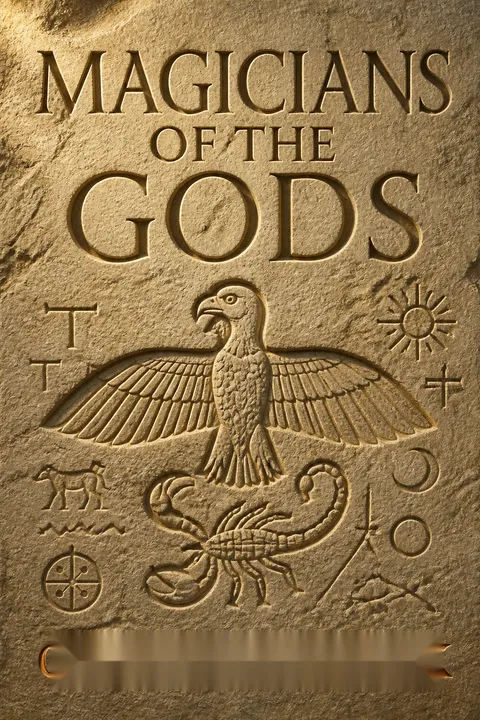
Astronomical message. Pillar 43 in Enclosure D features complex animal reliefs, including a vulture, a scorpion, and a sun disc. Analysis suggests these figures represent constellations and a specific astronomical alignment: the winter solstice sun in Sagittarius, targeting the galactic center. This alignment occurs in a narrow 80-year window (1960-2040 AD), implying that Göbekli Tepe's builders possessed advanced precessional knowledge and left a message for our current era.
4. Ancient Myths Encode Memories of Cataclysm and Sages
What is surprising is the remarkable consistency with which traditions from every part of the globe speak not only of cataclysmic events but also of very specific warnings given to certain selected “wise” or “good” or “pure” humans in advance of the impending cataclysm.
Universal flood narratives. Thousands of flood myths from diverse cultures worldwide share striking similarities, describing a global deluge sent to punish human wickedness. These narratives often include:
- Advance warnings given to a chosen few.
- Construction of a survival vessel (e.g., Noah's Ark, Yima's Vara).
- Preservation of life's "seeds" or breeding pairs.
- A world reborn after the catastrophe.
These consistent themes suggest a shared memory of a real, devastating event.
Zoroastrian "fatal winters." Ancient Persian texts, like the Zend Avesta, speak of a patriarch named Yima who was warned by the god Ahura Mazda of a coming "fatal winter" with "fierce, foul frost" and "snowflakes fall[ing] thick." Yima was instructed to build an underground refuge (Vara) to preserve the "seeds" of all life. This vividly mirrors the sudden onset of the Younger Dryas cold period and the need for survival.
The Watchers and Apkallu. Mesopotamian traditions speak of the Apkallu, Seven Sages who brought civilization before the Flood, often depicted as fish-men or bird-men holding mysterious bags. Similarly, the non-canonical Book of Enoch describes "Watchers" who descended on Mount Hermon (Lebanon), taught forbidden knowledge, and mated with human women, leading to the birth of "giants" (Nephilim) and ultimately the Flood. These figures, whether divine or human, represent knowledge-bearers from a pre-cataclysmic era.
5. The Precessional Code: A Universal Language for Future Messages
The heartbeat of the cycle, as we’ve seen, is 72—the number of years required for the unfolding of one degree of precessional change.
Celestial clockwork. The precession of the equinoxes is a slow, observable wobble of Earth's axis, causing the apparent positions of stars to shift over a grand cycle of approximately 25,920 years. This phenomenon, though imperceptible in a human lifetime, was meticulously tracked by ancient civilizations, who encoded its numerical patterns into their myths and monuments.
Numbers of the Great Year. Key precessional numbers, such as 72 (years per degree), 2,160 (years per zodiacal age), and 25,920 (full cycle), appear repeatedly in ancient traditions and architectural dimensions worldwide. For example:
- The 3:4:5 triangle in the Great Pyramid's King's Chamber yields 216 when cubed (3x72).
- The Great Pyramid's dimensions encode Earth's size at a scale of 1:43,200 (43,200 is 20x2160).
- Borobudur's 72 Buddhas and 2,160 circumambulations.
This suggests a shared, advanced astronomical knowledge from an "almost unbelievable" ancestor civilization.
Messages across millennia. The consistent use of this precessional code in geographically disparate sites like Giza, Göbekli Tepe, and Borobudur implies a deliberate attempt to transmit a message across vast stretches of time. This "universal language" of the stars would be decipherable by any future astronomically literate culture, ensuring the survival of crucial information beyond the vagaries of written language or perishable materials.
6. Giza and Baalbek: Megalithic Echoes of a Drowned World
The ground-plan of the pyramids and the Sphinx does speak clearly of the epoch of 10,500 BC.
Giza's ancient blueprint. The precise astronomical alignments of the Giza pyramids and the Great Sphinx point to the epoch of 10,500 BC (the Younger Dryas). The Sphinx, facing due east, aligns with the constellation Leo on the spring equinox, while the three pyramids align with Orion's Belt. This "sky-ground lock" suggests a much older origin for the site's design than the orthodox 2500 BC dating, implying it was a "book descended from the sky" from a lost civilization.
Baalbek's colossal mystery. In Lebanon, the Roman temples of Baalbek are built upon a massive U-shaped megalithic wall, including the Trilithon—three blocks weighing over 800 tons each, and a newly discovered block of 1,650 tons. While archaeologists attribute these to the Romans, their sheer size, precision, and non-load-bearing function for a "cosmetic" podium are anomalous. The presence of a Roman column drum in the foundations is often cited as proof of Roman origin, but this could easily be a later repair.
Pre-Roman origins. The book argues that the U-shaped wall at Baalbek likely predates the Romans, possibly even Herod's "Podium 1," and was inherited from a much earlier culture. Local traditions speak of Baalbek being built by giants before the Flood, and then repaired by Solomon or Nimrod. The site's "great antiquity" (Neolithic settlement layers dating back 10,000 years) and its connection to the Canaanite "magician" deity Hauron, who was assimilated with the Giza Sphinx, hint at a shared, ancient legacy.
7. Andean Monuments: Traces of Multiple Pre-Inca Civilizations
All of them are masterworks from the beginning. All of them are perfect. It’s almost as if, as Gamarra says, “it was easy for them.”
Beyond Inca origins. In the Peruvian Andes, sites like Sacsayhuaman, Coricancha, and Pisac display three distinct architectural styles:
- Hanan Pacha: Oldest, monolithic, rock-cut, no tool marks (e.g., sculpted knolls, Qenko, Temple of the Moon).
- Uran Pacha: Megalithic, polygonal blocks, impossibly tight joints, evidence of rock softening (e.g., Sacsayhuaman's zig-zag walls, Coricancha's inner chambers).
- Ukun Pacha: Later, cruder stonework, often imitating older styles (e.g., Inca walls).
This stylistic diversity challenges the orthodox view that all these monumental works were solely built by the Incas within a century.
Anomalous craftsmanship. The Uran Pacha megaliths, with their multi-ton polygonal blocks fitted with razor-thin precision, suggest a technology far beyond what the Incas are credited with. The absence of tool marks and the glassy sheen around joints, along with Russian research indicating limestone subjected to extreme heat (900-1100°C), hint at a lost technology capable of softening stone. This supports the idea that these structures were "molded" rather than carved.
Shared symbolism. The hand positions on the Tiahuanaco monoliths (Ponce, El Fraile), with fingers almost meeting across the belly, are strikingly similar to those on the Göbekli Tepe pillars and Easter Island Moai. Tiahuanaco also features bearded figures (Kon-Tiki Viracocha) and fish-scale patterns on garments, echoing the Mesopotamian Apkallu. These widespread symbolic and architectural parallels suggest a common, ancient influence across continents.
8. Indonesia: A Plausible Heart of the Lost Civilization
Indonesia must rank among the most plausible candidates anywhere on earth for the heartland in which that civilization could have evolved and grown to maturity.
Sundaland's submerged past. At the end of the Ice Age, Indonesia was part of a vast continent called Sundaland, which was submerged by catastrophic sea-level rise around 11,600 years ago. This region lost more habitable land than almost anywhere else, making it a prime candidate for the location of a drowned civilization, as suggested by geologist Danny Natawidjaja (who argues Indonesia is Plato's Atlantis).
Gunung Padang's deep secrets. The pyramid of Gunung Padang in West Java, initially thought to be a natural hill, has revealed man-made structures extending tens of meters below the surface, with carbon dates reaching back over 22,000 years. Remote sensing also indicates three hidden, rectilinear chambers deep within the pyramid. This site's immense antiquity and sophisticated construction challenge archaeological paradigms and hint at a highly advanced, prehistoric culture.
Widespread anomalies. Indonesia harbors numerous other enigmatic sites and discoveries:
- Bada Valley megaliths: Moai-like figures (e.g., Watu Palindo, "The Wise Man") with hand positions similar to Göbekli Tepe and Easter Island.
- Sumatra's painted chambers: Subterranean megalithic chambers with visionary rock art, reminiscent of European Paleolithic caves.
- Homo floresiensis: The "Hobbit" human species, which went extinct around 12,000 years ago, coinciding with the Younger Dryas.
- Ancient art: Sophisticated cave paintings on Sulawesi (39,900 years old) and geometric engravings on Java (500,000 years old) push back the timeline of advanced human cognition.
These findings suggest a rich, unexplored prehistoric past in the region.
9. The Return of the Phoenix: A Warning for Our Time
The star with the long, wide tail is going to destroy the world some day when it comes low again.
Cyclical cosmic threat. The Younger Dryas comet, or "the Phoenix," may not be a one-time event. Astrophysicists Victor Clube and Bill Napier propose that the original giant comet fragmented around 20,000 years ago, leaving a debris stream (the Taurid meteor stream) that Earth crosses twice annually. This stream contains numerous large, dark objects, including comets and asteroids, some up to 30 kilometers in diameter.
A recurring danger. Calculations suggest that Earth is currently, and for the coming decades (roughly 1960-2040), passing through a particularly dense cluster of these fragments. This period aligns precisely with the "end date" of the Mayan calendar and the astronomical symbolism on Göbekli Tepe's Pillar 43, both of which point to our current era as a time of potential global transformation or cataclysm.
Ancient prophecies and modern science. Ancient myths, like the Ojibwa tradition of the "Long-Tailed Heavenly Climbing Star" that "burned up everything" and "made a different world," resonate chillingly with modern scientific predictions. The convergence of ancient wisdom and contemporary astrophysics suggests that the "Great Return" of the Phoenix comet is a real and present danger, demanding our attention and collective action to prevent a recurrence of the Younger Dryas catastrophe.
10. The Need for a Paradigm Shift in Understanding Our Past
The house of history is built on sand.
Flawed foundations. The current historical timeline, which largely ignores the Younger Dryas cosmic impacts, rests on fundamentally false foundations. Archaeology's reluctance to integrate this massive, extinction-level event into its narrative of civilization's origins is a significant lapse in scholarship. The sudden emergence of complex sites like Göbekli Tepe immediately after the Younger Dryas demands a re-evaluation of our past.
Beyond academic turf wars. The resistance to the Younger Dryas impact hypothesis, often disguised as genuine criticism, stems from deeply entrenched uniformitarian biases and academic territorialism. This opposition, sometimes linked to government efforts to downplay cosmic threats, hinders scientific progress and prevents a holistic understanding of Earth's history and humanity's place within it.
Awakening to our potential. Recognizing the reality of a lost Ice Age civilization and the cyclical nature of cosmic threats is crucial for our future. This paradigm shift requires humanity to:
- Abandon narrow-minded conflicts and embrace global unity.
- Pool resources and intelligence to address existential threats.
- Reawaken to the "magnificent gift of consciousness" and its potential.
By learning from the past, we can avoid becoming the "next lost civilization" and instead usher in a new age of human consciousness and collective redemption.
Review Summary
Reviews for Magicians of the Gods are largely positive, averaging 4.17/5. Fans praise Hancock's thorough research, engaging writing, and thought-provoking theories about lost civilizations and comet impacts ending the Younger Dryas period. Highlights include explorations of Göbekli Tepe, Baalbek, and other ancient sites. Critics note the book is overly verbose, repetitive, and occasionally speculative, with some feeling the "conspiracy against mainstream archaeology" tone undermines credibility. Most agree it raises compelling questions about humanity's ancient past, even if conclusions remain unproven.
People Also Read



About the Author


Download PDF
Download EPUB
.epub digital book format is ideal for reading ebooks on phones, tablets, and e-readers.








































